快手

Search documents
快手-W(01024):深度:AI二次革命,短视频巨头的无限可能
Changjiang Securities· 2026-01-11 14:52
Investment Rating - The investment rating for the company is "Buy" and it is maintained [9] Core Insights - In the AI era, the short video giant Kuaishou is actively embracing new technologies, launching AI-native video products that lead industry development. The company is undergoing a value reassessment as it fully utilizes AI to reshape its core business commercialization chain [3][5] - The AI-native product, Keling AI, is positioned to lead the industry with its technical and product capabilities, while the OneRec recommendation model enhances user engagement and reduces operational costs, validating its revenue growth logic [5][6] - The market is expected to recognize Kuaishou's unique value proposition, leading to a potential revaluation of its stock as the AI commercialization process accelerates [19] Summary by Sections Introduction - Kuaishou, listed as the "first short video stock" in 2021, has gained market attention due to its unique monetization model in advertising, e-commerce, and live streaming. The company is transitioning from high-speed growth to stable growth in its e-commerce business, leading to a market valuation of around 10x PE [5][19] Keling AI - Keling AI is leading the AI video sector with its superior model performance and product capabilities. The market for AI-generated videos is projected to exceed $100 billion, with Keling achieving stable monthly revenues of over 100 million yuan and a quarterly revenue growth rate of over 20% [7][30] Main Business - Kuaishou's short video business is being comprehensively reshaped by AI, with a rebound in performance expected in Q1 2025. The company is enhancing its algorithm capabilities and commercial efficiency through the OneRec system, which is expected to improve advertising revenue significantly [8][62] Commercialization - Keling AI's user base consists mainly of professional and business users, with 70% of its revenue coming from overseas. The product is designed to cater to professional film and short video production needs, demonstrating strong growth in user numbers and video generation [53][59]

“硬三年、软三年”,AI应用风口已至?快手、B站携手拉升,港股互联网ETF(513770)上探2%
Xin Lang Cai Jing· 2026-01-11 11:34
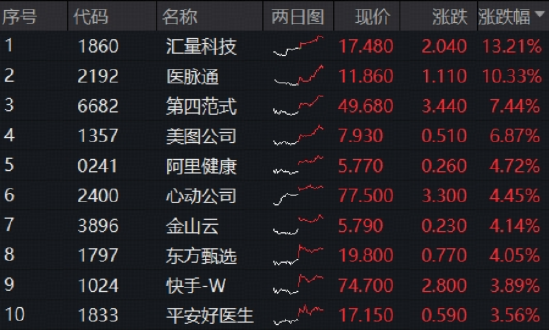
Market Overview - On January 9, the Hong Kong stock market saw the Hang Seng Index and the Hang Seng Tech Index rise by 0.32% and 0.15% respectively, with the internet sector leading the gains [1] - The Hong Kong Internet ETF (513770) experienced a price increase of over 2% during the day, closing up 1.69% [1][9] - Notable performers in the AI application sector included Kuaishou-W and Bilibili-W, both rising over 3%, while Alibaba-W increased by 2.73% [1][9] Fund Inflows - The Hong Kong Internet ETF (513770) showed continuous premium throughout the day, indicating strong buying interest, with a net inflow of 566 million yuan over four consecutive days [2][9] AI Sector Insights - MiniMax, an AI model company, saw its stock price surge by 109% on its debut, igniting investor enthusiasm for AI applications [10] - Analysts from Huaxin Securities predict that 2026 will be a "golden year" for AI applications, driven by technological maturity, supportive policies, and market demand [11] - According to Founder Securities, the investment cycle in the tech industry follows a pattern of "hard three years, soft three years, and three years of business model development," with major internet companies competing to create entry-level AI applications [11] Performance of Key Stocks - The top-performing stocks in the internet sector included: - Huoliang Technology (1860) with a rise of 13.21% - Yimaitong (2192) up by 10.33% - Fourth Paradigm (6682) increasing by 7.44% - Meitu (1357) up by 6.87% [2][9] ETF Composition - The Hong Kong Internet ETF tracks the CSI Hong Kong Internet Index, with major holdings including Alibaba-W, Tencent Holdings, Xiaomi Group-W, Kuaishou-W, and Bilibili-W, which collectively account for over 78% of the fund [5][12]

中泰证券:开年市场新高后或如何演绎?
Zhi Tong Cai Jing· 2026-01-11 05:50
Core Viewpoint - The market is expected to continue its upward trend in the short term, with opportunities for investors to strategically position themselves before the Chinese New Year [1][2]. Market Performance - The A-share market has shown strong upward momentum, with major indices like the Wind All A, CSI 300, and CSI 2000 rising by 5.11%, 2.79%, and 6.54% respectively this week [2]. - The Shanghai Composite Index has risen by 3.82%, surpassing 4100 points and achieving a 16-day consecutive increase, marking a significant trend [2]. - Daily trading volume has increased, with the average daily turnover reaching 2.85 trillion yuan, and a single-day turnover exceeding 3 trillion yuan, indicating a strong influx of new capital [2]. Sector Analysis - The robotics sector has seen continuous net inflows, indicating it remains a key focus area for investment [1]. - The commercial aerospace sector is also experiencing strong capital inflows, but its trading density is at historical highs, suggesting a shift from a primary upward phase to a "theme diffusion" phase [1][3]. - Other sectors such as controllable nuclear fusion, sports and consumer services, and non-ferrous metals are showing signs of sustained capital inflows, making them potential structural investment opportunities [1]. Industry Highlights - The technology sector has been a strong market driver, with significant gains in media (13.11%), computer (8.50%), and electronics (7.74%) industries [3]. - The defense and military industry has surged by 13.63%, influenced by geopolitical events and the ongoing development of commercial aerospace [3]. - Non-ferrous metals have also risen by 8.56%, supported by strong demand and strategic reserves [3]. Future Outlook - The upward trend in indices is likely to continue as long as trading volume remains robust, with average daily turnover increasing by 51.63% compared to the previous month [4]. - The market is expected to focus on technology sectors and resource demand, with a potential shift towards less crowded segments within technology [4]. - The growth of northbound and leveraged funds is providing strong momentum for the market, with margin financing balances steadily breaking previous highs [4].

第一批做AI漫剧的中年人,已经财务自由了?
3 6 Ke· 2026-01-10 02:09
Core Insights - The emergence of AI Manhua (AI-generated comics) represents a significant trend in the entertainment industry, combining traditional comic elements with advanced AI video generation technology to create engaging content rapidly and cost-effectively [1][2][4][10]. Group 1: Definition and Characteristics - AI Manhua is a blend of existing comic genres and new AI video generation technologies, resulting in a unique product that resembles both comics and animated series [2][4]. - The rapid production capabilities of AI Manhua allow for the creation of high-quality effects that would typically require months of work from traditional animators [4][10]. Group 2: Market Growth and Adoption - By the end of 2025, AI Manhua has rapidly replaced previous dominant formats in the genre, with platforms like Douyin and Kuaishou actively supporting its development [10][11]. - In the first half of 2025, over 3,000 AI Manhua episodes were launched, with a staggering growth rate of 83%, and Douyin alone saw over 6,500 new episodes in September [11][13]. Group 3: Cost Efficiency - The production cost of high-quality 3D animated content has been reduced to approximately 1,300 yuan per minute, compared to 15,000 to 40,000 yuan for traditional short films [21][23]. - AI Manhua can achieve even lower costs, with estimates as low as 400 yuan per minute under certain conditions, significantly altering the industry's cost structure [22][23]. Group 4: Revenue Potential - The revenue model for AI Manhua largely mirrors that of traditional short films, with predictions indicating that the "free-to-watch + advertising" model will dominate [25][27]. - Successful AI Manhua can generate substantial profits, with average net profits reaching 200,000 to 300,000 yuan for episodes with over a million views [25][28]. Group 5: Audience Demographics - AI Manhua attracts a younger audience compared to traditional short films, with a significant portion of viewers aged between 24 and 30, contrasting with the older demographics of short film audiences [30][32]. Group 6: Industry Challenges - The rapid growth of AI Manhua has led to a crowded market, with many new entrants facing difficulties due to a lack of experience and understanding of the production process [34][40]. - Issues such as copyright ambiguity and the prevalence of low-quality content pose risks to the sustainability of the AI Manhua industry [44][48].

电商运营:2025年Q4中国电商平台商家投诉数据报告
Sou Hu Cai Jing· 2026-01-09 23:46
Core Insights - The report highlights the coexistence of a peak shopping season and a significant number of merchant complaints in the Chinese e-commerce sector during Q4 2025, with platforms like Kuaishou focusing on promotional activities while facing merchant rights issues [1][9] Summary by Sections 1. Report Overview - In Q4, e-commerce merchants on platforms such as JD, Taobao, Pinduoduo, and Douyin experienced a crucial business peak supported by various promotional activities and policies [5] - Platforms like Tmall launched initiatives like the "Thousand Stars Plan" to provide resources for potential merchants, while advertising competition intensified during key sales events, potentially increasing customer acquisition costs [5][8] 2. Overall Data - The report includes comprehensive data on merchant complaints across various e-commerce platforms, revealing significant challenges faced by merchants [9] 3. Complaint Platform Distribution - The complaint distribution among platforms in Q4 was as follows: Douyin (38.75%), Pinduoduo (33.55%), Taobao (10.92%), JD (2.08%), and others [6][10] 4. Complaint Issue Types - The primary complaint issues were: arbitrary refunds (37.09%), excessive consumer protection (19.97%), withholding of deposits (9.99%), arbitrary fines (9.73%), and others [12][14] 5. Complaint Regional Distribution - The top regions for merchant complaints were Guangdong (23.86%), Zhejiang (14.53%), and Shandong (11.80%) [16] 6. Complaint Business Category Distribution - The leading categories for complaints included apparel (15.95%), 3C digital products (10.64%), and food and fresh produce (9.08%) [18] 7. Complaint Amount Distribution - The majority of complaint amounts were concentrated in the range of 0-50,000 yuan, with 95.07% of complaints falling within the 0-50,000 yuan bracket [20] 8. Complaint Merchant Gender Distribution - The gender distribution of complaint merchants showed that 70.78% were male and 29.22% were female [22] 9. Douyin E-commerce Specific Data - Douyin's complaints were primarily about arbitrary refunds (46.64%) and excessive consumer protection (29.53%) [25] - The top regions for Douyin complaints were Zhejiang (19.46%) and Guangdong (19.13%) [28] - The main complaint categories for Douyin included apparel (23.49%) and outdoor products (14.43%) [31] 10. Taobao Specific Data - Taobao's complaints were mainly about arbitrary refunds (30.95%) and excessive consumer protection (28.57%) [34] - The top regions for Taobao complaints were Guangdong (28.57%) and Zhejiang (17.86%) [36] - The leading complaint categories for Taobao included apparel (14.29%) and home goods (9.52%) [39]



陆家嘴财经早餐2026年1月10日星期六
Sou Hu Cai Jing· 2026-01-09 23:11
Group 1 - A-shares experienced a significant increase, with the Shanghai Composite Index achieving a 16-day winning streak, closing at 4120.43 points, the highest in over 10 years. The market turnover exceeded 3.1 trillion yuan, marking the sixth instance in A-share history of surpassing 3 trillion yuan in turnover [1] - The food delivery service industry is facing intense competition, leading to a government investigation into market conditions. Major platforms like Meituan and JD Delivery have expressed willingness to cooperate with the investigation [1] - The U.S. Federal Reserve's expectation for a rate cut in January 2026 has diminished significantly, following disappointing non-farm payroll data for December 2025, which showed an increase of only 50,000 jobs, below the expected 60,000 [1] Group 2 - The State Council has announced a comprehensive policy package to promote domestic demand, including optimizing service industry loans and implementing interest subsidies for personal consumption loans [2] - China's CPI rose by 0.8% year-on-year in December 2025, the highest increase since March 2023, while PPI decreased by 1.9% year-on-year, with a narrowing decline compared to the previous month [2] - The Ministry of Commerce has issued a task list for expanding service industry openness in nine cities, focusing on telecommunications, healthcare, finance, and trade [2] Group 3 - Shanghai has released a three-year action plan to support the transformation and upgrading of advanced manufacturing, aiming to add 100 manufacturing enterprises with an annual output value exceeding 1 billion yuan by 2028 [3] - The Hong Kong stock market saw a slight increase, with the Hang Seng Index rising by 0.32%. Notably, MiniMax's stock surged by 109% on its debut [3] - The China Securities Regulatory Commission has introduced a reward system for whistleblowers reporting serious violations in the securities and futures markets, with potential rewards up to 1 million yuan [3] Group 4 - Tianpu Co. is under investigation by the CSRC for significant stock price fluctuations and has announced that it has no plans to engage in AI-related business [4] - The Shanghai Stock Exchange is monitoring several companies, including *ST Zhengping and *ST Yazhen, for potential violations [4] Group 5 - The first batch of fund quarterly reports indicates that equity funds maintained high stock positions, with significant growth in fund sizes driven by net value increases. Fund managers are optimistic about sectors like computing power and semiconductors [5] - The trust industry reported a slight increase in revenue, with Shaanxi Guotou's revenue reaching 2.928 billion yuan in 2025, a year-on-year growth of 0.03% [5] Group 6 - The Ministry of Finance has announced the cancellation of VAT export rebates for photovoltaic products starting April 1, 2026, which may lead to a short-term increase in exports but a long-term decline [7] - A report indicates that Chinese companies dominate the global humanoid robot market, with Zhiyuan holding a 39% market share [7] Group 7 - The latest data shows a 13.5% year-on-year decline in residential land transaction area in 300 cities, with a 10.6% decrease in land transfer fees [8] - The passenger car market in December 2025 saw a retail decline of 14% year-on-year, while new energy vehicles experienced a 2.6% increase [8] Group 8 - The global central banks purchased 45 tons of gold in November 2025, maintaining a high level of net purchases for the year [16] - The international precious metals market saw significant price increases, with COMEX gold futures rising by 1.29% [17]

南向资金今日净买入68.15亿港元,腾讯控股净买入14.12亿港元
Zheng Quan Shi Bao Wang· 2026-01-09 14:41
Core Viewpoint - The Hang Seng Index rose by 0.32% on January 9, with southbound capital totaling HKD 111.39 billion, resulting in a net inflow of HKD 6.81 billion [1] Group 1: Southbound Capital Activity - Total southbound trading amounted to HKD 111.39 billion, with buy transactions at HKD 59.10 billion and sell transactions at HKD 52.29 billion, leading to a net buy of HKD 6.81 billion [1] - The Shenzhen Stock Connect saw a total trading volume of HKD 44.30 billion, with net buying of HKD 5.15 billion, while the Shanghai Stock Connect had a total trading volume of HKD 67.08 billion, resulting in a net buy of HKD 1.66 billion [1] Group 2: Active Stocks - Alibaba-W had the highest trading volume among southbound stocks at HKD 99.89 billion, with a net sell of HKD 26.22 billion, despite a closing price increase of 2.73% [1] - Tencent Holdings recorded a net buy of HKD 14.12 billion, closing down by 0.81%, while Xiaomi Group-W had a net buy of HKD 8.70 billion, closing down by 0.53% [1][2] - Kuaishou-W also saw significant activity with a net buy of HKD 7.76 billion, closing up by 3.89% [2] Group 3: Continuous Net Buying - Xiaomi Group-W and Tencent Holdings were noted for continuous net buying, with Xiaomi seeing 7 consecutive days of net buying totaling HKD 55.53 billion, and Tencent with 3 consecutive days totaling HKD 42.31 billion [2]




南向资金今日净买入68.15亿港元 腾讯控股净买入14.12亿港元
Zheng Quan Shi Bao Wang· 2026-01-09 14:35
Core Viewpoint - On January 9, the Hang Seng Index rose by 0.32%, with southbound funds totaling HKD 111.39 billion in trading volume, resulting in a net inflow of HKD 6.81 billion [1] Group 1: Southbound Trading Activity - The total trading volume for southbound funds was HKD 111.39 billion, with buy transactions amounting to HKD 59.10 billion and sell transactions at HKD 52.29 billion, leading to a net buy of HKD 6.81 billion [1] - The Hong Kong Stock Connect (Shenzhen) recorded a total trading volume of HKD 44.30 billion, with net buying of HKD 5.15 billion, while the Hong Kong Stock Connect (Shanghai) had a trading volume of HKD 67.08 billion and a net buy of HKD 1.66 billion [1] Group 2: Active Stocks - Alibaba-W had the highest trading volume among southbound funds at HKD 99.89 billion, but experienced a net sell of HKD 26.22 billion, despite a closing price increase of 2.73% [1] - Tencent Holdings saw a net buy of HKD 14.12 billion, with a closing price decrease of 0.81%, while Xiaomi Group-W had a net buy of HKD 8.70 billion [1] - Kuaishou-W recorded a net buy of HKD 7.76 billion, and Meituan-W and China Mobile faced net sells of HKD 3.67 billion and HKD 3.11 billion, respectively [1] Group 3: Continuous Net Buying - Xiaomi Group-W and Tencent Holdings were the only two stocks with continuous net buying for more than three days, with Xiaomi Group-W having a total net buy of HKD 55.53 billion over seven days, and Tencent Holdings with HKD 42.31 billion over three days [2]

港股通(深)净买入51.55亿港元
Zheng Quan Shi Bao Wang· 2026-01-09 14:34
Core Viewpoint - On January 9, the Hang Seng Index rose by 0.32% to close at 26,231.79 points, with a net inflow of HKD 6.815 billion through the southbound trading channel [1] Group 1: Market Activity - The total trading volume for southbound trading on January 9 was HKD 111.389 billion, with a net buying amount of HKD 6.815 billion [1] - The Shanghai Stock Exchange's southbound trading amounted to HKD 67.084 billion, with a net buying of HKD 1.660 billion, while the Shenzhen Stock Exchange recorded HKD 44.305 billion in trading with a net buying of HKD 5.155 billion [1] Group 2: Active Stocks - In the Shanghai Stock Exchange's southbound trading, Alibaba-W had the highest trading volume at HKD 65.69 billion, followed by Goldwind Technology at HKD 33.07 billion and SMIC at HKD 21.74 billion [1] - Tencent Holdings had the highest net buying amount of HKD 0.883 billion, despite a closing price drop of 0.81% [1] - Alibaba-W recorded the highest net selling amount of HKD 2.114 billion, while its closing price increased by 2.73% [1] Group 3: Detailed Stock Data - The top active stocks in the southbound trading on January 9 included: - Alibaba-W: Trading amount of HKD 656.911 million with a net selling of HKD 211.364 million, closing up by 2.73% [3] - Goldwind Technology: Trading amount of HKD 330.673 million with a net selling of HKD 13.003 million, closing up by 3.41% [3] - SMIC: Trading amount of HKD 217.368 million with a net selling of HKD 17.406 million, closing down by 0.73% [3] - Tencent Holdings: Trading amount of HKD 209.478 million with a net buying of HKD 52.898 million, closing down by 0.81% [3]
漫剧赛道,咋就成了新风口?
Xin Hua Wang· 2026-01-09 14:28
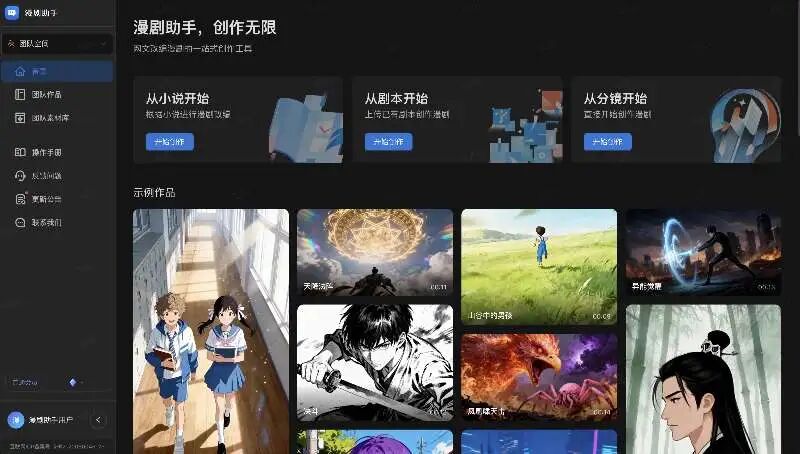
Core Insights - The rise of "manhua drama" represents a transformation of traditional animation into short video formats, catering to the entertainment needs of modern young audiences with a focus on quick, engaging content [1][2] - The unique production model of manhua drama, characterized by lower costs and shorter production cycles, differentiates it from traditional animation and live-action short dramas, allowing for a diverse range of content [1][2] - The integration of AI technology in the production process has significantly reduced costs and improved efficiency, enabling a scalable growth phase for the industry [3][5] Group 1: Market Performance and User Engagement - Manhua dramas have achieved significant viewership, with 80 works surpassing 10 million views and over 10 works exceeding 100 million views, indicating strong market potential [1] - The overlap between paying users of manhua dramas and short dramas is only 38%, suggesting that manhua dramas attract a substantial number of new paying users [2] - The appeal of manhua dramas lies in their ability to resonate emotionally with users, enhanced by community interactions and a low-cost, fast-paced payment model [2] Group 2: Technological Advancements and Production Efficiency - AI tools have drastically reduced the production costs of manhua dramas, with costs dropping from 2000-5000 yuan per minute to 1000-2500 yuan, achieving a reduction of up to 50% [3] - The introduction of platforms like "Manhua Assistant" and "Dream Maker 2.0" has further streamlined the creative process, allowing creators to focus on narrative and aesthetics [5] - The evolution of AI technology is reshaping the production logic, enabling creators to generate high-quality content with less manual effort [5] Group 3: Industry Challenges and Future Directions - The manhua drama industry faces challenges such as content homogenization, copyright disputes, and the need for content safety, which could hinder sustainable growth [6][7] - AI is currently viewed as a supportive tool in scriptwriting, lacking the capability to create complex narratives independently, which highlights the need for human creativity in the production process [7] - The increase in copyright infringement cases related to AI-generated content necessitates the establishment of a comprehensive copyright governance system within the industry [8]