
SpaceX

Search documents
马斯克公布月球电磁弹射计划,发射成本有望降低90%
Sou Hu Cai Jing· 2026-02-25 05:04
Core Concept - SpaceX CEO Elon Musk has proposed an ambitious space infrastructure plan to launch AI satellites from the Moon using electromagnetic propulsion technology [1][3] Group 1: Infrastructure and Technology - The plan relies on two main infrastructures: a satellite assembly factory on the Moon for local satellite manufacturing and a giant electromagnetic launcher to deliver satellites to low Earth orbit [1][3] - Electromagnetic propulsion technology could reduce launch costs by up to 90%, potentially bringing costs below $500 per kilogram, and supports multiple launches per day due to its rapid reset capability [4] Group 2: Strategic Vision and Goals - Musk outlined the initial blueprint for the lunar satellite factory during a meeting at his AI company, xAI, emphasizing the need for a factory on the Moon to produce AI satellites [3] - The goal is to achieve an unmanned lunar landing by March 2027 and to shift SpaceX's strategic focus towards building a "self-sustaining city" on the Moon within a decade [3] Group 3: Energy and AI Deployment - The driving logic behind this concept is the increasing conflict between AI computational power and energy supply, with Musk stating that the current growth of AI chip production is outpacing energy supply growth [3] - SpaceX has applied to the FCC to deploy up to 1 million satellites in low Earth orbit, creating an in-orbit data center network powered by solar energy [3] Group 4: Challenges and Considerations - Significant technical challenges remain, including the need for a permanent lunar base, transporting thousands of tons of building materials, and protecting sensitive electronic devices during high-speed launches [4] - The construction of a lunar power network to support frequent launches is also an unknown factor [4]


Leverage Is Almost Everything for These ETF Issuers
Yahoo Finance· 2026-02-25 05:02
Group 1 - The demand for leveraged ETFs is increasing, with issuers preparing new funds almost daily, including filings for single-stock products focused on private companies like SpaceX and Anthropic [1] - Retail investors may face unreasonable levels of risk with these leveraged funds, raising questions about their desirability [2] - Leveraged ETFs have been heavily utilized during market selloffs since 2020, with significant turnover as traders switch between long and short positions [2][3] Group 2 - Recent trends indicate that many investors use leveraged ETFs as short-term trading tools rather than long-term holdings, with a notable portion holding them for more than a single day [3] - Issuers such as ProShares, Tradr, GraniteShares, and Leverage Shares are seeking approval for new 2x leveraged ETFs focused on pre-IPO companies, while others are filing for numerous 3x and 4x ETFs [4]
SpaceX﹒多行星文明:“运、连、算、光”四位一体太空基建
GF SECURITIES· 2026-02-25 04:05
Investment Rating - The report provides a "Buy" rating for several companies involved in the SpaceX ecosystem, including companies like Ruichuang Micro-Nano, Minshida, and others, indicating a positive outlook on their growth potential in the defense and aerospace sector [4]. Core Insights - SpaceX aims to reduce space transportation costs and achieve Mars colonization, with a focus on three transformative areas: the internet, sustainable energy, and the ability to live beyond Earth. The company has developed a series of rockets and spacecraft, including the Falcon, Dragon, and Starship, to facilitate low-cost access to space [3][11]. - The business model of SpaceX is centered around vertical integration, encompassing the entire supply chain from rockets to satellites, launches, terminals, and applications. This approach allows for self-sustaining growth and continuous iteration of its services [3][11]. - Government support is crucial for SpaceX, with the U.S. government providing funding, contracts, and technology support to maintain its competitive edge in the space industry. This collaboration has enabled SpaceX to innovate and expand its capabilities [3][11]. Summary by Sections Section 1: SpaceX Overview - SpaceX is recognized as a global leader in commercial spaceflight, having achieved numerous milestones, including the first privately funded liquid-fueled rocket to reach orbit and the first private company to send astronauts to the International Space Station [12][11]. Section 2: Business Model - The company has created a self-sustaining ecosystem through a series of commercial concepts, including Mars colonization and satellite internet services, which continuously generate demand and market opportunities [3][11]. Section 3: Cost Efficiency - SpaceX emphasizes reusability and cost reduction as core principles, utilizing mature technologies and a vertically integrated supply chain to minimize outsourcing and production costs [3][11]. Section 4: Government Collaboration - The report highlights the importance of NASA and U.S. military support in SpaceX's growth, showcasing how government contracts and technology sharing have facilitated the company's advancements in space technology [3][11]. Section 5: Investment Recommendations - The report suggests potential investment opportunities in various companies linked to SpaceX's operations, including those involved in satellite technology, AI, and materials for aerospace applications [3][4].
未知机构:涨价石油准油股份洲际油气涨价MLCC风华高科涨价白银-20260225
未知机构· 2026-02-25 03:25
Summary of Key Points from Conference Call Records Industry and Company Insights Price Increases in Various Industries - **Oil**: Companies such as **Zhun Oil Co.** and **Intercontinental Oil** are experiencing price increases in the oil sector [1] - **MLCC**: **Fenghua Advanced Technology** is noted for price hikes in MLCC [1] - **Silver**: **Hunan Silver** is also raising prices [1] - **Glass Fiber**: **Shandong Glass Fiber** is seeing price increases [1] - **Titanium Dioxide**: **Jinpu Titanium Industry** is involved in price hikes [1] - **Phosphate Chemicals**: **Chengxing Co.** is mentioned in relation to price increases [1] - **Diamond Cooling Technology**: Companies like **Huanghe Xuanfeng** and **Sifangda** are involved in diamond cooling technology, which is being commercialized [1] AI and Semiconductor Developments - **NVIDIA**: The company is set to release its Q4 FY2026 earnings report on February 26 [1] - **Akash Systems**: Delivered the world's first commercial AI servers equipped with diamond cooling technology to **NxtGenAI Pvt Ltd** [1] - **AXT Inc.**: The company saw a significant stock increase of 23.39%, attributed to rising demand for indium phosphide due to AI infrastructure [2] Rare Earth Elements and Market Dynamics - **Rare Earth Prices**: Significant price increases noted for rare earth elements due to export controls from China, with prices for yttrium reaching $850/kg and dysprosium at $1100/kg [6] - **Japanese Initiatives**: Japan is planning to extract rare earth elements from the seabed, potentially contributing to future supply chains [7] Government and Policy Impacts - **U.S. Government Initiatives**: The Trump administration is focusing on AI pricing models for critical minerals to support global metal trade [2] - **Elderly Care Services**: The Chinese government is promoting the development of elderly care services and consumption [5] Energy and Infrastructure - **Electricity Companies**: U.S. states are set to receive $400-$500 million in subsidies for grid upgrades and charging infrastructure [9] - **Battery Storage Solutions**: **Daotong Technology** is expected to secure at least 100 partnerships with electricity companies for energy storage demonstration stations [11] Other Notable Mentions - **SpaceX**: Plans to deploy a satellite network from the Moon to support AI and high-performance computing needs [3] - **Quantum Information Industry**: Anhui Province is implementing actions to promote quantum information applications, with over 300 scenarios expected by 2026 [7] This summary encapsulates the key points from the conference call records, highlighting industry trends, company developments, and government initiatives that may impact investment opportunities and risks.
能源转型新技术观察(6):太空光伏,是否会成为下一个星辰大海?
HTSC· 2026-02-25 02:50
Investment Rating - The report does not explicitly provide an investment rating for the industry Core Insights - The satellite launch industry is entering an accelerated phase, with significant growth expected in satellite deployment plans, including over 200,000 satellites submitted by China and 1 million by SpaceX, indicating a potential increase in the global satellite market from tens of MW to hundreds of MW and GW levels [15][21][22] - The space photovoltaic market is currently valued at 30 MW, representing only 2% of the terrestrial photovoltaic market, but could expand significantly under various scenarios, potentially reaching 100 GW and generating up to 9 times the value of the terrestrial market [3][18] - The competition for orbital resources is intensifying, with low Earth orbit (LEO) communication satellites becoming the primary focus, as they offer lower latency and broader applications compared to traditional satellites [16][35] Summary by Sections Section 1: Industry Growth and Satellite Launches - The global satellite launch volume is expected to reach a historical high in 2025, with a projected increase of 72.5% in new satellites launched, totaling approximately 4,330 satellites [22][21] - China's satellite deployment plans are ambitious, with a significant increase in the number of satellites expected to be launched by 2030, potentially exceeding 10,000 annually [21][27] Section 2: Space Photovoltaics Market Potential - The current space photovoltaic market is small, but three scenarios could lead to substantial growth: 1. A dense launch of communication satellites could push the market to 40% of the terrestrial photovoltaic market 2. Initial networking of computing constellations could create a demand for 10 GW of space photovoltaics, surpassing terrestrial values 3. Dominance of computing satellites could lead to a demand of 100 GW, increasing market value significantly [3][18] Section 3: Technological Developments and Supply Chain Opportunities - The report highlights the need for technological advancements in space photovoltaic systems, particularly in materials and efficiency, as traditional technologies face limitations in space environments [8][17] - The supply chain for space photovoltaics is expected to see increased demand for packaging materials, which are significantly more valuable in space applications compared to terrestrial uses [19][18] - The shift towards flexible solar wings is anticipated to replace rigid designs, creating new opportunities for materials such as UTG glass and CPI films [19][18]
帮主快评:马斯克要在月球建工厂、弹射AI卫星,这PPT有点大
Sou Hu Cai Jing· 2026-02-25 02:20
Group 1 - The core idea is that Elon Musk plans to build a giant electromagnetic catapult on the Moon, along with a satellite assembly plant to launch AI satellites into Earth's orbit from the Moon, which is more efficient than launching from Earth [1][3] - The rationale behind this initiative is that the Moon's lower gravity and lack of atmospheric resistance significantly enhance launch efficiency compared to Earth [3] - Musk has set an ambitious timeline of "two to three years" for this project, although Sam Altman has expressed skepticism, suggesting it may take a decade or more [4] Group 2 - SpaceX is reportedly planning to deploy a constellation of 1 million satellites to create a space data center specifically for AI computing power [3] - In response to competition from Amazon's Kuiper satellite, SpaceX has significantly reduced its Starlink pricing to a $50 package and is even offering free hardware [4] - SpaceX is expected to go public in June, with a valuation exceeding $1.5 trillion, indicating a strategy to maximize its narrative before the IPO [4]

SpaceX IPO will reprice the entire private space market, says Space Capital's Chad Anderson
Youtube· 2026-02-25 01:59
Core Insights - The space technology sector is experiencing significant growth, with global investment increasing by 48% in 2025, reaching a new record, and further interest anticipated in 2026 due to the potential SpaceX IPO, which could be the largest in history [1][2]. Company Insights - SpaceX's recent acquisition of XAI is seen as a strategic move that enhances its valuation and IPO potential, positioning it as a major player in the space economy [2][4]. - The narrative surrounding the SpaceX IPO emphasizes its 10 million plus Starlink subscribers and its direct-to-sell roadmap, which is expected to capture market share from traditional telecommunications companies [4][5]. - SpaceX is being recognized as more than just a rocket company; it is viewed as a provider of critical infrastructure that supports the broader space economy, which includes data centers and orbital infrastructure [5][7]. Industry Insights - The space economy is becoming increasingly important, with institutional investors reassessing its potential, likening the current moment to the Netscape era for the internet in the 1990s [3]. - Space technologies are identified as the "invisible backbone" of the global economy, with defense spending providing a stable foundation for growth in this sector [7].

AI突传重磅!马斯克超级计划曝光
Xin Lang Cai Jing· 2026-02-25 00:58
Group 1: SpaceX's Lunar Plans - Elon Musk intends to build a giant electromagnetic launch system and a satellite assembly plant on the Moon to facilitate the deployment of AI-focused satellite networks [1][2][8] - SpaceX has submitted an application to the FCC to deploy a system of up to 1 million satellites in low Earth orbit, aimed at creating an in-orbit data center network to support AI and high-performance computing needs [2][8] - The theoretical advantages of launching from the Moon include lower gravity, no atmospheric resistance, and abundant solar energy, which could enhance launch efficiency compared to Earth [9] Group 2: Starlink Pricing Strategy - SpaceX's Starlink satellite internet service has become a major revenue source, with user numbers expected to reach 10 million by the end of 2025, generating approximately $15 billion to $16 billion in total revenue [4][10] - Starlink has announced significant price reductions and is providing hardware for free to distribution partners, aiming to secure customers ahead of increased competition from Amazon's Kuiper satellite system [5][10][11] - Musk stated that the price cuts are not related to competition with Amazon but are intended to make Starlink more affordable for a broader user base [5][10] Group 3: IPO Expectations - SpaceX is considering an IPO in June, with a potential valuation exceeding $1.5 trillion, which would make it one of the largest IPOs globally [1][4][10] - Analysts expect that Starlink will continue to generate strong cash flow in the coming years, serving as a key driver for SpaceX's growth [4][10]
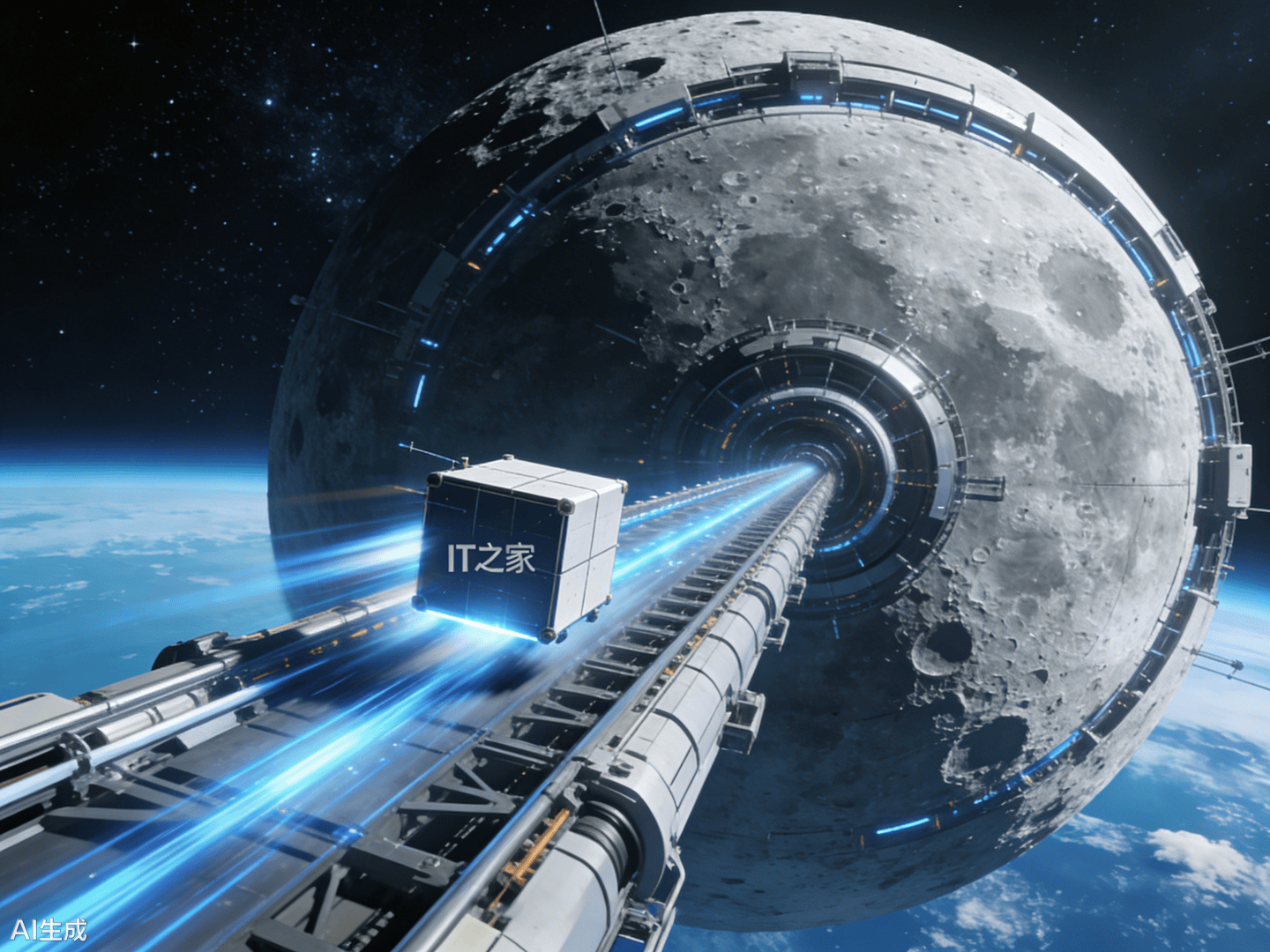
马斯克设想从月球电磁弹射 AI 卫星,计划两三年内实现在太空部署 AI 数据中心
Sou Hu Cai Jing· 2026-02-24 23:51
Core Viewpoint - SpaceX CEO Elon Musk envisions launching satellites into Earth's orbit using an electromagnetic catapult from the Moon to facilitate the deployment of AI-specific data center satellite networks [2][3]. Group 1: Satellite Launch Strategy - Musk plans to construct a giant electromagnetic catapult and a satellite assembly plant on the Moon, which would enhance launch efficiency due to the Moon's low gravity, lack of atmosphere, and abundant solar energy [3]. - The proposed method of launching from the Moon is expected to significantly improve efficiency compared to Earth launches, while also avoiding congestion from existing spacecraft and debris in low Earth orbit [3]. Group 2: AI Infrastructure and Energy Solutions - Musk has expressed concerns that Earth's energy supply cannot meet the explosive growth of AI infrastructure, suggesting that deploying data centers in space could leverage unlimited solar energy to address energy constraints [3]. - The focus will shift to chip production capacity as the primary limiting factor once energy issues are resolved [3]. Group 3: Future Plans and Market Position - Musk indicated that deploying AI data centers in space could be achievable within "two to three years" [3]. - Earlier reports mentioned plans to establish an "orbital data center" network in Earth's orbit, which would create a satellite constellation with unprecedented computing power to support advanced AI models and applications [3]. - SpaceX recently became the highest-valued private company globally, with the core aim of building a space-based data center, which requires continuous satellite launches to ensure stable and scalable revenue in the foreseeable future [3].
微软与SpaceX星链合作以扩大全球连接
Xin Lang Cai Jing· 2026-02-24 23:26
Group 1 - Microsoft announced a partnership with SpaceX's Starlink satellite internet service to expand global network coverage [1] - The collaboration aims to combine low Earth orbit satellite connectivity with community deployment models and local ecosystem partnerships [1]
