
迈瑞医疗

Search documents
建发致新:深耕医疗器械流通领域 多元布局筑牢“护城河”
Zhong Guo Zheng Quan Bao· 2025-09-26 01:01
Core Viewpoint - Jianfa Zhixin has successfully listed on the Shenzhen Stock Exchange's ChiNext board, with a closing stock price of 36.56 yuan per share on September 25, representing a significant increase of 418.58% and a total market capitalization of approximately 15.4 billion yuan [1] Group 1: Company Overview - Jianfa Zhixin, established in 2010, primarily engages in the direct sales and distribution of medical devices, providing centralized operation services for medical consumables to terminal hospitals [1] - The company has expanded its product offerings from vascular intervention products to various categories, including surgical instruments, in vitro diagnostics (IVD), and medical equipment [1][4] Group 2: Market Position and Financial Performance - In 2023, Jianfa Zhixin achieved a market share of 16.47% in the vascular intervention device sector, positioning itself as a leading player in this industry [2] - The company's projected revenues for 2022, 2023, and 2024 are 11.882 billion yuan, 15.443 billion yuan, and 17.923 billion yuan, respectively. The revenue from vascular intervention devices for the same years is 7.583 billion yuan, 9.205 billion yuan, and 9.967 billion yuan, accounting for 63.90%, 59.72%, and 55.73% of total revenue [2] Group 3: Strategic Focus and Innovations - Jianfa Zhixin emphasizes a diversified product line and has been actively expanding into IVD, surgical, and ophthalmic medical device sectors, leveraging its expertise in vascular intervention [4] - The company is committed to digital transformation and has developed a core business system to enhance operational efficiency and management across its nationwide network [5][7] Group 4: Service and Operational Excellence - The company provides centralized operation services for medical consumables, having signed contracts with 60 hospitals, including nearly 30 tertiary hospitals, managing over 10 billion yuan in medical consumables [6] - Jianfa Zhixin aims to enhance its service quality and customer loyalty by offering high-quality centralized operation services and expanding its direct sales and distribution capabilities [6] Group 5: Funding and Future Plans - The funds raised from the IPO will be allocated to information system upgrades, centralized operation services for medical consumables, and working capital, with planned investments of 140 million yuan, 104 million yuan, and 240 million yuan, respectively [8] - The company seeks to strengthen its digital management capabilities and service attributes within the industry chain, aspiring to become a leading medical device distribution service provider in China [8]

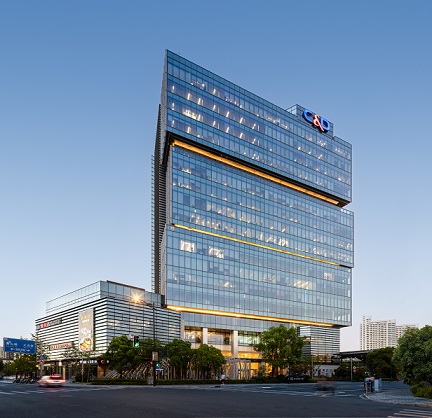
A股战力TOP10城市:京沪深制霸,台州最意外
2 1 Shi Ji Jing Ji Bao Dao· 2025-09-25 22:52
Group 1 - The total market value of A-shares has surpassed 100 trillion yuan for the first time, with the Shanghai Composite Index reaching a ten-year high, attracting numerous companies to pursue IPOs [1][3] - As of September 24, 72 companies successfully listed on A-shares, raising 69.644 billion yuan, a year-on-year increase of 53.3% [1] - Beijing, Shanghai, and Shenzhen continue to dominate the A-share market, but each city has distinct industrial characteristics: Beijing relies on state-owned enterprises and financial giants, Shanghai combines diversified finance with high-end manufacturing, and Shenzhen focuses on hard technology [1][3] Group 2 - The number of listed companies in top cities as of September 24 includes Beijing (475), Shanghai (447), Shenzhen (424), and others, with Beijing holding a significant market share [3][4] - Beijing's listed companies account for 25% of the total A-share market value, driven primarily by 135 state-owned enterprises that contribute 91.48% of revenue and 97.42% of net profit [3][4] - Shenzhen has surpassed Shanghai in total market value, reaching 12.71 trillion yuan, primarily due to its higher number of hard technology companies and their premium valuations [5] Group 3 - Suzhou has outperformed other cities in the number of new A-share listings this year, with six new companies, while also having a strong presence in the science and technology board [6][7] - However, Suzhou's total market value is 2.52 trillion yuan, significantly lower than Hangzhou's 3.36 trillion yuan, indicating a challenge in converting quantity into market value [7][8] - Hangzhou benefits from a concentration of digital economy leaders and provincial state-owned enterprises, contributing to its higher average market value per company [8] Group 4 - The trend of "industrial clustering" is evident, with companies in similar industries increasingly concentrated in specific regions, enhancing collaboration and resource sharing [9][10] - The completion of the Shenzhen-Zhongshan Link has facilitated the listing of two new companies in Zhongshan, demonstrating the impact of regional supply chain integration [10] - Cities like Taizhou have positioned themselves as specialized support zones for advanced manufacturing and digital economy, attracting significant investment and new listings [10][11]
建发致新:深耕医疗器械流通领域多元布局筑牢“护城河”
Zhong Guo Zheng Quan Bao· 2025-09-25 22:16
Core Viewpoint - Jianfa Zhixin has successfully listed on the Shenzhen Stock Exchange's ChiNext board, achieving a closing price of 36.56 yuan per share on September 25, with a remarkable increase of 418.58% and a total market capitalization of approximately 15.4 billion yuan [1] Company Overview - Established in 2010, Jianfa Zhixin primarily engages in the direct sales and distribution of medical devices, providing centralized operation services for medical consumables to terminal hospitals [1] - The company offers direct sales services for over 10,000 types of products to more than 3,300 terminal medical institutions across 31 provinces and regions in China [2] Market Position and Financial Performance - Jianfa Zhixin has become a leading enterprise in the vascular intervention device distribution industry, with a market share of 16.47% in 2023 [2] - The company's revenue figures are projected to be 11.882 billion yuan, 15.443 billion yuan, and 17.923 billion yuan for the years 2022, 2023, and 2024, respectively [2] - Revenue from vascular intervention devices for the same years is expected to be 7.583 billion yuan, 9.205 billion yuan, and 9.967 billion yuan, accounting for 63.90%, 59.72%, and 55.73% of total revenue [2] Product Line and Business Strategy - The company adopts a diversified layout strategy, expanding into various medical device segments such as IVD, surgical, and ophthalmic devices while leveraging its expertise in vascular intervention [3] - Jianfa Zhixin emphasizes innovation in medical device distribution, aligning with national policies that encourage the development of innovative medical devices [3] Integrated Management Approach - The company has established a "national integrated medical device distribution hub," collaborating with numerous manufacturers and over 3,300 key hospitals [3] - Jianfa Zhixin's unique advantage lies in its vertically integrated management, supported by self-developed core business systems that enhance digital transformation [4] Information Technology and Digitalization - The company has focused on information technology and IoT to build a digital supply chain management system for medical devices [6] - Jianfa Zhixin has implemented a unique identification management system (UDI) to address challenges in traditional distribution processes, ensuring effective control over logistics, financial flows, and information [6] Fundraising and Future Plans - The funds raised from the IPO will be allocated to information system upgrades, centralized operation services for medical consumables, and working capital, with planned investments of 140 million yuan, 104 million yuan, and 240 million yuan, respectively [7] - The company aims to enhance its refined and intelligent management capabilities to support its rapidly expanding business scale and improve service quality [7]
A股战力TOP10城市:京沪深制霸,台州最意外
21世纪经济报道· 2025-09-25 16:12
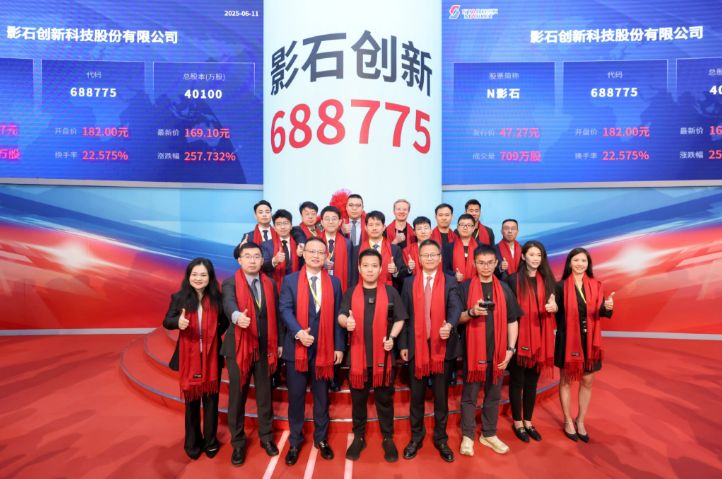
Core Insights - The number and quality of listed companies reflect a city's financing capacity, industrial strength, and future potential, with A-shares reaching a total market value of over 100 trillion yuan for the first time this year [1][4] - As of September 24, 72 companies successfully listed on A-shares, raising 69.644 billion yuan, a year-on-year increase of 53.3% [1] Group 1: Top Cities in A-share Listings - Beijing leads with 475 listed companies and a total market value of 28.67 trillion yuan, supported by state-owned enterprises contributing significantly to revenue and profit [5][6] - Shanghai ranks second with 447 listed companies and a market value of 10.80 trillion yuan, characterized by a balanced structure across finance and high-end manufacturing [6] - Shenzhen, with 424 listed companies and a market value of 12.71 trillion yuan, excels in hard technology, leading in new IPOs among first-tier cities [5][6][7] Group 2: Second-tier Cities Competition - Suzhou has surpassed Hangzhou in the number of new listings, with 6 new A-share companies, but its total market value remains lower at 2.52 trillion yuan [2][11] - Hangzhou maintains a qualitative advantage with a market value of 3.36 trillion yuan, supported by digital economy leaders and provincial state-owned enterprises [12][13] - Guangzhou, while having fewer new listings, shows strength in average market value per company, with a total market value of 2.08 trillion yuan across 153 companies [13] Group 3: Regional Collaboration and Industry Clustering - Companies are increasingly breaking city boundaries, forming clusters within the Yangtze River Delta and Pearl River Delta regions, enhancing collaboration and supply chain integration [2][15] - The emergence of companies like YingShi Innovation highlights the importance of regional industrial support, as it relocated to Shenzhen for better supply chain access [17][19] - Cities like Taizhou are positioning themselves as specialized support zones, attracting significant investments and fostering local industries through strategic partnerships [19]


医药生物周报(25年第36周):劲方医药在港交所上市,关注具备差异化的创新药公司-20250925
Guoxin Securities· 2025-09-25 15:17
Investment Rating - The report maintains an "Outperform" rating for the pharmaceutical and biotechnology sector [5][36]. Core Viewpoints - The pharmaceutical sector has shown weaker performance compared to the overall market, with a decline of 2.07% in the biotechnology sector [1][27]. - The report emphasizes the importance of focusing on innovative drug companies with differentiated capabilities and global commercialization potential [3][36]. - The report highlights the potential for valuation recovery in the medical device sector due to policy optimization and performance recovery [3]. Summary by Sections Market Performance - The overall A-share market declined by 0.65%, while the biotechnology sector fell by 2.07% [1][27]. - Specific declines were noted in chemical pharmaceuticals (down 2.43%), biological products (down 3.47%), and medical devices (down 2.04%) [1][27]. Company Focus: Jinfang Pharmaceutical - Jinfang Pharmaceutical, listed on the Hong Kong Stock Exchange, focuses on RAS-targeted molecular research and has successfully launched its first innovative drug [2][10]. - The core product GFH925 is a selective inhibitor for KRAS G12C mutations, approved for use in NSCLC and expected to enter the market in August 2024 [2][20]. - The company has a robust pipeline, including GFH312 for PAD and PBC indications, and GFH375 for KRAS G12D mutations, with ongoing clinical trials [2][22]. Investment Strategy - The report suggests investing in innovative drug companies with strong growth in new orders and backlogs, as well as leading CDMO companies [3][36]. - Recommended companies include Mindray Medical, WuXi AppTec, and Aier Eye Hospital, all rated as "Outperform" [4][36]. Valuation Metrics - The TTM P/E ratio for the pharmaceutical and biotechnology sector is 39.77x, significantly higher than the overall A-share market P/E of 20.32x [32][36]. - Specific sector P/E ratios include chemical pharmaceuticals at 49.53x and biological products at 48.34x [32]. Recommended Stocks - Mindray Medical is highlighted for its strong R&D and sales capabilities, benefiting from domestic medical infrastructure and international expansion [36]. - WuXi AppTec is noted for its comprehensive new drug development service platform, poised to benefit from the global outsourcing market [36]. - Aier Eye Hospital is recognized for its leading position in the private eye care sector and ongoing expansion efforts [36].
正式加入“激战”!刚刚,这一基金巨头出手了
Zhong Guo Ji Jin Bao· 2025-09-25 14:17
Core Insights - Xingsheng Global Fund has officially entered the ETF market by submitting its first ETF product, the Xingsheng Global CSI 300 Quality ETF, signaling its ambition in the 5.4 trillion yuan ETF market [1][2] Group 1: Company Developments - The Xingsheng Global CSI 300 Quality ETF was submitted to the China Securities Regulatory Commission on September 25 and is currently in the material acceptance stage [2] - If approved, this will be the first ETF product for Xingsheng Global Fund, which has been established for nearly 22 years [2] - The ETF aims to track the CSI 300 Quality Index, which was launched on March 18 of this year and includes 50 companies selected for their stable operations and strong profitability [4] Group 2: Market Context - As of September 24, the total scale of 1,318 ETF products in the market reached 5.46 trillion yuan, reflecting a 46.4% increase compared to the end of last year [6] - The rapid growth of the ETF market has attracted numerous public fund companies to actively participate [5] - The trend of developing ETFs has been supported by favorable policies aimed at enhancing market liquidity and promoting the growth of stock and bond ETFs [10] Group 3: Competitive Landscape - The ETF market is becoming increasingly competitive, with major fund companies leveraging their financial strength and sales channels to gain market share [1][4] - There is a notable increase in participation in "phenomenal" ETF categories, with over 30 public funds entering the CSI A500 ETF space [9] - The market is shifting from "scale expansion" to "quality enhancement," suggesting that precise targeting of niche demands may provide opportunities for smaller players to succeed [10]
又一10亿美元,“药王”单月2笔出海大单!BD热潮再度涌动,100%创新药研发标的520880或迎黄金配置窗口
Xin Lang Ji Jin· 2025-09-25 11:52
Core Viewpoint - The pharmaceutical sector is experiencing a rebound, driven by leading companies such as Heng Rui Pharmaceutical and Mai Rui Medical, with significant movements in both A-shares and Hong Kong stocks [1][4]. Group 1: Market Performance - A-shares saw leading pharmaceutical stocks like Heng Rui Pharmaceutical and Bai Li Tian Heng driving the sector's growth, with the only pharmaceutical ETF (562050) continuing to rise [1]. - The largest medical ETF (512170) in the market gained 0.78%, marking two consecutive days of increases despite overall market fluctuations [1]. - The Hong Kong innovation drug sector showed resilience, with the high-profile Hong Kong innovation drug ETF (520880) initially surging by 1.6% before closing up 0.48%, indicating strong buying interest [2][4]. Group 2: Company Developments - Heng Rui Pharmaceutical announced a licensing deal for its innovative drug SHR-A1811, potentially generating up to $1.093 billion in revenue, marking its second major overseas deal in September [4]. - The company also secured a licensing agreement with Braveheart Bio for another drug, HRS-1893, with a potential revenue of up to $1.013 billion [4]. Group 3: Investment Strategies - Analysts suggest that the current period may represent a golden opportunity for investing in innovative drugs, with a focus on balancing investments across different segments of the pharmaceutical sector [6][8]. - The Hong Kong innovation drug ETF (520880) has seen significant inflows, with net subscriptions exceeding 640 million yuan over the past 20 trading days, indicating strong investor interest [6]. Group 4: Sector Outlook - The overall strategy for the pharmaceutical sector remains positive, with expectations of sustained performance driven by policy support and clear trends in earnings [8]. - Recommendations include focusing on both innovative drugs and underperforming segments like medical devices and services for a balanced investment approach [8][9].


A股战力榜:京沪深制霸,苏杭穗混战,台州最意外!
2 1 Shi Ji Jing Ji Bao Dao· 2025-09-25 11:33
Core Insights - The number and quality of listed companies reflect a city's financing capacity, industrial strength, and future potential, with A-shares reaching a total market value of over 100 trillion yuan for the first time this year, and 72 companies successfully listed, raising 69.644 billion yuan, a year-on-year increase of 53.3% [2][3] Group 1: Top Cities in A-share Listings - Beijing, Shanghai, and Shenzhen continue to dominate the A-share market, with Beijing leading in both the number of listed companies (475) and total market value (28.67 trillion yuan), supported by state-owned enterprises and financial giants [3][6] - Shanghai ranks second with 447 listed companies and a market value of 10.80 trillion yuan, benefiting from a balanced structure of finance and high-end manufacturing [7] - Shenzhen, with 424 listed companies and a market value of 12.71 trillion yuan, has a higher valuation due to its focus on hard technology and innovation, leading in new IPOs among first-tier cities [8][9] Group 2: Second-tier Cities Competition - Suzhou has surpassed Hangzhou in the number of new listings this year, with 6 new A-share companies, while maintaining a lower total market value of 2.52 trillion yuan compared to Hangzhou's 3.36 trillion yuan [11][12] - Hangzhou's strength lies in its digital economy and provincial state-owned enterprises, which contribute to its higher average market value per company [13] - Guangzhou, while having fewer new listings, showcases its capital strength through a significant number of overseas listed companies and ongoing mergers and acquisitions, with a total market value of 2.08 trillion yuan [14] Group 3: Regional Industrial Collaboration - The trend of "industrial clustering" is accelerating, with companies in similar sectors increasingly concentrated in specific regions, enhancing collaboration and resource sharing [16][19] - The successful case of YingShi Innovation highlights the importance of regional supply chains, as the company moved to Shenzhen to leverage its industrial ecosystem [16][17] - Cities like Taizhou are positioning themselves as specialized support zones for advanced manufacturing and digital economy, attracting significant investments and fostering local industries [18]

迈瑞医疗大宗交易成交235.87万元
Zheng Quan Shi Bao Wang· 2025-09-25 10:21
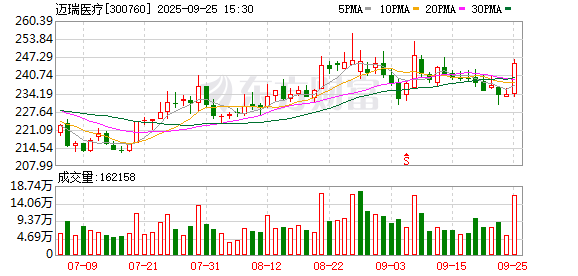
迈瑞医疗9月25日大宗交易平台出现一笔成交,成交量1.12万股,成交金额235.87万元,大宗交易成交价 为210.60元,相对今日收盘价折价14.04%。该笔交易的买方营业部为中航证券有限公司深圳海德三道证 券营业部,卖方营业部为粤开证券股份有限公司深圳滨海大道证券营业部。 进一步统计,近3个月内该股累计发生39笔大宗交易,合计成交金额为12.64亿元。 证券时报·数据宝统计显示,迈瑞医疗今日收盘价为245.00元,上涨4.75%,日换手率为1.34%,成交额 为39.07亿元,全天主力资金净流入2.60亿元,近5日该股累计上涨3.03%,近5日资金合计净流入3.83亿 元。 两融数据显示,该股最新融资余额为32.10亿元,近5日增加2.18亿元,增幅为7.30%。 (文章来源:证券时报网) 据天眼查APP显示,深圳迈瑞生物医疗电子股份有限公司成立于1999年01月25日。注册资本 121244.1394万人民币。(数据宝) 9月25日迈瑞医疗大宗交易一览 | 成交量 | 成交金额 | 成交价 | 相对当日收盘 | | | | --- | --- | --- | --- | --- | --- | | (万 ...

特朗普政府对进口医疗设备启动调查 中国出口企业影响如何
Di Yi Cai Jing· 2025-09-25 09:19
Core Viewpoint - The Trump administration has initiated Section 232 investigations into imported robots, industrial machinery, and medical devices, which may lead to potential tariffs affecting Chinese medical device exports to the U.S. [1] Group 1: Impact on Medical Device Companies - The stock prices of the top ten medical device companies in A-shares showed mixed results, with Mindray Medical (300760.SZ) increasing by 4.75%, while the largest decline was seen in Yingke Medical (300677.SZ) with a drop of 2.54% [1] - According to the China Chamber of Commerce for Import and Export of Medicines and Health Products, China's medical device export value is projected to reach $24.1 billion in the first half of 2025, marking a 5.0% year-on-year increase. However, exports to the U.S. decreased by 4.41% due to escalating trade tensions, resulting in a market share contraction of 2.26 percentage points compared to the same period in 2024 [1] Group 2: Strategies of Chinese Medical Device Companies - Chinese medical imaging device companies have limited manufacturing presence in the U.S. and primarily rely on direct exports. The U.S. is also pushing for a return of pharmaceutical manufacturing [2] - The impact of potential tariffs varies among medical device companies; low-value consumables may face profit margin pressures, while higher-margin medical equipment companies might absorb tariff costs [2] - The China Chamber of Commerce for Import and Export of Medicines and Health Products indicated that companies are restructuring competitive strategies through "technology tiers + global layout" in response to U.S. tariffs and technology restrictions [2] - Companies like United Imaging Healthcare have established a global service network with seven regional spare parts hubs and 32 country warehouses, while Mindray Medical is advancing its global strategy through digitalization and IoT technology [2] Group 3: Local Production and Market Adaptation - Mindray Medical reported that nearly 70% of its international revenue comes from developing countries, which have market capacities similar to China but with faster growth rates. The company plans to increase the number of countries with local production to 14, with 11 already initiated [3] - Steady Medical (300888.SZ) noted that its sales to the U.S. represent a small portion of its revenue and is closely monitoring the investigation's outcomes while shifting some medical consumables production to the U.S. and nearby regions to mitigate tariff impacts [3]