SpaceX

Search documents
金丰来:巨型IPO来袭
Sou Hu Cai Jing· 2026-02-24 11:18
Group 1 - The core viewpoint is that SpaceX's planned mega IPO could reshape the capital market dynamics in 2026, with potential fundraising reaching hundreds of billions of dollars, making it one of the largest IPOs in history [1] - The concentration of large tech company IPOs may attract market liquidity and investor attention away from other companies, with AI firms like Anthropic and OpenAI seen as potential heavyweight IPO candidates [3] - Mid-sized companies may need to adjust their issuance windows to avoid direct competition with these massive projects, leading to increased pressure on asset management firms regarding portfolio allocation and cash management [4] Group 2 - Private equity firms face challenges in timing their market entries, as seen with EQT AB, which is planning to push its assets to the public market but must be cautious due to the impending mega IPOs [6] - If large tech companies perform well post-IPO, it could boost overall market sentiment and attract more long-term capital back to the new stock market, benefiting mid-sized and growth companies through a positive spillover effect [6] - The key for the IPO market in the near future will be the rhythm and timing of offerings, requiring companies to balance valuation, liquidity, and investor sentiment to achieve favorable outcomes [8]

打破“砷化镓”太空垄断!碲化镉将成下一代空间光伏的“破局者”?
Xin Lang Cai Jing· 2026-02-24 11:06
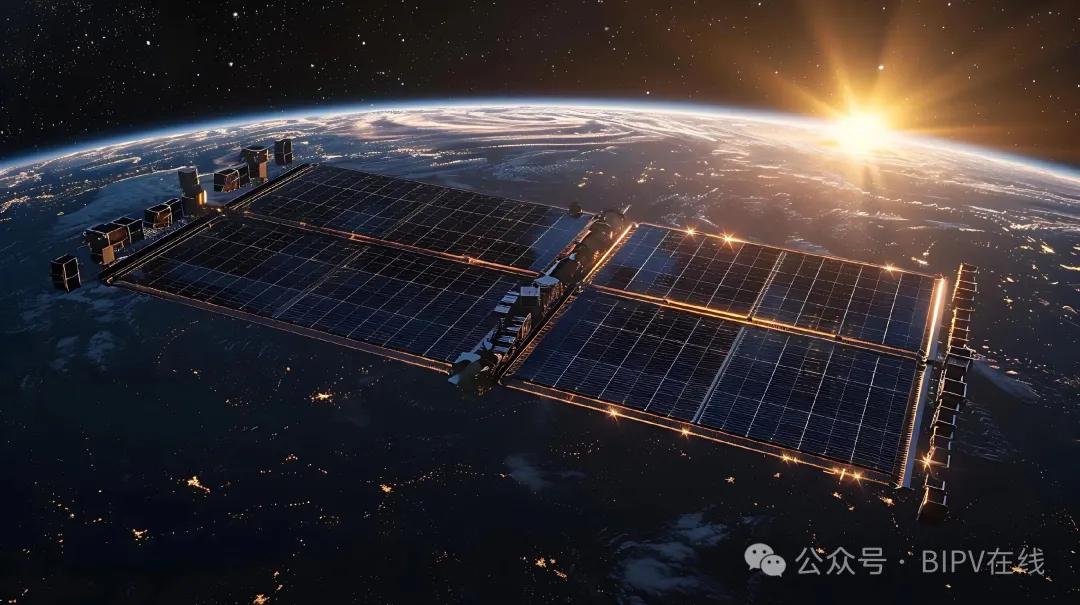
Core Insights - Space photovoltaics are considered a key solution for the future energy revolution, with cadmium telluride (CdTe) thin-film technology showing promising application potential [1][20][22] - The European Space Agency predicts that space solar energy demand will surge from 1 megawatt peak currently to 10 gigawatts peak by 2035, driven by the expansion of satellite constellations like SpaceX's Starlink [22] - CdTe technology is expected to challenge the long-standing dominance of III-V multi-junction cells in the aerospace market, providing new energy options for commercial space and deep space exploration [20][23] Group 1: Core Advantages of CdTe Technology - CdTe has an extremely high specific power of 1.6 kW/kg and aims for a conversion efficiency of 20% under AM0 spectrum, significantly surpassing current aerospace technologies [4][24] - The CdTe solar cells can be deposited on ultra-thin flexible glass, eliminating traditional lamination costs and weight while providing dual functions of substrate and radiation protection [4][24] - CdTe exhibits excellent radiation resistance, maintaining performance better than some III-V multi-junction cells after simulated three years of radiation exposure [5][25] Group 2: Technical Application Possibilities - CdTe is ideal for flexible, ultra-lightweight solar arrays that can be rolled or folded, significantly reducing launch costs and enabling longer deployment in space [8][29] - The technology has been validated in low Earth orbit applications and shows advantages for deep space missions due to its performance in low-light conditions [8][30] Group 3: Technical Challenges and Research Frontiers - Current research focuses on optimizing the bandgap through selenium doping to enhance efficiency and reduce interface recombination [8][30] - Stability issues related to back contact diffusion into the CdTe layer have been identified, with new designs being explored to mitigate this problem [8][31] - The doping strategy is evolving from traditional copper doping to V-group element doping, which shows unique radiation stability patterns [8][32] Group 4: Economic Viability Analysis - CdTe cells are lighter, cheaper, and more radiation-resistant alternatives to multi-junction solar cells, which are limited by high manufacturing costs and complexity [8][34] - The goal is to develop space-grade CdTe solar cells with production costs significantly lower than multi-junction technologies, while achieving a conversion efficiency of 20% and a specific power exceeding 1.5 kW/kg [8][34] Group 5: Future Outlook - Despite challenges in efficiency and long certification cycles, the application prospects for CdTe technology are becoming clearer as technology matures and costs decrease [8][35] - Collaborative projects funded by UKRI are accelerating the transition of this technology from laboratory to space applications, promising significant advantages for future space missions [8][35]
SpaceX史上超大IPO重塑2026年上市版图 拟上市企业需重新规划时间表
Xin Lang Cai Jing· 2026-02-24 08:38
Core Viewpoint - Elon Musk's SpaceX is planning the largest IPO in history, potentially raising up to $50 billion, which is beneficial for existing investors and investment banks, but poses challenges for other companies planning to go public [1][2]. Group 1: Impact on Other Companies - Other companies planning IPOs may struggle as SpaceX's massive offering could dominate investor attention, forcing smaller firms to adjust their timelines [2][7]. - Magnus Thulin from EQT AB suggests that if smaller IPOs coincide with major ones like SpaceX, large asset management firms may overlook them, prompting EQT to move their IPO schedules forward by at least six weeks [7][8]. - The IPO market is gradually recovering from the pandemic lows, with global IPO financing expected to reach $170 billion in 2025, the highest in three years, but still below pre-pandemic averages [3][4]. Group 2: Market Dynamics - The presence of large IPOs may divert funds from smaller offerings, complicating the timing for companies looking to go public [8]. - Long-term investors, such as mutual funds and pension funds, may feel pressured to invest heavily in these large IPOs, which could impact their overall portfolio strategies [8][9]. - If large IPOs perform well, they could attract more capital into the IPO market, benefiting the overall ecosystem [6][9].
云鼎科技:公司没有收购SpaceX公司的相关计划
Zheng Quan Ri Bao Wang· 2026-02-24 08:09
Core Viewpoint - Yunding Technology (000409) has confirmed that it has no plans to acquire SpaceX, addressing investor inquiries on the matter [1] Group 1 - The company responded to investor questions on its interactive platform [1] - There are no ongoing discussions or plans regarding the acquisition of SpaceX [1]

Bill Ackman's $1 Billion Question: Can Robinhood Actually Underwrite SpaceX Better Than Top-Tier Hedge Funds? - Robinhood Markets (NASDAQ:HOOD)
Benzinga· 2026-02-24 08:00
Core Insights - Robinhood Markets Inc. is launching a $1 billion closed-end fund, Robinhood Ventures Fund I (RVI), aimed at providing retail investors access to private companies like SpaceX and Stripe [1][2] - The fund addresses the issue of companies staying private longer and reaching high valuations before retail investors can participate [2] Group 1: Fund Structure and Strategy - RVI starts with a $350 million seed portfolio, including companies like DataBricks, Ramp, and Boom Aerospace [4] - The fund aims to offer "permanent capital" to founders, reducing the pressure to sell that traditional venture funds impose [5] - Unlike typical VC funds, RVI allows for long-term holding in public markets, enhancing flexibility for investments [6] Group 2: Market Dynamics and Founder Appeal - The fund's appeal to founders includes not just financial backing but also the "brand halo" of retail investor support [4] - Robinhood's strategy is positioned to redefine the IPO process, aiming to make it more favorable for companies that have avoided public markets [6] - By establishing a base of stable retail shareholders, Robinhood seeks to demonstrate its capability in underwriting tech investments sustainably [7]


OpenAI奥特曼驳斥太空数据中心构想:称其“荒谬至极”
Huan Qiu Wang Zi Xun· 2026-02-24 07:30
Core Viewpoint - OpenAI CEO Sam Altman stated that the idea of deploying data centers in space is "absurd" and asserted that such facilities will not be feasible for large-scale application within this decade [1][3] Group 1: Response to Space Data Center Concept - Altman's comments directly address the proposals made by Elon Musk and Jeff Bezos regarding space data centers [3] - Musk indicated that deploying space data centers is a primary reason for merging his rocket company SpaceX with AI company xAI, while Bezos estimated that the technology would take 20 to 30 years to mature [3] Group 2: Cost and Feasibility Concerns - Altman highlighted that the current cost of rocket launches is significantly higher than ground energy expenditures, making in-orbit maintenance or hardware replacement nearly impossible [3] - He emphasized that a rough comparison of launch costs versus terrestrial power generation costs reveals that the industry is still far from achieving this goal [3] Group 3: Future Possibilities - Although Altman is skeptical about the immediate feasibility of space data centers, he did not completely dismiss the potential for certain specific AI applications to benefit from a space environment in the long term [3]

招商证券:北美启动光伏扩产 国产受益供应链中重视辅材
智通财经网· 2026-02-24 07:11
Core Viewpoint - Tesla and SpaceX plan to build 100GW of solar capacity in the U.S. over the next three years, which will lead to a revaluation of related domestic auxiliary materials, equipment, and leading manufacturing companies, particularly emphasizing the opportunities in auxiliary materials [1][2] Group 1: North American Solar Expansion - North America is expected to initiate solar manufacturing capacity expansion, with Tesla and SpaceX's plans potentially yielding significant returns due to tariff protections and FEOC subsidies [2] - The anticipated demand for ground-mounted solar in North America is projected to support a capacity of 100GW, driven by natural growth and future data center needs [2] Group 2: Supply Chain Opportunities - The ground solar expansion in North America will create opportunities for Chinese supply chains, while space solutions are still evolving [3] - SpaceX is likely to favor the P-HJT route for solar technology, with HJT and perovskite equipment manufacturers expected to benefit [3] Group 3: Auxiliary Materials - The ground auxiliary materials supply chain is expected to benefit with high certainty and sustainability, while space auxiliary materials may experience significant inflation due to extreme conditions [4] - Tesla's collaboration with domestic auxiliary material companies suggests that ground solar expansion will likely utilize existing supply chains, with light asset auxiliary materials gradually being matched to North American factories [4]


效仿OpenAI?Anthropic允许员工套现,规模最高60亿美元
Hua Er Jie Jian Wen· 2026-02-24 07:02
Anthropic本月早些时候宣布完成300亿美元融资,由新加坡主权财富基金GIC和Coatue领投,D.E. Shaw Ventures、Dragoneer、Founders Fund、Iconiq和MGX共同领投。 人工智能初创公司Anthropic正在启动一项员工股份出售计划,允许现任和前任员工以该公司最新融资 轮的估值水平套现。 2月24日,据彭博社和科技媒体The Information报道,知情人士透露,Anthropic已为此次股份出售安排 了50亿至60亿美元的资金规模,最终金额将取决于符合条件的员工选择出售的股份数量。交易价格将基 于公司约3500亿美元的估值水平,与Anthropic本月早些时候完成的300亿美元融资中的估值相当。 据报道,这笔交易将由外部投资者而非Anthropic本身购买内部人士持有的股份。在AI公司普遍选择延 长私有化阶段的背景下,二级市场股份出售已成为初创公司在未进行收购或IPO的情况下,让员工从估 值增长中获益的重要方式。 这是继OpenAI之后,又一家顶级AI公司采用二级市场交易为员工提供流动性的案例,凸显出在激烈的 AI人才竞争中,大型初创公司通过股权变现留住 ...
铭利达(301268.SZ):公司给特斯拉供货的光伏结构件没有用于SpaceX
Ge Long Hui· 2026-02-24 06:33
Group 1 - The core point of the article is that Minglida (301268.SZ) clarified on the investor interaction platform that the photovoltaic structural components supplied to Tesla are not used for SpaceX [1] Group 2 - The company is involved in supplying photovoltaic structural components, indicating its role in the renewable energy sector [1] - The clarification may impact investor perceptions regarding the company's association with high-profile clients like Tesla and SpaceX [1]
2026年度光伏设备行业策略报告:光伏设备商基本面筑底,看好太空算力应用场景打开&海外地面需求增长
Soochow Securities· 2026-02-24 06:05
Investment Rating - The report maintains a positive outlook on the photovoltaic equipment industry, indicating a recovery and growth trajectory for 2026, driven by space computing applications and increasing overseas ground demand. Core Insights - The photovoltaic equipment sector is characterized by both growth and cyclical attributes, with supply, demand, and technological factors resonating together [2]. - The industry is expected to enter a recovery phase in 2026, following a significant adjustment in 2025, where leading equipment manufacturers have strengthened cash flow management and reduced operational risks [5]. - The emergence of space computing applications is anticipated to expand the long-term growth potential of the photovoltaic sector, transitioning from ground energy to orbital energy systems [5]. - Overseas demand, particularly from the U.S. and the Middle East, is projected to be a significant source of incremental growth in 2026, with U.S. solar installations remaining robust and local manufacturing policies enhancing supply chain security [5]. - A new round of technological iterations is seen as a key variable for capacity reset amid supply-demand imbalances, with advancements in HJT technology expected to drive structural expansion [5]. Summary by Sections Section 1: 2025 Industry Fundamentals and 2026 Outlook - The fundamentals of leading photovoltaic equipment manufacturers are expected to bottom out in 2025, with a positive outlook for 2026 driven by recovery in equipment orders [5]. - The report highlights the importance of cash flow management and risk control among leading manufacturers, with adjustments in payment models to mitigate risks during industry downturns [9][10]. Section 2: Space Computing Applications - The report discusses the significant reduction in launch costs due to advancements in reusable rocket technology, which is expected to facilitate the deployment of space data centers powered by photovoltaic energy [38]. - The U.S. and China are leading in the planning and deployment of space computing capabilities, with ambitious goals for satellite constellations and data centers [41][42]. Section 3: Overseas Ground Demand - The U.S. market is highlighted as a key area for growth, with local manufacturing policies and high installation rates driving demand for photovoltaic equipment [5]. - The report notes that Middle Eastern countries are also increasing their solar installation plans, providing further opportunities for growth [5]. Section 4: Domestic Policy Changes and Technological Iteration - The report emphasizes the need to monitor domestic policy changes and the ongoing technological advancements within the industry, which are crucial for maintaining competitiveness [5]. Section 5: Investment Recommendations - The report recommends focusing on leading companies in the HJT technology space, such as Maiwei Co., Jinsheng Electric, and Aotwei, as well as those specializing in automation and thin silicon wafer cutting equipment [5].