招商银行

Search documents
单笔金额不高的压岁钱,银行为何纷纷开“抢”?
Xin Lang Cai Jing· 2026-02-21 11:53
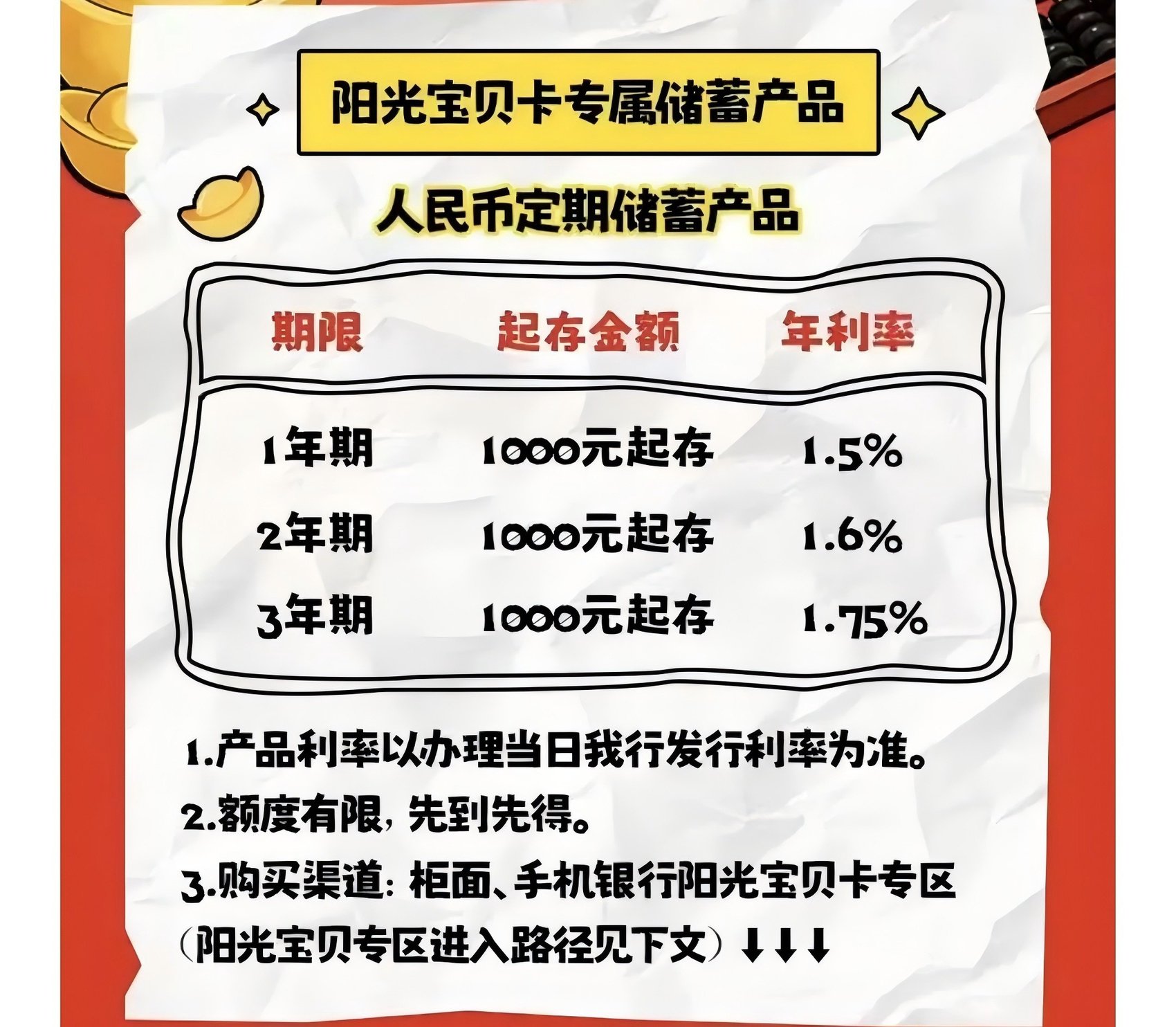
Core Viewpoint - The competition among banks to attract children's "lucky money" during the Spring Festival has intensified, with various financial products and services being launched to convert this influx of funds into long-term customer assets [1][5]. Group 1: Product Offerings - Banks are focusing on three main types of products related to "lucky money": exclusive savings or card accounts for minors, short-term fixed deposits with enhanced interest rates or incentives, and "managed" funds linked to parent accounts for comprehensive family asset management [1][3]. - Examples include Guangfa Bank's "Free Card" which allows for independent accounts for children, and China Merchants Bank's "Golden Little Aui Housekeeper Service" that includes features for managing children's bank cards and educational accounts [1][2]. Group 2: Interest Rates and Terms - China Merchants Bank offers a one-year deposit annualized interest rate of 1.3% and a two-year rate of 1.4%, both higher than standard rates. Beijing Rural Commercial Bank's "Sunshine Baby Card" has rates of 1.5%, 1.6%, and 1.75% for one, two, and three-year terms, respectively [2]. - Zhejiang Jiaxing Pinghu Rural Commercial Bank's "Children's Savings Book" requires a minimum deposit of 10,000 yuan, with one-year and three-year rates of 1.5% and 1.65% [2]. Group 3: Strategic Focus - Banks emphasize that these products are not just about short-term deposit growth but aim to cultivate savings habits and financial literacy among children, positioning themselves as integral to family financial planning [3][5]. - The influx of "lucky money" is seen as a low-cost funding source and a gateway to acquiring young family customers, with potential for cross-selling in education funds, insurance, and consumer finance [3]. Group 4: Regulatory Considerations - The design of products targeting "lucky money" must balance compliance with long-term value, as regulations govern account management, risk warnings, and fund usage for minors [4]. - Banks must ensure that marketing does not undermine trust in their professionalism, maintaining a balance between helping parents manage money and establishing rules for children [4]. Group 5: Market Trends - The focus on "lucky money" reflects a broader trend in retail finance from "competing for deposits" to "competing for relationships" and "long-term customers," indicating growth potential in this niche market as family financial needs evolve [5].
掌握10万亿美元资产,美国犹太资本巨头,已全面渗透中国
Sou Hu Cai Jing· 2026-02-20 10:23
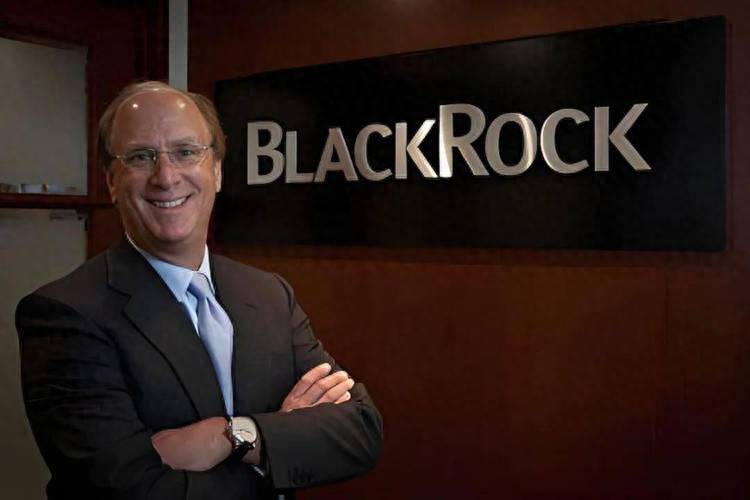
Core Viewpoint - BlackRock, the world's largest asset management company, has established a significant presence in the Chinese market, managing assets worth $300 billion through a complex financial network [2]. Group 1: Investment Strategy and Market Entry - BlackRock made its initial investment in China in 2006 by acquiring a stake in China Bank Fund, marking the beginning of its strategic entry into the market [4]. - Following the removal of foreign ownership limits in April 2020, BlackRock quickly submitted an application to establish a wholly-owned public fund company in August 2020 [4]. - By June 2021, BlackRock became the first foreign institution allowed to set up a wholly-owned public fund in China, showcasing its first-mover advantage [6]. Group 2: Investment Holdings and Influence - As of the end of 2024, BlackRock indirectly holds stakes in over 1,200 Chinese listed companies through more than 200 fund products, creating a network that spans critical sectors of the Chinese economy [10]. - In the electric vehicle sector, BlackRock is the second-largest institutional shareholder of CATL and holds approximately 6.2% of BYD's H-shares, along with significant stakes in other new energy vehicle companies [10][12]. - BlackRock's investments extend across the entire electric vehicle supply chain, from battery manufacturing to vehicle production and charging infrastructure [12]. Group 3: Regulatory Environment and Challenges - A 2024 report from the U.S. Congress highlighted that BlackRock invested billions in several Chinese companies under U.S. sanctions, prompting calls for legislative action to limit such investments [20]. - In response to foreign capital penetration, Chinese regulatory bodies have begun to enhance oversight, particularly concerning investments in critical information infrastructure and data resources [22]. - New regulations introduced in March 2024 emphasize compliance for foreign financial institutions, with a focus on preventing circumvention of regulations through complex financial structures [24]. Group 4: Future Outlook and Strategic Developments - By the third quarter of 2025, BlackRock's asset management scale in China reached $1.225 trillion, reflecting a 12% year-on-year growth despite regulatory pressures [28]. - BlackRock's ongoing expansion in China signifies a broader trend of foreign capital navigating the balance between openness and security in the financial landscape [30].


近30家银行,一夜消失
商业洞察· 2026-02-20 09:29
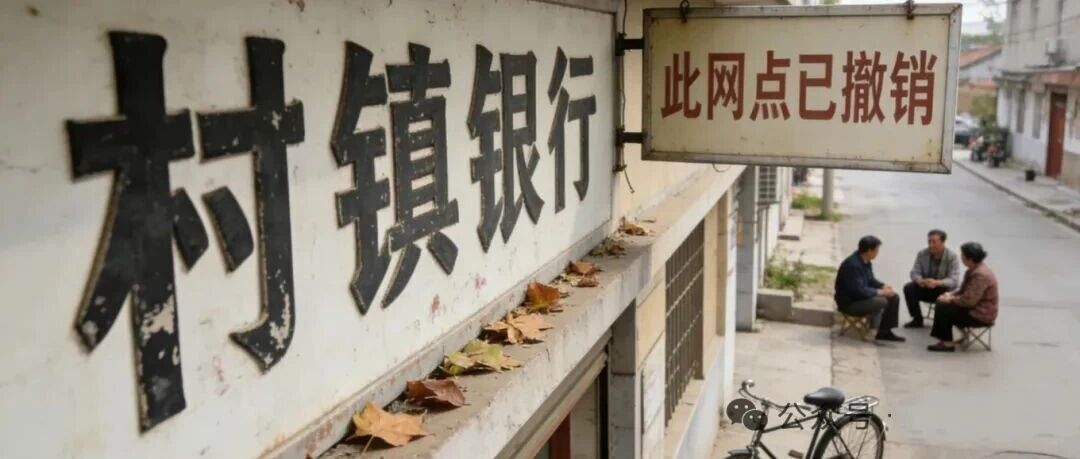
Core Viewpoint - The rapid dissolution of village banks in China, with nearly 30 banks disappearing in the first two months of 2026, indicates an accelerating trend in the consolidation and exit of these financial institutions, which have largely completed their historical mission [2][4][7]. Group 1: Current Status of Village Banks - As of early 2026, 30 village banks have been deregistered, surpassing the 231 banks that exited in the entirety of 2025, suggesting a faster pace of consolidation [2]. - Major commercial banks, particularly the 12 large joint-stock banks, are leading the integration efforts, with some banks like Everbright Bank completely exiting the village banking sector [4][6]. - The majority of village banks are now under the control of larger banks, with significant reductions in their numbers, such as Shanghai Pudong Development Bank reducing its village banks from 28 to 13 [6][7]. Group 2: Reasons for Consolidation - The consolidation is driven by the completion of the village banks' original roles, as modern banking systems like postal savings and rural credit cooperatives have taken over their functions [7]. - A significant factor in the accelerated exit of village banks is the 400 billion yuan crisis involving five village banks in Henan five years ago, which severely impacted public trust and highlighted the risks associated with these institutions [8][10]. - The operational failures of village banks, where they became akin to "personal ATMs" for their owners, have led to a loss of confidence among depositors, prompting a need for swift action from regulators [10][11]. Group 3: Overall Reform Landscape - Currently, there are approximately 1,624 village banks in China, with 1,173 (72.2%) still operational, while 451 (27.8%) have exited the market [14]. - The provinces with the highest rates of bank exits include Jilin (80.6%), Inner Mongolia (79.5%), and Hunan (62.2%), indicating regional disparities in the reform process [14]. - The ongoing reforms suggest that over half of the remaining village banks may not survive the next two years, reflecting a critical phase in the banking sector's evolution [14].
智通AH统计|2月20日
智通财经网· 2026-02-20 08:16
智通财经APP获悉,截止2月20日收盘,东北电气(00042)、京城机电股份(00187)、弘业期货(03678)分列 AH溢价率前三位,溢价率分别为800.00%、294.26%、292.86%;宁德时代(03750)、药明康德(02359)、 招商银行(03968)分列AH溢价率末三位,溢价率分别为-15.74%、-5.50%、-3.71%。其中京城机电股份 (00187)、剑桥科技(06166)、弘业期货(03678)的偏离值位居前三,分别为23.37%、23.34%、22.07%;另 外,晨鸣纸业(01812)、中海油田服务(02883)、钧达股份(02865)的偏离值位居后三,分别 为-59.49%、-29.71%、-25.40%。 | 凯盛新能(01108) | | | | | | --- | --- | --- | --- | --- | | 南华期货股份 | 10.200 | 18.34 | 115.39% | 16.88% | | (02691) | | | | | | 泰格医药(03347) | 48.800 | 64.4 | 58.07% | 13.30% | | 中州证券(01375) ...


创东方投资高宇辉:马年的投资机遇将孕育在四个“确定性”之中
Zhong Guo Ji Jin Bao· 2026-02-20 06:45
新春肇启,万象更新。值此甲辰马年春节来临之际,创东方投资全体员工,向您及家人致以最诚挚的祝 福!祝愿您在新的一年里,龙马精神、万事顺遂、阖家安康、事业腾达! 过去一年,中国经济在复杂严峻的外部环境和国内转型压力下,展现出了强大的战略定力和发展韧性。 投资人和创业者与我们一同见证了市场的波澜起伏,也共同分享了结构性机遇带来的惊喜。创东方始终 秉持"稳健投资、创新发展"的理念,在先进制造、人工智能、生物医药、新能源、新材料等关键领域实 现深度布局与价值共创。 2025年,创东方在科技领域的长期布局迎来丰硕成果,多家被投企业成功IPO,行业覆盖新材料、创新 药等高壁垒赛道。截至目前,创东方累计管理规模已近300亿元人民币,累计投资企业超过350家,其中 超已有40余家已通过上市方式退出,持续在硬科技与医疗健康领域构建产业生态。 资本市场向好的确定性:中国经济的稳定增长及高可预期性,使中国成为世界经济发展的压舱石;中国 才是世界正常经贸秩序、正常资本市场秩序维护者的身份,越来越成为全球共识;经济向东、牵手中 国,成为越来越多国家的一致行动。在此大背景下,中国资本市场将迎来更好的发展,进而带动一级市 场迎来新的发展机遇 ...
春晚广告位争夺战:四十年国民记忆与商业暗流
凤凰网财经· 2026-02-19 10:54
Core Viewpoint - The evolution of the Spring Festival Gala sponsorship reflects the transformation of China's economy and consumer behavior over the past 40 years, showcasing the shift from material scarcity to technological innovation and brand storytelling [4][5]. Group 1: 1980s to Early 1990s - The Era of Material Scarcity - The transition from a planned economy to a market economy in the 1980s led to a scarcity of goods, making items like watches and bicycles symbols of wealth and status [6][7]. - The first brand to sponsor the Spring Festival Gala was Kambas watches in 1984, which used 3,000 quartz watches as payment, marking the beginning of brand sponsorship in the event [7][9]. - Kambas became a household name, with production reaching 1.26 million units by 1987 and over 2 million by 1991, highlighting the impact of the Gala on brand visibility and market demand [9][10]. Group 2: Mid-1990s to Early 2000s - The Rise of Consumerism - The late 1990s saw a surge in consumer spending, with households moving from basic necessities to larger purchases like televisions and refrigerators [12][14]. - In 1995, Shandong Kongfu Banquet Wine became the first "advertising king" of the Spring Festival Gala, paying 30.79 million yuan, initiating a trend among liquor companies [12][14]. - The sales of Qin Pool Wine skyrocketed from 180 million yuan in 1995 to 950 million yuan in 1996 after winning the sponsorship, demonstrating the immediate impact of Gala advertising [17]. Group 3: 2000s to 2010s - The Era of Brand Awareness - The early 2000s marked a shift towards household appliances as the main consumer focus, with Midea becoming a prominent sponsor, securing 16 sponsorships from 2003 to 2019 [18][20]. - The cost of advertising during the Gala increased significantly, with Midea's sponsorship rising from 6.8 million yuan in 2005 to 57.2 million yuan in 2011, reflecting the growing value of the event [20]. - Brands began to focus on storytelling and emotional connections with consumers, as seen with Haier and Gree, indicating a maturation of brand marketing strategies [21]. Group 4: Mid-2010s to Present - The Digital Economy and Technological Innovation - The rise of internet companies has transformed the Spring Festival Gala into a platform for digital engagement, with WeChat's "red envelope war" in 2015 significantly increasing viewer interaction [24][26]. - The Gala has become a battleground for tech giants, with platforms like Douyin and Kuaishou participating in interactive sponsorships, showcasing the shift towards a two-way communication model [29]. - The introduction of robots and AI technologies in recent Galas reflects China's transition from manufacturing to intelligent manufacturing, highlighting the importance of innovation in the economy [31].


当流量退潮 民营银行为何“消失”在TOP50?
Jing Ji Guan Cha Wang· 2026-02-19 10:12
2025年的中国手机银行市场,出现了一个值得玩味的现象:曾经被视为"鲶鱼"的民营银行,集体从主流 视野中消失了。艾瑞咨询最新发布的《2025年中国手机银行APP监测报告》(下文简称"报告")显示, 以微众银行、网商银行为代表的民营银行遭遇重挫,2025年集体淡出行业月活TOP50榜单。 这一"消失"并非偶然。当手机银行用户规模在7亿量级筑顶,当单机单日有效使用时长从4.93分钟骤降 至2.70分钟,当用户行为从"长时浏览"转向"即用即走",曾经靠流量红利和互联网光环撑起的民营银行 故事,正迎来新局。 报告认为,当传统银行全面完成数字化补课后,民营银行纯线上模式在获客、信任度和综合服务能力上 的短板暴露无遗,缺乏独特生态场景和稳固根基成为其发展瓶颈。 从"双子星"到"无人上榜" 根据报告,中国手机银行月度总独立设备数在6.48亿至7.39亿区间波动后企稳,市场正式进入存量深耕 阶段。在残酷的存量博弈中,竞争格局呈现出显著的结构性分化。然而,引人注目的并非头部玩家的座 次微调,而是一个曾经活跃的群体,民营银行的集体退场。 民营银行从TOP50榜单"消失",并非一夜之间。 报告数据显示,2025年MAU排名靠前的银 ...
智通AH统计|2月19日
智通财经网· 2026-02-19 08:18
Core Viewpoint - The report highlights the AH premium rates of various companies, indicating significant disparities between their H-shares and A-shares, with some companies showing extremely high premiums while others exhibit negative premiums [1][2]. AH Premium Rate Rankings - The top three companies with the highest AH premium rates are Northeast Electric (00042) at 785.25%, Beijing Jingcheng Machinery Electric (00187) at 291.45%, and Sinopec Oilfield Service (01033) at 284.04% [1]. - The bottom three companies with the lowest AH premium rates are CATL (03750) at -16.62%, WuXi AppTec (02359) at -6.17%, and China Merchants Bank (03968) at -3.27% [1]. Deviation Values - The companies with the highest deviation values are Beijing Jingcheng Machinery Electric (00187) at 21.79%, Dongjiang Environmental Protection (00895) at 18.16%, and Nanhua Futures (02691) at 16.05% [1]. - The companies with the lowest deviation values include Morning Paper (01812) at -50.01%, Junda Co., Ltd. (02865) at -34.08%, and Yangtze Optical Fibre and Cable (06869) at -32.00% [1]. Top and Bottom AH Stocks by Deviation - The top AH stocks by deviation include Beijing Jingcheng Machinery Electric (00187) with a premium rate of 291.45% and a deviation of 21.79%, and Dongjiang Environmental Protection (00895) with a premium rate of 165.28% and a deviation of 18.16% [2]. - The bottom AH stocks by deviation include Morning Paper (01812) with a premium rate of 150.50% and a deviation of -50.01%, and Junda Co., Ltd. (02865) with a premium rate of 210.82% and a deviation of -34.08% [2].
春晚广告位争夺战:四十年国民记忆与商业洪流
Xin Lang Cai Jing· 2026-02-19 07:21
Core Insights - The evolution of the CCTV Spring Festival Gala sponsorship reflects the transformation of Chinese society and economy over the past 40 years, showcasing the changing consumer demands and emerging industries [20][21]. Group 1: 1980s to Early 1990s - The Era of Scarcity - In the 1980s, as China transitioned from a planned economy to a market economy, consumer goods were scarce, leading to a high demand for basic commodities [22]. - The first brand to sponsor the Spring Festival Gala was Kambas watches in 1984, which used 3,000 quartz watches as payment, marking the beginning of brand sponsorship in the gala [22][23]. - Kambas became a household name, with production reaching 1.26 million units in 1987 and over 2 million by 1991, despite the high price of its watches relative to average incomes [23][24]. Group 2: Mid-1990s to Early 2000s - The Rise of Consumerism - The mid-1990s saw a shift in consumer spending from basic goods to electronics, with Shandong Kongfu Banquet Wine becoming the first "advertising king" by paying 30.79 million yuan for sponsorship in 1995 [26]. - The competition among liquor brands for sponsorship reflected the rise of "social consumption," where premium liquor became a status symbol for social gatherings [28]. - After winning the Spring Festival sponsorship, Qin Pool Wine's sales skyrocketed from 180 million yuan in 1995 to 950 million yuan in 1996, demonstrating the immediate impact of gala sponsorship [29]. Group 3: 2000s to Early 2010s - The Home Appliance Boom - The early 2000s marked a shift towards home appliances as the primary consumer focus, with Midea becoming the most frequent sponsor, securing 16 sponsorships from 2003 to 2019 [30]. - The cost of advertising during the gala increased significantly, with Midea's sponsorship fee rising from 6.8 million yuan in 2005 to 57.2 million yuan in 2011, an increase of 840% [30]. - Midea's revenue grew from 17.5 billion yuan in 2003 to over 140 billion yuan in 2014, reflecting the effectiveness of its gala sponsorship strategy [12][30]. Group 4: Mid-2010s to Present - The Digital Economy and Technological Innovation - The rise of internet companies has transformed the Spring Festival Gala into a platform for digital engagement, with WeChat's "red envelope war" in 2015 significantly boosting viewer interaction [15][35]. - The gala's advertising has evolved from one-way promotion to interactive engagement, with platforms like Douyin and Kuaishou participating in sponsorships [16][35]. - The presence of technology companies has increased, with innovations such as AI and robotics showcased during the gala, indicating a shift from traditional advertising to technology-driven marketing [19][37].


孩子存1000元比你存20万利息高?各大银行盯上了压岁钱
Xin Lang Cai Jing· 2026-02-19 06:34
Group 1 - Parents are increasingly managing their children's New Year's money by depositing it into bank accounts, with some accumulating nearly 70,000 yuan over the years [1] - Banks are actively marketing special deposit products for New Year's money, with some offering higher interest rates than standard rates [1] - For example, Beijing Rural Commercial Bank offers a special savings product with interest rates of 1.5%, 1.6%, and 1.75% for different terms, compared to standard rates of 1.15%, 1.2%, and 1.3% [1] Group 2 - China Merchants Bank has launched a "2026 New Year's Money New Strategy" campaign, providing services to help parents manage their children's bank accounts [2] - The campaign includes a lottery for customers who open special accounts with a minimum asset requirement of 50,000 yuan [2] Group 3 - Guangfa Bank has introduced a "Freedom Card" for children, allowing parents to monitor spending and set limits through the bank's app [3] - Many parents are finding it difficult to find deposit products with interest rates above 2% due to declining market rates [3] Group 4 - Some parents are shifting from traditional deposit products to low-risk financial products with better returns, such as funds and insurance [4] - For instance, one parent has allocated a portion of their child's New Year's money to index funds, achieving a return of approximately 40% [4] Group 5 - Insurance products are becoming a popular choice for managing children's New Year's money, with parents seeking long-term benefits and stability [5] - Banks are also promoting non-deposit products, such as insurance and gold, as part of their marketing strategies for New Year's money [5]