
第一三共

Search documents
电商正在分走药店的市场蛋糕!两大医药电商巨头业绩相继报喜,线下药店一个季度净减少3395家
Di Yi Cai Jing· 2025-05-20 12:14
Core Viewpoint - The performance of online pharmaceutical giants like Alibaba Health and JD Health continues to grow, contrasting sharply with the struggles faced by offline pharmacies in the current market environment [2][4]. Company Performance - Alibaba Health reported a revenue of 30.598 billion yuan for the fiscal year 2025, marking a year-on-year increase of 13.2%, with a net profit of 1.432 billion yuan, up 62.2% [2][3]. - JD Health achieved a revenue of 16.645 billion yuan in the first quarter of 2025, reflecting a year-on-year growth of 25.5%. The operating profit was 1.071 billion yuan, up 119.8%, and the net profit was 934 million yuan, a 4.6% increase [3]. Industry Trends - Offline pharmacies are experiencing a downturn, with five out of eight listed pharmacy companies reporting a decline in net profit for 2024. In the first quarter of 2025, half of these companies continued to see a drop in net profit [4]. - The total number of pharmacies in China decreased by 0.5% at the end of 2024 compared to the third quarter, marking the first quarterly decline in recent years. In the fourth quarter of 2024, 10,700 new stores opened while 14,100 closed, resulting in a net decrease of 3,395 stores [4]. - The online penetration of pharmaceutical retail is accelerating, with the drug sales scale in China's retail market reaching 501.9 billion yuan in 2024, a slight increase of 0.8%. Online drug sales accounted for 64.5 billion yuan, growing at a rate of 4.6%, surpassing the growth of physical pharmacies [5]. New Product Launches - JD Health has solidified its position as the "first station for online launch of new specialty drugs," introducing several innovative drugs in the first quarter of 2025 [6]. - Alibaba Health continues to leverage its platform for the launch of new drugs, collaborating with well-known pharmaceutical companies to facilitate the introduction of multiple new products [6].

暴跌!特朗普,突传利空
Zhong Guo Ji Jin Bao· 2025-05-12 10:31
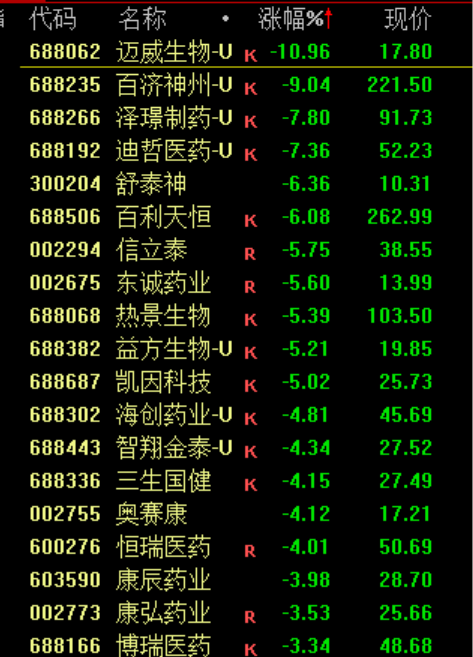
【导读】医药板块,突传利空 大家好,特朗普突然对医药出手了! 特朗普计划降低美国药品价格,医药股暴跌 5月12日,虽然市场整体大涨,但创新药板块却逆市大跌。 | 代码 | 名称 . | 涨幅%1 | 现价 | | | --- | --- | --- | --- | --- | | 688062 | 迈威生物-U K -10.96 | | 17.80 | | | 688532 | 自济神州-U K -9.04 | | 221.50 | | | e8826e | 淺環制药-U K | -1.81 | 91.73 | | | 688192 | 迪哲医药-U K | -7.36 | 52.23 | | | 300204 | 舒泰神 | -6.36 | 10.31 | | | 688206 | 百利天恒 ાર | -6.08 | 262.99 | | | 002294 | 信立泰 R | -5.75 | 38'22 | | | 002675 | 东诚药业 R | -5.60 | 13.99 | | | 688068 | 热景生物 ાર | -5.39 | 103.50 | | | 688382 | 益方生物-U K | ...



降价30%~80%箭在弦上,美国药价改革影响几何?
2 1 Shi Ji Jing Ji Bao Dao· 2025-05-12 10:16
Core Viewpoint - The announcement by President Trump regarding a potential reduction in prescription drug prices by 30% to 80% has led to significant declines in the stock prices of pharmaceutical companies, particularly in the A-share and Hong Kong markets [1][2]. Drug Price Reduction - The U.S. has previously attempted to lower drug prices, with the Medicare program expected to save approximately $6 billion in net costs by 2026 due to new negotiated prices [3][4]. - The recent administrative order aims to link Medicare payments for certain drugs to actual hospital procurement costs, potentially lowering prices by up to 60% [5][6]. Impact on Pharmaceutical Companies - The difference between list prices and net prices can be as high as 90%, meaning companies may only retain 10% of their revenue after negotiations [4][8]. - The administrative order is expected to lead to greater price reductions than previously anticipated, impacting pharmaceutical companies' revenue [4][10]. Medicaid and Medicare Considerations - Analysts suggest that the proposed price reductions may primarily affect Medicaid, with limited impact on Medicare due to existing price buffers [2][8]. - The IRA allows Medicare to negotiate prices for certain high-cost drugs, but the complexity of the process has resulted in lower-than-expected savings [9][10]. Future Outlook - The potential for significant changes in drug pricing policies remains uncertain, with the possibility of further negotiations and adjustments to the IRA [10][11]. - The pharmaceutical industry faces challenges due to the pressure of price negotiations and the potential for reduced market access for certain drugs [11].
小细胞肺癌:中国管线全球领先,研发聚焦三大新领域
KAIYUAN SECURITIES· 2025-05-12 06:44
Investment Rating - The investment rating for the biopharmaceutical industry is "Positive" (maintained) [2] Core Insights - The report highlights the aggressive nature of small cell lung cancer (SCLC), with extensive stage SCLC accounting for approximately 75% of cases, which often rely on systemic treatment and have a poor prognosis [6][21] - The first-line treatment for extensive stage SCLC primarily involves PD-1/PD-L1 immunotherapy combined with doublet chemotherapy, while there are limited approved drugs for later-line treatments, indicating a significant unmet clinical need [24][30] - The report identifies three key areas of focus for research and development in the SCLC field: Antibody-Drug Conjugates (ADC), DLL3 T-cell engagers (TCE), and next-generation immune-oncology (IO) therapies [30][34] Summary by Sections 1. SCLC Overview - SCLC accounts for about 15%-20% of all lung cancer cases, with a high incidence of early metastasis [18][19] - The majority of SCLC cases are extensive stage, which has a poor prognosis and relies heavily on systemic therapies [21][22] 2. Treatment Landscape - The standard treatment for extensive stage SCLC has been established as a combination of chemotherapy and PD-1/PD-L1 immunotherapy, but the overall prognosis remains poor [24][25] - The NCCN and CSCO guidelines recommend various treatment options, including the recent inclusion of Tarlatamab as a preferred second-line treatment [28][29] 3. Research and Development Focus - ADCs are rapidly advancing in the SCLC field, targeting multiple hot spots such as B7-H3, DLL3, and TROP-2, with no ADC products currently approved for SCLC [37][38] - DLL3 TCEs, particularly Tarlatamab, have shown promising early data and are expected to reshape the treatment landscape for SCLC [30][31] - Next-generation IO therapies are being developed to challenge the current PD-L1 standard in first-line SCLC treatment [8][36] 4. Investment Recommendations - The report suggests that companies with strong pipelines in the SCLC space, such as Zai Lab, Zai Lab-U, Innovent Biologics, and others, are likely to benefit from the anticipated growth in the market as new data emerges [9]




金价大跌,日韩股市高开!特朗普将签署!
Zheng Quan Shi Bao Wang· 2025-05-12 01:22
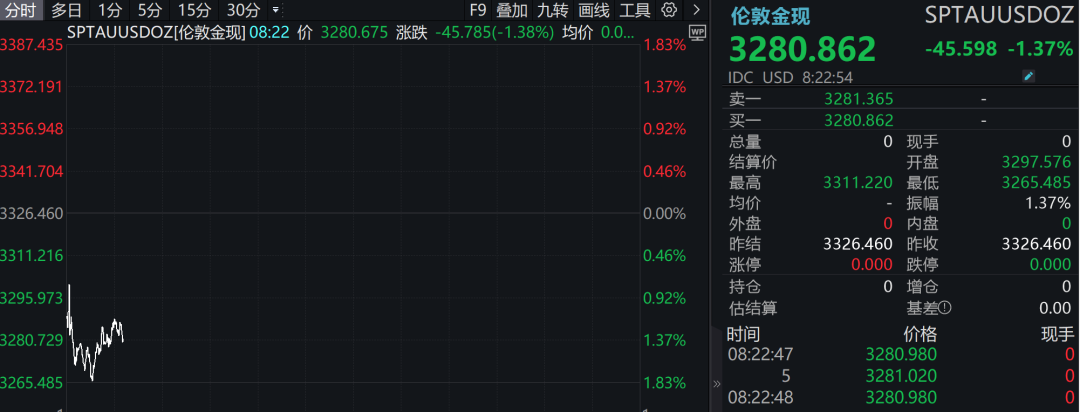
Group 1: Gold Market - The international gold spot price opened lower on Monday, with a current quote of $3280.862 per ounce, down over $45, representing a decline of 1.37% [1][2][7] - The significant drop in gold prices is attributed to the easing of geopolitical tensions, including ceasefires in the India-Pakistan and Russia-Ukraine conflicts [7][8] Group 2: Stock Market - Most Asia-Pacific stock markets opened higher, with the KOSPI200 and the Korea Composite Index rising by 0.82% and 0.74% respectively, while the Nikkei 225 index increased by 0.29% [2][3] - U.S. stock index futures also showed collective gains, with notable increases in major tech stocks such as Tesla, which rose over 4% [3] Group 3: Pharmaceutical Sector - Japanese pharmaceutical stocks experienced significant declines following U.S. President Trump's announcement of an executive order aimed at reducing prescription drug prices by 30% to 80% [5][6] - Major pharmaceutical companies like Chugai Pharmaceutical and Takeda Pharmaceutical saw drops exceeding 5% [5][6] Group 4: Trade Negotiations - Recent developments in trade negotiations, including constructive talks between China and the U.S., have contributed to the decline in gold prices and the rise in stock markets [8][9] - Japan's Prime Minister reiterated the demand for zero tariffs on exports to the U.S., particularly concerning the automotive sector, emphasizing the importance of maintaining investment and job creation in the U.S. [9]
誉衡药业(002437) - 002437誉衡药业投资者关系管理信息20250508
2025-05-08 11:06
Group 1: Collaboration and Product Development - The company has maintained a nearly ten-year partnership with Daiichi Sankyo, expanding from a single product in 2015 to six products, including Olmesartan Medoxomil tablets and others, with a focus on cardiovascular treatments [2][3] - The company plans to continue expanding collaborations with Japanese firms, particularly in the cardiovascular treatment sector [2] Group 2: Market Performance and Sales - After the centralized procurement of Injection Multivitamins (12), prices decreased, but sales volume increased, with a 40% growth in sales volume and over 1.1 billion CNY in revenue in 2024 [3] - The company holds over 80% market share in the Injection Multivitamins (12) market, with three manufacturers currently competing [3] - Sales of the product "Dipeptide Injection" have shown a stable growth of nearly 10% in 2024 [4] Group 3: Product Portfolio and Future Prospects - Core products from the subsidiary Pude Pharmaceutical include Ginkgo Biloba Injection and others, which have maintained strong market positions [3] - The product "Anbrain Pills" achieved a revenue of 182 million CNY in 2024, an increase of over 80% year-on-year, with significant growth potential due to its unique market position [7] - The company has over 20 projects under research, focusing on differentiated products in areas like cardiovascular and orthopedic treatments [9] Group 4: Financial Performance and Challenges - The company's revenue for 2024 was 2.441 billion CNY, a decrease of 7.06% year-on-year, primarily due to strategic decisions affecting product procurement [9] - Total assets have declined due to measures taken to repay bank loans and dispose of idle assets [9] - The company reported a goodwill of 369 million CNY as of the end of 2024, with no signs of impairment [9] Group 5: Management Structure - The company's board consists of six members, with Shen Zhenyu as the chairperson and Guo Lei Feng as the general manager [10] - The management model adheres to legal regulations, with daily operations managed by the core management team [10]

阿斯利康一季度在华营收同比增长5% 或因涉嫌非法进口药品面临最高800万美元罚款
Mei Ri Jing Ji Xin Wen· 2025-04-30 09:23
Core Insights - AstraZeneca reported Q1 2025 revenue of $13.588 billion, a 10% year-over-year increase, driven by double-digit growth in oncology and biopharmaceuticals [1] - The company reaffirmed its full-year guidance, expecting high single-digit revenue growth and low double-digit core earnings per share growth for 2025 [1] Revenue Breakdown - In Q1 2025, AstraZeneca's revenue from the US market was $5.646 billion, a 10% increase, while revenue from China was $1.805 billion, a 5% increase, accounting for 13% of the company's global market share [1] - The oncology segment generated $5.643 billion, a 13% increase, representing 42% of total revenue, remaining the primary revenue source [2] Legal Matters - AstraZeneca is under investigation for allegedly evading import taxes exceeding $1.6 million related to the drug Enhertu, with potential fines ranging from $1 million to $8 million if found liable [1] - The company received a notice regarding alleged violations of personal information rights, asserting no illegal gains from such actions and pledging cooperation with Chinese authorities [2] Product Performance - Enhertu's global sales rose from $879 million in the previous year to $1.086 billion in Q1 2025, with a significant contribution from the Chinese market, where sales increased by 57.1% [3] - Following its inclusion in China's National Reimbursement Drug List, Enhertu has seen rapid growth in indications for HER2-positive and HER2-low expressing breast cancer [3]

阿斯利康再披露中国区涉嫌走私及侵犯公民信息案件进展
Xin Lang Cai Jing· 2025-04-30 03:43
Core Viewpoint - AstraZeneca is currently facing two significant investigations in China regarding illegal drug imports and the infringement of personal information, which could lead to substantial financial penalties and reputational damage [1][2][4]. Group 1: Illegal Drug Import Investigation - AstraZeneca has received a notice from the Shenzhen Customs Anti-Smuggling Bureau indicating that the company is suspected of evading import taxes amounting to over $1.6 million [1]. - The drug involved in this case is Enhertu (deruxtecan), which was approved for sale in China in February 2023 [1]. - If found liable, AstraZeneca could face fines ranging from one to five times the unpaid import taxes [1]. Group 2: Personal Information Infringement Investigation - The company has also received a notice from the Bao'an District Public Security Bureau regarding allegations of infringing on personal information, stating that AstraZeneca has no illegal gains from this behavior [2]. - AstraZeneca has committed to cooperating fully with the relevant Chinese authorities [2]. Group 3: Financial Performance and Market Impact - Enhertu generated global sales of $1.086 billion in Q1 2025, with approximately $68 million coming from China, reflecting a 57.1% year-on-year growth [5]. - The drug is indicated for several types of cancer, including HER2-positive breast cancer and HER2-mutant non-small cell lung cancer [5]. - The previous investigation regarding illegal drug imports involved Imfinzi and Imjudo, with tax evasion amounts reported at $900,000 [4]. Group 4: Executive Investigation and Company Actions - The ongoing investigations are linked to the detention of Wang Lei, AstraZeneca's Global Executive Vice President and China President, who is cooperating with the investigation [5][6]. - The investigations are said to focus on individuals rather than the company as a whole, and are not related to previous insurance fraud cases [6]. - AstraZeneca has made significant investments in China, including a $2.5 billion plan to establish a new global strategic R&D center in Beijing [7].
阿斯利康在华面临800万美元新罚款?公司回应了
2 1 Shi Ji Jing Ji Bao Dao· 2025-04-30 01:37
Core Viewpoint - AstraZeneca may face a new fine of $8 million in China related to unpaid taxes on the breast cancer drug Enhertu, in addition to a potential fine of up to $4.5 million for two other cancer drugs, Imfinzi and Imjudo [1][2]. Group 1: Financial Performance - Enhertu's sales for the fiscal year 2024 are projected to be ¥552.8 billion (approximately $3.654 billion), representing a year-on-year growth of 39.6%, with revenue from China at ¥10.3 billion (about $0.68 billion), up 57.1% year-on-year [1]. - For fiscal year 2025, Enhertu's revenue is expected to reach ¥662.1 billion (approximately $4.377 billion) [1]. - In the first quarter of this year, Enhertu's sales amounted to $1.086 billion [1]. Group 2: Regulatory Issues - AstraZeneca is under investigation for allegedly failing to pay import taxes, with the Shenzhen Customs issuing a notice indicating potential tax evasion of over $1.6 million related to Enhertu [2]. - The company has also received a notice from the Shenzhen Public Security Bureau regarding allegations of infringing on personal information, but claims no illegal gains from such actions [3]. - AstraZeneca has stated its commitment to cooperate fully with Chinese authorities regarding these investigations [3]. Group 3: Market Position - Enhertu has covered 90% of the metastatic breast cancer population and received approval for a sixth indication in the U.S. for specific types of breast cancer [2]. - The company has submitted a new indication application for Enhertu in China as of April this year [2].
阿斯利康一季报:中国区收入18亿美元,ADC药物驱动新增长
2 1 Shi Ji Jing Ji Bao Dao· 2025-04-29 10:00
Core Insights - AstraZeneca reported Q1 2025 revenue of $13.588 billion, a 10% year-over-year increase, with product sales reaching $12.875 billion, up 9% [1] - The company’s R&D investment was $3.159 billion, reflecting a 15% increase [1] - The U.S. market contributed $5.646 billion, a 10% increase, while China contributed $1.805 billion, a 5% increase, making China the third-largest market for AstraZeneca [1] Financial Performance - Revenue by disease area: Oncology contributed $5.643 billion (up 13%), CVRM (Cardiovascular, Renal, and Metabolic diseases) contributed $3.322 billion (up 13%), R&I (Respiratory and Immunology) contributed $2.084 billion (up 13%), V&I (Vaccines and Immune Therapies) contributed $0.225 billion, and Rare Diseases contributed $2.042 billion [3] - Top-selling products: Farxiga (Dapagliflozin) generated $2.057 billion, Tagrisso (Osimertinib) generated $1.679 billion (up 8%), and ADC drug, Trastuzumab deruxtecan, generated $1.086 billion [3] Market Dynamics - The ADC market in China is highly competitive, with significant growth expected; the HER2 ADC market is projected to grow from $0.6 billion in 2022 to $8.4 billion by 2030, with a CAGR of 39% [5] - Trastuzumab deruxtecan has rapidly expanded its indications since its approval in China in February 2023, benefiting from policy support for innovative drugs [4][5] Strategic Initiatives - AstraZeneca is focusing on innovation and local partnerships to navigate the challenges in the Chinese pharmaceutical market, including collaborations with local companies for clinical research [7][8] - The company is diversifying its pipeline to mitigate risks associated with single products, particularly in the ADC space [6][9] Future Outlook - AstraZeneca's ability to convert its clinical pipeline into sustainable revenue will be crucial for its growth in the coming years, especially in light of increasing competition and market pressures [9]