洋河股份

Search documents
洋河半年报解码:中高档酒毛利率逆势上扬,年轻社交场里的“绵柔破局”
Zheng Quan Zhi Xing· 2025-08-26 02:45
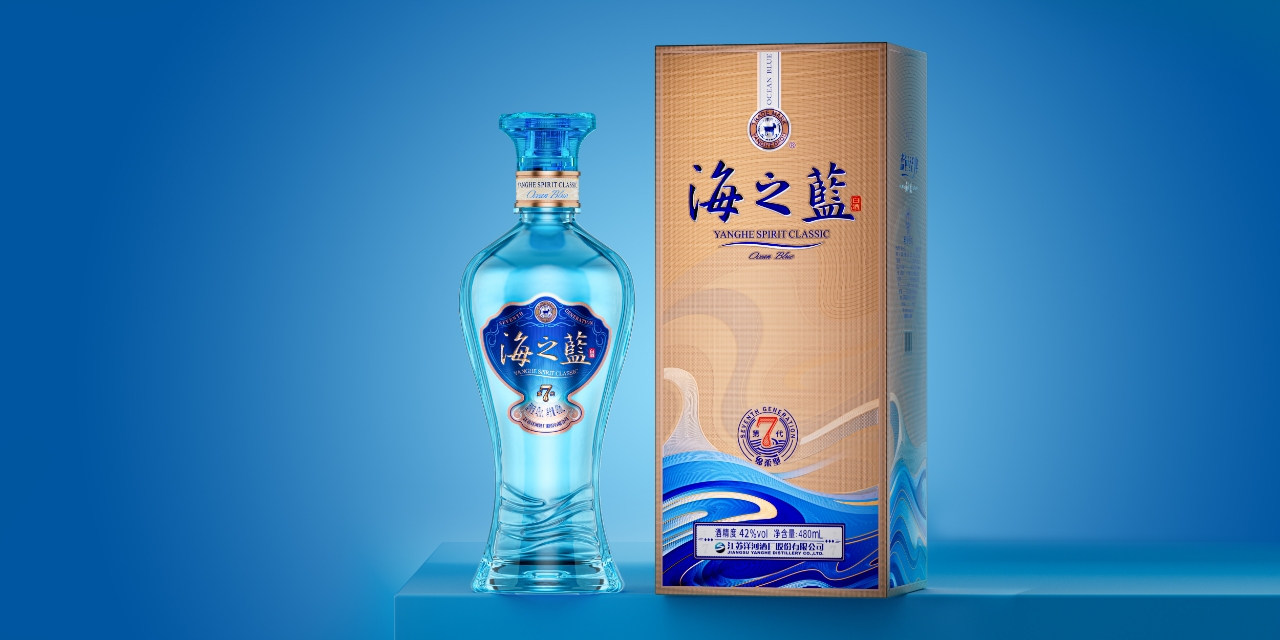
Core Viewpoint - The liquor industry is undergoing a deep adjustment cycle, with leading companies facing significant pressure. In this context, Yanghe Co., Ltd. has reported revenue of 14.796 billion yuan and a net profit of 4.344 billion yuan in the first half of the year, demonstrating strategic resilience during the cycle [1] Group 1: Company Performance - Yanghe's revenue in Jiangsu, its home market, reached 7.12 billion yuan, accounting for nearly half of its total revenue [1] - The company has optimized its dealer system, enhancing efficiency and deepening market penetration both domestically and in external markets [1] - The seventh generation of Hai Zhi Lan has been upgraded, continuing its legacy of selling 10 million bottles annually, while the Dream Blue Handcrafted series has established itself in the high-end market with "true vintage" certification [1][6] Group 2: Strategic Focus - Yanghe is implementing a "Four Focus" strategy, concentrating on its leading brands, mid-range and next-high-end price segments, domestic markets, and core business [2] - The seventh generation of Hai Zhi Lan has been launched with an extended base liquor aging of over three years, enhancing its appeal in the consumer market [2] Group 3: Market Positioning - The Yanghe Daqu high-end light bottle series has shown strong competitive differentiation, selling over 10,000 bottles within 48 hours of its pre-sale on JD.com [4] - Tian Zhi Lan has become a benchmark product in the mid-range segment, penetrating key scenarios such as business banquets and wedding gifts [6] Group 4: Consumer Engagement - Yanghe is focusing on consumer insights and long-term value, aligning its products with the emotional values of younger consumers through various activities [7] - The company has launched events like the Tian Zhi Lan Fun Run and the "Super Fan Festival" to engage younger demographics and enhance brand interaction [7] Group 5: Inventory and Supply Chain Management - Yanghe has proactively slowed its operational pace to alleviate pressure on dealers and reduce inventory, resulting in a 33.96% year-on-year decrease in white liquor inventory [8] - The company maintains a robust base liquor reserve of 70,000 cellars and 700,000 tons of original liquor, supporting its product quality claims [8]


中国白酒追踪-市场情绪从低位回升,需求仍在逐步改善;茅台 - 五粮液批发价走弱-China Spirits Tracker_ Market sentiment recovering from low, demand still improving gradually; Moutai_Wuliangye wholesale price weakens
2025-08-26 01:19
Summary of China Spirits Tracker Conference Call Industry Overview - The spirits industry is experiencing a recovery in market sentiment, with investors adopting a "worst is over" perspective as the impact of anti-graft policies normalizes [1][1] - The price-to-earnings (P/E) gap between spirits and A-share indices is nearing a decade low, approximately 2-3x, which is an 18% premium compared to the last decade average of 103% [1][1] - Northbound fund flows into spirits stocks remain low as of the end of Q2 2025 [1][1] Demand and Consumption Trends - Retail demand is gradually improving month-on-month, although banquet consumption is still significantly affected by anti-graft policies, with an estimated 30-50% of commercial banquet demand under policy impact [1][1] - A 30% decline in retail sales for spirits was observed in August due to these ongoing impacts [1][1] - Distributors are cautious with channel stocking, leading to minimal prepayments in July and August [1][1] Company-Specific Insights - **Shede Spirits**: Despite policy challenges, management reported a sequential improvement in retail demand, with some SKUs showing positive bottle-open ratios year-on-year in August [1][1] - The company remains cautiously optimistic about sell-through performance during the upcoming peak seasons [1][1] - Regional performance varies, with Jiangsu and Guangdong under pressure, while Shandong, Hebei, and Sichuan show resilience [1][1] Price Trends - **Moutai**: The wholesale price of original case Feitian Moutai decreased by RMB 65 from RMB 1,910 to RMB 1,845, while unpacked prices fell by RMB 55 from RMB 1,875 to RMB 1,820 [5][5] - Other Moutai SKUs also saw price declines, with significant drops in various products [5][5] - **Wuliangye**: The wholesale price decreased by RMB 90 to RMB 860 and RMB 80 to RMB 835 for different product lines [5][5] - **Guojiao 1573**: Prices remained stable at RMB 835 [5][5] Market Focus - The upcoming peak retail season, particularly around the Mid-Autumn Festival on October 6, 2025, is a key focus for the industry [1][1] - The direction of future policies, including property-related policies and clarifications on anti-graft measures, will significantly influence market dynamics [1][1] Additional Developments - Moutai launched a new full-case specification on August 14, 2025, priced 30% lower than previous offerings [17][17] - ZJLD's chairman is actively building personal branding and engaging with merchants to boost sales [17][17] - Gujing launched a new product targeting younger consumers, emphasizing a minimalist design and mix-drinking scenarios [17][17] Conclusion - The spirits industry is navigating through a challenging environment with cautious optimism as demand begins to recover. Key players are adjusting strategies to adapt to changing market conditions and consumer preferences while keeping an eye on regulatory impacts and upcoming seasonal opportunities [1][1][1]




中银证券:给予洋河股份买入评级
Zheng Quan Zhi Xing· 2025-08-26 00:08
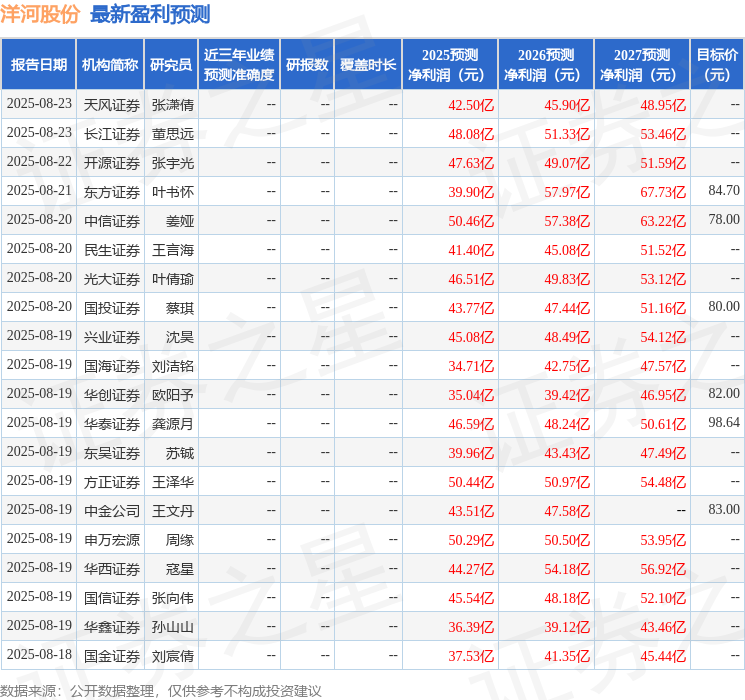
Core Viewpoint - The company is undergoing a deep adjustment, with a significant decline in revenue and net profit in the first half of 2025, but is expected to benefit from reforms in the future, maintaining a buy rating [1][2]. Financial Performance - In 1H25, the company achieved revenue of 14.8 billion yuan, a year-on-year decrease of 35.3%, and a net profit attributable to shareholders of 4.34 billion yuan, down 45.3% year-on-year [2]. - In 2Q25, revenue and net profit were 3.73 billion yuan and 710 million yuan, respectively, reflecting year-on-year declines of 43.7% and 62.7% [2]. - The company’s sales volume and price per ton in 1H25 decreased by 32.4% and 4.6% year-on-year, respectively [3]. Product and Channel Analysis - Revenue from products priced above 100 yuan and below 100 yuan in 1H25 decreased by 36.5% and 27.2% year-on-year, respectively [3]. - The company has been focusing on core products and managing inventory through various strategies since the second half of 2024, leading to improved channel inventory compared to previous periods [3]. - Revenue from the domestic market in 1H25 was 7.12 billion yuan, down 25.8% year-on-year, while revenue from the external market was 7.39 billion yuan, down 42.7% [3]. Profitability and Financial Stability - As of 1H25, the company’s contract liabilities stood at 5.88 billion yuan, a decrease of 1.15 billion yuan from the previous period [4]. - In 2Q25, the company’s gross profit margin was 73.3%, a year-on-year decrease of 0.4 percentage points, leading to a net profit margin of 18.9%, down 9.6 percentage points year-on-year [4]. Valuation and Future Outlook - The company plans to launch the seventh generation of its product and high-end light bottle liquor to stabilize its consumer base in the second half of 2025 [5]. - The company has committed to a cash dividend of no less than 70% of net profit from 2024 to 2026, with a projected dynamic dividend yield of 6.4% for 2025 [5]. - The adjusted net profit forecasts for 2025, 2026, and 2027 are 4.32 billion yuan, 4.60 billion yuan, and 4.97 billion yuan, respectively, with corresponding year-on-year growth rates of -35.3%, +6.5%, and +8.2% [5].

洋河股份(002304):公司持续深度调整,静待改革成效显现
Bank of China Securities· 2025-08-26 00:01
Investment Rating - The investment rating for the company is "Buy" [1][4][6] Core Views - The company is undergoing a deep adjustment phase, with financial statements being cleaned up, and is expected to gradually emerge from this bottom adjustment period as channel health improves [4][6][9] - The company reported a significant decline in revenue and net profit for the first half of 2025, with revenue of RMB 14.8 billion, down 35.3% year-on-year, and net profit of RMB 4.34 billion, down 45.3% year-on-year [4][10] - The company is focusing on core products and inventory reduction strategies to alleviate channel pressure, with a notable decrease in the number of distributors impacting revenue [9][10] Financial Performance Summary - For 1H25, the company achieved revenue of RMB 14.8 billion, a decrease of 35.3% year-on-year, and a net profit of RMB 4.34 billion, a decrease of 45.3% year-on-year [4][10] - In 2Q25, revenue was RMB 3.73 billion, down 43.7% year-on-year, and net profit was RMB 707 million, down 62.7% year-on-year [10] - The company’s gross margin for 1H25 was 75.0%, a decrease of 0.3 percentage points year-on-year [10] Valuation and Forecast - The company plans to distribute a total cash dividend of no less than 70% of net profit for the years 2024 to 2026, with a minimum of RMB 7 billion (including tax) [6] - The projected net profit for 2025 is RMB 4.32 billion, with a year-on-year decline of 35.3%, followed by a recovery in 2026 with an expected net profit of RMB 4.60 billion, representing a growth of 6.5% [6][8] - The current market capitalization corresponds to a price-to-earnings ratio (PE) of 25.2X for 2025, 23.7X for 2026, and 21.9X for 2027 [6][8]
年份白酒市场繁荣背后: 标准缺失暗藏信任危机
Zheng Quan Shi Bao· 2025-08-25 22:06
Core Insights - The market for aged liquor, particularly in the Chinese baijiu sector, is experiencing significant growth driven by consumer demand for quality and unique flavors, with a compound annual growth rate exceeding 20% over the past five years [4][5] - The lack of standardized definitions and regulations for aged liquor has led to widespread issues of counterfeit products and misleading labeling, creating a trust crisis among consumers [1][5][6] - Major companies are increasingly focusing on the aged liquor segment as a strategic advantage, with brands like Yanghe and Wuliangye launching products that emphasize authenticity and quality [2][3] Market Dynamics - The aged liquor market in China has surpassed a transaction scale of 1300 billion yuan, with projections to reach between 1500 billion and 2000 billion yuan in the next five years [4] - The pricing for aged liquor can vary dramatically, with a bottle of "10-year aged" liquor priced at over a thousand yuan, while non-aged variants range from 200 to 500 yuan [3] - The competition among liquor companies has shifted from market share to establishing authority over the standards of aged liquor, as seen in the rivalry between Yanghe and Jinshiyuan [2] Regulatory Challenges - The absence of a unified standard for defining aged liquor has resulted in confusion among consumers, with different companies using varying criteria for labeling [5][6] - The China Alcoholic Drinks Association has been working on establishing a standard for aged liquor since 2006, but the lack of legal enforcement means many companies remain unregulated [6][7] - Experts suggest that a multi-faceted approach involving stricter regulations, third-party certifications, and consumer education is necessary to restore trust in the aged liquor market [7][8] Strategic Initiatives - Companies are investing heavily in the aged liquor segment, with strategies focusing on quality, branding, and market infrastructure to differentiate themselves [2][3] - The establishment of a blockchain traceability system and stricter regulations on packaging and labeling are recommended to combat counterfeiting and ensure product authenticity [7][8] - Collaborative efforts between industry associations, regulatory bodies, and companies are essential to create a healthy and orderly market for aged liquor [1][8]
迎驾贡酒与今世缘业绩下降白酒行业存量竞争加剧
Xin Lang Cai Jing· 2025-08-25 21:09
Core Insights - The performance of the liquor industry, particularly for companies like Yingjia Gongjiu and Jinshiyuan, has declined, with Jinshiyuan experiencing a smaller decrease compared to Yingjia Gongjiu [1] Company Performance - Yingjia Gongjiu reported a revenue of 3.16 billion yuan, a year-on-year decrease of 16.89%; net profit attributable to shareholders was 1.13 billion yuan, down 18.19%; and the net profit after deducting non-recurring items was 1.09 billion yuan, a decline of 19.94% [2] - Jinshiyuan showed relatively stable performance with a revenue of 6.95 billion yuan, a year-on-year decrease of 4.84%; net profit attributable to shareholders was 2.23 billion yuan, down 9.46%; and the net profit after deducting non-recurring items was 2.22 billion yuan, a decrease of 9.08% [2] - Compared to Jinshiyuan, Yanghe Co. faced a more significant decline, with a revenue of 14.80 billion yuan, a year-on-year decrease of 35.32%; net profit was 4.34 billion yuan [2] Industry Challenges - The liquor industry is entering a period of deep adjustment characterized by stock competition, with the cumulative production of industrial liquor declining by 5.8% year-on-year due to weak consumption and demand differentiation [1] - The cash flow from operating activities for Yanghe Co. plummeted by 69.85%, amounting to 616 million yuan, while its sales volume decreased by 32.35% [2] Strategic Responses - Yingjia Gongjiu is enhancing internal control management with a focus on "quality improvement and efficiency enhancement" by optimizing personnel structure, standardizing pricing systems, and emphasizing research and development, with an R&D investment of 262 million yuan [2] - Jinshiyuan is focusing on "cultural connections," developing three major brands: Guoyuan, Jinshiyuan, and Gaogou, with efforts to strengthen the high-end image of the Guoyuan series and promote new products [2] - Yingjia Gongjiu is positioning itself as an "ecological liquor," with its core product series continuing to perform well and investments in automated production and digital circular economy initiatives [2]


年份白酒市场繁荣背后:标准缺失暗藏信任危机
Zheng Quan Shi Bao· 2025-08-25 18:17
Core Insights - The market for aged liquor, particularly in the Chinese baijiu sector, is experiencing significant growth driven by consumer demand for quality and authenticity [4][7] - The lack of standardized definitions and regulations for aged liquor has led to widespread issues of counterfeit products and consumer distrust [5][6] Group 1: Market Dynamics - The aged liquor market in China has seen a compound annual growth rate of over 20% in the past five years, with the market size surpassing 130 billion yuan and projected to reach between 150 billion and 200 billion yuan in the next five years [4][6] - Major companies like Yanghe and Wuliangye are leveraging their aged liquor offerings as a competitive advantage, with Yanghe launching a product priced at 59 yuan that emphasizes authenticity [2][3] - The pricing for aged liquor can vary dramatically, with a 10-year aged product priced at over 1,000 yuan, while non-aged variants are priced between 200 and 500 yuan [3] Group 2: Industry Challenges - The absence of a unified standard for defining aged liquor has resulted in confusion among consumers, with different companies using varying criteria for age designation [5][6] - The Chinese Alcohol Industry Association has been working on establishing standards since 2006, but the lack of legal enforcement means many companies remain unregulated [6][7] - Issues such as inflated pricing and lack of transparency in the sourcing and production of aged liquor are damaging consumer trust and the overall industry ecosystem [7][8] Group 3: Regulatory and Collaborative Efforts - Industry experts emphasize the need for collaboration among industry associations, regulatory bodies, and companies to create and enforce standards that ensure product quality and consumer trust [7][8] - Proposed measures include implementing third-party certification, enhancing supply chain transparency through blockchain technology, and establishing a blacklist for violators to deter fraudulent practices [8] - The establishment of a comprehensive governance system involving source certification, platform cooperation, and consumer reporting is seen as essential for restoring trust in the aged liquor market [8]
洋河股份: 第八届董事会第十四次会议决议公告
Zheng Quan Zhi Xing· 2025-08-25 16:34
证券代码:002304 证券简称:洋河股份 公告编号:2025-029 江苏洋河酒厂股份有限公司 本公司及董事会全体成员保证信息披露的内容真实、准确、完整, 没有虚假记载、误导性陈述或重大遗漏。 一、董事会会议召开情况 江苏洋河酒厂股份有限公司(以下简称"公司")第八届董事会第十 四次会议,于2025年8月25日以通讯表决方式召开。会议通知于2025年8 月19日以送达和通讯相结合方式发出。本次会议应参与审议表决董事10 人,实际参与审议表决董事10人。本次会议由董事长顾宇先生召集,会 议的召集、召开符合《公司法》等有关法律法规和《公司章程》的规定。 二、董事会会议审议情况 会议以 10 票同意,0 票反对,0 票弃权,审议通过了《关于对外捐 赠的议案》。同意公司捐赠 520 万元,用于开展"贵州贵酒·梦想计划" 公益项目,支持公益助学圆梦活动。 三、备查文件 第八届董事会第十四次会议决议。 特此公告。 江苏洋河酒厂股份有限公司 董事会 ...
白酒意外大涨!踏空资金可能在批量进场了
Sou Hu Cai Jing· 2025-08-25 15:46
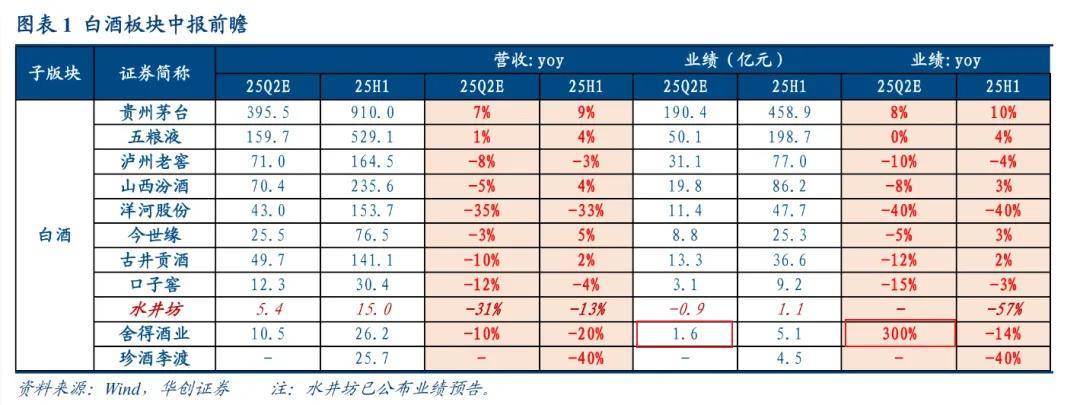
Group 1: Company Performance - Shede Liquor reported a net profit of 440 million yuan for the first half of 2025, a year-on-year decrease of 25% [1] - In the second quarter, the net profit was less than 100 million yuan, showing a year-on-year increase of 140%, which was significantly below the previous forecast of 160 million yuan by brokerage institutions [1] - Despite the poor performance, Shede's stock price did not plummet but instead hit the daily limit up [1] Group 2: Industry Overview - The overall performance of the liquor industry has shown mixed results, with major brands like Kweichow Moutai and Wuliangye experiencing slight revenue growth, while others like Luzhou Laojiao and Yanghe Co. faced declines [2] - The liquor sector has seen a recent surge in stock prices, driven by funds that missed out on previous gains, leading to increased buying in lower-priced stocks [3] - The sentiment in the market suggests a growing "FOMO" (fear of missing out) among investors, particularly in sectors like liquor, real estate, and chemicals, despite the lack of significant improvement in their fundamentals [3]
五粮液推新品猛攻年轻市场!“茅五泸汾洋”集体狂飙,食品ETF(515710)摸高3.48%!
Xin Lang Ji Jin· 2025-08-25 14:56
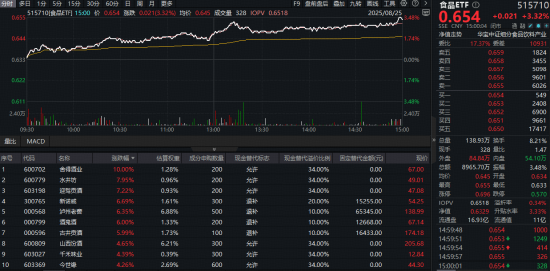
Group 1 - The food and beverage sector experienced significant gains on August 25, with the Food ETF (515710) rising by 3.32%, reaching a peak intraday increase of 3.48% [1][3] - Major liquor stocks saw substantial increases, with Shede Liquor hitting the daily limit, and others like Shui Jing Fang and Ying Jia Gong Jiu rising over 7% [1][3] - The overall market sentiment for the liquor sector is optimistic, driven by new product launches targeting younger consumers and a focus on innovation [2][3] Group 2 - The liquor industry is responding positively to consumption upgrades and the trend towards younger demographics, with leading companies launching lower-alcohol products [3][4] - The current valuation of the food and beverage sector remains relatively low compared to other sectors, presenting a favorable investment opportunity [3][4] - The Food ETF (515710) tracks a specialized food and beverage index, with approximately 60% of its holdings in high-end liquor stocks and 40% in other beverage and food segments [4]