蔚来

Search documents
英利汽车:公司的主要客户为国内知名整车制造商
Zheng Quan Ri Bao Wang· 2025-12-30 11:41
Core Viewpoint - Yingli Automotive (601279) has established deep partnerships with well-known domestic automakers and is expanding its business in the emerging new energy vehicle sector through collaborations with leading companies in the industry [1] Group 1: Client Relationships - The company’s main clients include prominent domestic vehicle manufacturers such as FAW-Volkswagen, Beijing Benz, Volvo Asia Pacific, Brilliance BMW, SAIC Volkswagen, SAIC General Motors, Geely, and FAW Hongqi [1] - Yingli Automotive is progressively promoting its new energy vehicle business and has formed partnerships with notable new energy vehicle companies like BYD (002594), Xpeng, NIO, Polestar, and several well-known North American new energy vehicle firms [1] Group 2: Business Development - The client structure of the company is continuously enriching, indicating a strategic focus on diversifying its customer base within the automotive industry [1]

蔚来能源|写入《2025 汽车行业影响力年鉴》
Jing Ji Guan Cha Bao· 2025-12-30 11:23
(原标题:蔚来能源|写入《2025 汽车行业影响力年鉴》) 在"十四五"规划收官之际,中国汽车产业正在进入新的发展阶段。经济观察报第十九届中国汽车年会暨 《2025汽车行业影响力年鉴》,基于公开数据、市场表现与行业共识,对年度内在技术路径与市场格局 层面产生实际影响的"明亮因子"进行系统梳理。 在汽车产业迈向全面电动化转型的关键阶段,能源服务的创新与布局,已成为衡量企业长期竞争力与用 户体验的重要标尺。蔚来能源 以前瞻的战略眼光、扎实的网络建设、开放的生态合作以及持续演进的 商业模式,重塑电动汽车用户的补能体验,开辟出一条兼具成长性、行业引领性与社会价值的新赛道, 成为2025年备受关注的投资价值标杆。 秉持"让加电比加油更方便"的愿景,蔚来能源累计投入约180亿元,系统构建起"可充、可换、可升 级"的全场景能源服务体系。截至2025年12月,其已在全国布局超过8500座充换电站,形成覆盖"9纵11 横16大城市群"的高速换电网络,1000余座高速换电站联通全国550座城市。在部分基础设施相对薄弱、 但出行需求旺盛的区域,蔚来布局了80余条加电风景线,并向全行业电动车用户开放,助力低碳出行。 2025年,蔚来 ...

港股科网股集体拉升,百度股价大涨超8%
Xin Lang Cai Jing· 2025-12-30 09:45
Group 1 - Baidu Group-SW (09888.HK) experienced a strong performance in the Hong Kong stock market, closing up 8.90% on December 30, becoming the leading stock in the Hang Seng Tech Index [1] - The Hang Seng Tech Index rose by 1.74%, closing at 5578.38 points, with other tech stocks like Horizon Robotics and SMIC also seeing significant gains [1] - Baidu Maps announced a deep collaboration with the autonomous vehicle company New Stone, integrating LD data products into its logistics platform for high-precision mapping services [1] Group 2 - Baidu's Q3 2025 earnings report showed total revenue of 31.174 billion yuan, a year-on-year decline of 7%, primarily due to a drop in core online marketing revenue to 16.566 billion yuan, down approximately 18% [2] - The company reported a net loss attributable to Baidu of 11.232 billion yuan, mainly due to long-term asset impairment of 16.19 billion yuan, while non-GAAP net profit was 3.77 billion yuan, indicating resilience in core business profitability [2] - Morgan Stanley noted a fundamental shift in Baidu's investment narrative, transitioning from a traditional search advertising company to an AI infrastructure provider, with significant revenue growth expected from Kunlun chip sales and GPU computing demand [2] - The revenue from Kunlun chips is projected to increase from approximately 1.3 billion yuan in 2025 to 8.3 billion yuan in 2026, representing a sixfold increase [2] - Research from Shenwan Hongyuan upgraded Baidu's rating to "Buy," forecasting revenues of 128.5 billion, 133.1 billion, and 141 billion yuan for 2025 to 2027 [2] - Dongwu Securities expressed optimism about AI providing new growth opportunities for Baidu, highlighting the company's focus on shareholder returns through ongoing buybacks and maintaining a "Buy" rating [2]

沪指10连阳,AI概念爆发,十余股涨停,港股科网股集体拉升,百度大涨8%
21世纪经济报道· 2025-12-30 07:40
Market Overview - The A-share market experienced a strong upward trend, with the Shanghai Composite Index closing with a 10-day winning streak, while the Shenzhen Component Index and the ChiNext Index rose by 0.49% and 0.63% respectively [1] - The total trading volume in the Shanghai and Shenzhen markets exceeded 2 trillion yuan for the third consecutive trading day, increasing by 3.8 billion yuan compared to the previous trading day [2] Sector Performance - The robotics sector saw significant gains, with multiple stocks hitting the daily limit, including Fenglong Co. with five consecutive limit-ups and Tianqi Co. with four consecutive limit-ups [3] - The AI glasses concept also showed strong performance, with stocks like New Xiang Micro rising nearly 10% and Yingpais rising over 7% [3] - AI-related stocks collectively surged, with over ten stocks in the AI, AI agents, and AIGC sectors hitting the daily limit, including Kute Intelligent and Baijia Qiancheng [3] Hong Kong Market - The Hong Kong stock market also showed strength, with the Hang Seng Index rising over 1% and the Hang Seng Tech Index increasing by more than 2% [5] International Markets - The Japanese and South Korean stock markets closed early due to the New Year's holiday, with the Nikkei 225 Index down 0.37% but showing a strong annual performance, gaining over 10,000 points and up 26.18% for the year [7]



汽车行业2026年投资策略:智驾+出海驱动新增长,机器人开启未来篇章
Huajin Securities· 2025-12-30 06:27
Core Insights - The report emphasizes that the automotive industry will experience new growth driven by "smart driving and overseas expansion" in 2026, with L3-level autonomous driving penetration expected to continue increasing and new energy vehicle (NEV) exports maintaining high growth [2][3] - The report anticipates that the overall export of vehicles will exceed expectations in 2025, with strong momentum for NEV exports in regions such as Europe, the Middle East, and North America, indicating a new growth phase for domestic brands [2] - The report highlights that the L3 window period is clearly defined, with multiple domestic manufacturers set to mass-produce vehicles equipped with advanced driving assistance systems, leading to increased penetration of intelligent components [2] Vehicle Sector - The overall demand in the vehicle market remains stable, with a projected retail sales volume of 2,494 million units in 2026, reflecting a year-on-year growth rate of 1% [45] - NEV sales are steadily increasing, with a retail penetration rate exceeding 50%, and a cumulative retail sales volume of 10.15 million units from January to October 2025, representing a year-on-year growth of 21.9% [13] - The average price of passenger vehicles is on a downward trend, with the average price in the first ten months of 2025 being 170,000 yuan, a decrease of 7,000 yuan from the previous year [19] Component Sector - The report indicates that the trend towards electrification remains unchanged, with the penetration of intelligent components expected to continue rising, benefiting from the ongoing development of the automotive supply chain [2] - The report suggests that the domestic automotive supply chain, combined with overseas expansion, is likely to accelerate in 2026, providing incremental opportunities for relevant component manufacturers [2] Robotics Sector - The report notes that humanoid robots are entering a critical stage of industrialization, with significant demand for complex scene interactions driving the growth of core components, benefiting companies with relevant layouts in the robotics field [2] - The report emphasizes that the core components of humanoid robots will enjoy the dividends of industrial development, with companies positioned in this sector expected to benefit first [2] Low-altitude Economy - The report states that the domestic low-altitude economy has transitioned from a nascent stage to a period of rapid development, with the market scale expected to leap from hundreds of billions to trillions [2] - Several automotive companies are entering the low-altitude economy sector, indicating a promising future for growth [2] Policy and Market Dynamics - The report highlights that the 2026 NEV purchase tax subsidy will be reduced, leading to increased market competition, while the overall trend of NEV penetration and intelligentization is expected to drive the rise of domestic brands [2][38] - The tightening of "two new" policies is anticipated to increase the marginal cost for consumers, with various regions adjusting or suspending vehicle replacement and scrapping subsidy policies [39][40]





百度大涨近8%,中芯国际涨超4%
Di Yi Cai Jing Zi Xun· 2025-12-30 06:23
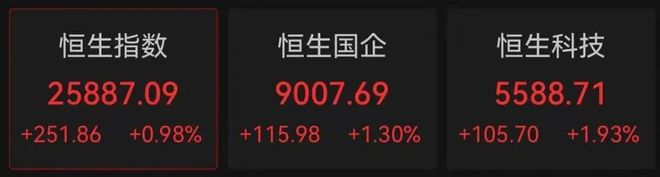
Group 1 - The Hong Kong stock market saw an upward trend, with the Hang Seng Technology Index rising nearly 2% and the Hang Seng Index increasing by almost 1% [1] - Technology stocks experienced significant gains, with Baidu surging nearly 8%, Horizon Robotics rising over 5%, and SMIC increasing by more than 4% [3][4] - Other notable performers included NIO, SenseTime, Xiaomi Group, and NetEase, all of which also saw positive movements in their stock prices [3][4] Group 2 - Oil stocks led the gains, with China National Offshore Oil Corporation rising over 4% and China Petroleum & Chemical Corporation increasing by more than 3% [5] - Other oil-related stocks such as Sinopec and Kunlun Energy also showed positive performance, with gains of 2.83% and 0.54% respectively [5]

百度大涨近8%,中芯国际涨超4%
第一财经· 2025-12-30 06:11
石油股涨幅居前,截至发稿,中国海洋石油涨超4%,中国石油股份涨超3%。 | 甲国海峡圆叶 | 21.520 | 4.26% | | --- | --- | --- | | 0883.HK | | | | 中国石油股份 0857.HK | 8.530 | 3.27% | | 中国石油化工股份 | 4.720 | 2.83% | | 0386.HK | | | | 中海湘田服务 | 7.100 | 1.87% | | 2883.HK | | | | 昆仑能源 | 7.390 | 0.54% | | 0135.HK | | | | 年T | | | 编辑 | 钉钉 科网股集体拉升,百度大涨近8%,地平线机器人涨超5%,中芯国际涨超4%,蔚来、商汤、小米集 团、网易等跟涨。 | 百度集团-SW | 128.600 | 7.98% | | --- | --- | --- | | 9888.HK | | | | 地平线机器人-W | 8.940 | 5.55% | | 9660.HK | | | | 中商国际 | 72.500 | 4.24% | | 0981.HK | | | | 厨来-SW | 41.760 | 3. ...

金元证券每日晨报-20251230
Jinyuan Securities· 2025-12-30 05:10
Core Insights - The report highlights the performance of major stock indices across different markets, indicating a mixed trend with slight gains in European markets and declines in US and Asian markets [10][11][12] - Key developments in international and domestic news include significant meetings between US and Ukrainian leaders, the announcement of a new tariff adjustment plan by the Chinese government, and ongoing regulatory efforts to enhance fair competition in the market [11][12][13] International Market Overview - European markets showed slight gains with the DAX index up 0.05% at 24351.12 points, and the CAC40 index up 0.1% at 8112.02 points, while the FTSE 100 index fell 0.04% to 9866.53 points [10] - In the US, the Dow Jones index decreased by 0.51% to 48461.93 points, the S&P 500 index fell 0.35% to 6905.74 points, and the Nasdaq dropped 0.5% to 23474.35 points [10] - The Asia-Pacific market saw the Hang Seng index decline by 0.71% to 25635.23 points, while the KOSPI index increased by 2.2% to 4220.56 points [10] Domestic News - The State Council's Tariff Commission released the 2026 Tariff Adjustment Plan, which will implement temporary import tariffs below the most-favored-nation rate on 935 items starting January 1, 2026 [11] - The Market Supervision Administration emphasized the need to deepen fair competition governance and enhance anti-monopoly enforcement as part of its 2026 key tasks [12] Key Company Developments - TSMC announced that its 2nm technology has commenced mass production as scheduled in the fourth quarter [13] - SoftBank agreed to acquire DigitalBridge, a data center investment company, for $4 billion as part of its AI strategy [13] - Toray Industries indicated a new round of price increases in the carbon fiber market starting January 2026, with price hikes ranging from 10% to 20% [13] A-Share Important Announcements - Ganfeng Lithium received a notice of prosecution from the Yichun Public Security Bureau for suspected insider trading, but its operations remain normal [13] - Longpan Technology will reduce production on some lines for maintenance starting January 1, 2026, expecting to decrease lithium iron phosphate output by approximately 5,000 tons [13] - Rising Technology obtained AS 9100D certification for aerospace quality management and has begun supplying products for Chinese commercial aircraft [13] Research Recommendations - The fixed income report indicates that the RMB exchange rate has broken 7.0, leading to a rebound in the bond market, with overall yield declines observed [14] - The low-altitude economy industry report highlights several policy developments and company advancements, including the launch of low-altitude financial services and the successful ignition of a high-power rotor engine by Dong'an Power [14] - The electronic sector report discusses Nvidia's potential acquisition of Groq to enhance its competitive edge in the inference market, indicating a shift towards mixed processing capabilities in future GPU architectures [15] - The computer industry monthly report notes a 2.88% increase in the CSI 300 index, while the computer industry index fell by 1.39%, suggesting ongoing adjustments despite positive catalysts in the AI sector [16]
贺岁档“助攻”,20cm涨停!
Zhong Guo Ji Jin Bao· 2025-12-30 04:49
Market Overview - The A-share market showed mixed performance with the Shanghai Composite Index down 0.1% at 3961.21 points, while the Shenzhen Component Index rose 0.23% and the ChiNext Index fell 0.06% [2][3] - The total trading volume in the Shanghai and Shenzhen markets was 1.29 trillion yuan, a decrease of 101.9 billion yuan compared to the previous trading day [3] Film Industry - The film sector experienced a significant surge, with the 2025 New Year box office reaching 5.245 billion yuan, marking the highest level in nearly eight years [6][5] - Notable stocks in the film sector included Baida Qiancheng, which hit the daily limit with a 20% increase, and Jin Yi Film, which also reached the limit [5][6] Robotics Sector - The humanoid robotics sector continued its upward trend, with stocks like Wuzhou Xinchun and Tianqi Co. both hitting the daily limit of 10% [7][8] - The establishment of a standardization committee for humanoid robots and embodied intelligence was announced, aimed at enhancing high-quality standards and promoting technology application [9] Semiconductor Industry - The semiconductor sector saw significant gains, with stocks like Zhuosheng Micro rising over 10% and Dongxin Co. increasing by over 6% [10][11] - A major acquisition by SMIC was announced, involving the purchase of a 49% stake in a subsidiary for 40.6 billion yuan, which will result in SMIC owning 100% of the subsidiary [12] Aerospace Sector - The commercial aerospace sector was active, with China Satellite and China Satcom both achieving new highs, and several stocks recording daily limits [13][18] - A new guideline was released to facilitate financing for commercial rocket companies, aimed at supporting the industry's growth and technological advancements [18]



异动盘点1230 |石油股早盘上扬,昭衍新药跌超6%;铜矿板块集体下挫,Ultragenyx Pharmaceutical股价暴跌42.32%
贝塔投资智库· 2025-12-30 04:06
Group 1 - Zijin Mining (02899) rose nearly 3% after announcing the completion of the main construction and core equipment installation for the second phase of the Xizang Julong Copper Mine, marking a key step before production [1] - Asia Pacific Satellite (01045) increased over 5.4%, with a cumulative rise of nearly 30% over the past five trading days, as it operates multiple satellites under China Satcom [1] - Zhaoyan New Drug (06127) fell over 6% following an announcement that its actual controller plans to reduce holdings by up to 14.98 million shares, representing 20.0466% of his holdings and 1.99873% of the company's total share capital [1] - Zhongwei New Materials (02579) surged nearly 7% after signing a strategic cooperation framework agreement with Xinwanda for solid-state batteries [1] Group 2 - Dongyue Group (00189) rose nearly 5% as the long-term contract prices for refrigerants were confirmed, with R32 priced at 61,200 yuan/ton (+1,000 yuan) and R410A at 55,100 yuan/ton (+1,900 yuan) [2] - MicroPort Scientific Corporation (02252) increased over 1.2%, reporting that its core products' cumulative order volume exceeded 230 units [2] - Oil stocks saw gains, with CNOOC (00883) up 4.17%, PetroChina (00857) up 2.91%, and Sinopec (00386) up 1.31%, driven by a rise in international crude oil prices due to geopolitical tensions [2] - Baidu Group (09888) rose nearly 7% after announcing a partnership with Uber and Lyft to launch a robotaxi pilot project in the UK by 2026 [2] Group 3 - NIO (09866) rose over 2.4% after announcing that it successfully delivered over 40,000 units of its new ES8 model within 100 days of the official delivery start [3] - Damai Entertainment (01060) increased nearly 5%, with the total box office for the 2025 New Year’s season reaching 5.245 billion yuan as of December 28 [3] Group 4 - Copper mining stocks collectively declined, with Hudbay Minerals (HBM.US) down 4.01%, Taseko Mines (TGB.US) down 3.1%, and Ero Copper (ERO.US) down 1.64%, as international copper futures fell over 4% [5] - Some cryptocurrency-related stocks fell, with IREN Ltd (IREN.US) down 2.21% and Circle (CRCL.US) down 0.94% [5] - NIO (NIO.US) rose 4.71% in the US market, echoing its performance in Hong Kong [6] - The Nasdaq Golden Dragon Index fell nearly 1%, with major Chinese concept stocks declining, including Alibaba (BABA.US) down 2.46% and Xpeng Motors (XPEV.US) down 1.35% [6]