中国星网

Search documents
中国卫通:未承担中国星网低轨卫星的运维等相关任务
Ge Long Hui· 2025-11-17 07:46
Core Viewpoint - China Satcom (601698.SH) is currently not responsible for the operation and maintenance tasks related to China Star Net's low-orbit satellites, focusing instead on managing 18 geostationary communication and broadcasting satellites to provide reliable broadcasting services [1] Group 1 - The company operates 18 geostationary communication and broadcasting satellites [1] - It provides safe and stable broadcasting television signal transmission for the public [1] - The company offers dedicated services for government departments and important industry clients [1] Group 2 - The company ensures timely and reliable communication support for major events and emergency rescue operations [1]

河北证监局:以强监管防风险促高质量发展 全力服务雄安新区建设
Zheng Quan Shi Bao Wang· 2025-11-14 08:35
Core Viewpoint - The Hebei Securities Regulatory Bureau emphasizes the importance of strong regulation, risk prevention, and promoting high-quality development in building a resilient capital market tailored to the needs of Hebei and Xiong'an New Area [1] Regulatory Approach - The bureau adheres to a strict regulatory philosophy, enhancing the effectiveness and deterrence of on-site supervision to combat various illegal activities [1] - It implements a proactive risk prevention strategy focusing on early identification, warning, exposure, and resolution, particularly in key areas to maintain systemic financial stability [1] Support for Development - The bureau prioritizes serving the Xiong'an New Area by organizing meetings for newly guided enterprises, clarifying regulatory requirements, and addressing capital market concerns [1] - It conducts specialized activities to empower industrial clusters in Hebei, providing professional services for companies seeking to go public [1] - The bureau encourages enterprises to expand direct financing channels through IPOs, refinancing, and bond issuance, while guiding capital elements towards Xiong'an New Area to foster a virtuous cycle of capital and industry development [1]
“十四五”以来雄安新区累计完成投资工作量超万亿元
Xin Hua Wang· 2025-11-14 06:48
Group 1 - The core viewpoint of the news is that Xiong'an New Area has achieved significant investment and development milestones during the "14th Five-Year Plan" period, with a focus on high-quality growth and urbanization [1][2] - Since the beginning of the "14th Five-Year Plan," Xiong'an New Area has maintained an annual investment scale of 200 billion yuan, with a cumulative investment exceeding 1 trillion yuan, and an average annual GDP growth rate of 17.1% [1] - Major enterprises, including China Star Network, China Huaneng, and China Sinochem, have established their headquarters in Xiong'an, contributing to the area's economic development [1] - The area has seen the completion of over 4,000 enterprises from Beijing and the establishment of 278 applications for "same-city" administrative services [1] Group 2 - Xiong'an has implemented the largest-scale systematic governance of Baiyangdian, stabilizing water quality at Class III standards and increasing the number of wild bird species to 296, which is an increase of 90 species since the establishment of the New Area [2] - The forest coverage rate has risen from 11% before the establishment to 35.1%, and a city park system is gradually taking shape [2] - The area has successfully resettled 169,000 returning residents and built 62,600 high-quality market-oriented housing units, along with the establishment of 105 new primary and secondary schools and kindergartens [2] - Public services have improved, with operational facilities including 80 elderly care services, 15 health service stations, and 75 child-friendly practice bases [2]
千年之城拔节生长
Zhong Guo Jing Ying Bao· 2025-11-07 19:39
Core Insights - Xiong'an New Area is transitioning from a grand blueprint to a tangible city with the establishment of central enterprise headquarters and high-tech industry clusters, marking a significant phase in its development [3][4] - The focus of Xiong'an's development has shifted towards high-quality construction, high-level management, and effective functional relief from Beijing, emphasizing a solid foundation for future growth [3][5] Industry Development - Over 200 high-tech enterprises have settled in Xiong'an, with key industries including satellite internet, artificial intelligence, and new materials being prioritized for development [4][6] - The aerospace information and satellite internet sectors are identified as foundational industries, with 62 companies already established in the aerospace information field [6] Ecological Progress - Xiong'an has implemented an ecological-first approach, achieving a forest coverage rate increase from 11% to 35% and planting 481,000 acres of trees as part of the "Thousand-Year Forest" project [8] - The water quality of Baiyangdian has remained stable at Class III for four consecutive years, with significant improvements in biodiversity, including an increase in wild bird species [8] Social Development - Xiong'an is enhancing public services, including education, healthcare, and elderly care, while creating job opportunities through traditional industry upgrades, providing over 400,000 job openings [9] - The area is actively promoting urban-rural integration and has established various agricultural and digital innovation centers [9] Urban Planning and Infrastructure - Xiong'an is developing a comprehensive transportation network and utilizing underground space to alleviate urban issues, aiming to create a future city without "urban diseases" [11][12] - As of now, Xiong'an has developed nearly 215 square kilometers, with a total construction area of 55.88 million square meters and 5,127 buildings completed [12]

华西证券:低轨卫星拐点已至 国内组网加速
智通财经网· 2025-11-07 08:39
Core Insights - The low Earth orbit (LEO) satellite market is becoming a strategic focus in the US-China competition, with the principle of "first come, first served" governing orbital and frequency resources [1][2] - SpaceX has launched over 10,000 satellites, with more than 8,600 currently operational, while China has only about 300 LEO satellites in orbit, indicating a significant gap that necessitates accelerated deployment [1][2] Group 1: Market Dynamics - The LEO orbit can accommodate approximately 60,000 satellites, and strict international regulations require timely launches to retain frequency and orbital rights [2] - SpaceX has applied for resources for 42,000 satellites, while Amazon's Kuiper plans to deploy 3,236 satellites; China's China Star Network and Shanghai Yuanxin plans to deploy around 13,000 and 15,000 satellites, respectively [2] Group 2: Launch Capacity and Technology - Rocket launch capacity is a critical metric, with SpaceX's Falcon 9 capable of 22.8 tons to LEO, while China's Long March 8 has a capacity of only 7 tons, highlighting a significant disparity [3] - The development of commercial rockets and reusable technology is progressing rapidly in China, with several private companies achieving successful launches and narrowing the gap with international standards [3] Group 3: Cost Reduction Strategies - SpaceX has reduced the cost of individual satellites to below $500,000 through mass production, while China's satellite manufacturing is also lowering costs via modular design and batch production [4] Group 4: Market Opportunities - LEO satellites are expected to integrate deeply with terrestrial 5G networks, enabling global seamless coverage, with significant advancements anticipated by 2025 [5] - The combination of artificial intelligence (AI) and LEO satellites is leading to the development of next-generation intelligent satellite systems, with major tech companies like NVIDIA and Google planning to deploy AI-capable satellites [5] Group 5: Future Developments - China's LEO satellite deployment is entering a rapid networking phase, with recent successful launches indicating an acceleration in the pace of deployment [6][7] - The domestic market is moving towards a "constellation deployment" phase, transitioning from "single satellite customization" [7] Group 6: Investment Opportunities - Companies to watch include Fudan Microelectronics (688385.SH) and Unisoc (002249.SZ) as potential investment targets in the LEO satellite sector [8]

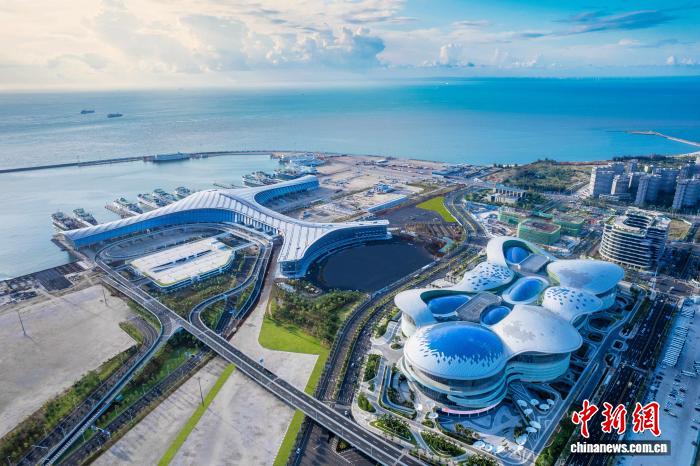
观海潮 | 紧抓封关机遇,央企纷赴自贸港布局
Sou Hu Cai Jing· 2025-10-31 20:47
Core Insights - The construction of Hainan Free Trade Port has accelerated the strategic layout of central enterprises in Hainan, contributing to high-quality economic and social development [2] - Central enterprises are seizing the opportunity of the upcoming full island customs operation to increase investment in Hainan [2][8] Group 1: Central Enterprises' Role - Central enterprises are crucial to the national economy and have a special mission in the construction of Hainan Free Trade Port [2] - Since the implementation of the "Hundred Central Enterprises Enter Hainan" initiative in 2020, 69 central enterprises have established strategic cooperation relationships with the Hainan provincial government [2] - The cooperation covers key areas such as infrastructure, energy development, trade finance, transportation, industrial park operations, and tourism [2][3] Group 2: Key Investment Areas - Central enterprises are actively involved in various sectors, including tourism, high-tech industries, and energy [3][5] - Major projects include the world's largest single duty-free shop, joint ventures in commercial aerospace, and investments in offshore wind power [3][5] - In the energy sector, significant projects like the "Deep Sea No. 1" project and the second phase of Hainan nuclear power have been initiated [5][6] Group 3: Agricultural Development - Central enterprises are also playing a vital role in the development of tropical high-efficiency agriculture, with initiatives to upgrade the rubber industry and establish a national gene verification system [6] Group 4: Future Prospects - With the full customs operation set to begin on December 18, 2023, central enterprises are expected to further enhance their investment in Hainan [8][10] - The establishment of regional headquarters by companies like COSCO Shipping Group aims to create a modern logistics system to support Hainan's development [10] - Hainan plans to optimize the business environment to facilitate central enterprises in overcoming challenges related to project construction and investment [10]




东兴证券:适度超前建设新型基础设施 商业航天将加速发展
智通财经网· 2025-10-31 08:29
Core Insights - The report from Dongxing Securities emphasizes the acceleration of China's aerospace industry and the development of satellite internet as key components of the modern industrial system outlined in the 14th Five-Year Plan [1][2] Group 1: Satellite Internet Development - As of October 2025, China Star Network has launched a total of 93 satellites this year, including experimental satellites [2] - The successful first flights of the Zhuque-3 and Tianlong-3 rockets are expected to establish them as the main launch vehicles for domestic satellite internet, leading to significant advancements in 2026 [2][1] Group 2: Infrastructure and Market Expansion - The transition from large-scale investment to efficient development in communication and computing networks indicates a shift in national infrastructure strategy, with ongoing expansion in related markets such as base station equipment and data centers [3][4] - By mid-2025, the number of 5G base stations in China reached 4.549 million, with a net increase of 298,000 from the previous year, although the growth rate has slowed compared to the previous year [4] Group 3: Quantum Technology and 6G Development - The report highlights the early-stage development of quantum technology and 6G as new economic growth points, with a focus on creating a high-tech industrial ecosystem [5][6] - The global 6G development timeline includes the start of technical standardization in 2025, with the first standards expected to be frozen by 2029 and commercial deployment by 2030 [7]

商业航天系列二:大时代的序章,卫星互联网新机遇-国泰海通
Sou Hu Cai Jing· 2025-10-30 04:45
Core Insights - The report focuses on the development trends of the satellite internet industry, analyzing the global competitive landscape and opportunities for China, highlighting low Earth orbit (LEO) communication satellites as a core direction with significant investment value [1][2]. Group 1: Global Competition and China's Position - The competition for space resources is intensifying, with the US and China as the main competitors. As of September 2025, there are 15,621 satellites in orbit globally, with the US holding 10,490 (67.15%) and China only 951, indicating a significant gap [1][11]. - SpaceX's Starlink has over 10,000 satellites in orbit, covering more than 100 countries and regions, with 7 million active users, demonstrating a closed commercial model [1][6]. - China is accelerating its efforts with plans for the GW constellation and the Qianfan constellation, targeting over 25,000 satellite launches, with 188 satellites expected to be launched in 2024, entering a phase of intensive networking [1][2]. Group 2: Trends in Low Earth Orbit Communication Satellites - Low Earth orbit satellites are becoming the mainstream trend in the industry due to their low latency, high bandwidth, and cost-effective advantages, making up 89% of global satellites, with 73% being communication satellites [1][10]. - The implementation of direct satellite-to-phone technology is underway, with major manufacturers like Apple and Huawei deploying related features in high-end models. The Ministry of Industry and Information Technology plans for over 10 million satellite communication users by 2030 [1][2]. Group 3: Factors Driving China's Commercial Space Development - China's commercial space sector is entering a new phase driven by policies, capital, and technology. The government has classified commercial space as a strategic emerging industry, with numerous incentive policies introduced at both central and local levels [2][25]. - In 2023, over 22,000 new companies were registered in the commercial space sector, accounting for 82.4% of the total industry, indicating a strong influx of private capital [2][29]. - The launch of the Hainan commercial launch site enhances the efficiency of satellite launches, supporting the networking efforts [2][36]. Group 4: Investment Opportunities - Investment suggestions focus on three main areas: satellite internet networking and operators, satellite manufacturing companies, and core component manufacturers [2][10]. - Key components such as phased array antennas, inter-satellite laser communication, Hall-effect thrusters, and flexible solar wings are highlighted as high-value segments benefiting from industry growth [2][10].





雄安新区设立以来累计投资突破1万亿元
Zhong Guo Xin Wen Wang· 2025-10-29 13:53
Group 1 - The total investment in Xiong'an New Area has exceeded 1 trillion RMB since its establishment, with an average annual investment growth rate of 19.8% during the 14th Five-Year Plan period [1][2] - Significant achievements have been made in the implementation of major national strategies, including the deepening of the Beijing-Tianjin-Hebei coordinated development [1] - The total length of highways in the Beijing-Tianjin-Hebei region has surpassed 11,000 kilometers, with a highway density 2.7 times the national average [1] Group 2 - Xiong'an New Area has shown remarkable construction results, with major companies like China Star Network and China Huaneng Group relocating their headquarters [2] - The first batch of universities and hospitals, including Beijing University of Science and Technology and Peking University People's Hospital, are accelerating their construction in the area [2] - Ecological improvements are evident, with the water quality of Baiyangdian maintaining a Class III standard and the presence of 296 species of wild birds, including the national first-class protected bird, the blue-headed pochard [2]
海南产经新观察:紧抓封关机遇 央企纷赴自贸港布局
Zhong Guo Xin Wen Wang· 2025-10-29 04:30
Core Viewpoint - Central enterprises are accelerating their strategic layout in Hainan Free Trade Port, seizing the opportunity of the upcoming full island closure operation to enhance investment and support high-quality economic development in Hainan [1][2]. Group 1: Investment and Strategic Cooperation - Since the implementation of the "Hundred Central Enterprises Enter Hainan" initiative in 2020, 69 central enterprises have established targeted and project-based strategic cooperation with the Hainan provincial government, covering key areas such as infrastructure, energy, trade finance, and tourism [2][3]. - The investment scale and operational efficiency of central enterprises in Hainan have shown significant growth, ranking among the top in the country [2]. Group 2: Key Areas of Development - Central enterprises are actively involved in various sectors, including tourism, high-tech industries, and energy, with projects such as the world's largest single duty-free shop and the establishment of a commercial aerospace company [3][6]. - In the tourism and modern service sectors, enterprises like China National Chemical Corporation and China Merchants Group are developing technology cities and enhancing the tourism experience through innovative services [6][8]. Group 3: Future Prospects and Opportunities - With the full closure operation of Hainan Free Trade Port set to begin on December 18, 2023, central enterprises are expected to increase their investments, further optimizing the business environment and addressing practical issues faced by these enterprises [8][10]. - The establishment of regional headquarters by companies like COSCO Shipping Group aims to enhance logistics and service capabilities, particularly targeting Southeast Asian markets [8][10].