中国移动

Search documents
新春走基层丨太行山里的“移动110”
He Nan Ri Bao· 2026-02-17 23:07
Core Viewpoint - The article highlights the significant impact of Zhang Haiquan, a network engineer for China Mobile, in improving telecommunications in remote mountainous areas, transforming them from "information islands" to vibrant "digital villages" through his dedicated service and efforts [1][2]. Group 1: Zhang Haiquan's Role - Zhang Haiquan has been a network engineer for China Mobile for over 12 years, covering more than 140,000 kilometers in the mountainous regions to ensure connectivity for local residents [1]. - He is affectionately referred to as "Mobile 110" by villagers, indicating his reliability and quick response to their telecommunications issues [2]. - His personal connection with the community is evident as he carries over 5,000 contacts in his phone, representing the local residents he serves [2]. Group 2: Community Impact - Zhang's efforts have led to the complete fiber optic coverage of 42 administrative villages, enabling e-commerce, live streaming for agriculture, and smart classrooms [2]. - The transformation of these areas from "information islands" to "digital villages" signifies a major shift in the local economy and access to information [2]. - Villagers express deep trust in Zhang, viewing him not just as a service provider but as a vital part of their community, often relying on him for various needs beyond telecommunications [2].
乡韵依旧 家园常新
Xin Lang Cai Jing· 2026-02-17 18:40
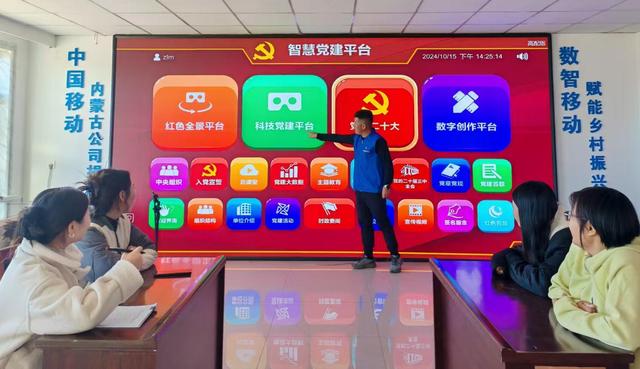
Core Viewpoint - The article highlights the positive transformations in rural areas of Inner Mongolia, emphasizing improvements in housing, income generation, and digital infrastructure, contributing to a better quality of life for residents during the Spring Festival season [2][3][5]. Group 1: Housing Improvements - The article describes the story of a resident, Yu Chunlong, who benefited from a housing reconstruction program after his home was damaged by fire. His new 96-square-meter brick house has significantly improved his living conditions, providing warmth and comfort during the winter [2]. - Inner Mongolia has been actively promoting policies to consolidate poverty alleviation efforts with rural revitalization, focusing on housing, employment, education, and healthcare to ensure the well-being of families [2]. Group 2: Income Generation - The "unified planting and shared prosperity" model in Dalateqi has transformed agricultural practices, allowing farmers to collaborate for better efficiency and profitability. For instance, a farmer named Shi Haishu reported earnings of 33,600 yuan from his 30 acres of land through cooperative management [3]. - The article notes that this model has led to a shift from individual farming to collective efforts, enhancing income through shared resources and risk management, thereby increasing the financial stability of both farmers and village collectives [3][4]. Group 3: Digital Infrastructure - The establishment of a smart party building room in Wushen Yihe Village has enabled residents to access high-speed internet and modern facilities, enhancing community engagement and entertainment during the Spring Festival [5][6]. - Inner Mongolia has made significant strides in digital infrastructure, with initiatives that include remote medical services, digital agriculture, and e-commerce, which are improving rural governance and living standards [6]. - The region has achieved notable milestones in rural development, such as a road network of 180,000 kilometers and a drinking water coverage rate of 85.1%, contributing to enhanced living conditions and environmental quality [6]. Group 4: Future Outlook - Inner Mongolia aims to continue its development efforts, focusing on creating prosperous, ecologically sustainable, and culturally vibrant rural communities, thereby enhancing the overall quality of life for its residents [7].


乡韵依旧、家园常新,这是内蒙古和美乡村的模样
Xin Lang Cai Jing· 2026-02-17 11:13
Core Viewpoint - The articles highlight the positive transformations in rural areas of Inner Mongolia, focusing on housing improvements, income growth through cooperative farming, and advancements in digital infrastructure, all contributing to a better quality of life for residents during the Spring Festival. Group 1: Housing Improvements - The story of Yu Chunlong, a poverty monitoring household, illustrates the impact of housing upgrades, as he moved into a new 96-square-meter brick house before the Spring Festival, enhancing his family's living conditions and overall happiness [2] - The Inner Mongolia government has been actively working to connect poverty alleviation efforts with rural revitalization, improving policies in various sectors such as housing, employment, and healthcare to ensure stability and development [2] Group 2: Income Growth - The "Unified Planting and Shared Prosperity" model in Dalate Banner has allowed farmers like Shi Haishu to benefit from cooperative farming, leading to significant income increases. For instance, he earned 33,600 yuan from his 30 acres of land through cooperative management and an additional 42,000 yuan from infrastructure projects [3] - This model promotes the integration of resources and labor, enabling small farmers to participate in larger agricultural industries, thus enhancing collective income and financial stability for both households and village collectives [3][4] Group 3: Digital Infrastructure and Community Engagement - The establishment of a smart party building room in Wushen Yihe Village has facilitated community engagement through digital means, allowing residents to enjoy shared experiences like watching the Spring Festival Gala together [5][6] - The integration of digital technology in rural governance and services, such as remote medical care and e-commerce, is transforming rural life, with significant improvements in infrastructure like high-speed internet and modern facilities [7] Group 4: Overall Rural Development - Inner Mongolia aims to maintain over 10 million acres of grain planting area by 2025, achieving stable production and ensuring food security through cooperative farming practices [4] - The region has made substantial progress in rural infrastructure, with 99.8% of administrative villages having access to fiber optics, and significant improvements in water supply and waste management, contributing to enhanced living conditions [7]
春晚广告位争夺战:四十年国民记忆与商业暗流
创业邦· 2026-02-17 10:32
Core Viewpoint - The evolution of the Spring Festival Gala sponsorship reflects the changing landscape of China's economy and consumer behavior over the past 40 years, showcasing the transition from material scarcity to technological innovation and brand storytelling [4][24]. Group 1: 1980s to Early 1990s - The 1980s marked a period of material scarcity, where items like watches and radios were symbols of wealth and status, leading to the first brand sponsorship by 康巴丝 (Kangbasi) at the Spring Festival Gala [5][7]. - 康巴丝 sponsored the gala by trading 3,000 quartz watches for advertising, which significantly boosted its brand recognition and sales, reaching an annual production of 1.26 million watches by 1987 [8]. - The sponsorship model evolved, with 中华自行车 (Zhonghua Bicycle) taking over the sponsorship in 1995, reflecting the changing consumer demands and economic conditions [9][14]. Group 2: Mid-1990s to Early 2000s - The mid-1990s saw a surge in consumer spending, with the emergence of "标王" (advertising king) sponsorships, particularly in the liquor industry, exemplified by 山东孔府宴酒 (Shandong Confucius Feast Wine) and 秦池酒 (Qinchijiu) [11][12]. - 秦池酒's sponsorship led to a dramatic increase in sales from 1.8 billion yuan in 1995 to 9.5 billion yuan in 1996, highlighting the impact of gala sponsorship on brand visibility and sales [16]. - The era was characterized by a shift towards consumerism, with brands leveraging the gala to enhance their market presence, although some faced backlash due to quality issues [16]. Group 3: 2000s to Early 2010s - The early 2000s marked the rise of home appliance brands, with 美的 (Midea) becoming a prominent sponsor, securing 11 sponsorships from 2003 to 2014, reflecting the growing importance of brand trust [17][19]. - The cost of advertising skyrocketed, with Midea's sponsorship fee increasing from 6.8 million yuan in 2005 to 57.2 million yuan in 2011, indicating the gala's significant viewership and advertising value [21]. - Brands began to focus on storytelling and emotional connections with consumers, moving beyond mere product promotion to build brand loyalty [23]. Group 4: Mid-2010s to Present - The 2010s saw the rise of internet companies as key players in the advertising space, with platforms like WeChat revolutionizing audience engagement through interactive features like the "red envelope battle" during the gala [25][26]. - The digital transformation of the gala allowed for unprecedented levels of interaction, with WeChat reporting 10.1 billion red envelope transactions on New Year's Eve, significantly enhancing its user base [26]. - The emergence of technology companies in the gala sponsorship landscape reflects a broader shift towards innovation and digital engagement, with brands like Xiaomi and AI robotics showcasing advancements in technology [32].







智通港股通持股解析|2月17日
智通财经网· 2026-02-17 01:44
Group 1 - The top three companies by Hong Kong Stock Connect holding ratios are China Telecom (71.26%), Haotian International Investment (70.78%), and Green Power Environmental (68.78%) [1][2] - In the last five trading days, the companies with the largest increase in holding amounts are China National Offshore Oil (CNOOC) (+764 million), Meituan (+652 million), and Bilibili (+400 million) [1][2] - The companies with the largest decrease in holding amounts in the last five trading days are Tencent Holdings (-644 million), China Mobile (-377 million), and Alibaba-W (-351 million) [1][3] Group 2 - The latest holding ratios for the top 20 companies in Hong Kong Stock Connect show significant ownership, with China Telecom leading at 71.26% and others like Tianjin Chuangye Environmental and China Shenhua also above 66% [2] - The increase in holdings for the top 10 companies in the last five trading days indicates strong investor interest, particularly in CNOOC and Meituan, suggesting potential growth opportunities [2] - The decrease in holdings for Tencent, China Mobile, and Alibaba may indicate a shift in investor sentiment or profit-taking strategies [3]






村里大小事 云端皆可知
Xin Lang Cai Jing· 2026-02-16 22:33
Group 1 - The article highlights the increasing risk of telecom network fraud as the Spring Festival approaches, prompting local leaders to enhance fraud awareness among villagers through social media [1] - The introduction of 5G network coverage in Guanyin Village marks a significant improvement in communication, allowing for better dissemination of information and community engagement [2] - The village has adopted a dual approach of online and offline engagement, utilizing social media for policy dissemination and community activities, which has fostered a stronger sense of community among residents [2] Group 2 - Guanyin Village plans to leverage its cultural heritage and 5G technology to develop a "5G + smart tourism" model, aiming to promote local agricultural products and handicrafts [3] - Recent initiatives, including live streaming sales, have already generated over 200,000 yuan in revenue from local specialty products, indicating a positive economic impact from these efforts [3]
港股16日涨0.52% 收报26705.94点
Xin Hua Wang· 2026-02-16 09:53
Market Performance - The Hang Seng Index rose by 138.82 points, an increase of 0.52%, closing at 26,705.94 points [1] - The Main Board recorded a total turnover of 84.997 billion HKD [1] - The National Enterprises Index increased by 37.61 points, closing at 9,070.32 points, a rise of 0.42% [1] - The Hang Seng Tech Index saw a slight increase of 7.10 points, closing at 5,367.52 points, up by 0.13% [1] Blue-Chip Stocks - Tencent Holdings increased by 0.19%, closing at 533 HKD [1] - Hong Kong Exchanges and Clearing rose by 0.89%, closing at 408.8 HKD [1] - China Mobile saw a rise of 0.26%, closing at 78.4 HKD [1] - HSBC Holdings decreased by 1.11%, closing at 134.2 HKD [1] Local Hong Kong Stocks - Cheung Kong Holdings increased by 0.72%, closing at 47.24 HKD [1] - Sun Hung Kai Properties rose by 0.75%, closing at 134.7 HKD [1] - Henderson Land Development saw an increase of 0.93%, closing at 32.7 HKD [1] Chinese Financial Stocks - Bank of China rose by 0.22%, closing at 4.66 HKD [1] - China Construction Bank increased by 0.63%, closing at 8.01 HKD [1] - Industrial and Commercial Bank of China decreased by 0.16%, closing at 6.4 HKD [1] - Ping An Insurance rose by 0.43%, closing at 70.65 HKD [1] - China Life Insurance saw a significant increase of 1.93%, closing at 33.72 HKD [1] Oil and Petrochemical Stocks - Sinopec increased by 1.3%, closing at 5.44 HKD [1] - PetroChina rose by 1.44%, closing at 9.18 HKD [1] - CNOOC saw a notable increase of 3.71%, closing at 25.14 HKD [1]
美团收购叮咚买菜:即时零售的终局是“城市折叠”
Jing Ji Guan Cha Wang· 2026-02-16 07:27
Core Insights - Meituan announced the acquisition of Dingdong Maicai's China business for approximately $717 million, marking a significant move in the instant retail sector [1][2] - The acquisition signals a shift in the industry towards consolidation, as various business models explored by entrepreneurs are being absorbed into platform-level infrastructure [2][13] - Instant retail is evolving from a startup battleground to a platform-based infrastructure, focusing on time-sensitive consumer needs rather than just price and variety [2][24] Industry Overview - The instant retail market in China is projected to reach 781 billion yuan in 2024, with a growth rate exceeding 20%, significantly outpacing traditional online retail [5] - By 2026, the market size is expected to surpass 1 trillion yuan, indicating that instant retail is becoming one of the fastest-growing segments in the overall consumption landscape [5] Consumer Behavior - Despite the maturity of e-commerce, a significant portion of retail consumption (approximately 73.9%) still occurs in local offline settings, highlighting the ongoing relevance of physical retail [3][4] - Instant retail addresses the time-sensitive nature of consumer needs, particularly for everyday items that are often unplanned purchases [4][6] Competitive Landscape - The competition in instant retail is shifting from a focus on business models to a focus on order density and delivery speed, as platforms seek to optimize their logistics networks [17][20] - Different operational models coexist in the market, including platform-connected models, self-operated models, and hybrid models, each addressing the challenge of achieving high order density in urban environments [14][15] Future Trends - The future of instant retail is likely to see a transition from traffic competition to density competition, where the efficiency of order distribution within urban areas becomes the key competitive factor [20][23] - Instant retail may lead to a convergence of e-commerce and local services, blurring the lines between online and offline retail as platforms integrate both types of orders into a unified system [22][23] - The competitive landscape may evolve into a patchwork of city-level networks, where different platforms hold varying advantages in different urban areas [21][23]
印度想接中国制造的班?根本没戏,工业大门已经彻底焊死了
Sou Hu Cai Jing· 2026-02-16 07:15
Group 1 - China has become the largest holder of AI patents globally, accounting for 60% of the total, which has shocked India and raised concerns about its manufacturing ambitions [1] - The Indian government has approved a significant electronic components manufacturing project worth 418.63 billion rupees (approximately 4.64 billion USD) to reduce dependence on China and reshape the global electronic supply chain [1][3] - India's electronic product exports are projected to reach 38.56 billion USD in the fiscal year 2025, making it the country's third-largest export item, with multinational companies establishing factories in India [3] Group 2 - Despite the growth in manufacturing, India remains heavily reliant on Chinese core components, with nearly 40% of electronic components sourced directly from China, and over 56% when including goods routed through Hong Kong [3][5] - India's manufacturing sector is primarily engaged in assembly work, earning only minimal profits while lacking core manufacturing capabilities, leading to an increasing dependency on Chinese parts [5] - The report highlights India's weaknesses in infrastructure, talent pool, and business environment, ranking sixth among 11 Asian economies, far behind China, Malaysia, and Vietnam [5][6] Group 3 - High logistics costs, complex tax compliance, and corruption issues significantly undermine India's competitiveness, with foreign investments deterred by lengthy project approval processes averaging 18 months [6] - The Indian rupee is projected to depreciate by about 5% by 2025, nearing 90 rupees to 1 USD, which will further weaken the price competitiveness of Indian exports [8] - In contrast, China is advancing its industrialization through AI and robotics, establishing competitive barriers that are difficult for other countries to overcome [8][11] Group 4 - China's technological upgrades are driven by the need for high-quality development in manufacturing, aligning with global technological revolutions and industrial transformations [11] - The application of AI and robotics aims to enhance production efficiency and optimize industrial structures, transitioning from scale-based to quality-based manufacturing [11] - India's ambition to decouple from China may lead to isolation and missed opportunities, emphasizing the need for India to address its shortcomings and focus on core technologies to compete effectively in the global manufacturing landscape [11]

智通港股通持股解析|2月16日
智通财经网· 2026-02-16 00:34
Core Insights - The top three companies by Hong Kong Stock Connect holding ratios are China Telecom (71.26%), Haotian International Investment (70.78%), and Gree Power Environmental (68.78%) [1] - Tencent Holdings, Meituan-W, and China National Offshore Oil Corporation saw the largest increases in holding amounts over the last five trading days, with increases of +1.071 billion, +937 million, and +811 million respectively [1] - The largest decreases in holding amounts were observed in the Yingfu Fund (-4.085 billion), Hang Seng China Enterprises (-1.359 billion), and China Mobile (-780 million) [2] Group 1: Hong Kong Stock Connect Holding Ratios - China Telecom (00728) has a holding of 9.891 billion shares, representing 71.26% [1] - Haotian International Investment (01341) has a holding of 7.855 billion shares, representing 70.78% [1] - Gree Power Environmental (01330) has a holding of 278 million shares, representing 68.78% [1] Group 2: Recent Increases in Holdings - Tencent Holdings (00700) increased its holding by +1.071 billion, with a change of +2.0125 million shares [2] - Meituan-W (03690) increased its holding by +937 million, with a change of +11.4088 million shares [2] - China National Offshore Oil Corporation (00883) increased its holding by +811 million, with a change of +33.4436 million shares [2] Group 3: Recent Decreases in Holdings - Yingfu Fund (02800) decreased its holding by -4.085 billion, with a change of -152.537 million shares [2] - Hang Seng China Enterprises (02828) decreased its holding by -1.359 billion, with a change of -14.6972 million shares [2] - China Mobile (00941) decreased its holding by -780 million, with a change of -9.9762 million shares [2]