
美光

Search documents
AI应用推升存储芯片需求 行业高景气度或持续至明年年中
Shang Hai Zheng Quan Bao· 2025-11-25 18:16
Core Viewpoint - The global investor confidence in AI is being revitalized, leading to a resurgence in interest in storage chips, which are crucial for AI infrastructure. The prices of storage chips are expected to continue rising, with significant demand driven by AI applications and a supply shortage anticipated to last until at least mid-next year [1][5]. Group 1: Market Dynamics - The storage chip market is experiencing a significant supply shortage, with distributors struggling to fulfill orders, indicating a tight supply chain [2][3]. - Major storage manufacturers, including Samsung and SanDisk, have initiated price increases, with some products seeing price hikes of up to 60% since September [4][6]. - The demand for DRAM and NAND Flash is expected to remain strong, with projections indicating a potential price increase of at least 50% from current levels [4][6]. Group 2: Product Specifics - DDR5 memory is particularly highlighted as having a robust market, with prices having surged by 60% since September, driven by increased demand from AI applications and a shift from DDR4 due to shortages [6][7]. - NOR Flash is also experiencing a price increase, with industry analysts adjusting growth forecasts upward due to rising demand from AI developments [2][4]. Group 3: Future Outlook - The current price increase trend for storage chips is expected to persist for at least two to three more quarters, with a potential shortage of DRAM and NAND Flash continuing into the first half of 2026 [8]. - The resolution of the supply shortage is contingent upon the ramp-up of DDR5 production capacity by Chinese manufacturers, which could stabilize prices in the future [8].
安世、三星、GD...这些芯片在涨价!
芯世相· 2025-11-25 07:11
Core Insights - The article discusses the current trends and price fluctuations in the semiconductor market, particularly focusing on various chips that have gained attention in November 2023. Group 1: Price Trends of Specific Chips - The ICM-42688-P gyroscope has seen its price double from 13-15 RMB to around 35 RMB, with recent quotes dropping to 23-28 RMB [4][6]. - The W25Q128JVSIQ NOR Flash chip's price increased from 4 RMB to 4.5 RMB, with some recent quotes reaching 5.5 RMB [8][10]. - The KLM8G1GETF-B041 eMMC chip's price rose from 6 USD to approximately 8.5 USD this month [15][19]. - The K4UBE3D4AB-MGCL LPDDR4X chip's price surged from 30 USD to nearly 50 USD within a week [21][22]. - The TL431AQDBZRQ1 voltage regulator's price remained stable around 0.5-0.65 RMB despite increased demand [25][26]. - The GD25Q64ESIGR NOR Flash chip's price increased from 1.6 RMB to about 2 RMB due to rising demand [28][29]. - The BAV99-Q diode's market price is highly variable, ranging from 0.2 to 6 RMB, with previous prices nearing 10 RMB [33]. Group 2: Market Demand and Applications - The ICM-42688-P is widely used in AR/VR controllers, wearables, and robotics, indicating strong demand in these sectors [6]. - The W25Q128JVSIQ is essential for consumer electronics, with significant applications in automotive and PC markets, reflecting a recovery in demand [13]. - The KLM8G1GETF-B041 is a popular choice for mobile devices, with its price increase attributed to supply constraints following production halts [19]. - The K4UBE3D4AB-MGCL is utilized in high-performance applications, which explains its price surge amid high demand [22]. - The TL431AQDBZRQ1 is used in automotive applications, highlighting its importance in the automotive electronics market [26]. - The GD25Q64ESIGR is favored in embedded systems, showcasing its relevance in various electronic designs [29]. - The BAV99-Q is designed for automotive applications, emphasizing the ongoing demand for reliable electronic components in this sector [33].


佰维存储港股IPO:上半年增收不增利,企业级存储毛利率降至3.9%
Sou Hu Cai Jing· 2025-11-21 08:27
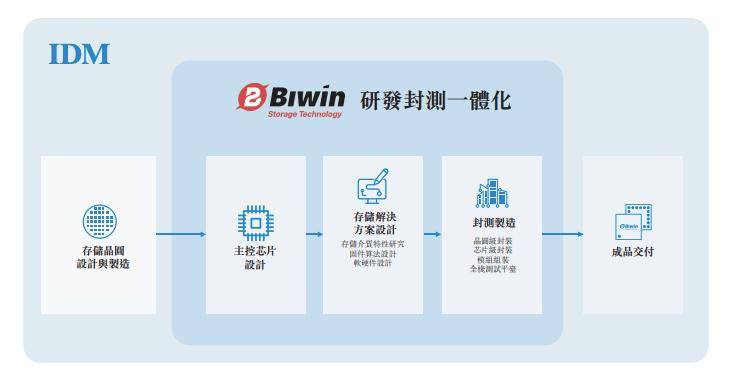
Core Viewpoint - Bawei Storage, a semiconductor memory company, has submitted its IPO application to the Hong Kong Stock Exchange, aiming to raise funds for self-developed chips, high-performance semiconductor storage solutions, and wafer-level packaging capabilities. Despite benefiting from the AI wave, the company faces profitability challenges in a market dominated by giants like Micron and SK Hynix, with a projected phase of "increased revenue but decreased profit" in the first half of 2025 [1][2][9]. Company Overview - Bawei Storage primarily engages in the research, design, packaging, testing, production, and sales of semiconductor memory, with its main products being semiconductor memory devices [2]. - The company's business segments include embedded storage, consumer-grade storage, and advanced packaging and testing [4][6]. Financial Performance - Since its listing on the Sci-Tech Innovation Board, Bawei Storage has experienced a complete cycle of "downturn-recovery-adjustment" in the semiconductor storage industry. From 2022 to 2023, the company saw revenue growth but transitioned from profit to loss [7]. - In 2024, the company is expected to benefit from a rebound in storage prices and AI demand, achieving a strong turnaround with revenue doubling. However, in the first half of 2025, it is projected to face a phase of "increased revenue but decreased profit," with historical high revenue but a return to phase losses [8][9]. - Specific financial data shows that revenue from 2022 to the first half of 2025 is projected to be 2.986 billion, 3.591 billion, 6.695 billion, and 3.912 billion RMB, with net profits of 71 million, -631 million, 135 million, and -241 million RMB respectively [9]. Market Dynamics - The global storage market is expected to grow significantly, driven by AI data centers, with projections indicating an increase from $263.3 billion in 2025 to $407.1 billion by 2029, representing a compound annual growth rate (CAGR) of 11.5% [11]. - The server segment is anticipated to grow from $26.8 billion in 2020 to $59.4 billion in 2024, with a CAGR of 22.0%, reaching $145.8 billion by 2029 [11]. Industry Structure - The storage product industry chain consists of three segments: upstream wafer and main control chip design and manufacturing, midstream storage product manufacturing, and downstream terminal applications [12]. - Bawei Storage operates as an independent memory manufacturer, focusing on storage solution design, packaging, testing, and large-scale delivery, unlike integrated device manufacturers (IDM) like Micron and SK Hynix, which have pricing power in the industry [14]. Future Outlook - The demand for storage solutions is expected to increase due to the upgrading of storage needs in the AI era, enhancing the value of module manufacturers and solution providers within the industry [16].
国泰海通:内存报价有望持续提升 予半导体行业“增持”评级
智通财经网· 2025-11-21 06:25
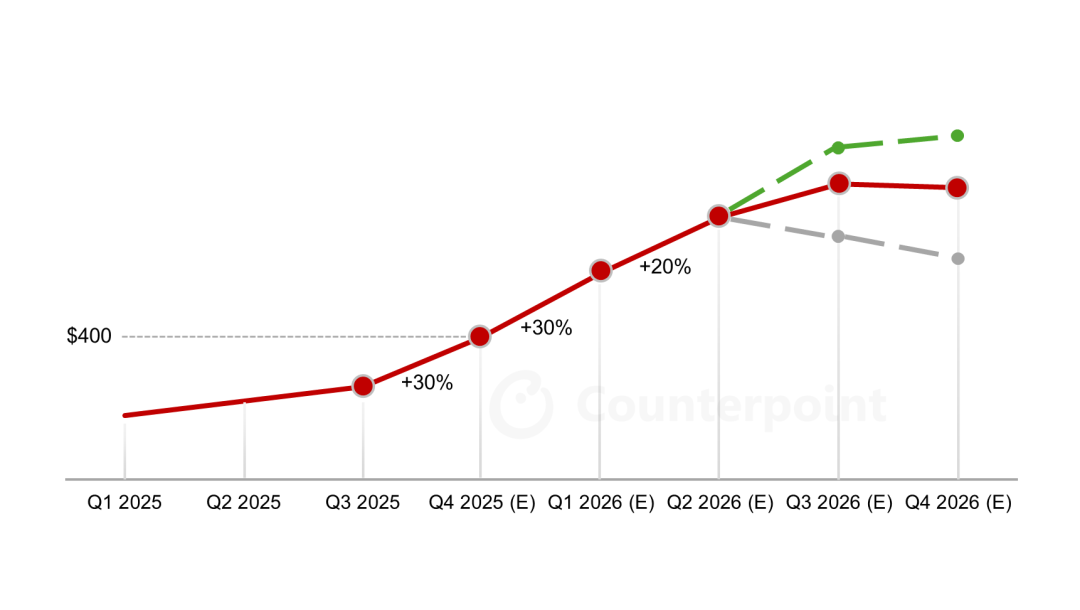
Core Viewpoint - Nvidia has decided to switch from DDR5 to LPDDR memory chips for AI servers to reduce power costs, which may significantly impact the supply of consumer-grade memory [1] Group 1: Memory Chip Transition - Nvidia is replacing traditional DDR5 RDIMM with LPDDR to lower AI server power consumption costs [1] - The shift to LPDDR, typically used in mobile devices, is expected to increase demand in the industry significantly [1] Group 2: SOCAMM Performance - SOCAMM, based on LPDDR, offers 2.5x bandwidth improvement over traditional RDIMM and reduces power consumption by one-third [2] - SOCAMM is designed for AI servers, with a compact size of 14x90mm and a maximum capacity of 128GB per module [2] Group 3: Memory Price Trends - Memory prices have increased by 50% this year, with expectations of a further 30% rise by Q4 2025 and an additional 20% increase early next year [3] - The heightened demand for LPDDR from Nvidia is likely to extend price increases into the consumer electronics market [3]


Counterpoint Research:英伟达(NVDA.US)战略转向叠加结构性因素 先进内存价格或将翻倍
智通财经网· 2025-11-20 05:52
Core Insights - Memory prices have increased by 50% this year, with expectations of a further 30% rise by Q4 2025 and an additional 20% increase early next year [1] - The supply of traditional LPDDR4 is tightening, driven by strong demand from AI applications, particularly from Nvidia, which is impacting the entire consumer electronics market [1][2] - The current shortage primarily affects low-end smartphones, with potential ripple effects across the smartphone and consumer electronics ecosystem [5] Group 1: Market Dynamics - The shift in production capacity towards higher-end processes is disrupting the overall market structure, leading to price inversion in the spot market [1] - DDR5 prices are expected to double from Q1 2025 to the end of 2026 due to extreme supply constraints [3] - The transition of Nvidia to LPDDR for lower power consumption is creating significant demand that the supply chain struggles to accommodate [2] Group 2: Impact on Manufacturers - The BOM costs for smartphones are rising significantly, with some models experiencing increases of up to 15%, which could compress profit margins and hinder growth [5] - Major chip manufacturers are expected to increase DRAM production by over 20% by 2026, with companies like Samsung and SK Hynix adjusting their production strategies [2] - Macroeconomic risks, including tariffs and geopolitical factors, are adding to the uncertainty in the industry, forcing suppliers and manufacturers to navigate difficult trade-offs [5]
存储涨价惩罚PC市场,为何唯独放过了苹果(AAPL.US)与联想(00992)?
智通财经网· 2025-11-18 07:57
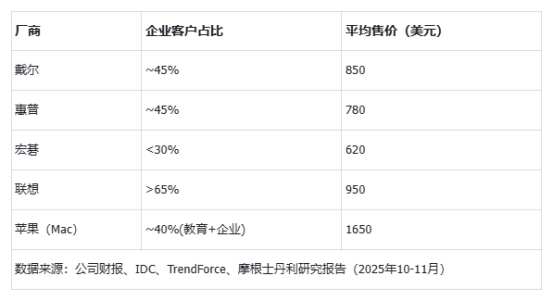
Core Insights - The global storage chip contract prices have experienced a rare nonlinear surge since Q2 2025, driven by the high demand for high-bandwidth memory (HBM) from AI accelerators like NVIDIA's H100 [1] - Major storage manufacturers such as Samsung, SK Hynix, and Micron are shifting production capacity from traditional PC DRAM and NAND to more profitable HBM, tightening supply for traditional PC DRAM and NAND [1][2] - Companies like Lenovo and Apple are viewed as exceptions that may benefit from this storage price uptrend due to their strong customer bases and supply chain management capabilities [1][3] Supply Chain Dynamics - The demand for high-performance SSDs and HBM has surged due to AI data centers, leading manufacturers to prioritize production for high-margin products, which has squeezed the supply of mid-range DDR and client SSDs [2] - In 2025, the global DRAM market revenue is expected to exceed $200 billion, with HBM contributing over half of the profit growth despite accounting for less than 30% of the market [2] - The average storage cost increase of 20% for an $800 laptop could raise the bill of materials (BOM) by $30-$50, potentially eroding 3-6 percentage points of gross margin if manufacturers cannot pass on costs [2] Impact on Consumer-Oriented Manufacturers - Dell, HP, and Acer, which heavily rely on the consumer market, face significant profit margin threats due to their sensitivity to storage price increases [3] - The average selling price of global consumer PCs is projected to be around $620 in 2025, making these companies vulnerable to price sensitivity in a highly competitive market [3] - Morgan Stanley's report indicates that Dell and HP are the most sensitive to rising storage prices, predicting a 2-4 percentage point decline in their PC gross margins for FY 2026 [3] Resilience of Lenovo and Apple - Lenovo and Apple are better positioned to withstand the pressures of rising storage prices due to their strong supply chain control and customer structure [4][10] - Lenovo's market share exceeds 25%, with over 65% of its revenue coming from enterprise and government clients, allowing it to pass on costs more effectively [6][7] - Apple maintains absolute control over its supply chain, benefiting from long-term contracts that ensure priority access to components, which helps it manage costs effectively [9] Competitive Advantages - Lenovo's procurement strategy, which includes multi-regional sourcing, enhances its bargaining power and allows it to secure better prices and delivery guarantees [8] - Apple's BOM structure has a lower storage cost percentage, allowing it to absorb price increases more easily, and its strong brand allows for higher pricing flexibility [9][10] - Both companies are expected to maintain or even expand their market share during this "super cycle" of storage price increases, leading to greater industry differentiation [10]


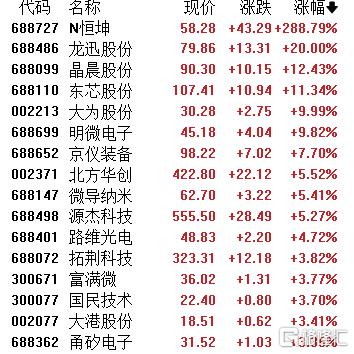
价格飙涨60%,龙头产能拉满!港A半导体股逆势飘红
Ge Long Hui A P P· 2025-11-18 07:38
| 代码 名称 | | 现价 | 张跌 | 张唱↓ | | --- | --- | --- | --- | --- | | 688727 N 自由 | | 58.28 +43.29+288.79% | | | | 688486 龙迅股份 | | 79.86 +13.31 +20.00% | | | | 688099 晶晨股份 | | 90.30 +10.15 +12.43% | | | | 688110 东芯胶份 | | 107.41 +10.94 +11.34% | | | | 002213 大为股份 | | 30.28 | +2.75 | +9.99% | | 688699 明微电子 | | 45.18 | +4.04 | +9.82% | | 688652 京仪装备 | | 98.22 | +7.02 | +7.70% | | 002371 | 北方华创 | 422.80 +22.12 | | +5.52% | | 688147 微导纳米 | | 62.70 | +3.22 | +5.41% | | 688498 源杰科技 | | 555.50 +28.49 | | +5.27% | | 688401 ...

【招商电子】半导体行业深度跟踪:存储景气上行价格涨幅扩大,设备等受益于下游扩产趋势
招商电子· 2025-11-18 03:15
Core Viewpoint - Nvidia and AMD maintain an optimistic outlook on AI, with Nvidia projecting $500 billion in revenue from Blackwell and Rubin series products over the next five quarters. AMD reported record revenue in Q3 2025 and anticipates a CAGR of over 60% for its data center business. The storage cycle is on an upward trend, driven by increasing demand in the AI era, leading to a sustained supply-demand gap and accelerated price increases in October. The domestic self-controllable process is accelerating, benefiting from the expansion of advanced logic and storage production lines in China by 2026. Investment opportunities are suggested in the storage sector, equipment/materials benefiting from downstream expansion, and optimistic computing power sectors [3][4][5]. Industry Sentiment Tracking - Demand Side: Some consumer electronics sectors are recovering, with innovations driven by AI and automotive applications. Global smartphone shipments increased by 2.6% YoY in Q3 2025, while PC shipments rose by 9.4% YoY. Wearable AI glasses saw significant growth, although growth is expected to slow in the second half of the year. Server shipments are projected to grow by 24.1% YoY [4][5]. - Inventory Side: Power MCU and analog DOI saw a decrease, with inventory adjustments nearing completion. Q3 2025 saw an increase in average inventory for both domestic and overseas smartphone chip manufacturers [5]. - Supply Side: Capacity utilization rates are recovering, with TSMC reporting strong demand for AI data centers. SMIC's capacity utilization reached 95.8%, and domestic advanced logic production line expansions are expected to accelerate by 2026 [5][6]. - Price Side: Since Q3 2025, DRAM and NAND prices have risen significantly, with October seeing accelerated price increases due to AI server demand [6]. - Sales Side: Global semiconductor sales in September 2025 reached $64.97 billion, marking a 25.1% YoY increase [6]. Industry Chain Tracking - Design/IDM: Demand for AI-related chips is increasing, with Nvidia and AMD showing strong performance. AMD's Q3 2025 revenue reached a record high, and its data center business is expected to grow significantly [8][9]. - Storage: The storage industry is experiencing a cyclical upturn driven by AI demand, with profitability improving for manufacturers [9]. - MCU: The market is seeing a mild recovery, although the effect of customers pulling inventory ahead of time has weakened compared to the first half of the year [10]. - Analog: Demand for AI-related products remains optimistic, but domestic consumer demand has weakened, affecting Q3 performance [10]. - RF: Mergers among major players are reshaping the market landscape, presenting opportunities for domestic manufacturers [11]. - CIS: Domestic manufacturers are making breakthroughs, particularly in automotive applications [11]. - Power Semiconductors: Infineon has raised its revenue guidance for AI data centers, while domestic companies showed mixed performance in Q3 2025 [12]. Investment Recommendations - Focus on sectors benefiting from the ongoing upturn in the storage cycle, equipment/materials benefiting from downstream expansion, and optimistic computing power sectors. Specific attention is recommended for domestic chip manufacturers and companies poised to benefit from the recovery in AI server demand [15].


存储市场迎价格上涨周期,半导体设备ETF(159516)大涨超3%
Sou Hu Cai Jing· 2025-11-18 03:05
Group 1 - The semiconductor equipment ETF (159516) has seen a significant increase of over 3% on November 18, with a year-to-date share growth of over 160%, reaching a scale of over 6.2 billion yuan, ranking first among similar products [1][7] - The storage market is currently experiencing a notable price increase cycle driven by explosive growth in enterprise-level storage demand due to AI applications and a structural supply tightness in traditional storage products [3] - Major storage manufacturers, including Samsung, SK Hynix, Kioxia, and Micron, have reduced NAND Flash supply in the second half of this year, which may prolong the tight supply situation and further drive up NAND prices [3] Group 2 - The "domestic substitution" trend has become a necessity in the semiconductor industry, creating a stable domestic market for equipment and materials companies, which can withstand global cyclical fluctuations [4] - The storage chip industry is entering a new upcycle, supporting the high-quality development of the digital economy, and companies achieving technological breakthroughs in key areas are likely to outperform expectations [4] - The semiconductor equipment ETF (159516) is positioned to benefit from the increasing importance of semiconductor equipment amid escalating geopolitical tensions and the expansion of advanced process and storage production [5] Group 3 - The semiconductor equipment ETF (159516) tracks the CSI Semiconductor Materials and Equipment Theme Index, representing the fundamental progress in the equipment and materials sector [5] - Key companies within the semiconductor equipment ETF include Zhongwei Company (17.29% weight), Northern Huachuang (13.46% weight), and Tuojing Technology (6.05% weight), among others [6]

怡亚通(002183.SZ):在半导体存储供应链产业链已经形成闭环布局
Ge Long Hui· 2025-11-17 07:28
Core Viewpoint - The company has established a closed-loop layout in the semiconductor storage supply chain, collaborating with major global and domestic players in the industry [1] Group 1: Company Collaboration - The company has formed deep partnerships with foreign semiconductor giants such as Micron, Toshiba, and Kioxia, as well as significant domestic enterprises [1] - The company provides a range of storage products including solid-state drives (SSD), memory modules (DRAM), portable solid-state drives (PSSD), portable hard disk drives (PHDD), mobile hard drives (HDD), and storage cards [1] Group 2: Market Coverage - The company's storage products are widely applicable across various sectors including smart terminals, automotive electronics, laptops, and desktop computers, covering both embedded and non-embedded fields [1] - The business scope has expanded to include countries such as China, Singapore, and Malaysia [1]
