
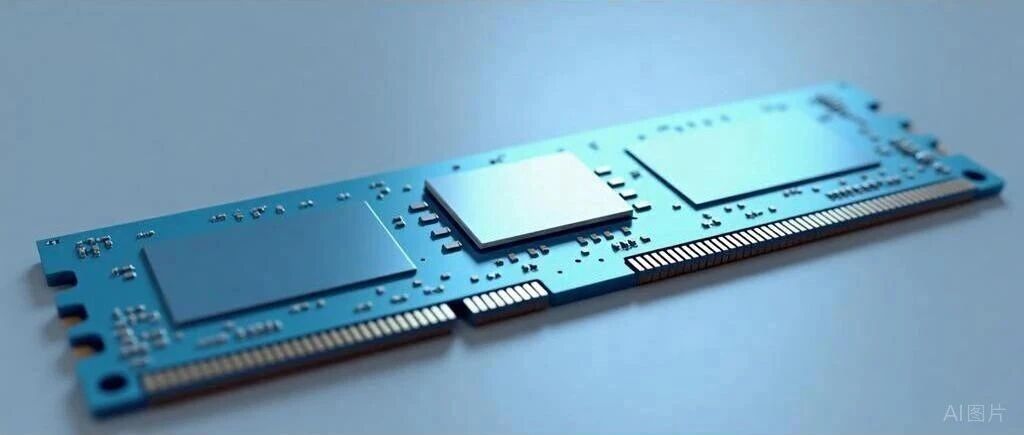
RDIMM

Search documents
江波龙:公司目前未和英伟达有直接合作
Xin Lang Cai Jing· 2026-03-27 03:53
Core Viewpoint - The company has not established direct cooperation with Nvidia but is actively developing AI-related storage products for various applications [1] Group 1: Product Development - The company has launched enterprise-level storage products including SATA SSD, PCIe SSD, and RDIMM, focusing on AI large model application scenarios [1] - New high-performance storage products such as MRDIMM and CXL2.0 memory expansion modules have been introduced [1] - The product offerings cater to a diverse clientele, including telecom operators, internet companies, and server manufacturers [1]

SOCAMM2,新贵?
半导体芯闻· 2026-03-04 10:23
Core Viewpoint - The rapid development of artificial intelligence (AI) infrastructure is struggling to keep pace with model innovation, leading to a critical need for advanced memory architectures like SOCAMM2 to address the increasing complexity of AI workloads [2][4]. Group 1: SOCAMM and SOCAMM2 Development - SOCAMM is a memory standard co-developed by Micron Technology and NVIDIA, designed to provide high bandwidth solutions for applications exceeding HBM capacity, with a modular design that allows for upgrades [4][5]. - The first generation of SOCAMM introduced a new tier in the memory and storage hierarchy to meet the demands of AI servers for higher capacity and bandwidth, quickly adopted as an industry standard by major memory manufacturers [5][7]. - SOCAMM2 aims to enhance bandwidth, capacity, energy efficiency, signal integrity, and thermal performance, achieving a memory capacity increase from 128 GB to 256 GB while reducing power consumption by 66% compared to equivalent RDIMM modules [7][8]. Group 2: Performance and Cost Efficiency - The introduction of SOCAMM2 has resulted in a fourfold performance increase for general server workloads and a sixfold increase for AI workloads, with potential memory configurations per CPU rising from 1 TB to 2 TB [7][8]. - The new memory architecture is expected to significantly reduce the token generation costs for high-parameter foundational models like ChatGPT and Gemini by 3 to 5 times, driven by a projected 115-fold increase in LLM token demand [8][9]. - SOCAMM2 is not only targeted at AI servers but is also attracting interest from high-performance computing (HPC) manufacturers due to its high bandwidth capabilities, indicating a broader application potential [9][10]. Group 3: Industry Impact and Future Outlook - The emergence of SOCAMM2 represents a shift in memory hierarchy and AI server architecture, crucial for enhancing server compute density by tightly integrating CPU, AI accelerators, memory, and network components [9][10]. - As AI is recognized as a key competitive capability globally, companies like NVIDIA and Micron are positioned as leaders in the AI race, focusing on AI acceleration and memory architecture, respectively [10].


longsys江波龙聚焦AI存储,端云协同有新招
Quan Jing Wang· 2026-02-04 03:01
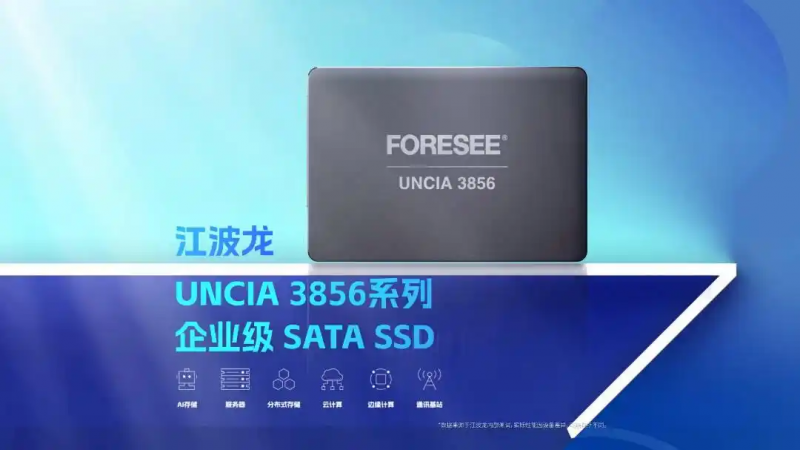
Core Insights - AI technology is reshaping various industries, with storage technology becoming increasingly critical as a backbone for AI applications. Jiangbolong has emerged as a key player in the AI storage transformation with innovative solutions and precise market positioning [1]. Group 1: Full-Stack Solutions - Jiangbolong provides a full-stack solution for AI servers and computing integrated machines, covering all scenarios of AI training and inference. Key products include eSSD, RDIMM, SOCAMM2, and innovative memory solutions, which offer efficient and reliable storage performance tailored to complex AI needs [1]. - The new UNCIA 3856 SATA eSSD features high-quality 3D eTLC NAND and self-developed firmware algorithms, achieving a balance of large capacity, low power consumption, and high endurance, thus providing a solid data storage foundation for AI servers [1]. Group 2: Memory Solutions - Jiangbolong's DDR5 RDIMM and MRDIMM memory modules are core choices for general servers and AI infrastructure due to their high bandwidth, low latency, and excellent compatibility. The DDR5 MRDIMM significantly enhances data transfer rates through a multi-channel architecture, delivering unprecedented performance for AI computing integrated machines [3]. - The SOCAMM2 memory product, based on LPDDR5/5x particles and CAMM modular design, meets the stringent performance and energy efficiency requirements of data centers. It offers ultra-high transmission rates (up to 8533 Mbps) and low power consumption (one-third of standard DDR5 RDIMM), providing dual enhancements in capacity and bandwidth for intelligent computing centers [3]. Group 3: Edge AI Solutions - Jiangbolong has introduced the integrated packaging mSSD for edge AI applications, utilizing wafer-level system-in-package (SiP) technology to integrate the controller, NAND, PMIC, and other components into a single package. This makes mSSD an ideal storage solution for edge AI devices such as AI PCs and robots, offering flexibility and efficiency [5]. Group 4: Strategic Vision - In the AI era, mere improvements in storage performance are insufficient to meet the complex and changing application demands. Jiangbolong aims to achieve efficient utilization of storage resources and flexible release of computing power through an edge-cloud collaborative strategy. The company strengthens partnerships within the industry chain to inject critical storage capabilities into AI intelligent computing center construction and promote the continuous advancement and widespread application of edge AI storage technology [7]. - Jiangbolong's outstanding performance in the AI storage sector is reflected not only in the continuous launch of innovative products but also in its deep insights into industry trends and precise understanding of customer needs. The company will continue to adhere to an innovation-driven development strategy, focusing on core media like mSSD to iterate more forms and scenarios of innovative packaged storage, contributing further to the popularization and application of AI technology [7].
存储大厂:双位数涨价
半导体行业观察· 2026-01-24 02:39
Core Viewpoint - The demand for DRAM and NAND is expected to see double-digit price increases, driven by the expanding AI data center market and a shift in the supply-demand structure within the storage industry [2][3]. Group 1: Price Trends - Samsung and SK Hynix have indicated that the contract prices for DRAM and NAND are likely to rise, with expectations for announcements by the end of January or early February [3]. - The market speculation regarding an 80% price increase from Samsung remains unverified, as Taiwanese module manufacturers and agents have not received formal price notifications [3]. - By the first quarter of 2026, both DRAM and NAND prices are anticipated to trend upwards, with a clear upward price cycle in place [3][4]. Group 2: Price Structure and Client Impact - The actual price increases will vary by customer tier, with cloud service providers (CSPs) and high-end applications facing higher price hikes, while module and channel levels will experience more moderate increases [4]. - The pricing strategy is shifting towards a seller's market, as evidenced by the rapid rise in RDIMM spot prices and the requirement for some NAND customers to make deposits to secure allocations [4]. Group 3: Contract Strategies and Market Behavior - Current practices involve manufacturers and clients adopting long-term contracts to secure annual capacity, but historical trends suggest that clients may not always fulfill their commitments if market conditions change [5]. - The focus is shifting from merely signing long-term contracts to designing contracts that ensure actual shipment feasibility, including minimum order quantities, prepayments, priority supply terms, and cancellation clauses [5]. - To mitigate the risk of overbooking, Taiwanese storage manufacturers and module factories are implementing allocation strategies based on historical shipment records to ensure smooth supply and risk management [5].
江波龙:公司将持续深化与多个领域知名客户的合作
Zheng Quan Ri Bao Wang· 2026-01-09 13:11
Core Viewpoint - Jiangbolong (301308) is positioned as a key player in the storage solutions market, offering a diverse range of products from consumer-grade to enterprise-level server storage, catering to high-performance demands in data centers [1] Group 1: Product Offerings - The company provides a variety of storage products, including consumer-grade, industrial-grade, automotive-grade, and enterprise-level server storage [1] - Jiangbolong is one of the few domestic companies capable of designing and supplying "eSSD+RDIMM" product combinations at scale [1] Group 2: Clientele and Market Position - The company serves numerous leading clients across various sectors, indicating a strong market presence and reputation [1] - Jiangbolong aims to deepen collaborations with well-known clients in multiple fields, enhancing its competitive edge [1]
存储芯片巨头大手笔扩产
2 1 Shi Ji Jing Ji Bao Dao· 2025-12-12 23:07
Core Viewpoint - The storage industry is experiencing a "super cycle" driven by AI demand, leading to significant expansion plans from major companies like Jiangbolong and Demingli, with expectations of continued price increases into the first half of next year [1][5]. Group 1: Expansion Plans - Jiangbolong has announced a fundraising plan of 3.7 billion yuan, while Demingli has proposed a 3.2 billion yuan expansion plan [1]. - Jiangbolong's fundraising will focus on three key areas: storage product application technology development, NAND Flash main control chip design, and storage chip packaging and testing [1]. - Demingli aims to enhance its full-chain technical capabilities from storage main control chip R&D to storage module delivery through its fundraising projects [1]. Group 2: AI Market Focus - Jiangbolong's fundraising will support high-end storage development and industrialization projects aimed at the AI sector, with a total investment of 930 million yuan for AI-related storage solutions [3][4]. - The demand for storage in AI servers is significantly higher than in traditional servers, with DRAM usage approximately eight times and NAND Flash usage three times that of conventional servers [3]. - Both companies are targeting high-capacity and high-performance solid-state drives (SSDs) and memory products to meet the growing needs of AI applications [4]. Group 3: Market Outlook - The global semiconductor storage market is projected to grow by 16.2% by 2026, reaching a size of 214.8 billion USD, presenting opportunities for domestic storage manufacturers [5]. - Jiangbolong and Demingli are both focusing on enhancing their production capabilities to meet the increasing demand from data centers and AI applications [5]. - The storage industry is characterized by a supply-demand imbalance, with expectations of limited supply from upstream manufacturers in the coming years [6]. Group 4: Financial Health and Strategy - Both companies are facing cash flow challenges, with Demingli reporting negative operating cash flow for several consecutive quarters and a high debt ratio of 73.28% [7]. - Jiangbolong has initiated a plan for H-share listing to address its urgent funding needs, indicating a strong demand for capital in the storage sector [7]. - Companies are adopting inventory management strategies to ensure supply chain stability amid market volatility, with a focus on aligning procurement with sales plans [7][8].
研报掘金丨长城证券:维持江波龙“增持”评级,积极布局AI高端存储+存储主控芯片+高端封测
Ge Long Hui A P P· 2025-12-10 06:52
Core Viewpoint - Jiangbolong plans to raise 3.7 billion yuan through a private placement to actively invest in high-end AI storage, storage controller chips, and advanced packaging and testing [1] Group 1: Fundraising and Investment Plans - The company intends to use 880 million yuan of the raised funds to develop storage products targeting the AI sector, including enterprise-level SSDs and high-end consumer SSDs [1] - The company is expanding its enterprise storage business by leveraging self-developed technology and actively participating in major client technology and new product bidding [1] Group 2: Market Growth and Opportunities - The global AIGC wave and the "Digital China" top-level planning are providing new growth momentum for the storage market [1] - As a leading independent memory manufacturer in China, the company is advancing its domestic and international dual-wheel layout in the storage industry, indicating significant growth potential [1] Group 3: Financial Projections - The company's projected net profit attributable to shareholders for 2025, 2026, and 2027 is expected to be 1.16 billion, 1.85 billion, and 2.32 billion yuan, respectively [1] - Corresponding price-to-earnings ratios for 2025, 2026, and 2027 are forecasted to be 99, 62, and 49 times, respectively, maintaining a "buy" rating [1]

江波龙37亿定增
是说芯语· 2025-12-03 00:23
Core Viewpoint - The article highlights the strategic move by Jiangbolong, a leading independent storage company in China, to raise up to 3.7 billion yuan for AI-related storage research and industrialization projects, amidst a surge in AI computing power demand [1][4]. Group 1: Fundraising and Investment Plans - Jiangbolong plans to raise funds through a private placement, targeting a total of 3.7 billion yuan, with a focus on AI-related storage development [1][4]. - The funds will be allocated to four key areas: high-end storage for AI, semiconductor storage control chip development, high-end packaging and testing projects, and working capital [3][4]. Group 2: Market Position and Growth - Jiangbolong is the second-largest independent storage company globally, with significant market presence through its brands FORESEE and Lexar [5]. - The company reported a 138.66% year-on-year increase in enterprise storage business revenue, reaching 693 million yuan in the first half of 2025 [5][7]. Group 3: Technological Advancements - The company aims to address the challenges of performance, capacity, and cost in storage technology, particularly for AI applications [4]. - Jiangbolong's self-developed control chips have surpassed 100 million units deployed, with ongoing validation by major manufacturers [5]. Group 4: Financial Performance - For the first three quarters of 2025, Jiangbolong achieved revenue of 16.734 billion yuan, a 26.12% increase year-on-year, and a net profit of 713 million yuan, up 27.95% [7].
国泰海通|电子:LPDDR或将替代基于DDR5的RDIMM传统方案
国泰海通证券研究· 2025-11-21 08:46
Core Viewpoint - NVIDIA's recent decision to switch from DDR5 to LPDDR memory chips aims to reduce power costs for AI servers, which is expected to significantly boost industry demand and spill over into the consumer electronics market [1][3]. Group 1: Memory Chip Transition - NVIDIA is replacing traditional DDR5 with low-power LPDDR memory to lower AI server power costs, which is anticipated to increase demand in the industry [1]. - The shift to LPDDR is expected to enhance memory value in AI servers, which typically have a higher memory unit value compared to smartphones [1]. Group 2: SOCAMM Performance - SOCAMM, based on LPDDR, is designed for AI servers and offers a 2.5x increase in bandwidth while reducing power consumption by one-third [2]. - SOCAMM's compact design (14x90mm) allows for more efficient server configurations, and it supports a maximum capacity of 128GB per module, enhancing AI model training and inference performance [2]. Group 3: Memory Price Trends - Memory prices have increased by 50% this year, with expectations of a further 30% rise by Q4 2025 and an additional 20% increase early next year [3]. - The heightened demand for LPDDR from NVIDIA is likely to create broader and more long-term risk factors surrounding advanced chips, affecting the entire consumer electronics market [3].

国泰海通:内存报价有望持续提升 予半导体行业“增持”评级
智通财经网· 2025-11-21 06:25
Core Viewpoint - Nvidia has decided to switch from DDR5 to LPDDR memory chips for AI servers to reduce power costs, which may significantly impact the supply of consumer-grade memory [1] Group 1: Memory Chip Transition - Nvidia is replacing traditional DDR5 RDIMM with LPDDR to lower AI server power consumption costs [1] - The shift to LPDDR, typically used in mobile devices, is expected to increase demand in the industry significantly [1] Group 2: SOCAMM Performance - SOCAMM, based on LPDDR, offers 2.5x bandwidth improvement over traditional RDIMM and reduces power consumption by one-third [2] - SOCAMM is designed for AI servers, with a compact size of 14x90mm and a maximum capacity of 128GB per module [2] Group 3: Memory Price Trends - Memory prices have increased by 50% this year, with expectations of a further 30% rise by Q4 2025 and an additional 20% increase early next year [3] - The heightened demand for LPDDR from Nvidia is likely to extend price increases into the consumer electronics market [3]
