
三六零

Search documents
【钛晨报】两部门:推动更多符合条件的在闽优质台资企业在大陆上市;蚂蚁集团两家子公司官宣入局稳定币;黄仁勋:自动驾驶与机器人将在未来几年腾飞
Tai Mei Ti A P P· 2025-06-12 23:26
Group 1 - The People's Bank of China and the State Administration of Foreign Exchange issued measures to support the construction of a cross-strait integration development demonstration zone in Fujian, focusing on financial support for cross-strait exchanges [2][3] - The measures include allowing banks in Fujian to handle cross-border RMB payments for Taiwanese residents involved in real estate transactions and enhancing payment services for foreign personnel in Fujian [2][3] - The initiative aims to facilitate high-level openness in cross-border trade and capital financing, encouraging Taiwanese enterprises to invest in Fujian and participate in the mainland financial market [3] Group 2 - Ant Group announced plans to apply for stablecoin licenses in Hong Kong and Singapore, aiming to enhance its global treasury management and blockchain innovations [4] - Tencent is reportedly exploring the acquisition of South Korean gaming giant Nexon, with discussions ongoing with the founder's family regarding potential options [5] - New China Life Insurance plans to invest up to 15 billion yuan in a private equity fund to optimize asset-liability matching and improve capital efficiency [5] Group 3 - Vanke A completed the sale of 72.96 million A-shares, raising approximately 479 million yuan to enhance liquidity [6] - GAC Group launched its first mass-produced flying car, AirCab, with a price not exceeding 1.68 million yuan [6] - 360 Group introduced a new AI-powered search product capable of processing complex tasks and integrating information from multiple platforms [6] Group 4 - Yonghui Supermarket reported that 41 reformed stores have distributed over 26 million yuan in bonuses to employees [7][8] - New City Development issued a 300 million USD bond with a coupon rate of 11.88%, marking a significant step for private real estate companies in resuming USD bond financing [8] Group 5 - Boeing is in contact with Air India regarding a recent aircraft accident, offering support as needed [9] - Micron Technology announced plans to invest approximately 200 billion USD in memory manufacturing and R&D in the U.S., reinforcing its position as a global leader in memory technology [9] Group 6 - Nvidia's CEO highlighted the expected growth of autonomous driving and robotics in the coming years, emphasizing Nvidia's role in providing both hardware and software solutions [10] - Meta AI launched a new generative AI video editing feature, allowing users to change clothing, scenes, and lighting with preset prompts [11] Group 7 - The Chinese government has approved a number of export licenses for rare earth-related items, indicating a commitment to meet global demand while ensuring compliance [21] - The National Development and Reform Commission supports Hong Kong-listed companies in issuing depositary receipts on the Shenzhen Stock Exchange [16]


本月底截止报名 “创客北京2025”创新创业大赛将给参赛及获奖企业特新资质申报加分支持
Bei Jing Shang Bao· 2025-06-12 14:12
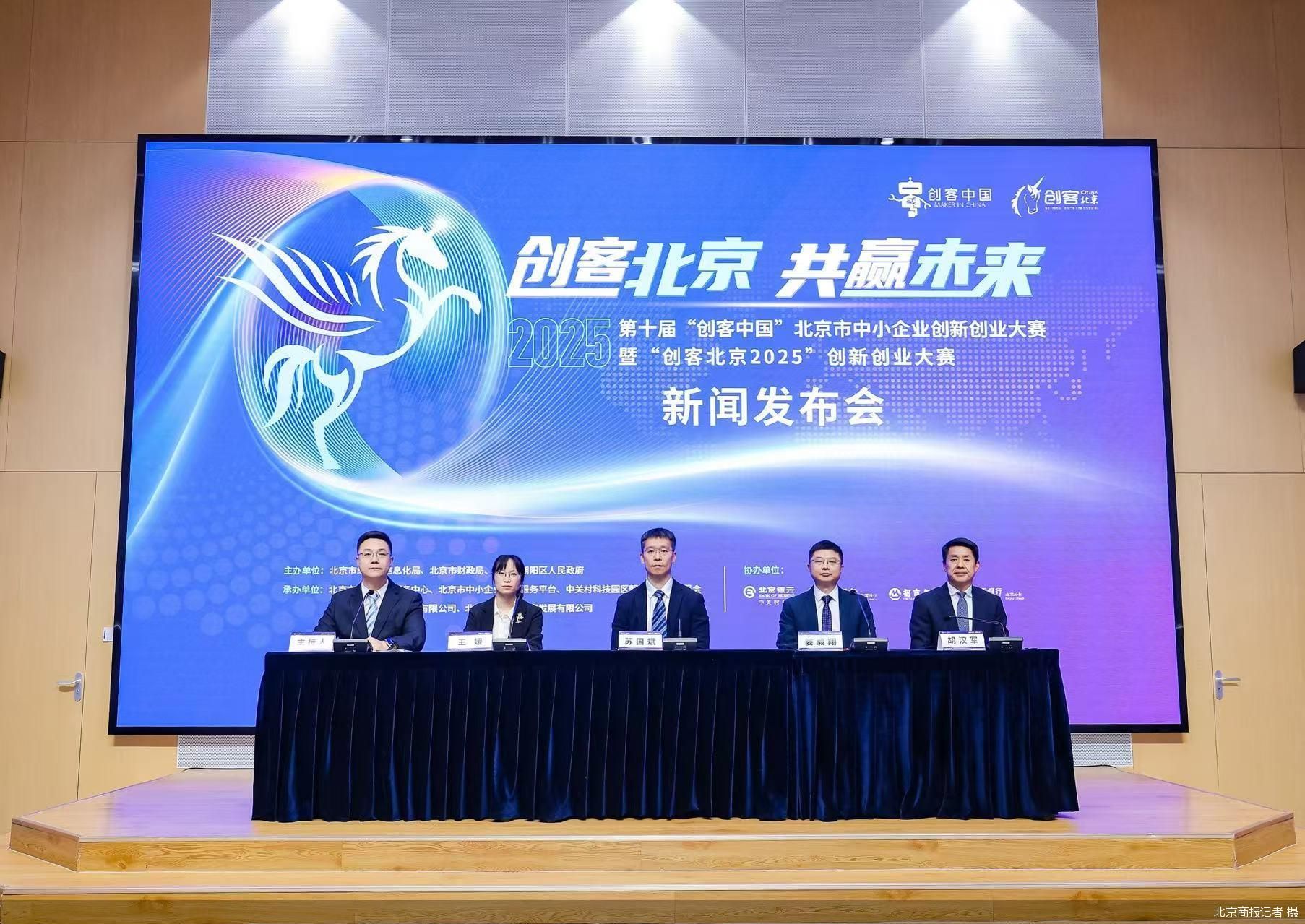
龙头企业专项赛事则以行业龙头企业"张榜"、中小企业"揭榜"的形式,助力中小企业参与重点产业链供应链强链补链,推动形成大中小企业良性互动、协同 发展格局。目前已联合北汽集团、北京人形机器人创新中心、海博思创、中国商飞北研中心、软通动力、中国有研、集创北方、京东方、京东、360、西门 子、用友和东华软件等13家龙头企业设置专项赛道,重点围绕新汽车科技、具身智能、民用航空、新材料等领域,发现前沿技术,开展融合对接。 6月12日,第十届"创客中国"北京市中小企业创新创业大赛暨"创客北京2025"创新创业大赛新闻发布会在京召开。据悉,本届大赛分为北京区域赛事和龙头 企业专项赛事,已于5月30日启动报名,项目招募报名截止时间为6月30日。同时,首次将大赛成绩与专精特新企业认定挂钩,根据参赛及获奖情况给予1—5 分的专项加分。 设置北京区域赛事和龙头企业专项赛事 据悉,"创客北京2025"创新创业大赛分为北京区域赛事和龙头企业专项赛事。其中,北京区域赛事由窗口平台初赛、区级复赛和市级决赛组成,共设立200 余个初赛点、17个分赛区。同时,聚焦高精尖和未来产业领域,围绕人工智能、医药健康、信息技术、高端制造、具身智能、新材料 ...

19家民营银行2024年经营情况对比
数说者· 2025-06-12 13:39
Core Viewpoint - The article discusses the development of private banks in China over the past decade, highlighting the involvement of major internet companies and the current status of these banks in terms of total assets and financial performance [1][4]. Summary by Sections Development of Private Banks - Since the pilot launch in 2014, China has established 19 private banks, with significant participation from major internet companies like Tencent, Alibaba, Xiaomi, and 360 [1]. List of Private Banks and Major Shareholders - A detailed table lists the names of the 19 private banks along with their top three shareholders, indicating the ownership structure of each bank [2][3]. Total Assets and Growth Rates - As of the end of 2024, the total assets of the private banks show significant variation, with Shenzhen Qianhai WeBank leading at 651.776 billion, a year-on-year growth of 21.70%. Zhejiang Wangshang Bank follows with 471.035 billion in total assets [4][6]. - Other banks like Jiangsu Sushang Bank, Wuhan Zhongbang Bank, and Sichuan Xinwang Bank also reported total assets exceeding 100 billion [4]. Revenue and Profitability - WeBank reported the highest revenue among private banks in 2024, amounting to 38.128 billion, ranking approximately 22nd among 42 A-share listed banks. Wangshang Bank followed with 21.314 billion [6][7]. - In terms of net profit, WeBank achieved 10.903 billion, significantly higher than Wangshang Bank's 3.166 billion, which is 3.44 times less [8]. Performance Variability - The growth rates of total assets varied among the banks, with WeBank, Yumin Bank, Sushang Bank, Huazhong Bank, and Minshang Bank exceeding 10%. Conversely, Hunan Sanxiang Bank, Jilin Yilian Bank, and Liaoning Zhenxing Bank experienced negative growth [6]. - The article also notes that some banks, including Anhui Xin'an Bank, reported minimal revenue, highlighting the disparity in performance among the private banks [5][7].

搜索范式革命:纳米AI与谷歌的「超级搜索智能体」共识
36氪· 2025-06-12 11:28
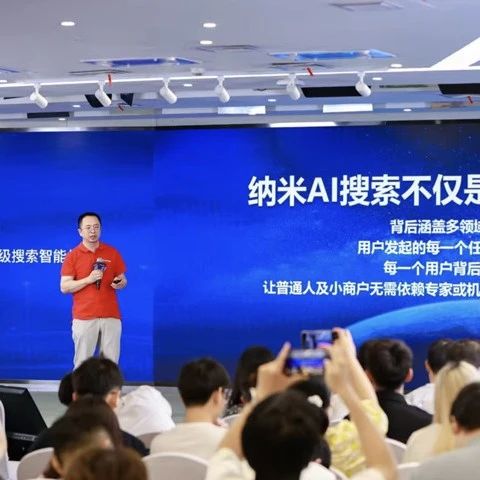
Core Viewpoint - The article discusses the evolution of search engines into "super search" intelligent agents by 2025, emphasizing their transition from traditional keyword-based searches to advanced task execution capabilities that understand user intent and deliver actionable solutions [2][8][16]. Group 1: Evolution of Search Engines - The shift from traditional search engines to intelligent agents is marked by the emergence of AI search 3.0, which integrates intent recognition and task execution into a seamless user experience [8][16]. - AI search 1.0 and 2.0 focused on information aggregation and answer provision, respectively, but lacked the ability to execute complex tasks directly [5][8]. - The future of search engines lies in their ability to function as task engines, providing users with direct solutions rather than just information [6][8]. Group 2: Capabilities of Super Search - Super search must possess five key capabilities: task planning, multi-model collaboration, high-dimensional information recognition, multi-modal output, and personalized search experiences [9][10][11][12][13]. - Current AI search engines are still in the early stages of development, with some like Nano AI and Google's AI Mode showing promise in covering these capabilities [14][18]. Group 3: Market Position and Competition - Nano AI has emerged as a leader in the AI search engine market, outperforming competitors in user engagement and functionality [19][21]. - The competition between established players like Google and emerging platforms like Nano AI is intensifying, with both focusing on transforming search engines into intelligent agents [22][33]. - The article highlights the importance of technological infrastructure and the ability to execute complex tasks as critical factors for success in the evolving search engine landscape [18][22]. Group 4: Practical Applications - Practical examples of super search capabilities include generating comprehensive reports and conducting in-depth research based on user queries, showcasing the potential for AI to enhance productivity [26][30]. - The article illustrates how Nano AI can autonomously break down complex tasks and deliver tailored solutions, emphasizing the shift from information retrieval to actionable insights [30][31].
搜索范式革命:纳米AI与谷歌的「超级搜索智能体」共识
36氪· 2025-06-12 11:27
Core Viewpoint - The article discusses the evolution of search engines into "super search" intelligent agents by 2025, emphasizing their transition from traditional keyword-based searches to task-oriented engines that understand user intent and deliver actionable solutions [2][8][16]. Group 1: Evolution of Search Engines - The concept of "super search" is moving from theory to reality, with search engines evolving to possess both intent understanding and task execution capabilities [2][3]. - The AI search 1.0 era involved traditional web page ranking with AI enhancements, while AI search 2.0 transitioned to answer engines focused on delivering direct answers [5][8]. - By 2025, AI search 3.0 will enable a closed-loop system where user intent input leads to automatic execution and result delivery, fundamentally changing how users interact with search engines [8][16]. Group 2: Capabilities of Super Search - Super search must incorporate five key capabilities: task planning, multi-model collaboration, high-dimensional information recognition, multi-modal output, and personalized search experiences [9][10][11][12][13]. - Current AI search engines are still in the early stages of development, with notable examples like Nano AI and Google's AI Mode demonstrating varying degrees of these capabilities [14][18]. Group 3: Market Position and Competition - Nano AI has emerged as a leader in the AI search engine market, achieving significant user engagement and outperforming competitors like Perplexity and traditional search engines [19][21]. - The competition in the search engine space is shifting towards more open agent product designs, with companies like Google leveraging their established technology and brand, while Nano AI focuses on rapid innovation and user-centric product development [33][34].
周鸿祎回应“干掉360市场部”:想刺激员工养成用AI的习惯、学会驾驭智能体
Sou Hu Cai Jing· 2025-06-12 09:51
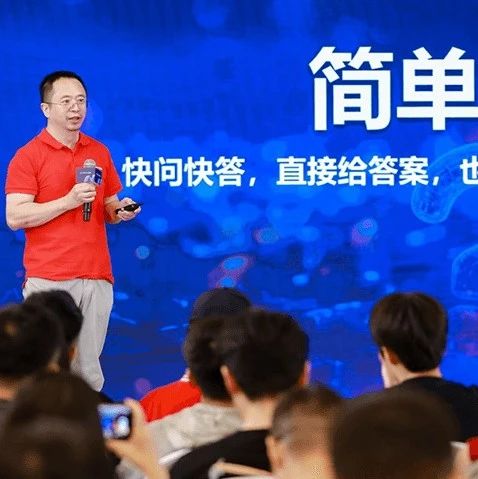
Core Viewpoint - The core message from the recent press conference by 360's founder Zhou Hongyi revolves around the need to integrate AI into the company's operations, particularly within the marketing department, which he initially suggested eliminating to promote AI usage [2][4][5]. Group 1: AI Integration and Marketing Department - Zhou Hongyi's statement about "eliminating the marketing department" was intended to provoke thought and encourage the team to adopt AI practices, rather than a literal plan to disband the department [3][4]. - The current AI usage rate within 360 is approximately 60-70%, with varying levels of engagement across different teams [4]. - Zhou emphasized the importance of developing habits around AI usage, indicating that all departments, including HR, finance, and legal, should work on creating intelligent agents [5][6]. Group 2: Concept of Intelligent Agents - Zhou introduced the concept of "super intelligent agents," which are expected to automate complex tasks and enhance operational efficiency [7][8]. - He believes that intelligent agents will evolve from being mere tools to becoming digital employees or assistants, with humans taking on roles as coaches and managers of these agents [5][6]. - The future workplace may see one employee managing multiple intelligent agents, shifting the focus from routine tasks to strategic oversight [5][6]. Group 3: AI Search Evolution - Zhou outlined the evolution of AI search, categorizing it into three generations, with the latest being the "nano AI super search agent," which integrates various large models for enhanced functionality [10][12]. - The upgraded nano AI super search agent can perform tasks such as planning, summarizing, and executing, showcasing a significant advancement in AI capabilities [12]. - This new search agent is designed to improve user experience by providing detailed task breakdowns and cross-platform information verification [12]. Group 4: AI Hardware Developments - 360 is also venturing into AI hardware, launching products like the nano AI Note and collaborating with Rokid on AI glasses, both of which will incorporate nano AI capabilities [13]. - The company aims to make these products competitively priced while enhancing their AI functionalities [13].

朝阳区人工智能企业近700家 覆盖产业链全环节
Zhong Guo Xin Wen Wang· 2025-06-12 06:20
Core Insights - Chaoyang District in Beijing has made significant advancements in technology and innovation, with a focus on the "business + technology" dual-driven development strategy, enhancing its comprehensive strength in technological innovation [3][11] - As of now, there are 3,649 national high-tech enterprises in Chaoyang District, with 1,171 specialized and innovative enterprises, 82 national "little giant" enterprises, 25 unicorns, and 146 listed companies [1][3] - The district has established a robust industrial internet ecosystem, with 677 industrial internet companies and has been recognized as a national demonstration base for new industrialization in the industrial internet sector [4] Technology and Innovation - In Q1 2025, the GDP contribution of information services, technology services, and industrial sectors in Chaoyang reached 28.1%, with technology service revenue growth surpassing the city average by 0.7 percentage points [3] - The district is focusing on future industries such as the metaverse, digital healthcare, quantum information, and 6G technology [3][4] Industry Clusters - Chaoyang has developed a "3+X" industrial cluster model, emphasizing industrial internet, artificial intelligence, and digital security, while also fostering new business formats in various sectors [3][4] - The artificial intelligence sector has nearly 700 companies, covering 118 industry segments, with a focus on applications in finance, education, healthcare, and retail [5] Infrastructure Development - The district is actively constructing specialized industrial parks, with over 20 parks in development, including the first industrial AI park in the country [7][10] - The Chaoyang District has launched the first digital healthcare park in the city, focusing on imaging-assisted diagnosis and health management [6] Collaborative Innovation - Chaoyang is enhancing its innovation ecosystem by collaborating with universities and research institutions, establishing innovation centers, and promoting the commercialization of research projects [9][11] - The district has implemented a comprehensive technology innovation policy framework, allocating over 600 million yuan in 2024 to support high-tech industries and small enterprises [9][10] Financial Services - The district has created a technology finance service matrix, attracting over 220 financial institutions to provide comprehensive financial services to tech companies [10] - In the first half of the year, 74 tech companies received credit totaling 5.15 billion yuan, addressing financing challenges faced by these enterprises [10] International Cooperation - Chaoyang has established the first international technology organization headquarters cluster in the country, enhancing international collaboration in technology innovation [11] - The district is working on building a dual-service system to support both local enterprises going global and foreign enterprises entering the local market [11]
下一个十年,AI的大方向
Hu Xiu· 2025-06-12 01:16
Core Insights - The article reflects on the evolution of artificial intelligence (AI) over the past decade, highlighting the rise and decline of major players in the industry, particularly the "AI Four Dragons" [3][4] - It suggests that the next decade (2025-2035) may shift focus from visual recognition to visual generation technologies [4][5] - The article discusses the emergence of various AI models in China, including those from major companies like Baidu, Alibaba, and Tencent, indicating a competitive landscape [4][6] Industry Developments - The AI landscape has seen significant advancements in large models, with a variety of applications emerging, such as text generation, audio generation, image generation, and video generation [4][5][6] - The article notes that these advancements are being monetized, with many companies starting to charge for their services, except for code generation in China [6] Historical Milestones - Key milestones in AI development include the introduction of the Transformer model in 2017, which revolutionized the field by consolidating various specialized models into a more unified approach [7] - The launch of ChatGPT in 2023 marked a significant turning point, prompting major companies like Google to accelerate their AI initiatives [8] - The article also references the release of OpenAI's Sora visual model in 2024, which highlighted the industry's challenges and led to renewed focus on text and context generation [8] Philosophical Considerations - The article raises questions about the future direction of AI, debating whether the next decade will be dominated by Artificial General Intelligence (AGI) or AI-Generated Content (AIGC) [11] - It draws parallels with the skepticism surrounding reusable rocket technology, suggesting that innovation often faces initial resistance before its value is recognized [13][14][15]
该翻篇就翻篇吧,搞 AI 一定要向前看
Founder Park· 2025-06-11 12:36
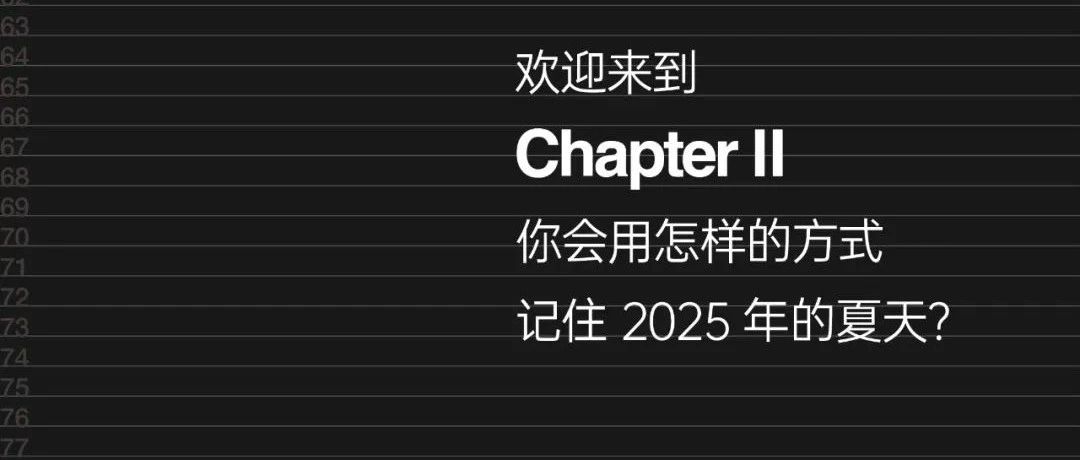
Founder Park /AGI Playground 2025 动意以 Agenda 6.20 PM lec 特别单元 22822882 Founder Show x se np 新锐与成熟创业者的 28 深度探讨 30 6.21 AM 主题分享: Why Chapter 2 ? 6.21 PM Al 硬件 垂直 Agent 全球化 50 6.22 AM al Al Cloud 100 China x AGI Playground 6.22 PM 创业新范式 | 出海新方法 | After Party 6.21 22 PM 露天 Social Playground 喝点东西, 坐下唠! Founder Park /AGI Playground (2025 Buy Tickets Now 15 16 17 18 19 20 21 23 Founder Park Founder Park 2 % % 2 % % % /AGI Playground /AGI Plavaround /2025 '2025 /早鸟单日票 早的印度 /6月22日 /6月21日 31 32 33 x751 × 751 34 35 36 ...
三六零周鸿祎:一个员工领导100个智能体将成常态
news flash· 2025-06-11 11:14
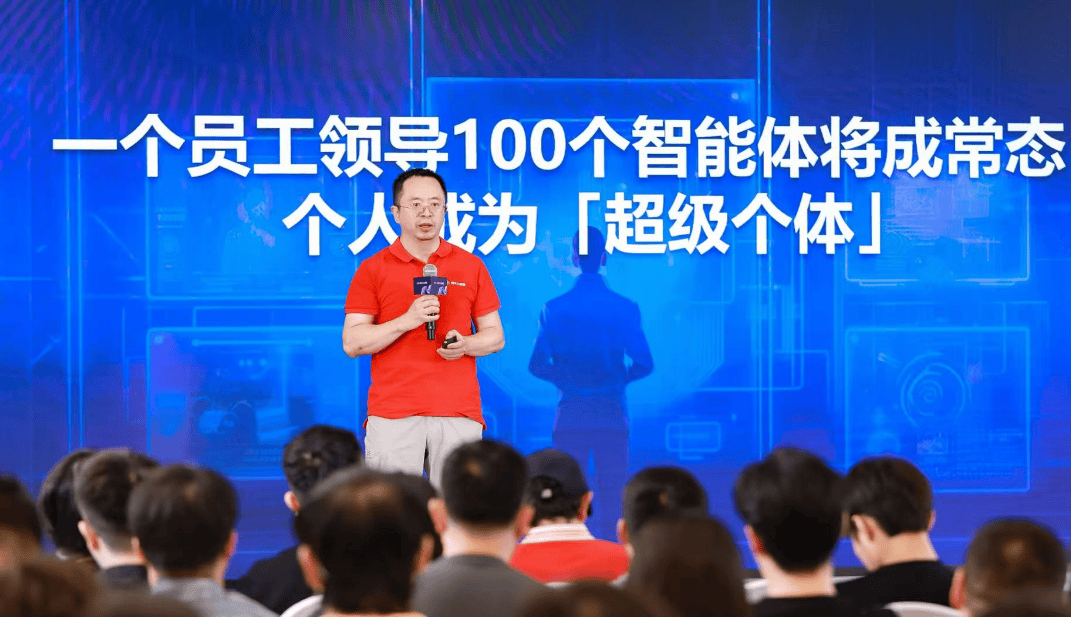
Core Viewpoint - The future will see employees managing multiple AI agents, leading to the emergence of "super individuals" and "super companies" with a high ratio of digital employees [1] Group 1 - On June 11, 360 (601360) held a launch event for its "Nano AI Super Search Intelligent Agent" [1] - Zhou Hongyi emphasized that it will become common for one employee to lead 100 intelligent agents [1] - Companies with a high proportion of digital employees are expected to become "super companies" [1]