邮储银行

Search documents
围绕“枢纽”建设 奋力谱写中国式现代化河南篇章
Qi Huo Ri Bao· 2025-12-15 01:37
Core Viewpoint - The article discusses the strategic development of Henan Province in China, focusing on the construction of a "hub" to enhance its economic and social development during the 14th Five-Year Plan period, leveraging its geographical advantages and comprehensive resources to integrate into the national unified market [1]. Group 1: National Element Allocation Hub - The core of building a national element allocation hub is to promote the market-oriented allocation of resources, which will enhance overall productivity and support high-quality development [2]. - Henan has the potential to become a national element allocation hub due to its rich resources, large population, and established infrastructure, including being a national big data comprehensive pilot zone [2]. - The Zhengzhou Data Trading Center is crucial for this hub, facilitating the commercialization and financialization of data, which will enhance the province's element allocation capabilities [3]. Group 2: Modern Logistics Hub - The 14th Five-Year Plan suggests implementing actions to reduce logistics costs and enhance logistics infrastructure, aiming to establish several regional logistics hubs and an international logistics center [6]. - To convert "flow" into "retention," it is essential to improve the efficiency of logistics through multi-modal transport and enhance international supply chain stability [7]. - Recommendations include building a multi-layered logistics hub network, innovating logistics service models, and expanding international logistics channels [8]. Group 3: Commodity Distribution Hub - The plan emphasizes supporting the Zhengzhou Commodity Exchange and establishing a resource allocation hub for bulk commodities, focusing on enhancing storage and transportation capabilities [9]. - The development of a comprehensive supplier network and a significant agricultural product trading center is essential for establishing a large-scale market and trade system [10]. - The integration of futures and spot markets at the Zhengzhou Commodity Exchange is seen as a key driver for the resource allocation hub, promoting price discovery and risk management [11].

最低持有期榜单出炉!固收增强产品成“最靓的仔”
2 1 Shi Ji Jing Ji Bao Dao· 2025-12-15 01:17
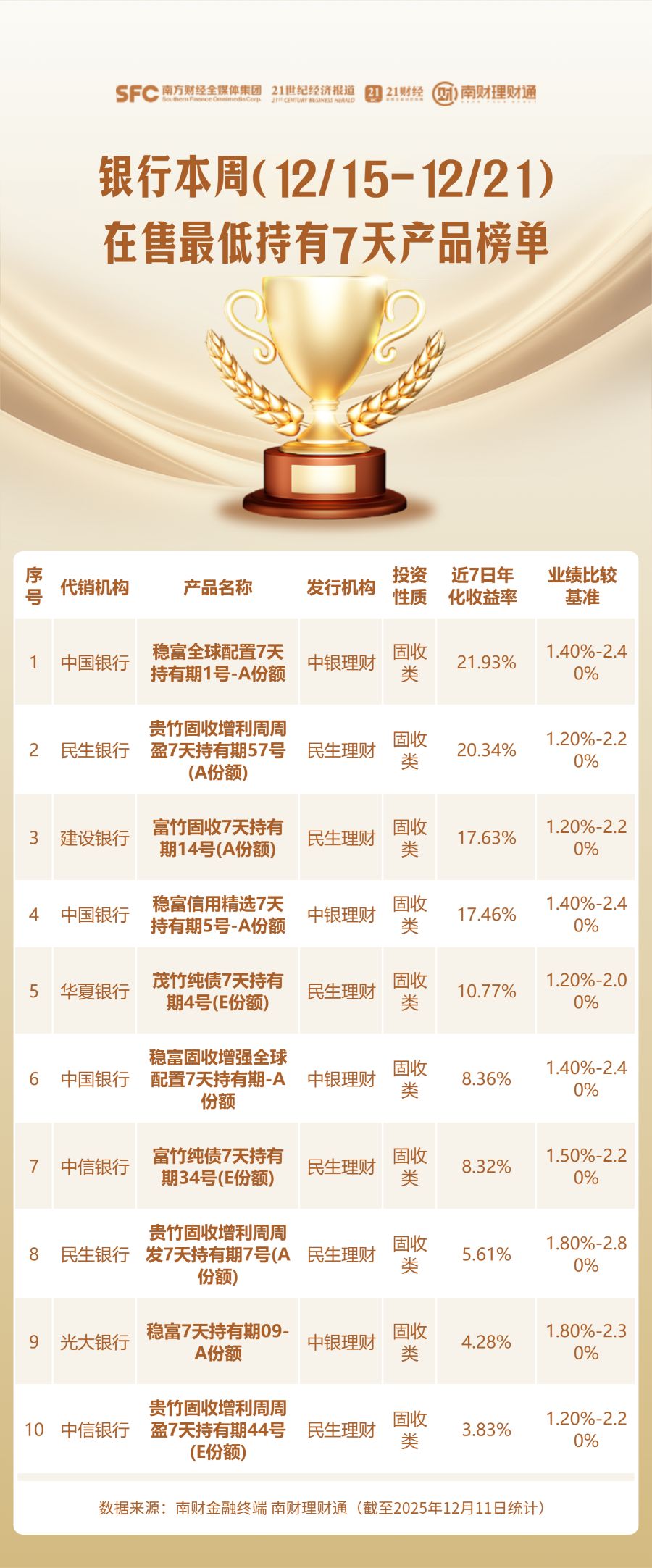
本期,南财理财通重点关注最低持有期人民币公募产品的业绩表现,按照7天、14天、30天、60天持有期限分类对产品业绩进行 排名,业绩指标计算指标为年化收益率,计算区间与持有期限相同,如90天持有期产品的业绩计算区间为近三月年化收益率, 同机构同系列同投资周期产品保留一只参与排名。 统计代销机构(28家):工商银行、中国银行、农业银行、邮储银行、建设银行、交通银行、招商银行、中信银行、光大银 行、民生银行、兴业银行、浦发银行、广发银行、浙商银行、华夏银行、平安银行、恒丰银行、渤海银行、北京银行、宁波银 行、江苏银行、上海银行、南京银行、杭州银行、徽商银行、微众银行、网商银行、百信银行。 需要特别提醒的是:本榜单对理财产品"在售"状态的判断基于其投资周期推算。但实际情况中,部分产品可能因额度售罄,或 银行针对不同客户展示的产品清单存在差异而无法购买。因此,建议投资者以代销银行APP的实际展示为准。 此外,南财理财通虽力求客观公正,但不对本评价榜信息的真实性、完整性和准确性作任何保证,排名信息仅供参考。 | | | (A(分割) | | K | | | | --- | --- | --- | --- | --- | ...




今年超9600家银行网点“关门”,农村金融机构成退场主力
Xin Lang Cai Jing· 2025-12-15 00:44
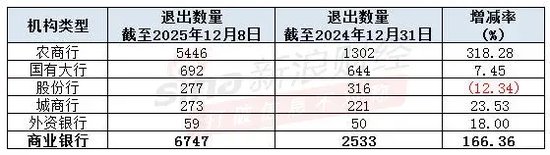
当前,商业银行线下网点"瘦身"已趋于常态化。 农商行占比达八成 据金监总局官网"金融许可证信息"栏目,截至12月8日,共计6747家商业银行线下网点正式 退出,与去年退出的2533家相比大幅增加。 其中,当前最新退出的机构是广东清新农村商业银行股份有限公司浸潭中心分理处,批准日 期为2018年7月31日,发证日期为2021年12月22日,发证机关是清远分局,退出日期为今年 12月5日。 与此同时,今年第一家获批退出的是中原银行股份有限公司三门峡文博城支行,批准日期为 2014年12月23日,发证日期在2021年10月8日,发证机关为三门峡分局,退出日期为今年1月 2日。 | 机构类型 | 退出数量 | 退出数量 | 增减率 | | --- | --- | --- | --- | | | 截至2025年12月8日 | 截至2024年12月31日 | (%) | | 农商行 | 5446 | 1302 | 318. 28 | | 国有大行 | 692 | 644 | 7.45 | | 股份行 | 277 | 316 | (12. 34) | | 城商行 | 273 | 221 | 23. 53 | | 外资银行 ...


银行业周度跟踪2025年第49周:如何理解银行股年末资金面波动?-20251215
Changjiang Securities· 2025-12-14 23:30
Investment Rating - The investment rating for the banking industry is "Positive" and maintained [12] Core Insights - The fluctuations in the banking sector's funding at year-end are primarily due to changes in the allocation of trading funds. In early October, bank index funds saw significant inflows, with a record net inflow of 8.2 billion yuan in the week of October 17. However, there has been a continuous net outflow for five weeks, with a recent outflow of 2.6 billion yuan. This reflects changes in market risk appetite as the quarter and year-end approaches, with expectations that after the year-end, allocation forces will push up bank stock valuations and the scale of bank index funds [2][6][37]. - The mid-term dividend transactions are expected to have an impact. The four major state-owned banks have recently completed their mid-term dividend ex-dividend dates, which historically lead to stock price adjustments. The mid-term dividend ex-dividend dates for these banks have been moved up to December this year. It is anticipated that other large banks will also implement mid-term dividend ex-dividend dates towards the end of the year and before the Spring Festival. If these transactions cause stock price adjustments, it typically presents a good opportunity for long-term investors [7][39]. Summary by Sections Market Performance - The banking index has fallen by 1.6% this week, underperforming the CSI 300 and ChiNext indices by 1.5% and 4.3%, respectively. This marks the fourth consecutive week of decline for the banking sector, driven by a further recovery in market risk appetite, leading to fluctuations in fund behavior. Active funds that previously sought defensive positions have continued to flow out of the banking sector [20][22]. Dividend and Stock Performance - As of December 12, the average dividend yield for the six major state-owned banks in A-shares has risen to 3.94%, with a spread of 210 basis points over the 10-year government bond yield. The average dividend yield for H-shares is 5.14%, with an average discount rate of 23% compared to A-shares, remaining stable from the previous week [22][26]. Fund Flows - The banking index funds have experienced a significant net outflow recently, with a net outflow of 2.6 billion yuan this week. This trend is expected to continue reflecting changes in market risk preferences as the year-end approaches. The report anticipates that after the year-end, the allocation forces will likely push up bank stock valuations and the scale of bank index funds [6][37]. Economic Policy Context - The Central Economic Work Conference held on December 10-11 emphasized the need to expand domestic demand and boost consumption as primary tasks. It also highlighted the importance of addressing risks in key areas such as real estate and local government debt, which remain critical concerns for the financial sector [8][43][44].
2026年怎么干?一线银行人这样说……
Jin Rong Shi Bao· 2025-12-14 23:04
Core Insights - The 2025 Central Economic Work Conference emphasized the need to fully tap economic potential and maintain a dual approach of policy support and reform innovation, which has sparked widespread discussion among grassroots banking staff [1][2] - The conference prioritized expanding domestic demand and building a strong domestic market, providing banks with new growth opportunities in sectors like accommodation, dining, entertainment, education, and elderly care [2][3] - The meeting highlighted the importance of innovation-driven development, guiding banks to deepen their engagement in "technology finance" and support innovation [3][4] - The conference addressed the stabilization of the real estate market and the promotion of "good housing" construction, which is crucial for residents' well-being and aligns with banks' traditional strengths in housing financial services [4][5] Group 1 - The conference called for a focus on serving the real economy, technology innovation, and green development, encouraging banks to translate these directives into actionable measures [2][3] - Grassroots banking professionals expressed their commitment to aligning their work with the conference's spirit, aiming to enhance financial services for small and micro enterprises and improve efficiency through financial technology [1][2] - The emphasis on rural revitalization and urban-rural integration has boosted banks' confidence in deepening their involvement in these areas [3][4] Group 2 - The conference's focus on stabilizing the real estate market and promoting housing construction provides a strong foundation for banks to support residents' housing needs [4][5] - Banks are planning to optimize differentiated housing credit policies to meet the demands of new citizens and families with multiple children, leveraging financial technology to enhance service efficiency [4][5] - As the "14th Five-Year Plan" concludes and the "15th Five-Year Plan" begins, banking staff are eager to implement the conference's directives and contribute to high-quality economic development [5]

多家银行传达学习中央经济工作会议精神
Zheng Quan Ri Bao· 2025-12-14 15:49
本报记者 杨洁 多家国有大行在会议中表示,中央经济工作会议为做好2026年经济金融工作提供了根本遵循,结合自身实际,下一步工作 将重点围绕在全面做好金融"五篇大文章"、加力支持扩大内需、支持"两新"政策与"两重"项目实施、统筹高质量发展与高水平 安全、全面服务好高水平对外开放等多个维度。 近日,政策性银行、国有大行党委纷纷召开会议,传达学习中央经济工作会议精神,按照全国金融系统工作会议的要求, 研究部署贯彻落实举措,有力有序有效做好2026年经营管理工作。 与此同时,各家大行均强调突出主责主业。工商银行会议提出要发挥主力军作用,持续发力促高质量发展。围绕服务"四 稳",突出主责主业,提供全面金融解决方案;农业银行会议强调要坚守服务"三农"主责主业,进一步加大县域乡村融资投 放,推动县域经济高质量发展,持续巩固拓展脱贫攻坚成果;中国银行会议要求加快提升全球布局能力和国际竞争力,积极服 务高质量共建"一带一路"、自贸区(港)建设、贸易投资一体化发展,加快推进人民币国际使用,助力深化改革扩大开放;建 设银行会议强调持续优化扩大内需、科技创新、协调发展、中小微企业、民生保障等重点领域金融供给,推动金融资源向经济 社会 ...
2025年度北京金融业十大品牌揭晓
Bei Jing Shang Bao· 2025-12-14 15:39
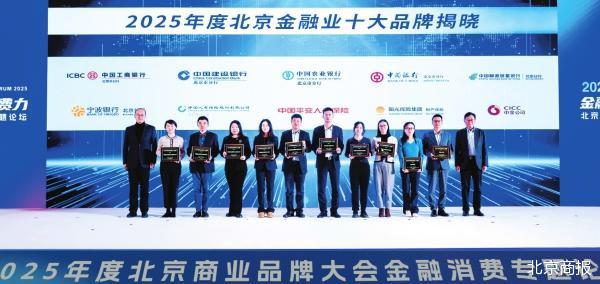
Group 1 - The top ten financial brands in Beijing for the year 2025 have been announced [1] - The list includes major banks such as ICBC, China Construction Bank, and Agricultural Bank of China [2] - Other notable companies on the list are China Life Insurance and Ping An Life Insurance [2]
这场论坛聚焦金融提振消费
Bei Jing Shang Bao· 2025-12-14 15:39
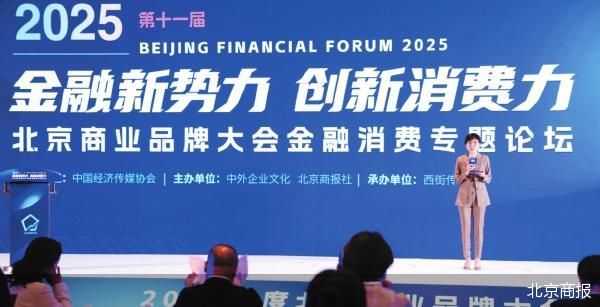
Group 1 - The core viewpoint emphasizes the integration of finance and consumption as a key support for expanding domestic demand and stabilizing economic growth, with a focus on quality improvement rather than mere scale expansion [1][3] - The 2025 Beijing Commercial Brand Conference highlighted the importance of financial empowerment in enhancing consumption quality, with ten major financial brands recognized for their contributions [1] - The forum discussed the evolving relationship between finance and consumption, indicating that financial services are becoming more crucial in driving consumer spending and economic stability [3][4] Group 2 - The macroeconomic outlook for 2026 suggests a significant increase in the resident consumption rate, with financial policies expected to focus on service consumption and enhancing residents' income [3][4] - The transition from traditional factor-driven growth to innovation-driven growth is identified as a key transformation in the next five years, with an emphasis on high-quality development and technological innovation [4][6] - Financial institutions are expected to play a larger role in supporting emerging industries and facilitating the shift from real estate-driven growth to new economic drivers [6][9] Group 3 - The rise of new consumer segments, such as new citizens and the elderly economy, presents opportunities for financial services to innovate and meet diverse consumer needs [9][10] - The demand for inclusive financial services is growing, particularly among younger consumers and new labor groups, highlighting the need for tailored financial products [9][10] - The insurance sector is leveraging technology to enhance service delivery and expand coverage, particularly for traditionally underserved populations [10][11] Group 4 - The wealth migration from traditional assets like real estate to diversified financial products is reshaping the investment landscape, with a focus on wealth management and financial planning [13][14] - Financial technology is being utilized to provide personalized services to clients, enhancing customer experience and engagement in wealth management [14][15] - The dual function of life insurance as both risk protection and asset growth is emphasized, positioning it as a vital component in comprehensive asset planning [16]
探寻利率方向(5):为何市场不谈论“资产荒”了?
GF SECURITIES· 2025-12-14 14:29
Investment Rating - The report assigns a "Buy" rating for the banking sector, indicating an expected performance that will exceed the market by more than 10% over the next 12 months [41]. Core Insights - The report discusses the concept of "asset scarcity," which is explained through two perspectives: the mismatch between supply and demand for funds, and the insufficient supply of quality assets that meet investors' risk and return preferences. It argues that the traditional supply-demand imbalance does not adequately explain the phenomenon of asset scarcity [5][13]. - The report identifies three dimensions of asset scarcity: macro, meso, and micro. It emphasizes that the bond market is primarily concerned with the micro-level aspects of asset scarcity [5][16]. - To alleviate macro-level asset scarcity, the report suggests increasing credit issuance and fiscal efforts, enhancing liquidity management by the central bank, and guiding non-bank funds back to banks to lower residents' yield expectations on non-bank assets [20][23]. - At the meso level, the report highlights the importance of fiscal and monetary growth rates, suggesting that credit and fiscal efforts should be strengthened while avoiding capital idling [23][24]. - The micro-level analysis focuses on the expectations of institutions regarding asset-liability expansion and actual expansion, noting that there is often a mismatch between liabilities and suitable assets [25][29]. Summary by Sections Section 1: Asset Scarcity Exploration - The report explores why the market has shifted its focus away from "asset scarcity," attributing this to a lack of significant asset-liability gaps in the real economy and the nature of interest rates as contractual [5][13]. - It discusses the macroeconomic factors influencing asset scarcity, including the expected decline in bond market yields and economic forecasts [16][18]. Section 2: Financial Institutions' Asset-Liability Management - The report provides a detailed analysis of financial institutions' liabilities, emphasizing the need for a balance between asset expansion and government debt supply [25][29]. - It projects that by 2026, the demand for government bonds will increase by 1.5 trillion yuan compared to 2025, indicating a growing need for asset allocation in the banking sector [25][29]. Section 3: Insurance Sector Analysis - The report estimates that the insurance sector will face a net increase in asset-liability mismatch of 1.28 trillion yuan by 2026, driven by the expiration of high-yield non-standard investments and continuous growth in premium income [30][29]. Section 4: Expected Returns and Market Dynamics - The report highlights the compression of asset-liability yield spreads due to rigid liabilities and flexible asset yields, which contributes to the practical aspect of asset scarcity for enterprises and theoretical scarcity for residents [35][29]. - It suggests that banks should lower the rigid costs of liabilities and guide non-bank entities to adjust their yield expectations [35][29].
顺丰让出来的电退件市场,京东和三通一达接得住吗?
Tai Mei Ti A P P· 2025-12-14 11:17
Core Insights - The article discusses the shift in the logistics market for Douyin's (TikTok's Chinese counterpart) return goods, where SF Express has relinquished its share, allowing JD Logistics and other companies to compete for this lucrative segment [1][6][16] - The return logistics market is experiencing explosive growth, driven by the rise of e-commerce, particularly live-streaming sales, which have significantly higher return rates compared to traditional e-commerce platforms [3][4][8] Market Dynamics - The volume of e-commerce return shipments in China has surged from 3.6 billion in 2019 to 8.2 billion in 2023, with projections indicating it could reach 20.9 billion by 2028, representing about 10% of the daily express delivery volume [2] - Live-streaming e-commerce has a return rate ranging from 30% to 60%, with some categories experiencing rates as high as 80% during peak sales events, creating a substantial demand for efficient reverse logistics [3][4] Service Requirements - Douyin's return logistics require high service standards, including a five-minute initial response and one-hour code verification, which poses challenges for companies like JD Logistics and the "Three Links and One Reach" (a group of logistics companies) to meet these expectations [4][11][16] - SF Express has been recognized for its ability to meet these stringent requirements, maintaining a collection timeliness rate of over 95% for return shipments [5][11] Strategic Shifts - SF Express's decision to step back from Douyin's return logistics is attributed to a strategic focus on improving overall profit margins, which conflicted with Douyin's need to reduce logistics costs [6][8][9] - The company's strategy involves a cyclical approach, focusing on volume expansion in the first half of the year and profit optimization in the latter half, leading to stricter customer selection and pricing strategies [6][9] Challenges for Competitors - JD Logistics faces challenges in leveraging its extensive warehouse network for return logistics, as the return process primarily involves transporting goods to designated addresses rather than utilizing its storage facilities [12][13] - The company also struggles with labor shortages, which can hinder its ability to meet the demands of Douyin's return logistics, especially during peak sales periods when resources are prioritized for its own platform [14][15] Future Outlook - The article suggests that despite the transition to JD Logistics and the "Three Links and One Reach," the high service standards required for Douyin's return logistics may lead to a reassessment of logistics partners, potentially resulting in a return to SF Express in the future [15][16]