携程集团

Search documents
恒生科技指数大幅回调!南向资金“跑步入场”,昨日净买入港股超100亿港元
Mei Ri Jing Ji Xin Wen· 2025-07-30 02:16
Group 1 - The Hong Kong stock market opened lower on July 30, with the Hang Seng Tech Index dropping over 2% at one point, while the largest ETF tracking this index also experienced fluctuations [1] - Southbound capital has been a significant source of inflow into the Hong Kong market this year, with a net purchase of HKD 12.72 billion on July 29, bringing the total net inflow to over HKD 840 billion, a record high for the year [1] Group 2 - Ping An Securities highlights that the Hong Kong market still has low valuations and increasing trading activity under the "profit-making effect," maintaining a positive medium to long-term outlook [2] - The latest valuation of the Hang Seng Tech Index ETF (513180) is 22.16 times P/E, which is below 76% of the time since its inception, indicating that the index is still relatively undervalued [2] - Suggested sectors for investment include technology (AI, robotics, semiconductors), innovative pharmaceuticals, low-risk dividend sectors (coal, oil, gas, telecom), and consumer sectors (apparel, dining) that are currently undervalued [2]
智通ADR统计 | 7月30日
智通财经网· 2025-07-29 22:43
Market Overview - The Hang Seng Index closed at 25,271.92, down by 252.53 points or 0.99% on July 29 [1] - The index reached a high of 25,554.41 and a low of 25,232.19 during the trading session, with a trading volume of 66.91 million [1] Major Blue-Chip Stocks Performance - HSBC Holdings closed at HKD 102.137, up by 1.33% compared to the Hong Kong market close [2] - Tencent Holdings closed at HKD 550.482, down by 0.81% compared to the Hong Kong market close [2] ADR Performance Summary - Tencent Holdings: ADR price at HKD 550.482, down by HKD 4.518 or 0.81% [3] - Alibaba Group: ADR price at HKD 117.114, down by HKD 3.586 or 2.97% [3] - HSBC Holdings: ADR price at HKD 102.137, up by HKD 1.337 or 1.33% [3] - Xiaomi Group: ADR price at HKD 54.601, down by HKD 0.699 or 1.26% [3] - Meituan: ADR price at HKD 126.886, down by HKD 1.714 or 1.33% [3] - AIA Group: ADR price at HKD 74.746, down by HKD 0.054 or 0.07% [3] - Hong Kong Exchanges: ADR price at HKD 435.801, down by HKD 4.999 or 1.13% [3] - Industrial and Commercial Bank of China: ADR price at HKD 6.024, down by HKD 0.046 or 0.75% [3] - BYD Company: ADR price at HKD 126.396, down by HKD 1.904 or 1.48% [3] - Ping An Insurance: ADR price at HKD 56.163, down by HKD 0.237 or 0.42% [3]






美亚科技IPO进行时:票务业务锐减,商旅管理崛起,营收质量成焦点
Sou Hu Cai Jing· 2025-07-29 19:58
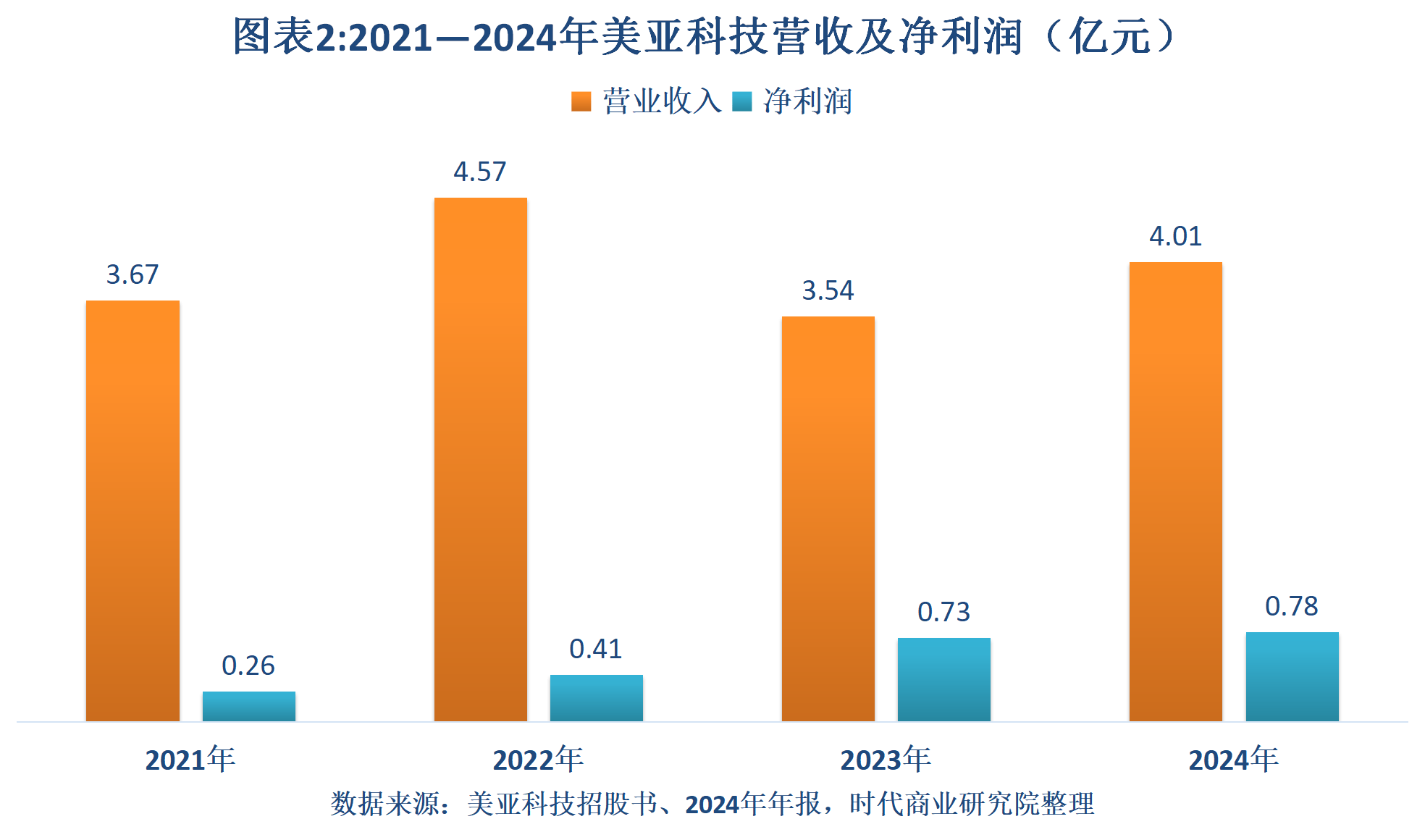
Core Viewpoint - Meiya Technology is advancing its IPO process and aims to raise 360 million yuan to enhance its smart travel services and expand internationally [1][8] Group 1: Company Overview - Meiya Technology is a comprehensive travel solution provider, offering digital travel services including air ticketing, business travel management, and incentive travel [1] - The company has obtained BSP authorization from 145 airlines, providing a competitive edge in ticket pricing [1] - Meiya Technology ranks fifth in the business travel management market in China, following major players like Ctrip and Alibaba [1] Group 2: Financial Performance - The company's revenue from 2021 to 2024 shows significant fluctuations, while net profit remains relatively stable, attributed to business restructuring [2] - Revenue from air ticketing has decreased significantly from 65.48% in 2022 to 30.42% in 2023 due to reduced charter business volume, while business travel management and incentive travel revenues are growing [2] - Cash flow from operating activities has also shown considerable volatility, not aligning with net profit trends, primarily due to the growth in business travel management and extended credit terms with clients [5] Group 3: Competitive Landscape - Ctrip Group is both a major competitor and a key client for Meiya Technology, contributing to its sales from 2021 to 2023 [6] - The relationship with Ctrip reflects the complex and diverse competitive and cooperative dynamics within the business travel industry [6] Group 4: Future Outlook - Despite financial volatility, the company expresses confidence in future growth through the development of smart travel services and international expansion [5][8] - Successful IPO is expected to provide additional funding and market attention, potentially enhancing the company's industry position and competitiveness [8]
外资机构抢筹港股忙 青睐科技、新能源等优质资产
Zheng Quan Ri Bao· 2025-07-29 16:04
Group 1 - The Hong Kong stock market has shown strong attractiveness this year, with the Hang Seng Index increasing over 27% year-to-date as of July 29 [1] - Foreign institutions are actively acquiring quality assets in the Hong Kong stock market, with stable and flexible foreign capital holding a cumulative share of 60.4% by the end of Q2 2025 [1][2] - The valuation of the Hong Kong stock market remains appealing, driven by global capital rebalancing strategies, the return of international capital to emerging markets, and the rise of the technology sector [3][4] Group 2 - The expansion of IPOs in the Hong Kong market is expected to attract more global funds, with foreign institutions participating significantly in cornerstone investments for IPO projects [5] - Cornerstone investors, including hedge funds and sovereign wealth funds, have played a crucial role in stabilizing new stock offerings, with their participation in recent IPOs rising from under 10% to over 80% [5] - The optimistic sentiment around artificial intelligence has sparked global investor interest in Hong Kong IPO projects, leading to increased participation in quality stock placements and refinancing projects [6] Group 3 - The structure of the Hong Kong stock market has become more balanced, enhancing its appeal to foreign institutions, with more leading manufacturing companies listing to fill gaps in the market [7] - Major foreign investment firms are actively buying or increasing their stakes in Hong Kong stocks, exemplified by the Capital Group's significant purchase of Ctrip Group H shares [8] - South Korean investors have also accelerated their entry into the Hong Kong stock market, with trading volumes significantly increasing compared to the previous year [9]
单日新高!外资疯狂涌入
Zhong Guo Ji Jin Bao· 2025-07-29 12:13
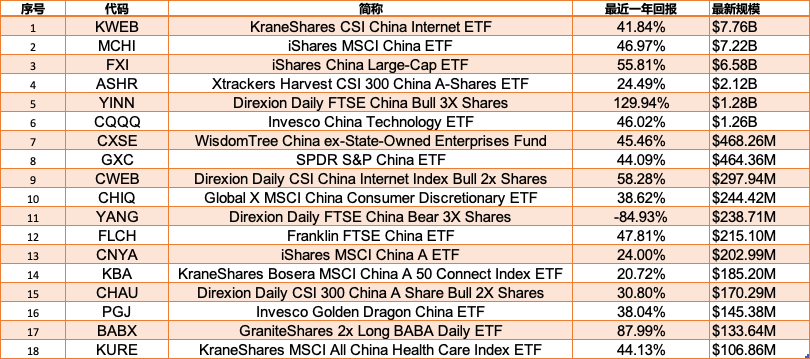
Core Viewpoint - There is a significant increase in passive foreign capital inflows into the Chinese stock market, particularly through ETFs, indicating renewed interest from international investors in Chinese equities [1][14]. Group 1: ETF Inflows - The largest Chinese stock ETF listed in the US, KWEB, saw a net inflow of $876 million (approximately 6.29 billion RMB) from July 17 to July 25, with a peak single-day inflow of $264 million on July 17, marking a five-month high [2][5]. - Other ETFs also experienced substantial inflows, such as MCHI, which had a net inflow of $154 million on July 24 and $201 million on July 25, setting a new annual single-day inflow record [2][3]. - FXI reversed a long trend of outflows with a net inflow of $76.9 million on June 17, while ASHR recorded a net inflow of $96 million over the past month [3]. Group 2: Performance of Chinese ETFs - KWEB has delivered a one-year return of 41.84% with a current size of $7.76 billion, while MCHI has a return of 46.97% and a size of $7.22 billion [5]. - FXI has shown a one-year return of 55.81% with a size of $6.58 billion, and ASHR has a return of 24.49% with a size of $2.12 billion [5]. - CQQQ, a technology-focused ETF, saw a net inflow of $7.23 million in the past month, with a peak inflow of $4.84 million on June 27, marking a three-month high [4]. Group 3: Active Management Funds - Some overseas active management funds are increasing their positions in internet technology stocks, reflecting a preference for high-tech ETFs amid the return of passive capital [6]. - The FSSA China Growth I fund, with a size of $2.7 billion, has increased its holdings in Tencent by 2.75% and in Trip.com by 9.18% [7][8]. - The Fidelity China Focus Fund, with a size of $2.5 billion, has increased its stake in Alibaba by 12.46% and in Trip.com by 6.32% [9][10]. Group 4: Market Sentiment and Future Outlook - Goldman Sachs has raised its 12-month target for the MSCI China Index from 85 to 90, suggesting an 11% upside potential for the index [14]. - The firm noted a resurgence of interest in Chinese stocks among international investors, driven by diversification needs, expectations of a stronger RMB, and the emergence of AI applications in China [14]. - Despite a recent rebound in US stocks, many overseas investors are strategically rebalancing their portfolios through IPOs and secondary offerings, with foreign cornerstone investor participation in Hong Kong IPOs reaching a five-year high [16].
A股,三大利好来袭!
天天基金网· 2025-07-29 03:33
Group 1 - Goldman Sachs raised the 12-month target for the MSCI China Index from 85 to 90, indicating a potential upside of 10% to 11% from the latest closing price [2] - The MSCI China Index has increased over 25% year-to-date, with recent market conditions allowing it to break out of a trading range, reaching four-year highs [2][3] - The investment strategy has shifted towards focusing on individual stocks, with upgrades to "overweight" for the insurance and materials sectors, while maintaining caution on banks and real estate [2][3] Group 2 - The Shanghai Municipal Economic and Information Commission announced measures to support the artificial intelligence industry, including the issuance of 600 million yuan in computing power vouchers [4] - The initiative aims to reduce the cost of using intelligent computing power and support the development of large models and related applications [4][5] - A total of 300 million yuan will be allocated for model vouchers to promote the application of third-party large model APIs [4][5] Group 3 - The Ministry of Industry and Information Technology emphasized the need to enhance policies for emerging industries, including humanoid robots and the Internet of Things [7] - A new round of actions to stabilize growth in ten key industries will be implemented, focusing on the integration of culture and industry [7] - The government aims to promote the digital transformation of industries and improve the quality of industrial software and open-source systems [7] Group 4 - The solar energy sector is undergoing a "de-involution" process, with recent efforts to address below-cost sales leading to initial price stabilization in the supply chain [8] - Analysts suggest that policy support and technological advancements may accelerate supply clearing in the solar industry, providing significant valuation recovery potential [8]

中国股市已实现“夏季突破”,高盛认为未来应“轻指数、重个股”
Hua Er Jie Jian Wen· 2025-07-29 03:27
Core Viewpoint - The Chinese stock market has achieved a "summer breakthrough," with the MSCI China Index reaching a four-year high and the CSI 300 Index hitting its annual peak, although Goldman Sachs warns that the valuation of A-shares is no longer low, indicating that the easy profit phase from index betting may be over [1] Group 1: Market Drivers - Key factors driving the recent A-share rally include improved Sino-U.S. relations, strong Q2 economic data, policy interventions targeting key industries, a recovery in the Hong Kong IPO market, and record inflows from the "southbound trading" [1] - Goldman Sachs maintains an "overweight" stance on the Chinese market, raising the 12-month target for the MSCI China Index to 90 points, suggesting an 11% potential return [1] Group 2: Investment Strategy - The report emphasizes a preference for "Alpha over Beta," suggesting that investors should focus on individual stock selection rather than broad index investments due to increased market sensitivity to risks following a 25% rise in the MSCI China Index year-to-date [2][3] - The forward P/E ratio of the MSCI China Index has reached 12.7 times, indicating that the market is now in a "normalization" range, making it more susceptible to external shocks and domestic growth or policy disappointments [2] Group 3: Sector Recommendations - Goldman Sachs recommends increasing positions in insurance and materials sectors, while downgrading banks and real estate sectors to neutral ratings [8] - The "Prominent 10" theme highlights ten leading private enterprises in China, including companies like Tencent, Alibaba, and CATL, which are expected to enhance their market dominance [3] - The shareholder return theme, focusing on dividends and buybacks, has yielded a total return of 44% over the past two years, outperforming the MSCI China and CSI 300 indices by 12 and 34 percentage points, respectively [3]

地方可根据财力适当提高育儿补贴标准
第一财经· 2025-07-29 03:04
Core Viewpoint - The newly announced national childcare subsidy policy aims to provide financial support to families with children, offering an annual subsidy of 3,600 yuan per child until the child reaches three years old, starting from January 1, 2025 [1][9]. Summary by Sections Policy Implementation - The subsidy is applicable to families with one, two, or three children, and it is designed to strengthen the foundation for one-child families [2]. - The subsidy will be distributed annually, with the central government providing financial support to eastern, central, and western regions based on a proportional system [3][12]. Financial Implications - Based on data from the National Bureau of Statistics, approximately 28.12 million births are expected from 2022 to 2024, leading to an estimated annual financial requirement of about 101.2 billion yuan for the subsidy [4]. - The policy allows local governments to adjust the subsidy amount based on their financial capabilities, with the additional funding being the responsibility of local finances [4][13]. Societal Impact - The implementation of the childcare subsidy is expected to reduce the financial burden of raising children, thereby improving living standards and fostering a pro-natalist environment [5][9]. - The policy is projected to benefit over 20 million families annually [9]. Application Process - Families with children born before January 1, 2025, who are under three years old, can also receive a prorated subsidy based on the number of months since birth [8]. - The application for the subsidy can be made online or offline, with specific timelines determined by local governments [11][23]. Regional Financial Responsibility - The central and local governments will share the financial burden of the subsidy, with the distribution of responsibilities varying by region [15][16]. - The policy aims to ensure fairness and uniformity in subsidy standards across different administrative levels, preventing discrepancies that could lead to inequities [14]. Broader Support Measures - Experts suggest that encouraging childbirth requires a comprehensive approach, including economic support and improvements in education, childcare, healthcare, and housing [18]. - Recent government initiatives, such as promoting free preschool education and including assisted reproductive services in health insurance, align with the broader goal of creating a supportive environment for families [19]. Future Considerations - The policy is expected to evolve with economic and social advancements, necessitating a mechanism to adjust subsidy standards in line with development levels [21]. - Continuous evaluation and feedback from various stakeholders will be essential for refining the implementation of the childcare subsidy [22].

QuestMobile2025 中国移动互联网半年大报告:产业韧性增长已现,一二梯队格局成型但核心玩家战火再燃!
QuestMobile· 2025-07-29 02:00
Core Insights - The article highlights the robust growth of China's mobile internet sector, with a total of 1.267 billion monthly active users as of June 2025, reflecting a year-on-year increase of 2.5% [3][11]. - User engagement metrics show an increase in average daily usage time to 7.97 hours and frequency of use to 117.9 times per day, representing growth of 7.8% and 2.6% respectively [3][13]. - The competitive landscape among top internet companies is intensifying, with significant user growth for JD and Douyin at 13% and 12% year-on-year, while Pinduoduo and Baidu show minimal growth [3][18]. Group 1: Mobile Internet Growth - The overall economic environment in China is stabilizing, with digital economy policies boosting consumer confidence and market activity [9][15]. - The mobile internet user base continues to grow steadily, maintaining an increase of over 2% in the first half of 2025 [11]. - The increase in user engagement is primarily driven by younger and elderly demographics, with a notable shift of users towards first-tier cities [15][17]. Group 2: AI Applications - The AI application market is experiencing fierce competition, with 66.7% of the top 30 AI applications coming from the leading internet companies [4][22]. - The growth of AI applications is evident across various sectors, with significant user increases in AI native apps and plugins [4][26]. - The AI search engine segment has shown the largest growth, indicating a shift in user preferences towards AI-integrated solutions [4][32]. Group 3: Advertising and Marketing - The online advertising market in China surpassed 200 billion yuan in the second quarter of 2025, with a year-on-year growth rate of 6.8% [45][53]. - Brands are increasingly investing in marketing to enhance brand image, with a notable rise in advertising expenditure among beauty brands [59][61]. - The "618" shopping festival remains a critical marketing period, significantly impacting advertising spend and consumer engagement [57][63]. Group 4: Industry Insights - The short video industry continues to consolidate around platforms like Douyin and Kuaishou, with Douyin reaching 900 million users [76][78]. - The online travel sector has seen a 4.4% year-on-year increase in user numbers, reaching 156 million users by June 2025 [107][109]. - The integration of technology in the travel sector is enhancing user experiences, with AI and AR applications becoming more prevalent [111][113]. Group 5: Consumer Behavior Trends - The trend of "lightweight travel" is growing, with consumers favoring immediate purchase options and personalized experiences [116][118]. - The rise of "pet-friendly" services in the travel industry reflects changing consumer preferences, particularly among younger demographics [120][122]. - The demand for experiential consumption is driving innovation in the hospitality sector, with hotels offering unique service combinations [114][116].



A股,三大利好来袭!
券商中国· 2025-07-29 01:23
Core Viewpoint - The article highlights positive developments in the Chinese market, including Goldman Sachs raising its MSCI China Index target and various government initiatives to support the AI and industrial sectors [2][3][4]. Group 1: Goldman Sachs' Market Outlook - Goldman Sachs raised its 12-month target for the MSCI China Index from 85 to 90, indicating a potential upside of 10% to 11% from the latest closing price [3]. - The MSCI China Index has increased over 25% year-to-date, with Goldman Sachs shifting its investment strategy to focus on individual stocks, upgrading the insurance and materials sectors to "overweight" while remaining cautious on banks and real estate [4]. - Key factors for the recent market performance include easing international trade tensions, strong Q2 GDP data, and a resurgence in the Hong Kong IPO market, alongside increased foreign interest in Chinese stocks [4]. Group 2: Government Initiatives in AI and Industry - The Shanghai Municipal Economic and Information Commission announced measures to expand AI applications, including issuing 600 million yuan in computing power vouchers and 300 million yuan for AI model applications [6][7]. - The government aims to lower the cost of AI computing power and support the development of AI technologies, including intelligent chips and brain-computer interfaces [6][8]. - The Ministry of Industry and Information Technology emphasized the need to enhance policies for emerging industries, including humanoid robots and IoT, to stimulate consumption and industrial growth [10][11]. Group 3: Industry-Specific Developments - The article notes that the solar energy sector is undergoing a "de-involution" process, with recent efforts to stabilize prices and improve profitability across the supply chain [14]. - Analysts suggest that the AI industry in China is poised for continued growth, driven by advancements in AI models and domestic chip performance [9].