中国移动

Search documents
年初只会丢手绢 年末暴打创始人 具身智能企业今年融资370亿元
Shen Zhen Shang Bao· 2025-12-25 23:24
Core Insights - The industry of embodied intelligence is transitioning from the "proof of concept" phase to a new stage characterized by large-scale investments, concentration of leading companies, and expectations for industrialization [2][8] Investment Trends - In 2025, at least 165 embodied intelligence companies completed 303 financing rounds, accumulating nearly 37 billion yuan, a nearly 260% increase compared to the entire year of 2024 [2] - The number of companies receiving investment in 2025 reached 168, with a financing scale of 32.9 billion yuan, a year-on-year increase of 291% [3] - The total investment in the embodied intelligence sector from 2022 to 2025 amounted to 512 cases, with disclosed financing exceeding 48 billion yuan [4] Company Performance - Notable companies like ZhiYuan Robotics and Galaxy General have achieved significant financing milestones, with Galaxy General raising over 300 million USD (approximately 2.1 billion yuan) in December 2025, setting new records for single and cumulative financing [6] - ZhiYuan Robotics completed 11 financing rounds by August 2025, with a valuation reaching 15 billion yuan, and plans for an IPO in Hong Kong [6] Market Dynamics - The concentration of investment is evident, with the top 10 companies accounting for about 40% of the total financing in 2025, indicating a narrowing window for mid-tier projects [8] - The industry is experiencing a surge in entrepreneurial activity, with 53 new companies established in 2025, and 31 of them securing funding shortly after their inception [3] Future Outlook - 2025 is seen as a watershed year for financing in the embodied intelligence sector, marking a systematic increase in capital scale and a shift from "technology validation" to "pre-industrialization" [8] - The financing rhythm is expected to differentiate in 2026, with leading companies likely to secure large, low-frequency but high-certainty funding, while mid-tier companies may face a more challenging environment [8]
向“新”而行 加“数”奔腾
Ren Min Ri Bao· 2025-12-25 20:34
Group 1 - The core viewpoint of the article emphasizes the rapid development of China's digital economy and the integration of digital technologies across various industries, leading to significant advancements in artificial intelligence, robotics, and digital infrastructure [6][7][10][12][14]. Group 2 - In 2025, the wave of digitalization continues, with humanoid robots increasingly integrated into diverse scenarios, from performances to sports, showcasing accelerated application [6]. - The comprehensive strength of artificial intelligence in China has seen a systematic leap, with new infrastructure construction progressing in an orderly manner [7]. - The DeepSeek model, launched in January, gained over 22.15 million active users within 21 days, demonstrating significant user engagement and technological advancement [8]. - China has become the largest holder of AI patents globally, accounting for 60% of the total, indicating a strong position in AI technology [8]. - By the end of November, China had 4.83 million 5G base stations, a net increase of 579,000 from the previous year, representing 37.4% of all mobile base stations [9]. - The total number of intelligent computing centers in China reached 10.85 million standard racks, with a computing power scale of 788 EFLOPS [9]. - The digital economy in China remains the second largest in the world, with significant improvements in technological innovation, industrial competitiveness, and international influence [9]. Group 3 - The digitalization of various industries is reshaping China's economic landscape, with significant growth in high-tech manufacturing and smart consumer devices [11]. - The production value of high-tech manufacturing increased by 9.2% year-on-year from January to November, while the production of industrial robots surged by 29.2% [11]. - The integration of digital technologies in traditional and emerging industries is driving new growth momentum, with over 7,000 advanced intelligent factories established nationwide [12]. - The agricultural sector is also experiencing innovation, with 62 types of intelligent equipment achieving breakthroughs, enhancing productivity [13]. Group 4 - Digital services are enhancing public welfare, with initiatives like the two-way referral information platform improving healthcare access for patients [14]. - The implementation of self-service terminals in public service centers is streamlining processes, allowing citizens to access services more efficiently [15]. - Digital technologies are transforming daily life and leisure activities, with smart community services and digital consumption trends emerging [16][17]. Group 5 - China is actively promoting international cooperation in digital economy, with the "Suhao Cloud" platform facilitating cross-border e-commerce and achieving over 220% growth in trade volume [18][19]. - The establishment of partnerships with 36 countries under the "Silk Road e-commerce" initiative is enhancing global e-commerce collaboration [19]. - China is participating in the construction of digital rules on a multilateral stage, signing memorandums of understanding with multiple countries to strengthen digital economic cooperation [20][21].


试点密集落地 央国企数据要素价值化破题
Zheng Quan Shi Bao· 2025-12-25 18:45
Core Viewpoint - The State-owned Assets Supervision and Administration Commission (SASAC) is leading initiatives to develop a trusted data space system within state-owned enterprises (SOEs), aiming to enhance the value realization of data elements through pilot projects and policy support [1][6]. Group 1: Policy and Initiatives - The SASAC has issued a notice to initiate pilot projects for the construction of trusted data spaces, with 14 SOEs taking the lead [1]. - The issuance of the "Opinions on Promoting the Development and Utilization of Enterprise Data Resources" in December 2024 provides a regulatory framework for the open circulation of data [2]. - Multiple departments are spearheading various pilot projects related to data asset management and the innovative development of trusted data spaces, with SOEs playing a significant role [2]. Group 2: Data Resource Management - As of now, SOEs have formed four industry data industry communities, with significant progress in data asset management [3]. - The State-owned Assets Supervision and Administration Commission is promoting the construction of high-quality data sets across ten sectors, with the first batch of 30 exemplary construction results already published [5]. - Many SOEs have established large-scale data infrastructures, such as the National Pipeline Network Group's data platform, which aggregates over 10 billion core data entries [5]. Group 3: Challenges and Recommendations - Experts highlight ongoing challenges in realizing the value of data elements, including issues related to compliance, costs, and benefits [8]. - The lack of active market pricing and the high initial investment required for data transactions are significant barriers for enterprises [8]. - Recommendations include the need for clearer operational guidelines on data rights confirmation and the establishment of unified standards for data valuation and circulation [9].
一键下单,美食“飞”到身边
Xin Lang Cai Jing· 2025-12-25 16:21
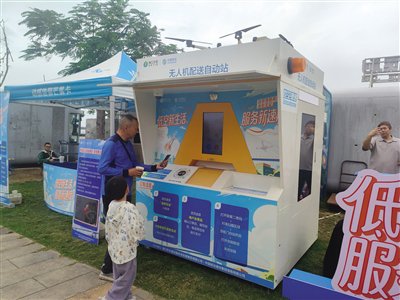
海口交投集团相关负责人表示,活动响应国企产业创新的重要成果,是探索可复制、可推广低空配送模 式的重要起点,是企业助力海南自贸港封关后物流服务升级的生动实践。封关以后,企业将持续深耕低 空经济领域,进一步加大投入,联合各方完善配送标准规范,拓展生鲜、药品、应急物资等多品类业 务,推动跨海物流、免税品空中专线等高价值场景试点,提升产业附加值,助力海口打造低空经济示范 城市,为市民带来更高品质的生活服务。 本报讯 12月25日,随着一份外卖从天而降,海口交投集团联合海南移动在华彩海口湾至云洞图书馆一 带举办的"低空新生活,服务新速度"无人机低空配送活动开幕。 记者 沈丽焕 文/图 为积极承接国家低空经济发展战略,把握海南自贸港政策机遇,海口交投集团围绕低空产业积极研究探 索。本次开展的低空消费即配场景体验活动,为期三个月,重点验证跨海低空配送实操效果,在示范成 熟的基础上,通过打磨产品、建立标准、培育市场,形成可复制推广的运营模式和安全管理体系,以文 旅配送、政务巡查、应急医疗为突破口,形成一批具有海口辨识度的低空服务产品,推动低空应用场景 从消费即配向其他领域拓展和延伸。 活动选取市民高频需求品类开展配送测试,涵 ...
中国广电电话卡值得办吗?5G套餐真香还是智商税?
Sou Hu Cai Jing· 2025-12-25 16:06
Core Viewpoint - The introduction of China Broadcasting's mobile service is neither inherently beneficial nor a scam; it represents a unique partnership leveraging China Mobile's established network, making its value and risks closely tied to the quality of China Mobile's service [3][18]. Group 1: Understanding China Broadcasting - China Broadcasting is a new entrant in the mobile communication sector, lacking the extensive network infrastructure built by established players like China Mobile, China Unicom, and China Telecom [4]. - The signal and speed of China Broadcasting's service come from a national strategy involving a co-construction and sharing agreement with China Mobile, meaning users will experience service quality similar to that of China Mobile in their location [5]. Group 2: Pricing and Packages - As a market newcomer, China Broadcasting uses competitive pricing as a primary strategy to attract users, offering packages like "19 yuan for 192GB" and "29 yuan for over 100GB" [6]. - Users should be cautious of potential pitfalls in these low-cost packages, which may include hidden terms related to resource allocation, pricing duration, and speed limitations [7]. Group 3: 5G Experience - China Broadcasting claims to provide genuine 5G services by utilizing China Mobile's 5G network, allowing users to access 5G speeds where available [8]. - However, the quality of the 5G experience is contingent upon the local infrastructure of China Mobile, meaning that the actual user experience may vary significantly based on location [9]. Group 4: Hidden Issues - Users should be aware of several potential issues, including the breakdown of data allowances into general and specific usage categories, the possibility of price increases after promotional periods, and speed throttling after reaching data limits [10]. - Additional considerations include the limited number of physical service outlets, potential delays in receiving verification messages from third-party services, and the compatibility of devices with the service [12]. Group 5: Decision-Making Process - To determine if China Broadcasting's service is suitable, users should first assess the quality of China Mobile's network in their area, as this is a critical factor in the service's viability [13]. - Users should clarify their data needs, analyze the actual capacity of the chosen package, and calculate long-term costs, including any potential price increases after promotional periods [14]. - It is essential to review the user agreement for any hidden fees or limitations before finalizing the service [15]. Group 6: Target Audience - China Broadcasting's service may be appealing to users in areas with strong China Mobile coverage, those seeking high-value data packages, and users comfortable with online service management [17][19]. - Conversely, it may not be suitable for users in areas with poor China Mobile service, those who rely heavily on in-person support, and users sensitive to inter-operator connectivity issues [19].

广东成为全国低空应用场景创新的重要策源地
Xin Lang Cai Jing· 2025-12-25 15:18
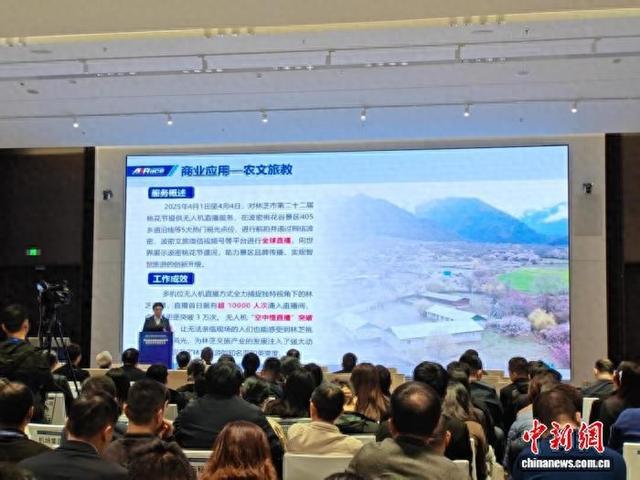
Core Viewpoint - The "2025 Guangdong-Hong Kong-Macao Greater Bay Area Low Altitude Economy High-Quality Development Conference" focuses on innovative applications and supporting elements of the low altitude economy, highlighting its integration into various industries and the need for a collaborative ecosystem to unlock its potential [3][4]. Group 1: Event Overview - The conference was held in Guangzhou, guided by the Guangdong Airport Management Group and co-hosted by several organizations, gathering over 200 representatives to discuss innovative practices and collaborative support systems for low altitude economic applications [3][4]. - The theme of the conference was "Low Altitude Empowerment, Revitalizing Industries," emphasizing the rapid integration of low altitude economy into various sectors such as transportation, logistics, agriculture, and public governance [3]. Group 2: Innovations and Applications - Various companies showcased their innovative applications of drones, including South Network Aviation's efficient use of drones for power line inspections and complex operations, and Taiyi Technology's dual-practice in government and commercial scenarios [3][4]. - Guangdong Mobile presented how 5G-A technology can empower low altitude innovative applications, while the Agricultural Bank of China introduced comprehensive financial service solutions for the entire low altitude economic industry chain [3][4]. Group 3: Standards and Regulations - The Guangdong Provincial Market Supervision Administration detailed four newly approved provincial standards related to low altitude economy, covering areas such as drone delivery and agricultural pest monitoring, with a total of 13 provincial standards and over 90 group standards established in the field [4]. - Experts from various institutions discussed the importance of a collaborative ecosystem involving policy, technology, financial services, data circulation, and infrastructure to promote the commercialization of low altitude aircraft [4]. Group 4: Key Outcomes - The conference launched the "Guangdong Low Altitude Economy Talent Cultivation Service Platform" and introduced the "Three Double Model" for urban low altitude scene applications, providing practical insights for safe industrialization [5]. - Guangdong Low Altitude Economy Company released two innovative products: the "Low Altitude Safety Route Tester" and the "Low Altitude Intelligent Multi-Mode Monitor," aimed at enhancing safety and monitoring capabilities in low altitude operations [5]. - Strategic cooperation agreements were signed with various organizations in fields such as communication technology and precision agriculture, indicating a deepening collaboration within Guangdong's low altitude economy industry [5].
朴道征信引入中移投资作为战略股东
Bei Jing Shang Bao· 2025-12-25 12:27
Core Insights - Puda Credit has officially introduced China Mobile Investment Holdings as a strategic shareholder, enhancing its equity structure and integrating China Mobile's data resources into China's credit system [1] Company Overview - Puda Credit was established on December 28, 2020, and is the second market-oriented credit agency in China to hold both personal and corporate credit business licenses, with a registered capital of 1 billion yuan [1] Strategic Partnership - The partnership with China Mobile Investment, founded in 2016 with a registered capital of 20 billion yuan, will broaden data application scenarios and innovate data products, thereby stimulating the vitality of data elements and enhancing their value [1]
在鸟巢开过发布会的陈凯峰,决定不再做手机品牌
Jing Ji Guan Cha Wang· 2025-12-25 12:11
Core Viewpoint - The article chronicles the evolution of the Chinese mobile phone industry through the experiences of Chen Kaifeng, highlighting the transition from basic feature phones to smart devices and the strategic pivots made by companies like KuSai Intelligent in response to market changes [2][10][22]. Industry Evolution - In the late 1990s, mobile phones were luxury items in China, with high costs for both calls and devices, leading to a burgeoning electronic communication industry [2]. - By the early 2000s, domestic manufacturers primarily acted as intermediaries, lacking core technology and relying on foreign designs for assembly [3][4]. - The introduction of MediaTek's "Turnkey Solution" in 2005 significantly lowered the technical and financial barriers for manufacturers, allowing them to produce phones without extensive R&D [5]. Company Development - Chen Kaifeng founded his company in 2006, initially focusing on a unique product that catered to specific user needs, such as loudspeakers for construction workers and long battery life [6][7]. - The "shanzhai" (copycat) phones, while often viewed negatively, provided affordable access to mobile technology for lower-income consumers, contributing to the growth of the Shenzhen electronics industry [8][9]. - In 2009, the company shifted focus to branding, launching the "Koobee" brand, which initially thrived due to its understanding of the market [10][11]. Market Challenges - The smartphone market began to consolidate around major players like Xiaomi and OPPO, leading to increased competition and pressure on smaller brands [12][14][15]. - By 2017, the company faced significant challenges as the market became dominated by a few key brands, prompting a strategic pivot towards international markets and niche segments [15][21]. Strategic Shift - The company transitioned from a focus on branding to becoming an "invisible factory" for local brands in overseas markets, emphasizing customized solutions for specific regional needs [21][22]. - KuSai Intelligent began to explore specialized markets, such as rugged phones for industrial use, integrating advanced features like thermal imaging and laser measurement [18][19][20]. Future Outlook - The company is now leveraging its engineering capabilities to expand beyond mobile phones into other technology sectors, such as fitness equipment and robotics [24][25]. - Chen Kaifeng emphasizes the importance of surviving and thriving within the industry ecosystem rather than seeking fame, focusing on building a sustainable business model [26].
大普微创业板IPO过会:AI时代国产先进存储“破局者”
Zheng Quan Shi Bao Wang· 2025-12-25 11:09
Core Viewpoint - The successful IPO of Shenzhen Dapu Microelectronics Co., Ltd. (Dapu Micro) on the ChiNext board highlights the growing acceptance of high-tech and high-growth companies in the A-share capital market, reflecting a shift towards supporting innovative enterprises in China [1][2] Company Overview - Dapu Micro specializes in enterprise-level SSD products, leveraging its full-stack self-research capabilities in controller chips, firmware algorithms, and modules, with applications in AI, cloud computing, and internet data centers [1][4] - The company has established itself as a core supplier of advanced storage solutions in China, addressing the urgent demand for domestic alternatives in a market dominated by international giants [1][4] Industry Context - The enterprise-level SSD sector is a critical component of the information infrastructure industry chain, aligning with national strategic priorities such as AI model development and data circulation [1][2] - The ChiNext board has evolved to support high-growth and high-quality enterprises, providing a financing channel for companies with significant technological innovation capabilities [2] Technological Capabilities - Dapu Micro has achieved a rare full-stack self-research capability in enterprise-level SSDs, overcoming the long-standing dominance of international brands in the high-end storage market [4][6] - The company has a cumulative shipment of over 4,900 PB of enterprise-level SSDs as of June 2025, with over 75% of these products featuring self-developed controller chips [4] Client Ecosystem - Dapu Micro's client base includes leading global companies such as Google, ByteDance, Tencent, and Alibaba, as well as major domestic server manufacturers and telecom operators, providing a solid foundation for technology iteration and product deployment [5] Research and Development - From 2022 to 2024, Dapu Micro invested 737 million yuan in R&D, accounting for 36.15% of its cumulative revenue, with 69.01% of its workforce dedicated to R&D [6][7] - The company holds 162 authorized domestic and international invention patents and is involved in several national and provincial-level major research projects, contributing to technological advancement in the storage sector [7] Future Outlook - The strategic importance of enterprise-level SSDs is expected to grow, with significant market potential as digital infrastructure continues to expand [8] - Dapu Micro's successful IPO marks a significant milestone for domestic high-end storage products, supported by national industrial policies and capital market reforms [8]

万亿投资筑底,央企疏解领航!雄安新区书写千年大计新答卷|2025中国经济年报
Sou Hu Cai Jing· 2025-12-25 10:42
Core Insights - Xiong'an New Area is transitioning from large-scale infrastructure construction to urban prosperity, focusing on the integration of non-capital functions from Beijing and promoting urban and industrial development [2] - The area has seen over 1 trillion yuan in cumulative investment over the past eight years, with an average annual investment of 200 billion yuan during the 14th Five-Year Plan period and a GDP growth rate of 17.1% [2] Group 1: Central Enterprises' Relocation - China Huaneng and China Sinochem have officially relocated their headquarters to Xiong'an, marking a significant milestone in the area’s development [3] - The successful establishment of these central enterprises sets a benchmark for subsequent projects, with over 400 central enterprises gathering in the region [3][4] - The relocation of these enterprises not only involves physical space but also ensures a smooth transition in business operations [4] Group 2: Industrial Ecosystem Restructuring - Xiong'an has attracted major energy central enterprises, including China Huaneng, China Huadian, and China Datang, forming a collaborative development model of "headquarters + R&D base + supporting enterprises" [5] - The area is also home to over 4,000 enterprises from Beijing, fostering an environment conducive to innovation and entrepreneurship [5] Group 3: Innovation and Development - The relocation of central enterprises is driving the restructuring of industrial chains, innovation chains, and resource flows, enhancing the region's innovative vitality [6] - Xiong'an has established 118 innovation platforms, including 53 at the provincial level, and has recognized numerous high-tech enterprises, indicating a robust innovation ecosystem [6] Group 4: Education and Research Integration - Four universities have set up 14 provincial-level key laboratories and two provincial-level technology innovation centers, promoting deep integration between academic research and industrial needs [7] - The relocation of financial services and cross-border financial centers is facilitating the flow of capital, technology, and talent in the region [7] Group 5: Green Development Initiatives - Xiong'an is positioning itself as a model for green low-carbon cities, with projects like distributed photovoltaic systems and green building standards being implemented [8] - The focus on green technology and sustainable practices is evident in the initiatives taken by relocated enterprises, contributing to the development of a modern green energy system [9]