燕京啤酒

Search documents
家族绝对控股、社保历史欠缴…金星啤酒赴港上市的风险清单
Sou Hu Cai Jing· 2026-01-16 08:45
Core Viewpoint - The company has shown significant revenue growth and improved profit margins, but faces serious internal control issues and dependency on a single product line, which raises concerns about sustainability and compliance risks [2][5][10]. Financial Performance - Revenue increased from 356 million RMB in 2022 to 1.11 billion RMB in the first nine months of 2025, with a net profit margin rising from 3.4% in 2023 to 27.5% in 2025 [2]. - Gross margin is projected to rise from 27.3% in 2023 to 37.8% in 2024, while net profit margin is expected to increase from 3.4% to 17.2% in the same period [5]. Internal Control Issues - The company has reported significant shortfalls in social insurance and housing fund contributions, with unpaid amounts of 7.5 million RMB, 7.9 million RMB, and 6.5 million RMB for 2023, 2024, and the first nine months of 2025, respectively [6]. - There are serious financial control vulnerabilities, with 40.5% of dealer payments in 2024 flowing through third-party accounts, raising legal risks related to money laundering [7]. - Approximately 25.7% of the company's building area lacks ownership certificates, and a construction site in Xi'an lacks necessary permits, posing regulatory and operational risks [8]. Product Dependency - The company heavily relies on its "Chinese Craft Beer" category, particularly the tea beer series launched in August 2024, which accounted for 78.1% of revenue in the first nine months of 2025 [10]. - The sustainability of growth is questioned as consumer acceptance of the "tea + beer" combination may not last, and any decline in popularity could severely impact revenue [10]. Market Competition - The company claims to be a leader in the "flavor craft beer" segment, but the Chinese beer market is dominated by the top five companies, which hold over 80% of the market share [16]. - Despite significant price increases and improved margins, the overall interest in the beer sector remains low, with current market valuations limiting growth potential [17]. Ownership Structure - The company's ownership is highly concentrated, with the Zhang family controlling 100% of the equity through direct and indirect means [17]. Conclusion - While the company presents a compelling growth narrative, the underlying compliance issues, product dependency, and competitive landscape necessitate a cautious evaluation of its long-term sustainability and market position [18].

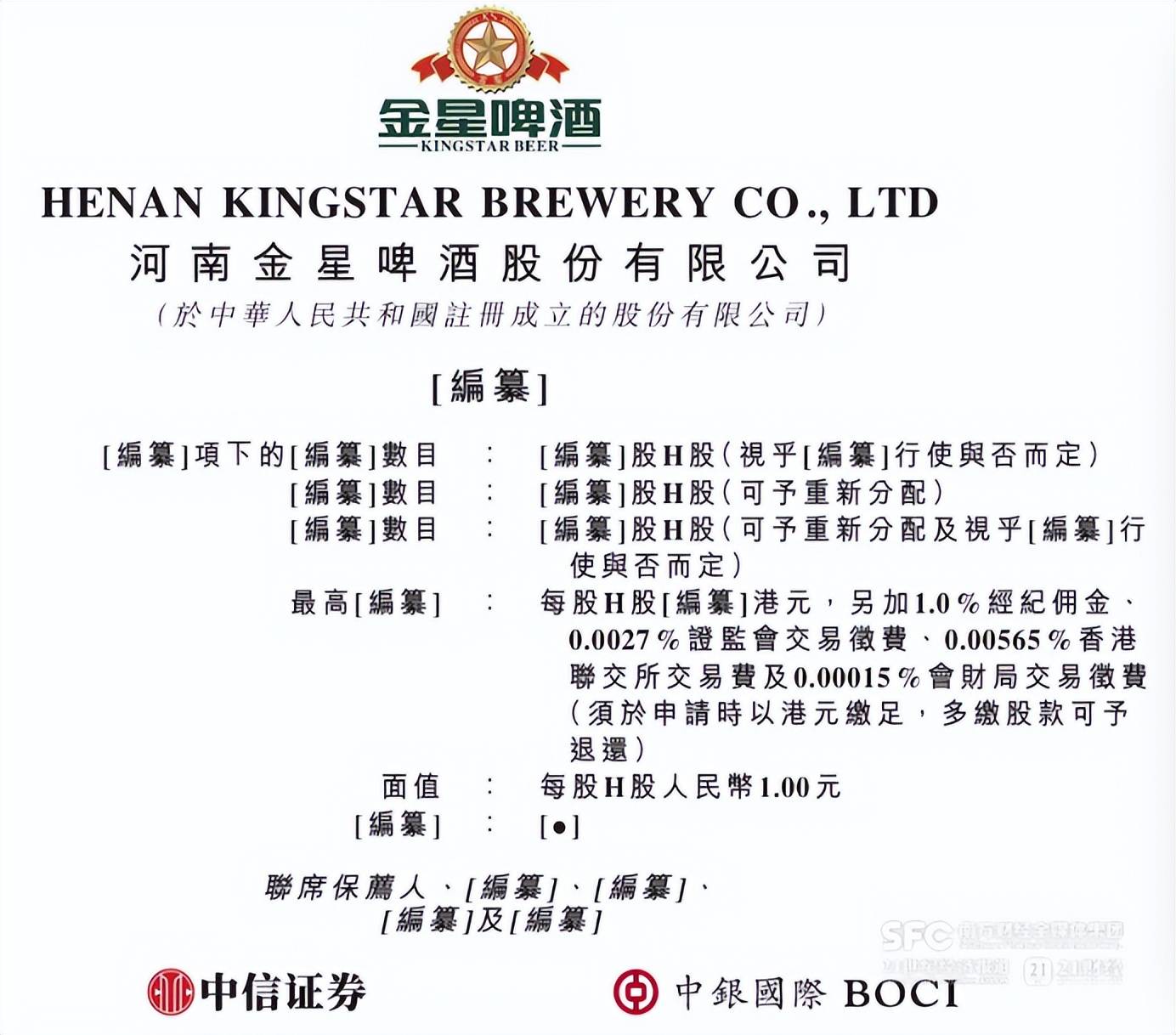
跳出生肖俗套,燕京U8以“好运即发”重构春节营销新范式
Jin Rong Jie· 2026-01-16 07:04
Core Insights - The article discusses the challenges brands face in effectively marketing during the Chinese New Year, highlighting the need for emotional resonance with consumers amidst a saturated market [1][5] - Yanjing Beer has introduced a new marketing slogan "Good Luck is Coming" that breaks away from traditional zodiac narratives, aiming to connect with contemporary consumer emotions [1][3] Group 1: Marketing Strategy - Yanjing U8's slogan "Good Luck is Coming" encapsulates a rich cultural meaning, symbolizing prosperity and good fortune, which resonates with consumers' personal aspirations and family hopes [3][5] - The brand's approach avoids complex narratives, instead using the universally understood concept of "good luck" to foster a shared vision of a positive future [3][6] - Yanjing U8 aims to differentiate itself in a market where traditional zodiac designs lead to creative fatigue, establishing a long-term communication theme that transcends annual symbols [6][10] Group 2: Consumer Engagement - The marketing strategy targets individual emotional experiences, addressing consumers' reflections on the past year and hopes for the new year, thus creating a more intimate connection [9][10] - By focusing on social settings like gatherings and personal celebrations, Yanjing U8's messaging encourages consumers to actively engage with the brand, enhancing the likelihood of purchase and sharing [9][10] Group 3: Sales Performance - Yanjing Beer has successfully transformed the traditionally slow first quarter into a growth engine through strategic marketing, activating various consumer scenarios such as year-end parties and family gatherings [12][13] - Recent sales data indicates that Yanjing U8 has seen significant increases in both sales volume and market share during the first quarter, demonstrating the effectiveness of their marketing campaign [17] - The brand's innovative approach to holiday marketing has redefined consumer cycles and tapped into existing market potential, proving that emotionally resonant marketing can create demand and alter consumption habits [17][18]

金星啤酒冲港IPO:“中式精酿”能让老牌酒企翻身吗?
Xin Lang Cai Jing· 2026-01-16 03:42
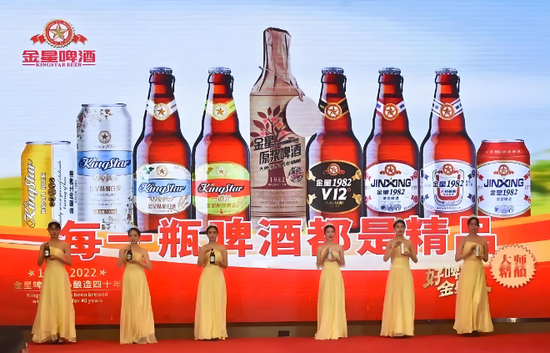
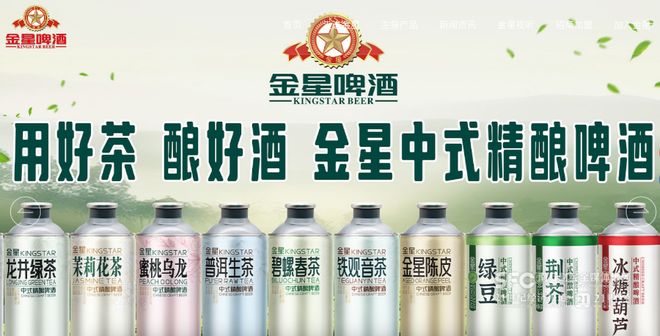
Core Viewpoint - The IPO story of Jin Xing Beer represents a balance-seeking journey amid explosive growth, single-category risk, family control versus modern governance, and being a pioneer in a new category while facing competition from industry giants [3][19][32] Group 1: Company Background and Development - Jin Xing Beer started in 1982 as a village-run brewery in Zhengzhou, facing bankruptcy shortly after its establishment [3][19] - Under the leadership of Zhang Tieshan, the company expanded its operations throughout Henan province and became the industry leader by 1993 [3][19] - The company capitalized on the national expansion of the beer industry in the late 1990s and early 2000s, establishing production bases in various provinces [3][19] Group 2: Product Innovation and Market Position - The turning point for Jin Xing Beer came in August 2024 with the launch of its first Chinese craft beer, Jin Xing Xinyang Maojian, which quickly gained consumer popularity [4][20] - The company successfully created a new category of "Chinese craft beer" and has since introduced a variety of innovative products [5][21] - By 2025, the revenue share of craft beer surged to 78.1%, while traditional products dropped to 16.6% [7][23] Group 3: Financial Performance - Jin Xing Beer experienced explosive growth, with revenue increasing from 356 million yuan in 2023 to 1.109 billion yuan in the first three quarters of 2025, and net profit rising from 12.2 million yuan to 305 million yuan [6][22] - The introduction of craft beer significantly improved the company's gross margin from 27.3% in 2023 to 47.0% in 2025 [7][23] - The pricing strategy for craft beer, set at approximately 20 yuan per can (1L), allowed for a price increase of 60% to 100% compared to traditional products [7][23] Group 4: Competitive Landscape and Market Dynamics - Despite its growth, Jin Xing Beer remains significantly smaller than industry giants, with its revenue being about 1/12 of leading companies like Yanjing Beer [8][25] - The company achieved a remarkable 191% year-on-year revenue growth, outpacing the industry average, and is positioned as the eighth largest beer company in China [8][25] - The craft beer market in China is rapidly expanding, with a projected growth rate of 38.4% from 2019 to 2024, indicating a favorable environment for Jin Xing Beer [15][31] Group 5: Challenges and Risks - Jin Xing Beer faces risks related to its heavy reliance on the single category of craft beer, which accounted for 78.1% of its revenue by 2025 [12][29] - The company's governance structure, characterized by concentrated family ownership, raises concerns about transparency and decision-making processes [12][29] - Increased competition from both local breweries and major players like China Resources, Carlsberg, and Budweiser entering the craft beer market poses a significant challenge [13][30]
围炉煮清酒
Xin Lang Cai Jing· 2026-01-15 17:24
Group 1 - The article highlights the cultural significance of traditional tea and its modern adaptation through social gatherings, emphasizing the blend of ancient culture with contemporary life [1] - The setting of the article is in Yanjiao, a historical area known for its commercial activity since ancient times, which adds a rich cultural backdrop to the narrative [1] - The transition from autumn to winter is described vividly, showcasing the beauty of snow-covered landscapes and the challenges of winter living, which leads to the idea of gathering for a hot pot meal [2] Group 2 - The preparation for the hot pot meal involves teamwork and creativity, as students gather ingredients from local markets, demonstrating resourcefulness in a winter setting [2][3] - The cooking process is detailed, highlighting the use of traditional ingredients and methods, which reflects the importance of culinary heritage in social gatherings [3] - The overall experience of sharing a meal and enjoying each other's company is portrayed as a simple yet profound aspect of life, reinforcing the theme of community and warmth during the cold winter months [3]
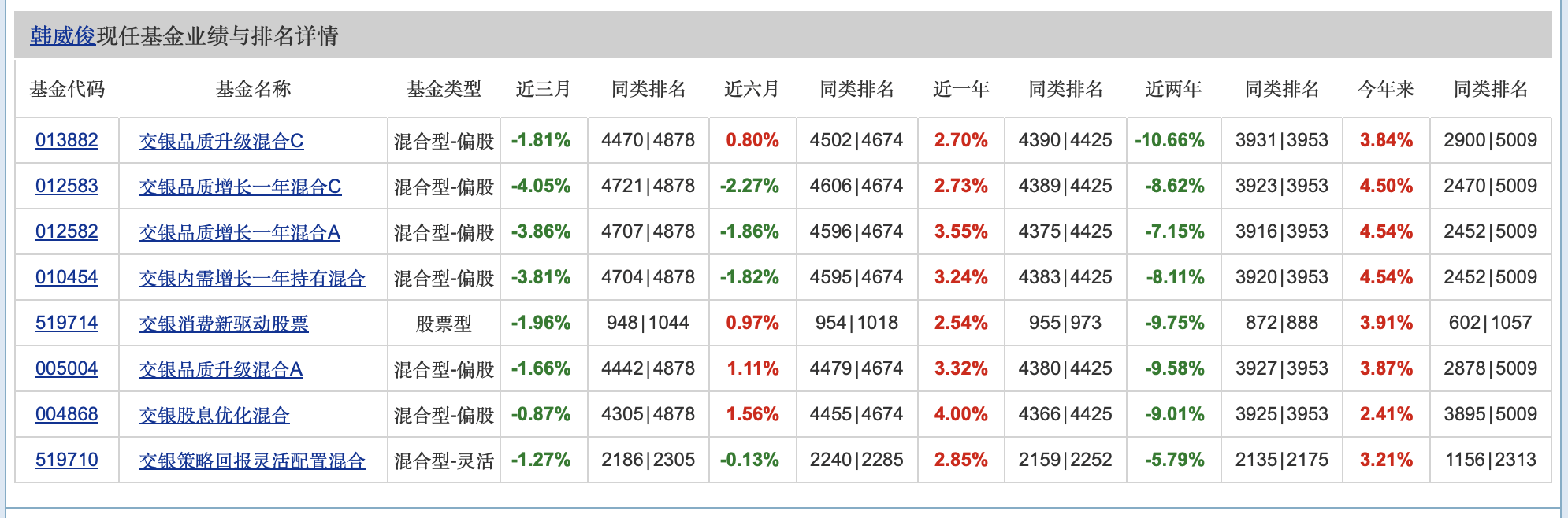
为何“躺平式投资”?交银施罗德“海豹”韩威俊旗下产品全线亏损引争议
Sou Hu Cai Jing· 2026-01-15 03:25
2026年1月,交银施罗德的韩威俊即将迎来担任基金经理的十年关口,但近年来围绕这位"老将"的舆论不再是"爆发"或者"进攻",而是"躺平":不追热点、 换手率低、重仓股高度稳定并且产品之间持仓趋同。 这带来的结果是,虽然2025年股市呈现"硬科技+创新药"双主线行情,带动权益类基金大面积飘红,超2000只权益类基金净值创历史新高,但韩威俊管理的 六只产品在2025年全部录得负收益,其代表性产品交银内需增长一年持有期混合基金已连续五年亏损。截至2025年底,韩威俊管理的6只基金合计规模仅剩 48.71亿元,相较于巅峰期近200亿元的规模,三年内缩水了75%以上。 | | 韩威俊现任基金业绩与排名详情 | | | | | | | --- | --- | --- | --- | --- | --- | --- | | 基金代码 | 基金名称 | 基金类型 | 近三月 | 同类排名 | 近六月 | 同类 | | 013882 | 交银品质升级混合C | 混合型-偏股 | -1.81% | 4470 4878 | 0.80% | 4502 - | | 012583 | 交银品质增长一年混合C | 混合型-偏股 | -4. ...
国盛证券-2026食饮行业年度策略:消费者大时代
Sou Hu Cai Jing· 2026-01-15 03:22
Core Insights - The food and beverage industry is expected to see multi-dimensional improvements in 2026, following a year of stabilization in 2025, characterized by price pressures and structural differentiation [1][2]. Group 1: Industry Overview - The food and beverage sector (CITIC) experienced a cumulative decline of 4% in 2025, underperforming the CSI 300 by 20% [1][16]. - The liquor sector faced significant pressure, with an annual decline of 7%, while segments like health products, frozen foods, and beverages saw increases of 18%, 15%, and 12% respectively [1][16]. - The overall retail sales in China showed moderate growth, with a year-on-year increase of 4.0% from January to November 2025, and service consumption growth outpacing goods consumption [1][27]. Group 2: Liquor Industry Insights - The liquor industry is currently at a triple bottom, with supply clearing continuing into 2025, and leading companies focusing on stabilizing prices and sales [2][6]. - Demand has begun to recover, with improved sales expected during the Spring Festival, and strong demand for mid-range priced liquor brands [2][61]. - The product strategy includes a shift towards lower alcohol content and targeting younger consumers, with a focus on collaborative channel development [2][6]. Group 3: Beer and Beverage Sector - The beer sector is anticipated to benefit from a recovery in dining, with cost advantages expected to maintain stable gross margins in 2026 [2][6]. - The soft drink market is steadily expanding, with segments like functional beverages and bottled water showing strong performance, driven by leading brands leveraging their market position [2][6]. Group 4: Food Sector Developments - The food sector is focusing on recovery and growth, with a rebound in demand for restaurant supply chains and leading companies expected to show profit elasticity [3][6]. - The snack segment is being driven by retail transformation, with health-oriented products and new opportunities emerging [3][6]. - The dairy sector is nearing a turning point, with expectations for supply-demand improvements in the second half of 2026 [3][6]. Group 5: Consumer Trends - High-end consumption is showing signs of recovery, with luxury retail sales improving and experiential consumption rebounding [1][35]. - The trend towards health-conscious consumption is becoming more pronounced, with a shift towards lower sugar and simpler ingredient formulations across various food categories [3][45].




北京顺义:推动港产城融合发展 现代化产业体系加速构建
Zhong Guo Jing Ji Wang· 2026-01-14 14:16
记者从北京市顺义区1月13日举行的新闻发布会获悉,"十四五"时期,顺义区奋力推动港产城融合发 展,较好完成"十四五"规划主要目标任务,区域现代化建设实现良好开局。过去五年,顺义区GDP年均 增长5.5%左右,总量达到2500亿元,现代化产业体系加快构建。 顺义区发展改革委党组书记、主任马卫国介绍说,过去五年,顺义区服务首都功能建设不断强化,成功 举办HICOOL全球创业者峰会等高水平国际化、品牌化活动,2025年实现参赛项目和参赛人数"双破 万"。首都国际机场通达航点达到227个,航线覆盖广度全国第一。首都机场临空经济区发展指数连续三 年排名全国首位。中德示范园区品牌效应持续增强,集聚德企超120家,隐形冠军企业达27家。 "'十五五'时期,我们将加速形成'以港兴产、以产促城、港城一体'的港产城深度融合发展局面,加快塑 造 以先进制造业为骨干,开放创新、两业融合、集约高效的现代化产业体系。"马卫国说。 顺义区经济和信息化局党组书记、局长周靖慧说,作为北京高端制造业大区,顺义区重点产业发展展现 新成效。新能源智能汽车领域对工业支撑作用进一步凸显,智能网联汽车配套产业成功入选国家级中小 企业特色产业集群。在第三代 ...
主打七天保质期的泰山啤酒被债务压垮了
Xin Lang Cai Jing· 2026-01-14 12:20
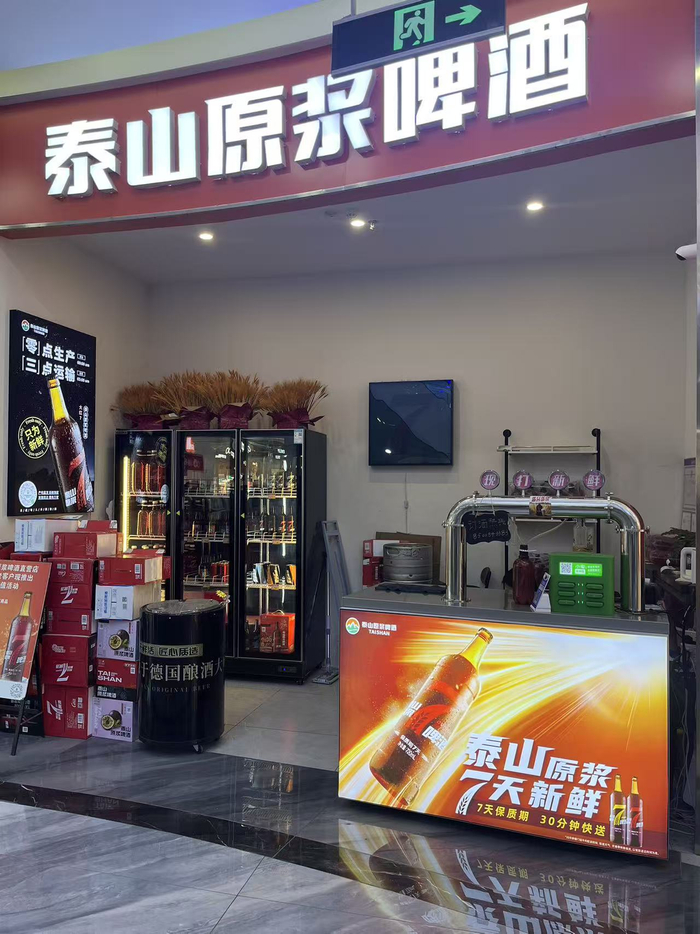
Core Viewpoint - Shandong Taishan Beer Co., Ltd. has entered bankruptcy reorganization due to insolvency, with total assets of approximately 622 million yuan and total liabilities of about 663 million yuan, resulting in a debt-to-asset ratio of 106.63% [1][2] Company Overview - Taishan Beer was established in 1979 and became a wholly foreign-owned enterprise after being acquired by Hong Kong Tiger Color Group in 2000 [1] - The company operates over 3,000 specialized stores nationwide and has advantages in product marketing, technology innovation, and brand vitality, indicating potential for reorganization [1][2] Financial Situation - As of October 31, 2025, Taishan Beer is unable to repay its debts and lacks sufficient assets to cover all liabilities, leading to a severe cash flow shortage and operational difficulties [1][2] - The company reported a revenue of 50.152 million yuan in 2024 and aims for a sales volume of 80,000 tons in 2025, maintaining revenue levels similar to the previous year [10] Bankruptcy Reorganization - The court accepted the bankruptcy reorganization application based on the company's inability to pay due debts and the presence of reorganization value [2] - The management clarified that the reorganization is not an indication of closure but a necessary step for long-term development and to address historical debt issues [5] Market Context - The Chinese beer market shows growth potential, with 338 breweries achieving a total production of 30.9525 million kiloliters and sales revenue of 151.748 billion yuan in 2025, indicating a competitive landscape [6] - Major beer companies dominate the market, with top players capturing nearly 90% of the market share, making it challenging for second-tier brands like Taishan Beer to break through [6] Product and Marketing Strategy - Taishan Beer has introduced innovative products, including a "Herbal" series and high-end offerings, to cater to diverse consumer preferences and health trends [8] - The company has adopted a direct sales model through specialized stores, enhancing brand experience and retaining more channel profits [5][8] Future Outlook - Despite the current financial challenges, the company remains optimistic about its future, aiming to expand its store network significantly and maintain consumer engagement during the reorganization process [11]
金星啤酒闯关港股,中式精酿黑马面临估值之问
2 1 Shi Ji Jing Ji Bao Dao· 2026-01-14 09:29
Core Viewpoint - Henan Jinxing Beer Co., Ltd. has submitted its listing application to the Hong Kong Stock Exchange, marking its official entry into the public market, with a focus on its innovative "Chinese craft beer" products that have driven significant revenue growth [1][2]. Company Overview - Founded in 1982, Jinxing Beer has evolved from a regional brand to the eighth largest beer company in China, and the fifth largest domestic beer producer [1][2]. - The company has experienced a transformation in the past two years, particularly with the launch of its innovative products like "Jinxiang Maojian," which has contributed to its rapid growth [5][7]. Financial Performance - Jinxing Beer reported revenues of 356.4 million yuan in 2023, projected to reach 730.2 million yuan in 2024, and 1.109 billion yuan for the first nine months of 2025, with net profits increasing from 12.2 million yuan in 2023 to 305.3 million yuan in 2025 [2][7]. - The revenue contribution from "Chinese craft beer" has surged to 78.1% by the first three quarters of 2025, compared to 0% in 2023 [7][10]. Market Position - Despite its growth, Jinxing Beer still lags behind major competitors, with the sixth largest competitor, Zhujiang Beer, generating over 5 billion yuan in revenue, significantly more than Jinxing Beer [8][9]. - The company aims to maintain a growth rate above the industry average to close the gap with leading brands [8]. Product Innovation - Jinxing Beer has successfully created a new category of "Chinese craft beer," with over 50 SKUs, including unique flavors like ice sugar hawthorn and sugar orange [5][10]. - The pricing strategy for "Chinese craft beer" is significantly higher, with products priced around 20 yuan per can, compared to traditional products priced between 3 to 6 yuan [10][11]. Market Sentiment and Valuation - The capital market's interest in alcoholic beverage stocks is currently low, which may affect Jinxing Beer's valuation despite its growth potential [15][16]. - Comparatively, Jinxing Beer is expected to achieve a higher valuation than its peers in the Hong Kong market due to its growth trajectory and innovative product offerings [14]. Distribution and Sales Channels - Jinxing Beer relies heavily on traditional distribution channels, with over 90% of its revenue coming from offline sales, indicating a need for further development in e-commerce and direct sales [17]. - The company has expanded its distribution network to 29 provinces, but still faces competition from established brands in the market [18]. Ownership Structure - The largest shareholder of Jinxing Beer is Jinxing Holding Group, which holds 74.56% of the company, with key figures Zhang Tieshan and Zhang Feng holding significant stakes [19].
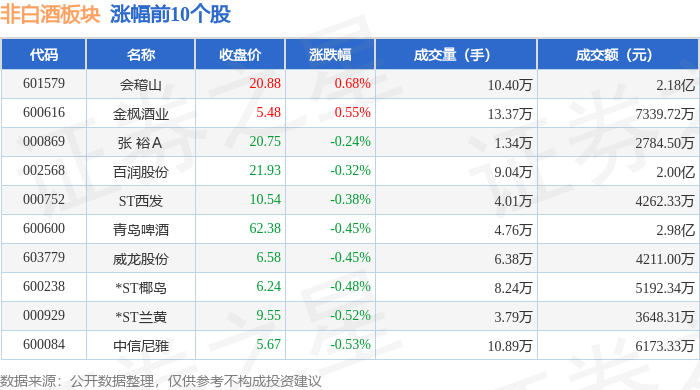
非白酒板块1月14日跌0.63%,燕京啤酒领跌,主力资金净流出7660.75万元
Zheng Xing Xing Ye Ri Bao· 2026-01-14 08:50
Market Overview - The non-baijiu sector experienced a decline of 0.63% on January 14, with Yanjing Beer leading the drop [1] - The Shanghai Composite Index closed at 4126.09, down 0.31%, while the Shenzhen Component Index closed at 14248.6, up 0.56% [1] Stock Performance - Key stocks in the non-baijiu sector showed varied performance, with Kuaijishan closing at 20.88, up 0.68%, and Zhangyu A at 20.75, down 0.24% [1] - Other notable declines included ST Xifa at 10.54, down 0.38%, and Qingdao Beer at 51.80, down 0.97% [2] Trading Volume and Value - Kuaijishan had a trading volume of 104,000 shares and a transaction value of 218 million yuan, while ST Xifa had a volume of 40,100 shares and a value of 42.62 million yuan [1] - The non-baijiu sector saw a total net outflow of 76.61 million yuan from main funds, with retail investors contributing a net inflow of 43.96 million yuan [2] Fund Flow Analysis - Main funds showed a net inflow of 10.61 million yuan for Kuaijishan, while Zhangyu A experienced a net outflow of 2.52 million yuan [3] - The overall fund flow indicates a mixed sentiment, with retail investors showing interest in certain stocks despite the overall outflow from main funds [3]