
英特尔

Search documents
CPU专题报告一:配套内存模组向MRDIMM发展,看好MRCD芯片与MDB芯片环节
CAITONG SECURITIES· 2026-02-02 04:30
Investment Rating - The report maintains a "Positive" investment rating for the industry [1]. Core Insights - The transition of server-level CPU memory modules towards MRDIMM technology is highlighted, with a focus on MRCD and MDB chips as key growth areas. MRDIMM is suitable for high-performance computing and AI applications, achieving data transfer rates of up to 8800MT/s, with future generations expected to reach 14000MT/s [3][5][11][12]. - The report anticipates significant demand growth for MRCD and MDB chips, projecting that by 2030, the demand could reach 5.93 billion and 59.28 billion units respectively under optimistic scenarios [5][20][22]. Summary by Sections 1. Development of Server CPU Memory Modules Towards MRDIMM - The report discusses the evolution of memory modules in servers, emphasizing the importance of stability, error correction, and low power consumption as data storage and processing loads increase [8][9]. - Current mainstream memory module technologies include UDIMM, RDIMM, and LRDIMM, with MRDIMM emerging as a new architecture designed to enhance memory bandwidth and performance [10][11]. 2. Core Incremental Growth from MRCD and MDB Chips - MRDIMM utilizes a "1+10" architecture, consisting of one MRCD and ten MDB chips, which are crucial for its performance enhancements. The technology is already compatible with Intel's sixth-generation CPUs, and major memory manufacturers have begun producing MRDIMM products [5][17]. - The report outlines potential penetration rates for MRDIMM by 2030, estimating demand for MRCD and MDB chips under various scenarios [20][22]. 3. Demand Projections for MRCD and MDB Chips - Under optimistic assumptions, the report forecasts that by 2030, the demand for MRCD and MDB chips could reach 5.93 billion and 59.28 billion units respectively, driven by the increasing adoption of MRDIMM technology in server environments [20][23].


开盘:三大指数涨跌不一 贵金属板块大幅低开
Sou Hu Cai Jing· 2026-02-02 01:38
Market Overview - The three major indices showed mixed performance, with the Shanghai Composite Index down 0.93% at 4079.71, the Shenzhen Component Index down 0.54% at 14128.87, and the ChiNext Index up 0.65% at 3368.14 [1] Policy and Regulatory Developments - The Central Committee of the Communist Party of China emphasized the strategic importance of advancing future industries during a collective study session led by Xi Jinping [2] - The China Securities Regulatory Commission (CSRC) is focusing on deepening capital market reforms and enhancing the adaptability of regulations, including expanding the types of strategic investors for listed companies [3][3] - The National Bureau of Statistics reported a decline in the manufacturing Purchasing Managers' Index (PMI) to 49.3%, down 0.8 percentage points from the previous month, indicating a contraction in the manufacturing sector [3] Company Announcements and Financial Performance - SpaceX is applying to launch and operate a satellite constellation of up to 1 million satellites, along with building an AI data center network in orbit [3] - Companies like Zhongji Xuchuang and Xinyi Technology are projecting significant net profit increases for 2025, with estimates of 89.50%-128.17% and 231%-249% year-on-year growth, respectively [5][5] - Several companies, including Huaneng Power and China Mobile, announced expected losses for 2025, with Huaneng Power projecting a net loss of 10 billion to 16.5 billion yuan [6][7] Market Trends and Investment Insights - Citic Securities suggests a shift from speculative investments to quality assets, indicating a potential recovery window for blue-chip stocks as the ETF redemption tide appears to be ending [12] - Huatai Securities notes that while the market may experience short-term fluctuations, the core drivers for the spring market rally remain intact, with recommendations to focus on high-quality sectors such as power equipment and semiconductor devices [13]
深夜“血洗”!白银史诗级暴跌!黄金创40年最大跌幅!
天天基金网· 2026-01-31 02:05
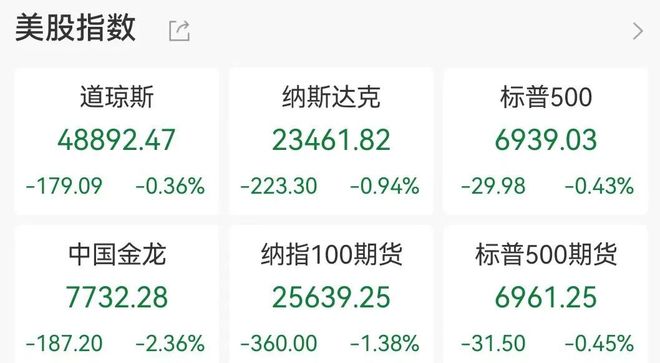
Core Viewpoint - The article discusses the significant decline in gold and silver prices, marking historical drops due to various market factors, including the nomination of Kevin Warsh as the new Federal Reserve Chairman, which has led to increased volatility in the financial markets [2][4][5]. Price Declines - On January 31, silver prices fell by 36%, the largest intraday drop in history, while gold prices dropped over 12%, reaching a low of $4682 per ounce, the largest single-day decline in 40 years. By the end of trading, gold was down 9.25% at $4880 per ounce, and silver closed down 26.42% at $85.259 per ounce [2][4]. Market Reactions - The U.S. stock market saw all three major indices close lower, with the Dow Jones down 0.36%, S&P 500 down 0.43%, and Nasdaq down 0.94%. This decline was attributed to uncertainties surrounding Federal Reserve policies, inflation pressures, and geopolitical risks [5][6]. Sector Performance - The gold sector experienced significant losses, with major companies like Newmont down 11.52%, Barrick Gold down 12.09%, and AngloGold down 13.28%. The technology sector also faced declines, with notable drops in stocks like Meta and TSMC [6][7]. Federal Reserve Nomination Impact - The nomination of Kevin Warsh as the next Federal Reserve Chairman has raised concerns about potential long-term economic risks. Warsh's previous support for higher interest rates and recent shift towards advocating for lower rates has led to worries about the independence of the central bank [7].


全球市场大震荡,亿鹏能源狂飙超3000%
Feng Huang Wang Cai Jing· 2026-01-31 02:01
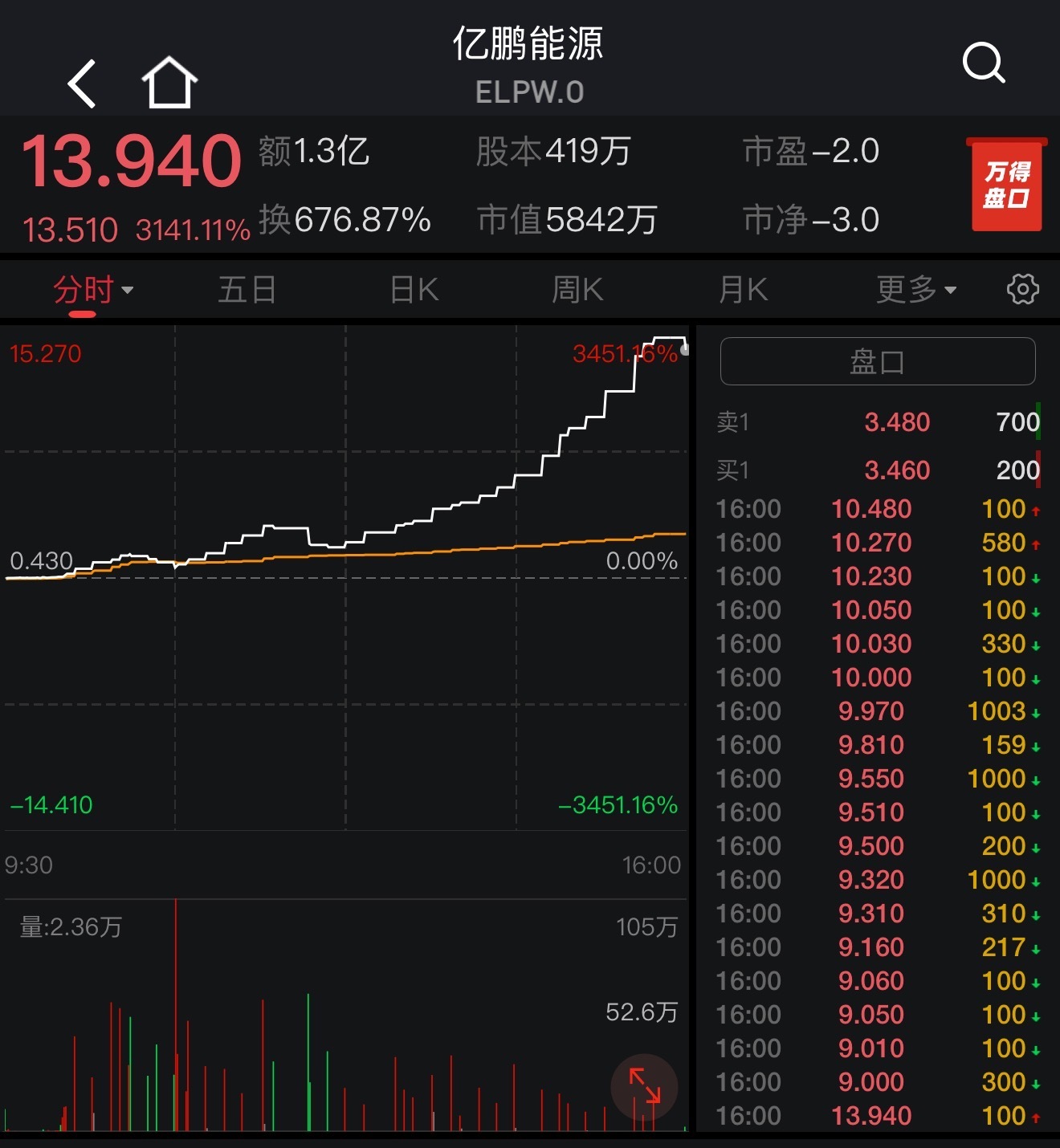
Market Overview - The US stock market opened lower and closed down, with all three major indices declining. The Dow Jones fell by 0.36% to 48,892.47 points, the S&P 500 dropped by 0.43% to 6,939.03 points, marking its third consecutive day of decline, and the Nasdaq decreased by 0.94% to 23,461.82 points, with intraday drops exceeding 1% [1]. Precious Metals - The precious metals sector experienced significant declines, with spot silver prices plummeting by 36%, marking the largest single-day drop in history. Spot gold prices also fell over 12%, dipping below $4,700 per ounce, representing the largest single-day decline in 40 years [1]. Technology Sector - The technology sector saw most large-cap stocks decline, with the Wande American Technology Seven Giants Index down by 0.32%. Notable individual stock movements included META and TSMC each dropping nearly 3%, while Amazon fell by 1%. Tesla, however, rose by 3%. The semiconductor sector faced substantial losses, with stocks like AMD down over 6%, GlobalFoundries down 5%, and both Micron Technology and Intel down over 4% [1]. Chinese Stocks - Chinese stocks mostly declined, with the Nasdaq China Golden Dragon Index falling by 2.36% and the Wande Chinese Technology Leaders Index down by 3%. Individual stocks such as Brain Rebirth dropped over 10%, Kingsoft Cloud fell by 7%, and several others, including Bilibili, Xiaoma Zhixing, Century Interconnect, Li Auto, and XPeng, each declined by over 3%. Major companies like Baidu, Alibaba, NetEase, and JD.com also saw declines exceeding 2% [1]. ELPW Energy - ELPW Energy (亿鹏能源) stood out amidst the market downturn, surging by 3,141.11%, equivalent to a 31-fold increase in a single day, likely resulting in significant profits for investors holding the stock [2].
深夜“血洗”!白银,史诗级暴跌!黄金,40年最大跌幅!
券商中国· 2026-01-30 23:42
Core Viewpoint - The article discusses the significant drop in gold and silver prices, marking historical declines due to various market factors, including the nomination of Kevin Warsh as the new Federal Reserve Chairman, which has led to a stronger US dollar and increased market volatility [1][3][5]. Group 1: Precious Metals Market - On January 31, silver prices fell by 36%, the largest intraday drop in history, while gold prices dropped over 12%, reaching a low of $4682 per ounce, marking the largest single-day decline in 40 years [1][3]. - At market close, gold was down 9.25% at $4880 per ounce, and silver closed down 26.42% at $85.259 per ounce [3]. - Despite the monthly gains in gold and silver prices, the sell-off on this day was the most significant blow to the upward trend since October of the previous year [3]. Group 2: Market Reactions - The US stock market saw all three major indices decline, with the Dow Jones down 0.36%, S&P 500 down 0.43%, and Nasdaq down 0.94% [4]. - The gold sector experienced substantial losses, with companies like Barrick Gold and AngloGold down over 10% [4]. - The strengthening of the US dollar, which saw its largest single-day increase since July of the previous year, negatively impacted investor confidence and contributed to the drop in gold and silver prices [3]. Group 3: Federal Reserve Nomination - President Trump announced the nomination of Kevin Warsh as the next Federal Reserve Chairman, which has raised concerns about potential interest rate policies [5][6]. - Warsh's previous support for higher interest rates has led to mixed reactions, with some analysts suggesting that his nomination could pose long-term risks to the economy [6].

深夜黄金大跳水,白银暴跌26%,美股全线下跌,亿鹏能源狂飙超3000%,美国宣布对伊朗最新制裁
2 1 Shi Ji Jing Ji Bao Dao· 2026-01-30 23:26
Market Overview - On January 31, US stock indices closed lower, with the Dow Jones down 0.36%, the Nasdaq down 0.94%, and the S&P 500 down 0.43% [1][2] - The Dow Jones index closed at 48,892.47, the Nasdaq at 23,461.82, and the S&P 500 at 6,939.03 [2] Precious Metals - Global precious metals market experienced panic selling, with spot silver dropping over 36% at one point, and gold prices falling below $5,000, with a daily decline of 12.41% from $5,400/oz to $4,709.68/oz [2][6] - COMEX gold futures fell by $447.30, a decrease of 8.35%, closing at $4,907.5/oz, while spot gold dropped nearly $500, down 9.25% to $4,880/oz [6][7] - Spot silver saw a decline of over $30, down 26.42% to $85.259/oz, and platinum fell 17.59% to $2,178.48/oz [6][7] Technology Sector - Major technology stocks mostly declined, with the US Technology Seven Index down 0.32%. Notable declines included META and TSMC down nearly 3%, while Tesla rose by 3% [2] - The semiconductor sector faced significant losses, with companies like Nvidia, Micron Technology, and Intel all experiencing declines of over 4% [2][4] Chinese Stocks - The Nasdaq China Golden Dragon Index fell by 2.36%, with many Chinese stocks declining, including Bilibili and Li Auto down over 3% [3] - Yipeng Energy saw a dramatic increase of 3141.11% [3][4] Economic Indicators - Recent economic data from the US shows mixed signals, with December PPI rising 3.0% year-on-year, indicating persistent inflationary pressures [9] - The Chicago PMI for January rebounded significantly to 54, indicating unexpected expansion in manufacturing activity [9] Federal Reserve Nomination - President Trump nominated Kevin Walsh, a former Fed governor, for the next Fed chair, which may impact future monetary policy due to his hawkish stance on monetary policy [8][9]
深夜黄金大跳水,白银暴跌26%,美股全线下跌,亿鹏能源狂飙超3000%,美国宣布对伊朗最新制裁
21世纪经济报道· 2026-01-30 23:20
Market Overview - On January 31, US stock indices closed lower, with the Dow Jones down 0.36%, the Nasdaq down 0.94%, and the S&P 500 down 0.43% [1][2] - The panic selling affected global precious metal markets, with silver prices dropping over 36% and gold prices falling below $5,000, reaching a low of $4,709.68 per ounce [2][5] Technology Sector - Major technology stocks mostly declined, with the Wande American Technology Seven Giants Index down 0.32%. Notable declines included META and TSMC, both down nearly 3%, while Tesla saw a rise of 3% [2] - The semiconductor sector experienced significant losses, with companies like AMD and GlobalFoundries dropping over 5%, and Micron Technology and Intel down over 4% [2][4] Chinese Stocks - The Nasdaq China Golden Dragon Index fell by 2.36%, with many Chinese stocks declining, including Bilibili and Li Auto, both down over 3%. However, Yipeng Energy surged by 3141.11% [3][4] Precious Metals - The precious metals sector saw a significant drop, with gold and silver prices plummeting. COMEX gold futures fell by $447.30, a decline of 8.35%, while COMEX silver futures dropped by $29.18, a decrease of 25.50% [5][6] - Major gold mining companies also faced steep declines, with Barrick Gold down 12.09% and AngloGold down 13.28% [4] Economic Indicators - Recent economic data from the US shows mixed signals, with December PPI rising 3.0%, indicating persistent inflationary pressures. The Chicago PMI for January rebounded to 54, indicating unexpected expansion in manufacturing activity [8] Federal Reserve Nomination - The potential nomination of Kevin Walsh as the next Federal Reserve Chair by President Trump has raised concerns in the market, as Walsh is known for his hawkish stance on monetary policy, which could impact future asset prices [7][8]

华强北不知何为“AI泡沫”
经济观察报· 2026-01-30 14:33
Core Viewpoint - The article highlights a significant surge in the prices of server components, particularly storage chips and graphics cards, driven by supply constraints and increased demand from AI infrastructure investments. This price volatility is causing challenges for both buyers and sellers in the market [2][3][20]. Price Trends - A single server equipped with eight NVIDIA RTX 5090 graphics cards has seen its price rise from 300,000 yuan to 400,000 yuan within a month, indicating a 33.3% increase [2]. - The price of DDR4 64G server memory has doubled from approximately 1,500 yuan to 3,100 yuan in two months, reflecting a 106.7% increase [4]. - High-frequency DDR5 memory prices have surged to over 13,000 yuan for second-hand parts, with new products priced above 25,000 yuan (approximately 18,000 yuan) [6]. Market Behavior - Sellers are hesitant to stock inventory due to unpredictable price fluctuations, leading to a shift from traditional order placements to same-day pricing validity [3][4]. - Payment terms have become stricter, with sellers requiring a 50% deposit upon order and full payment before shipment [4]. Supply Chain Dynamics - Major semiconductor companies are issuing price increase notices, with adjustments ranging from 15% to 80% due to rising costs and supply chain pressures [10][11]. - The demand for AI-related chips is causing a supply crunch, with manufacturers like TSMC and Samsung reporting record profits and high demand for high-value products [17][18]. Impact on End Products - The rising costs of memory and storage are expected to increase the prices of consumer electronics, with estimates suggesting a potential 10% to 20% increase in product prices [13]. - The notebook computer market is projected to face significant challenges, with expected shipment declines of 9.4% in 2026 due to rising component costs [21]. Industry Outlook - The current chip price surge is anticipated to persist throughout 2023, with supply chain constraints and high demand from AI investments driving ongoing price increases [14][20].







华强北不知何为“AI泡沫”
Jing Ji Guan Cha Wang· 2026-01-30 14:06
Core Viewpoint - The prices of server-related hardware, particularly storage chips and graphics cards, have surged dramatically due to supply constraints and increased demand driven by investments in AI infrastructure. This has led to significant price volatility in the market, affecting both buyers and sellers [2][3][5][12]. Price Trends - A server equipped with eight NVIDIA RTX 5090 graphics cards has seen its price rise from 300,000 yuan to 400,000 yuan within a month, indicating a 33.3% increase [2]. - The price of DDR4 64G server memory has doubled from approximately 1,500 yuan to 3,100 yuan in two months [3]. - High-frequency DDR5 memory prices have exceeded 13,000 yuan for second-hand parts, while new products are priced above 25,000 yuan (approximately 18,000 yuan) [6]. Market Behavior - Sellers are hesitant to stock inventory due to unpredictable price fluctuations, leading to a shift from traditional order placements to same-day pricing [3][4]. - Buyers are resorting to alternative strategies, such as purchasing second-hand laptops to extract valuable memory components, reflecting the high value of memory compared to other parts [4]. Supply Chain Dynamics - Major semiconductor companies are issuing price hikes for various products, with increases ranging from 15% to 80% due to rising costs and supply chain pressures [12][13]. - The demand for AI-related chips is causing a structural imbalance in supply, with companies like TSMC and SK Hynix reporting record revenues while others, like Intel, struggle with production issues [18][21][22]. Future Outlook - The ongoing price increases are expected to persist throughout 2026, with significant impacts on consumer electronics, including potential reductions in laptop shipments by 9.4% [22][23]. - The rising costs of storage and memory components may force manufacturers to either increase product prices by 10% to 20% or downgrade specifications to maintain cost balance [16].
英特尔取得标示同时发送接收或非同时发送接收约束机制专利
Jin Rong Jie· 2026-01-30 05:43
国家知识产权局信息显示,英特尔公司取得一项名为"标示同时发送接收或非同时发送接收约束的机 制"的专利,授权公告号CN115699983B,申请日期为2021年7月。 作者:情报员 声明:市场有风险,投资需谨慎。本文为AI基于第三方数据生成,仅供参考,不构成个人投资建议。 本文源自:市场资讯 ...
