
美的集团

Search documents
梅卡曼德邵天兰谈机器人行业瓶颈:要改造环境来适应机器人,而不是让机器人去适应环境
Xin Lang Cai Jing· 2025-12-10 06:57
Group 1 - The 2025 China Entrepreneur Influence Entrepreneur Annual Conference is held from December 5 to 7 in Beijing, focusing on the theme "Emergence·Infinity - Co-creating New Forms of Intelligent Business" [1][5] - The founder and CEO of Mech-Mind Robotics, Shao Tianlan, highlighted that the robotics industry is relatively small, with total industrial robot sales reaching 500,000 units last year, and the combined revenue of all related companies is less than two-thirds of Midea Group's revenue [3][7] - Shao emphasized that the robotics sector is not merely about selling products but involves complex projects requiring various engineering expertise, which leads to significant customization and high costs [3][7] Group 2 - To address the issue of robots not being intelligent enough, Shao suggested that the environment should be modified to accommodate robots rather than forcing robots to adapt to existing environments, which presents a major bottleneck [3][7] - He pointed out that theoretically, robots can perform many tasks if sufficient funding is available, but economic constraints prevent the widespread use of customized engineering solutions [3][7] - Shao illustrated the cost disparity between mass-produced and customized products, stating that while a mass-produced sofa may cost 2,000 yuan, a customized version could be priced at 20,000 yuan, reflecting similar dynamics in the robotics industry [3][7] - He concluded that 99.5% of the potential capabilities of robots remain untapped due to extensive customization, and the current demand in large-scale manufacturing is 100 times greater than the existing robot supply [3][7]



梅卡曼德邵天兰:机器人全行业收入不及美的三分之二,但大型制造业需求已是当下百倍
Xin Lang Cai Jing· 2025-12-10 06:57
Group 1 - The 2025 China Entrepreneur Influence Entrepreneur Annual Conference is held in Beijing from December 5 to 7, with the theme "Emergence·Infinity - Co-creating New Forms of Intelligent Business" [1][5] - The founder and CEO of Mechaman, Shao Tianlan, attended and delivered a speech at the conference [1][5] Group 2 - The robotics industry is described as very small, with total industrial robot sales reaching 500,000 units last year, and the combined revenue of all component manufacturers, robot body companies, and solution system integrators being less than two-thirds of Midea Group's revenue [3][7] - The demand for robots is not the issue; rather, the challenge lies in the fact that robots are not standalone products but projects that require extensive customization and engineering support [3][7] - Shao Tianlan emphasizes the need to adapt environments to suit robots instead of forcing robots to adapt to existing environments, which presents a significant bottleneck [3][7] - The economic feasibility of deploying numerous customized engineers is questioned, highlighting the importance of generalization in robotics to reduce costs and facilitate project implementation [3][7] - An analogy is made comparing the cost of mass-produced items versus customized products, illustrating that the robotics industry faces similar challenges in terms of cost and customization [3][7] - It is noted that theoretically, robots can perform many tasks, but due to extensive customization, 99.5% of their capabilities remain untapped, with current demand in large manufacturing being 100 times the existing robot supply [3][7]

京东金榜宣布打造AI时代的交互式榜单,改变传统导购模式
Guan Cha Zhe Wang· 2025-12-10 03:23
Core Insights - JD.com announced the winners of the 2025 "Quality Gold Award," "New Product Gold Award," and "PLUS Member Selected Gold Award" at the annual JD Gold List event, recognizing over 140 brands for their high-quality products and strong consumer reputation [1] - The JD Gold List has demonstrated significant consumer influence, with approximately 1 billion people expected to purchase items from the list in 2025, and products on the list experiencing a sales growth rate 12 times higher than ordinary products, with a 100% higher repurchase rate [1] Group 1 - The JD Gold List has established itself as a trusted consumer guide by using a data-driven model to select high-quality and cost-effective products, helping consumers make informed purchasing decisions [1][2] - Over 80% of consumers recognize the JD Gold List as a "navigation tool" for quality living, addressing the common issue of "choice paralysis" in an information-overloaded market [1][2] - The JD Gold List has been upgraded to include a "Quality Gold List," which utilizes stricter standards for product selection, resulting in over 90% of consumers expressing stronger trust in the listed products due to professional testing and third-party certification [2] Group 2 - JD.com announced the arrival of AI-driven rankings, transitioning from user browsing to interactive shopping, creating personalized lists that cater to individual consumer needs and habits [3] - The JD Gold List aims to expand brand exposure and authority through three main initiatives: increasing co-branded products, optimizing ranking mechanisms, and expanding the list matrix [3] - The JD Gold List has proven to enhance brand performance, with products like Haier's men's jeans seeing over 600% increase in exposure and over 500% increase in sales after being listed, demonstrating a positive cycle of increased visibility and sales [4] Group 3 - The JD Gold List serves as a "trustworthy ranking" in the e-commerce industry, providing precise shopping guidance and helping brands achieve long-term growth in exposure, purchasing efficiency, and brand value [4][5] - The collaboration between brands and the JD Gold List has led to successful product launches, such as the co-branded natural water from Nongfu Spring, which saw a 120% year-on-year sales increase after receiving the JD Gold List certification [2] - The JD Gold List enhances consumer shopping experiences by acting as an "information compressor," simplifying complex product information into clear buying signals, thus reducing decision-making time for consumers [4]

险资松绑利好红利板块,300红利低波ETF(515300)震荡市场中优势凸显
Xin Lang Cai Jing· 2025-12-10 03:16
截至2025年12月10日10:48,沪深300红利低波动指数下跌0.54%。成分股华能水电领涨,川投能源、华 域汽车跟涨;招商银行领跌,农业银行、兴业银行跟跌。 消息面上,12月8日,工商银行、农业银行分别发布A股2025年半年度分红派息实施公告,两家银行此 次中期分红总额分别为503.96亿元、418.23亿元。Wind数据显示,截至12月9日,已有26家A股上市银行 披露2025年中期或季度分红方案,合计派息金额拟超2600亿元。 中国银河证券表示,上市银行中期分红力度不减且节奏提前,红利价值日益凸显。 西部证券指出,险资股票风险因子松绑,新规利好银行、公用事业、煤炭等红利板块。伴随新会计准则 即将全面落地,中小险企或将加强OCI股票配置,风险因子松绑下,红利板块有望充分受益。 数据显示,截至2025年11月28日,沪深300红利低波动指数前十大权重股分别为中国神华、双汇发展、 中国石化、格力电器、美的集团、华域汽车、大秦铁路、宝钢股份、中国移动、中国建筑,前十大权重 股合计占比35.7%。 没有股票账户的场外投资者可通过对应的沪深300红利低波动ETF联接基金(007606)把握投资机会。 300红利 ...
兴业证券:26Q2预计家电外销景气优于内销 推荐石头科技(688189.SH)等
智通财经网· 2025-12-10 02:58
Core Viewpoint - The report from Industrial Securities anticipates a mixed performance in the home appliance sector, with domestic sales under pressure due to policy changes and high base effects, while export sales are expected to perform better due to easing tariff impacts and recovering demand in developed and emerging markets [1] Group 1: Home Appliance Overview - The home appliance sector is experiencing internal performance differentiation, with overall operational resilience [1] - Cost factors include rising raw material prices since 2025, while shipping costs have been decreasing, keeping overall cost impacts manageable [1] - Domestic demand is supported by ongoing national subsidies, with retail sales of home appliances significantly outperforming the broader market [1] - Export growth has faced short-term disruptions from tariffs and high base effects, but leading companies are leveraging global layouts and contributions from emerging markets to maintain resilient export performance [1] - The average dividend yield for the home appliance sector is 3.2%, ranking fourth among 31 primary industries in China, highlighting the sector's attractive dividend characteristics [1] Group 2: White Goods - Domestic sales are expected to see a decline in growth rates in the second half of 2025 due to policy impacts and high base effects, with a forecast of a low-to-high growth pattern in 2026 [2] - If national subsidy policies continue in 2026, they may further enhance domestic demand and market structure [2] - Export sales are projected to improve in 2026, benefiting from lower base effects and easing tariff impacts, with leading companies expected to maintain competitive advantages and improve profitability [2] Group 3: Black Goods - The domestic TV market is undergoing structural optimization, with leading companies driving the adoption of RGB Mini LED products, which are expected to contribute to profit growth [3] - The overseas market, particularly in emerging regions, is expected to grow, with major events like the World Cup boosting demand for TVs [3] - Chinese brands are enhancing their marketing efforts and local channel structures to increase overseas market share and improve product mix [3] Group 4: Small Appliances - Domestic sales of small appliances are expected to be supported by national subsidy policies in early 2025, but demand may weaken as subsidies taper off [4] - The geopolitical situation poses risks to small appliance exports, but Chinese companies are well-positioned to manage tariff impacts due to their strong supply chain capabilities [4] Group 5: Robotic Vacuums - The demand for robotic vacuums remains strong, with the continuation of national subsidy policies in 2026 likely to enhance market penetration and improve profitability for brands [5] - Market share is expected to concentrate among leading brands, with a trend of increasing competition within the industry [5] - The overseas market for robotic vacuums is projected to maintain steady growth, although internal competition is intensifying [5]

兴业证券:26Q2预计家电外销景气优于内销 推荐石头科技等
智通财经网· 2025-12-10 02:53
Core Viewpoint - The report from Industrial Securities anticipates a mixed performance in the home appliance sector, with domestic sales under pressure due to policy changes and high base effects, while export sales are expected to perform better due to easing tariff impacts and recovering demand in developed and emerging markets [1] Group 1: Home Appliance Overview - The home appliance sector is experiencing internal performance differentiation, with overall operational resilience [1] - Cost factors include rising raw material prices since 2025, while shipping costs have been decreasing, keeping overall cost impacts manageable [1] - Domestic demand is supported by ongoing national subsidies, with retail sales of home appliances significantly outperforming the broader market [1] - Export growth has faced short-term disruptions from tariffs and high base effects, but leading companies are leveraging global layouts and contributions from emerging markets to maintain resilient export performance [1] - The average dividend yield for the home appliance sector is 3.2%, ranking fourth among 31 primary industries in China, highlighting the sector's attractive dividend characteristics [1] Group 2: White Goods - Domestic sales are expected to see a decline in growth rates in the second half of 2025 due to policy impacts and high base effects, with a forecast of a low-to-high growth pattern in 2026 [2] - Continued national subsidy policies in 2026 could further enhance domestic demand and market structure [2] - Export sales are projected to outperform domestic sales in 2026, driven by easing tariffs and increased penetration in emerging markets [2] Group 3: Black Goods - The domestic TV market is undergoing structural optimization, with leading companies driving the adoption of RGB Mini LED products, which are expected to contribute to profit growth [3] - The overseas market is benefiting from sustained growth in emerging markets, with major events like the World Cup expected to boost demand for TVs [3] - Chinese brands are enhancing their marketing efforts and local channel structures to increase overseas market share [3] Group 4: Small Appliances - Domestic sales of small appliances are expected to be supported by national subsidy policies in early 2025, but demand may weaken as subsidies taper off [4] - The geopolitical situation poses risks to small appliance exports, but Chinese companies are well-positioned to manage tariff impacts due to their strong supply chain capabilities [4] Group 5: Robotic Vacuums - The demand for robotic vacuums remains strong, with the continuation of national subsidy policies in 2026 likely to enhance domestic market penetration and improve profitability [5] - Market share is expected to concentrate among leading brands, with a trend of differentiation in marketing strategies [5] - The overseas market for robotic vacuums is projected to maintain steady growth, although internal competition is intensifying [5]
首钢·璟悦长安×华为鸿蒙智家 构筑智慧好房新范式
Huan Qiu Wang· 2025-12-10 02:50
Core Perspective - The integration of technology and residential living transforms homes into intelligent entities that understand the needs of their owners, exemplified by the collaboration between Shougang Jingyue Chang'an and Huawei HarmonyOS Smart Home, creating a futuristic living environment [1] Group 1: Smart Home Features - Shougang Jingyue Chang'an utilizes Huawei HarmonyOS to establish an open and inclusive smart ecosystem, featuring a central smart host that integrates learning, computation, decision-making, and control for enhanced comfort [3] - The smart home system includes a central control panel and a mobile app, allowing remote operation of home devices, ensuring convenience and security for homeowners [4] - The HarmonyOS technology connects over 2,500 products from various mainstream appliance brands, providing a comprehensive smart home solution that addresses various aspects of daily life [4] Group 2: Health and Comfort - The smart living environment includes a 24-hour dual-flow fresh air exchange system that continuously circulates and filters outdoor air, effectively reducing indoor pollutants like PM2.5 and dust [6] - A real-time water quality monitoring system ensures that water used in the home is safe and clean, providing peace of mind for families [8] Group 3: Personalized Living Experiences - The home features customizable modes such as "Return Home," "Leave Home," "Sleep," and "Movie," which adjust lighting, temperature, and security settings to enhance the living experience [10] - The technology serves as a warm companion, adapting to the emotional and physical needs of the residents, making the home a responsive and nurturing environment [10]
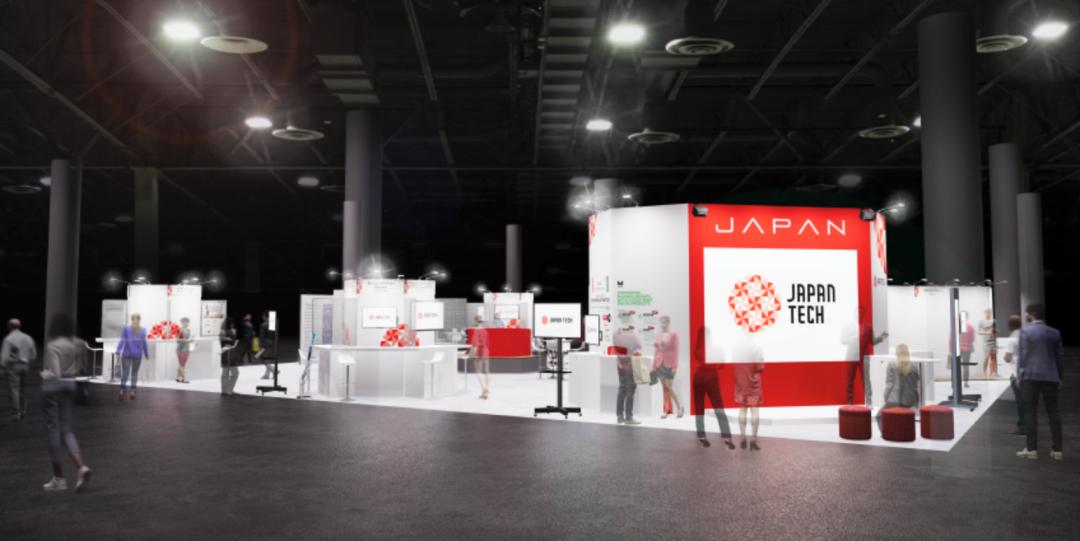
“日本科技项目”CES组团拉客,日本科技企业还能打吗?
3 6 Ke· 2025-12-10 00:13
Core Insights - CES 2026 will take place from January 6 to 9, 2026, in Las Vegas, serving as a significant platform for global technology brands, particularly from China and Japan [1][14] - The "Japan Tech Project" aims to support Japanese companies with new technologies and products to showcase at CES and other global tech exhibitions [1][16] - Japanese companies are expected to present innovations in various fields, including AI, robotics, and eco-friendly materials, at CES 2026 [1][3] Japanese Companies' Innovations - Sony is set to showcase its first LCD TV using "True RGB" LED backlight technology, which claims to avoid common OLED issues while achieving high brightness levels [3][5] - In addition to TVs, Sony may introduce a new 240Hz refresh rate PlayStation monitor, aiming to maintain its position in the high-end hardware market [5] - Panasonic will focus on "carbon neutrality" and "circular economy" themes, showcasing smart appliances like refrigerators that monitor food freshness [6][9] Automotive Developments - Sony Honda Mobility will present the AFEELA 1 electric vehicle at CES 2026, highlighting the collaboration between entertainment and automotive technology [10][12] Professional Imaging and Robotics - Japanese firms continue to dominate the professional imaging sector, with Sony and Nikon expected to unveil new technologies for filmmakers and smart vehicles [12] - The "Japan Tech Project" also aims to support startups in showcasing innovative hardware, including robotics, at CES 2026 [13][17] Competitive Landscape - Chinese companies have significantly increased their presence at CES, with over 1,475 exhibitors in 2025, and are expected to surpass pre-pandemic levels in 2026 [14][16] - Despite the strong showing from China and the U.S., Japan and other countries are striving to establish a more prominent presence in the global tech landscape [16][17]

京东发布年度金榜:上榜商品销量增长率比普通商品高12倍
Xin Lang Cai Jing· 2025-12-09 23:45
12月9日,京东金榜年度盛典在上海举行,美的、华硕、飞利浦、韶音、小米、华为、三只松鼠、农夫 山泉、海澜之家、波司登、伯希和等超140个品牌单品获得年度金奖。数据显示,金榜上榜商品销量增 长率比普通商品高12倍,复购率高1倍。(智通财经记者 范佳来) ...
美的集团完成百亿股份回购 业绩高增托底累派现1382亿
Chang Jiang Shang Bao· 2025-12-09 23:33
Core Viewpoint - Midea Group has successfully completed a significant share buyback program amounting to 10 billion yuan, with plans for further buybacks and a strong commitment to shareholder returns through dividends [1][2][4]. Buyback Program - The buyback program initiated on June 17, 2025, aimed to repurchase shares worth between 5 billion to 10 billion yuan, with a maximum price of 100 yuan per share [2]. - As of December 8, 2025, Midea Group repurchased 135 million shares, representing 1.76% of the total share capital, with a total expenditure of approximately 10 billion yuan, reaching the upper limit of the buyback plan [2][3]. - Over 70% of the repurchased shares will be canceled, reducing the total share capital to approximately 7.596 billion shares [2]. Financial Performance - Midea Group has shown consistent revenue and profit growth since its listing in 2013, with revenue increasing from 121.27 billion yuan in 2013 to 409.08 billion yuan in 2024, and net profit rising from 5.32 billion yuan to 38.54 billion yuan during the same period [4]. - In the first three quarters of 2025, the company reported revenue of 363.06 billion yuan, a year-on-year increase of 13.82%, and a net profit of 37.88 billion yuan, up 19.51% year-on-year [4]. Dividend Policy - Midea Group announced its first interim dividend in 2025, distributing 5 yuan per 10 shares, totaling 3.448 billion yuan, marking a shift from its previous annual dividend model [5]. - Since its listing, the company has distributed a total of 138.195 billion yuan in dividends, with a payout ratio of 46% [5]. Strategic Developments - Midea Group is evolving from a traditional home appliance manufacturer to a global technology group, launching initiatives in energy solutions and robotics [5]. - The company has introduced a comprehensive energy strategy focusing on "energy storage + heat pumps + AI," providing customized energy solutions across various sectors [5]. - Midea's robotics strategy includes AI integration, humanoid robot development, and core component manufacturing [5].