
宁波银行

Search documents
服贸会秀“绿”绩
2 1 Shi Ji Jing Ji Bao Dao· 2025-09-12 23:06
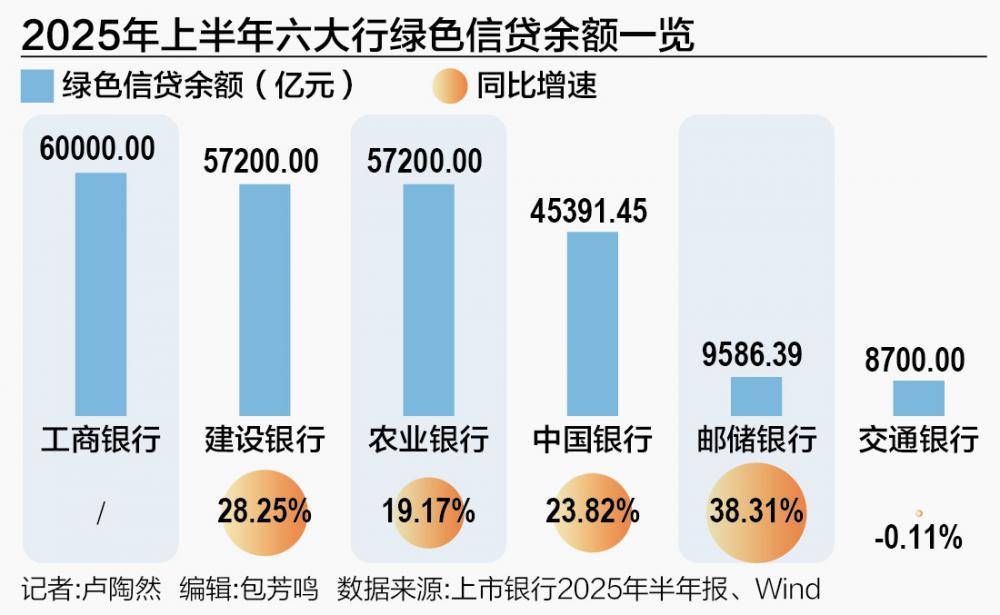
Core Insights - As of the end of Q2 2025, China's green loan balance reached approximately 42.4 trillion yuan, and the green bond balance exceeded 2.2 trillion yuan, positioning China among the top globally [1] - The carbon reduction support tool has guided financial institutions to issue carbon reduction loans exceeding 1.38 trillion yuan [1] - A total of 37 listed banks reported a combined green loan balance of 29.22 trillion yuan, with an average balance exceeding 800 billion yuan, reflecting a year-on-year growth of 41.79% [1][5] Green Loan Growth - The green loan balance of the banking system in China is leading globally, with state-owned banks playing a significant role [4] - Among the six major state-owned banks, the Industrial and Commercial Bank of China (ICBC) leads with a green loan balance of 6 trillion yuan, followed by China Construction Bank and Agricultural Bank of China, each with 5.72 trillion yuan [5] - Postal Savings Bank of China showed a remarkable year-on-year growth rate of 38.31%, nearing the 1 trillion yuan mark [5] Innovation in Green Financial Products - Banks are actively expanding and innovating specialized green financial products and service models, covering areas such as clean energy and environmental remediation [2] - The green financial product system is becoming increasingly diverse, showcasing various practical paths and innovative outcomes [2] Carbon Reduction Support Tool - The carbon reduction support tool is becoming a key indicator of banks' green financial capabilities, effectively directing financial resources towards green and low-carbon sectors [9] - In Q2 2025, 16 banks reported carbon reduction loans that facilitated a carbon reduction equivalent of over 7 million tons, with a total loan amount of nearly 24 billion yuan [9] - Major banks like ICBC and China Construction Bank have over 100 projects funded through carbon reduction loans, leading in both project numbers and loan amounts [9] Performance of Smaller Banks - Smaller banks, including city commercial banks and rural commercial banks, are showing significant growth in green loan balances, with some achieving substantial year-on-year increases [8] - Zhangjiagang Rural Commercial Bank led the rural commercial banks with a growth rate of 30.25% in green loan balances [7] - Smaller banks are encouraged to leverage local advantages and develop differentiated paths to support local green projects [8]







青岛金王应用化学股份有限公司第九届董事会第四次(临时)会议决议公告
Shang Hai Zheng Quan Bao· 2025-09-12 18:45
Core Viewpoint - Qingdao Kingking Applied Chemistry Co., Ltd. has approved a joint liability guarantee for its wholly-owned subsidiary, Shanghai Yuefeng Cosmetics Co., Ltd., to support its application for a credit limit of up to 10 million yuan from Ningbo Bank [1][2]. Group 1: Meeting and Resolution - The fourth (temporary) meeting of the ninth board of directors was held on September 12, 2025, with all 8 directors participating and voting unanimously in favor of the guarantee proposal [1][2]. - The meeting was conducted in accordance with the Company Law and the company's articles of association, ensuring its legality and validity [1]. Group 2: Guarantee Details - The company plans to provide a joint liability guarantee for Shanghai Yuefeng's credit application, which is aimed at supporting its business development and normal funding needs [2]. - The guarantee will cover a credit limit of no more than 10 million yuan, with a duration of one year from the date of board approval or agreement signing [2]. Group 3: Subsidiary Financial Overview - As of December 31, 2024, Shanghai Yuefeng had total assets of 308.32 million yuan and total liabilities of 117.26 million yuan, resulting in a debt-to-asset ratio of 38.03% [3]. - For the year 2024, the subsidiary reported revenue of 280.82 million yuan and a net profit attributable to the parent company of 15.84 million yuan [3]. - As of June 30, 2025, the subsidiary's total assets increased to 498.04 million yuan, with total liabilities of 304.05 million yuan, leading to a debt-to-asset ratio of 61.05% [4]. Group 4: Board's Opinion and Compliance - The board believes that the financial risks associated with the guarantee are within the company's control and that the guarantee aligns with relevant regulations and internal policies [5]. - The guarantee is expected to facilitate the subsidiary's access to bank credit for financing, addressing liquidity needs and supporting business operations, which is in the overall interest of the company [5]. Group 5: Guarantee Limits and Status - As of the announcement date, the company has a total available guarantee limit of 430 million yuan, with an actual total guarantee amount of 50 million yuan, representing 3.40% of the audited net assets for 2024 [6]. - The proposed guarantee of 10 million yuan for the subsidiary accounts for 0.68% of the audited net assets and 0.32% of the audited total assets for 2024 [6].

金价 爆了!
Mei Ri Jing Ji Xin Wen· 2025-09-12 13:31
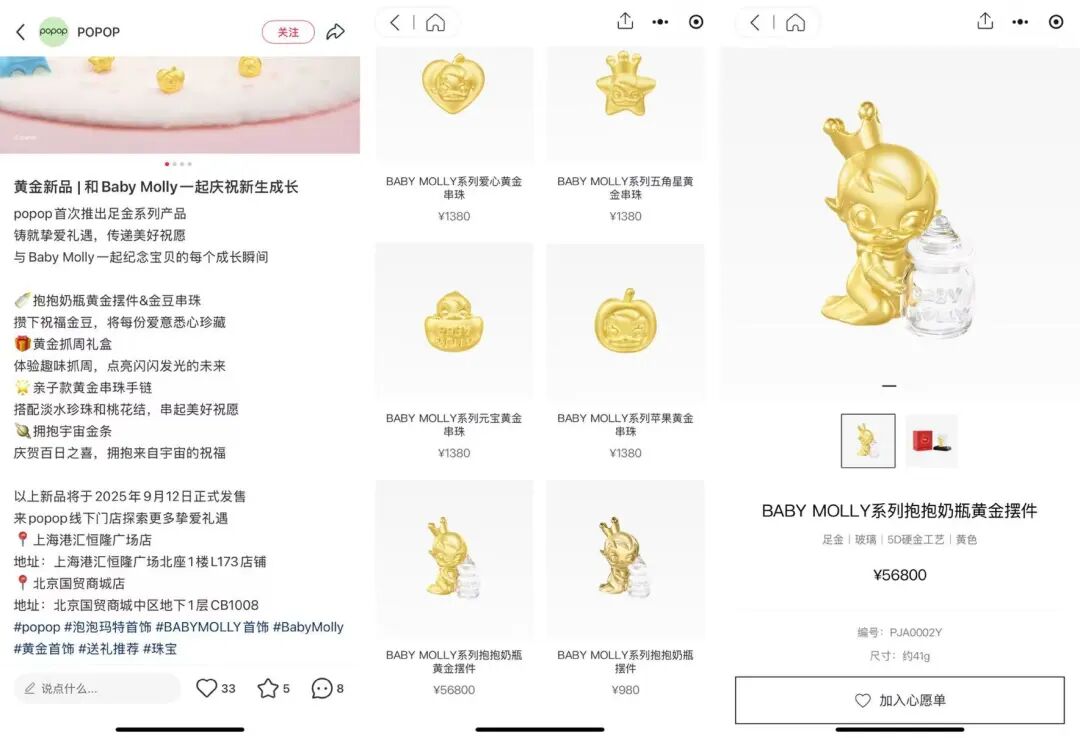
Group 1: Gold Price Surge - Gold prices reached a historical high of $3674.27 per ounce, surpassing the previous peak of $850 per ounce from January 21, 1980, when adjusted for inflation [1] - The gold price has increased approximately 5% this month and nearly 40% year-to-date [1] - Major banks in China, including Bank of China and Agricultural Bank of China, have raised investment thresholds and adjusted margin requirements for precious metals due to increased volatility in gold prices [1][2] Group 2: Factors Driving Gold Prices - Multiple factors, including tax cuts and tariffs from the Trump administration, have weakened the appeal of the US dollar and US Treasury bonds, leading to increased investment in gold [2] - Gold is viewed as a hedge against inflation and currency devaluation, a role it has played for centuries [2] - Central banks have been diversifying their foreign reserves, with gold now being the second-largest reserve asset globally, surpassing the euro [3] Group 3: Market Dynamics and Predictions - Analysts suggest that the current gold price surge is characterized by lower volatility compared to the 1980s, attributed to enhanced market liquidity and the accessibility of gold through ETFs [2][3] - Goldman Sachs predicts that gold prices could reach $3700 by the end of 2025 and potentially exceed $4000 by mid-2026, with scenarios suggesting prices could touch $4500 to $5000 if there is a significant outflow from dollar assets [2] Group 4: New Product Launches in Jewelry Sector - Popop, a jewelry brand under Pop Mart, launched its first gold product line, featuring items priced between ¥980 and ¥56,800, with the most expensive item being a 41g gold ornament [4][10] - The pricing strategy for Popop's gold products is a fixed price model, similar to traditional gold shops, rather than fluctuating with gold prices [6][10] - The new product line is part of Pop Mart's strategy to expand into the jewelry sector, aiming to leverage its IP for broader market opportunities [10]

服贸会秀“绿”绩:42.4万亿信贷筑基,碳减排工具成效初显
2 1 Shi Ji Jing Ji Bao Dao· 2025-09-12 13:09
Core Insights - The balance of green loans in China is approximately 42.4 trillion yuan, and the balance of green bonds exceeds 2.2 trillion yuan, placing these figures among the highest globally [1] - As of September 12, 2025, 37 listed banks reported a total green loan balance of 29.22 trillion yuan, with an average balance exceeding 800 billion yuan, reflecting a year-on-year growth of 41.79% [3] - The carbon reduction support tool has led to over 1.38 trillion yuan in carbon reduction loans issued by financial institutions, indicating significant progress in green finance [1][6] Green Loan Growth - The green loan balance of 37 listed banks reached 29.22 trillion yuan, with state-owned banks holding over 20 trillion yuan, accounting for nearly half of the total [3] - Industrial and Commercial Bank of China leads with a green loan balance of 6 trillion yuan, followed by China Construction Bank and Agricultural Bank of China, each with approximately 5.72 trillion yuan [3] - Postal Savings Bank of China showed a remarkable year-on-year growth of 38%, nearing the 1 trillion yuan mark [3] Innovation in Green Financial Products - Banks are actively expanding and innovating specialized green financial products and service models, covering areas such as clean energy and environmental remediation [2] - The green financial product system is becoming increasingly diverse, showcasing various practical paths and innovative outcomes [2] Carbon Reduction Support Tool - The carbon reduction support tool is becoming a key indicator of banks' green finance capabilities, effectively guiding financial resources towards green and low-carbon sectors [6] - In the second quarter of 2025, 16 banks reported carbon reduction loans leading to over 7 million tons of carbon reduction, with a total loan amount of nearly 24 billion yuan [6] - Major banks like ICBC and CCB have over 100 projects funded through carbon reduction loans, demonstrating their significant role in this area [6] Performance of Smaller Banks - Smaller banks are showing strong growth in green loan scales, with some achieving substantial increases in 2024 [5] - Banks like Xi'an Bank and Shaoxing Ruifeng Rural Commercial Bank reported green loan growth rates of 202.75% and 144.63%, respectively [5] - There is a need for smaller banks to leverage local advantages and develop differentiated paths in green finance [5]
宁波银行(002142):中间业务收入改善 资产质量优异
Xin Lang Cai Jing· 2025-09-12 12:36
Core Viewpoint - The company reported a solid performance in the first half of 2025, with revenue and net profit showing year-on-year growth, while maintaining a stable asset quality despite challenges in personal loans and manufacturing sectors [1][5]. Financial Performance - In H1 2025, the company achieved operating revenue of 37.16 billion yuan (+7.91% YoY) and net profit attributable to ordinary shareholders of 14.77 billion yuan (+8.23% YoY) [1]. - As of June 30, 2025, total assets reached 3.47 trillion yuan (+14.39% YoY), with a non-performing loan (NPL) ratio of 0.76% (unchanged QoQ) and a provision coverage ratio of 374.16% (+3.62 percentage points QoQ) [1]. - The net interest margin for Q2 was 1.72% (-11.98 basis points YoY) [1][3]. Loan Growth and Market Position - The company maintained a competitive advantage in corporate loans, with a seasonal decline in personal loans due to weak demand and tightened credit policies [2]. - Corporate loan growth was supported by strong regional economic demand and a solid project pipeline, while personal loans showed a decrease in total scale compared to the end of Q1 [2]. - The company’s financial investments continued to grow rapidly in Q2, driven by government financing [2]. Interest Margin and Cost Management - The Q2 net interest margin was impacted by repricing effects, with a measured interest rate of 3.44% for interest-earning assets [3]. - The cost of deposits improved significantly due to multiple rounds of deposit rate cuts, with a measured interest rate of 1.71% [3]. - The company is expected to follow the trend of major banks in deposit repricing, which will alleviate pressure on asset yields [3]. Risk Management and Asset Quality - The overall NPL ratio remained stable at 0.76%, with a slight increase in personal loan NPLs due to a combination of factors [5]. - The company has been prudent in its impairment provisions, with a decrease in the proportion of overdue loans, indicating signs of risk mitigation [5]. - The company’s ability to manage retail risks effectively is supported by its revenue growth and strong provisions [7]. Profit Forecast and Investment Outlook - The company has adjusted its profit forecasts upward, expecting operating revenues of 71.56 billion, 77.41 billion, and 86.29 billion yuan for 2025-2027 [6]. - The net profit attributable to ordinary shareholders is projected to be 29.53 billion, 32.47 billion, and 36.80 billion yuan for the same period [6]. - The company is well-positioned to leverage its wealth management and asset management strengths in a favorable capital market environment [6][7].
上半年多家股份行人均薪酬微降,人力资源成降本重要“阵地”
Nan Fang Du Shi Bao· 2025-09-12 12:01
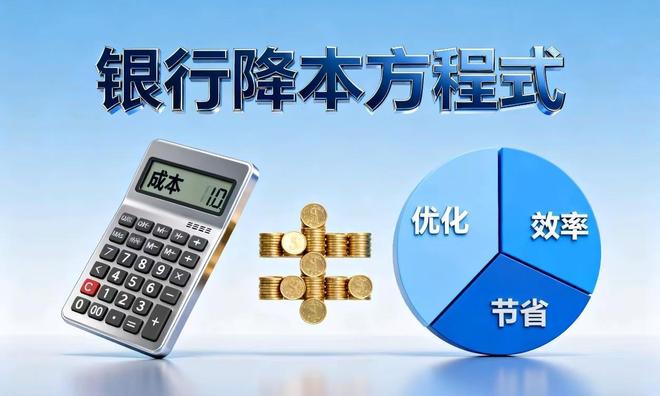
Core Viewpoint - The banking industry is focusing on cost control and efficiency improvement as a consensus, with human resource optimization being a key strategy for cost management in 2025 [2][4]. Salary Analysis - Over 10 banks reported an average monthly salary exceeding 40,000 yuan, with notable figures including China Merchants Bank at 50,500 yuan and Nanjing Bank at 48,200 yuan [2]. - Salary changes varied, with some banks like China Merchants Bank and Everbright Bank experiencing slight declines compared to the previous year [4]. - State-owned banks generally reported lower average salaries, with Bank of China showing a monthly salary of 28,000 yuan, a slight increase year-on-year [4]. Cost Control Measures - Banks are implementing strict cost control measures, including reducing employee numbers and optimizing salary expenditures [2][5]. - For instance, Shanghai Pudong Development Bank reduced its employee expenses by 9.58 billion yuan, with a decrease in employee count by 673 [5]. - The overall trend shows a reduction in workforce among major state-owned banks, totaling over 20,000 employees, while some joint-stock banks increased their workforce [5]. Deposit Cost Management - Managing deposit costs has become a common strategy, with a focus on low-cost deposits as a key tool for banks [6][8]. - As of the end of Q2, the net interest margin for commercial banks was 1.42%, a slight decrease from the previous quarter [8]. - China Merchants Bank reported a significant reduction in deposit costs, with an average annual cost rate of 1.26%, down 34 basis points year-on-year [8]. Digital Transformation and Efficiency - Banks are increasingly adopting digital solutions to enhance operational efficiency and reduce costs, focusing on automating processes and minimizing manual operations [12]. - The shift towards digital banking is seen as a means to not only cut costs but also to restructure processes and improve overall efficiency [12]. - Some banks are closing inefficient branches and optimizing their real estate management to further reduce costs [11].




央行:调整后的一级交易商考评办法将从2025年启用,考评期内行为不当的一级交易商将被暂停参与公开市场操作
Sou Hu Cai Jing· 2025-09-12 10:45
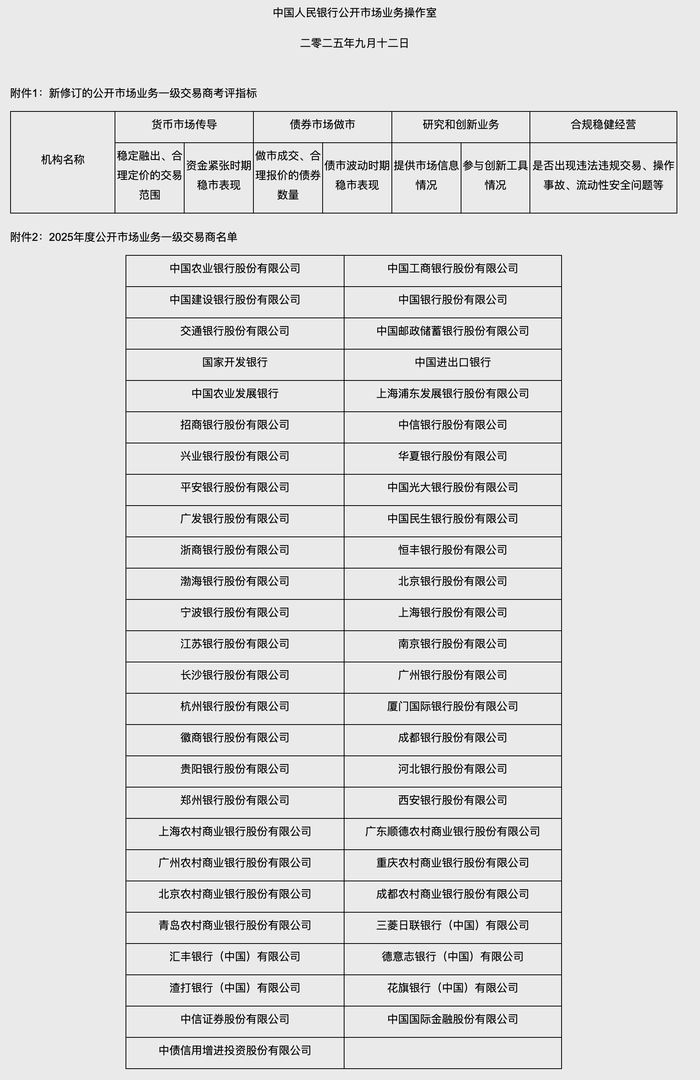
Core Viewpoint - The People's Bank of China (PBOC) has established a new evaluation mechanism for primary dealers in the open market, which will be implemented in 2025, aiming to enhance the transmission of monetary policy and adapt to the evolving financial market [1]. Group 1: Evaluation Mechanism - The PBOC's evaluation mechanism for primary dealers was first established in 2004 and adjusted in 2018 to support smooth open market operations [1]. - The new evaluation method will focus on optimizing and simplifying assessment indicators, categorizing institutions for evaluation, and strengthening the linkage with bond market makers [1]. - The list of primary dealers for the year 2025 will remain unchanged, and any dealer exhibiting inappropriate behavior during the evaluation period may be suspended from participating in open market operations [1]. Group 2: Institutions Involved - A comprehensive list of institutions that will be evaluated includes major banks such as Agricultural Bank of China, Industrial and Commercial Bank of China, China Construction Bank, and Bank of China, among others [3][4]. - The evaluation will consider factors such as stable lending, reasonable pricing, market performance during tight funding periods, and compliance with operational standards [3].



玩转“核心-卫星”策略,QFII二季度持仓市值环比增长超16%,猛加TMT行业!
市值风云· 2025-09-12 10:08
Core Viewpoint - QFII has significantly increased its holdings in the stock market, with a total investment of 138.2 billion, reflecting a growth of over 16% compared to the previous quarter, while the Shanghai Composite Index only rose by 3.25% during the same period [3][4]. Group 1: QFII Holdings Overview - QFII has entered the top ten shareholders of 1,130 listed companies, with a total holding of 138.2 billion, up from 118.6 billion at the end of the first quarter [3]. - The banking sector remains a favorite for QFII, with holdings reaching 65.79 billion, accounting for 47.6% of total holdings [5]. - Other significant sectors include electronics at 17.56 billion, machinery, non-ferrous metals, and automotive, with the top five sectors collectively holding 100.2 billion, representing 72.5% of total holdings [5]. Group 2: Sector Performance and Adjustments - QFII has notably increased its positions in the communication, defense, media, and military sectors, with communication holdings rising from 0.337 billion to 1.33 billion, reflecting a growth of over 50% [7]. - The defense and military sector saw a significant increase in holdings from 0.479 billion to 0.904 billion, coinciding with a 20.3% rise in the sector's performance [7]. - Conversely, QFII has reduced its exposure to the food and beverage sector, decreasing holdings from nearly 2 billion to 1.41 billion [7]. Group 3: Top Holdings and Changes - The top twenty holdings of QFII account for 894.8 billion, making up 64.8% of total positions, with an average increase of 25.1% year-to-date [7]. - Notable increases in holdings include Zijin Mining, BOE Technology Group, and others, while Jianghuai Automobile is a new addition to the top holdings [8]. - QFII's favorite bank stocks include Ningbo Bank and Nanjing Bank, with combined holdings exceeding 58 billion [9]. Group 4: Strategic Focus - QFII's strategy involves a core-satellite approach, focusing on stable investments in banks while also engaging in short-term trading in sectors like technology, military, and basic chemicals [16]. - The significant increase in holdings in the electronics and computer sectors indicates a strong anticipation of a tech rally, with six positions in the top twenty holdings [11]. - QFII has also shown interest in the robotics sector, increasing positions in several machinery stocks [12].
城商行板块9月12日跌1.78%,齐鲁银行领跌,主力资金净流出11.32亿元
Zheng Xing Xing Ye Ri Bao· 2025-09-12 08:38
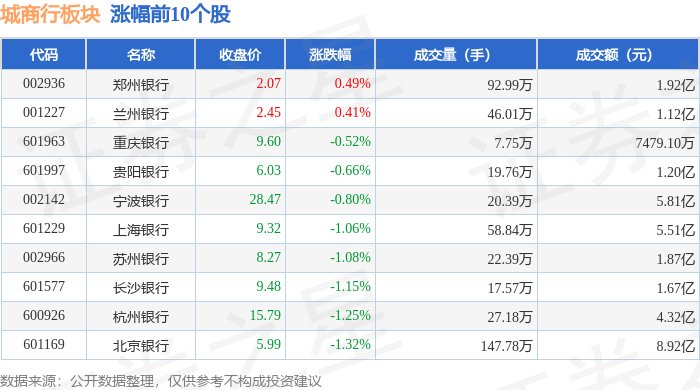
Market Overview - The city commercial bank sector experienced a decline of 1.78% on September 12, with Qilu Bank leading the drop [1] - The Shanghai Composite Index closed at 3883.69, up 0.22%, while the Shenzhen Component Index closed at 12996.38, up 0.13% [1] Individual Bank Performance - Zhengzhou Bank closed at 2.07, up 0.49% with a trading volume of 929,900 shares and a transaction value of 192 million [1] - Qilu Bank closed at 5.69, down 1.90% with a trading volume of 508,000 shares and a transaction value of 291 million [2] - Xiamen Bank closed at 6.50, down 1.66% with a trading volume of 128,000 shares and a transaction value of 83.97 million [2] Capital Flow Analysis - The city commercial bank sector saw a net outflow of 1.132 billion in main funds, while retail funds had a net inflow of 535 million [2] - Qilu Bank had a main fund net inflow of 8.6045 million, but a net outflow of 14.4704 million from speculative funds [3] - Xiamen Bank experienced a significant main fund net outflow of 16.3414 million, with a retail net inflow of 15.2695 million [3]
宁波银行(002142):中间业务收入改善,资产质量优异
Donghai Securities· 2025-09-12 08:22
Investment Rating - The investment rating for the company is "Buy" (maintained) [1] Core Views - The company reported a 7.91% year-on-year increase in operating revenue for the first half of 2025, reaching 37.16 billion yuan, and an 8.23% increase in net profit attributable to ordinary shareholders, amounting to 14.77 billion yuan [2] - As of June 30, 2025, the company's total assets stood at 3.47 trillion yuan, reflecting a 14.39% year-on-year growth, with a non-performing loan ratio of 0.76% (unchanged quarter-on-quarter) and a non-performing loan provision coverage ratio of 374.16% (up 3.62 percentage points quarter-on-quarter) [2] - The net interest margin for Q2 was 1.72%, down 11.98 basis points year-on-year [2] Summary by Sections Loan and Deposit Performance - The company experienced a seasonal decline in loan issuance in Q2, but maintained a significant advantage over the industry. Corporate loans, particularly through bill discounting, showed strong growth, reflecting good regional economic demand and ample project reserves [5] - Personal loans continued to face weak demand, with total scale decreasing compared to the end of Q1, attributed to tighter credit policies due to rising risks [5] - The company’s deposit scale saw a seasonal decline, but the year-on-year growth rate remained significantly higher than the M2 growth rate due to a solid foundation from Q1's deposit gathering [5] Interest Margin and Investment Income - The interest margin continued to narrow under repricing effects, with Q2's net interest margin at 1.72%. The asset yield was measured at 3.44%, reflecting a decrease due to lower LPR and a higher proportion of low-yield bonds in the investment portfolio [5] - The company’s non-interest income improved in Q2, indicating a recovery in capital markets and a positive effect from the easing of fee reduction policies [5] Asset Quality and Risk Management - The overall non-performing loan ratio remained stable at 0.76% as of the end of Q2, with a slight increase in personal loan non-performing rates due to a contraction in the loan base [5] - The company adopted a prudent approach to impairment provisioning, with a decrease in the provision for loan impairment losses compared to the peak in Q1, reflecting a cautious stance amid rising risks in personal loans [6] Earnings Forecast and Investment Recommendations - The company’s loan scale expansion exceeded expectations, with improved investment income and non-interest income. The earnings forecast for 2025-2027 has been adjusted upwards, with expected operating revenues of 71.56 billion, 77.41 billion, and 86.29 billion yuan respectively [6] - The forecasted net profit attributable to the parent company for the same period is 29.53 billion, 32.47 billion, and 36.80 billion yuan respectively, indicating a robust growth outlook [6]