荣耀

Search documents
一切硬件皆有AI,这样的时代正在奔来
Di Yi Cai Jing· 2025-08-27 10:39
Group 1 - The core viewpoint of the articles is that the Chinese government has initiated a push towards the integration of artificial intelligence (AI) into various hardware sectors, aiming for over 70% of terminal devices to achieve smart upgrades within the next two years [1][2][3] - The "AI+" action plan outlines a clear timeline for the proliferation of new generation smart terminals, with expectations of over 90% adoption by 2030 and a complete transition to an intelligent economy by 2035 [1][2] - The AI transformation is expected to redefine human-computer interaction and reconstruct product value logic and industry ecosystems [1][3] Group 2 - The PC industry is experiencing a revival driven by AI, with IDC forecasting a global PC shipment of 262.7 million units in 2024, marking a 1% year-on-year growth, the first increase in three years [4] - Lenovo's AI PC sales have already reached one-third of total PC sales, surpassing previous expectations, indicating strong user engagement with AI features [4][5] - The smartphone sector is witnessing significant changes as AI redefines interaction methods and reshapes the industry ecosystem, with AI capabilities becoming standard in high-end devices [5][6] Group 3 - The integration of AI in household appliances is becoming mainstream, with traditional appliances like refrigerators and washing machines undergoing upgrades towards higher intelligence and personalization [7][8] - AI penetration rates in various appliance categories are notable, with 90% in robotic vacuums and air purifiers, and over 70% in AI televisions [8] - The smart home appliance market in China is projected to reach approximately 756 billion yuan in 2024, with a growth rate of 3% [8] Group 4 - The future of AI hardware may involve new forms beyond current PCs and smartphones, as existing devices may not meet the demands of next-generation AI [9][10] - The concept of AI as a personal assistant is evolving, with expectations for devices to understand user intent and interact more naturally [10][11] - Emerging technologies such as embodied AI and brain-computer interfaces are expected to drive the next wave of hardware innovation, leading to devices that are seamlessly integrated into daily life [11][12]

上半年营收超250亿元 爱施德毛利率持续提升
Zheng Quan Shi Bao Wang· 2025-08-27 06:45
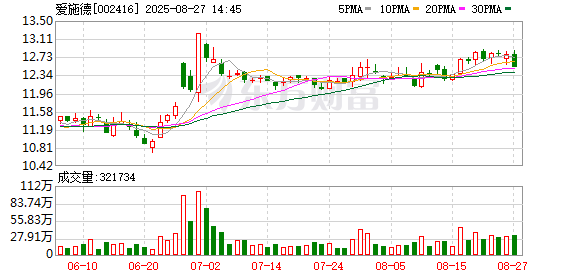
Core Viewpoint - Aishide (002416) reported a revenue of 25.37 billion yuan and a net profit of 255 million yuan for the first half of 2025, reflecting a strategic optimization of its business structure despite a challenging market environment [2] Group 1: Financial Performance - The company's revenue increased to 25.37 billion yuan, while net profit reached 255 million yuan, driven by a reduction in low-margin and uncertain businesses [2] - Gross margin improved from 3.88% in the same period last year to 5.09%, indicating early success in business structure optimization [2] Group 2: Business Operations - Aishide is a leading digital distribution and retail service provider in China, serving as a primary distributor for major smartphone brands including Apple, Honor, Samsung, and Meizu [2] - The company has a comprehensive service network covering all channels from T1 to T6, with over 2,000 authorized stores for Apple and 7,000 clients for Honor [2] Group 3: Overseas Expansion - The company experienced a 29.96% year-on-year increase in overseas sales revenue, with significant market share gains for Honor in Hong Kong and Macau [3] - In Vietnam, retail activation volume grew by over 300%, showcasing strong capabilities in overseas market development [3] Group 4: Industry Outlook - Despite short-term fluctuations in the consumer electronics industry, long-term growth trends remain positive, with IDC predicting a gradual recovery in the global smartphone market [3] - The instant retail sector is experiencing rapid growth, with Aishide's instant retail scale increasing by over 100% year-on-year [3] Group 5: Strategic Initiatives - The company plans to deepen its distribution service system and expand retail presence, aiming to enhance market share and profitability as the consumer market recovers [4] - Aishide is pursuing a dual strategy of "internal growth and external development," focusing on investments in smart terminals and artificial intelligence through a newly established investment fund [4]


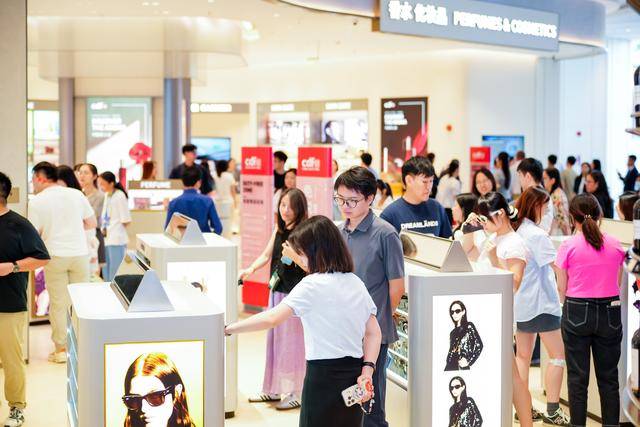
3000平方米,国内最大!深圳首家市内免税店正式开业
Sou Hu Cai Jing· 2025-08-27 03:50
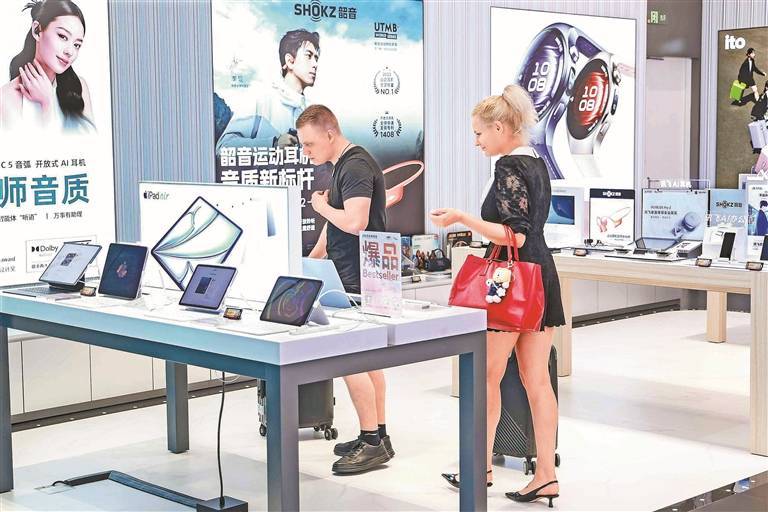
Core Insights - The first city duty-free store in Shenzhen has officially opened, offering a convenient shopping experience for travelers with various promotional offers [1][2] - The store is a collaboration between China Duty Free Group, Shenzhen Duty Free Group, and Shenye Group, covering an area of nearly 3,000 square meters, making it the largest city duty-free store in China [1][2] Group 1: Store Features and Offerings - The city duty-free store adopts a multi-faceted model combining "duty-free, tax refund, and taxable" products, enhancing the shopping experience with a diverse range of goods [2][3] - The product matrix includes beauty and skincare, watches, high-end liquor, and features local tech brands, showcasing Shenzhen's innovation [3][4] - The store introduces a "Shenzhen-made" experience area featuring local tech brands, enhancing the shopping environment for both domestic and international customers [3][4] Group 2: Consumer Engagement and Promotions - The store targets both outbound travelers and local consumers, aiming to stimulate cross-border consumption and local spending [5] - Exclusive promotions during the opening include discount packages, membership rewards, and a tax refund of approximately 9% on eligible products, with duty-free items priced 11%-25% lower than taxable counterparts [5]
国产手机围剿iPhone 17,2亿双摄+1万毫安大电池、手机里还要装“空调”…太离谱
3 6 Ke· 2025-08-27 03:09
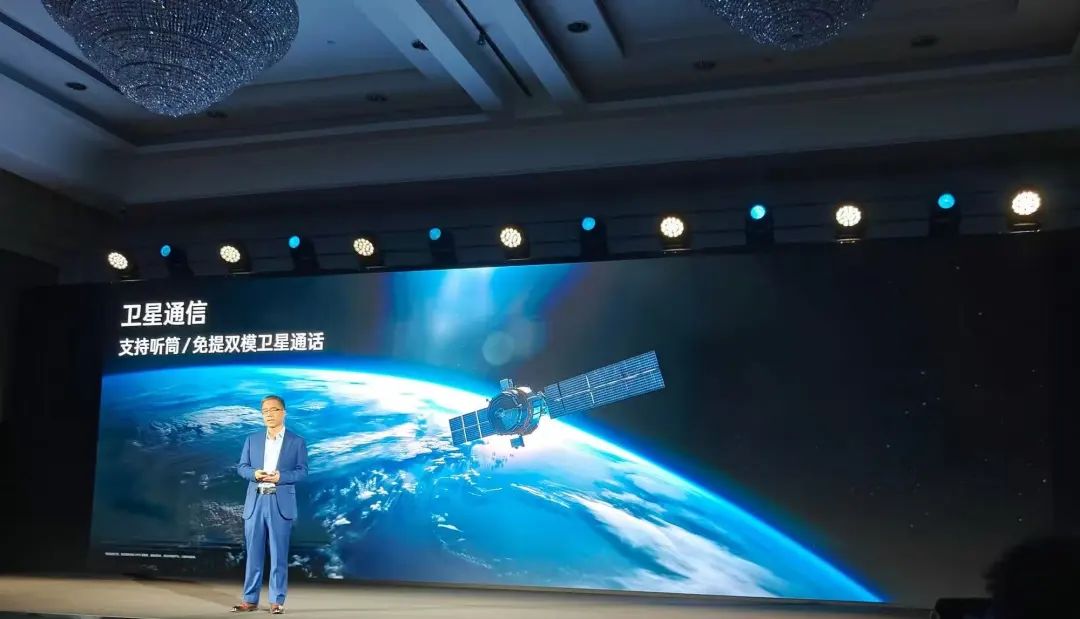
Core Viewpoint - The article discusses the rapid advancements in the smartphone industry, particularly focusing on the upcoming features and technologies that Chinese manufacturers are planning to implement, such as 200 million pixel cameras, extreme durability, and significant battery capacity improvements. Group 1: Camera Technology - The competition in smartphone imaging has intensified, with manufacturers now aiming for 200 million pixel cameras, which are expected to become mainstream in upcoming flagship models [7][11][12] - The Xiaomi 15 Ultra has already demonstrated the capabilities of a 200 million pixel long-focus lens, showcasing its ability to capture fine details [14][18] - The trend indicates that multiple manufacturers will adopt dual 200 million pixel configurations, enhancing photography capabilities significantly [11][12] Group 2: Durability and Battery Life - Recent models, such as the Redmi Note 15, have showcased impressive durability, withstanding drops from 2 meters without damage [23][28] - The Honor X70 has been marketed with extreme durability claims, suggesting it could withstand bullets, utilizing advanced materials to enhance impact resistance [33][35] - Upcoming models are expected to feature batteries with capacities reaching 10,000 mAh, with several manufacturers already planning to introduce such models [38][41][46] Group 3: Cooling Technology - Active cooling systems are being integrated into smartphones, with Huawei's Mate 80 series expected to feature a built-in fan for enhanced thermal management [53][55] - Realme has also showcased a prototype with an internal cooling fan, indicating a trend towards better heat dissipation in smartphones [59][61] Group 4: Communication Technology - The Huawei Mate 80 series is set to introduce low Earth orbit satellite communication, allowing for connectivity in remote areas without traditional signal coverage [62][63] - The integration of eSIM technology is also anticipated, which could lead to more compact designs and potentially larger battery capacities in future smartphones [65][66] Group 5: Overall Industry Trends - The article highlights a significant shift in the smartphone industry, with Chinese manufacturers pushing the boundaries of technology, making high-end features accessible in mid-range devices [67] - The ongoing competition among manufacturers is expected to lead to continuous innovation, enhancing user experience without a clear winner in the market [67]

折叠屏苦等爆点
Bei Jing Shang Bao· 2025-08-26 16:24
Core Viewpoint - The foldable screen market is experiencing a tug-of-war between excitement and stagnation, with manufacturers launching new products while facing inherent challenges such as high prices and quality inconsistencies [1][3]. Group 1: Market Dynamics - Honor and Xiaomi have recently launched new foldable models, indicating a competitive push in the foldable screen segment [1]. - IDC predicts that the foldable screen market will enter a "small year" by 2025, with manufacturers adopting more conservative strategies due to fluctuating market growth [1][3]. - Gold Yuan Securities forecasts that by 2025, global foldable phone shipments will increase, with China's market share rising to 31%, marking it as a "second growth curve" for smartphones [3]. Group 2: Consumer Sentiment - Many consumers find foldable screens appealing but face practical issues, leading to limited repurchase intentions [4][6]. - Despite curiosity about foldable devices, actual sales remain lower than traditional models due to concerns over price and usability [5][6]. - A significant portion of mainstream applications still uses simple adaptation methods, resulting in poor user experiences [7]. Group 3: Technical Challenges - The high cost of foldable devices is primarily due to the expensive components like hinges and flexible screens, which account for over 60% of the BOM cost [6]. - Foldable devices often compromise on core specifications to maintain their unique form factor, leading to a perception of inadequate value compared to traditional smartphones [6][7]. - Durability issues persist, with high repair costs and limited availability of parts contributing to consumer hesitance [7]. Group 4: Future Outlook - TrendForce predicts that foldable phone shipments will reach 19.83 million units by 2025, maintaining a penetration rate of approximately 1.6% [8]. - The anticipated entry of Apple into the foldable market with the iPhone Fold in 2026 is seen as a potential catalyst for industry growth, although its impact on overall sales remains uncertain [9][10]. - Analysts suggest that while Apple's brand strength could enhance foldable screen adoption, other factors like pricing and application relevance may continue to limit broader market penetration [10][11].

“免税、退税、有税”融合!深圳首家市内免税店正式开业
Sou Hu Cai Jing· 2025-08-26 16:12
Core Insights - The Shenzhen Duty-Free Store officially opened on August 26, coinciding with the 45th anniversary of the Shenzhen Special Economic Zone, aiming to enhance the economic effects of the Shenzhen port and stimulate international consumption [1] Group 1: Store Features and Offerings - The Shenzhen Duty-Free Store, located in the core business district of Futian, covers nearly 3,000 square meters, making it the largest city duty-free store in China [3] - The store integrates traditional product categories with innovative elements, including a "Shenzhen Smart Manufacturing" section showcasing local tech brands like iFlytek, Honor, and Huawei, highlighting Shenzhen's identity as a "City of Technology" [3] - It introduces a domestic beauty and skincare series, a customizable skincare service area, and a Chinese medicine culture experience space, creating a new retail environment that combines shopping, interaction, and lifestyle [3] Group 2: Target Consumer Base - The store targets both domestic and international consumers, aiming to attract outbound travelers while also stimulating local consumption [5] - The opening of the store is expected to create a consumption loop connecting duty-free shopping, luxury hotel stays, and ecological park visits, enhancing the overall tourism experience in the area [6] Group 3: Innovative Services and Benefits - The Shenzhen Duty-Free Store has launched a "cloud tax refund" service, providing convenient payment and efficient tax refund processes, showcasing the "Shenzhen speed" [9] - The store offers a price discount of 11% to 25% on duty-free products, compared to the traditional tax refund rate of 8% to 9%, which is anticipated to boost international consumption, particularly in tech products favored by foreign tourists [12]

折叠屏,苦等一个拐点
Bei Jing Shang Bao· 2025-08-26 14:15
Core Insights - The foldable screen market is experiencing a tug-of-war between excitement and stagnation, with new product launches from major players like Honor and Xiaomi indicating a competitive landscape, yet data shows a decline in growth rates and challenges in market penetration [1][2][4] Market Performance - In 2024, China's foldable screen shipments reached 9.17 million units, marking a 30.8% year-on-year increase, but the fourth quarter saw a decline of 9.6% compared to the previous year, ending a streak of nine consecutive quarters of growth [1] - The first quarter of 2025 saw shipments of 2.84 million units, a 53.1% year-on-year increase, but the second quarter dropped to 2.21 million units, reflecting a 14% year-on-year decline, indicating volatility in market performance [2] Industry Trends - The foldable screen segment is projected to account for 31% of the global market by 2025, becoming a significant growth driver in the high-end smartphone market [4] - Despite ongoing product and technological advancements, the market is facing challenges in expanding its user base and attracting new customers, as the novelty of foldable designs is wearing off [5][6] Consumer Sentiment - Many consumers perceive foldable screens as "good-looking but not practical," with high prices and usability issues hindering their transition from novelty items to essential devices [8] - The average price for foldable devices remains high, with some models priced over 5,000 yuan, leading consumers to question the value compared to traditional smartphones [8][9] Future Outlook - TrendForce predicts that foldable phone shipments will reach 19.8 million units in 2025, maintaining a penetration rate of approximately 1.6% [10] - The anticipated entry of Apple into the foldable market with the iPhone Fold in 2026 is expected to be a significant catalyst for industry growth, although its impact on overall market dynamics remains uncertain [11][12]

苹果、vivo、荣耀接连入局!手机厂商为何看好MR新赛道?
Zheng Quan Shi Bao Wang· 2025-08-26 13:54
Group 1: Industry Overview - The mixed reality (MR) market is still in its early stages, with various companies like vivo, Honor, Xiaomi, Huawei, and OPPO entering the space, reflecting a broader industry anxiety about growth [1][4] - Apple's MR headset, Vision Pro, faced disappointing sales, with only 500,000 units sold by the end of 2024, leading to its production halt [3][4] - The Chinese consumer-grade XR device market saw a retail volume of 307,000 units in the first half of 2025, a 17.6% year-on-year increase, but the VR/MR segment experienced a 25.6% decline [3][4] Group 2: Company Strategies - Vivo launched its first MR headset, the vivo Vision Exploration Edition, which is the lightest MR headset on the market at 398g, but it is currently only available for reservation [2] - Vivo's MR team has grown to 500 members, with a long-term vision of integrating MR technology into household robotics [2][3] - Xiaomi adjusted its annual smartphone sales target to approximately 175 million units due to market conditions, indicating a shift in focus towards MR technology [6] Group 3: Market Dynamics - The global VR/MR shipment is expected to reach 5.6 million units in 2025, potentially growing to 14.4 million units by 2030 [5] - The smartphone market is saturated, prompting manufacturers to explore MR as a means to expand their business boundaries and create a multi-device ecosystem [6][7] - The integration of MR with robotics is seen as a way to enhance human-machine interaction, with MR serving as a data collection tool for robots [7][8] Group 4: Challenges and Future Outlook - Industry experts highlight several challenges for MR and robotics, including the need for high-performance sensors, real-time data processing, and cost-effective production [7][8] - The development of a robust application ecosystem and user-friendly interfaces is crucial for the widespread adoption of MR technology [4][5] - The transition from consumer electronics to more reliable systems for robotics is necessary for companies looking to leverage MR technology [8]
AI日报丨最强人形机器人“大脑”!英伟达推Jetson Thor,AI性能暴涨7.5倍
美股研究社· 2025-08-26 12:58
Group 1 - Nvidia launched the Jetson Thor robotics platform, significantly enhancing AI computing power by 7.5 times and energy efficiency by 3.5 times compared to previous models. The developer kit starts at $3,499, while bulk orders of the production module are priced at $2,999 each. Over 2 million developers are currently utilizing Nvidia's robotics technology stack [5][6][11]. - Mobile manufacturers are increasingly investing in new human-computer interaction technologies, with companies like Apple, Vivo, Honor, Xiaomi, Huawei, and OPPO entering the mixed reality (MR) and augmented reality (AR) markets. However, initial sales of Apple's MR headset were disappointing, leading to its discontinuation, and Xiaomi's AI glasses faced a return wave [5][6]. - Saudi AI company Humain is constructing its first data centers, set to begin operations in early 2026, and plans to import chips from Nvidia and other suppliers to establish Saudi Arabia as a regional AI hub [6][7]. Group 2 - Wedbush reported that Nvidia's demand-to-supply ratio is 10:1 ahead of its earnings report, making it a focal point for market attention. Analysts expect Nvidia's earnings per share to be $1.01, with revenue projected at $46 billion [11][12][13].


3000平方米,国内最大!深圳首家市内免税店正式开业!
Sou Hu Cai Jing· 2025-08-26 12:43
Core Viewpoint - The opening of Shenzhen's first city duty-free store marks a significant development in the retail landscape, offering a blend of duty-free and taxable goods, innovative services, and a unique shopping experience for both domestic and international travelers [1][3][10]. Group 1: Store Features and Offerings - The city duty-free store, developed by China Duty Free Group, Shenzhen Duty Free Group, and Shenye Group, spans nearly 3,000 square meters, making it the largest city duty-free store in China [1]. - The store features a diverse product matrix focusing on beauty, high-end watches, premium spirits, and local tech brands, aiming to provide a high-quality shopping experience [5][7]. - It introduces a "Shenzhen-made" element with a dedicated electronic technology experience area, showcasing local tech brands to attract foreign tourists [5][7]. Group 2: Innovative Services - The store employs a multi-faceted model combining duty-free, tax refund, and taxable goods, enhancing the shopping experience [3]. - It has launched a "cloud tax refund" service, facilitating convenient payments and efficient tax refunds for consumers [3]. - Shenzhen Customs has implemented innovative regulatory methods to streamline the shopping process, promoting a high-quality launch for the duty-free store [3]. Group 3: Consumer Engagement and Promotions - The store targets both outbound travelers and local consumers, aiming to stimulate cross-border consumption and local spending [8]. - During the opening period, the store offers exclusive promotions, including discount vouchers and loyalty points, enhancing consumer incentives [10]. - Duty-free products are priced 11%-25% lower than taxable counterparts, providing tangible benefits to consumers [10].