西门子

Search documents
2025年终经济观察丨开放合作互利共赢,中国为世界带来新机遇
Xin Hua Wang· 2025-12-29 12:34
Group 1 - High-level openness is seen as a "driving force" for promoting mutually beneficial cooperation between China and the world, with a focus on aligning with international high-standard economic and trade rules by 2025 [1] - The Central Economic Work Conference has identified "maintaining openness and promoting multi-field cooperation for win-win outcomes" as a key task for China's economic work in the coming year [1] - There is a growing influx of foreign investment into China, with over 60,000 new foreign-invested enterprises established in the first 11 months of the year, marking a 16.9% year-on-year increase [3] Group 2 - Multinational companies are increasingly viewing China as a global innovation hub, with significant investments in research and development centers to cater to local market demands [2] - The actual use of foreign capital in high-tech industries reached 221.26 billion RMB, accounting for over 30% of the total foreign investment in the country [3] - China's foreign trade has shown resilience, with a total import and export value of 41.21 trillion RMB in the first 11 months of the year, reflecting a 3.6% year-on-year growth [5] Group 3 - The establishment of the Hainan Free Trade Port has led to a significant increase in foreign trade registration, with 1,972 new foreign trade registered enterprises in the first week of its operation, a 2.3-fold increase [8] - China is actively promoting institutional openness, with various measures aimed at stabilizing foreign investment and expanding service sector openness [8] - The signing of the upgraded version of the China-ASEAN Free Trade Area 3.0 agreement marks a shift towards "institutional openness," enhancing cooperation between the two regions [9]
吴晓波:“AI闪耀中国”2025(年度演讲全文)
Xin Lang Cai Jing· 2025-12-29 03:18
Group 1 - The AI revolution is a significant competition that impacts national fortunes, with China and the US as the main players [1][13][32] - The development of AI has evolved through key milestones, starting from Turing's question in 1950 to the emergence of GPT-3.5 in 2022, marking a pivotal moment in AI's integration into daily life [10][24][30] - The AI infrastructure investment in the US is projected to exceed $350 billion by 2025, while China's investment is expected to reach 630 billion RMB, indicating a massive scale of infrastructure development in both countries [24][26] Group 2 - The competition between the US and China in AI is characterized by different approaches: the US focuses on AI chips and closed-source models, while China leverages its manufacturing capabilities and open-source models [30][28] - By 2025, the majority of large AI models will be concentrated in the US and China, with both countries accounting for over 80% of the global total [26][28] - The AI industry is witnessing a surge in applications across various sectors, including finance, healthcare, and manufacturing, with companies like Shanghai Bank and Xiamen Guomao leading the way in AI integration [44][50][57] Group 3 - The emergence of multi-modal technologies is revolutionizing content production, allowing non-technical users to create high-quality content easily [34][36] - The AI animation industry has seen a dramatic increase in production and efficiency, with a reported 600% growth in output and a significant reduction in production costs [38][39] - Companies are increasingly adopting AI to innovate their business models, as seen in the case of Jinpai Home, which utilizes AI for home renovation services [53][57] Group 4 - The robotics sector is rapidly evolving, with a new generation of companies emerging to develop intelligent robots capable of performing complex tasks [72][74] - The market for embodied intelligent robots is expected to become a significant part of China's economy, with predictions of four trillion-yuan markets emerging in various sectors [80][82] - Innovations in AI-driven products, such as the ROBOT PHONE by Honor, highlight the integration of AI into consumer electronics, showcasing the potential for new market opportunities [84][85]


趋势研判!2025年中国执行器行业产业链全景、发展现状、企业格局及未来发展趋势分析:人形机器人需求引爆,执行器行业打开高增长空间[图]
Chan Ye Xin Xi Wang· 2025-12-29 01:13
Core Insights - The actuator industry in China has established a complete industrial chain, with upstream focusing on raw materials and core technology components, midstream accelerating towards intelligent development, and downstream driven by traditional industries and emerging fields like robotics and renewable energy [1][5][9]. Industry Overview - Actuators are critical components in automation control systems, converting controller signals into mechanical actions to regulate production parameters [2][3]. - The actuator market is projected to reach 33 billion yuan in 2024 and 82 billion yuan by 2030, driven by technological upgrades and domestic replacements [1][13]. Upstream Development - The upstream sector includes key components like motors, reducers, and sensors, with domestic breakthroughs in motors and reducers, but a notable gap in high-end precision components like encoders [7][9]. - Domestic companies have made significant progress in servo motors and harmonic reducers, but high-end encoder markets remain dominated by international firms [7][9]. Downstream Demand - The demand for actuators is characterized by a dual structure of traditional and emerging markets, with industrial automation as the foundation and new energy and robotics as growth drivers [9][10]. - The humanoid robot sector is expected to see explosive growth, with the market projected to increase from approximately 2.4 billion yuan in 2025 to 25.4 billion yuan by 2030, highlighting the actuator's role as a core component [11][12]. Market Segmentation - The actuator market is segmented into electric, pneumatic, hydraulic, and special actuators, with electric actuators leading growth due to their advantages in smart applications [14][15]. - The electric actuator market is expected to reach 17.8 billion yuan by 2025, while pneumatic and hydraulic actuators maintain stable growth in their respective applications [14][15]. Competitive Landscape - The actuator industry features a diverse competitive landscape with foreign brands dominating high-end markets and domestic leaders making significant inroads through innovation and localization [15][16]. - Domestic brands are expected to capture 58% of the market share by 2024, with projections to exceed 70% by 2030, driven by technological advancements and market responsiveness [15][16]. Future Trends - The industry is set to evolve with a focus on technological innovation, market optimization, and industrial upgrades, emphasizing the integration of IoT and AI into actuator products [16][17]. - The market will see a shift towards high-end applications and a collaborative development model among core and supporting enterprises, enhancing overall competitiveness [18].




燃机品种近期市场汇报
2025-12-29 01:04
Summary of Key Points from Conference Call Records Industry Overview - The gas turbine market is expected to remain tight until 2029, with the order-to-supply ratio projected to increase from 5.15 in 2025 to 5.9 by 2027, indicating strong demand [1][2] - Major players like Siemens and GE are expected to sign a combined 74 GW of new orders in 2025, accounting for 60% of the global gas turbine market [1][2] - The total global order backlog is estimated to reach approximately 230 GW, significantly exceeding the 2025 production capacity of 45 GW [1][2] Demand Drivers - Demand in 2025 is primarily driven by AI data centers, non-AI replacements in the U.S., and global non-U.S. demand, totaling around 80 GW, with expectations to rise to 150 GW in 2026 [1][4] - The U.S. accounts for less than 40% of global demand, while regions like the Middle East, Central Asia, Russia, and Africa represent over 60% [1][4] Future Projections - By 2028, the global order backlog could reach 500 GW, with demand increasing to 190 GW, although production capacity is limited to 80-90 GW due to constraints in key components like turbine disks and high-temperature blades [1][4] Company Insights Jereh Corporation - Expected profit for 2025 is approximately 3 billion CNY, increasing to at least 3.3 billion CNY in 2026, corresponding to a market value of 60-70 billion CNY [1][9] - The gas turbine business is projected to be revised upwards to 400 MW, contributing 3.5 billion CNY in revenue and 700 million CNY in profit, potentially adding 20-30 billion CNY in market value [1][9] - The liquid cooling business may contribute an additional 10 billion CNY in market value, leading to an overall market value expectation of 100-110 billion CNY [1][9] Binlun Environment - Positioned among the top three in North America for liquid cooling equipment, with new orders expected to reach 1.6 billion CNY in 2025, a year-on-year increase of over 300% [3][10] - HRSG business revenue is projected at 1 billion CNY for 2025, with a target of 1.5 billion CNY for the following year [3][10] - Collaboration with Hyundai Heavy Industries to expand overseas markets indicates strong growth potential [3][10] Market Trends - The gas turbine market is anticipated to grow significantly due to increasing electricity demand, particularly driven by AI [6][7] - By 2030, AI is expected to contribute an additional 200 GW to U.S. electricity demand, a figure significantly higher than some reports suggest [7] Investment Opportunities - Companies such as Jereh, Haomai, Yingliu, Liande, Boyin, Wande, and Changbao are highlighted as potential investment opportunities due to their growth prospects [8] - Jereh and Binlun are expected to outperform market expectations, with Jereh's market value potentially reaching 100 billion CNY and Binlun at 30 billion CNY based on their business development and market conditions [5][15] Conclusion - The gas turbine market is poised for significant growth driven by technological advancements and increasing demand, particularly from AI applications. Companies like Jereh and Binlun are well-positioned to capitalize on these trends, presenting attractive investment opportunities.


本周,3家IPO首发上会
Zheng Quan Shi Bao· 2025-12-29 00:42
Group 1: IPO Overview - This week marks the last trading week of 2025, with no new IPOs scheduled from December 29 to 31 unless changes occur [1] - Three companies are set to present their IPOs this week: Weitongli for the Shenzhen Main Board, and Peicheng Technology and Guantai Vacuum for the Beijing Stock Exchange [1] Group 2: Weitongli - Weitongli focuses on the research, production, and sales of a range of electrical connection products, including hard connections, flexible connections, contact components, laminated busbars, and CCS [1] - The company aims to provide high-performance electrical connection products tailored to the specific needs of global customers, enhancing safety, reliability, and intelligence in electrical connections [1] - Weitongli serves high-end clients in various sectors, including major companies like Siemens, Schneider, ABB, Hitachi Energy, and GE in the electrical engineering field, as well as BYD, Stellantis, and others in the new energy vehicle sector [1] Group 3: Guantai Vacuum - Guantai Vacuum specializes in the research, manufacturing, and sales of vacuum equipment, with integrated capabilities from equipment design to delivery [2] - The company focuses on functional materials, particularly in the rare earth permanent magnet industry, with products such as vacuum sintering furnaces and vacuum melting furnaces [2] - The rare earth permanent magnet industry has been the largest revenue contributor for Guantai Vacuum in recent years [2] Group 4: Peicheng Technology - Peicheng Technology is positioned as a value-added service provider in the lithium battery new energy sector, focusing on the demand for key components in batteries, power supplies, and electric vehicles [2] - The company specializes in the independent research, production, and sales of third-party battery management systems (BMS) and power control systems (PCS) [2] - Peicheng Technology provides component application solutions centered around integrated circuits and discrete devices [2]
海南封关李嘉诚换道避险,霍家南沙数十亿投资何去何从?
Sou Hu Cai Jing· 2025-12-28 17:44
但老谋深算的李嘉诚早就提前布局了。2024年上半年,他陆续出售了上海、广州等地的非核心写字楼资 产,回笼资金超200亿元,外界以为他要撤离内地,没想到他转头就把目光投向了海南:在海口江东新区 搞跨境电商产业园,在三亚投资高端医疗项目,还联手本地企业进军新能源领域。说白了,他不是"跑 路",而是看清了政策风向,主动把受冲击的资产变现,换成海南自贸港的新机会,把损失降到了最低。 前阵子去海南旅游,海口美兰机场的免税店排起了长队,导购员说封关政策落地后,6600多个税目的商品 都能零关税买,比香港还划算。在三亚海边吃饭时,老板聊起现在洋浦港天天有巨轮靠岸,连西门子这样 的巨头都来落户了。 而身边做外贸的朋友却在纠结:海南封关这波冲击波,不仅改变了咱们普通人的购物和出行,更让香港两 位商业大佬的布局迎来大考——李嘉诚提前抛售大湾区资产转向海南,霍家在南沙砸了数十年的数十亿投 资,如今又该何去何从? 一、先搞懂:海南封关不是封岛,官方政策到底咋回事? 很多人一听"封关"就慌了,以为以后去海南要办签证、货物进出受限制,其实完全是误解。根据海南省人 民政府2025年12月发布的官方通告,海南全岛封关从2025年12月18日 ...

越南首富紧急撤资,南北高铁8天就梦碎,这个“天坑”谁接谁破产?
Sou Hu Cai Jing· 2025-12-27 17:13
Core Viewpoint - Vingroup Group, led by Vietnam's richest man Pham Nhat Vuong, has withdrawn its investment registration for the North-South high-speed rail project, causing significant turmoil in the Vietnamese capital market and raising doubts about the project's viability [1][4]. Group 1: Project Viability - The North-South high-speed rail project faces insurmountable competition from the airline industry, which offers lower prices and faster travel times, making it difficult for high-speed rail to attract passengers [3][4]. - The projected ticket price for the high-speed rail is at least 700 RMB, which is 2.5 times more expensive than air travel, and the travel time is also 2.5 times longer, leading to a lack of competitiveness [3][4]. Group 2: Cost Structure - The total investment for the high-speed rail is approximately $77 billion, which is 15% of Vietnam's 2024 GDP and 90% of its fiscal revenue, significantly higher than the investment for China's Beijing-Shanghai high-speed rail [4][9]. - The high costs are attributed to Vietnam's reliance on imported technology and materials, which keeps construction costs high [4][6]. Group 3: Operational Challenges - The operational costs for the high-speed rail are projected to be $4.2 billion annually, which does not include interest, depreciation, and maintenance costs, leading to unsustainable financial pressures [6][7]. - Vingroup has already committed to several large-scale national projects, and taking on the high-speed rail would create a financial black hole that could jeopardize the entire Vingroup ecosystem [7][9]. Group 4: Government Involvement - Vingroup and another interested party, Longhai Group, have requested significant government support, indicating that the project is viewed as a fiscal burden rather than a commercial opportunity [7][9]. - The Vietnamese government lacks the financial capacity to support such a large-scale project, as its 2024 GDP is only $476 billion, and it relies heavily on foreign investment for infrastructure projects [9].

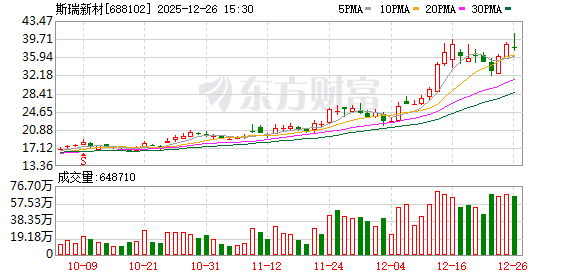
斯瑞新材:公司海外业务主要覆盖GE集团、Wabtec集团、阿尔斯通、施耐德、西门子等标杆客户
Mei Ri Jing Ji Xin Wen· 2025-12-26 11:32
(文章来源:每日经济新闻) 每经AI快讯,有投资者在投资者互动平台提问:董秘你好,在最近的互动中,公司表示目前不是 SpaceX的供应商。请问目前是否进入了SpaceX的认证体系?如果没有,主要的卡点是技术标准,地缘 政治因素,还是产能无法满足其庞大的需求?公司目前的境外业务,分别与哪些公司有业务往来? 斯瑞新材(688102.SH)12月26日在投资者互动平台表示,公司海外业务主要覆盖GE集团、Wabtec集 团、阿尔斯通、施耐德、西门子、ABB、伊顿等标杆客户。 ...

CES前瞻|黄仁勋“赶场”忙 中国机器人扎堆“走出去”
Di Yi Cai Jing· 2025-12-26 10:01
Core Insights - The upcoming CES 2026 in Las Vegas is set to showcase a significant focus on AI, marking a shift from mere technological displays to practical applications in various industries [1][4] - Chinese companies, particularly in the embodied intelligence sector, are making a notable entrance at CES, with many participating for the first time [2][8] - Key industry leaders, including AMD's CEO Lisa Su and NVIDIA's CEO Jensen Huang, will highlight advancements in AI technology and its integration into hardware and industrial applications [3][4] Group 1: Event Overview - CES 2026 will officially commence on January 6, featuring major tech companies and startups presenting their upcoming products and innovations [1] - The event is expected to attract significant attention from venture capital firms, indicating a robust interest in AI and technology trends [1][5] Group 2: AI Focus - AI has transitioned from a conceptual showcase to a critical element in hardware and industrial applications, with major companies emphasizing its importance in their presentations [4][6] - AMD and Siemens are among the companies that will discuss the scaling of industrial AI and its integration into various operational environments [4] Group 3: Chinese Companies Participation - A new wave of Chinese companies in the embodied intelligence sector, such as Yushutech and Galaxy General, will debut at CES, aiming to enhance their brand visibility and secure international orders [7][8] - The participation of these companies reflects a broader trend of Chinese firms seeking to establish a presence in overseas markets and explore new application scenarios [9] Group 4: Industry Trends - The narrative of CES is shifting towards the deep integration of AI technology with real-world applications, moving beyond simple technological showcases [9] - The event will feature a diverse range of products, from industrial robots to consumer electronics, highlighting the evolving landscape of technology and its applications [9]

博弈升级!美国告知中国第2轮交锋即将开始,中方不怵任何施压
Sou Hu Cai Jing· 2025-12-26 05:42
Group 1 - The U.S. government plans to impose tariffs on China's mature process chips by 2027, but has provided an 18-month "buffer period," indicating a new phase in the semiconductor competition between the two countries [1][3] - The U.S. strategy towards China’s semiconductor industry has evolved, with previous sanctions failing to halt China's advancements, as evidenced by Yangtze Memory Technologies' breakthroughs in NAND flash memory [3][5] - The focus on mature process chips is due to their extensive applications in critical sectors like automotive and industrial equipment, with China holding a significant share of global production capacity [3][5] Group 2 - The 18-month grace period reflects U.S. strategic hesitation, as American companies face pressures from supply chain disruptions and the need to maintain market share in China, which accounts for one-third of global chip demand [5][7] - China's self-sufficiency in chips has improved to 26% in 2023, with domestic chips gaining cost advantages and stable supply capabilities, embedding deeply into the global supply chain [5][9] - Technological breakthroughs, such as the rise of RISC-V architecture and Chiplet technology, are key for China to circumvent U.S. restrictions, allowing for high-performance computing and innovative solutions [7][9] Group 3 - The competition in the semiconductor sector has transcended simple tariff conflicts, evolving into a comprehensive contest over technology standards, industrial ecosystems, and global supply chains [9] - The U.S. aims to slow down China's development through regulatory measures, while China is building a self-sufficient chip ecosystem through innovation and market penetration [9]