Neuralink

Search documents
脑机接口走出实验室,强脑科技递表港交所
Bei Jing Shang Bao· 2026-01-13 12:15
Group 1 - Strong Brain Technology has submitted a confidential IPO application to the Hong Kong Stock Exchange, with expectations that its listing is only a matter of time [2] - The company recently completed approximately 2 billion yuan in Pre-IPO financing, achieving a post-investment valuation of over 1.3 billion USD [2] - The global brain-computer interface (BCI) market is experiencing significant growth, with a compound annual growth rate (CAGR) of over 13% from 2019 to 2023, and is projected to reach 7.63 billion USD by 2029 [4] Group 2 - The funds raised from the recent financing will be used to accelerate core technology research and development, extreme engineering breakthroughs, and product scaling [3] - Strong Brain Technology aims to help 1 million physically disabled individuals regain daily life through neural-controlled prosthetics and improve the conditions of 10 million patients suffering from brain-related disorders [3] - The company differentiates itself from competitors like Neuralink by focusing on non-invasive solutions and developing super sensors to detect human neural signals [4] Group 3 - The Chinese government has included brain-computer interfaces in its national strategic planning, indicating a shift from laboratory research to a national priority [4] - The stock market has reacted to the BCI concept, with companies like Innovation Medical and Rock Mountain Technology experiencing consecutive trading gains [4] - Recent inquiries from the Shanghai Stock Exchange regarding partnerships in the BCI space highlight the regulatory scrutiny and market interest surrounding this technology [5]

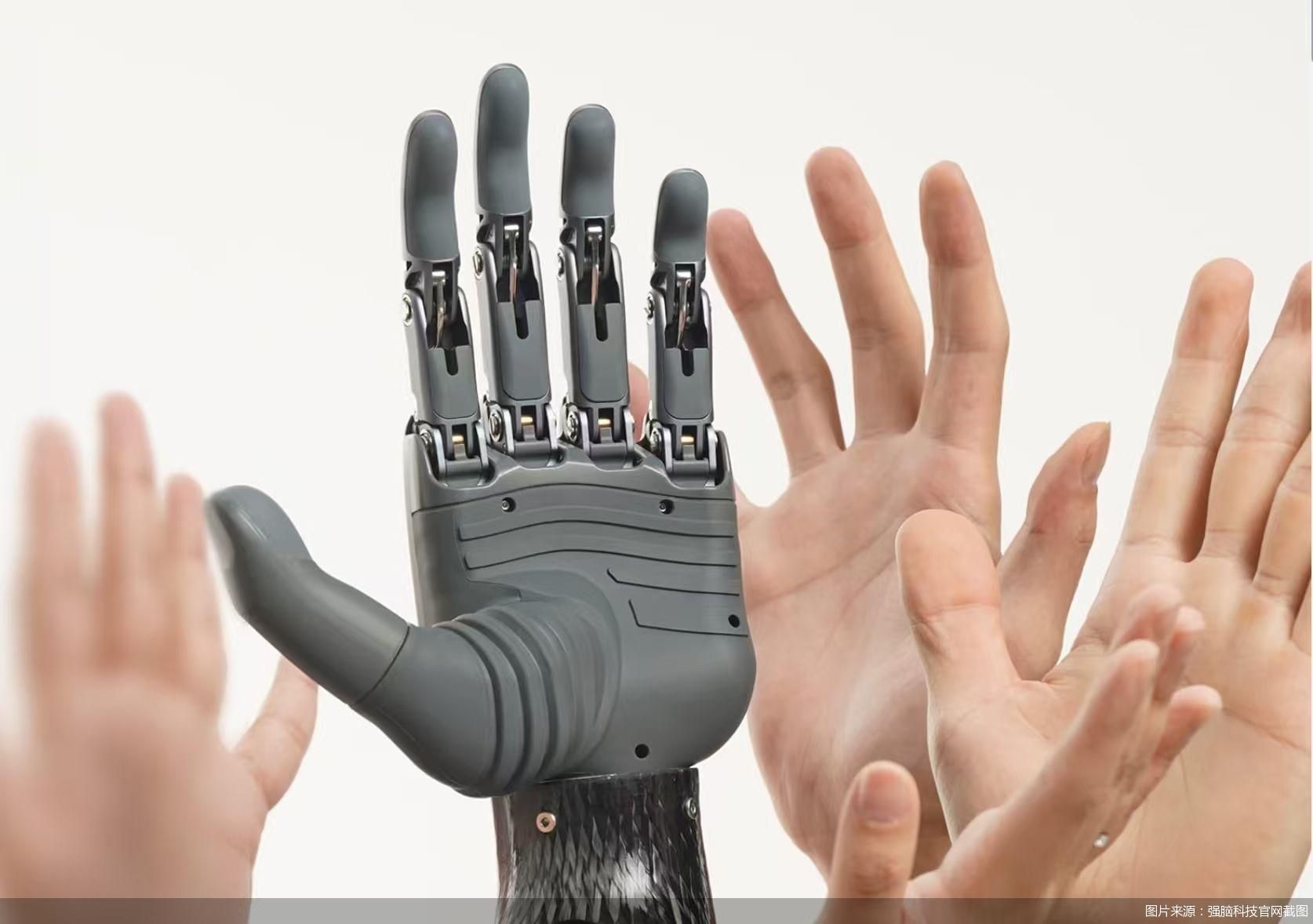
强脑科技或已秘密递交香港上市申请,与中金、瑞银合作,有望成“杭州六小龙”首家上市公司
机器人圈· 2026-01-13 09:41
Core Viewpoint - Strong Brain Technology is preparing for an IPO in Hong Kong, potentially raising hundreds of millions of dollars, collaborating with China International Capital Corporation and UBS for the issuance [1][3]. Group 1: Company Overview - Strong Brain Technology is expected to be the first company listed among the "Six Little Dragons of Hangzhou" [2]. - The company recently completed approximately 2 billion yuan in financing, marking the second-largest funding round globally in the brain-computer interface sector, following Neuralink [2]. - The investor lineup includes prominent institutions such as IDG, Huaden International, and major companies like Lens Technology and Lingyi iTech [2]. Group 2: Product and Technology - Strong Brain Technology focuses on breakthroughs in brain-computer interface technology, aiming to establish communication pathways between the brain and external devices to assist individuals with disabilities [3][5]. - The company has received FDA and CE certifications, making it one of the largest investors in brain-computer interface R&D globally [2]. - Its core product, a super sensor, can detect weak signals from the brain without invasive procedures, enabling the development of neuro-controlled prosthetics for individuals with limb disabilities [5]. Group 3: Future Prospects - The company plans to continue its focus on non-invasive brain-computer interfaces, targeting solutions for conditions such as depression and Alzheimer's disease [6]. - Strong Brain Technology aims to help 1 million individuals with limb disabilities regain mobility and assist 10 million patients suffering from brain-related conditions like Alzheimer's and autism over the next 5 to 10 years [5].

哈佛学霸创办的杭州六小龙,要IPO了
Xin Lang Cai Jing· 2026-01-13 09:38
Core Viewpoint - Qiangnao Technology is reportedly preparing for an IPO in Hong Kong, aiming to raise a significant amount of capital, following a recent financing round that set a record in the brain-computer interface sector, second only to Neuralink [1][10]. Company Overview - Qiangnao Technology is recognized as China's first unicorn in the brain-computer interface space, focusing on enabling users to control machines through thought [11][12]. - The company adopts a non-invasive approach, contrasting with Neuralink's invasive method, which involves surgical implantation of chips in the brain [12][22]. Financial Projections - Following a recent financing round, Qiangnao's valuation exceeded $1.3 billion (approximately 9.2 billion RMB), with analysts estimating a potential market capitalization of 100 billion RMB upon IPO, and possibly reaching 200-300 billion RMB under high demand [3][13]. - Revenue projections for 2025 suggest Qiangnao could surpass 800 million RMB, with a net profit of approximately 120 million RMB, indicating a year-on-year growth rate exceeding 100% [3][13]. Founder Background - The founder, Han Bicheng, is a 1987-born entrepreneur from Heilongjiang, who studied at the Korea Advanced Institute of Science and Technology and later pursued a PhD at Harvard University [14][17]. - Han's early experiences in a medical research center influenced his vision of redefining human interaction with technology through brain-computer interfaces [15][18]. Market Position and Competition - Qiangnao Technology and Neuralink are the two highest-funded companies in the global brain-computer interface sector, representing distinct technological paths and commercialization strategies [9][22]. - The company is positioned to potentially become the first among the "Hangzhou Six" to go public, leveraging a shorter review process in Hong Kong compared to A-share listings [21][22]. Vision and Future Outlook - Qiangnao has articulated a vision for brain-computer interface technology to become as transformative as electricity in the modern era, suggesting it could revolutionize various industries once fully developed [22].

数字经济双周报(2026年第1期):前瞻布局未来产业:脑机接口量产与商业化提速-20260113
Yin He Zheng Quan· 2026-01-13 07:28
Group 1: Brain-Computer Interface (BCI) Development - The brain-computer interface (BCI) technology is transitioning from laboratory experiments to industrial production, with 2026 expected to be a pivotal year for commercialization[4] - China's proactive policies and multi-layered support systems are accelerating the domestic BCI industry development, aiming for significant advancements by 2025 and beyond[4] - The BCI industry is forming a complete supply chain covering upstream, midstream, and downstream sectors, indicating robust growth potential[4] Group 2: AI Industry Trends - The AI industry in the U.S. is experiencing intense competition, with significant capital inflows leading to a new wave of financing and valuation surges among leading companies[12] - In Europe, there is a strong focus on governance and collaboration to promote AI development, addressing new risks associated with digital technologies[14] - The integration of AI into traditional industries and public services is accelerating, driving a shift towards intelligent and precise operations[19] Group 3: Market Dynamics and Projections - By 2034, the BCI market is projected to reach a valuation of approximately $124 billion, reflecting a compound annual growth rate (CAGR) of 24.57% from 2025[5] - The competition between China and the U.S. in the AI sector is intensifying, with both nations striving for leadership in technological advancements[5] - The global AI landscape is characterized by a multi-polar competitive structure, with various countries vying for strategic advantages in AI governance and technology[16]
疫苗ETF(159643)涨超1.1%,科技属性强化或成医药新动能
Mei Ri Jing Ji Xin Wen· 2026-01-13 04:04
Group 1 - The vaccine ETF (159643) rose over 1.1%, indicating a strengthening of its technological attributes, which may become a new driving force in the pharmaceutical sector [1] - 2025 is projected to be a landmark year for Chinese innovative drugs going global, with total outbound licensing transaction amounts reaching $135.655 billion, including upfront payments of $7 billion and a record 157 transactions [1] - The innovative drug sector is expected to create a new valuation anchor, with an anticipated index increase of 35.31% in 2025 [1] Group 2 - Breakthroughs in small nucleic acid drugs have been achieved, with GSK's Bepirovirsen completing Phase III studies for chronic hepatitis B, potentially becoming the first functional cure [1] - Domestic companies such as Yuyuan Pharmaceutical and Reborn Biotech have made progress in liver-targeted and thrombosis treatment areas [1] - The development of oral immunomodulatory drugs is accelerating, with Takeda's TYK2 inhibitor zasocitinib showing superior results in Phase III studies for psoriasis compared to placebo [1] Group 3 - Brain-computer interface technology is entering the industrialization phase, with Neuralink's devices set for mass production and increased domestic policy support [1] - The ZAP-X radiation therapy device presents breakthroughs in brain tumor treatment, revealing a potential market worth billions in China [1] - The commercialization of AI in healthcare is advancing, with pathology fee reforms incorporating AI-assisted diagnostics into pricing structures [1]
医药行业跟踪报告:医药板块迎来开门红,2026年继续看好创新出海和硬科技
Shanghai Aijian Securities· 2026-01-13 03:44
Investment Rating - The report assigns an "Outperform" rating for the pharmaceutical sector, indicating a positive outlook compared to the broader market [2][4]. Core Insights - The pharmaceutical sector has shown strong performance, with the SW Pharmaceutical Biotechnology Index rising by 7.81% in the week of January 5-11, significantly outperforming the CSI 300 Index, which increased by 2.79% [2]. - Key drivers of this growth include advancements in brain-computer interfaces, small nucleic acids, and AI healthcare technologies [2]. - The report emphasizes the potential of innovation in overseas markets and hard technology, particularly in AI healthcare and brain-computer interfaces, as major growth areas for the pharmaceutical industry in 2026 [2]. Summary by Sections Industry Overview - The pharmaceutical sector is expected to continue its positive trajectory into 2026, driven by innovation and technological advancements [1]. - The report highlights the importance of the "AI + Health" investment trend, particularly with the launch of the Ant Group's "Afu" app, which focuses on health management [1][2]. Market Performance - The report notes that various sub-sectors, including hospitals, CXO, and medical devices, have experienced significant gains, with increases of 13.92%, 11.15%, and 10.81% respectively [2]. - The Hong Kong market has also seen a rebound in innovative drugs, with the Hang Seng Biotechnology Index rising by 11.06% [2]. Future Outlook - The report identifies three main sources of growth for the pharmaceutical industry: innovation in overseas markets, structural growth under the medical insurance payment framework, and natural growth from government finance and personal demand [2]. - Investment opportunities are expected to arise from the expansion of innovative drugs, hard technology, and the ongoing development of AI healthcare applications [2].
陈天桥重回战场
创业邦· 2026-01-13 03:44
Core Viewpoint - The article discusses the return of Chen Tianqiao, a prominent figure in the Chinese internet industry, who is now focusing on brain-computer interface (BCI) technology and artificial intelligence (AI) through his new ventures, Gestalt and Tanka, emphasizing a long-term vision in these fields [5][6][30]. Group 1: Chen Tianqiao's Return and Investments - Chen Tianqiao announced a $1 billion investment in computational power to support global AI-driven scientific research during a conference in San Francisco [5][23]. - His new company, Gestalt, focuses on non-invasive ultrasound brain-computer interfaces, contrasting with Elon Musk's invasive approach [11][12]. - Tanka, another venture, aims to create a communication platform that integrates AI with human decision-making, redefining organizational management in the AI era [15][16]. Group 2: Brain-Computer Interface Technology - The article highlights the contrasting approaches to BCI technology, with Musk's Neuralink pursuing invasive methods and Gestalt opting for a non-invasive strategy [11][12]. - Gestalt's approach is described as more complex and challenging, aiming for a comprehensive understanding of brain functions without the risks associated with surgical procedures [12][30]. - The potential for Gestalt and Tanka to collaborate could lead to significant advancements in understanding human cognition and emotional regulation [34]. Group 3: Long-term Vision and Challenges - Chen Tianqiao's strategy is characterized by a commitment to long-term research and development in brain science and AI, moving away from traditional business models [30][31]. - The challenges of clinical translation in BCI technology are noted, with timelines often extending over a decade and facing strict ethical and regulatory scrutiny [31][33]. - The article suggests that the intersection of brain science and AI could create new opportunities for innovation and understanding of human behavior [34].
瑞银专家电话会:中美脑机接口技术差距有望在两年内显著缩小
Hua Er Jie Jian Wen· 2026-01-13 03:37
瑞银近期举办了一场脑机接口商业化的专家电话会议,核心结论非常明确:虽然目前中国在脑机接口 (BCI)核心技术上落后美国约两年,但这一差距预计在两年后将显著缩小。 1月13日,据追风交易台消息,瑞银最新研报称,在近日举办的脑机接口行业专家电话会上,专家表 示,尽管目前中国企业在该领域落后美国约两年,但随着产品成熟度提升和应用场景扩展,中国BCI市 场预计将迎来指数级增长。 专家透露中国BCI产品正处于不同的研发和商业化阶段。非侵入式产品已有在售产品,预计未来6至12 个月将有更多产品上市。半侵入式产品预计1至2年内首次在中国上市,而侵入式产品可能在2至3年内推 出。 专家预计,到2030年,中国BCI产品的整体市场规模可能达到数百亿元人民币。其中,非侵入式产品预 计将占据至少70%的市场份额,显著高于半侵入式和侵入式产品。 技术差距:目前落后两年,硬件与算法是核心短板 研报称,专家在电话会上指出,目前中国本土企业的BCI技术与美国同行(如Neuralink)相比,存在约 两年的差距。但这一差距并非不可逾越,预计在两年后将开始"有意义地"缩小。 在电极技术方面,美国企业的设备和加工技术更为先进。例如,中国的通道数 ...
生物医药ETF(512290)涨近3%,行业景气度与创新进展受关注
Sou Hu Cai Jing· 2026-01-13 02:46
Group 1 - The year 2025 is significant for China's innovative drug exports, with a total transaction amount reaching $135.655 billion, a down payment of $7 billion, and a record 157 transactions [1] - The innovative drug sector not only provides R&D funding for companies but also reshapes the industry's valuation system, with the innovative drug index increasing by 35.31%, outperforming the CSI 300 index by 17.65% [1] - Breakthroughs in small nucleic acid drugs have been noted, with GSK's Bepirovirsen for chronic hepatitis B completing Phase III studies, and domestic companies like Yuyuan Pharmaceutical and Reborn Biotech making significant progress in liver-targeted drug development [1] Group 2 - In the oral autoimmune drug sector, Takeda's TYK2 inhibitor zasocitinib shows excellent performance in Phase III studies for psoriasis, with domestic companies such as Yifang Biotech and Nocare Biopharma also advancing related clinical trials [1] - Brain-computer interface technology is entering the industrialization phase, with Neuralink planning to mass-produce devices by 2026, supported by domestic policies accelerating medical application implementation [1] - The ZAP-X radiation therapy device brings new breakthroughs in brain tumor treatment, with domestic market demand potential reaching a scale of hundreds of billions [1] Group 3 - The commercialization path for AI in healthcare is becoming clearer, with pathology fee reforms establishing pricing mechanisms for AI-assisted diagnosis, leading to accelerated development in consumer applications [1]
太空脑机首测成功,概念狂欢背后谁是真正的“核心玩家”?
Quan Jing Wang· 2026-01-12 13:07
Group 1: Market Trends and Developments - The brain-computer interface (BCI) sector is transitioning from clinical validation to commercial scalability, with 2026 expected to be a pivotal year for industrialization [2] - China's BCI market is projected to grow from 3.2 billion yuan in 2024 to 5.58 billion yuan in 2027, reflecting a compound annual growth rate of approximately 20% [2] - Global BCI market is anticipated to exceed 40 billion USD by 2030 [2] Group 2: Company Innovations and Collaborations - Yingkang Life has developed a comprehensive management solution for Parkinson's treatment using BCI technology, having completed over 20 deep brain stimulation surgeries [2] - Cheng Yi Tong's recent patent for "brainwave acquisition devices" is expected to enhance its core technology and market share in the BCI field [3] - Entropy Technology plans to launch a prototype BCI product by March 2026, focusing on commercial applications [3] - Yingqu Technology collaborates with various partners to develop BCI-related products, including brainwave monitoring headbands and rehabilitation robots [4] - Hanwei Technology has made breakthroughs in non-invasive flexible BCI materials, although commercial applications remain uncertain [5] - Daoshi Technology has strategically invested in Qiangnao Technology to enhance its capabilities in BCI applications across medical rehabilitation and education [6] - Sanbo Brain Science is advancing its "North Brain No. 2" project, focusing on flexible microelectrode technology for clinical applications [7] - Meihua Medical is a strategic partner in the cochlear implant sector, which is a significant application of BCI technology [7] Group 3: Investment and Strategic Partnerships - Leidi Ke has acquired a 20.41% stake in Aoyi Technology, which specializes in both BCI and robotics, enhancing its capabilities in the medical and health sectors [9] - Lihua Science and Technology's subsidiary, Weiling Medical, is developing a fully implanted wireless BCI system [10] - Guiyan Biotech is exploring precious metal materials for BCI applications, with some products in the experimental stage [11]