
李宁

Search documents
2025年中国运动服价值链分析:采购原材料是运动服产品生产的主要成本
Qian Zhan Wang· 2025-07-14 06:36
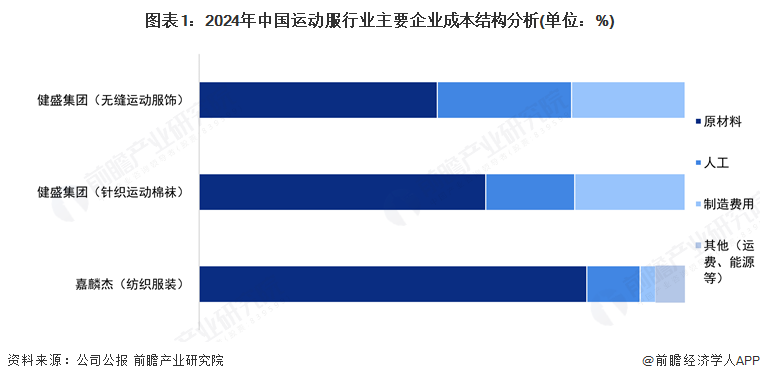
Core Insights - The article discusses the cost structure and pricing mechanisms in the Chinese sportswear industry, highlighting the trends in material costs, labor costs, and the overall value chain [1][2][6]. Cost Structure - In the production of sportswear, raw materials constitute the largest cost component, although their proportion has been declining in recent years. For instance, in 2024, the raw material cost for seamless sportswear from Jian Sheng Group is projected to be 49.01%, while for knitted cotton socks, it is 58.97%. Additionally, Jia Lin Jie reports a raw material cost proportion of 79.8% [1][2]. - Labor costs represent the second-largest expenditure, fluctuating between 10% and 30%, while manufacturing expenses range from 3% to 25% [1]. Pricing Mechanism - The pricing of sportswear in China is influenced by the supply side, manufacturing side, value-added premiums, and consumer demand elasticity. The cost prices on the supply side include material, equipment, technology, and labor costs, which are then transformed into production costs at the manufacturing level. These costs, along with supply-demand premiums, R&D costs, and corporate profits, determine the "manufacturing price" that is transmitted through distribution channels to the end market [6]. Value Chain - The value chain of the Chinese sportswear industry exhibits a "low-middle, high-both-ends" trend. The upstream consists of textile raw materials and equipment suppliers, while the midstream involves the production of various sportswear. The downstream primarily includes sales through online platforms and offline stores [8]. - The production process begins with designers creating concepts based on market demand and trends, followed by sourcing raw materials for production. While well-known brands often produce in-house, many opt to use authorized professional factories for manufacturing, which are then sold through specialized channels. High-end brands typically enjoy higher pricing and profit margins, whereas traditional textile manufacturers face tighter margins due to rising labor costs [10].

人形机器人引爆万亿赛道!机器人产业ETF(159551)年内份额狂飙116%
Mei Ri Jing Ji Xin Wen· 2025-07-14 02:59
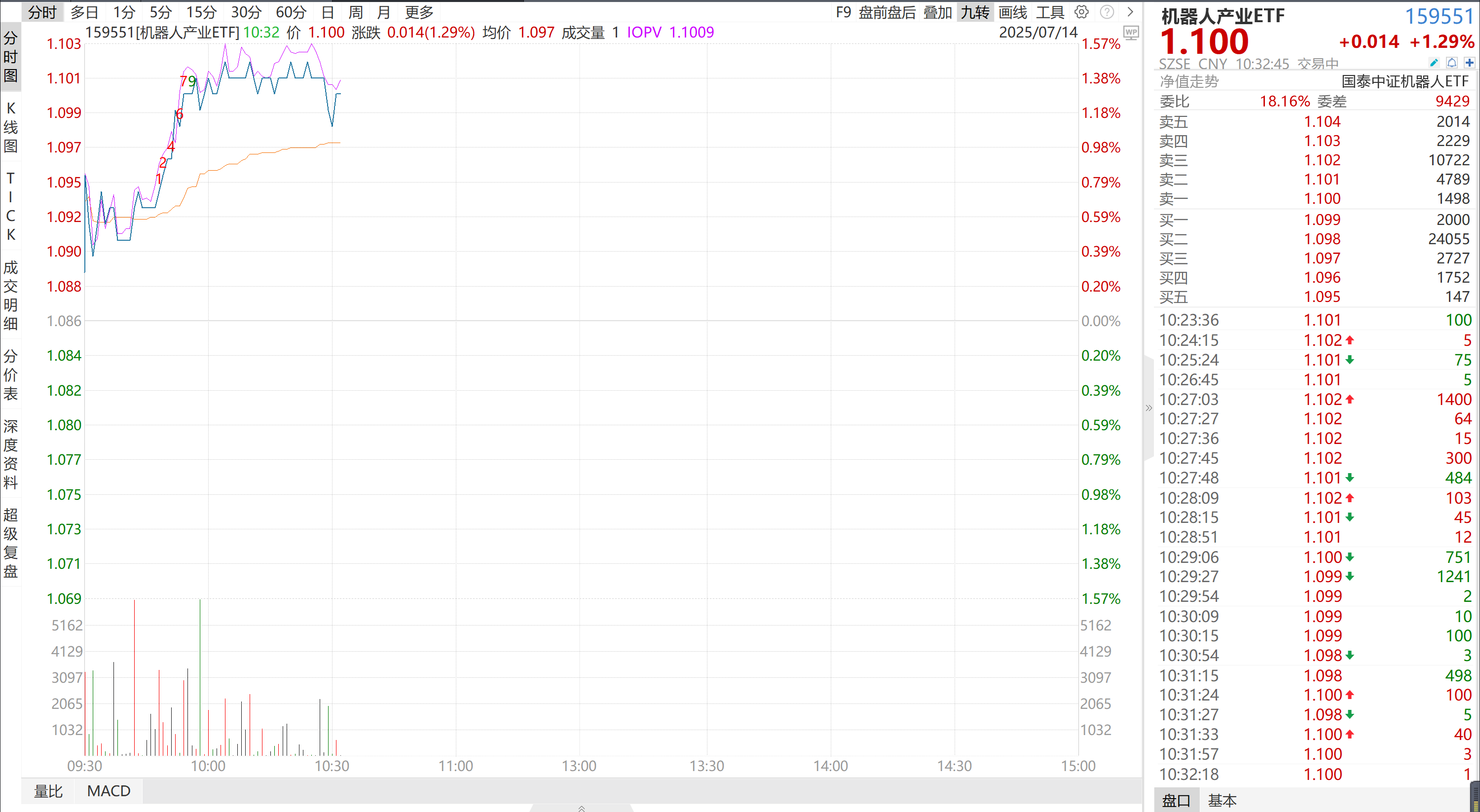
Core Viewpoint - The humanoid robot industry is entering a new phase of vigorous development, with increased collaboration among industry chain enterprises and a focus on application scenarios [4] Group 1: Market Performance - The Shanghai Composite Index stabilized above 3500 points, with the robotics sector leading the gains, particularly the robotics industry ETF (159551), which rose over 1.2% [1] - The robotics industry ETF (159551) has seen its fund shares increase by over 116% year-to-date as of May 23, 2025, outperforming the Shanghai and Shenzhen 300 Index with an annualized increase of 24.22% since the beginning of the year [5] Group 2: Strategic Collaborations - Beijing Humanoid Robot Innovation Center and Li Ning (China) Sports Goods Co., Ltd. signed a strategic cooperation agreement to establish the first national humanoid robot sports science joint laboratory, focusing on cutting-edge theories and key technologies in humanoid robot sports science [3] - Companies like UBTECH and Kepler have established strategic partnerships with upstream and downstream enterprises in the industry chain to accelerate commercialization [4] Group 3: Investment Trends - There has been a surge of investment into the humanoid robot sector, with multiple venture capital firms and private equity funds accelerating their investments since June, and various cities increasing fiscal support to guide more funds into key areas of humanoid robotics [3] - The humanoid robot industry is seeing significant interest from large companies, with NVIDIA and Foxconn collaborating to establish humanoid robot production scenarios, aiming for production by 2026 [4] Group 4: Industry Challenges - Despite the accelerated commercialization process, there are uncertainties regarding the iteration of core components and the accumulation of general scenario training data, which may impact the sector's performance [4]





跳空高开!“全市场唯一百亿规模”机器人ETF(562500) 虹吸效应显著,规模再创新高!
Mei Ri Jing Ji Xin Wen· 2025-07-14 02:44
Group 1 - The core viewpoint of the news highlights the significant performance of the Robot ETF (562500), which rose by 1.19% and saw multiple constituent stocks, such as Ecovacs and Zhongdali, hitting the 10% limit up [1] - The trading volume reached 367 million, indicating active trading that contributed to the upward momentum [1] - The Robot ETF experienced a scale increase of 461 million in the past week, with new scale surpassing 300 million compared to similar funds, demonstrating a significant siphoning effect [1] Group 2 - The latest share count of the Robot ETF reached 17.599 billion, setting a new historical high and leading among comparable funds [1] - A strategic partnership was established between Beijing Humanoid Robot Innovation Center and Li Ning (China) Sports Goods Co., focusing on the establishment of the first national humanoid robot sports science joint laboratory [1] - The laboratory aims to advance research in humanoid robot sports science and facilitate the transformation of research outcomes into intelligent sports equipment and robot products, promoting deep integration between the robot industry and the sports goods sector [1] Group 3 - According to AVIC Securities, the domestic robot industry chain is undergoing positive changes, with leading domestic robot manufacturers accelerating their capitalization processes, which is expected to increase overall industry capital expenditure [1] - This trend may also create a demonstration effect for future listings of robot companies, potentially accelerating industry progress [1]
港股开盘,恒指开跌0.16%,科指开跌0.15%;蔚来汽车(09866.HK)涨超4.5%,李宁(02331.HK)、农夫山泉(09633.HK)均涨近1.5%。
news flash· 2025-07-14 01:24
Group 1 - The Hang Seng Index opened down 0.16% and the Tech Index opened down 0.15% [1] - NIO Inc. (09866.HK) saw an increase of over 4.5% [1] - Li Ning Company Limited (02331.HK) and Nongfu Spring Co., Ltd. (09633.HK) both rose nearly 1.5% [1]



可选消费W28周度趋势解析:临近业绩披露期,基于预期差股价波动加剧-20250713
Haitong Securities International· 2025-07-13 14:45
Investment Rating - The report assigns an "Outperform" rating to multiple companies including Nike, Midea Group, JD Group, Gree Electric, Anta Sports, Haier Smart Home, and others, while Lulu Lemon is rated as "Neutral" [1]. Core Insights - The report highlights that as the earnings season approaches, stock price volatility is expected to increase due to expectation gaps [4][21]. - The gambling sector has shown strong performance, driven by higher-than-expected visitor numbers in Macau, leading to upward revisions in market expectations for monthly GGR and EBITDA [5][12]. - The report notes that most sectors are currently valued below their historical averages over the past five years, indicating potential investment opportunities [8][16]. Sector Performance Review - Weekly performance rankings show Gambling > Luxury Goods > U.S. Hotel > Domestic Sportswear > Domestic Cosmetics > Daily Necessities > Overseas Sportswear > Overseas Cosmetics > Credit Card > Snacks > Gold Jewelry > Pet, with the Gambling sector outperforming the MSCI China index [10][21]. - Monthly performance also favors the Gambling sector, followed by U.S. Hotel and Luxury Goods, while Domestic Cosmetics and Pet sectors experienced negative growth [22]. - Year-to-date performance indicates Gold Jewelry leading, followed by Domestic Cosmetics and Overseas Cosmetics, with the Overseas Sportswear sector showing negative growth [23]. Valuation Analysis - The report provides a detailed valuation analysis, indicating that many sectors, including Overseas Sportswear and Domestic Sportswear, are trading below their historical PE averages, suggesting potential upside [8][16]. - Specific expected PE ratios for 2025 are provided, with Overseas Sportswear at 34.4x (55% of its 5-year average), Domestic Sportswear at 12.6x (72%), and Gambling at 17.6x (26%) [16].
“环青赛”迎来收官之战
Zhong Guo Xin Wen Wang· 2025-07-13 13:35
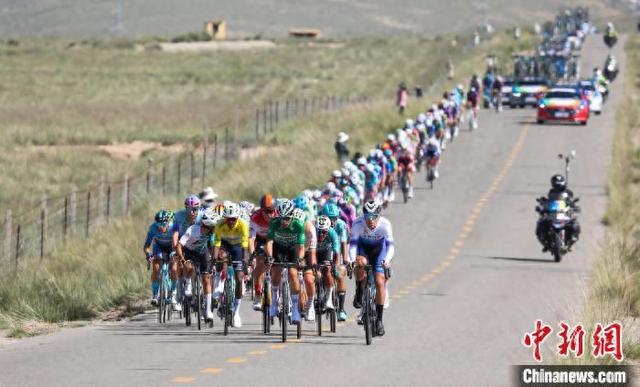
7月13日,车手们在青海省海北藏族自治州海晏县同宝山沿线骑行。当日,第二十四届环大美青海国际 公路自行车赛迎来收官之战——同宝山绕圈赛。该赛段全程121公里,设有1个爬坡点和3个途中冲刺 点。最终,来自李宁之星车队的谢尔比·亚历山大获得赛段冠军。中新社记者 马铭言 摄 7月13日,车手们在青海省海北藏族自治州海晏县同宝山沿线骑行。当日,第二十四届环大美青海国际 公路自行车赛迎来收官之战——同宝山绕圈赛。该赛段全程121公里,设有1个爬坡点和3个途中冲刺 点。最终,来自李宁之星车队的谢尔比·亚历山大获得赛段冠军。中新社记者 马铭言 摄 7月13日,车手们在青海省海北藏族自治州海晏县同宝山沿线骑行。当日,第二十四届环大美青海国际 公路自行车赛迎来收官之战——同宝山绕圈赛。该赛段全程121公里,设有1个爬坡点和3个途中冲刺 点。最终,来自李宁之星车队的谢尔比·亚历山大获得赛段冠军。中新社记者 马铭言 摄 7月13日,车手们在青海省海北藏族自治州海晏县同宝山沿线骑行。当日,第二十四届环大美青海国际 公路自行车赛迎来收官之战——同宝山绕圈赛。该赛段全程121公里,设有1个爬坡点和3个途中冲刺 点。最终,来自李宁之星车队 ...
大中华区成“最差市场”:耐克为何抓不住中国年轻一代?
阿尔法工场研究院· 2025-07-13 05:29
Core Viewpoint - Nike's decline in the Chinese market is attributed to strategic misjudgments, loss of competitive focus, and the fading of market dividends, rather than merely "traffic fatigue" or a "promotional environment" [22] Group 1: Financial Performance - Nike's revenue for the fiscal year 2025 was $46.3 billion, a 10% year-over-year decline [1] - Revenue from the Greater China region was $6.586 billion, down 13% year-over-year, equating to a loss of approximately $959 million [1][2] - Overall net profit decreased by 44% to $3.2 billion [2] Group 2: Market Competition - Local brands such as Anta, Li Ning, and Xtep are experiencing strong growth, with Anta leading the industry with over 100 billion RMB in revenue [7] - Emerging brands like On and HOKA are also gaining market share, further challenging Nike's dominance [7] - Local brands have demonstrated effective market positioning, with Xtep focusing on the running segment through acquisitions [8] Group 3: Pricing and Consumer Preferences - Local brands offer comparable quality at lower prices, making them more appealing to consumers who prioritize value [10] - The shift in consumer sentiment has led to a decline in loyalty towards international brands like Nike, especially among younger consumers [23] Group 4: Product Strategy and Quality Issues - Nike's production shift to Vietnam has resulted in quality complaints from consumers, impacting brand perception [12][21] - The lengthy product development cycle due to supply chain inefficiencies has hindered Nike's responsiveness to market trends [21] Group 5: Marketing and Brand Engagement - Nike's marketing strategy relies heavily on top-tier athletes, which may not resonate with younger consumers who prefer relatable influencers [24] - The brand has been slow to engage in popular platforms like Douyin, missing opportunities to connect with the youth market [47] Group 6: Strategic Changes and Future Outlook - Nike's "Win Now" strategy aims to address current challenges, including leadership changes and a focus on local market needs [42][44] - The strategy includes simplifying product lines and increasing promotional activities to clear inventory and attract consumers [52][56] - Future success will depend on Nike's ability to understand and respond to local consumer demands more effectively than competitors [56]


李宁(2331.HK):预计1H25营收与利润端分别同比+2%/-16%
Ge Long Hui· 2025-07-12 19:19
Group 1 - The core viewpoint is that the company is expected to experience a revenue growth of 2% and a decline in net profit attributable to shareholders of 16% in the first half of 2025, indicating a challenging market environment [1][2] - The company maintains a "buy" rating and has raised the target price by 5% to HKD 19.30, corresponding to an 18 times P/E ratio for 2026 [1][2] - The company's revenue for 1H25 is projected to reach approximately 14.63 billion yuan, with a gross margin decline of 0.5 percentage points to 49.9% [1][2] Group 2 - The company has expanded its product width significantly in the previous year, but the risk-reward ratio may decrease this year due to higher bases and increased inventory management challenges [2] - The company plans to enhance its outdoor product lines, particularly in light outdoor categories, with an expected introduction of around 5,000 stores by the end of the year [2] - The forecast for 2025-2027 revenue remains unchanged, with expected revenues of 28.69 billion, 29.25 billion, and 29.79 billion yuan respectively, while net profit estimates have been reduced by 6% to 7% for the same period [2]
“中国造”引爆全球购物潮:从免签政策到退税红利,外国游客为何疯狂“扫货中国”?
Sou Hu Cai Jing· 2025-07-12 01:00
Group 1 - The core viewpoint of the article highlights a significant increase in foreign tourist shopping in China, driven by policy benefits, cultural confidence, and consumption upgrades, leading to a global shopping revolution [1][9][10] - In the first half of 2025, inbound foreign tourists reached 26.94 million, a year-on-year increase of 96%, with Chengdu's airport seeing over 790,000 foreign arrivals, up 58.5% from the previous year [1][4] - The expansion of China's visa-free policy to 47 countries and the implementation of a 240-hour transit visa have significantly lowered entry barriers for foreign tourists [4][8] Group 2 - The upgrade of the departure tax refund policy has reduced shopping costs by 11%, with a notable increase in the number of tax refund applications and sales of tax refund goods [5][11] - In the first quarter of 2025, tax refund store applications in Beijing increased by 128%, while Shanghai's tax refund goods sales reached 760 million yuan, up 85% [5][11] - The cultural revival of traditional products, such as Shu embroidery and bamboo weaving, has become a key attraction for foreign tourists, who are now willing to pay for cultural value [5][6] Group 3 - Chinese technology products, including drones and smart home devices, have become popular among foreign tourists, showcasing China's manufacturing capabilities [6][7] - Traditional markets like Chengdu's Hehua Pond and Guangzhou's Shisan Hang have emerged as new shopping hotspots, offering unique cultural experiences and competitive pricing [6][7] - China's supply chain advantages allow for flexible production, making it a global shopping hub, with significant cost savings compared to local production in other countries [7][8] Group 4 - The increase in U.S. tariffs on Chinese goods has inadvertently led to a surge in American tourists shopping in China, with a reported 300% increase in tax refunds for U.S. tourists in the first quarter of 2025 [8][9] - The shopping wave among foreign tourists not only boosts China's consumer market but also serves as a channel for cultural export, enhancing global awareness of Chinese culture [9][10] - The overall shopping experience in China is characterized by a more open, confident, and inclusive approach, fostering shared development opportunities with the world [10]

北京人形与李宁达成战略合作
news flash· 2025-07-11 13:08
Group 1 - The core viewpoint of the article highlights the strategic partnership between Beijing Humanoid Robot Innovation Center Co., Ltd. and Li Ning (China) Sports Goods Co., Ltd. aimed at exploring the frontiers of humanoid robot sports science and technological breakthroughs [1] - The collaboration includes the establishment of a "Humanoid Robot Sports Science Joint Laboratory" at the Li Ning Sports Science Research Center, indicating a commitment to research and development in the field [1] - The partnership aims to promote the transformation of scientific research achievements and lead the integration of intelligent sports and the robotics industry [1]