微软

Search documents

【环球财经】云计算业务推动微软公司营收利润同比增长
Xin Hua She· 2025-10-30 09:01
Core Insights - Microsoft reported a quarterly revenue of approximately $77.7 billion, representing an 18% year-over-year growth [2] - The company's net profit for the quarter reached $27.7 billion, showing a 12% increase compared to the previous year [2] - Revenue from Microsoft's cloud computing business amounted to $49.1 billion, with a year-over-year growth of 26%, while the intelligent cloud segment generated $30.9 billion, up 28% year-over-year [2] - CEO Satya Nadella emphasized the company's commitment to advancing artificial intelligence applications and increasing investments in AI talent and capital to seize future opportunities [2]

微软(MSFT.US)FY26Q1电话会:客户集中风险可控 AI平台正在创造真实的商业价值
Zhi Tong Cai Jing· 2025-10-30 08:37
Core Viewpoint - Microsoft emphasizes that its AI platform is generating real business value, with Azure cloud revenue expected to grow approximately 37% in fixed currency for Q2, despite capacity constraints [1][2] Financial Performance - The company projects total revenue guidance for Q2 to be between $79.5 billion and $80.6 billion, representing a growth of 14% to 16% [2] - Expected sales costs are between $26.35 billion and $26.55 billion, with a year-over-year increase of 21% to 22% [2] - Operating expenses are anticipated to be between $17.3 billion and $17.4 billion, reflecting a year-over-year growth of 7% to 8% [2] Customer Concentration Risk - Microsoft believes that the risk of customer concentration is manageable, as its nearly $400 billion remaining performance obligation (RPO) covers a wide range of products and customer sizes [1][4] - The weighted average duration of these contracts is only two years, indicating a focus on short-term consumption and usage [1][4] AI Platform and Systems - The company's competitive advantage lies in building systems like M365 Copilot and GitHub Agent HQ, rather than just the AI models themselves [2][4] - Microsoft is creating a highly interchangeable general AI platform, reducing dependency on any single large customer [2][7] Infrastructure and Demand - Microsoft has not over-invested in infrastructure; instead, demand continues to exceed supply, with a strong focus on fulfilling existing contracts [5][9] - The company is building an efficient, flexible infrastructure to support both first-party and third-party applications, ensuring high utilization rates [6][8] OpenAI Investment - The $4.1 billion loss related to OpenAI is attributed solely to the company's share of OpenAI's operational losses, with no other components included [6][10] Strategic Decision-Making - Microsoft prioritizes building a platform that can flexibly serve various customer needs, rejecting contracts that could disrupt this balance [10] - The company is selective about large-scale AI contracts, ensuring they align with long-term strategic interests and profitability [10]
AI狂浪席卷之下 长期低调的半导体设备终于藏不住了! 这家EUV链条的“核心之眼”单日暴涨超20%
智通财经网· 2025-10-30 08:01
Group 1: AI Chip Industry Overview - The global AI chip industry is experiencing a bullish market atmosphere, driven by significant investments from major tech companies like Microsoft, Google, and Meta in AI computing infrastructure [1][7] - NVIDIA has reached a market capitalization of $5 trillion, becoming the first company to achieve this milestone [1] - Semiconductor equipment suppliers have seen substantial stock price increases, reflecting the growing demand for AI chip manufacturing capabilities [1][4] Group 2: Lasertec's Market Performance - Lasertec's stock surged by 21%, reaching a market value of $17.5 billion, marking its largest increase in over a year [2] - Analysts expect Lasertec's revenue to grow by 27%, positioning it as a key beneficiary in the AI chip wave [2][3] - The company specializes in EUV mask actinic inspection, which is critical for the AI chip supply chain [2][3] Group 3: Semiconductor Equipment Demand - The demand for semiconductor equipment is rising due to the expansion of AI computing needs and significant investments in AI infrastructure [7][8] - Companies like ASML, Applied Materials, and KLA are expected to benefit from the increasing complexity and performance requirements of advanced CPU/GPU packaging [9] - The AI infrastructure investment wave is projected to reach $2 trillion to $3 trillion, indicating a robust growth trajectory for the semiconductor equipment sector [7][8]


小摩:将微软目标价上调至575美元
Ge Long Hui· 2025-10-30 07:41
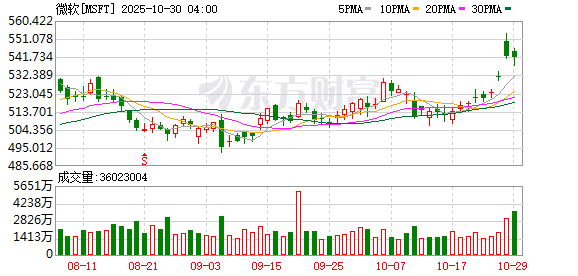
Core Viewpoint - Morgan Stanley raised Microsoft's target stock price from $565 to $575, indicating a positive outlook despite recent market fluctuations [1] Related Events - Microsoft shares fell 3.5% in after-hours trading, attributed to Azure and other cloud revenue falling short of buyer expectations [1] - There has been a significant increase in AI spending, which may impact future financial performance [1]
英伟达的“10倍股历程”:3年前ChatGPT首发时市值4000亿美元,如今,首家“五万亿美元公司”!
美股IPO· 2025-10-30 07:22
Core Insights - Nvidia's market capitalization has officially surpassed $5 trillion, making it the first company to reach this milestone globally, reflecting unprecedented growth and market influence [3][4][6] - The company's stock price has increased approximately 90% over the past six months, driven by strong demand for its AI chips and optimistic sales expectations in the Chinese market [6][11] Market Position - Nvidia's market value exceeds the combined market capitalization of competitors such as AMD, Arm, ASML, Broadcom, Intel, Lam Research, Qualcomm, and TSMC, as well as entire sectors like utilities, industrials, and consumer staples within the S&P 500 [6][10] - The company's valuation trajectory has outpaced that of major tech giants like Apple and Microsoft, which recently crossed the $4 trillion mark [10] Growth Drivers - The surge in Nvidia's market value is primarily attributed to the skyrocketing demand for GPUs, particularly following the launch of generative AI tools like ChatGPT, which significantly increased the need for training and running large language models [8][11] - Nvidia's CEO, Jensen Huang, has projected substantial sales growth, estimating that total sales could reach $500 billion over the next five quarters, with chip sales expected to exceed $300 billion in the 2026 calendar year [12][13] Demand and Orders - Strong demand is reflected in Nvidia's order data, with 6 million units of the Blackwell chip shipped and an additional 14 million units on order [11] - Major tech companies are investing heavily in data center infrastructure to support AI model operations, driving demand for Nvidia's products [13] Valuation Concerns - Despite the impressive growth, there are concerns about potential market bubbles, with some analysts comparing the current AI stock surge to the early 2000s internet bubble [14] - Nvidia's stock is currently valued at approximately 33 times its expected earnings for the next year, compared to an average P/E ratio of 24 for the S&P 500, raising questions about sustainability [14]
英伟达是怎么被“抬”上5万亿的?
投中网· 2025-10-30 07:22
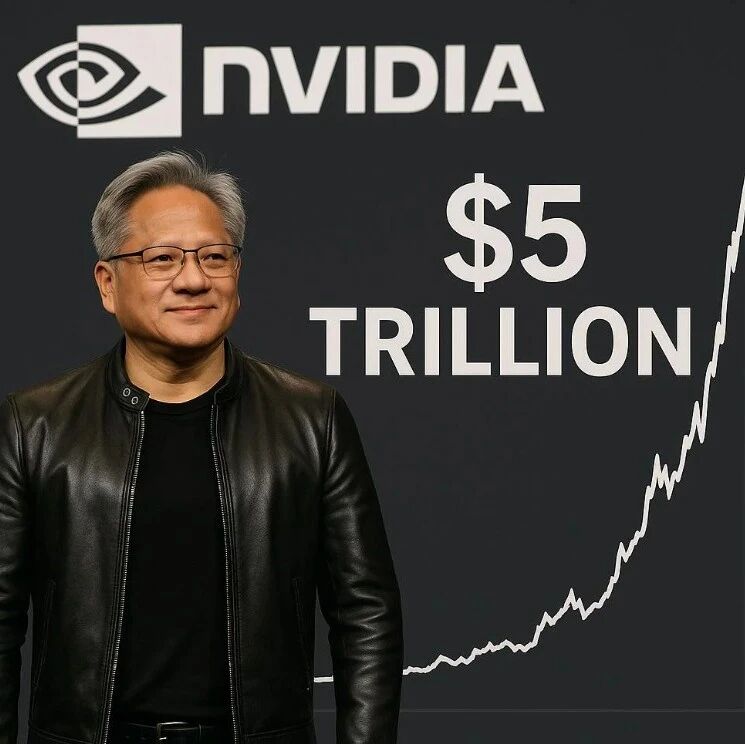
Core Viewpoint - Nvidia has become the first company in history to surpass a market capitalization of $5 trillion, driven by strong demand for AI and its strategic investments in AI-related companies like OpenAI [5][6][7]. Group 1: Nvidia's Market Position and AI Demand - Nvidia's CEO Jensen Huang highlighted that the revenue from Blackwell and Rubin architecture chips could exceed $500 billion by 2026, which is five times the revenue expected from the Hopper architecture chips between 2023 and 2025 [5][6]. - Nvidia's market value is closely tied to market optimism regarding the future of AI in the U.S., as it holds significant pricing power over GPUs, the core resource for AI [6][7]. Group 2: Concerns Over AI Bubble - The announcement of Nvidia's $100 billion investment in OpenAI raised concerns about an AI bubble, as it involved a significant order of GPUs from Nvidia in return for the investment [8][9]. - IMF President Kristalina Georgieva and the UK's Financial Policy Committee expressed worries about overvaluation in the U.S. stock market, particularly among AI-related tech companies, which could lead to a market correction [9][10]. Group 3: Capital Circulation and Financing Strategies - A capital loop is formed where Nvidia invests in OpenAI, which in turn orders GPUs from Nvidia, while OpenAI also requires cloud services from Oracle, creating a cycle of revenue among these companies [11][12][13]. - Major tech companies are increasingly relying on external financing rather than just free cash flow, with significant declines in free cash flow reported among the "Big Seven" tech firms [18][20]. Group 4: Government Influence and Market Dynamics - The U.S. government views AI as a core strategic competition area, which may lead to continued loose regulations on capital inflow, exacerbating leverage and valuation issues [23][24]. - The U.S. stock market's performance is crucial for maintaining the financial system's stability, as it supports the dollar's dominance and the government's financial strategies [32][33]. Group 5: Profitability Challenges in AI Sector - OpenAI reported a revenue of approximately $4.3 billion in the first half of 2025 but incurred losses of $13.5 billion, primarily due to AI development costs [25][26]. - The commercialization of generative AI applications is lagging, with a report indicating that 95% of investments in this area have not yielded returns, highlighting the challenges in monetizing AI technologies [27][28]. Group 6: Future Implications and Risks - The ongoing AI narrative is critical for the U.S. stock market, as it is seen as a key driver for future growth and financial stability [49][50]. - The potential for an AI bubble to burst poses risks not only to the stock market but also to the broader financial system, reminiscent of the dot-com bubble [53][54].
英伟达成全球首家市值突破5万亿美元上市公司,AI狂潮再掀资本神话
Sou Hu Cai Jing· 2025-10-30 06:30
Core Insights - NVIDIA has achieved a market capitalization of over $5 trillion, becoming the first publicly traded company to reach this milestone, with a stock price increase of over 56% year-to-date and a market value increment of $2.9 trillion in 2023 [1][3] Group 1: Market Performance - NVIDIA's stock price surged to $207.04 per share, with an intraday increase exceeding 5%, contributing significantly to the S&P 500 index's annual growth of 17% [1] - The company's market value growth from $4 trillion to $5 trillion occurred in just over three months, a record pace compared to Microsoft and Apple [1] Group 2: AI Demand and Product Development - The explosive growth in AI computing demand is driving NVIDIA's success, with CEO Jensen Huang announcing that the flagship Blackwell chip has entered full-scale production, projecting over $500 billion in revenue over the next five quarters [2] - NVIDIA's next-generation Rubin chip is set for early production in October 2026, with a rolling innovation model in place for future architectures [2] Group 3: Strategic Partnerships and Ecosystem - NVIDIA has formed strategic partnerships, including a $100 billion investment in OpenAI for a 10 GW AI data center and collaboration with Uber to expand a global fleet of autonomous vehicles [2] - The company has also invested $1 billion in Nokia to explore the integration of 5G and AI technologies [2] Group 4: Market Position and Competition - NVIDIA's market capitalization surpasses the combined total of major semiconductor companies and is comparable to the total market value of several major economies [3] - Despite strong analyst support, there are concerns regarding the sustainability of NVIDIA's valuation amid competition from AMD and Broadcom [3][4] Group 5: Geopolitical Risks - NVIDIA's market share in China has dropped from 95% to 0%, raising concerns about geopolitical risks affecting its global supply chain [4] - CEO Huang emphasized that the strength of AI models will continue to drive customer willingness to pay, highlighting the synergy of software, hardware, and ecosystem as NVIDIA's competitive advantage [4] Group 6: Future Technologies - NVIDIA is developing the NVQLink quantum interconnect system to integrate GPU computing with quantum processors, aiming to create a global quantum supercomputer network [5] - The AI-native 6G technology stack, NVIDIA Arc, is designed to provide ultra-low latency for future communication infrastructure [5] Group 7: Market Sentiment - Analysts express high expectations for the transformative impact of AI, with NVIDIA redefining the technology industry's potential at an unprecedented pace [6]
云计算业务推动微软公司营收利润同比增长
Xin Hua Wang· 2025-10-30 06:24
Core Insights - Microsoft reported a quarterly revenue of approximately $77.7 billion, representing an 18% year-over-year growth [1] - The company's net profit for the quarter reached $27.7 billion, a 12% increase compared to the previous year [1] - Revenue from Microsoft's cloud computing business amounted to $49.1 billion, showing a 26% year-over-year growth, with intelligent cloud revenue at $30.9 billion, up 28% [1] - CEO Satya Nadella emphasized the company's commitment to advancing artificial intelligence applications and increasing investments in AI talent and capital to seize future opportunities [1]
英伟达一骑绝尘,其他科技巨头业绩喜忧参半 美联储主席:人工智能并非泡沫产业
Sou Hu Cai Jing· 2025-10-30 05:39
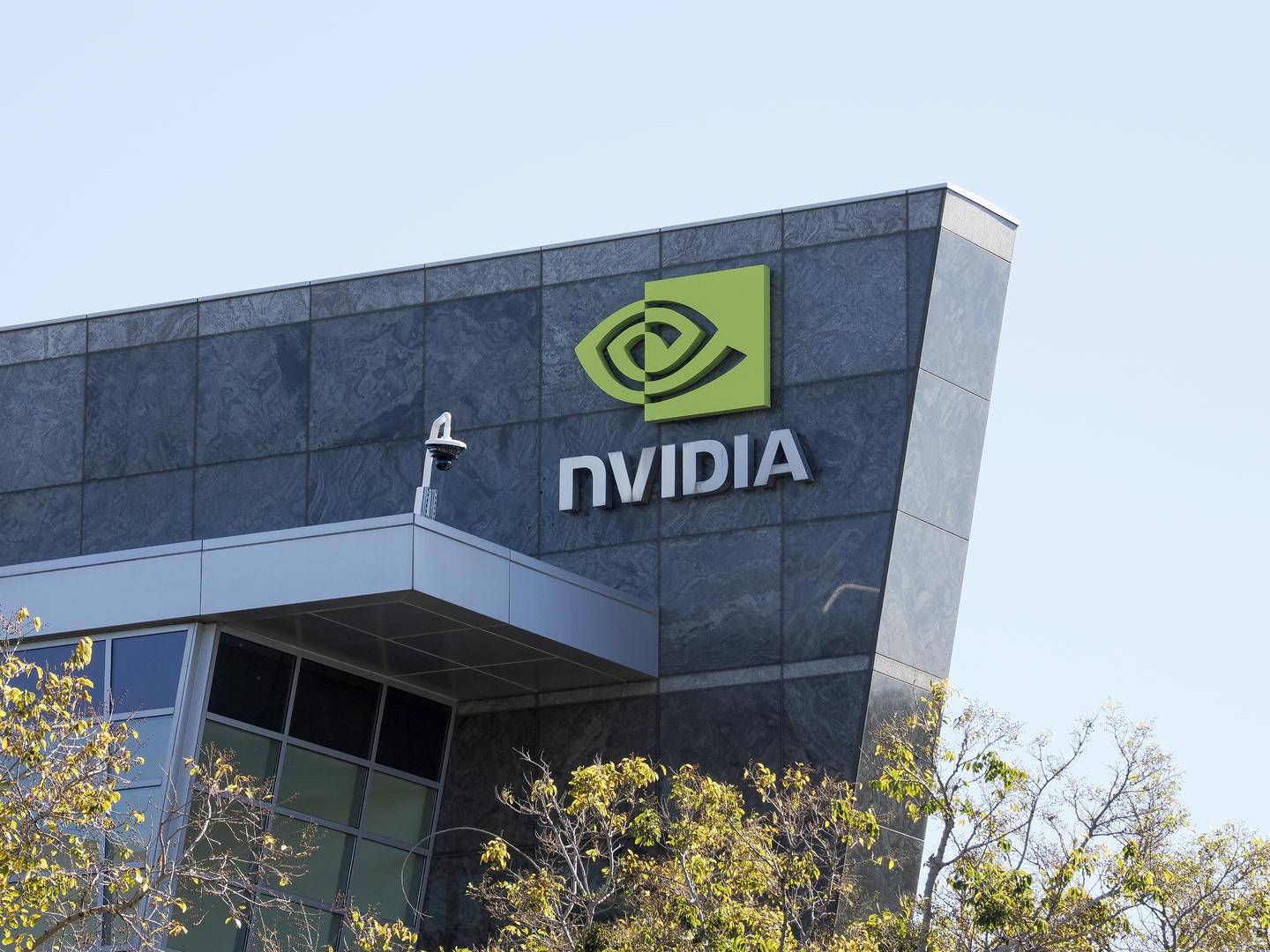
▲当地时间2025年10月29日,美国华盛顿,美联储主席鲍威尔在联邦公开市场委员会(FOMC)会议后举行新闻发布会 图据视觉中国 作为人工智能(AI)热潮的最大受益者,当地时间10月29日,英伟达市值突破5万亿美元,成为全球首家达到这一估值的公司。当天,该公司股价上涨超过 5.6%,最高达212.19美元。 得益于人工智能算力需求的井喷式增长,以及英伟达在AI芯片领域的统治力,该公司股价今年以来已飙升超50%。7月初,英伟达市值一举突破4万亿美元大 关。10月29日的市值突破,进一步巩固了英伟达全球最有价值公司的地位,其估值远超微软和苹果——这两家科技巨头市值约为4万亿美元。 ▲当地时间2025年10月29日,美国加州圣克拉拉市,英伟达公司总部 图据IC photo 目前,英伟达的芯片系统正广泛应用于全球AI训练,为谷歌、Meta、OpenAI等科技公司的数据中心提供核心动力。凭借在这一迅猛发展的市场中的主导地 位,该公司过去两年的收入呈爆炸式增长,而投资者正押注其能持续保持对竞争对手的领先优势。 美股其他科技巨头29日公布了第三季度财报,业绩喜忧参半。谷歌盘后涨超6%;微软营收虽增长了18%,但在盘后交易中 ...