腾讯控股

Search documents
20天闪电问询,腾讯系AI芯片公司冲刺IPO
3 6 Ke· 2026-02-12 00:31
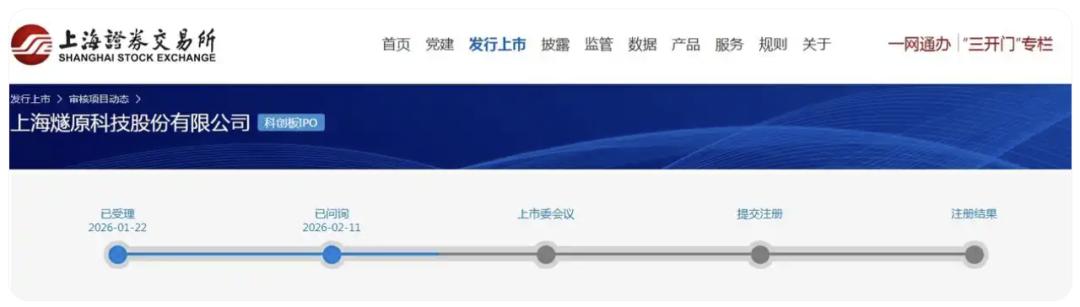
Core Viewpoint - Shanghai Suiruan Technology Co., Ltd. is undergoing an IPO review process, with a valuation of approximately 20 billion yuan, despite accumulating losses of 5.1 billion yuan over three years and a heavy reliance on Tencent for over 70% of its revenue [1][28]. Group 1: Company Overview - Suiruan Technology, established in March 2018, is the oldest among the "four little dragons" of domestic GPUs but is the last to go public [2][4]. - The company has received backing from over 20 investment institutions, including Tencent, which holds a 20.26% stake and has been involved in every funding round since the Pre-A round [6][4]. Group 2: Financial Performance - From 2022 to 2024, Suiruan's revenue surged from 90.1 million yuan to 722 million yuan, achieving a compound annual growth rate of 183.15% [13]. - The company reported a cumulative net loss of 5.179 billion yuan, with a loss of 888 million yuan in the first three quarters of 2025 [16][17]. - Research and development expenses are exceptionally high, with a rate of 181.66% in 2024 and 164.77% in the first three quarters of 2025, indicating a significant investment in technology development [17][18]. Group 3: Market Position and Product Development - Suiruan's AI accelerator cards and modules accounted for approximately 1.4% of the Chinese AI accelerator market in 2024, with sales volume reaching 38,800 units [10][22]. - The company is developing its fifth and sixth-generation AI chips, with the fifth generation expected to launch in 2027 and the sixth in 2028 [11][13]. - The company’s product strategy diverges from competitors by focusing on a non-GPGPU architecture, which requires building a new software ecosystem from scratch [8][9]. Group 4: Customer Dependency and Market Challenges - Suiruan's revenue is heavily dependent on Tencent, with sales to Tencent increasing from 8.53% in 2020 to 71.84% in the first three quarters of 2025 [22][28]. - The company faces challenges in maintaining growth and profitability, as indicated by declining production and sales rates of its AI accelerator cards, which fell from 99.46% in 2023 to 69.48% in the first three quarters of 2025 [19][20]. Group 5: Industry Context - The domestic GPU market is witnessing a shift towards AI chip production, with Suiruan being the only company focused on cloud-based AI chips among its peers [23][24]. - The recent IPO activities of its competitors, such as Moer Thread and Muxi Technology, highlight the competitive landscape and the urgency for Suiruan to capitalize on its market position [27][24].


硅谷的这个春节,也难熬了
吴晓波频道· 2026-02-12 00:29
Core Viewpoint - The article discusses the intense competition and significant capital expenditures among major tech companies in the AI sector, highlighting the risks and uncertainties associated with their aggressive investments and marketing strategies [3][4][6]. Group 1: AI Investment Landscape - In 2026, major tech companies like Microsoft, Amazon, Google, and Meta are projected to spend $660 billion (approximately 4.58 trillion RMB) on AI, marking a 60% increase from 2025 and a staggering 165% increase from 2024 [7][8]. - This level of spending represents about 2.1% of GDP, surpassing historical investments in infrastructure projects like the interstate highway system and the Apollo moon landing [8]. - Microsoft plans to allocate $140 billion for capital expenditures by June, while Amazon aims to invest $200 billion in AI-related workloads, significantly exceeding market expectations [10][11]. Group 2: Market Reactions and Concerns - Despite strong financial reports, investor concerns are rising due to the massive capital expenditures, leading to significant stock price drops for companies like Microsoft and Amazon [10][11]. - Analysts predict a drastic decline in free cash flow for Google and Meta, with estimates suggesting a nearly 90% drop for both companies, while Amazon's cash flow may turn negative [13]. - The interconnected nature of AI investments raises concerns about potential distortions in incentives and the risks of over-reliance on single clients, as seen with Microsoft's dependence on OpenAI [11][12]. Group 3: Competitive Dynamics - Google is regaining momentum in the AI space with its Gemini model, which has shown superior performance compared to ChatGPT, leading to increased interest in Google Cloud services [16][20]. - The article highlights the competitive landscape where companies like OpenAI are exploring various monetization strategies, including subscription fees and API services, to sustain their operations amid high costs [21][22]. - The emergence of new AI platforms, such as Moltbook, reflects the public's complex attitudes towards AI, oscillating between fascination and skepticism [30][32].






智通港股沽空统计|2月12日
智通财经网· 2026-02-12 00:28
Group 1 - AIA Group (81299), JD Health (86618), and JD Group (89618) have the highest short-selling ratios at 100.00% each [1][2] - Alibaba (09988), Tencent Holdings (00700), and Xiaomi Group (01810) lead in short-selling amounts, with HKD 1.557 billion, HKD 1.404 billion, and HKD 1.183 billion respectively [1][2] - Zhaojin Mining (01818), OSL Group (00863), and Prada (01913) have the highest deviation values at 44.29%, 35.21%, and 34.72% respectively [1][2] Group 2 - The top ten short-selling ratios include AIA Group (81299) at 100.00%, JD Health (86618) at 100.00%, and JD Group (89618) at 100.00% [2] - The top ten short-selling amounts show Alibaba (09988) leading with HKD 1.557 billion, followed by Tencent Holdings (00700) with HKD 1.404 billion [2] - The top ten deviation values highlight Zhaojin Mining (01818) with a deviation of 44.29%, indicating significant short-selling activity compared to its historical average [2][3]



今年以来,香港新股上市首日“零破发”!
证券时报· 2026-02-12 00:27
多位受访人士分析指出,今年以来,港股新股市场"零破发"的背后,是短期市场情绪、定价策略以及政策层面等多重因素共同作用的结果。短期 市场情绪来看,投资者心态积极转变,为市场注入了活力;发行方谨慎务实合理定价,为新股上市后的表现预留了空间;基石投资者机制等也在 稳定股价方面发挥了关键作用。 港股新股首日"零破发" 2月11日,智能装备企业先导智能登陆港股。上市首日,公司股价开盘上涨1%,尽管尾盘股价一度下探至发行价以下,但随后快速拉升,最终守 住发行价,收盘未出现破发。先导智能的表现是近期新股市场的一个写照。Wind数据显示,今年以来已有22只新股在港股上市,且这些新股在 上市首日无一破发。与之形成鲜明对比的是,在2025年12月,25只新股上市首日竟有10只出现破发。 在今年登陆港股市场的新股阵营里,大模型公司MiniMax上市首日涨幅高达109.09%,在一众新股中脱颖而出,成为涨幅之冠。港股"钓鱼装备第 一股"乐欣户外上市首日的涨幅也达到102.29%,仅次于MiniMax。此外,AI芯片企业壁仞科技、量贩零食龙头鸣鸣很忙、集成电路企业澜起科技 等上市首日的涨幅不低,均在60%以上。 今年在港股市场上市的新 ...

拼运营、撬漫剧,2026短剧春节档“杀”疯了
3 6 Ke· 2026-02-12 00:26
Core Insights - The 2026 Short Drama Spring Festival has begun, showcasing a significant shift in content strategy among major platforms, moving from quantity to quality and user retention [1][2] - Platforms are focusing on customized content for the Spring Festival and exploring new avenues like AI and comic dramas to capture market share [1][9] Group 1: Industry Trends - Short dramas have evolved into a significant content category, with average monthly viewing time reaching 26.09 hours, ranking just below short videos [2] - The growth rate of monthly active users for platforms like Hongguo Short Drama has slowed, indicating a shift from expansion to competition for existing users [2][3] - The average production cost for short dramas has increased by 30% to 50%, making million-level investments standard for top projects [3] Group 2: Platform Strategies - Hongguo Short Drama has implemented a comprehensive strategy for the Spring Festival, including high-profile content scheduling and interactive user engagement activities [6][10] - Tencent has launched the "Fire Dragon Comic Drama" app, integrating AI and comic elements to align with user habits on short video platforms [9][12] - Kuaishou has extended its content supply period to 1-3 months, aiming to increase user engagement during the Spring Festival [8][10] Group 3: Competitive Landscape - The competition for quality short dramas is intensifying, with platforms vying for top talent and unique content to differentiate themselves [4][10] - The comic drama sector is becoming a critical battleground, with multiple platforms, including Baidu and iQIYI, launching their own comic drama apps [14][15] - Red Fruit Short Drama has achieved over 100 million daily active users and 275 million monthly active users, indicating strong market presence [12]



DeepSeek不发V4,六小龙不敢过年
3 6 Ke· 2026-02-12 00:26
Core Insights - DeepSeek is evolving beyond being just a "chatbot" base and is optimizing its large model's energy efficiency through architectural innovations, as evidenced by the recent release of new models and frameworks [1][3] - The competitive landscape is intensifying, with DeepSeek's new models being crucial for maintaining its industry position against major players like Google and OpenAI [1][2] Group 1: Technological Developments - In January 2024, DeepSeek released the Engram architecture, which separates "conditional memory" from "computation," aiming to reduce errors and save computational power [3] - The new model, referred to as MODEL1, is speculated to either be a lightweight model suitable for edge devices or a "long-sequence expert" designed for processing lengthy documents or code [3] - DeepSeek's commitment to cost-effective AI solutions is evident, as it aims to lower token costs, making AI development more accessible to a broader range of developers [4] Group 2: Market Position and Competition - The release of new models is seen as essential for DeepSeek to avoid falling behind competitors like Gemini 3 and GPT-5, which have demonstrated superior performance in various benchmarks [7][8] - Despite DeepSeek's strong position in the open-source community, the company faces pressure from the rapid advancements of closed-source models, which could lead to a loss of developer loyalty [10][11] - The competitive dynamics are shifting, with major internet companies increasing their investments in AI, potentially impacting DeepSeek's market share and the overall landscape for domestic AI companies [13][14] Group 3: Ecosystem and Community Impact - DeepSeek's open-source models, such as DeepSeek-V3 and R1, have gained significant traction, accounting for over half of the open-source token throughput in a short period [8][9] - The company has established a decentralized and pragmatic technical ecosystem, attracting developers interested in self-controlled and private deployments [4][6] - The ongoing developments in the open-source AI community are reshaping the narrative around Chinese AI capabilities, with DeepSeek playing a pivotal role in this transformation [5][6]

基民抢热点、提前“埋伏”AI、机器人主题基金,基金经理:科技投资正转向业绩验证期
Xin Lang Cai Jing· 2026-02-12 00:13
Core Viewpoint - The article discusses the increasing interest and investment in AI and semiconductor ETFs as the Chinese New Year approaches, highlighting the potential for significant market movements in these sectors due to upcoming technological advancements and seasonal trading patterns [1][2][3]. Group 1: Market Trends and Investment Behavior - As the Chinese New Year approaches, AI applications and robotics are gaining attention, with investors anticipating new developments that could drive market interest post-holiday [1][6]. - Despite a market downturn since February, both semiconductor and robotics ETFs have seen net inflows, indicating continued investor confidence in these sectors [2][7]. - Data shows that the semiconductor equipment ETF Guotai (159516.SZ) has a net asset value of 9.011 billion yuan, with a net inflow of 1.04 billion yuan since February, while the robotics ETF Huaxia (159272.SZ) has a net asset value of 26.465 billion yuan and a net inflow of 818 million yuan [2][7]. Group 2: Seasonal Trading Patterns - Historical data indicates a strong "calendar effect" in the A-share market, with an 80% probability of the Shanghai Composite Index rising in the five trading days before the Spring Festival, and a median increase of 1.94% [3][8]. - The first trading week after the Spring Festival shows a 75% probability of an increase, with a median rise of 1.64%, and the following ten trading days maintain a 70% probability of gains [3][8]. Group 3: Industry Insights and Future Outlook - The semiconductor and robotics sectors are currently in the middle of an innovation cycle, with AI capital expenditures expected to remain high through 2026, suggesting a robust environment for growth [3][9]. - The hardware investment cycle in the current AI wave is significantly extended, with major global players expected to maintain strong capital expenditures in AI-related areas from 2026 to 2030 [4][9]. - Investment strategies are shifting towards a focus on detailed industry analysis, emphasizing the importance of identifying companies that can benefit from inflation and exhibit explosive growth potential [10].

陆家嘴财经早餐2026年2月12日星期四
Wind万得· 2026-02-11 23:33
Group 1 - The State Council emphasizes the need to comprehensively promote AI technology innovation, industrial development, and application empowerment to foster new productive forces and drive high-quality development [3] - The State Council aims for a unified national electricity market system to be fully established by 2035, transitioning to unified pricing and joint trading [13] - The National Bureau of Statistics reports that China's CPI rose by 0.2% year-on-year in January, while PPI fell by 1.4%, with the data reflecting a base period adjustment [4][13] Group 2 - The automotive industry in China saw production and sales of 2.45 million and 2.346 million vehicles in January, respectively, with a slight year-on-year increase in production and a decrease in sales [13] - The banking wealth management scale decreased by 100 billion yuan in January, indicating a rebalancing of funds among deposits, wealth management, insurance, and equity assets [13] - The Hong Kong Monetary Authority is actively processing license applications for stablecoin issuers, aiming to position Hong Kong as a global innovation center for digital assets [15] Group 3 - The capital market continues a "zero tolerance" regulatory approach, with numerous penalties issued to listed companies and intermediaries for various violations, reflecting an increase in accountability and comprehensive regulation [9] - The Hong Kong IPO market has seen a rare "zero break" phenomenon, with 22 new stocks listed this year not experiencing any price drops on their first day [9] - The MSCI announced its quarterly index adjustments, including the addition of 37 stocks to the MSCI China Index, which will take effect after the market closes on February 27 [9]
智通港股通资金流向统计(T+2)|2月12日
智通财经网· 2026-02-11 23:32
Core Insights - Tencent Holdings (00700), Southern Hang Seng Technology (03033), and Xiaomi Group-W (01810) ranked as the top three in net inflow of southbound funds, with net inflows of 1.792 billion, 0.571 billion, and 0.412 billion respectively [1] - The top three in net outflow of southbound funds were Yingfu Fund (02800), Hang Seng China Enterprises (02828), and Kuaishou-W (01024), with net outflows of -4.553 billion, -1.380 billion, and -0.576 billion respectively [1] - In terms of net inflow ratio, Huaxia Hang Seng Technology (03088), Southern East Selection (03441), and Anhui Wantuo Expressway (00995) led the market with ratios of 90.53%, 74.02%, and 68.27% respectively [1] - The top three in net outflow ratio were Southern Hong Kong Stock Connect (03432), Fuyao Glass (06865), and Baize Medical (02609) with ratios of -100.00%, -59.27%, and -53.09% respectively [1] Net Inflow Rankings - Tencent Holdings (00700) had a net inflow of 1.792 billion, representing a 12.21% increase, closing at 560.000 (+2.28%) [2] - Southern Hang Seng Technology (03033) saw a net inflow of 0.571 billion, with a 6.77% increase, closing at 5.300 (+1.34%) [2] - Xiaomi Group-W (01810) recorded a net inflow of 0.412 billion, with a 9.45% increase, closing at 35.200 (+0.06%) [2] Net Outflow Rankings - Yingfu Fund (02800) experienced the highest net outflow of -4.553 billion, with a -22.13% decrease, closing at 27.220 (+1.72%) [2] - Hang Seng China Enterprises (02828) had a net outflow of -1.380 billion, representing an -11.37% decrease, closing at 93.940 (+1.56%) [2] - Kuaishou-W (01024) faced a net outflow of -0.576 billion, with a -10.25% decrease, closing at 69.300 (-2.74%) [2] Net Inflow Ratio Rankings - Huaxia Hang Seng Technology (03088) led with a net inflow ratio of 90.53%, with a net inflow of 47.6883 million, closing at 6.875 (+1.33%) [3] - Southern East Selection (03441) followed with a net inflow ratio of 74.02%, with a net inflow of 18.0421 million, closing at 11.600 (+1.13%) [3] - Anhui Wantuo Expressway (00995) had a net inflow ratio of 68.27%, with a net inflow of 5.6553 million, closing at 13.340 (-0.07%) [3]

美股三大指数小幅收跌,谷歌、微软跌超2%,中概指数跌0.65%
Ge Long Hui· 2026-02-11 23:22
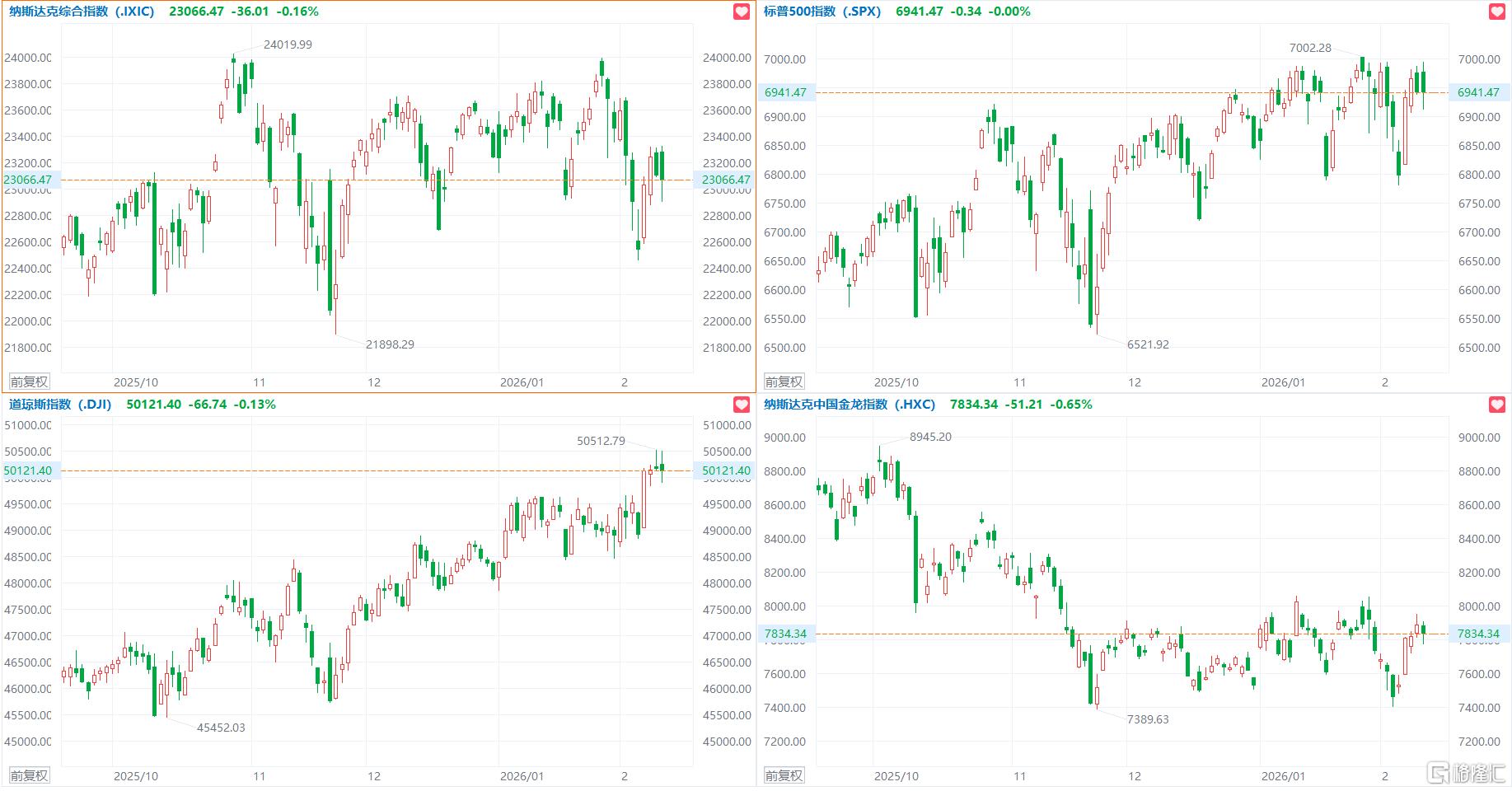
Group 1 - The U.S. non-farm payroll data for January exceeded expectations, leading to slight declines in the three major U.S. stock indices: Dow Jones down 0.13%, Nasdaq down 0.16%, and S&P 500 down 0.01% [1] - Popular tech stocks showed mixed performance, with Google and Microsoft both falling over 2%, while Intel rose over 2%, and Nvidia, Apple, and Tesla had gains of less than 1% [1] - Storage concept stocks and the metals and mining sector saw significant gains, with SanDisk up over 10%, Micron Technology up over 9%, and companies like American Vanguard and Western Digital rising over 4% [1] Group 2 - Cryptocurrency-related stocks experienced substantial declines, with Robinhood down over 8%, Coinbase and Strategy down over 5%, and Circle down over 3% [1] - The Nasdaq China Golden Dragon Index fell by 0.65%, with notable declines in popular Chinese concept stocks such as WeRide down 5.5%, NetEase down 4%, and others like Yum China, Baidu, Tencent, Alibaba, and Meituan down over 1% [1] - However, some Chinese electric vehicle manufacturers saw gains, with XPeng up 1.6%, Li Auto up 1.8%, NIO up 2.1%, BYD up 2.8%, and Xiaomi up 3.9% [1]