
赛力斯

Search documents
张兴海:“A+H”双平台开启全球化新程
Zhong Guo Zheng Quan Bao· 2025-11-06 20:15
Core Viewpoint - The listing of Seres Group on the Hong Kong Stock Exchange marks a significant milestone as it becomes the first luxury new energy vehicle company to be dual-listed in both A and H shares, raising a net amount of HKD 14.016 billion (approximately RMB 12.853 billion), the largest IPO for a mainland car company to date and the largest globally in 2025 [1][3] Group 1: Company Background and Transformation - Seres Group was founded in 1986 by Zhang Xinghai with an initial investment of 8,000 yuan, starting as a spring manufacturer and quickly capturing 90% of the domestic market by offering a cost-effective alternative to Japanese products [1][2] - The first major transformation occurred in 2003 when the company entered the automotive sector by forming a joint venture with Dongfeng Motor, launching the Dongfeng Xiaokang brand, which became a top player in the microcar market [2] - In 2016, the company made a second critical transformation by investing heavily in new energy vehicles, establishing a smart factory, and acquiring an American battery company, InEVit, despite industry skepticism [2][3] Group 2: Strategic Partnerships and Market Position - A pivotal moment for Seres came in 2021 when it partnered with Huawei, leading to the launch of the AITO brand, with models like the M5, M7, and M9 achieving significant sales success [3][4] - The company rebranded from Xiaokang to Seres in 2022, reflecting its shift to high-end new energy vehicles, and achieved a valuation of 126 billion yuan, ranking 76th in the Hurun China 500 [3][4] Group 3: Capital Strategy and Fund Utilization - The recent IPO in Hong Kong is part of Seres' strategy to leverage international capital for global expansion, with the H-share issuance being oversubscribed 133 times, raising a total of HKD 14.016 billion [3][4] - The company plans to allocate 70% of the raised funds to R&D, 20% to global marketing and charging infrastructure, and 10% for working capital, focusing on enhancing product competitiveness and expanding overseas channels [4][5] Group 4: Future Outlook and Challenges - Seres aims to utilize its dual capital platform to enhance brand growth and global competitiveness, with plans to establish 100 experience centers in Europe and the Middle East by 2026 [4][5] - Despite recent challenges, including a slight decline in net profit due to increased channel development and R&D costs, the company is exploring new growth avenues, such as partnerships in intelligent robotics [5]
杀入增程赛道 小鹏汽车盼盈利
Bei Jing Shang Bao· 2025-11-06 16:26
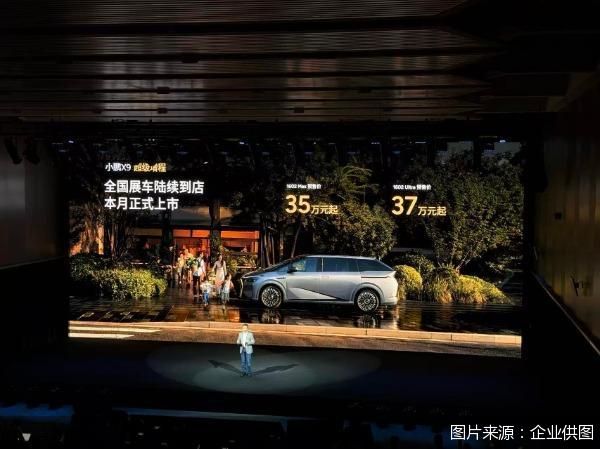
Core Insights - Xiaopeng Motors has launched its first range-extended model, the Xiaopeng X9, targeting the popular hybrid MPV market, with a pre-sale price of 350,000 to 370,000 yuan [1][2] - Despite a significant increase in sales, Xiaopeng Motors is still facing losses, with a net loss of 480 million yuan in Q2 2023, although this is an improvement from 1.28 billion yuan in the same period last year [2][3] - The introduction of the Kunpeng Super Range-Extended Technology aims to enhance the company's profitability and market competitiveness, as seen with other companies successfully leveraging range-extended models [3] Company Developments - The Xiaopeng X9 features a 63.3 kWh lithium iron phosphate battery and a 60L fuel tank, offering a pure electric range of 452 km and a combined range of 1602 km [1] - The company aims to achieve profitability in Q4 2023, indicating a strategic shift towards a dual-energy vehicle lineup to expand market reach [2] - Xiaopeng Motors has expanded its electric vehicle lineup to seven models since the launch of its first model, the Xiaopeng G3, in 2018, contributing to a 190% year-on-year increase in deliveries in the first ten months of 2023 [2] Industry Context - The hybrid MPV market is expected to see a significant increase, with projections indicating that by 2025, 50% of MPV sales in China will be new energy vehicles [2] - The success of range-extended models from competitors like Li Auto and Seres highlights a trend where hybrid and range-extended vehicles can alleviate consumer range anxiety while being more cost-effective [3] - Industry experts suggest that hybrid vehicles currently offer better profitability compared to traditional combustion engine vehicles, as indicated by comments from Ford's CEO [3]
4只新股上市,3只跌破发行价!港股超额认购难挡破发|港美股看台·IPO观察
Zheng Quan Shi Bao Wang· 2025-11-06 15:54
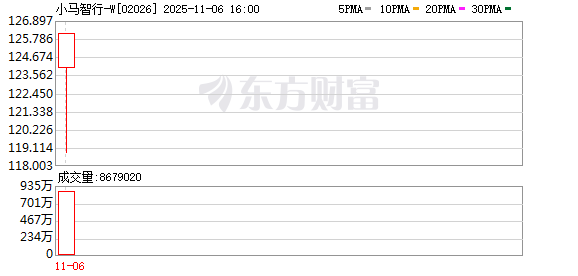
Core Insights - The recent trend in the Hong Kong IPO market shows a significant increase in the risk of new stocks breaking below their issue prices, with three out of four newly listed stocks on November 6 experiencing this issue [1][2]. Group 1: IPO Performance - On November 6, three companies, Xiaoma Zhixing, Wenyuan Zhixing, and Junsheng Electronics, listed on the Hong Kong Stock Exchange, with Xiaoma Zhixing seeing a maximum drop of over 14% during trading [2]. - Xiaoma Zhixing's IPO raised up to HKD 7.7 billion, marking it as the largest IPO in the global autonomous driving sector for 2025 [2]. - Wenyuan Zhixing's IPO raised approximately HKD 2.39 billion, with a share price set at HKD 27.1 [2][3]. Group 2: Subscription Demand - Xiaoma Zhixing received a subscription rate of 15.88 times for its public offering and 7.72 times for its international offering [2]. - Wenyuan Zhixing achieved a subscription rate of 73.44 times for its public offering and 9.85 times for its international offering [3]. - Junsheng Electronics had an impressive subscription rate of 147.67 times for its public offering and 9.78 times for its international offering [3]. Group 3: Market Sentiment and Challenges - The disparity between high subscription rates and poor market performance is attributed to increased market volatility and cautious investor sentiment [4]. - Both Xiaoma Zhixing and Wenyuan Zhixing face common industry challenges of high growth, high investment, and significant losses, leading to market uncertainty [4]. - Xiaoma Zhixing reported a revenue of USD 35.43 million for the first half of 2025, a 43.34% increase, but also a net loss of USD 96.09 million [4]. - Wenyuan Zhixing's revenue for the first half of the year was approximately RMB 200 million, with a net loss of RMB 79.2 million [5]. Group 4: Industry Outlook - The autonomous driving sector is viewed as having significant growth potential, with ongoing technological advancements expected to enhance vehicle decision-making capabilities [5]. - However, the rapid pace of technological change and intense competition pose risks for companies that fail to keep up with new developments [5][6]. - The recent trend of IPOs in the Hong Kong market has been driven by a focus on technology and consumer sectors, attracting substantial investment but also exposing companies to high R&D risks [7].

4只新股上市 3只跌破发行价!港股超额认购难挡破发|港美股看台·IPO观察
Zheng Quan Shi Bao· 2025-11-06 15:43
Core Viewpoint - The recent trend of new stocks in the Hong Kong market shows an increasing risk of price drops on their debut, with three out of four new listings on November 6 experiencing a decline below their issue price, indicating a rising rate of new stock failures in the market [2][4][10] Group 1: New Stock Performance - On November 6, three new stocks, Xiaoma Zhixing, Wenyuan Zhixing, and Junsheng Electronics, listed on the Hong Kong Stock Exchange and opened below their issue prices, with Xiaoma Zhixing and Wenyuan Zhixing experiencing maximum intraday declines of over 14% [4][10] - Xiaoma Zhixing's IPO involved issuing approximately 48.25 million shares, with a potential fundraising amount of 7.7 billion HKD, marking it as the largest IPO in the global autonomous driving sector for 2025 [4][5] - Wenyuan Zhixing's IPO involved a total of 88.25 million shares, with a fundraising target of 2.39 billion HKD, and it also faced a price drop on its debut [4][5] Group 2: Subscription Demand vs. Market Performance - Despite high subscription rates, with Xiaoma Zhixing achieving 15.88 times oversubscription in the public offering and Wenyuan Zhixing achieving 73.44 times, the market performance diverged significantly, leading to price drops [4][5][6] - The overall market volatility and cautious investor sentiment have contributed to the disparity between high subscription demand and poor market performance [6][10] Group 3: Financial Performance and Challenges - Xiaoma Zhixing reported a revenue of 35.43 million USD for the first half of 2025, a 43.34% increase year-on-year, but also faced a net loss of 96.09 million USD, indicating ongoing financial challenges [6][7] - Wenyuan Zhixing has also shown continuous losses, with revenues declining from 528 million RMB in 2022 to 361 million RMB in 2024, alongside significant net losses [7][8] - Both companies maintain high R&D expenditures, with Xiaoma Zhixing's R&D spending reaching 97 million USD in the first half of 2025, representing 272.4% of its revenue [6][7] Group 4: Market Outlook and Risks - The autonomous driving industry is viewed as having significant growth potential, but companies face challenges related to high investment, rapid technological changes, and intense competition [7][8][10] - The recent trend of new stock failures may reflect inflated valuation expectations amidst a hot market, leading to increased risks of price drops when market sentiment normalizes [3][10]

4只新股上市,3只跌破发行价!港股超额认购难挡破发|港美股看台·IPO观察
证券时报· 2025-11-06 15:39
继赛力斯11月5日在港股上市首日破发后,11月6日上市的4只新股有3只出现破发,港股市场新股破发风险骤然提升。 打新投资者在"稳赚不赔"的期待中,正面临越来越大的不确定性。业内人士指出,近期破发案例频现,表明港股新股市场破发率正在上升。在当前港股市场行情比 较火热的背景下,部分发行人及其股东对新股估值预期过高,当市场情绪回归理性时,高估值新股便面临破发风险。 超额认购难挡上市首日破发 11月6日,小马智行、文远知行、均胜电子在港交所上市交易,但上述3只股票开盘就跌破发行价,小马智行、文远知行盘中最大跌幅均在14%以上,均胜电子盘中 也一度跌超9%。截至收盘,小马智行跌9.28%,文远知行跌9.96%,均胜电子跌8%。 小马智行此次港股IPO共计发行约4825万股,绿鞋后集资额可达77亿港元,成为2025年全球自动驾驶行业规模最大IPO。2024年11月,小马智行在美国纳斯达克以股 票代码"PONY"成功上市,成为"全球Robotaxi第一股";不到一年后在港股挂牌,标志着正式构建起"美股+港股"双重主要上市架构。 小马智行发布的分配结果显示,香港公开发售部分,小马智行获得了15.88倍的超额认购;国际发售部分 ...

赛力斯(601127):2025年三季报及港股上市点评:Q3业绩符合预期,港股上市募资140亿港元
Huachuang Securities· 2025-11-06 15:27
Investment Rating - The report maintains a "Strong Buy" rating for the company, expecting it to outperform the benchmark index by over 20% in the next six months [6][17]. Core Insights - The company reported Q3 2025 results that met expectations, with revenue of 48.1 billion yuan, a year-on-year increase of 16% and a quarter-on-quarter increase of 11%. The net profit attributable to shareholders was 2.37 billion yuan, down 1.7% year-on-year but up 8.1% quarter-on-quarter. The company successfully listed on the Hong Kong Stock Exchange, raising approximately 14.2 billion HKD [2][6]. - The company is leveraging its "A+H" dual capital platform strategy to enhance brand recognition in international markets and accelerate global expansion [2][6]. - The new model, Wanjie M8, has shown strong sales performance, contributing to the overall sales growth of 142,000 vehicles in Q3 2025, a year-on-year increase of 6.3% and a quarter-on-quarter increase of 9.1% [6][7]. Financial Performance Summary - Q3 2025 sales volume reached 142,000 units, with Wanjie sales at 124,000 units, reflecting a year-on-year increase of 12% and a quarter-on-quarter increase of 16%. The average selling price (ASP) was 339,000 yuan, up 2,800 yuan year-on-year and 700 yuan quarter-on-quarter [6][7]. - The gross margin for Q3 2025 was 29.9%, an increase of 4.4 percentage points year-on-year and 0.4 percentage points quarter-on-quarter [6][7]. - The company plans to allocate the funds raised from the IPO as follows: 40% for technology R&D, 30% for product development, 20% for marketing and overseas sales, and 10% for working capital [6][7]. Future Outlook - The company expects steady growth in sales and profitability, driven by the successful launch of new models and the internationalization process accelerated by the Hong Kong IPO. Revenue forecasts for 2025-2027 have been adjusted to 168.8 billion, 237.1 billion, and 268.3 billion yuan, respectively, with net profit forecasts adjusted to 8.3 billion, 13.6 billion, and 15.5 billion yuan [6][7]. - The target price for the company's stock is set at 195.80 yuan, indicating a potential upside of 38% based on a 25x PE ratio for 2026 [6][7].

赛力斯张兴海:“A+H”双平台开启全球化新程
Zhong Guo Zheng Quan Bao· 2025-11-06 15:05
Core Viewpoint - Seres Group has successfully listed on the Hong Kong Stock Exchange, becoming the first luxury new energy vehicle company to achieve a dual listing in both A-share and H-share markets, raising a net amount of HKD 14.016 billion (approximately RMB 12.853 billion), setting a new record for IPO scale among domestic car companies in Hong Kong [2][8] Company Overview - Seres Group was founded in 1986 by Zhang Xinghai, starting as a spring factory with an initial capital of CNY 8,000, eventually dominating the domestic high-end spring market [4] - The company transitioned from a parts supplier to a vehicle manufacturer, launching the Dongfeng Xiaokang brand in 2003, which quickly became a top player in the microcar market [5] - In 2016, the company pivoted towards new energy vehicles, investing heavily in smart factories and battery technology, and later rebranded as Seres in 2022 [6] Strategic Developments - The recent IPO is a significant step in the company's international capital operations and global expansion strategy, with the H-share issuance being oversubscribed by 133 times, raising a total of HKD 14.016 billion [8] - The company plans to allocate 70% of the raised funds to R&D, 20% to global marketing and charging infrastructure, and 10% for working capital, focusing on enhancing product competitiveness and expanding overseas channels [8] Financial Performance - As of Q3 2025, the company's total assets exceeded CNY 121.5 billion, although it faced a high debt ratio of 87.38% prior to the IPO, which is expected to improve post-listing [9] - The company's net profit attributable to shareholders saw a slight decline of 1.74% year-on-year, attributed to increased investments in channel development and R&D [9] Market Position and Future Outlook - Seres aims to leverage its dual capital platform to enhance brand growth and accelerate its presence in the global high-end new energy vehicle market, with plans to establish 100 experience centers in Europe and the Middle East by 2026 [9][10] - The collaboration with Huawei is expected to strengthen the company's technological capabilities and brand positioning, while exploring new growth avenues through partnerships in emerging technologies [9]
募资超140亿港元 赛力斯挂牌港交所加速竞逐全球化
Zheng Quan Ri Bao Zhi Sheng· 2025-11-06 14:41
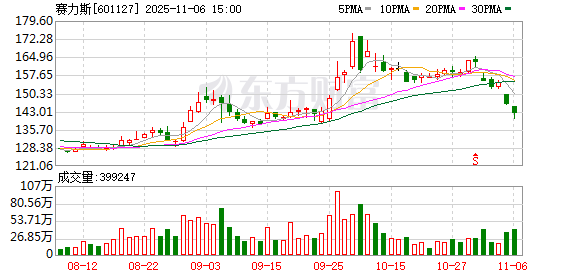
Core Viewpoint - The successful listing of Seres (601127) on the Hong Kong Stock Exchange marks a significant step in its global strategy, raising a net amount of HKD 14.016 billion, which will enhance its capital strength for technological innovation and global expansion [1][2] Group 1: IPO Details - Seres completed its IPO process rapidly, from submitting its application in April 2025 to listing in November 2023, issuing 100.2 million H-shares at a final price of HKD 131.50 per share [2] - The IPO attracted 22 cornerstone investors, indicating strong market confidence in Seres' long-term value, with the public offering being oversubscribed by 133 times, raising over HKD 170 billion [2] - The company's revenue for the first three quarters of 2025 reached CNY 110.534 billion, a year-on-year increase of 3.67%, while net profit grew by 31.56% to CNY 5.312 billion [2] Group 2: Business Strategy and Growth - Seres' growth is driven by its forward-looking product layout and technological advantages, having entered the new energy sector in 2016 and launched the AITO brand in collaboration with Huawei in 2021 [3] - The AITO product lineup includes four models, which have significantly boosted the company's scale and profitability, with a projected return to profitability in 2024 [3] - The company emphasizes software-defined vehicles and high-quality development, supported by substantial R&D investments and innovative technologies [3] Group 3: Global Expansion and Market Position - Seres plans to allocate 70% of the IPO proceeds to R&D, 20% to new marketing channels and overseas market expansion, and 10% for working capital [4] - The company aims to establish 100 experience centers in Europe and the Middle East by 2026 and collaborate with Huawei to build a supercharging network covering 80% of major international highways [4] - Seres' global presence includes key markets in Europe, the Middle East, the Americas, and Africa, with overseas revenues of CNY 3.922 billion, CNY 4.976 billion, and CNY 4.211 billion from 2022 to 2024 [5] Group 4: Industry Context - The listing enhances Seres' global visibility and brand internationalization, positioning it favorably against international competitors [5] - The shift in the Chinese automotive industry's export model from simple product exports to a more integrated "ecological export" approach reflects the industry's evolution towards high-end, intelligent manufacturing [5] - Seres' successful IPO provides a new financing platform that supports its long-term development and offers a dual-driven model of "technology + capital" for other Chinese automotive companies [5][6]
小鹏汽车杀入增程赛道:盼盈利,急“造血”
Bei Jing Shang Bao· 2025-11-06 14:35
Core Viewpoint - Xiaopeng Motors officially enters the range-extended vehicle market with the launch of its Kunpeng Super Range-Extended Technology, targeting the popular MPV segment with the pre-sale of the Xiaopeng X9 Super Range-Extended model [1][3] Group 1: Product Launch and Features - The Xiaopeng X9 Super Range-Extended model is available in two versions, Max and Ultra, with pre-sale prices of 350,000 yuan and 370,000 yuan respectively [1] - The vehicle features a 63.3 kWh fast-charging lithium iron phosphate battery and a 60L fuel tank, offering a pure electric range of 452 kilometers and a comprehensive range of 1,602 kilometers [3] - The Kunpeng Super Range-Extended Technology utilizes 5C+800V ultra-fast charging technology, allowing for a 70% state of charge (SOC) in just 12 minutes [3] Group 2: Market Context and Competition - The MPV market is becoming increasingly competitive, with several domestic brands like Lantu, Denza, and Zeekr entering the high-end MPV segment [4] - The market dynamics are shifting, with the Xiaopeng X9 Super Range-Extended model set to compete directly with established players like Weipai and Denza, which currently hold the second and third positions in the MPV market [4] Group 3: Financial Performance and Strategy - Xiaopeng Motors has seen a significant increase in sales, with a cumulative delivery of 355,000 vehicles in the first ten months of this year, representing a 190% year-on-year growth [5] - Despite rising sales, the company reported a net loss of 480 million yuan in Q2, although this is an improvement from a loss of 1.28 billion yuan in the same period last year [5] - The company aims to achieve profitability by Q4 of this year and is focusing on expanding its product lineup to enhance market presence [5][6] Group 4: Industry Trends and Future Outlook - The hybrid and range-extended vehicle market is experiencing rapid growth, with a tenfold increase in sales from 2020 to 2023 [7] - By 2025, it is projected that hybrid and range-extended vehicles will account for nearly 50% of the new energy vehicle market in China [7] - Global market forecasts suggest that the hybrid power system market will reach 441.623 billion yuan by 2029, growing at a compound annual growth rate of 4.5% [7] Group 5: Global Expansion Efforts - Xiaopeng Motors has been expanding its global presence, with sales and service networks covering over 46 countries and regions [8] - The company is also looking to enhance its overseas market strategy, particularly in regions where electric vehicle infrastructure is still developing [8]
8100亿元!年内A股定增大涨
Shen Zhen Shang Bao· 2025-11-06 13:53
Core Viewpoint - The fundraising amount through private placements in the A-share market has significantly increased this year, with financial stocks leading the way in terms of capital raised [2]. Group 1: Fundraising Statistics - As of November 3, 2023, 140 companies have raised a total of 812.37 billion yuan through private placements, marking a 23% increase in the number of companies and a 5.4 times increase in the amount raised compared to the previous year [2]. - Among the top 10 companies by fundraising amount, 6 are financial institutions, highlighting the dominance of this sector in the private placement market [2]. - Four major state-owned banks, including China Bank, Postal Savings Bank, and others, have raised over 100 billion yuan each through private placements, contributing significantly to the overall market size [2]. Group 2: Specific Company Fundraising - China Bank raised 165 billion yuan, Postal Savings Bank 130 billion yuan, Traffic Bank 120 billion yuan, and Construction Bank 105 billion yuan through private placements [2]. - The successful completion of fundraising by these banks indicates a substantial breakthrough in their plans to supplement core Tier 1 capital through the capital market [2]. Group 3: Use of Funds - Companies are utilizing the funds raised through private placements for various purposes, including asset acquisitions and operational funding [3]. - For instance, AVIC Chengfei raised 17.439 billion yuan for acquiring 100% equity of AVIC Chengfei, while Sairisi raised 8.164 billion yuan for a new factory and operational funds [3]. - Guolian Securities raised 29.492 billion yuan to acquire 99.26% of Minsheng Securities [3]. Group 4: Policy Support and Market Dynamics - The revival of the private placement market is supported by policy initiatives, including the China Securities Regulatory Commission's new merger and acquisition guidelines [3]. - Local governments have also introduced measures to support corporate mergers and acquisitions, further stimulating the market [3]. Group 5: Notable Cases and Challenges - Some companies have seen significant participation from major shareholders in their private placements, such as Nanfang Electric, which plans to raise up to 2 billion yuan with substantial backing from its controlling shareholder [3]. - However, not all private placements have been successful; for example, GCL-Poly announced the termination of its nearly three-year fundraising plan, originally aimed at raising 4.842 billion yuan, due to market adjustments in the photovoltaic industry [4].





