
软银集团

Search documents
刚刚,全线暴跌!日韩股市,大跳水!
券商中国· 2025-11-05 01:10
Core Viewpoint - The ongoing sell-off in technology stocks has led to significant declines in the Japanese and South Korean stock markets, with major indices experiencing sharp drops due to concerns over high valuations and a strengthening dollar [1][2][4]. Group 1: Market Performance - The Nikkei 225 index in Japan fell over 1300 points, a decline exceeding 2%, while the KOSPI index in South Korea dropped over 4% [1][2]. - Major technology stocks such as SoftBank Group, Samsung Electronics, and SK Hynix saw significant declines, with SoftBank's stock plummeting over 10% [1][4]. - The KOSPI 200 index futures experienced a drop of more than 5%, triggering a trading halt mechanism in South Korea [1]. Group 2: Investor Sentiment - Analysts suggest that after a period of rapid gains, investors are increasingly concerned about the overvaluation of AI and semiconductor stocks, leading to profit-taking [1][4]. - The Nasdaq Composite in the U.S. also saw a significant drop of over 2%, reflecting a broader trend in technology stocks [4]. - High-profile investors, including Michael Burry, have expressed bearish sentiments, further heightening market anxiety [4]. Group 3: Currency Impact - The strengthening U.S. dollar has added pressure on high-valuation technology stocks, with the dollar index surpassing the 100 mark for the first time since August [1][5]. - The rise in the dollar is attributed to internal divisions within the Federal Reserve regarding interest rate cuts, which has led traders to adjust their expectations [7][8]. - The British pound has weakened significantly, contributing to the dollar's strength, as the UK faces economic challenges [7][10].



日韩股市跳水 半导体重挫 软银跌10% 三星电子跌4%
2 1 Shi Ji Jing Ji Bao Dao· 2025-11-05 01:05
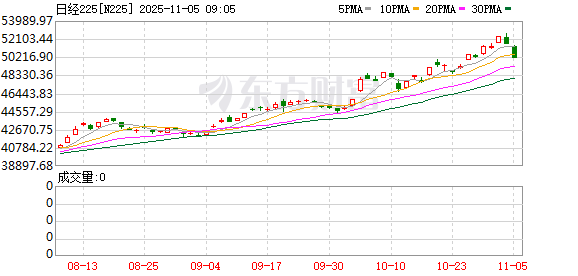
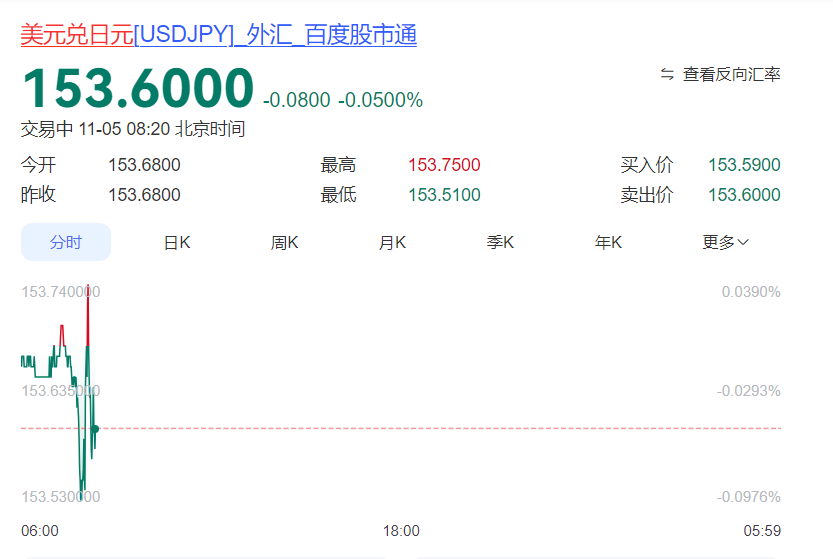
11月5日,日韩股市低开低走,截至8:16,日经225指数跌超2%,韩国综合指数跌超3%,失守4000点。 在全球人工智能估值担忧之际,韩国KOSPI指数下跌4%。芯片股走低,SK海力士股价下跌5.5%,报 554,000韩元。三星电子股价下跌4.6%,报100,100韩元。截至8:47,韩国已暂停KOSPI市场的程序化交 易卖单。 日本芯片相关股票也不例外,多股大幅下跌,此前美国科技股遭抛售。软银集团股价下跌10%,爱德万 测试下跌8.6%。 10年期日本国债收益率下跌1个基点,至1.66%。 11月4日,美元兑日元一度向下触及154,截至发稿,已跌至153.6。 但到了近两日,日韩股市均走低。对此,李徽徽认为,日韩股市下跌的核心原因是"高位拥挤交易+美 元再走强"共同作用,一方面,日经与KOSPI此前连创新高,午后触发获利了结与量化平仓,技术性回 撤放大;另一方面,美元指数抬头、美元/日元再度逼近154,市场担心干预与政策不确定性,风险偏好 降温;韩国则叠加AI链涨幅过大、对美股AI波动高度敏感,放大波动性。 展望未来,李徽徽表示,若日本政府的财政方案与改革清单推进,或带动日本东证股价指数(Topix)的 ...

日韩股市跳水,半导体重挫,软银跌10%,三星电子跌4%
2 1 Shi Ji Jing Ji Bao Dao· 2025-11-05 01:03
Market Performance - Japanese and Korean stock markets experienced significant declines, with the Nikkei 225 index dropping over 2% and the KOSPI index falling more than 3%, losing the 4000-point mark [1] - The KOSPI index saw a 4% drop amid global concerns over AI valuations, with major chip stocks like SK Hynix and Samsung Electronics declining by 5.5% and 4.6% respectively [1] - The Nikkei 225 index had previously reached a six-day high above 50,000 points, accumulating a 15% increase since early October and a 29.8% rise year-to-date [3] Factors Influencing Market Trends - Three main factors affecting the Asia-Pacific stock markets include the strengthening US dollar, recent sell-offs in high-flying assets, and ongoing trade uncertainties despite some positive signals [3] - The strong performance of the Japanese stock market was attributed to three pillars: improved corporate governance, the new NISA tax scheme, and expectations of fiscal expansion [4] - The Korean stock market's rise was linked to the recovery of the AI industry and improved order volumes, alongside anticipated corporate governance reforms [4] Recent Market Corrections - The recent downturn in Japanese and Korean markets is attributed to "crowded trades at high levels" and a strengthening dollar, leading to profit-taking and technical pullbacks [5] - Concerns over potential currency intervention and policy uncertainties have dampened risk appetite, particularly in the context of the Korean market's sensitivity to fluctuations in US AI stocks [5] Future Outlook - Future performance of the Japanese market may depend on the government's fiscal plans and reforms, which could bolster value stocks and domestic demand [5] - The Korean market faces overheating risks and will be influenced by the US AI cycle and domestic capital expenditure trends [5] - There is an increasing risk of Japanese authorities intervening in the currency market, although actual intervention is not expected in the short term [5]
SoftBank shares plunge 10% as Asian AI-linked stocks slide on valuation jitters
CNBC· 2025-11-05 00:34
Group 1 - Asian AI-linked companies' shares declined, influenced by falling U.S. peers and investor concerns over high valuations in crowded trades [1] - SoftBank's shares dropped by 10%, while Advantest's shares fell over 8% [1] - Palantir's shares decreased by approximately 8% despite exceeding third-quarter expectations, reflecting negative sentiment towards high valuations in the AI sector [2]



2025年第43周:数码家电行业周度市场观察
艾瑞咨询· 2025-11-05 00:07
Group 1: Travel Industry Insights - The rise of AI travel assistants is marked by platforms offering smart itinerary planning and real-time suggestions to address traditional travel pain points [3] - AI assistants like Tongyi Qianwen and Ctrip AI excel in transportation, accommodation, and attraction planning, but still lack in dining recommendations and time management [3] - The commercial potential of AI travel assistants lies in transaction closure, data-driven recommendations, and content operations, although scaling monetization will take time [3] Group 2: AI and Gaming Market - The application of generative AI in gaming is rapidly increasing, with an 800% surge in related games on Steam, and an expected 20% share of new game releases this year [4] - Major companies like Tencent and NetEase are accelerating their investments in AI-native games, which are categorized into four types: enhancement, auxiliary development, research, and strategy [4] - Despite early-stage technology, AI has significantly improved development efficiency, contributing to revenue growth for companies like Tencent and 37 Interactive Entertainment [4] Group 3: Surgical Robotics Market - Domestic surgical robots are gaining traction, with a market share of 48.89% for laparoscopic robots in 2024, challenging foreign brands like Da Vinci [5] - Price advantages (30%-40% lower than imports) and policy support (medical insurance coverage in 28 provinces) are accelerating the replacement process [5] - Challenges include reliance on imported core components and the need for technological breakthroughs to transition from price competition to technological leadership [5] Group 4: Smart Bathroom Market - The smart toilet market is experiencing growth driven by policies like "old-for-new" exchanges and mandatory certifications, with a year-on-year growth exceeding 30% [6] - Consumer demand is shifting from mere availability to quality, prompting companies to innovate in health, comfort, and smart technology [6] - Despite growth, the industry faces challenges such as insufficient user awareness and inconsistent service standards [6] Group 5: Home Appliance Market Dynamics - The national subsidy policy has injected vitality into the home appliance market, with 300 billion yuan allocated for the fourth quarter [7] - However, market growth is sluggish, and the diminishing marginal effects of policies may lead to a decline in sales for products like air conditioners and refrigerators [7] - Companies need to shift focus from price competition to product value, service innovation, and technological upgrades to navigate the post-subsidy era [7] Group 6: AI in Entertainment - The introduction of AI actress Tilly Norwood has sparked controversy in Hollywood, with strong opposition from the industry regarding the use of actor data without consent [8] - The situation highlights the conflict between technology and traditional industries, raising concerns about AI's impact on employment and artistic value [8] Group 7: Global Smart Companionship Market - The global smart companionship market is projected to exceed $140 billion by 2030, with China and Singapore as key markets [9] - Experts emphasize the importance of user experience, cultural adaptation, and ethical governance in the development of AI products [9] Group 8: AI Glasses Market - The AI glasses market is experiencing rapid growth, with a 54.9% increase in global shipments, particularly in China, but faces high return rates of 30%-50% due to functionality issues [11] - The industry struggles with a lack of unified standards and challenges in balancing performance, weight, and battery life [11] Group 9: Robotics Industry Trends - The robotics industry is entering a rapid development phase, with companies collaborating to accelerate technology implementation [12] - The competition is shifting from technological rivalry to ecosystem collaboration, although challenges remain in mass production and cost control [12] Group 10: Washing Machine Market Innovations - The focus on partitioned washing machines is growing, driven by consumer health care demands and strategic initiatives from leading brands [13] - Companies are expected to innovate around user health needs and technology to gain a competitive edge in the market [13] Group 11: Electric Vehicle Industry - The two-wheeled electric vehicle sector is undergoing a smart transformation, with AI technology enhancing user experience [15] - However, challenges such as functionality gaps and safety concerns persist, necessitating a focus on core user pain points [15] Group 12: AI in Healthcare - The healthcare sector is a key focus for AI applications, with policies driving the integration of AI in precision diagnosis and health management [16] - Companies like Neusoft are leveraging large model technology to improve efficiency, although challenges related to data quality and standardization remain [16] Group 13: AI Toys Market - The AI toy market is rapidly evolving, combining IP with AI features to enhance companionship and educational value [17] - Despite high market interest, issues such as high return rates and poor user experience need to be addressed for commercial success [17] Group 14: AI Glasses in Tourism - AI glasses have gained popularity during the recent holiday season, used for photography and navigation, but face challenges in comfort and battery life [19] - Major tech companies are entering the market, but the glasses must overcome integration issues with smartphones to achieve widespread adoption [19] Group 15: AI Investment Trends - OpenAI is forming partnerships with tech giants to enhance AI infrastructure, leading to significant market capitalization growth [20] - However, the aggressive investment strategy poses risks, as it relies on long-term returns from AI technologies [20] Group 16: Robotics in Hospitality - CloudMinds Technology has become the first publicly traded company focused on service robots, achieving a market share of 6.3% in the hotel sector [23] - Despite revenue growth, the company faces challenges related to profitability and market competition [23] Group 17: Automotive Industry Challenges - Mercedes-Benz is facing declining sales in China, prompting a partnership with ByteDance to integrate AI technology into new electric models [24] - The collaboration aims to enhance user experience but faces stiff competition from local manufacturers [24] Group 18: AI and Robotics Collaboration - The collaboration between Huawei's Seres and ByteDance aims to advance the development of intelligent robots in the automotive sector [25] - The market for humanoid robots is expected to grow rapidly, with Chinese companies playing a significant role [25] Group 19: AI in Lithium Battery Sector - ByteDance is entering the lithium battery market, leveraging AI to accelerate research and development [31] - The company aims to reduce costs and create an ecosystem that integrates energy storage solutions [31] Group 20: Autonomous Driving Investments - Didi has secured significant funding for its autonomous driving initiatives, focusing on L4 technology and commercial operations [32] - The company aims to leverage its extensive network to enhance its position in the autonomous driving market [32] Group 21: Semiconductor Industry Performance - TSMC reported a revenue of $33.1 billion, driven by demand for AI chips and advanced manufacturing processes [28] - The company maintains a strong position in the AI chip supply chain, benefiting from increased capital expenditures [28]

万亿估值、百亿亏损,OpenAI开启商业化狂飙
3 6 Ke· 2025-11-04 23:02
Core Insights - OpenAI is rapidly advancing its commercialization efforts, driven by the need to convert its significant user base into sustainable revenue streams [1][3][5] - The company is launching multiple products, including the Atlas AI browser and Sora 2, to expand its ecosystem and enhance user engagement [1][7][11] Commercialization Strategy - OpenAI's annual recurring revenue is approximately 70% derived from ChatGPT subscription fees, but only 5% of its 800 million monthly active users are paying customers [3][12] - The company is shifting from a cautious approach to a more aggressive "broad net" strategy, aiming to integrate AI into various aspects of users' digital lives [5][9] Financial Pressures - OpenAI faces immense financial pressure due to rising operational costs and significant investments required for AI development, with a reported net loss of $13.5 billion in the first half of 2025 [16][18] - The company has entered into a costly agreement with Microsoft, requiring an additional purchase of $250 billion in Azure cloud services, which is seen as a "separation fee" for losing preferential access to computing resources [12][18] Funding and Valuation - OpenAI has raised substantial funding, including $6.6 billion in 2024 and $40 billion in 2025, leading to a valuation of $300 billion, making it one of the highest-valued private companies globally [13][18] - Despite impressive revenue growth of 200% year-on-year, the company must establish a clear and credible profit model to support its soaring valuation, which is nearing $1 trillion [18][19] Future Plans - OpenAI is considering an initial public offering (IPO) as early as the second half of 2026, with discussions around raising at least $60 billion, which could push its valuation beyond $1 trillion [18][19]

英伟达联手德电建欧洲最大AI中心:部署多达1万块GPU,使德国AI算力提升50%!
Hua Er Jie Jian Wen· 2025-11-04 13:14
Core Insights - Nvidia and Deutsche Telekom announced a joint investment of €1 billion ($1.2 billion) to build a data center in Munich, aimed at enhancing AI infrastructure in Europe, with operations expected to start in Q1 2026 [1] - The project is expected to increase Germany's AI computing capacity by approximately 50%, marking a significant step for Europe's largest economy to develop a local AI ecosystem and compete with the US [1] - The investment highlights the substantial gap between Europe and the US in AI infrastructure, as the project plans to deploy up to 10,000 GPUs, which is a small fraction compared to the scale of US facilities [1][2] Group 1: Project Overview - The data center will host AI models and connect them to industrial data sources, facilitating faster adoption of AI technology in the industrial sector [2] - SAP, as Europe's largest software company, will provide its business technology platform and applications for the data center [2] - The project is part of a broader strategy to leverage Europe's manufacturing strengths rather than competing in consumer technology with the US and China [2] Group 2: Challenges and Comparisons - Germany's ambition in AI faces challenges, as previous attempts to create a national AI champion have struggled, with local startup Aleph Alpha shifting away from building large AI models [2] - The scale of the project is smaller than other announced European data center plans, such as OpenAI's Stargate project in Norway and Brookfield's $10 billion project in Sweden [3] - The EU has announced a €200 billion plan to support AI development in the region, aiming to double the capacity for such systems in the next 5 to 7 years [4] Group 3: Strategic Importance - The facility is described as one of the largest data centers in Europe, with Nvidia's CEO emphasizing the introduction of AI and robotics technology to transform German industry [4] - Deutsche Telekom is actively negotiating with other companies to promote the construction of AI super factories, although progress has been slow [4]

英伟达与德国电信宣布投资10亿欧元在德建数据中心
Sou Hu Cai Jing· 2025-11-04 12:35
Core Insights - Nvidia and Deutsche Telekom are investing €1 billion (approximately ¥82.04 billion) to build a data center in Germany to enhance the infrastructure supporting complex AI systems in Europe [1][3] - The facility is set to become one of the largest data centers in Europe and is expected to be operational by Q1 2026 [3] - The project aims to significantly boost Germany's AI computing power by approximately 50% [3] Investment and Collaboration - The announcement was made during an event in Berlin, attended by executives from Nvidia, Deutsche Telekom, SAP, Deutsche Bank, and German government officials, highlighting Germany's efforts to build a local AI ecosystem to compete with the US and China [3] - Nvidia's CEO emphasized that this project represents one of the largest deployments of advanced AI chips in Germany [3] - SAP will provide its business technology platform and related applications for the data center, which will expand an existing facility in Munich [3] Comparison with US Investments - The project will utilize up to 10,000 GPUs, which is a small fraction compared to the 500,000 GPUs planned for a data center project in Texas by SoftBank, OpenAI, and Oracle [4] - The EU announced a €200 billion plan to support AI development, aiming to triple the region's AI computing power over the next five to seven years [4] - Deutsche Telekom is in discussions with other companies to participate in building "AI gigafactories," but progress has been slow due to unclear project evaluation and funding allocation processes by the EU [4]
重组、谋上市,OpenAI更自由了
Sou Hu Cai Jing· 2025-11-04 11:32
Core Insights - OpenAI is preparing for an initial public offering (IPO) with a potential valuation of up to $1 trillion, which could be the largest IPO in history [3][6] - The company has recently completed a restructuring, converting investments from various stakeholders into common stock, thereby removing previous financial return limitations [3][5] - OpenAI's relationship with Microsoft is shifting from a "deep integration" to a "free collaboration" model, allowing both companies to partner with others [3][12] Company Structure and Financials - OpenAI has transitioned from a purely non-profit organization to a dual-structure model that balances commercial and public interest goals, with a non-profit entity controlling a public benefit corporation (PBC) [5][8] - The restructuring allows OpenAI to eliminate profit caps, enabling a more traditional capital structure and greater profit potential [8][15] - OpenAI's financial report indicates a revenue of approximately $4.3 billion for the first half of 2025, a 16% increase from the previous year, but also a loss of $13.5 billion due to high R&D costs [16][17] Market Position and Product Development - OpenAI's flagship product, ChatGPT, has significantly contributed to its revenue, with additional income streams from API licensing and partnerships with Microsoft [20][29] - The company is exploring various monetization strategies, including increased pricing for its latest models and integrating e-commerce functionalities into ChatGPT [20][23] - OpenAI's recent product launches, such as Sora, demonstrate its ongoing innovation and potential to disrupt multiple industries, including entertainment and education [27][29] Future Outlook - OpenAI aims to achieve significant milestones in AI research, including the development of fully autonomous AI researchers by 2028 [30][31] - The company is expected to generate substantial revenue from its AI Agent products, with projections estimating $29 billion by 2029 [29] - The market generally views OpenAI's restructuring and future plans positively, recognizing its technological leadership and commercial potential [33]

宏观研究:PMI走势弱于季节性,投资性需求应阶段性加力
China Post Securities· 2025-11-04 06:26
Economic Indicators - The manufacturing PMI for October is at 49.0%, down 0.8 percentage points from the previous month, indicating a contraction below the seasonal level[12] - The production index within the PMI fell to 49.7%, a decrease of 2.2 percentage points, also below the seasonal norm[14] - New orders index for manufacturing is at 48.8%, down 0.9 percentage points, reflecting a decline in demand[15] Supply and Demand Dynamics - Effective demand remains insufficient, leading to inventory accumulation and suppressing price recovery, with the PPI expected to decline by approximately 2.5% year-on-year in October[26] - The new export orders index is at 45.9%, down 1.9 percentage points, indicating a significant drop in external demand[15] - The construction sector's PMI is at 49.1%, with new orders index rising to 45.9%, suggesting some resilience despite seasonal slowdowns[23] Policy Outlook - The "anti-involution" policy is expected to intensify if prices weaken further, aiming to curb disorderly competition[3] - Financial support for stabilizing the real estate sector may include lowering mortgage rates and expanding the use of special bonds for purchasing existing homes[3] - Anticipation of early deployment of fiscal policies for the next year, including setting government debt limits and issuing long-term special bonds[3] Risks - Potential risks include rising overseas sovereign debt risks and geopolitical conflicts, which could impact domestic economic stability[4]