创想三维

Search documents
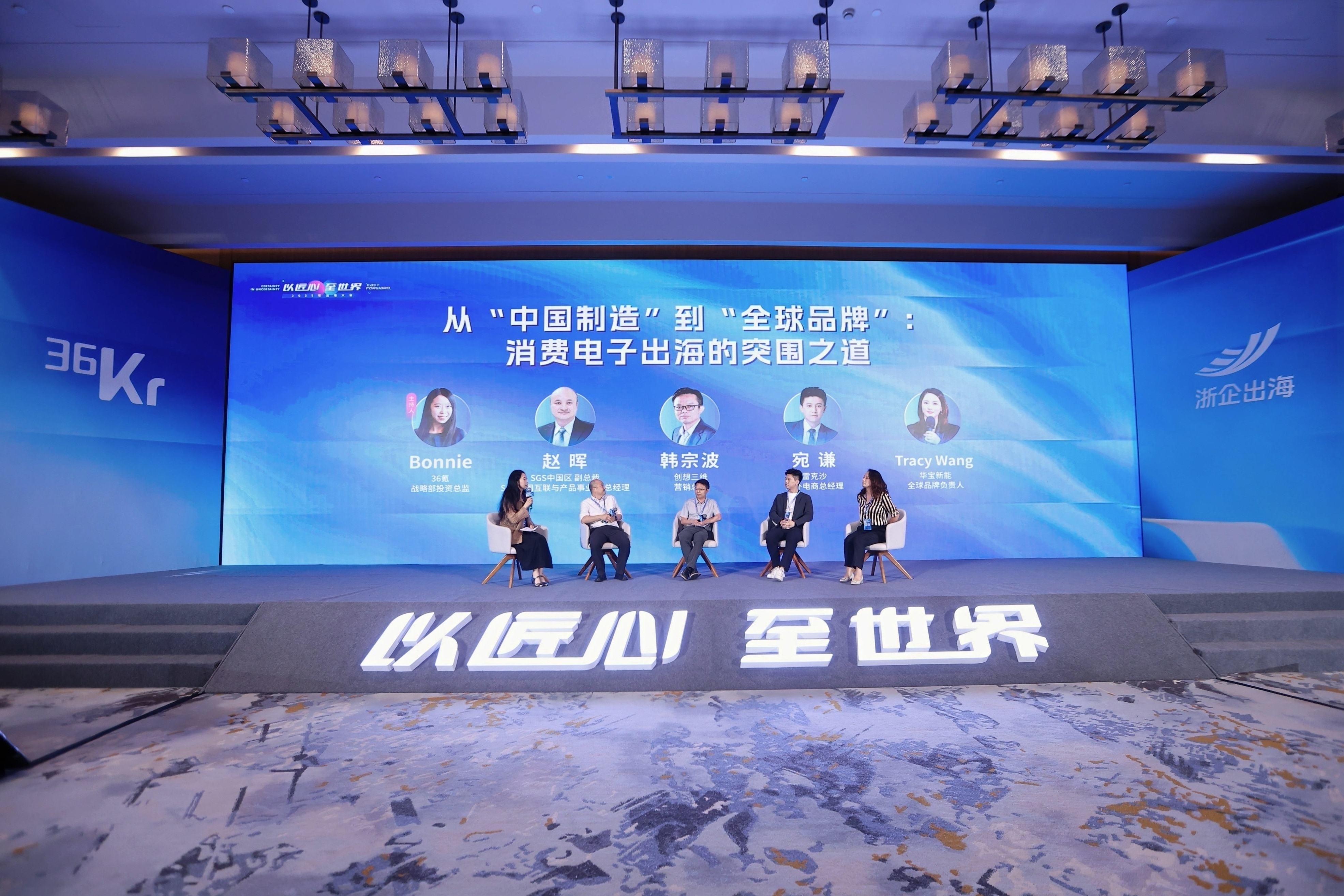
圆桌对话:从“中国制造”到“全球品牌”:消费电子出海的突围之道 | 2025出海大会
3 6 Ke· 2025-07-30 07:12
Core Insights - The "2025 'From Craftsmanship to the World' Outbound Conference" will be held in Hangzhou, focusing on globalization and outbound strategies for various industries, including consumption, technology, e-commerce, finance, and new energy [1] - The conference will feature discussions on the collaboration between products, technology, and ecosystems to enhance sustainable outbound capabilities for enterprises [1] Group 1: Conference Overview - The conference is organized by 36Kr and Qiantang Construction Group, with support from various governmental bodies [1] - It will include a main venue and sub-venues, featuring over 10 keynote speeches and 5 roundtable discussions [1] - The event aims to provide a global development path for enterprises navigating globalization challenges [1] Group 2: Roundtable Discussion Highlights - Key themes discussed include consumer electronics, outbound strategies, and breakthrough paths [5] - Participants include executives from SGS, Chuangxiang Sanwei, Lexar, and Huabao New Energy, each sharing insights on their companies and experiences [5][6] - The discussion emphasizes the importance of innovation, compliance, and sustainability in the consumer electronics sector [7] Group 3: Key Trends and Market Insights - Executives identified key trends in consumer electronics as intelligence, compliance, and sustainable development [7] - The focus is shifting from price competitiveness to brand value and trust-building with consumers [8] - Different markets have unique value anchors, with Europe prioritizing sustainability, North America focusing on practical applications, and Japan emphasizing utility and detail [8] Group 4: Company Strategies - Huabao New Energy integrates ESG principles into its core strategy, achieving significant energy savings and carbon reduction [10] - Lexar emphasizes innovation and service scenarios, launching products based on user feedback and maintaining a strong offline presence [12][13] - Chuangxiang Sanwei aims to adapt its products for various printers and enhance customer engagement through membership and social media activities [14] Group 5: Market Entry Strategies - For small and medium enterprises, leveraging established certification paths can facilitate entry into mature markets like Europe and North America [15] - Emerging markets may offer simpler regulatory frameworks, allowing for quicker market access [15]

谁是3D打印界的小米?
雷峰网· 2025-07-29 10:26
Core Viewpoint - The article discusses the competitive landscape of the 3D printing industry, particularly focusing on the emergence of Tuozhu as a significant player and its impact on existing companies like Chuangxiang Sanwei. It highlights the potential for investment opportunities and the challenges faced by traditional players in adapting to the new market dynamics [4][38]. Group 1: Investment Interest in Tuozhu - Recent rumors about Tencent's potential investment in Tuozhu have sparked interest among investors, although the validity of these rumors remains uncertain [4]. - Many investors are eager to invest in Tuozhu, viewing it as a leading company in the 3D printing sector, akin to Apple in its industry [5][6]. - The competition for investment opportunities has led some investors to seek alternative targets within the 3D printing space, looking for the next "Xiaomi" [5][6]. Group 2: Potential Competitors to Tuozhu - xTool is identified as a strong competitor to Tuozhu, having transitioned from the education sector to become a leader in laser engraving and is now entering the 3D printing market [7][8]. - xTool's projected revenue for 2024 is estimated to be between 2.3 to 2.4 billion RMB, with a net profit margin of 12%, but its high Pre-IPO valuation of 6 billion RMB raises concerns among investors [8][9]. - Another competitor, Chasing, has launched a 3D printing project called Atom Rebuild, which has completed a multi-million angel round of financing and is expected to release products soon [10][11]. Group 3: Chuangxiang Sanwei's Market Position - Chuangxiang Sanwei has historically dominated the consumer-grade 3D printing market, with projected revenues of 2.8 billion RMB and a net profit of 100 to 200 million RMB for 2024 [15]. - Despite its advantages, Chuangxiang Sanwei faces challenges due to its equal shareholding structure among founders, which could lead to decision-making inefficiencies and internal conflicts [18][19]. - The company has struggled to innovate and keep pace with Tuozhu, which has rapidly gained market share and established a strong brand presence [20][21]. Group 4: Industry Dynamics and Changes - The emergence of Tuozhu has prompted a shift in the 3D printing industry, with traditional players like Chuangxiang Sanwei adapting their strategies to remain competitive [24][30]. - Chuangxiang Sanwei is transitioning from a "machine sea strategy" to focusing on high-quality products, influenced by Tuozhu's market approach [26][27]. - The competitive landscape has led to a reevaluation of product development and marketing strategies among established companies, with many adopting a follower strategy in response to Tuozhu's innovations [30][38]. Group 5: IPO Prospects for Chuangxiang Sanwei - Chuangxiang Sanwei is reportedly preparing for an IPO in Hong Kong, aiming to become the first consumer-grade 3D printing company to go public [32]. - The company has faced challenges in its IPO journey, including a potential reduction in valuation from 6 billion RMB to 4.5 billion RMB due to market conditions [34][35]. - Successful IPO could provide Chuangxiang Sanwei with additional capital for R&D and production, benefiting the overall industry [36].

AI深度赋能3D打印产业 普及化、智能化、自主化成趋势
Shang Hai Zheng Quan Bao· 2025-07-22 18:16
Group 1 - The Ministry of Industry and Information Technology of China has released the 2025 work points for the integration of informatization and industrialization, emphasizing the "Artificial Intelligence + Manufacturing" initiative to support enterprises in applying general and industry-specific large models and intelligent agents in key scenarios [2] - The 3D printing industry is identified as a key area for AI empowerment, showing trends of popularization, intelligence, and autonomy, with expectations for higher quality development as the "Artificial Intelligence + Manufacturing" initiative is implemented [2][3] - AI is lowering the barriers to entry for 3D printing, enabling ordinary users to design complex products through AI-assisted modeling, thus transforming 3D printing from a professional tool to a mass-market application [3] Group 2 - The user demographic for consumer-grade 3D printing devices is shifting from skilled "makers" to a broader audience, including ordinary users, as AI facilitates the entire process from modeling to final product [3] - The application scenarios for consumer-grade 3D printing are expanding into areas such as home DIY, education, and maker spaces, driven by AI's ability to assist users in completing the entire workflow independently [3] - In the industrial-grade 3D printing sector, the integration of AI is transforming personalized medical applications from "experience-driven" to "data-driven" approaches, exemplified by digital orthodontic treatment models supported by 3D printing and AI technologies [3] Group 3 - AI is rapidly integrating into the manufacturing processes of 3D printing, enhancing the intelligence, efficiency, and usability of 3D printing equipment, thereby reshaping the competitive landscape and technological barriers of the industry [5] - AI is involved in the entire lifecycle of 3D printing products, from design to production and post-processing, reconstructing the industry's value and transitioning 3D printing from a "manufacturing tool" to an "intelligent system" [5] - AI's closed-loop control capabilities monitor defects during printing and adjust parameters in real-time, improving the stability and success rate of 3D printing operations [5] Group 4 - The development model of 3D printing is evolving from "human + experience" to "autonomous operation" through the integration of AI and digital twin technologies [6] - AI-driven software can detect various parameters of 3D printed products in real-time, allowing for corrective actions to be taken during the printing process [6] - The future of 3D printing is expected to achieve a fully AI-driven design process, creating a new manufacturing ecosystem characterized by on-demand creation and zero waste [7] Group 5 - The production chain of 3D printing is predicted to evolve towards a "fully autonomous operation" model, integrating AI and digital twin technologies for comprehensive decision-making regarding product processes, structures, and performance [8] - AI large models are anticipated to possess capabilities for perception, planning, execution, and reflection in the production of 3D printed products, leading to a platform system that enables "one-click printing" with zero human intervention [8]
报告显示:深圳市42家独角兽企业总估值达1599亿美元
Xin Hua Cai Jing· 2025-07-18 14:35
Group 1 - As of the end of 2024, Shenzhen has 42 unicorn companies with a total valuation of $159.9 billion, with 4 super unicorns contributing 56% of this valuation [1][2] - Shenzhen leads the nation with 13 newly recognized unicorn companies, showcasing its strength in nurturing innovative enterprises [1][2] - The unicorn companies in Shenzhen are primarily concentrated in "hard technology" sectors, with 66.7% of them operating in cutting-edge technology fields [1] Group 2 - The newly recognized unicorn companies include notable names such as Honor (smart hardware), Yuanxiang XVERSE (VR/AR), and Laplace (clean energy), with Laplace being a newly listed company in the same year [2] - Shenzhen's government emphasizes the importance of supporting unicorn companies, having introduced a comprehensive action plan for 2025-2027 to foster their development [2] - The city aims to enhance its innovation ecosystem by optimizing policies, capital, and talent to become a globally influential hub for unicorn companies [2]
长城战略咨询武文生:深圳独角兽企业领跑全国!新增第一!
Feng Huang Wang Cai Jing· 2025-07-18 03:40
Core Insights - The report highlights Shenzhen's dominance in the growth of unicorn companies, with 42 unicorns and a total valuation of $159.9 billion, making it the city with the highest number of new unicorns in China [2][4] Group 1: Unicorn Growth in Shenzhen - In 2024, Shenzhen added 13 new unicorns, accounting for 25% of the national total, while the overall number of new unicorns in China decreased by 10 [2] - Shenzhen's unicorns have an average valuation of $3.71 billion, with a total valuation of $159.9 billion [2] - The city is the only one among "Beijing, Shanghai, Shenzhen, Guangzhou, and Hangzhou" to see an increase in unicorn numbers [2] Group 2: Characteristics of Shenzhen Unicorns - Shenzhen's unicorns are heavily concentrated in "hard technology" sectors, with 66.7% of them in advanced technology fields such as integrated circuits and robotics [4] - The average number of authorized invention patents per unicorn in Shenzhen is 141, significantly higher than Beijing and Shanghai [4] - Over 80% of Shenzhen's unicorns are global companies, expanding through overseas factories and marketing networks [4] Group 3: Regional Distribution - Nanshan District leads with 20 unicorns, accounting for 48% of the total, followed by Bao'an District with 7 [5] - Nanshan's unicorns contribute a valuation of over $70 billion, representing 45% of the total valuation [5] - The presence of two super unicorns, Honor and Huolala, significantly boosts the valuation in the Futian District, which has a total valuation of over $49 billion [5]
新质驱动·未来领航——2025中国(深圳)独角兽企业大会即将开幕
Feng Huang Wang Cai Jing· 2025-07-16 09:51
Core Insights - The 2025 China (Shenzhen) Unicorn Enterprise Conference will be held on July 17-18, focusing on "New Quality Driven, Future Navigation" to inject dynamic energy into Shenzhen's development as a global benchmark city [1] Group 1: Event Overview - The conference is guided by Shenzhen's government departments and co-hosted by various financial and research institutions, aiming to discuss innovation and development [2] - Key highlights include the debut of the "GEI China Unicorn Enterprise Research Report 2025" and the "Shenzhen Unicorn and Gazelle Enterprises Research Report 2025," which will provide quantitative analysis and insights into unicorn growth and industry trends [2] - The establishment of the "Unicorn Enterprise Service Alliance" will create a comprehensive service network for innovative enterprises, covering policy alignment, financing support, and market expansion [2] Group 2: Value Creation - The conference will feature a "1+5" series of activities to create a full-chain connection platform, including a unicorn enterprise report release, cooperation negotiation meetings, and financing roadshows to address core needs of enterprises at various development stages [3] - Discussions will include topics such as "Intelligent Economy New Blue Ocean" and "Patient Capital and Enterprise Resilience Growth," fostering valuable exchanges of ideas [3] Group 3: Shenzhen's Unicorn Landscape - Shenzhen's unicorns are characterized by "hard technology" and innovation, with notable companies like Honor and Laplace leading in sectors such as integrated circuits and robotics [4] - The concentration of unicorns in cutting-edge technology fields, particularly in hard tech sectors, positions Shenzhen as one of the most active regions for unicorn enterprises in China [4] Group 4: Industry Participation - The conference will attract over a hundred unicorn enterprises from across the country, covering more than 20 cutting-edge sectors including AI, robotics, and biomedicine [5] - Local unicorns will serve as a vibrant "city business card," showcasing Shenzhen's industrial foundation and service networks, as well as successful case studies of companies transitioning from local to broader markets [5] Group 5: Growth and Policy Support - Shenzhen's unicorn growth trajectory reflects a shift from following to leading in innovation, with several companies successfully going public in recent years [6] - The introduction of the "Shenzhen Action Plan for Supporting the Development of Gazelle and Unicorn Enterprises (2025-2027)" will inject policy benefits into the innovation ecosystem, facilitating collective breakthroughs among unicorns [7]

把握景气投资,重视消费级3D打印(250714)
Soochow Securities· 2025-07-14 08:30
Core Insights - The demand for consumer-grade 3D printing is thriving, with domestic manufacturers leading product supply [1][2] - The consumer-grade 3D printing market in China has seen significant growth, with a CAGR of nearly 20% from 2020 to 2024, reaching over 40 billion yuan by 2024 [2][9] - The global sales of consumer-grade 3D printers are expected to continue growing, with 96% of these printers sourced from Chinese suppliers in 2024 [2][11] Market Dynamics - The user base for consumer-grade 3D printing primarily consists of small B-end customers, with applications in DIY production, educational institutions, and various industries [3][4] - The reduction in product prices and the lowering of operational barriers have allowed consumer-grade 3D printing to penetrate deeper into lower-tier markets [3][4] Industry Development - The consumer-grade 3D printing industry chain is maturing, with prices becoming more accessible to a broader customer base due to technological advancements and local supply chain efficiencies [4][5] - Leading companies like Tuozhu Technology have significantly reduced entry-level product prices, with their A1mini model priced below 1500 yuan after subsidies [4][5] Technological Advancements - The IP economy is driving consumer-grade 3D printing into new markets, with personalized demand for products like collectible figures increasing [5][8] - Companies are innovating by combining 3D printing with laser engraving and developing new materials to expand application scenarios [5][8] Key Players and Market Structure - The consumer-grade 3D printing machine manufacturers are experiencing rapid performance releases due to both domestic and export demand [5][8] - The report outlines key companies in the 3D printing industry, including Tuozhu Technology, which is a significant player in the consumer-grade segment [17][18]
3亿众筹创新高3D打印“三国杀”
2 1 Shi Ji Jing Ji Bao Dao· 2025-06-25 07:11
Group 1 - The core viewpoint is that 3D printing is rapidly gaining recognition and acceptance in the consumer market, with significant crowdfunding success for products like the eufyMake E1 printer [2][3][5] - Anker Innovation's eufyMake E1 has raised over $42 million on Kickstarter, marking it as the highest crowdfunding project across all categories on the platform [2] - The production of 3D printing equipment saw a year-on-year increase of 40% in May, following a 60.7% increase in April, indicating strong market growth [3] Group 2 - The eufyMake E1 is positioned as the world's first consumer-grade UV printer capable of full-color 3D texture printing, addressing previous limitations of traditional UV printers [5][6] - Anker Innovation aims to fulfill high expectations for product delivery following the crowdfunding success, as past experiences with 3D printers have not met customer satisfaction [6] - The competitive landscape includes companies like TuoZhu and ChuangXiang SanWei, which have established themselves in the consumer-grade 3D printing market [7] Group 3 - The 3D printing market is characterized by two main technologies: Fused Deposition Modeling (FDM) and Stereolithography (SLA), with FDM currently holding a market share approximately 4-5 times that of SLA [7] - Anker Innovation's revenue is significantly derived from North America, which constitutes 45% of its income, making it crucial for the company to navigate tariff impacts effectively [9] - The average price increase for Anker's top 100 products on Amazon in the U.S. was about 30% as of April 2025, indicating potential short-term sales impacts due to pricing strategies [9]

【私募调研记录】远望角投资调研奥比中光
Zheng Quan Zhi Xing· 2025-06-25 00:10
Group 1 - The core viewpoint of the news is that Yuanwangjiao Investment has conducted research on a listed company, Aobi Zhongguang, which specializes in 3D vision sensors and solutions for various applications, including commercial services, elderly rehabilitation, home care, logistics, and agricultural intelligence [1] - Aobi Zhongguang collaborates with leading companies in the 3D printing sector, such as Chuangxiang Sanwei, to develop consumer-grade 3D printers and high-precision handheld 3D scanners [1] - The company provides the Gemini330 series depth cameras for Tiangong Robotics, and the new Gemini435Le is applied in smart logistics and industrial automation [1] Group 2 - Aobi Zhongguang's 3D vision sensors enhance the intelligence of robots, enabling functionalities such as spatial scanning, skeleton/gesture tracking, positioning navigation, and 3D reconstruction [1]

惠州打造算力“航母”AI产值三年4600亿
Nan Fang Du Shi Bao· 2025-06-19 23:12
Core Viewpoint - Huizhou aims to accelerate the innovation and development of the artificial intelligence and robotics industry through a comprehensive action plan, targeting significant growth in various sectors by 2027 [2] Group 1: Industry Development Goals - By 2027, the output value of intelligent terminal products is expected to reach approximately 400 billion yuan, with core components of artificial intelligence achieving around 45 billion yuan and breakthroughs in high-end electronic new materials reaching about 15 billion yuan [2] - The plan includes the establishment of over 200 typical application scenarios for artificial intelligence and robotics, and the formation of more than three industrial clusters in the region [2] Group 2: Talent and Funding Support - The establishment of an artificial intelligence and robotics industry guidance fund is proposed to attract social capital to key areas of the industry chain, focusing on early, small, long-term, and hard technology investments [3] Group 3: Action Plans - The action plan includes ten major initiatives, such as enhancing the supply of AI smartphones and wearable devices, with a goal of gathering no less than 300 enterprises in the AI terminal industry chain by 2027 [5][6] - Support for leading companies in developing high-energy density batteries and other products to upgrade intelligent equipment manufacturing, aiming to gather over 100 intelligent equipment enterprises by 2027 [7][8] - The cultivation of high-end electronic new materials, including copper-clad laminates and aluminum foils, with support for companies to enhance their competitiveness in these sectors [9] Group 4: Core Component Development - The plan emphasizes the construction of an artificial intelligence component industry cluster, focusing on industries such as intelligent terminals and new energy storage, with support for various enterprises to expand their production capabilities [10] Group 5: AI Computing and Support Infrastructure - The establishment of a green computing center in the Greater Bay Area is planned, focusing on AI computing power to support applications and training in the region [11] Group 6: Innovation and Application - The goal is to cultivate over 500 high-tech enterprises in the AI sector by 2027, promoting the application of AI technologies across various industries [12][13] - The plan aims to create over 20 benchmark enterprises in digital applications, driving deep applications of AI in sectors like government services and manufacturing [13] Group 7: Data and Ecosystem Development - The initiative includes the creation of a national pilot for industry data space, focusing on high-value data sets in manufacturing and intelligent connected vehicles, with a target of nurturing over 50 data-driven enterprises by 2027 [15]