软银集团

Search documents
马斯克最大对手完成变身,史上最大IPO即将来临|硅谷观察
Xin Lang Cai Jing· 2025-10-29 23:40
Core Insights - OpenAI has successfully completed its restructuring plan, transitioning from a non-profit AI research organization to a profit-oriented technology giant, with an estimated valuation of $500 billion, making it the highest-valued startup globally and a leader in the generative AI industry [2][3] - The CEO of OpenAI, Sam Altman, indicated that an initial public offering (IPO) is the most likely path for the company post-restructuring, with market expectations suggesting a potential IPO in 2027, which could set a record for fundraising [2][3] Company Transformation - OpenAI's transformation from a non-profit to a profit-driven entity has significantly altered its trajectory and the broader AI industry landscape, marking a dramatic evolution over the past decade [3][4] - The restructuring involved a new dual-layer structure, where the former subsidiary OpenAI LP became OpenAI Group PBC, a public benefit corporation, while still being overseen by a non-profit foundation [5][6] - The non-profit foundation retains control over the profit-oriented entity, holding approximately 26% of the shares, valued at about $130 billion, while Microsoft remains the largest external investor with a 27% stake, valued at around $135 billion [5][6] Strategic Partnerships and Market Impact - OpenAI has formed strategic partnerships with major tech companies like Microsoft, Oracle, NVIDIA, AMD, and Broadcom, which have significantly influenced the AI ecosystem and driven stock price increases for these companies [3][4] - Following the announcement of OpenAI's restructuring, NVIDIA and Microsoft's stock prices surged, reaching new market capitalizations of $5 trillion and $4 trillion, respectively [3][4] Financial Commitments and Future Projections - OpenAI has committed to substantial financial agreements, including a $300 billion cloud computing deal with Oracle and a $250 billion commitment to purchase cloud services from Microsoft Azure [19][21] - The company is projected to face significant financial challenges, with anticipated losses of at least $14 billion in 2025, as its infrastructure investments exceed $1.5 trillion, highlighting a potential funding gap [22][23] Competitive Landscape - Elon Musk's opposition to OpenAI's transformation has been marked by multiple lawsuits and attempts to undermine the company's progress, reflecting a competitive rivalry that has intensified since Musk's departure from the board [11][12][15] - Musk's new venture, xAI, aims to compete directly with OpenAI, having quickly developed its own AI model, Grok, which is gaining traction in the market [16][17]



OpenAI Restructure Paves Way for IPO and AI Spending Spree
Yahoo Finance· 2025-10-29 18:35
Core Insights - OpenAI is transitioning to a more traditional for-profit structure to attract investment, which is seen as a significant step towards simplifying capital raising efforts [1][2][5] - The restructuring is expected to enable OpenAI to invest heavily in AI infrastructure, with a commitment of $1.4 trillion for data centers, chips, and talent [3][10] - The relationship between OpenAI's nonprofit and for-profit entities remains complex, with concerns about governance and influence over operations [6][9] Group 1: Restructuring and Investment - OpenAI has completed its restructuring after extensive negotiations with Microsoft and state regulators, marking a new phase for the company [4][5] - The company aims to raise unprecedented amounts of capital through venture funding, debt, and a potential public offering, with SoftBank's backing contingent on the successful completion of the restructure [2][3] - OpenAI's nonprofit will hold a 26% equity stake in the for-profit entity, valued at approximately $130 billion based on a $500 billion valuation [10] Group 2: Governance and Control - The nonprofit board retains some control over the for-profit board, but practical challenges exist in exercising this power, particularly in firing directors [7][8] - Concerns have been raised about the nonprofit's ability to maintain independence and accountability in the new structure [9] - An independent panel will determine when OpenAI reaches artificial general intelligence, impacting Microsoft's revenue share and access to OpenAI's research [13][14] Group 3: Future Directions and Challenges - OpenAI plans to allocate $25 billion towards AI initiatives that address health and mitigate risks associated with AI technology [10] - The ongoing relationship with Microsoft is complicated, with a 27% stake in the new for-profit entity but unclear terms regarding access to intellectual property [12][14] - Elon Musk continues to challenge the restructuring, indicating potential legal battles ahead [14]
日韩接力投资美国 美股成最大赢家? 日本前脚砸下5500亿美元 韩国立马抛出3500亿美元
智通财经网· 2025-10-29 13:22
Core Insights - The recent trade agreement between the U.S. and South Korea marks a significant development following the framework agreement reached in July, with South Korea committing to invest $350 billion in the U.S. [1][2] - The agreement includes a reduction of tariffs on South Korean goods from 25% to 15%, which is expected to enhance the competitiveness of South Korean manufacturers in the U.S. market [2][3] - The deal is projected to have a positive impact on the U.S. economy, particularly in boosting manufacturing capacity and non-farm employment, aligning with the "America First" policy [5] Investment Commitments - South Korea plans to invest $1.5 billion in the shipbuilding sector and an additional $2 billion in various investments in the U.S. [1][2] - The investment will be supported by domestic and international commercial banks, which will help alleviate pressure on the Korean won in the foreign exchange market [3] - The agreement stipulates that annual investments from South Korea will be capped at $20 billion, ensuring that it does not negatively impact the currency market [2][3] Tariff Adjustments - The agreement ensures that tariffs on semiconductors will not be less favorable than those applied to Taiwan, a key competitor for South Korean chip manufacturers [3] - The reduction in tariffs is expected to significantly benefit South Korean automotive manufacturers, who have faced disadvantages due to higher tariffs compared to Japanese counterparts [2][3] Economic Impact - The trade agreement is anticipated to serve as a catalyst for the ongoing bull market in U.S. stocks, as substantial investments from Japan and South Korea are expected to bolster market valuations and fundamentals [4] - The investment plans from Japan and South Korea cover a wide range of sectors, including energy and AI, which are crucial for the U.S. economy [4] - The U.S. government will establish an investment committee to oversee the selection of projects, enhancing the execution and compliance of the investment agreements [4]
烧200亿,赌7万亿:揭秘奥特曼的AI权力游戏 | 深网
Jin Shi Shu Ju· 2025-10-29 12:44
Core Insights - Sam Altman is leading a significant "AI gamble" that has rapidly increased the market value of major tech partners, with Oracle's stock rising over 36% and Nvidia, AMD, and Broadcom seeing market value increases of approximately $170 billion, $70 billion, and $150 billion respectively within a short period [2] - OpenAI aims to create a massive AI acceleration cluster requiring 26 gigawatts of power, equivalent to two times the peak summer electricity demand of New York City, forming a trillion-dollar closed-loop ecosystem [2] - Altman's strategy involves reducing dependency on Nvidia while establishing partnerships with Oracle, Nvidia, AMD, and Broadcom to secure computing power and ensure operational safety [2][3] Financial Overview - OpenAI has 8 million active users and an annual recurring revenue of $13 billion, but is projected to incur an operating loss of $8 billion in the first half of 2025, with total losses expected to exceed $20 billion for the year [4] - The company has signed over $1 trillion in computing agreements with major tech firms, raising questions about how a consistently loss-making startup can sustain such a massive financial commitment [4][6] - OpenAI's cash burn forecast for 2025 has been increased from $7 billion to $8 billion, with cumulative cash consumption expected to reach $115 billion by 2029 [4] Strategic Partnerships - OpenAI's collaboration with Nvidia includes building AI data centers with at least 10 gigawatts of capacity, supported by a potential $100 billion investment from Nvidia's CEO Jensen Huang [5] - A separate agreement with AMD involves issuing up to 160 million stock warrants, representing about 10% of AMD's equity, in exchange for deploying up to 6 gigawatts of AMD computing power [6] - OpenAI's partnerships are characterized by a "financial time travel" strategy, leveraging grand visions to attract investment from major tech players [6] Market Dynamics - OpenAI's user base has surpassed 800 million, with API calls reaching 60 billion per minute, highlighting the demand for computing power that exceeds Nvidia's annual GPU production [7] - The cost disparity between Nvidia and AMD GPUs presents a significant financial incentive for OpenAI to diversify its supplier base, with AMD's MI300X priced at $15,000 compared to Nvidia's H100 at $30,000 [7] - OpenAI's reliance on Nvidia is evident, with 80% of its computing expenditure directed towards Nvidia, raising concerns about supply chain vulnerabilities [7] Future Outlook - Altman's ambition extends beyond Silicon Valley, with plans for a $500 billion infrastructure investment initiative called "Stargate" involving major players like SoftBank and Oracle [12] - OpenAI is preparing for a new round of debt financing, aiming to raise hundreds of billions for infrastructure development, despite currently being unprofitable [12] - Analysts express caution regarding Altman's approach, suggesting it could lead to either a new economic era or a prolonged downturn [13]


集体暴涨!特朗普,突发!
Zheng Quan Shi Bao Wang· 2025-10-29 11:38
Market Overview - Japanese stock market saw a significant rise, with the Nikkei 225 index increasing by over 1000 points, a gain of more than 2% [1][2] - South Korean stock market also surged, with the KOSPI index reaching a new high of 4084 points, closing up 1.76% [5] Company Highlights - Advantest Corporation's stock surged over 20%, reaching a new high, with a market capitalization nearing 17 trillion yen. The company raised its operating profit forecast for the fiscal year ending March 2026 by 25% to 374 billion yen, driven by demand for chip testing equipment in the AI sector [1][2] - SoftBank Group's shares rose by nearly 5%, reaching a historical high, following a restructuring agreement between OpenAI and Microsoft, which may pave the way for OpenAI's IPO and provide funding for ambitious projects [2][3] - SK Hynix's stock increased by over 7%, achieving a new high, with third-quarter operating profit surpassing 1 trillion won for the first time, driven by rising prices of DRAM and NAND flash memory, as well as strong demand from the AI server industry [1][5] Investment and Financial Performance - OpenAI's valuation has surged from 300 billion to 500 billion dollars following SoftBank's additional investment of 22.5 billion dollars, part of a total planned investment of 30 billion dollars [2][3] - SK Hynix reported a third-quarter operating profit of 11.38 trillion won, a year-on-year increase of 62%, and a net profit of 12.59 trillion won, more than doubling from the previous year [5] - The demand for high-bandwidth memory (HBM) and enterprise solid-state drives (SSDs) is expected to continue growing, driven by AI infrastructure development [6] Strategic Partnerships and Future Outlook - U.S. President Trump emphasized the importance of U.S.-South Korea economic relations and encouraged increased investment in U.S. industries during a speech at the APEC summit [1] - NVIDIA's CEO Jensen Huang expressed optimism about OpenAI's potential IPO, suggesting it could be one of the most successful public offerings in history [3][4] - Huang also indicated plans to announce significant news with South Korean companies during his visit, highlighting the strong partnerships within the Korean ecosystem [7]
集体暴涨!特朗普,突发!
券商中国· 2025-10-29 11:29
Group 1: Market Performance - Japanese stock market saw significant gains, with the Nikkei 225 index rising by 2.17%, surpassing 1000 points increase, reaching a new historical high [1][3] - South Korean stock market also experienced a surge, with the KOSPI index increasing by 1.76%, reaching a new historical high of 4084 points [6] Group 2: Company Highlights - Advantest Corporation's stock surged by over 20%, reaching a new high, with a market capitalization approaching 17 trillion yen, driven by increased demand for chip testing equipment due to AI investments [1][3] - SoftBank Group's stock rose nearly 5%, reaching a historical high, following the announcement of a restructuring agreement between OpenAI and Microsoft, which may facilitate OpenAI's potential IPO [1][3] - SK Hynix's stock increased by 7.10%, with the company reporting a third-quarter operating profit of 11.38 trillion won, a 62% year-on-year increase, attributed to rising prices of DRAM and NAND flash memory [6][7] Group 3: AI and Technology Developments - OpenAI's restructuring is part of its strategy to leverage generative AI technology, which is expected to transform the global economy, with significant interest from investors and partners [4][5] - NVIDIA's stock rose nearly 5%, with a market capitalization exceeding $4.88 trillion, driven by a reported $500 billion in orders for AI processors [5] - The demand for high-bandwidth memory (HBM) and enterprise SSDs is expected to continue growing due to AI projects, positively impacting companies like SK Hynix [7][8]

完成“盈利化重组”,OpenAI为IPO“铺平道路”,AI最高潮要来了?
Hua Er Jie Jian Wen· 2025-10-29 09:23
Core Insights - OpenAI and Microsoft have completed a corporate restructuring, transitioning OpenAI into a Public Benefit Corporation (PBC), paving the way for a future IPO [1][2][3] Group 1: Corporate Restructuring - Microsoft retains a 27% stake in OpenAI, valued at $135 billion based on OpenAI's latest valuation of $500 billion [1] - The restructuring allows both companies greater freedom to collaborate with competitors, while Microsoft maintains rights to OpenAI's intellectual property until 2032 [1][7] - OpenAI's CEO Sam Altman indicated that an IPO is a potential option due to significant capital needs, with projected expenses of $115 billion by 2029 against an expected revenue of only $13 billion this year [1][2] Group 2: Financial Obligations and IPO Path - OpenAI has incurred $1.4 trillion in financial obligations due to commitments related to data center capacity, creating a substantial funding gap [2] - The restructuring converts early investors' investments into common equity and removes caps on financial returns, enhancing appeal to public market investors [2][3] - The restructuring has received approval from the attorneys general of Delaware and California, ensuring compliance with OpenAI's original mission to benefit humanity [2] Group 3: Stakeholder Impact - OpenAI Foundation now holds 26% of the restructured company, valued at $130 billion, and aims to support health research and address AI-related societal risks [3] - The restructuring has alleviated concerns for investors and employees, with SoftBank's board approving a $22.5 billion investment contingent on the restructuring's completion [6] - Current and former employees collectively hold about 26% of the equity, reflecting strong market demand for shares as the company's valuation rises [6] Group 4: Intellectual Property and Collaboration - Microsoft retains permanent rights to use OpenAI's intellectual property developed before 2032, including models related to general artificial intelligence (AGI) [7] - OpenAI is now free to collaborate with other cloud service providers without Microsoft's permission, while Microsoft can also engage with OpenAI's competitors [7] - The agreement explicitly excludes consumer hardware, allowing OpenAI to independently explore new business opportunities in AI-driven consumer electronics [7]
FICC日报:“十五五”规划建议稿发布-20251029
Hua Tai Qi Huo· 2025-10-29 05:06
Report Industry Investment Rating - Overall neutral rating for commodities and stock index futures [3] Core Viewpoints - The release of the "15th Five-Year Plan" draft proposal boosts market sentiment, with an expected average GDP growth rate of around 5% during the 15th Five-Year Plan period. The US economy shows resilience and its easing pace is relatively smooth, but the US government shutdown event needs continuous attention [1] - For commodities, it is advisable to wait and see in the near term. Pay attention to possible breakthrough directions for non-ferrous metals and energy in the second half of inflation. Different commodity sectors have different fundamentals [2] Summary by Related Catalogs Market Analysis - The "15th Five-Year Plan" draft proposal aims for significant achievements in high - quality development, etc. The full text of the proposal includes measures like promoting key technology breakthroughs and boosting consumption. The A - share market had a volatile day with the Shanghai Composite Index briefly reaching 4000 points [1] - US economic data shows resilience, with the Fed's easing pace potentially smooth. The US government shutdown has entered its 28th day, and the "small non - farm" ADP launches weekly employment data [1] Commodity Analysis - Black sector is dragged down by downstream demand expectations. Non - ferrous sector is limited in long - term supply but boosted by global easing expectations. Energy supply is expected to be relatively loose in the medium term. Chemicals' "anti - involution" space is worth attention. Agricultural products are driven by tariffs and inflation expectations. Precious metals may enter a consolidation phase [2] Strategy - Overall neutral rating for commodities and stock index futures [3] Important News - The "15th Five-Year Plan" proposal includes education expansion and improvement measures. China and ASEAN sign the FTA 3.0 upgrade protocol. The central bank and the CSRC announce relevant policies [4] - The market rebounds, with about 3000 stocks rising and a trading volume of 1.66 trillion. Japan announces a list of potential projects for a $550 billion investment in the US. Mexico and the US extend the agreement deadline [4] Macroeconomic Charts - Include charts such as the Citi Economic Surprise Index, 30 - major - city commercial housing transaction area, and US - China bond spreads [5][7][10] Interest Rate Charts - Include charts of 10Y and 2Y US - China bond spreads [14] Foreign Exchange Charts - Include charts of the US dollar's weekly exchange - rate changes against major currencies and the US dollar index [17][18]
日美发布4千亿美元对美投资清单 聚焦AI电力
日经中文网· 2025-10-29 03:16
Core Viewpoint - The U.S. and Japan have announced a joint investment initiative totaling approximately $400 billion, focusing on four key sectors: nuclear power generation, AI power development, strengthening AI infrastructure, and critical minerals [2][5]. Group 1: Investment Areas - The joint investment initiative highlights four primary sectors for collaboration: nuclear power generation, AI power development, strengthening AI infrastructure, and critical minerals [2]. - Eight Japanese companies have expressed interest in participating in the projects outlined in the joint investment initiative [2]. Group 2: Key Participants - Notable Japanese corporate leaders, including Masayoshi Son from SoftBank, attended a signing ceremony for the investment projects [4]. - Other participating companies include Hitachi, Panasonic, Mitsubishi Electric, and Toshiba, indicating a strong interest from major players in the Japanese market [4]. Group 3: Project Details - The largest project under consideration involves the construction of new nuclear reactors, with a potential scale of up to $1 trillion, leveraging Japan's expertise in reactor construction and component manufacturing [5][6]. - The collaboration includes the establishment of small modular reactors (SMRs) by GE Vernova and Hitachi, with a project scale also reaching up to $1 trillion [5]. Group 4: Energy Demand and AI - The increasing demand for electricity driven by generative AI is a significant factor in this collaboration, with predictions indicating that U.S. data center electricity consumption could quadruple by 2030 [6]. - The partnership aims to enhance the electricity infrastructure necessary to support major tech companies like OpenAI and Google, positioning Japan to develop a second major industry following automotive [6]. Group 5: Future Participation - The Japanese Minister of Economy, Trade and Industry indicated that the companies listed in the joint initiative are not yet confirmed participants, and others may join in the future [7].
2900亿,孙正义又开赌了
3 6 Ke· 2025-10-29 03:14
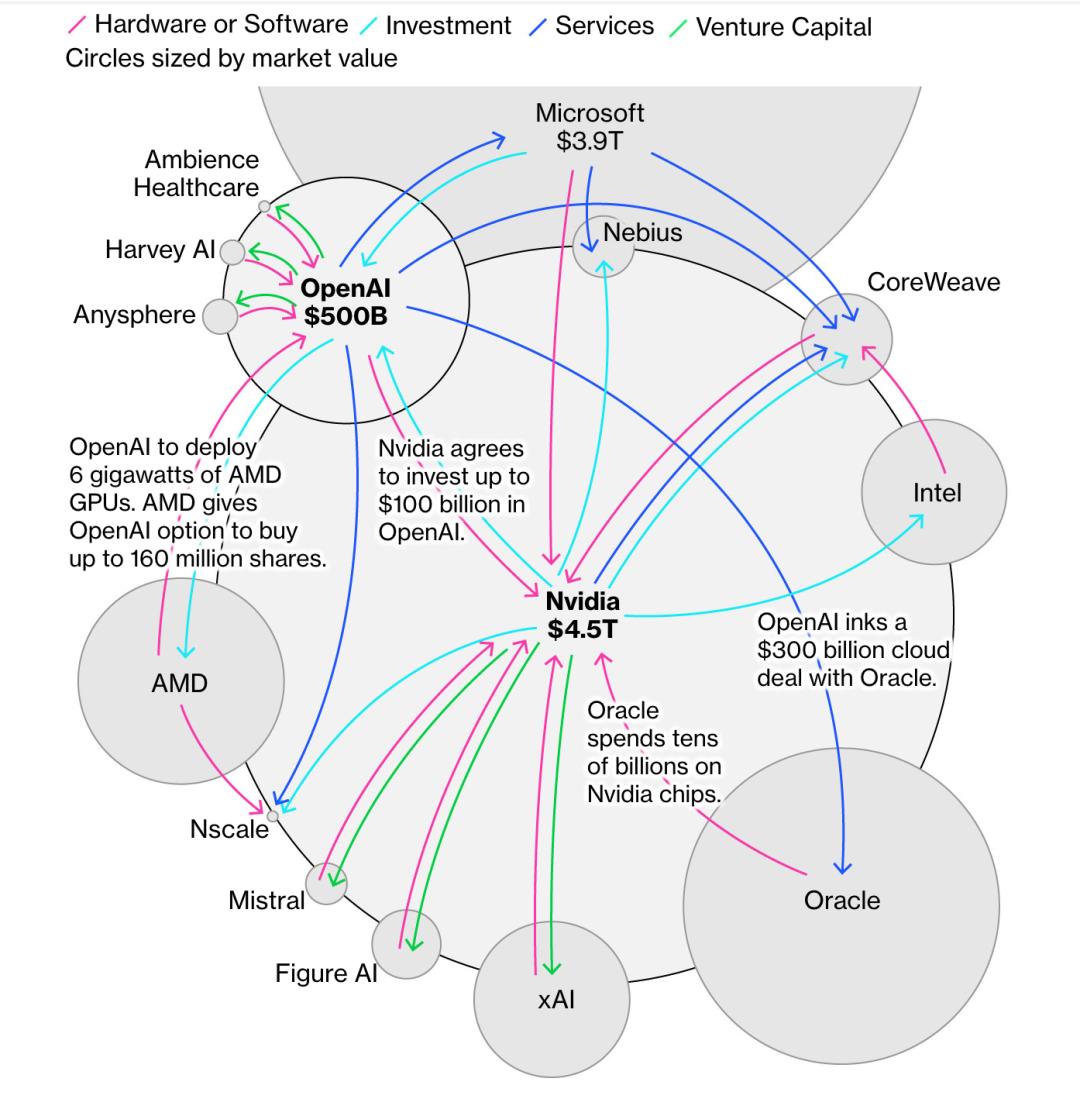
Core Insights - OpenAI has officially completed a capital restructuring, with SoftBank investing approximately $41 billion, signaling a strong bet on the future of AI [1][7] - SoftBank's CEO, Masayoshi Son, expressed ambitions to lead the global "super artificial intelligence" era within the next decade, indicating a shift from being a passive investor to an active organizer in the AI industry [1][8] - The restructuring transforms OpenAI from a non-profit entity to a profit-driven organization while maintaining oversight by a newly established non-profit foundation [2][10] Restructuring Details - The non-profit OpenAI Foundation will hold 26% of the equity in the newly formed OpenAI Group PBC, valued at approximately $130 billion based on a $500 billion valuation [2][3] - OpenAI's co-founder and CEO, Sam Altman, will not hold any equity post-restructuring, a move aimed at eliminating potential conflicts of interest [2][10] - Microsoft emerges as a significant beneficiary, acquiring about 27% equity, valued at approximately $135 billion, reflecting a nearly tenfold increase in its initial investment of $13.8 billion [2][3] Microsoft Agreement - The new agreement extends Microsoft's access to OpenAI's latest AI models and products until 2032, while introducing an "AGI verification mechanism" for future claims of achieving AGI [3][6] - Microsoft has relinquished its exclusive procurement rights for OpenAI's new cloud business, allowing OpenAI to engage with other cloud providers, notably Oracle, which has a $300 billion cloud service agreement with OpenAI [3][14] - This strategic shift allows OpenAI to adopt a "dual-cloud" strategy, utilizing both Azure and Oracle for its computational needs [3][14] SoftBank's Investment Strategy - SoftBank's investment in OpenAI totals approximately $30 billion, with a staged funding approach that includes an initial $10 billion commitment and an additional $22.5 billion contingent on the successful restructuring [7][9] - This investment positions SoftBank to acquire a 5-10% stake in OpenAI, enhancing its strategic involvement in the AI sector [7][9] - The broader financing round led by SoftBank totals $41 billion, with contributions from other investors like Dragoneer and Thrive [7][9] Industry Dynamics - The restructuring reflects a broader trend in the U.S. AI industry, characterized by collaboration among major players, with capital, hardware, software, and data interlinked [13][16] - Companies like NVIDIA and AMD are crucial suppliers of GPU power, while cloud providers like Microsoft and Oracle compete to meet the growing demands of AI model training [14][16] - OpenAI's role as a central player in this ecosystem highlights its importance in transforming hardware and computational resources into AI capabilities [15][16] Ethical Considerations - The restructuring raises concerns about OpenAI's commitment to its original mission of benefiting humanity, as it transitions towards a profit-driven model [10][11] - Critics, including co-founder Elon Musk, have voiced concerns over OpenAI's alignment with its founding principles, suggesting a shift towards becoming a profit-centric entity [10][11] - The balance between profit motives and ethical responsibilities remains a critical challenge for OpenAI as it navigates its new structure [10][11]