
洋河股份

Search documents
破界之后,长三角酒业如何协同共生?
Sou Hu Cai Jing· 2025-06-25 07:12
Core Insights - The competitiveness of the Yangtze River Delta wine industry is fundamentally driven by the release of policy dividends, activation of geographical endowments, and the reconstruction of the industrial chain [12] Economic Overview - In 2024, the GDP of the Yangtze River Delta is projected to exceed 33 trillion yuan, contributing 25% of the national economic total with only 4% of the land [3] - The region accounts for approximately 17% of the national population and contributes about 30% to national economic growth [3] - In the first quarter of 2025, the GDP surpassed 8 trillion yuan, maintaining a strong position in the national economic landscape [3] Industry Performance - Anhui's liquor industry reported significant growth in 2024, with revenue from large enterprises reaching 37.58 billion yuan, a year-on-year increase of 9.2%, and total profits of 12.77 billion yuan, up 13.2% [4] - Jiangsu faced challenges with a 9.83% decline in liquor production and a 16.69% drop in profits, contrasting with the expansion of production capacity by major brands [4] - Zhejiang's yellow wine industry, which holds 57.02% of national production, has seen leading companies achieve growth through structural upgrades and market expansion [4] Challenges Faced - Shanghai's local brands are struggling, with Jin Feng Wine achieving a revenue of 578 million yuan, a mere 0.87% increase, while its net profit plummeted by 94.49% [5] - Shanghai Gui Jiu experienced an 82.54% revenue drop to 285 million yuan, resulting in a net loss of 217 million yuan due to issues like related party transactions and funding chain disruptions [5] - The overall industry faces challenges such as aging consumers in Zhejiang and insufficient penetration into younger markets [6] Strategic Insights - The integration strategy of the Yangtze River Delta aims to break down administrative barriers and inject new momentum into the wine industry [8] - The region's economic foundation and scale have fostered the rise of Su and Hui wines, with leading companies capturing over 60% of their respective provincial markets [7] - Experts suggest that the wine industry must shift from provincial strategies to a more integrated approach, leveraging the strengths of the entire region [10] Future Opportunities - The Yangtze River Delta's one-integration strategy presents a historic opportunity for the wine industry, emphasizing the need for collaboration and resource sharing among provinces [9] - Initiatives include establishing a smart brewing innovation chain, promoting integrated cultural tourism, and developing new green consumption scenarios [9] - The region's unique economic and demographic characteristics create a fertile ground for high-end consumption, with significant potential for growth in premium wine markets [8]






六部门19项举措促消费,消费板块“慢牛”趋势有望重现,主要消费ETF(159672)回调蓄势
Xin Lang Cai Jing· 2025-06-25 05:10
Group 1 - The core viewpoint of the news is that the People's Bank of China and other departments have issued guidelines to support and expand consumption, which is expected to stimulate the consumer sector and lead to a rebound in the consumption index [1] - The major consumption index (000932) has shown mixed performance among its constituent stocks, with Dongpeng Beverage leading the gain at 0.87% and Shanxi Fenjiu experiencing the largest decline at 1.49% [1] - The major consumption ETF (159672) has decreased by 0.27%, with the latest price at 0.75 yuan, indicating a slight downturn in the ETF market [1] Group 2 - As of June 24, 2025, the major consumption ETF has achieved a maximum monthly return of 24.35% since its inception, with an average monthly return of 4.87% during the months it has risen [2] - The major consumption ETF has a management fee rate of 0.50% and a custody fee rate of 0.10%, which are among the lowest in comparable funds [2] - The latest price-to-earnings ratio (PE-TTM) of the major consumption index is 18.86, indicating that it is at a historical low, being lower than 96.83% of the time over the past year [2] Group 3 - As of May 30, 2025, the top ten weighted stocks in the major consumption index account for 67.15% of the index, with Yili Group and Kweichow Moutai being the top two [3] - The top ten stocks include Kweichow Moutai (10.39% weight), Yili Group (9.86% weight), and Wuliangye (9.12% weight), among others [4]
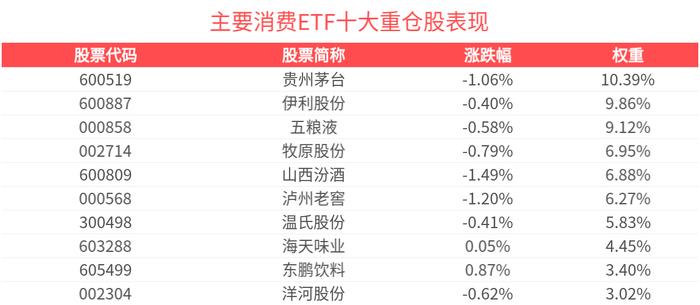
29度五粮液要来了!白酒巨头为啥纷纷“押注”低度酒?
Nan Fang Du Shi Bao· 2025-06-24 09:34
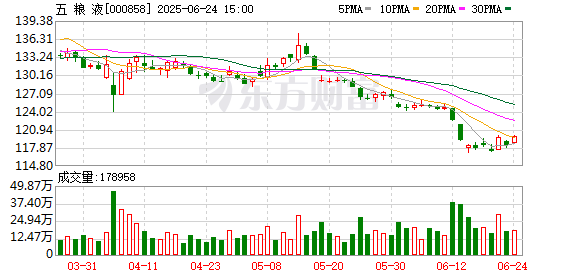
Core Insights - The introduction of the 29-degree Wuliangye aims to cater to the preferences of younger consumers, aligning with the company's strategy to capture the future of the liquor market [2][3] - Wuliangye's management emphasizes the importance of understanding the values and consumption habits of the younger generation to redefine the role of liquor in contemporary life [7] Product Development - Wuliangye is launching the 29-degree product as part of a broader strategy to appeal to younger demographics, focusing on taste and aesthetic preferences [2] - Market research conducted in June revealed that the target audience's preferences include flavor richness and price points ranging from 200 to over 500 yuan [2] - The company is integrating trendy design elements into product packaging to attract younger consumers [3] Market Strategy - Wuliangye is establishing a dedicated team to implement its youth-oriented strategy, ensuring efficient market response and operational management [3] - The company is expanding its distribution channels and creating diverse consumption scenarios, such as trendy experience stores that combine music and dining [3] Marketing and Communication - Wuliangye is enhancing its presence on social media platforms like Douyin and Xiaohongshu, and participating in popular TV shows to increase brand visibility [4] - The company is focusing on creating engaging marketing campaigns that resonate with young consumers, such as events centered around marriage celebrations [4][5] Consumer Insights - A survey of 1,000 young consumers revealed that only 19% prefer traditional liquor, while over 60% favor lower-alcohol options, indicating a significant shift in consumer preferences [6] - The trend towards lower alcohol content is seen as a long-term strategy for the liquor industry, with companies like Luzhou Laojiao also adapting to these changing preferences [6] Industry Trends - The low-alcohol liquor market is projected to grow significantly, with estimates suggesting a market size exceeding 740 billion yuan by 2025, reflecting a compound annual growth rate of 25% [8] - Many liquor companies are adopting dual strategies of core product development and innovation to capture the younger market segment [8] Competitive Landscape - The competition in the low-alcohol segment is intensifying, with various companies investing in marketing, channel transformation, and consumer engagement strategies [9]

酒水行业观察:茅台强化渠道管控,官媒纠正“一刀切”式禁酒政策
Qi Lu Wan Bao· 2025-06-24 02:38
Group 1: Company Strategies - Moutai Group has reached an agreement with JD.com and Alibaba to strengthen channel control, requiring e-commerce platforms to integrate into Moutai's channel ecosystem and combat unfair competition, particularly low-price diversion and counterfeit products [2] - Wuliangye announced its first interim dividend in nearly 20 years, amounting to 10 billion yuan, and committed to a cash dividend rate of no less than 70% annually from 2024 to 2026 [2] - Yanghe has launched a new high-line light bottle liquor strategy, targeting the mass market with a simplified packaging and three-year aged base liquor, in collaboration with JD.com [2] Group 2: Market Trends - The low-alcohol liquor market is experiencing explosive growth, with Meituan's 618 sales data showing a more than tenfold increase in white liquor transaction value year-on-year, and JD.com reporting a 40% increase in white liquor sales, particularly in low-alcohol and fruit wine categories [3] - The China Alcoholic Drinks Association predicts that the low-alcohol liquor market will exceed 74 billion yuan by 2025, with a compound annual growth rate of 25% [3] Group 3: Industry Policies - State media has criticized the "one-size-fits-all" ban on alcohol policies in certain regions, emphasizing the need to protect the reasonable demands of the catering industry and avoid equating violations with a ban on normal dining [4]
“苏超”激战正酣 企业如何踢出赛事经济“一记好球”
Zheng Quan Ri Bao Zhi Sheng· 2025-06-23 16:38
Group 1 - The "Su Super" league has gained significant popularity, with a record attendance of 36,712 spectators for a match between Changzhou and Nanjing, including over 10,000 attendees from outside the province [1] - The league has positively impacted local consumption in tourism, dining, and other sectors, with companies leveraging diverse channels to enhance their visibility and contribute to a robust event economy [1][2] - Companies like China Dinosaur Park have creatively engaged with the league by launching themed products and events, enhancing their brand presence [1] Group 2 - Jiangsu Tianmu Lake Tourism Co., Ltd. has utilized the league's popularity to promote local tourism, offering free tickets and encouraging visitors to explore the region [2] - The league has attracted a growing number of sponsors, increasing from 6 to 21 sponsors since its inception, including notable companies like Jiangsu Longpan Technology Co., Ltd. [3] - The sponsorship landscape includes various consumer and technology companies, which are leveraging the league's visibility to enhance brand recognition and consumer engagement [3] Group 3 - The provincial football league is entering a new development phase, with significant potential for growth in the event economy [4] - Companies are encouraged to innovate and integrate deeply into the event economy through sponsorships, advertising, and collaborative efforts to enhance brand awareness and consumer affinity [4]


白酒挤泡沫,压垮经销商
凤凰网财经· 2025-06-23 13:35
Core Viewpoint - The white liquor market, once a booming industry, is now facing a significant downturn, with prices collapsing and many distributors struggling to survive [6][7][9]. Group 1: Market Conditions - The wholesale market for white liquor is experiencing a severe decline, with merchants opening later and logistics failing to meet demand [3][4]. - High-end liquor prices have dropped significantly, with the price of 500ml Flying Moutai falling to 1968 yuan, breaching the 2000 yuan warning line [6]. - The market is witnessing a "multi-layer collapse," with even mid-range liquor prices falling below wholesale levels [7][8]. Group 2: Distributor Experiences - Distributors like Hai Tao are shifting to a "fast in, fast out" business model, avoiding inventory management due to low profits [4][5]. - Many distributors report drastic declines in sales, with some not opening for business due to lack of orders [13][14]. - The reliance on non-market consumption, such as government events, has severely impacted sales following recent regulations [17]. Group 3: Historical Context - The white liquor industry previously thrived during a period of rising incomes and consumption, leading to rampant expansion and speculation [19][20]. - The pandemic acted as a "black swan" event, disrupting the market and leading to increased inventory levels among producers [24][26]. - The once-reliable high-end brands are now facing a crisis of confidence, with the belief in brands like Moutai eroding [29][37]. Group 4: Changing Consumer Preferences - Younger consumers are gravitating towards diverse alcoholic beverages, leading to a decline in white liquor consumption [47][48]. - The perception that young people do not drink white liquor is challenged by the idea that they simply lack access to quality products [49][52]. - Aging management in liquor companies is failing to adapt to changing market dynamics, further alienating younger consumers [55][56]. Group 5: Future Outlook - The industry is undergoing a significant shift, with a potential return to rational consumption patterns and a cleansing of excess inventory [45][46]. - Distributors are exploring new business models, with some opting to create their own brands to escape the pressures of traditional distribution [60][61]. - Despite the current challenges, some industry players remain optimistic about the future, believing that the market will stabilize over time [63][64].

洋河与京东达成战略合作,发力59元光瓶酒背后有何深意?
Nan Fang Du Shi Bao· 2025-06-23 12:16
Core Viewpoint - Yanghe's recent launch of the "High Line" light bottle liquor marks a strategic shift towards the low-end market, aiming to complement its high-end offerings and address changing consumer demands [2][6][7]. Group 1: Product Launch and Strategy - Yanghe introduced the "High Line" light bottle liquor at a strategic launch event in Baotou, Inner Mongolia, with a price point of 59 yuan [2]. - The company aims to create a new strategic framework called "One Box, One Light" by combining light bottle liquor with boxed liquor, targeting a "super hundred billion" market [2][6]. - Yanghe's chairman emphasized the dual focus on being a "famous liquor" and a "popular liquor," indicating a shift in growth strategy [2][6]. Group 2: Collaboration with JD.com - Yanghe has formed a strategic partnership with JD.com to enhance supply chain optimization, new product development, and digital marketing [3][4]. - The collaboration aims to leverage JD.com's extensive user base of 600 million active users and 30 million liquor consumers to effectively reach target demographics [4][6]. Group 3: Market Context and Competition - The light bottle liquor market is projected to reach approximately 950 billion yuan, with an annual growth rate of 10%-15%, potentially exceeding 1.5 trillion yuan in the future [4][6]. - Yanghe's light bottle liquor will compete directly with established brands like Fenjiu, Wuliangye, and Luzhou Laojiao, which have their own light bottle offerings [5][6]. Group 4: Financial Performance and Challenges - Yanghe is facing significant financial pressures, with a projected revenue of 28.876 billion yuan for 2024, a decrease of 12.83% year-on-year, and a net profit of 6.673 billion yuan, down 33.37% [6]. - The company has acknowledged challenges such as brand rejuvenation, narrowing channel profit margins, and inventory pressures since 2021 [6][7]. Group 5: Consumer Trends and Future Outlook - Current consumer trends indicate a rational approach to alcohol consumption, with a growing preference for affordable light bottle liquors [4][7]. - Yanghe's strategy to enter the light bottle market is seen as a necessary adaptation to the evolving landscape of consumer preferences and market dynamics [7].

京东超市持续打造211规格系列独家货盘 与洋河携手拉动白酒行业新增长
Sou Hu Cai Jing· 2025-06-23 12:05
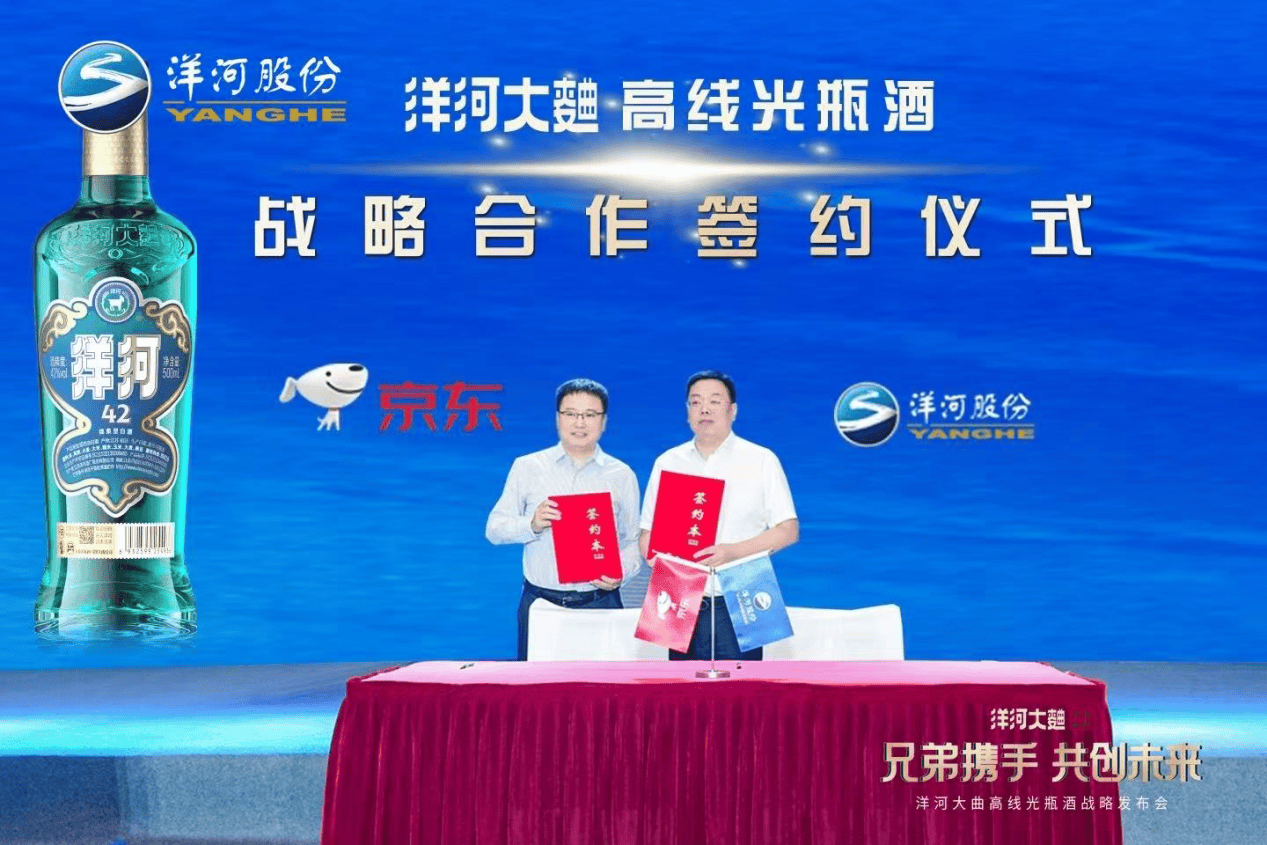
Core Viewpoint - JD Supermarket and Yanghe Co. have established a strategic partnership to enhance supply chain optimization, new product development, digital marketing, and AI applications, launching exclusive bottle sizes of Yanghe Daqu liquor [1][4] Group 1: Product Development - Yanghe has introduced two exclusive bottle sizes, 211ml and 618ml, specifically designed for JD Supermarket, marking the first time a liquor product has been tailored for a single distribution channel [3] - The new products maintain Yanghe's classic soft flavor profile, using 100% three-year aged base liquor, catering to different consumption scenarios such as casual drinking and gatherings [3][5] Group 2: Market Trends - The introduction of bottle liquor aligns with the evolving consumer mindset, shifting from "value-for-money" to "quality-oriented" consumption, positioning bottle liquor as a growth engine in the industry [3] - Yanghe's chairman emphasized the need to meet upgraded consumer demands while also leading consumption trends through this partnership with JD [3] Group 3: Strategic Collaboration - JD Supermarket's liquor business head highlighted that the new product launch is a result of deep collaboration between Yanghe's craftsmanship and JD's innovative strategies [4] - The partnership aims to create long-term value through multi-dimensional strategic cooperation [4] Group 4: Consumer Experience - The 211ml and 618ml bottle sizes are designed to meet the demand for scenario-based consumption, promoting responsible drinking habits [5] - JD Supermarket offers exclusive services like 211 express delivery to enhance consumer experience [5] Group 5: Supply Chain and Growth - Yanghe Daqu's exclusive bottle sizes represent JD Supermarket's ability to create unique products in collaboration with brands, achieving growth rates that exceed industry averages [6][7] - JD Supermarket plans to continue direct collaborations with brand partners to develop differentiated products and enhance its market presence [8]
食品饮料行业6月23日资金流向日报
Zheng Quan Shi Bao Wang· 2025-06-23 10:25
(原标题:食品饮料行业6月23日资金流向日报) 沪指6月23日上涨0.65%,申万所属行业中,今日上涨的有28个,涨幅居前的行业为计算机、国防军工,涨幅分别为2.25%、1.97%。跌幅居前的行 业为食品饮料、家用电器、钢铁,跌幅分别为0.80%、0.43%、0.11%。食品饮料行业位居今日跌幅榜首位。 食品饮料行业今日下跌0.80%,全天主力资金净流出6.93亿元,该行业所属的个股共123只,今日上涨的有75只;下跌的有44只。以资金流向数据 进行统计,该行业资金净流入的个股有56只,其中,净流入资金超千万元的有7只,净流入资金居首的是泸州老窖,今日净流入资金6440.25万 元,紧随其后的是东鹏饮料、金达威,净流入资金分别为2834.50万元、2093.72万元。食品饮料行业资金净流出个股中,资金净流出超3000万元的 有8只,净流出资金居前的有贵州茅台、伊利股份、洋河股份,净流出资金分别为3.72亿元、6277.42万元、5528.86万元。(数据宝) 食品饮料行业资金流入榜 | 代码 | 简称 | 今日涨跌幅(%) | 今日换手率(%) | 主力资金流量(万元) | | --- | --- | --- ...



超级品牌概念下跌0.04%,6股主力资金净流出超3000万元
Zheng Quan Shi Bao Wang· 2025-06-23 10:24
| 000538 | 云南白药 | -0.02 | 0.29 | -464.02 | | --- | --- | --- | --- | --- | | 603195 | 公牛集团 | -3.31 | 0.27 | -294.27 | | 000599 | 青岛双星 | 1.20 | 1.94 | -269.88 | | 603031 | 安孚科技 | 0.68 | 0.92 | -259.74 | | 603043 | 广州酒家 | -0.84 | 0.32 | -234.96 | | 002820 | 桂发祥 | 2.19 | 2.89 | -64.03 | | 600305 | 恒顺醋业 | 0.26 | 0.46 | 1.38 | | 603156 | 养元饮品 | -1.67 | 0.17 | 8.65 | | 001328 | 登康口腔 | 2.08 | 5.37 | 12.71 | | 002568 | 百润股份 | 0.53 | 1.34 | 13.18 | | 300999 | 金龙鱼 | 0.94 | 0.78 | 37.38 | | 000100 | TCL科技 | -0.46 | 0. ...


