
小鹏汇天

Search documents
粤开证券董事长郭川舟:奋楫扬帆,骏驰新程,以产业金融之力共赴2026
Sou Hu Cai Jing· 2026-02-17 09:14
站在2026年的开端,我们正置身于中国资本市场一个由规模扩张迈向质量跃升的全新周期。刚刚过去的2025年,我们见证了A股总市值历史性突破100万 亿元大关,并稳步攀升至约123万亿元;见证了上证指数从年初的3300点附近拾级而上,一度冲破4000点,年涨幅接近20%,创下近六年最佳表现;更见 证了市场成交额首次突破400万亿元,日均成交额较2024年放量超过60%,显示出充沛的流动性与高涨的参与热情。 坚定"耐心资本"理念,深耕产业周期 过去一年,粤开证券坚定不移地践行"耐心资本"战略,聚焦于具有关键技术壁垒和商业化潜力的硬科技企业。我们注意到,2025年新上市企业中超过九成 为高新技术企业,其中科创板、创业板为一批尚未盈利的"硬科技"企业敞开了大门,已有50余家此类企业成功上市。这正与我们的投资逻辑高度契合。 作为植根于广州开发区、黄埔区的国资控股券商,我们依托深厚的产业生态优势,前瞻性地布局商业航天、低空经济、生物医药等新质生产力。2025年, 我们投资了小鹏汇天、中科宇航、星河动力、蓝星光域等一批战略性科创企业,以实际行动巩固在硬科技领域的版图。此外,我们的私募股权管理规模突 破百亿元,致力于成为推动国 ...


广东何以汇天下
Xin Lang Cai Jing· 2026-02-16 00:27
Group 1 - The core viewpoint of the article highlights Guangdong's robust consumer market and its role as a significant economic driver in China, showcasing a vibrant atmosphere during the Spring Festival with various consumer activities and events [1][2][3]. - Guangdong has a population of 150 million, with one in six individuals being a business owner, making it one of the largest consumer markets in the country [1]. - The province's GDP is projected to reach 14.58 trillion yuan by 2025, maintaining its position as the top economy in China for 37 consecutive years, with a per capita consumption expenditure of 37,262 yuan, reflecting a 4% year-on-year growth [3]. Group 2 - The article emphasizes the transformation of Guangdong from a "world factory" to a "global market," indicating a shift in consumption patterns and economic dynamics [1][5]. - During the Spring Festival, Guangdong saw a 193% year-on-year increase in reservations for New Year's Eve dinners, illustrating the strong consumer sentiment [2]. - The province's import value is expected to reach 3.46 trillion yuan by 2025, with significant growth in integrated circuits and semiconductor manufacturing equipment, indicating a shift towards high-end manufacturing [5]. Group 3 - Guangdong's service sector is expanding beyond traditional goods trade to include cultural, technological, and health services, creating a comprehensive import landscape [6]. - The region is becoming a hub for global innovation, with the "Shenzhen-Hong Kong-Guangzhou" innovation cluster ranking first globally, showcasing its strong research and development capabilities [6][7]. - By 2025, the total retail sales of consumer goods in Guangdong are projected to reach 4.6 trillion yuan, highlighting its role in connecting domestic and international markets [5].
瑞松科技中标零跑汽车项目,股价创历史新高
Jing Ji Guan Cha Wang· 2026-02-14 01:27
Group 1: Contract Developments - The company announced that its subsidiary, Guangzhou Ruishun Beidou Automotive Equipment Co., Ltd., won a bid for the Leap Motor Jindong Industrial Park project, amounting to approximately 230 million yuan, which is expected to positively impact business development [1] - Previously, the company disclosed contracts for the Xinjiang Wuniu Protective Equipment project (approximately 330.8 million yuan) and a Malaysian new energy vehicle solution order (over 130 million yuan) [1] Group 2: Business and Technical Development - The company participated in the construction of the Xiaopeng Huitian aircraft production line, focusing on intelligent manufacturing technology for low-altitude aircraft, with potential future expansion into the aerospace sector [2] - High-precision and high-speed six-axis robots have received customer orders and have been shipped, being applied in precision electronics and other fields [2] Group 3: Institutional Research - The company organized a site visit on February 4, 2026, attended by institutions such as the Guangzhou Development Zone Listed Companies Association and Dongguan Securities, discussing the competitive advantages of robots and overseas business expansion [3] Group 4: Stock Performance - On February 9, 2026, the stock price reached a historical high of 57.70 yuan, increasing by 5.68% on that day; on February 12, it continued to rise by 5.43%, with a total market capitalization of approximately 6.721 billion yuan [4] - Over the past year, the stock price has increased by 73.96%, but there is a note of caution regarding high valuation risks, with a TTM price-to-earnings ratio exceeding 6700 [4] Group 5: Institutional Holdings Analysis - Huaxia Fund's China Securities Robot ETF is among the top ten circulating shareholders, having increased its holdings by 369,800 shares in the third quarter of 2025, and as of February 12, 2026, holds 2.0309 million shares [5]

重庆探路低空“总师模式”
Feng Huang Wang Cai Jing· 2026-02-13 12:28
Core Insights - 2026 is a critical turning point for China's low-altitude economy, transitioning from policy frameworks to commercial realities [1] - Chongqing has introduced a unique strategy in the low-altitude economy, highlighted by the successful first flight of its eVTOL and the establishment of a significant industrial fund [2] - The competitive landscape in China's low-altitude economy is characterized by three distinct paths: Shenzhen's vertical integration, Guangzhou/Hefei's lead firm model, and Chongqing's system capability output [3] Group 1: Policy and Governance - The new Civil Aviation Law mandates provincial governments to enhance supportive policies, leading cities like Jinan and Huangshi to develop local governance frameworks for low-altitude flight services [1] - Chongqing's low-altitude economic development is marked by a focus on systematizing governance and operational standards, moving beyond mere product competition [2] Group 2: Competitive Landscape - The three paths in the low-altitude economy include Shenzhen's focus on vertical integration with over 15,000 industry chain enterprises, Guangzhou/Hefei's lead firm approach with companies like EHang, and Chongqing's emphasis on system capability output led by the Aerospace Science and Technology Group [3] - Chongqing's model is gaining value as it demonstrates effective airspace utilization and rapid administrative processes, contrasting with Guangdong's challenges in infrastructure [3] Group 3: Structural Framework - The establishment of the Chongqing Low Altitude Economic Development Company is part of a four-tiered structure involving national strategic interests and local operational management [4][5] - The first tier involves the China Aerospace Science and Technology Group, focusing on national security and economic growth, while the second tier is represented by the Aerospace Ninth Academy, which manages system operations [4][5] Group 4: Capital Dynamics - The 20 billion yuan Aerospace Industrial Fund in Chongqing represents a complex structure of financial and industrial capital, indicating a shift from project-based funding to asset-based investment [6] - This model suggests a market-driven expansion of the low-altitude economy, moving away from reliance on government subsidies [6] Group 5: Future Outlook - The low-altitude sector is expected to face challenges post-2026, including diminishing advantages in airworthiness and the need for robust infrastructure [8] - The ability to provide comprehensive solutions for airspace management and operational standards will become a critical competitive advantage [8][9] - The 2026 timeline is pivotal for defining the industry's structure, with a shift from product competition to comprehensive urban airspace management [10]

出行经济的全球大航海时代悄然开始
3 6 Ke· 2026-02-13 04:20
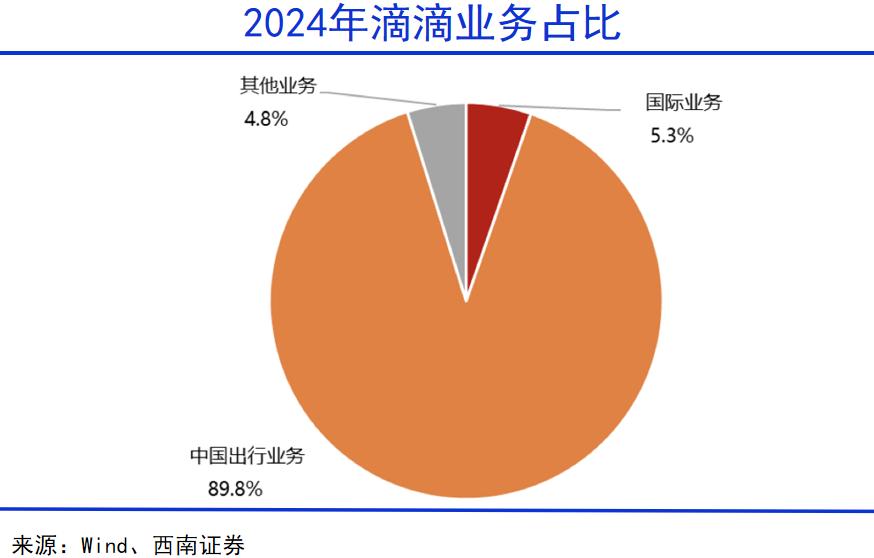
Core Insights - The article discusses the evolution and globalization of the Chinese mobility industry, highlighting key players like Didi and Cao Cao Mobility, and their strategies for international expansion [1][2][5][10]. Group 1: Didi's International Expansion - Didi began its international journey in 2015 by investing in various global ride-hailing platforms, including Grab and Lyft, and later focused on deeper market penetration in Latin America, particularly Brazil [2][5]. - By 2023, Didi had 55 million active users and 1.5 million drivers in Brazil, covering over 3,300 towns, marking a significant achievement in its international strategy [2]. - Didi's international business saw over 20% growth in Q3 2025, with a total order volume of 1.162 billion, indicating its status as a benchmark for Chinese mobility companies going global [8]. Group 2: Cao Cao Mobility's Strategy - Cao Cao Mobility, backed by Geely, achieved a Gross Transaction Value (GTV) of 17 billion yuan in 2024, making it the second-largest ride-hailing platform in China with a market share of 5.4% [9]. - The acquisition of Yao Mobility and Geely Business Travel expanded Cao Cao's service network to 12 international cities, enhancing its global footprint [9]. - Cao Cao's integration with Geely's ecosystem allows for localized operations and shared vehicle development capabilities, positioning it favorably against competitors [9][10]. Group 3: Autonomous Driving Expansion - The autonomous driving sector is a critical extension of the mobility industry, with companies like WeRide and Pony.ai aggressively pursuing global markets [11][16]. - WeRide received approval to operate a fully autonomous Robotaxi service in Abu Dhabi, marking a significant milestone in global autonomous driving commercialization [14][17]. - The competition in the autonomous driving space is intensifying, with companies like Waymo and Tesla also making significant advancements and investments [20][21]. Group 4: New Entrants and Market Dynamics - New players like Hello Mobility are expanding their business models to include two-wheeled and four-wheeled services, supported by Ant Group [21][23]. - The mobility industry in China is projected to reach 8 trillion yuan in 2024, with expectations to grow to 10 trillion yuan by 2029, indicating a robust market potential [21][25]. - The shift towards international markets is also seen in the mapping and location services sector, as companies adapt to new technological trends and consumer demands [24][25]. Group 5: Future Outlook - China's automotive exports reached 7.098 million units in 2025, solidifying its position as the world's largest automotive exporter for the third consecutive year [25]. - The article emphasizes the need for mobility companies to adapt their business models and technologies for international markets, particularly in autonomous driving and ecosystem development [25][26]. - The future of the global mobility economy is expected to be dynamic, with numerous companies vying for market share in an increasingly competitive landscape [26].
低空经济-无人机行业2026年展望
2026-02-13 02:17
Summary of Low Altitude Economy and Drone Industry Conference Call Industry Overview - The low altitude economy is expected to enter the implementation phase in 2026, with new national plans anticipated to be released, and the National Development and Reform Commission (NDRC) will oversee funding and subsidies [2][4][11] - The low altitude economy has seen slow progress over the past 25 years, with significant policies only being released in 2025 [3] Key Points and Arguments Policy and Funding - A new 15th Five-Year Plan is expected to be published, which will likely include increased funding and subsidies from the national level, contrasting with 2025 when funding was limited [2][4] - The NDRC will be responsible for reviewing and issuing national-level funds and subsidies [5] Infrastructure Development - A national air traffic management system is projected to be launched in 2026, with a focus on safety measures, particularly anti-drone construction [2][6] - Local governments are preparing to implement standards released by 10 departments and the NDRC [6] Manufacturing and Certification - 2026 and 2027 are critical years for certification in the drone industry, with U.S. companies like Jovi and Archer expected to receive FAA certification, while Chinese companies like XPeng and Zero Gravity are anticipated to obtain their second and third manned aircraft certificates [2][7] Investment Opportunities - Companies that can benefit from the low altitude industry, such as Zongheng Co. for industrial drones and Fulim Logistics for delivery services in mountainous areas, are highlighted as potential investment opportunities [4][15] - The investment environment in 2026 is expected to be more optimistic due to accelerated implementation and increased funding support [4][15] Additional Important Insights - The Hefei special bond project serves as a model for other cities, focusing on core infrastructure development and inviting social capital participation [8] - The low altitude economy is projected to become a trillion-dollar market, with the potential to replace 10% of ground traffic demand, leading to a market size of several million aircraft [10] - The commercial viability of drone applications in agriculture and inspection has already been established, independent of policy support [13] - The cargo drone transportation sector is still in the pilot phase, with significant potential for growth, supported by government subsidies [14] - EHang has received an operational qualification certificate but is awaiting further regulatory guidance before launching operations [12]
低空经济迈入万亿赛道规模化元年 小鹏汇天携7000台订单加速商业化落地
Chang Jiang Shang Bao· 2026-02-08 23:41
Group 1: Industry Overview - The low-altitude economy is expected to achieve a significant breakthrough in 2025, with a market size projected to reach 1.5 trillion yuan, driven by policy incentives, technological advancements, and practical applications [1][2][3] - The number of newly registered companies in the low-altitude economy is anticipated to increase by 162.36% year-on-year, with over 25,000 new registrations expected in 2025, marking a peak in the past five years [2][3] - The Chinese government has identified the low-altitude economy as a strategic emerging industry, essential for economic growth and the cultivation of new productive forces [2][3] Group 2: Policy and Regulatory Framework - A guideline for the construction of a low-altitude economy standard system was jointly released by ten government departments, indicating that the industry has entered an accelerated phase of industrialization [3] - The guideline sets a goal for the establishment of a basic standard system by 2027, with over 300 standards expected to be developed by 2030 to support the safe and healthy development of the low-altitude economy [3] Group 3: Company Spotlight - Xiaopeng Huitian - Xiaopeng Huitian has become a benchmark in the low-altitude economy by achieving mass production of flying cars and initiating its IPO process in Hong Kong, positioning itself as a key player in the market [4][5] - The company has received over 7,000 intention orders for its flying cars and plans to start global deliveries in the second half of 2026, with a production capacity of 10,000 units per year at its Guangzhou factory [6] - Xiaopeng Huitian's core product, the "land aircraft carrier," is designed for ease of use, with a price not exceeding 2 million yuan and a range of over 1,000 kilometers, making it a significant player in the eVTOL market [5][6] Group 4: Market Challenges and Opportunities - Xiaopeng Huitian faces challenges related to regulatory compliance and the commercial viability of its products, particularly in obtaining aviation certification and navigating safety standards [7] - The company’s strategy to enter the flying car market is seen as a necessary response to increasing competition in the traditional automotive sector, where electric vehicle penetration is expected to exceed 50% by 2025 [6][7] - The eVTOL market presents a trillion-yuan opportunity, but Xiaopeng Huitian must overcome hurdles related to regulatory frameworks and market acceptance to succeed [6][7]
2025中国企业出海年鉴
Sou Hu Cai Jing· 2026-02-06 04:11
Core Insights - In 2025, the globalization journey of Chinese enterprises has not shifted due to any single event, but rather has undergone a paradigm evolution through multiple accelerating and intersecting trajectories [1] - The core logic of going abroad is transitioning from a clear path focused on scale and efficiency to a more complex, decentralized reality that is difficult to replicate [1][10] - Success in overseas operations increasingly depends on deep localization capabilities, forward-looking compliance layouts, and technology and system outputs beyond the products themselves [1][10] Overall Changes in 2025 - The industry coverage of Chinese enterprises going abroad has expanded, with sectors such as AI, new energy vehicles, cross-border e-commerce, and cultural consumption accelerating their globalization efforts [2][15] - Southeast Asia remains a stable testing ground, while regions like the Middle East, Latin America, and Africa are emerging as crucial sources of growth, with the European and American markets evolving into high-value, high-barrier strategic competitions [2][15] - The shift in overseas business models is marked by a transition from light to heavy investments, with companies focusing on foundational infrastructure like cloud computing and AI computing power [2][19] Regional Dynamics - The "Global South" has surpassed its role as a mere market supplement, becoming a core area for Chinese enterprises to build strategic depth, leveraging demographic dividends and digital transformation opportunities [2][14] - The Gulf region is notable for its significant investments in data centers and computing clusters, aiming to create a self-sufficient AI industry ecosystem [3][14] - In contrast, competition in the European and American markets has escalated to regulatory and compliance levels, with a shift towards capital control and safety reviews, creating high-cost institutional barriers [3][14] Industry Restructuring - The path for key industries going abroad is fundamentally being restructured, with the AI sector transitioning from a follower to a leader, achieving breakthroughs in open-source model capabilities [4][15] - The automotive industry's focus has shifted from mere export expansion to deep localization, with many companies establishing complete vehicle factories or CKD assembly plants overseas [4][15] - Cross-border e-commerce is experiencing a revolution in fulfillment models, with "overseas warehouses + local fulfillment" becoming mainstream, marking a shift in competition towards backend fulfillment and infrastructure capabilities [4][15] Strategic Evolution - Chinese brands are improving their global reputation, entering a critical window for transitioning from a focus on sales volume to brand premium [5][15] - The first generation of overseas expansion experiences, reliant on platform dividends and low-cost traffic, is systematically failing under increasing competition and high traffic costs [5][15] - The overseas service system is evolving from passive responses to proactive layouts in key regions, expanding service offerings to local and global clients, marking a new phase of "serving globally" [5][15] Conclusion - The landscape of Chinese enterprises going abroad in 2025 indicates that globalization has entered an era requiring greater resilience, where success depends not only on the courage and speed of going out but also on the determination to integrate deeply and build sustainable competitive advantages in complex environments [6][10]

瑞松科技:公司参与小鹏汇天飞行器产线建设
Zheng Quan Ri Bao Wang· 2026-02-05 11:46
证券日报网讯2月5日,瑞松科技在互动平台回答投资者提问时表示,公司参与了小鹏汇天飞行器产线建 设。低空经济是国家战略性新兴产业,正迎来前所未有的发展机遇,公司积极参与低空经济的发展浪 潮。公司依托在智能制造领域的深厚积累,创新攻克了低空飞行器的智能制造技术难题。公司开发的智 能制造解决方案,融合了智能柔性连接技术与航空铝材铆接工艺,体现了公司在新型轻量化连接工艺方 面的创新探索,有效助力客户推动低空飞行器批量化生产。相关技术储备未来有望拓展应用至航空航天 等高端装备制造领域,为公司打开更广阔的应用前景。目前该项目相关收入占比较小,敬请广大投资者 谨慎决策,注意防范投资风险。 ...
瑞松科技(688090.SH):公司参与了小鹏汇天飞行器产线建设
Ge Long Hui A P P· 2026-02-05 08:29
Core Viewpoint - The company is actively participating in the construction of Xiaopeng Huitian's aircraft production line, aligning with the national strategy for low-altitude economy development, which presents unprecedented growth opportunities [1] Group 1: Company Involvement - The company has leveraged its deep expertise in intelligent manufacturing to tackle technical challenges in the smart manufacturing of low-altitude aircraft [1] - The developed intelligent manufacturing solutions integrate smart flexible connection technology with aviation aluminum riveting processes, showcasing innovation in lightweight connection techniques [1] Group 2: Industry Outlook - The low-altitude economy is recognized as a strategic emerging industry in the country, indicating significant growth potential [1] - The company's technological reserves are expected to expand into high-end equipment manufacturing fields such as aerospace, opening broader application prospects [1] Group 3: Financial Impact - Currently, the revenue from the related project is relatively small, suggesting a cautious approach for investors [1]