极飞科技

Search documents
为低空经济注入职教动能
Xin Lang Cai Jing· 2026-01-13 18:48
(来源:工人日报) 这种"校企双主体"的办学模式,还催生出独特的"三课堂联动"教学体系:"校内沉浸式课堂"打牢理论基 础,"双师云课堂"链接企业专家实时答疑,"企业项目课堂"让学生直接参与企业真实项目。 从"会飞"到"能创" "会飞只是入门,能根据不同场景解决实际问题,才是真本事。"在无人机实训中心,专业带头人刘星拿 起一架改装过的无人机说,"这是学生自主研发的'林业巡检专用机',加装了红外热成像镜头和AI识别 模块,能精准捕捉松材线虫病感染树木的特征。" 一群身着蓝色实训服的年轻人正熟练地操控着无人机,镜头掠过成片松林,实时传输的画面与数据在平 板电脑上飞速处理——这是山东水利职业学院无人机应用技术专业学生的日常实训现场。他们借助"无 人机+人工智能"技术,精准识别松材线虫病感染的树木,为林业生态保护提供科技支撑。 "这不是单纯的技能练习,每一次巡检都是给山林'看病'的实战任务。"大二学生蔡博讲道,"从确定巡检 路线到分析数据、生成报告,全流程都要按照企业标准来,就像在真实岗位上工作一样。" 自2015年成为山东省首批开设无人机应用技术专业的高职院校以来,山东水利职业学院以科技、产业、 教育深度融合为核心, ...
粤港澳大湾区领跑低空经济新赛道
Ren Min Ri Bao Hai Wai Ban· 2026-01-07 23:00
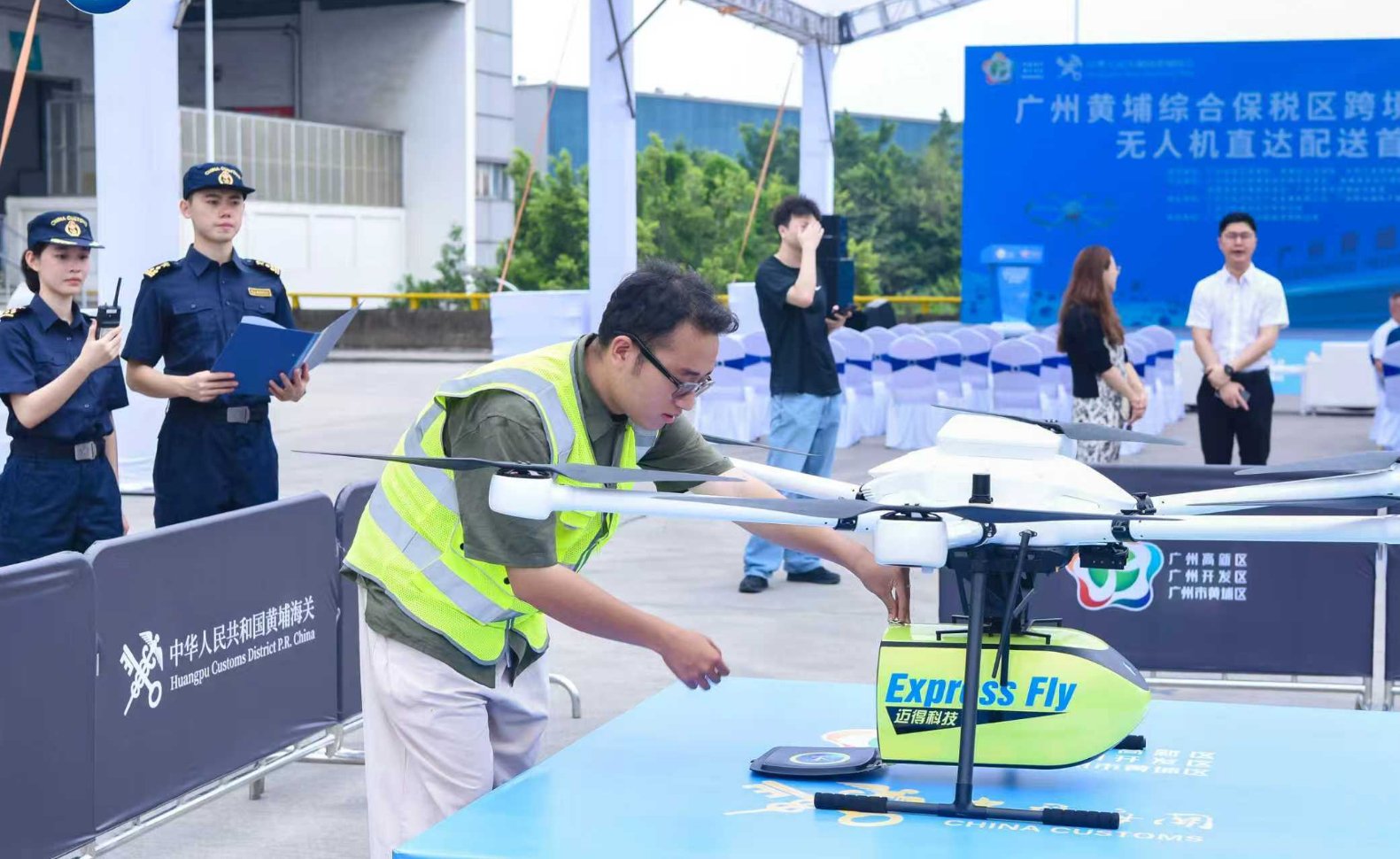
Core Insights - The Guangdong-Hong Kong-Macao Greater Bay Area is positioned as a leading hub for the emerging low-altitude economy, with significant policy support and industry collaboration [2][4]. Group 1: Event Overview - The 2025 Greater Bay Area Low Altitude Economy High-Quality Development Conference was held in Guangzhou, showcasing the region's commitment to developing a comprehensive low-altitude economic ecosystem [2]. - Various flying vehicles were presented, including drones and air ambulances, illustrating the practical applications of low-altitude economic initiatives [3]. Group 2: Market Potential - The low-altitude economy market in China is projected to reach 1.5 trillion yuan by 2025 and is expected to exceed 2 trillion yuan by 2030, with Guangdong accounting for over 30% of the industry chain [4]. - Guangdong is set to produce 6.94 million civilian drones in 2024, leading the nation with a 95% market share in consumer drones and 54% in industrial drones [4]. Group 3: Policy Initiatives - New policies were introduced to support low-altitude economic infrastructure, technological innovation, and management services, including a comprehensive low-altitude airspace management reform plan [5]. - The "Twelve Measures for Low Altitude Finance" were released to enhance financial support for low-altitude economic clusters, focusing on systemic support and collaboration [5]. Group 4: Infrastructure and Talent Development - The Guangdong Low Altitude Flight Comprehensive Management Service Platform was launched, capable of monitoring over 50,000 flights daily and processing 80 million data points [6]. - A talent cultivation service platform for the low-altitude economy was established, aiming to build a robust talent pool for the sector's development [6]. Group 5: Collaborative Efforts - Multiple cities in the Greater Bay Area are collaborating to drive low-altitude economic growth, with Guangzhou planning significant infrastructure developments and a government fund of 20 billion yuan to support the industry [7]. - Hong Kong and Macau are also taking steps to establish regulatory frameworks and support systems for low-altitude economic development [7]. Group 6: Future Development - The "2025 Greater Bay Area Low Altitude Economy Blue Book" emphasizes the importance of collaborative integration among core cities like Guangzhou, Shenzhen, and Zhuhai, and the need for cross-border cooperation with Hong Kong and Macau [8].

无人机产业洞察:在战略机遇与供应链风险中重塑全球竞争力
Da Gong Guo Ji· 2025-12-30 12:45
Investment Rating - The report does not explicitly provide an investment rating for the drone industry Core Insights - The Chinese drone industry has become a strategic emerging industry driven by national strategy, with a leading global market size and a complete industrial chain, transitioning from "manufacturing-led" to "technology-driven and ecosystem construction" [1] - The industry faces multiple challenges, including reliance on imported core technologies, long commercial return cycles, and international compliance and geopolitical risks, with future development focusing on intelligence, greening, airspace digitization, and market diversification [1] Strategic Positioning and Policy Support - The drone industry has rapidly developed under coordinated policy design, airspace management reform, and infrastructure construction, establishing a solid foundation for the large-scale application of the low-altitude economy [2] - The industry is defined as unmanned aerial vehicles operating in low-altitude airspace, which is recognized as a core carrier of the low-altitude economy [2] - A comprehensive policy framework has been established, including mandatory national standards and regulations to support the industry's standardized development [3][4] Market Size and Import-Export Patterns - The global drone market is projected to grow from USD 35.28 billion in 2024 to USD 67.64 billion by 2029, with a compound annual growth rate (CAGR) of 13.90% [5] - The Chinese civil drone market is expected to reach approximately CNY 146.8 billion in 2024, with a forecasted market size exceeding CNY 400 billion by 2030, reflecting a CAGR of 18.3% from 2024 to 2030 [5] - China remains the world's largest drone manufacturer and exporter, with significant growth in both export volume and value [6][7] Industry Chain Structure and Layout - The Chinese drone industry has established a complete industrial chain from upstream core components to midstream manufacturing and downstream application services, showcasing global competitiveness [11] - The upstream sector includes critical components such as flight control systems and sensors, with a high reliance on imports for advanced technologies [13] - The midstream focuses on the research and production of consumer, industrial, and military drones, with leading companies dominating various segments [14] - The downstream application services cover logistics, agriculture, power inspection, and emergency rescue, with significant market shares held by key players [14] Core Challenges and Future Development Trends - The industry faces challenges such as reliance on imported high-end components, high commercialization costs in industrial applications, and complex certification processes [16] - Future trends indicate a shift towards intelligent, autonomous, and green technologies, with eVTOLs emerging as a new avenue for urban air mobility [17][18] - The integration of low-altitude economy and digital infrastructure is expected to enhance operational efficiency and regulatory compliance [18]


从关键词读懂2025丨锚定新质生产力 产业发展开启多元“融合”
Sou Hu Cai Jing· 2025-12-30 02:16
Core Insights - The article emphasizes the acceleration of new productive forces and the deepening of industrial transformation and upgrading, with "integration" becoming a prominent theme in industrial development [1] Group 1: Industrial Growth and Trends - The expected growth rate of industrial added value for the year is 5.9%, while digital industry revenue is projected to increase by 9%, and the scale of the core artificial intelligence industry is anticipated to exceed 1 trillion yuan [1] - The integration of traditional and emerging industries, as well as the precise alignment of digital technology with the real economy, is highlighted as a key driver for breaking down industry barriers and enhancing growth potential [1] Group 2: Cross-Industry Collaboration - The collaboration between ByteDance and ZTE to launch the "Doubao Phone" and the introduction of AI glasses by Li Auto and Alibaba exemplify the trend of cross-industry terminal creation, reflecting the broader wave of industrial integration expected in 2025 [2] - In agriculture, traditional practices are evolving into smart agriculture through partnerships with emerging industries, showcasing the role of technology in enhancing efficiency and reducing costs [2] Group 3: Automotive Innovations - The rapid development of new energy vehicles is creating an inclusive innovation ecosystem, with companies like Dongfeng Motor collaborating with Huawei and others to advance intelligent driving systems and semiconductor production [3] Group 4: Multi-Dimensional Integration - The pearl industry in Zhejiang is merging with digital and green economies, creating a comprehensive ecosystem with a market scale exceeding 50 billion yuan, while Harbin is developing a composite business model around its ice and snow theme [4] - Experts predict that ongoing breakthroughs in artificial intelligence will further expand the scope of industrial integration, fostering new business models and driving economic growth [4] Group 5: Digital and Real Economy Fusion - In Ulanqab, the establishment of data centers and a significant investment in computing power are enhancing the integration of digital and real economies, with a computing power scale reaching 120,000 P [5] - The procurement of digital technology by enterprises has increased by 10.2%, indicating a solid advancement in the fusion of digital and real sectors [6] Group 6: Intelligent Manufacturing - The announcement of the first batch of 15 leading intelligent factories marks a significant leap in the intelligent transformation of manufacturing, with these factories achieving deep integration of new information technologies and advanced manufacturing [6] - The intelligent factory of Zoomlion showcases high efficiency with an 80% application rate of AI technologies, setting new records in the construction machinery sector [6] Group 7: Future Prospects - The Ministry of Industry and Information Technology forecasts a 9% growth in telecommunications and software business revenue, with the artificial intelligence industry expected to exceed 1 trillion yuan [7] - The integration of technology and industry is seen as a key catalyst for driving digital upgrades in the real economy, reshaping industrial development models [7] Group 8: Innovation and Policy Support - The integration of technological and industrial innovation is being actively promoted by government policies, indicating a clear path for practical exploration across various sectors [8] - The collaboration between academia and industry is yielding significant technological advancements, enhancing the competitiveness of various sectors [9]
首届粤港澳大湾区低空经济高质量发展大会举行 为万亿级新赛道注入强劲动能
Nan Fang Ri Bao Wang Luo Ban· 2025-12-26 08:48
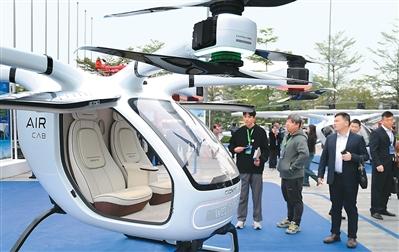
Core Insights - The first Guangdong-Hong Kong-Macao Greater Bay Area Low Altitude Economy High-Quality Development Conference was held in Guangzhou, focusing on the development of the low-altitude economy as a new trillion-level industry [1] - The conference emphasized the importance of innovation, safety, and leadership in the low-altitude economic sector, with expectations for the Greater Bay Area to establish standards and norms in this field [1] Policy and Infrastructure - A series of supportive policies were announced at the conference, including the implementation plan for low-altitude airspace management in Guangdong, a comprehensive infrastructure map, and the "Twelve Articles" for low-altitude finance [2] - The "Twelve Articles" aim to empower the creation of a comprehensive and specialized financial service system to support the financial needs of low-altitude economic clusters [2] - The Guangdong Low Altitude Flight Comprehensive Management Service Platform was officially launched, featuring functions for air traffic management, joint regulation, safety control, and user services [2] Talent Development and Innovation - The second batch of low-altitude field pilot platforms was awarded, including platforms for new energy aircraft, advanced materials, and intelligent connected vehicles [3] - The Guangdong Low Altitude Economic Talent Cultivation Service Platform was launched to address talent supply and demand mismatches in the industry [3] Industry Applications and Technology - The low-altitude economy is becoming a reality in Guangdong, with drone delivery services already operational in urban areas [4] - Various innovative technologies and products were showcased, including flying cars, passenger drones, and hydrogen fuel tilt-rotor drones, indicating a vibrant low-altitude industry [4][6] - The Guangdong Low Altitude Flight Comprehensive Management Service Platform supports over 50,000 flights daily, processing 80 million data entries to ensure safety and efficiency [5] Challenges and Future Outlook - Industry leaders acknowledged that the low-altitude economy requires patience and time for development, with a focus on technology maturity and public acceptance [7] - The need for diverse policy and capital support was emphasized to facilitate the application of low-altitude economic scenarios [7] - Key challenges identified include airspace resource allocation, economic layout, infrastructure development, and balancing safety with innovation [7]
2025:中国ToB告别“幻觉时代”
3 6 Ke· 2025-12-26 01:35
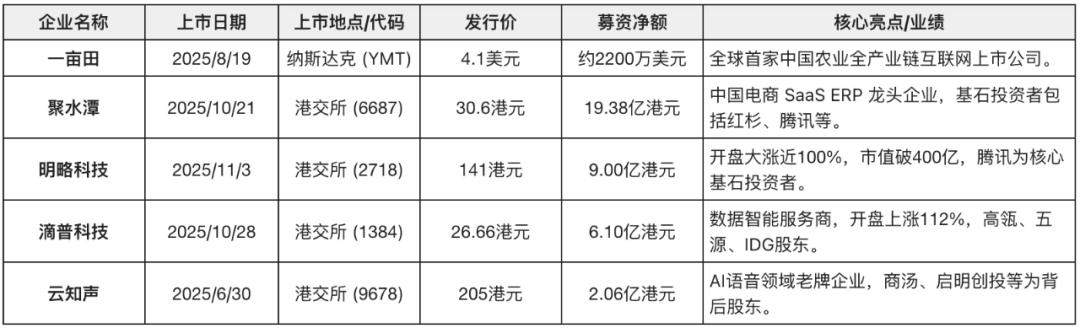
Core Insights - The Chinese ToB industry is undergoing a significant transformation, moving from a phase of "default growth" to a more competitive environment where survival requires proven operational capabilities [1][2][24] - The year 2025 marks a critical turning point, with many companies either successfully listing or facing bankruptcy, highlighting the stark realities of the market [1][4][24] Group 1: Market Dynamics - The ToB sector is experiencing a shift from "story premium" to quality-driven listings, with several companies successfully going public, including Yizhitian and Jushuitan [3][4] - The capital market is no longer rewarding mere narratives; companies must demonstrate self-sustainability and explore various exit strategies to attract investment [2][5] Group 2: Listing Trends - A wave of IPOs and listing preparations is evident in 2025, with companies like Yizhitian and Jushuitan leading the charge, indicating a reconnection with capital markets after years of adjustment [4][5] - The current IPO cycle differs from previous ones, focusing on established revenue models and customer bases rather than just high growth potential [4][5] Group 3: Exit Strategies - New exit pathways are emerging, such as control transfers, which provide alternative options for companies beyond traditional IPOs and mergers [5][6] - The case of Zhenai Meijia illustrates a shift towards control transactions, offering a new model for software companies and their early investors [5][6] Group 4: Strategic Investments - Companies like Pinming Technology are introducing strategic investors while maintaining control, reflecting a trend towards non-control capital infusion in a tightening capital environment [7][8] - This approach allows companies to secure long-term funding without altering governance structures, presenting a viable option for growth [8] Group 5: Mergers and Acquisitions - The focus of mergers is shifting from mere scale expansion to enhancing core capabilities and customer value through strategic integrations [10][11] - Notable acquisitions, such as Beisen's purchase of Cool Academy, demonstrate a trend towards integrating complementary services rather than just expanding product lines [9][10] Group 6: Major Corporate Moves - Tencent's acquisition of a controlling stake in SalesEasy marks a significant shift in its involvement in the SaaS sector, moving from an investor to a direct operational role [11][12] - This move provides SalesEasy with a more stable growth trajectory and access to Tencent's resources, setting a precedent for other SaaS companies [12] Group 7: Financial Performance - Companies like Beisen and Youzan are showing signs of financial recovery, with improved revenue and profitability metrics, indicating a broader trend towards financial health in the sector [15][16] - The industry is witnessing a collective movement towards achieving profitability, with many firms reporting reduced losses and positive cash flow [16][18] Group 8: AI Integration - Manus, an AI-native product, achieved remarkable success with a rapid international expansion and significant annual recurring revenue (ARR) growth, showcasing the potential of AI in the software market [19][21] - The swift transition of Manus from product launch to global market presence exemplifies a new standard for success in the AI sector [21] Group 9: Industry Challenges - The year 2025 has revealed the harsh realities of the industry, where companies must prove their ability to survive amidst tightening capital and increasing operational pressures [13][14][24] - The competitive landscape is forcing companies to reassess their cost structures and customer quality, emphasizing the need for sustainable business practices [14][24]

聚焦农产品电商 探索全链条协同机制
Xin Hua Ri Bao· 2025-12-25 21:13
尽管我国农产品电商起步较晚,但在国家相关政策与新兴技术的支撑下,发展迅猛。在2024中国农产品 电商高层研讨会上,农业农村部相关负责人表示,中国已成为世界第一大农产品电商国。《2024中国农 产品电商发展报告》显示,随着我国进入新的经济和消费周期,数字农产品电商也进入高质量发展时 期。近年来,我国农产品电商供应链也催生出直播电商、社区团购、生鲜电商、电商直采、社区支持农 业等各具特色的新业态。与传统农产品供应链相比,农产品电商供应链在结构模式、运营效率等方面优 势明显,呈现出供应链层级少、线上线下(300959)深度融合、信息透明度高、消费者参与度高、供应 链短链化等典型特征。 同时,以上特征对农产品电商的生产、配送和营销均产生重要影响,对农产品电商全链条协同管理提出 更具有挑战性的要求。首先,生产环节管控缺失,致农产品质量下降。电商实现农产品与消费者直接对 接,虽省去诸多中间环节,但因链条缩短、监管缺位,导致农产品面临质量难控、质量认证失效等挑 战,存在威胁农产品整体品质与安全的风险。其次,配送环节韧性欠佳,致配送时效降低。农产品供给 不确定性大、季节性波动明显、品质要求高,这些特点都增加了农产品电商供应链 ...

低空经济系列报告一:农业无人机:智慧农业新引擎,制造出海新名片
Southwest Securities· 2025-12-23 08:04
Investment Rating - The report indicates a positive outlook for the agricultural drone industry, suggesting a strong investment opportunity due to the expected growth and market dynamics [2][4]. Core Insights - Agricultural mechanization is thriving, with agricultural drones becoming a global leader. China is actively promoting agricultural mechanization through subsidies, achieving a comprehensive mechanization rate of over 75% by 2024, ahead of the 14th Five-Year Plan target [4][15]. - The agricultural drone industry is experiencing a technological revolution initiated by China, with significant market share and innovation driving growth. The industry is expected to see a shift towards smart driving technology, reducing operational barriers and enhancing safety [4][24]. - The report highlights the emergence of XAG Technology as a potential leader in the agricultural drone sector, with a strong financial performance and a focus on expanding its product offerings [4][58]. Summary by Sections Industry Overview - The agricultural drone market is characterized by rapid growth, with China's market share being substantial. As of mid-2025, China's agricultural drone ownership exceeded 250,000 units, while the global market surpassed 500,000 units [24][32]. - The market size for the global agricultural drone industry is projected to grow from 16 billion yuan in 2019 to 55 billion yuan by 2024, with a compound annual growth rate (CAGR) of 28.8% [32][30]. Market Trends - Three major trends are identified: 1. Domestic market competition is expected to ease, with prices stabilizing around 30,000 to 40,000 yuan per unit [39]. 2. A transition towards smart driving technology is anticipated, increasing the proportion of end consumers in the market [43]. 3. The overseas market is becoming a new growth area for Chinese agricultural drone companies, with significant expansion into regions like Southeast Asia and Latin America [50][54]. Company Spotlight: XAG Technology - XAG Technology has been a pioneer in the agricultural drone sector, with a focus on innovation and market expansion. The company aims to become the first publicly listed agricultural drone company in Hong Kong, having achieved profitability in 2024 [58][66]. - The company's revenue from agricultural drones is projected to grow from 4.75 billion yuan in 2022 to 9.35 billion yuan by the end of 2024, with expectations to exceed 10 billion yuan in 2025 [72][66]. - XAG's product matrix includes agricultural drones, autonomous vehicles, and smart farm IoT products, with drones accounting for nearly 89% of its revenue in the first half of 2025 [69][70]. Financial Performance - XAG Technology's revenue has shown significant growth, with a turnaround to profitability in 2024, achieving a net profit of 69.42 million yuan. The company continues to expand its market presence both domestically and internationally [66][83]. - The company's gross margin has improved significantly, rising from 17.9% in 2022 to 34.3% in the first half of 2025, reflecting enhanced operational efficiency and cost management [83].
低空经济驶入产业化深水区:广州如何从“先行试点”走向“规则样板”
Xin Lang Cai Jing· 2025-12-19 20:27
Core Insights - Guangzhou's low-altitude economy is transitioning from policy guidance to industrialization, marked by significant developments from local companies [1][3] - The commercialization of eVTOL (electric Vertical Take-Off and Landing) faces challenges in airspace management and technical standards, necessitating digital solutions for effective regulation [2][3] Industry Developments - Local companies like XPeng and GaoYu are making strides in low-altitude vehicle testing and production, with XPeng's "land aircraft" completing its first test flight and GaoYu's factory preparing for trial production [1][4] - The integration of research, testing, and production facilities in Guangzhou is creating a complete cycle for low-altitude vehicle development, facilitating the transition from technology to mass production [3][4] Application Scenarios - The low-altitude economy in Guangzhou is expanding across six major sectors, including logistics, passenger transport, public services, and agriculture, with 93 demand scenarios and 115 supply scenarios identified [5][6] - Notable advancements include the establishment of drone delivery routes by major logistics companies and the development of low-altitude business routes connecting cities in the Greater Bay Area [5][6] Policy Framework - Guangzhou has integrated low-altitude economy into its "12218" modernization strategy, establishing a clear policy matrix to support industry development and market demand [7][8] - The city has implemented regulations and support measures to create a stable legal environment for low-altitude economic activities, including the "Guangzhou Low-altitude Economy Development Regulations" [7][8] Future Directions - Despite progress, there is a need to strengthen operational services and technical research, particularly in battery technology and flight control algorithms, to enhance competitiveness [9] - The industry must focus on developing third-party flight service companies and improving service systems to complete the industrial chain from research and manufacturing to operational services [9]
从让汽车飞起来到星箭制造,解码广州开发区“天空之城”产业版图
Xin Lang Cai Jing· 2025-12-19 10:11
Core Insights - The low-altitude economy in Huangpu District is rapidly developing, with a complete industrial chain from core component research and development to manufacturing and application [3][10][11] - EHang Intelligent has become the first company globally to obtain all four necessary certifications for commercial operation of unmanned aerial vehicles (UAVs) [11][12] - The establishment of the world's first mass production line for flying cars by XPeng Heavens marks a significant milestone in the industrialization of aviation manufacturing [6][10] Group 1: Low-Altitude Economy Development - The low-altitude economy in Huangpu District has formed an industrial cluster led by companies like EHang Intelligent and XPeng Heavens, with a total output value reaching 148 billion yuan [3][10] - Huangpu District has launched 16 typical application scenarios and 55 specific opportunity lists for the low-altitude economy, covering various fields such as agriculture and meteorology [16][18] - The district's low-altitude industry chain output value is expected to grow from 130 billion yuan in 2023 to 148 billion yuan in 2024, with further increases anticipated in 2025 [10][11] Group 2: Technological Innovations - XPeng Heavens' flying car production facility has a planned annual capacity of 10,000 units, with an initial capacity of 5,000 units, making it the first factory capable of mass-producing flying cars [6][10] - The factory features innovative production processes, including the world's first power assembly detection line, which enhances production efficiency [8][10] - The integration of automotive assembly lines into aviation manufacturing is a groundbreaking development that aims to reduce costs to a more affordable range for families [6][10] Group 3: Commercialization of UAVs - EHang Intelligent's EH216-S has become the first unmanned aerial vehicle in China approved for commercial operation, marking a significant step towards the commercialization of low-altitude economy [11][12] - The company plans to gradually open eVTOL flight services to the public, with a focus on safety and stability during the transition to regular commercial operations [14][16] - EHang has conducted 1,923 flight activities this year, covering a total flight time of 243 hours and a distance of 3,760.57 kilometers [16] Group 4: Infrastructure Development - Huangpu District has established a comprehensive low-altitude infrastructure network, including 22 small take-off and landing points and a low-altitude management service platform [21][23] - The district's low-altitude route network includes three hubs, nine landing sites, and numerous take-off points, facilitating various air transport services [21][23] - The construction of the Knowledge City Aerospace Manufacturing Equipment Park is underway, with a focus on developing low-altitude management and safety systems [25][26] Group 5: Commercial Aerospace Initiatives - The Guangzhou Aerospace Town project aims to create a deep integration of industry and city, focusing on rocket manufacturing and satellite development [28][30] - The project has attracted leading companies like China Aerospace Science and Technology Corporation, which will establish production bases for reusable rocket engines [29][30] - The establishment of a world meteorological center in Huangpu District enhances the safety and operational efficiency of low-altitude flights [26][27]