雷鸟创新

Search documents
AI眼镜进“国补” 从“尝鲜”到“常用”还有几步?
Yang Shi Xin Wen· 2026-02-09 05:07
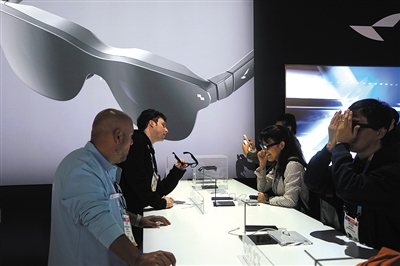
Core Insights - The article highlights the growing popularity of AI glasses as a new consumer product during the upcoming Spring Festival, driven by government subsidies and technological advancements [2][4] - The market for AI glasses is still in its infancy, with a shipment volume of approximately 1.78 million units in the first three quarters of 2025, compared to billions for smartphones [3][10] - The global AI glasses market is expected to see significant growth, with shipments projected to rise from 340,000 units in 2023 to 26 million units by 2028 [5] Policy and Market Dynamics - A new round of national subsidies for AI glasses will begin in January 2026, offering a 15% subsidy with a maximum of 500 yuan per unit, which is expected to stimulate consumer interest [2][4] - The CES 2026 showcased a strong presence of Chinese companies in the AI glasses sector, accounting for over 60% of exhibitors, indicating a robust domestic industry [4][5] Product Features and Consumer Interest - AI glasses are categorized into three main types: audio glasses, camera glasses, and AI+AR glasses, each serving different functions and use cases [8][9] - Consumer interest in AI glasses has increased, with many expressing curiosity and a willingness to purchase due to improved functionality and lower price points after subsidies [2][3] Industry Challenges and Future Outlook - Despite the growing interest, AI glasses remain a niche product, facing challenges such as consumer unfamiliarity and privacy concerns [3][10] - The industry is awaiting a breakthrough product that could drive mass adoption, akin to the "iPhone moment" for smartphones [10][12] - Recommendations for the industry include enhancing technological innovation, optimizing user experience, and fostering collaboration across the supply chain [12]

6家公司密集在港股IPO;它成立3个月融资4.8亿美元,速成独角兽 | 1月独角兽月报
Sou Hu Cai Jing· 2026-02-05 07:35
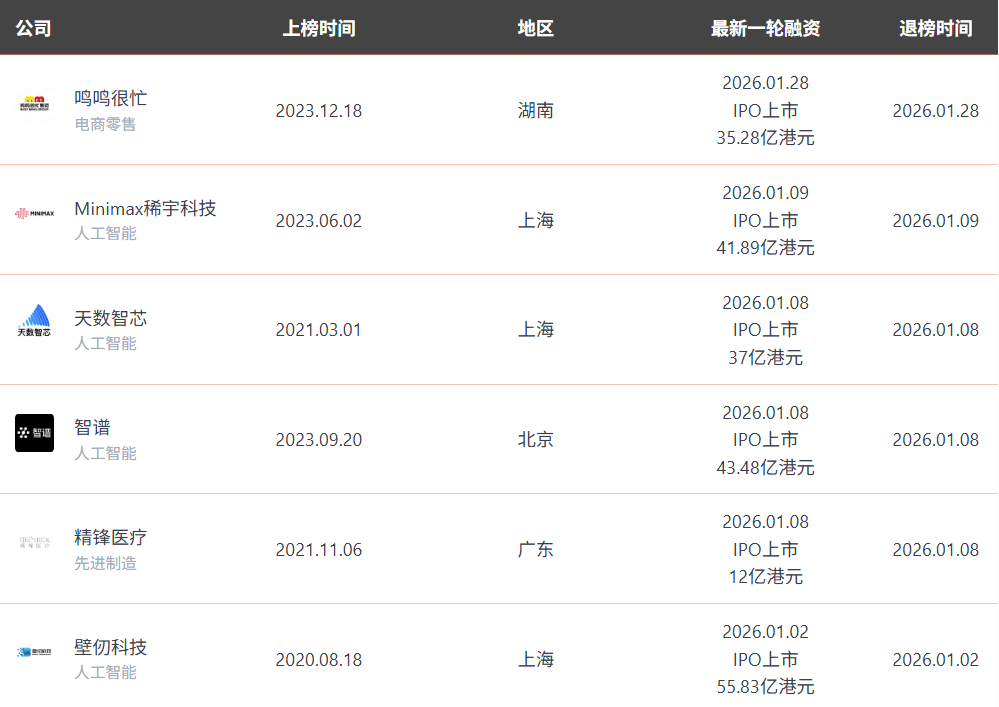
Core Insights - The domestic startup market in China is experiencing a surge in financing, with multiple companies securing over 1 billion yuan in funding, including notable firms like Jieyue Xingchen and Geely's flying car company WoFei ChangKong [1][2] Group 1: New Unicorns - In January 2026, 11 new unicorns emerged in China, spanning sectors such as AI, humanoid robots, healthcare, eVTOL, and quantum computing [2] - Humans& became a new unicorn after raising $480 million in seed funding, achieving a post-money valuation of $4.48 billion, backed by investors like NVIDIA and Google Ventures [3][4] - WoFei ChangKong, a subsidiary of Geely, completed nearly 1 billion yuan in financing, reaching a valuation of 10 billion yuan, focusing on low-altitude travel and flying car development [6][7][8] - ZiBian Robot secured 1 billion yuan in A++ round financing, achieving a post-money valuation of over $1 billion, with plans to enhance its humanoid robots and expand into various application scenarios [9] - RayNeo announced a new round of financing exceeding 1 billion yuan, achieving a valuation of $1 billion, and launched the world's first eSIM independent communication AR glasses [10][11] Group 2: IPO Activities - Six unicorn companies went public in January, all listed on the Hong Kong Stock Exchange, marking a concentrated IPO wave at the beginning of the year [12] - Notable IPOs include Zhiyuan, which raised 4.348 billion HKD, and Minimax, which raised 4.189 billion HKD, both focusing on AI and large model technologies [13] - Other companies like Biran Technology and Jingfeng Medical also completed IPOs, with respective fundraising targets of 5.583 billion HKD and 1.2 billion HKD [15] Group 3: Major Financing Events - Jieyue Xingchen completed over 5 billion yuan in B+ round financing, setting a record for the largest single financing in China's large model sector over the past year [16][18] - ByteDance's "Doubao" AI glasses are set to enter the market, with plans for a no-screen version to be released in Q1 2026 and a display version by Q4 2026 [19][20] - Baidu's Kunlun Chip has submitted a confidential IPO application, with a valuation of 21 billion yuan following its latest funding round [22][23]
2026年第3周:数码家电行业周度市场观察
艾瑞咨询· 2026-01-31 00:04
Industry Environment - In 2026, brands must take AI GEO seriously as AI chat assistants become essential tools for 96.8% of the youth, shifting information acquisition from "search" to "dialogue," thus transforming consumer decision-making [3][4] - The current AI companion market faces challenges due to high competition and low user willingness to pay, with significant operational costs and regulatory risks impacting independent developers [5] - The AI wave is transforming healthcare, with the global AI medical market projected to reach $504.17 billion by 2032, growing at a CAGR of 44%, driven by personalized health advice and efficiency improvements [6] - CES 2026 showcased a focus on consumer-grade AI hardware, with major companies like Samsung launching AI life companion plans, indicating a key entry point for AI adoption [7] - The XBOT coffee robot exemplifies embodied intelligence in consumer settings, achieving high precision and personalization, marking a significant milestone in commercial applications of AI [8] Automotive Industry - In 2025, China's new energy vehicle market penetration surpassed that of fuel vehicles, with companies like Li Auto and Xpeng focusing on intelligent competition and profitability strategies [9] AI Glasses - AI glasses did not achieve breakout success at CES 2026, facing challenges such as technical limitations and fragmented ecosystems, although long-term potential remains [10][11] Marketing Trends - In 2025, emotional marketing became a core driver, with AI technology enhancing user engagement and marketing strategies evolving towards intelligent and personalized approaches [12] AI Chip Market - The AI chip sector is experiencing a power shift, with domestic alternatives gaining traction in China, while global competition intensifies between Nvidia and cloud providers like Google and Amazon [12] Robotics and Automation - The rise of robot leasing platforms like "QingTian Rent" indicates a shift towards light asset operations, although challenges in technology and user retention persist [13] Smartphone Market - The smartphone market in 2025 faced fluctuations, with Apple performing well in the high-end segment, while mid-range devices struggled due to rising costs and competition from AI-integrated phones [14] AI Toys - 2025 marked the emergence of AI toys, driven by large model technologies, although challenges related to user demand and data privacy remain [15] Advertising Industry - The advertising sector is witnessing a divide, with tech giants dominating the digital ad market, while smaller businesses face pressure from increased platform fees and competition [16] Company Developments - Nvidia's CEO highlighted the transition to "physical AI," emphasizing the need for AI to interact with the physical world, which presents both opportunities and challenges [18] - Fookai plans to raise 700 million yuan for expansion into energy storage and robotics, aiming to enhance competitiveness in the smart appliance sector [19] - DeepSeek is set to release a new model that aims to outperform existing coding models, potentially leading to significant advancements in programming [20] - OpenAI's launch of ChatGPT Health reflects a strategic move into the AI healthcare space, focusing on privacy and personalized health planning [21] - Zhiyu AI became the first large model company to go public, highlighting the growth of AI technology in the capital market [22] - Midea's Weiling Robotics achieved a significant technological breakthrough in core components, enhancing the quality of China's robotics industry [24]

大疆老家,南山坐拥10000亿
投资界· 2026-01-30 08:09
里程碑。 作者/周佳丽 那是今年CES上,来自深圳的3 5 0余家参展企业创下阵容之最,现场投资人忍不住感叹: "明年CES不如直接在深圳办。" 如此,只是缩影。今天(1月3 0日),深圳市统计局发布,2 0 2 5年全市地区生产总值3 8 7 3 1 . 8 0亿元,同比增长5 . 5 %。稍早前新华社 报道,2 0 2 5年南山区成功迈入万亿城区, 成为我国首个GDP过万亿元的地市辖区 ,也是继北京海淀区、上海浦东新区之后,全国 第三个迈入"GDP万亿"行列的城区。 与北京海淀依托高校与央企的深厚根基不同,也与上海浦东以金融开放见长的路径相异,面积最小、建制年轻的南山,走出一条独 属于自己的路——以科技创新企业为绝对主体, "大企业顶天立地、中小企业铺天盖地、创新企业开天辟地"。 这一幕,创投圈感受更为深刻。两个月前,投资界报道《 大疆旁边咖啡馆挤满了投资人 》,记录了最近投资人去深圳抢项目的情景 ——以"大疆系"为代表的深圳创业军团席卷创投圈。随后,5 0 0亿粤港澳大湾区创业投资引导基金落户南山,史上最大创投活水缓缓 铺开。 凡此种种,皆是写照。 「 中国最牛区 」 上市公司密度全国第一 某种程度上, ...


金发科技:截至2025年12月31日,公司在金石成长基金的认缴份额为6.20%
Zheng Quan Ri Bao Wang· 2026-01-29 13:11
证券日报网讯1月29日,金发科技在互动平台回答投资者提问时表示,公司通过金石成长基金间接持有 雷鸟创新,截至2025年12月31日,公司在金石成长基金的认缴份额为6.20%,金石成长基金对雷鸟创新 的持股比例为1.98%,公司对雷鸟创新穿透持股约0.12%。 ...

AI眼镜的全新卡位赛:长期博弈拼谁耗得起,创业公司没有退路
Tai Mei Ti A P P· 2026-01-28 03:32
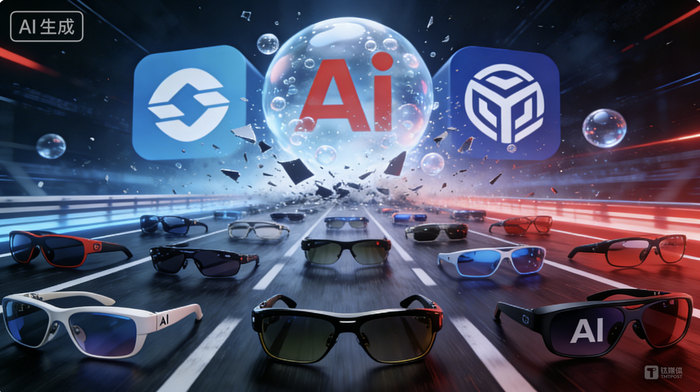
"2025年前三季度,智能眼镜市场出货量超过178万副,其中近八成是AI眼镜。"日前,工信部对外公布 的这组数据,无疑是"提振"了国内AI眼镜产业。如果按照规模来看,百万自然不是一个很大的量级,但 对比2024年20万左右的出货量,六倍的增长还是很可观的。 不仅如此,在2026年一开年,AI眼镜再一次刷屏,成为CES 2026上体验出圈的AI物种。资本层面,也 是好消息不断,包括雷鸟创新、影目科技以及XREAL等均有新的融资进账。随着字节、华为在今年也 都要下场,AI眼镜也将加速走进大众视野。刚刚上市的龙旗科技认为,智能眼镜板块预计将延续强劲 增长,2024年至2029年的复合年增长率达45.4%。微光科技副总裁、软工首席谢鑫更是直言,"今年市 场可能会达到千万级的销量。" 不过,仍需要指出的一点是,基于当前的硬件限制和软件生态的匮乏,AI眼镜远谈不上取代手机,最 终形态也存在争议,甚至长时间佩戴的问题也都没有解决。热潮之下,"百镜大战"会继续上演,不同的 是,今年更多巨头的入局会加速市场泡沫的破裂。而对于创业公司来说,则是一场没有退路的战役。 大厂押注、超10亿资金入账,新的卡位赛打响 当AI大模型在两年多 ...

佰维存储:公司ePOP系列产品目前已被Meta、Google、小米、阿里等国内外知名企业应用于其AI/AR眼镜、智能手表等智能穿戴设备上
Jin Rong Jie· 2026-01-27 08:32
Core Viewpoint - The company has established a strong competitive position in the AI edge storage market, with its ePOP series products being utilized by several prominent companies in the AI/AR glasses and smart wearable devices sector [1] Group 1: Product Applications - The company's ePOP series products are currently being used by major companies such as Meta, Google, Xiaomi, Alibaba, and others in their AI/AR glasses and smartwatches [1] - The company is actively expanding its customer base in the AI glasses segment [1]

广东外贸突破9万亿
21世纪经济报道· 2026-01-27 02:53
广货行天下,当前广东制造正以多元优势走向全球。普渡机器人拿下2026年全国出口"第一 单",其智能服务机器人从深圳口岸出发远销东盟、欧盟;雷鸟创新带着全球首款支持eSIM功 能的双目全彩AR眼镜,勇闯CES展会;以创想三维、拓竹科技为代表的企业则依托供应链与 技术优势,占据全球九成入门级3D打印市场。 数据进一步印证了这一趋势:1月26日举行的广东省十四届人大五次会议上,广东省政府工作 报告透露, 2025年进出口总额突破9万亿元 。同时,广东提出全省2026年全年进出口总额增 长3%左右的目标,明确推动货物贸易持续稳定发展、推动服务贸易抢抓机遇加快发展等,当 好国家高水平对外开放门户枢纽。 具体而言, 2025年广东外贸进出口同比增长4.4%,规模连续40年居全国首位,对全国外贸增 长贡献率达24.1%,居全国第一。 在此基础上,多个广东外贸企业受访时表达了对2026年出 口形势的信心。中国人民大学重阳金融研究院研究员刘英向南方财经记者分析,从广东的部署 看,2026年广东外贸将聚焦"稳规模、优结构、提质量",依托粤港澳大湾区开放枢纽作用推动 高质量、高技术、高附加值产品出口,加快从出口导向转向全球资源配置 ...

中国,造出全球80% AI眼镜
创业邦· 2026-01-26 04:09
Core Insights - The article emphasizes that China has become a dominant player in the AI glasses industry, controlling over 80% of the global supply chain [5][6][26] - The rapid innovation and manufacturing capabilities in China have allowed for significant advancements in AI glasses technology, making them a key player in the global market [16][30] Industry Overview - AI glasses are viewed as the next generation of computing devices, with China leading in the supply chain and production [6][8] - Key components such as chips and optical modules are primarily produced in China, with optical modules accounting for over 40% of the cost and chips over 30% [10][13] Technological Advancements - Chinese companies have made significant breakthroughs in optical waveguide technology, which is crucial for AI glasses [11] - Companies like JBD and Zhizhi Technology have developed advanced Micro LED and optical components that are lightweight and energy-efficient [11][13] Market Dynamics - The integration of the supply chain in China has led to reduced costs for AI glasses, with prices dropping from over 10,000 yuan to around 1,999 yuan [26] - The market for AI glasses is expected to grow significantly, with predictions of a compound annual growth rate of 55.6% over the next five years [30] Competitive Landscape - Major Chinese brands are emerging in the AI glasses market, with companies like TCL, XREAL, and Rokid showcasing innovative products at international tech exhibitions [27][29] - The article highlights that Chinese manufacturers are not only producing but also innovating, moving from a role of OEM to becoming leaders in the industry [17][24]

产品迭代出货激增 智能眼镜“热”撬动产业链升级
Xin Hua Wang· 2026-01-26 02:35
Core Insights - The smart glasses market is experiencing explosive growth, with China's shipment volume expected to reach 4.5 million units by 2026, representing a year-on-year increase of 77% [2][5]. Technology and Application Breakthroughs - The launch of the first eSIM smart glasses, "Thunderbird X3 Pro Project eSIM," showcases independent functionalities such as calls, AI conversations, and real-time translation without needing a smartphone [3]. - The integration of AI smart glasses with automotive technology allows users to control vehicle functions remotely and receive real-time navigation and speed information while driving [3]. - Recent advancements in optical technology, lightweight design, and independent communication capabilities have addressed previous limitations of smart glasses, enabling a transition from accessories to standalone devices [3][4]. Market Growth and Demand - The smart glasses market is projected to see significant growth, with shipments expected to reach 2.54 million units in 2025 and 4.51 million units in 2026, reflecting year-on-year growth rates of 92.9% and 77.7%, respectively [5][6]. - The core growth areas for smart glasses in 2026 will focus on consumer scenarios such as home use, travel, health management, content creation, and information services [6]. Industry Chain Upgrades - The demand for smart glasses is driving deep collaboration across the supply chain, enhancing product integration and production efficiency [7]. - Companies are innovating to meet the evolving demands for lightweight, low-power, and high-performance imaging systems, with new products being developed to align with market needs [8]. Challenges and Collaborative Solutions - The smart glasses industry faces challenges including balancing product weight, battery life, performance, and cost, as well as improving user education and market awareness [10]. - The first half of 2026 is expected to see advancements in optical displays and AI chips, but challenges related to production yield, cost control, and supply chain coordination remain [10][11].