中国星网

Search documents
“十四五”央企重组整合成绩单:重组10家企业、新设9家央企
2 1 Shi Ji Jing Ji Bao Dao· 2025-09-17 06:04
Core Viewpoint - During the "14th Five-Year Plan" period, state-owned enterprises (SOEs) in China have undergone significant restructuring, with 10 enterprises being strategically reorganized and 9 new central enterprises established, enhancing the efficiency of state capital allocation and operation [1][2]. Group 1: Strategic Restructuring - The restructuring efforts are focused on serving national strategies, enhancing the strategic support capabilities of state-owned economies, and ensuring national security [1]. - Key examples include the establishment of China Star Network to accelerate the construction of a self-controlled satellite internet and the integration of strategic mineral resources to improve supply security [1]. Group 2: Industrial Synergy - The restructuring aims to increase industrial concentration by promoting horizontal alliances among similar businesses and vertical integration of upstream and downstream operations, effectively addressing issues of redundant investment and resource dispersion [2]. - Notable cases include the merger of Ansteel Group and Benxi Steel Group, which enhances competitiveness and creates a regional leadership effect, as well as the formation of China Electrical Equipment to support energy supply [2]. Group 3: Public Service Optimization - The restructuring also focuses on optimizing public services by integrating resources in relevant fields to better fulfill the public welfare and security roles of state-owned economies [2]. - Examples include the establishment of China Resource Recycling Group, which aims to create a national platform for resource recovery and reuse, and the ongoing integration of medical resources within central enterprises, with one group managing over 400 medical institutions and serving more than 35 million patients annually [2]. Future Directions - The next steps involve enhancing core functions and competitiveness through systematic thinking, forward-looking planning, and innovative measures to further promote strategic professional restructuring and improve the efficiency of state capital allocation [3].
将大力推动战略性专业化重组整合!国务院国资委答中证报记者问
Zhong Guo Zheng Quan Bao· 2025-09-17 04:57
Group 1 - The core viewpoint emphasizes the strategic restructuring and integration of state-owned enterprises to enhance their core functions and competitiveness, thereby supporting economic and social development [1][2][3] - During the "14th Five-Year Plan" period, nine new central enterprises were established, and six groups of ten enterprises underwent strategic restructuring, improving the efficiency of state-owned capital allocation [2][4] - The restructuring focuses on three main areas: supporting national strategies, enhancing industrial collaboration, and optimizing public services, which collectively aim to improve resource allocation and service quality [2][3][4] Group 2 - The market value of central enterprises' listed companies has exceeded 22 trillion yuan, reflecting a nearly 50% increase since the end of the "13th Five-Year Plan" [4] - Central enterprises have implemented cash dividends totaling 2.5 trillion yuan since the beginning of the "14th Five-Year Plan," contributing to the stability of the capital market [4] - Investment in strategic emerging industries has significantly increased, with a cumulative investment of 8.6 trillion yuan since the "14th Five-Year Plan," marking a substantial rise compared to the "13th Five-Year Plan" [5] Group 3 - The "AI+" initiative is being actively pursued, with over 800 application scenarios developed across 16 key industries, aiming to leverage AI for industrial upgrades [6][7] - The establishment of industry data communities has led to the creation of over 1,000 industry data sets, facilitating AI empowerment across various sectors [6] - The capability for intelligent computing supply has more than doubled since the implementation of the "AI+" initiative, with significant investments made in building AI infrastructure [6][7]
“十四五”央企成绩单发布,央企重组整合思路明晰
Di Yi Cai Jing· 2025-09-17 04:30
Core Insights - Central enterprises are focusing on nine strategic emerging industries and six future industries, with significant growth in total assets and profits since the start of the 14th Five-Year Plan [1][3] - The cumulative investment in strategic emerging industries reached 8.6 trillion yuan, with a notable acceleration in sectors like integrated circuits, biotechnology, and new energy vehicles [3][4] - The restructuring and integration of state-owned enterprises have been actively pursued, enhancing the efficiency of capital allocation and operational effectiveness [5][6][7] Group 1: Economic Performance - Since the beginning of the 14th Five-Year Plan, total assets of central enterprises have increased from less than 70 trillion yuan to over 90 trillion yuan, while total profits rose from 1.9 trillion yuan to 2.6 trillion yuan, with average annual growth rates of 7.3% and 8.3% respectively [1] - Central enterprises have contributed over 10 trillion yuan in taxes and transferred 1.2 trillion yuan of state-owned equity to social security funds [1] Group 2: Strategic Investments - The annual growth rate of investments in strategic emerging industries has exceeded 20%, with over 800 application scenarios developed under the "AI+" initiative and the establishment of 1,854 smart factories [1][3] - By 2024, the revenue from strategic emerging industries is expected to surpass 11 trillion yuan, with contributions from new generation information technology and high-end equipment sectors exceeding 1 trillion yuan each [3][4] Group 3: Restructuring and Integration - The restructuring efforts have led to the establishment of six groups of ten enterprises and the formation of nine new central enterprises, focusing on strategic security and public service [5][6] - The integration aims to enhance industry collaboration, reduce redundant investments, and improve resource allocation efficiency, exemplified by the merger of Ansteel Group and Benxi Steel Group [6][7] - Future plans include enhancing core functions and competitiveness through systematic and innovative restructuring efforts [7]

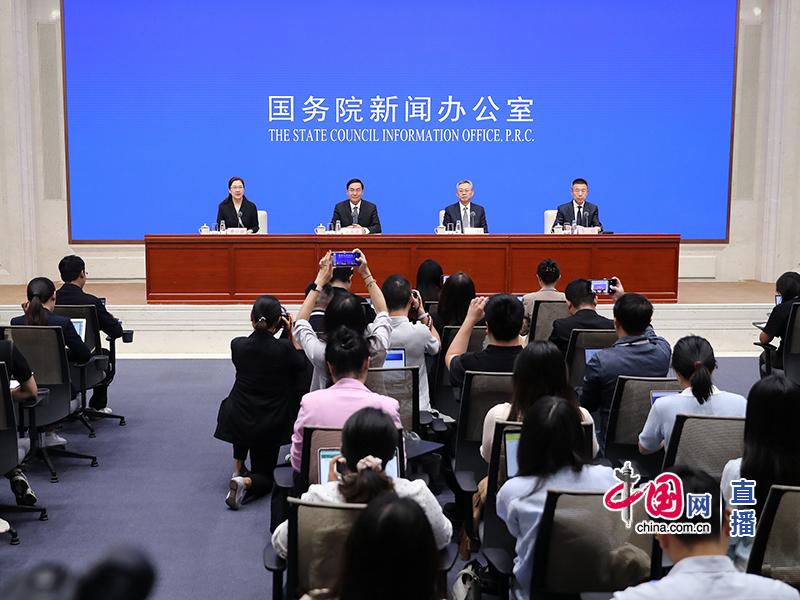
国资委:“十四五”期间新组建、设立9家中央企业
Sou Hu Cai Jing· 2025-09-17 04:25
Group 1 - The core viewpoint of the article highlights the significant restructuring and integration efforts of central enterprises during the "14th Five-Year Plan" period, focusing on strategic safety, industrial leadership, and public service [1][3][4] - The State-owned Assets Supervision and Administration Commission (SASAC) has facilitated the market-oriented restructuring of 10 enterprises into 6 groups, and established 9 new central enterprises [1][3] - The restructuring aims to enhance the strategic support capabilities of state-owned enterprises in key industries and critical areas, such as the establishment of China Star Network for satellite internet and the integration of strategic mineral resources [3][4] Group 2 - The restructuring also focuses on increasing industrial collaboration by promoting horizontal alliances among similar businesses and vertical integration across supply chains, exemplified by the merger of Ansteel Group and Benxi Steel Group [3][4] - The formation of China Electric Equipment aims to consolidate resources in the power equipment manufacturing sector, thereby supporting energy supply stability [3][4] - The optimization of public services is another key area, with initiatives like the establishment of China Resource Recycling Group to enhance resource recovery and utilization, and the integration of medical resources by China General Technology Group [4] Group 3 - Future efforts will concentrate on enhancing core functions and competitiveness through systematic thinking, forward-looking planning, and innovative measures to improve the efficiency of state capital allocation and operation [4]

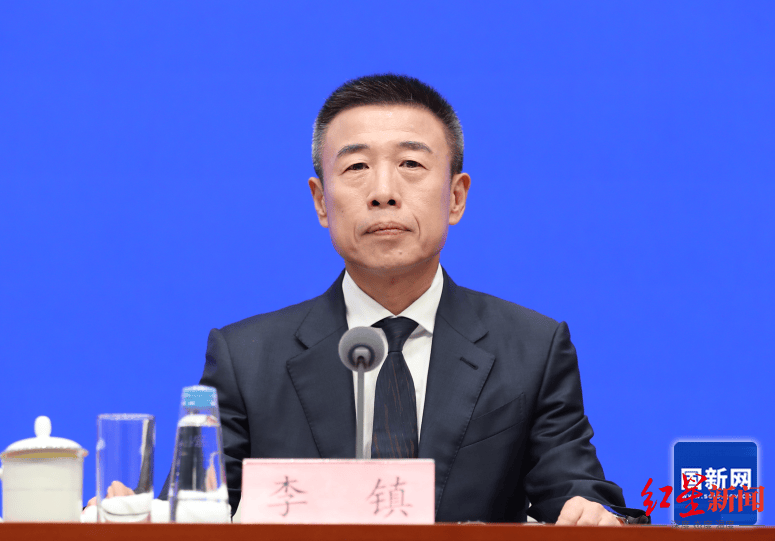
国资委发声,将大力推动国资央企战略性专业化重组整合
Xin Lang Cai Jing· 2025-09-17 03:55
记者 辛圆 国资委副主任李镇周三在国新办举行的"高质量完成'十四五'规划"系列主题新闻发布会上表示,"十四 五"期间国资央企大力推进布局优化结构调整,以市场化的方式重组了6组10家企业,新组建设立9家中 央企业。 一是围绕服务国家战略实施重组整合。李镇表示,以服务战略大局、维护国家安全为鲜明导向,在重要 行业和关键领域加快推进重组整合,进一步增强了国有经济的战略支撑托底能力。比如,着眼加快建设 自主可控的卫星互联网,组建了中国星网。 二是围绕增强产业协同实施重组整合。他提到,以提高产业集中度为目标,既推动同类型业务的横向联 合,又加强上下游业务的纵向整合,有力推进解决重复投资、资源分散等问题,形成了"1+1>2"的效 果。比如,鞍钢集团重组本钢集团,既提高了企业竞争力,形成了"南宝武、北鞍钢"的发展格局,又发 挥了区域引领带动作用。 例如安徽省国资委、安徽证监局4月8日印发《关于加强省属企业控股上市公司市值管理若干事项的通 知》,提出十条举措。在并购重组方面,措施提到,鼓励聚焦提高科技创新能力实施并购重组,打造一 批科技领军企业。 南京市政府办公厅3月份印发《南京市关于支持企业并购重组高质量发展的若干措施》, ...

国务院国资委:下一步仍将大力推动战略性专业化重组整合
Zhong Guo Jin Rong Xin Xi Wang· 2025-09-17 03:48
Group 1 - The core viewpoint of the article emphasizes the strategic professional restructuring of central enterprises during the "14th Five-Year Plan" period, focusing on optimizing layout and structural adjustments to enhance national strategic support and public service capabilities [1][2][3] Group 2 - The restructuring efforts are categorized into three main areas: 1. Restructuring to serve national strategic implementation, enhancing the strategic support capability of state-owned enterprises, with examples including the establishment of China Star Network for satellite internet and integration in strategic mineral resources [1][2] 2. Enhancing industrial synergy through horizontal and vertical integration to solve issues like repeated investments and resource dispersion, exemplified by the merger of Ansteel Group and Benxi Steel Group, and the formation of China Electrical Equipment [2] 3. Optimizing public services by integrating resources to provide high-quality and low-cost services, illustrated by the establishment of China Resource Recycling Group and the integration of medical resources within the General Technology Group [2][3] Group 3 - Future plans include enhancing core functions and competitiveness through systematic thinking and innovative measures, aiming to improve the allocation and operational efficiency of state-owned capital [3]
国务院国资委:将大力推动国资央企战略性专业化重组整合
Di Yi Cai Jing· 2025-09-17 03:19
Group 1 - The core viewpoint emphasizes the importance of enhancing the allocation and operational efficiency of state-owned capital to support economic and social development more effectively [1][4] Group 2 - During the "14th Five-Year Plan" period, state-owned enterprises (SOEs) have actively promoted strategic professional restructuring, focusing on national security, industrial leadership, public service, and market-oriented restructuring of 10 enterprises in 6 groups [2] - The restructuring aims to serve national strategic implementation, enhancing the strategic support capability of state-owned economy in key industries, such as the establishment of China Star Network for satellite internet and integration in strategic mineral resources [2][3] Group 3 - The restructuring also targets enhancing industrial synergy by increasing industry concentration, addressing issues like repeated investments and resource dispersion, exemplified by the merger of Ansteel Group and Benxi Steel Group [3] - Additionally, the restructuring focuses on optimizing public services, with initiatives like the establishment of China Resource Recycling Group to promote green transformation and the integration of medical resources, with over 400 medical institutions and more than 50,000 open beds [3]
“十四五”以来北京输出津冀技术合同成交额达2308.7亿元
Zhong Guo Xin Wen Wang· 2025-09-15 09:16
Core Points - Since the beginning of the 14th Five-Year Plan, the technology contract transaction amount from Beijing to the Tianjin-Hebei region has reached 230.87 billion RMB, nearly double the total amount during the 13th Five-Year Plan [1] Group 1 - The industrial collaboration model of "Beijing R&D, Tianjin-Hebei manufacturing" is maturing, with the integration of innovation and industrial chains becoming a tangible support for coordinated development [1] - The shift from mere transfer and acceptance of industries to collaborative industrial chain cooperation is evident, with the scale of industrial clusters continuously expanding, resulting in seven national-level advanced manufacturing clusters [1] Group 2 - Notable projects include the relocation of China Star Network to Xiong'an New Area, the upcoming operation of headquarters projects by Huaneng and Sinochem, and the commencement of construction for four university campuses in Xiong'an [1] - The Xiong'an Zhongguancun Science Park has attracted over 200 high-tech enterprises within just two years, creating an innovative "small climate" [1] Group 3 - The Tianjin Binhai-Zhongguancun Science Park has registered over 6,000 enterprises, indicating increasing integration between the two cities [1]
6亿订单无人接:中国商业航天卡在“最后一公里”
Hu Xiu· 2025-09-07 09:52
Core Viewpoint - The Chinese commercial space industry is facing a significant bottleneck in rocket launch capacity, which is hindering the deployment of satellite constellations necessary for meeting international regulatory deadlines [1][3][13]. Group 1: Market Demand and Challenges - Shanghai Yuanxin Satellite Technology Co., Ltd. has a rocket launch order with a total budget of 616 million RMB, aimed at supporting its "Qianfan Constellation" satellite network [2]. - The repeated failures in the bidding process for this order highlight the lack of qualified private rocket companies capable of fulfilling large-scale launch contracts [3][4]. - The urgency for satellite companies is underscored by the International Telecommunication Union (ITU) rules, which impose strict deadlines for satellite launches to retain orbital and frequency resources [6][8]. Group 2: Current Launch Activity - As of mid-August 2025, China has conducted 35 space launches, a record for the first half of the year, with a notable increase in launch frequency driven by companies like China Star Network [9][11]. - China Star Network completed five network launches in a span of 21 days, successfully deploying 38 satellites using multiple types of rockets [9][10]. Group 3: Industry Dynamics - The commercial satellite market is experiencing a surge in contracts, with companies like Aerospace Hongtu signing a 990 million RMB contract for satellite and ground system procurement [4]. - Despite the high demand for satellite launches, the industry lacks a large-capacity liquid rocket comparable to SpaceX's Falcon 9, which poses a significant challenge for satellite deployment [4][21]. Group 4: Rocket Development and Prospects - The current bidding process by Yuanxin Satellite has revealed a shortage of suppliers capable of providing large-capacity launch services, indicating a critical gap in the market [13][16]. - Three private rocket companies—Tianbing Technology, Blue Arrow Aerospace, and CAS Space—have emerged as potential suppliers for upcoming launches, although none have completed a successful orbital flight yet [27][28]. Group 5: Future Outlook - The industry is witnessing a shift towards developing large-capacity, reusable liquid rockets, with companies like Tianbing Technology and Blue Arrow Aerospace focusing their resources on this goal [24][25]. - The establishment of new launch facilities and the readiness of suppliers for mass production are crucial steps towards addressing the current launch capacity bottleneck [28][29].
万颗卫星上天难
经济观察报· 2025-09-07 09:20
Core Viewpoint - The Chinese commercial space industry is facing a significant bottleneck in rocket launch capacity, which is hindering the deployment of satellite constellations despite a growing demand for satellite services [2][4][10]. Group 1: Market Demand and Challenges - A major rocket launch order worth 616 million RMB from Shanghai Yuanxin Satellite Technology Co. has repeatedly failed to attract enough bidders, highlighting the shortage of capable private rocket companies [2][4]. - The total number of satellites planned by Yuanxin's "Qianfan Constellation" and China Star Network's "GW Constellation" has exceeded 30,000, indicating a substantial demand for launch services [3][4]. - The urgency of satellite launches is emphasized by the International Telecommunication Union (ITU) rules, which impose strict deadlines for satellite deployment to retain orbital and frequency resources [7][8]. Group 2: Current Launch Capacity - As of mid-2025, the Chinese commercial space sector has not produced a liquid rocket that can match the capabilities of SpaceX's Falcon 9, which poses a challenge for satellite companies needing reliable and cost-effective launch options [4][10]. - The recent bidding process by Yuanxin Satellite revealed that there are not enough qualified suppliers to meet the demand for large-capacity launch services, underscoring the industry's operational limitations [12][18]. Group 3: Potential Solutions and Developments - The market is looking towards several upcoming rockets, such as Tianbing Technology's "Tianlong-3," Blue Arrow Aerospace's "Zhuque-3," and CAS Space's "Lijian-2," which are expected to meet the large-scale constellation deployment needs but have yet to complete their first flights [5][23]. - The infrastructure for high-density launches is being developed, with new launch sites and production capabilities being established to support the anticipated increase in launch frequency [24][25]. - The capital market is becoming more accessible for companies in the commercial space sector, with firms like Blue Arrow Aerospace and CAS Space entering the IPO preparatory phase to secure funding for future growth [25].