丸美生物

Search documents
行业周报:六福集团业绩预告高增,美丽田园战略升级-20251122
KAIYUAN SECURITIES· 2025-11-22 11:35
Investment Rating - The report maintains a "Positive" investment rating for the retail industry [1] Core Insights - The retail industry is experiencing a significant transformation, with a focus on emotional consumption and innovative product offerings driving growth [6][32] - Companies like Liufu Group and Meili Tianyuan are implementing strategic upgrades to enhance brand value and market presence [27][29] Summary by Sections Retail Market Overview - The retail index reported a decline of 7.24% during the week of November 17-21, 2025, underperforming the Shanghai Composite Index by 3.34 percentage points [5][14] - The retail index has increased by 0.58% year-to-date, lagging behind the overall market performance [14][18] Company Performance Highlights - Liufu Group anticipates a revenue increase of approximately 20%-30% and a net profit growth of 40%-50% for the six months ending September 30, 2025, driven by effective product differentiation and sales strategies [27] - Meili Tianyuan is focusing on three major strategic initiatives: building a super brand through acquisitions, establishing a super chain for quality growth, and enhancing digital capabilities for precise marketing [29] Investment Themes - **Gold and Jewelry**: Focus on brands with differentiated product offerings and consumer insights, recommending companies like Laopuhuang and Chaohongji [6][35] - **Offline Retail**: Emphasize companies adapting to market changes, recommending Yonghui Supermarket and Aiyingshi [6][32] - **Cosmetics**: Highlight domestic brands that cater to emotional value and safety innovations, recommending companies like Maogeping and Pola [6][33] - **Medical Aesthetics**: Target differentiated product manufacturers and expanding medical chains, recommending Aimeike and Kedi-B [6][34] Key Company Updates - Chaohongji reported a revenue increase of 28.4% year-to-date, with a focus on expanding its franchise model and product innovation [38][40] - Yonghui Supermarket's revenue decreased by 22.2% year-to-date, but the company is undergoing a transformation to improve its supply chain and store optimization [41][43]



研判2025!中国弹性蛋白行业结构分类,产业链及市场规模分析:皮肤弹性基石与抗衰新势力,行业成高潜力热点[图]
Chan Ye Xin Xi Wang· 2025-11-21 01:56
内容概况:弹性蛋白(Elastin)广泛存在于哺乳动物结缔组织,和胶原蛋白同为皮肤的重要组成部分, 胶原蛋白提供支撑作用,而弹性蛋白提供延展性与回弹性。2024年,中国弹性蛋白行业市场规模约为 6.27亿元,同比增长3.81%。其前体原弹性蛋白(tropoelastin)胞内合成后分泌到胞外,经酶催化交联 成为高度不溶的弹性蛋白网络,使弹性蛋白分子能够任意卷曲,具有高弹性。在应用领域,弹性蛋白通 常与胶原蛋白、透明质酸等成分复配作为护肤品成分以达到综合抗老化效果。其良好的生物相容性和弹 性能使其成为理想的生物医用材料,包括人工血管、创伤敷料、药物递送、伤口修复等多个方面。近年 来弹性蛋白主要用于补剂、化妆品、生物医药等领域,逐渐成为新的热点产品。 相关上市企业:丸美生物(603983) 二、行业产业链 相关企业:内蒙古伊利实业集团股份有限公司、山东得利斯食品股份有限公司、黑龙江宾西牛业有限公 司、温氏食品集团股份有限公司、牧原食品股份有限公司、新希望六和股份有限公司、北京大北农科技 集团股份有限公司、上海药明康德新药开发有限公司、深圳华大基因股份有限公司、苏州泓迅生物科技 股份有限公司、梅花生物科技集团股份有 ...


化妆品板块11月20日跌2.85%,芭薇股份领跌,主力资金净流出3.77亿元
Zheng Xing Xing Ye Ri Bao· 2025-11-20 09:16
Market Overview - The cosmetics sector experienced a decline of 2.85% on November 20, with Bavi Co. leading the drop [1] - The Shanghai Composite Index closed at 3931.05, down 0.4%, while the Shenzhen Component Index closed at 12980.82, down 0.76% [1] Individual Stock Performance - Jiahen Home Cosmetics (300955) closed at 38.29, up 1.48% with a trading volume of 27,300 shares and a turnover of 103 million yuan [1] - Bavi Co. (920123) saw a significant drop of 9.28%, closing at 17.89 with a trading volume of 88,500 shares and a turnover of 163 million yuan [2] - Qingdao Kingway (002094) closed at 7.69, down 2.16%, with a trading volume of 214,700 shares and a turnover of 166 million yuan [1][2] Capital Flow Analysis - The cosmetics sector experienced a net outflow of 377 million yuan from institutional investors, while retail investors saw a net inflow of 323 million yuan [2] - The main capital inflow and outflow for various stocks indicate a mixed sentiment, with some stocks like Jiahen Home Cosmetics seeing a net inflow of 9.93 million yuan from institutional investors [3] Notable Stock Movements - Fuleida (600223) had a net outflow of 25.36 million yuan from institutional investors, but a net inflow of 9.99 million yuan from retail investors [3] - Kesheng Co. (300856) experienced a net outflow of 29.14 million yuan from institutional investors, while retail investors contributed a net inflow of 12.29 million yuan [3]




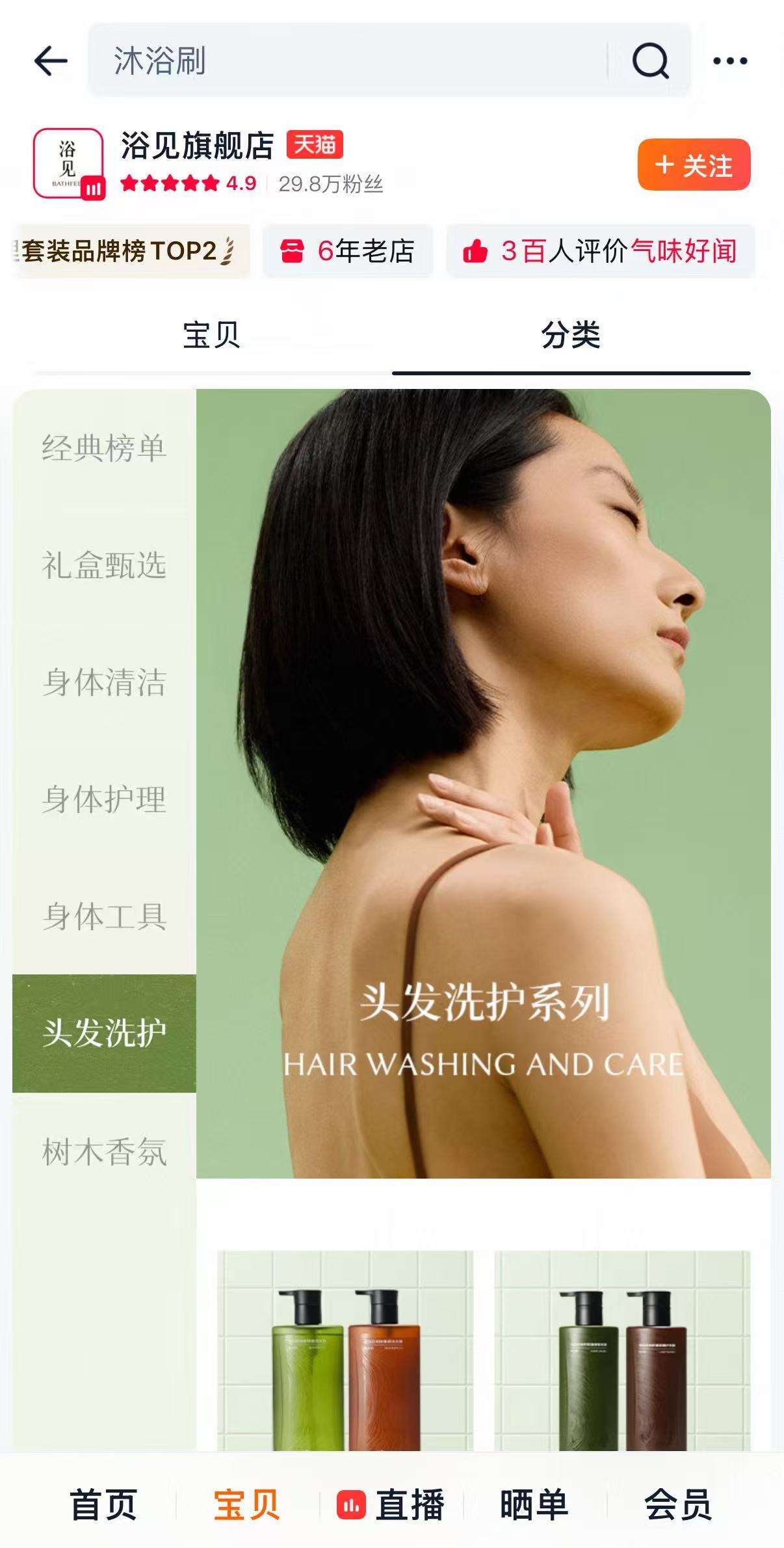
从200元浴刷到情绪价值放大器,浴见如何征服资本“靠山”
Guan Cha Zhe Wang· 2025-11-20 09:04
Core Insights - Bathfeel, a domestic body care brand, opened its first offline store in Shanghai, marking a significant move for its parent company, Betaini, to seek new growth avenues amid slowing main business growth [1][9] - The brand philosophy of Bathfeel is rooted in the idea that "the body is self, the body is freedom," which reflects a shift in consumer sentiment towards emotional value in body care products [2][4] Brand Development - Bathfeel started with a nearly 200 yuan pig bristle bath brush, successfully capturing the market and selling over 400,000 units by June this year [3][7] - The brand's focus shifted from functional products to emotional value, with user research indicating that emotional healing needs account for 53% of consumer demand in bathing scenarios [4][7] - Bathfeel has expanded its product line to include various body oils and creams, transitioning from a tool-focused brand to a comprehensive body care brand [4][7] Market Positioning - Bathfeel's main products are priced around 200 yuan, positioning itself in the high-end market segment and achieving consecutive sales growth over the past three years [7][12] - The brand has successfully captured a consumer base of 70% from new first-tier cities, with a significant portion being women aged 25-34, indicating a strong appeal to affluent urban consumers [7][12] Retail Strategy - The offline store design emphasizes brand experience over traditional retail logic, creating a comfortable environment for customers to engage with the brand [8][15] - Bathfeel's store features narrative sections that enhance emotional connections, moving away from conventional product displays [8][15] Investment and Growth Strategy - Betaini's investment in Bathfeel, acquiring a 20% stake, aims to explore product innovation and channel collaboration, addressing growth pressures faced by its main brand, Winona [9][12] - Betaini has made multiple investments across various sectors, indicating a strategic shift to diversify its brand portfolio and reduce reliance on a single brand [12][13] - The ultimate goal for Betaini is to build a comprehensive "skin health ecosystem" that covers different skin types, age groups, and price ranges, maximizing consumer reach [12][15]
丸美创始人孙怀庆:被超越不代表 “变差了” | 36氪专访
3 6 Ke· 2025-11-20 08:13
Core Insights - The article discusses the transformation of Marubi, a 23-year-old beauty brand, from a primarily offline sales model to an online-focused strategy due to the pandemic's impact on consumer behavior and retail channels [1][2][3] Group 1: Strategic Transformation - Marubi initiated a strategic shift in 2021, moving from a 70% offline and 30% online sales model to an 80% online and 20% offline model, which has revitalized the company's growth [2][3] - The company set a performance target of 4 billion yuan for the current year, which is seen as achievable based on past growth rates of approximately 30% year-on-year over the last ten quarters [2][3] Group 2: Market Position and Consumer Base - The pandemic led to a significant change in consumer habits, making it difficult for offline retail to recover, prompting Marubi to adapt to the new market dynamics [2][4] - The user base has expanded significantly post-transformation, retaining older offline customers while attracting younger online consumers, thus broadening the overall market reach [9][12] Group 3: Brand Strategy and Product Development - Marubi's approach emphasizes profitability and sustainable growth, focusing on product quality, user experience, and brand trust rather than merely chasing online traffic [10][15] - The company has invested in research and development, holding over 600 patents, with a focus on effective and continuous investment rather than just high spending [14][16] Group 4: Challenges and Future Outlook - The transition has not been without challenges, as the company faced a 30% decline in performance, which necessitated a reevaluation of its strategies and priorities [7][8][20] - Marubi aims to reduce reliance on single online channels and is aware of the competitive pressures in the beauty industry, indicating a long-term focus on sustainable growth rather than short-term gains [19][22]
美容护理观察系列1:双11稳态与新变并存
Orient Securities· 2025-11-20 04:15
Investment Rating - The industry investment rating is "Positive (Maintain)" [6] Core Insights - The beauty and personal care sector is transitioning from "single functional consumption" to "composite efficacy + emotional consumption," indicating enhanced consumer resilience [4] - The beauty industry is no longer reliant on a single traffic window, with narratives around channel efficiency strengthening [4] - Leading brands exhibit stronger resilience, with a positive outlook on companies with robust brand assets that can capitalize on channel and product cycles [4] Summary by Sections Industry Overview - The Double 11 shopping festival saw a total e-commerce sales of 16,950 billion yuan, reflecting a year-on-year growth of 14.2% [8] - Beauty and personal care sales reached 991 billion yuan, growing by 11.65% [8] - Instant retail sales surged to 670 billion yuan, marking a remarkable growth of 138.4% [8] Market Dynamics - Tmall leads in high-end beauty sales, while Douyin is becoming a significant platform for domestic brands [8] - The top five beauty brands on Tmall include Proya, Estée Lauder, Lancôme, L'Oréal, and SkinCeuticals, with Proya maintaining the top position for three consecutive years [8] - Douyin's beauty sales rankings show Han Shu at the top, followed by Proya and L'Oréal [8] Company Performance - Leading brands like Up Beauty, Ruo Yu Chen, and Mao Ge Ping have shown impressive performance during the Double 11 event [8] - Up Beauty's sales increased by 145% year-on-year, with significant growth on both Tmall and Douyin [8] - Ruo Yu Chen's sales saw a staggering 35-fold increase year-on-year, with Douyin sales growing by over 100% [8]


央视网和新华社为何同期专访丸美?答案藏在重组胶原里
FBeauty未来迹· 2025-11-19 09:30
Core Viewpoint - The article highlights the emergence of recombinant collagen as a significant anti-aging ingredient developed in China, marking a shift in the beauty industry where domestic brands gain authority in core raw materials, moving from a follower to a leader position in the global market [3][4][5]. Group 1: Company Overview - Marubi Biotech is one of the few companies in China that has achieved full-chain self-research and production of recombinant collagen, positioning itself as a representative of high-end beauty technology in the country [5][6]. - The company has played a crucial role in establishing national industry standards for recombinant collagen, transitioning from an industry participant to a standard setter, which signifies its technical authority [6][7]. Group 2: Technological Advancements - Marubi has developed a comprehensive research and production chain in the functional protein field, including gene editing, fermentation expression, structural verification, separation purification, and formula application [7][11]. - The establishment of the "National Recombinant Functional Protein Technology Research Center" under Marubi indicates its capability to not only serve its product development but also provide technical output to the industry [11][12]. Group 3: Product Development and Efficacy - Marubi's products, such as the "Recombinant Double Collagen," have achieved significant breakthroughs, including the first global production of high-activity recombinant human collagen through self-research and the use of translation pause technology [13][14]. - Clinical trials have shown that Marubi's products can effectively reduce wrinkle volume, with a reported 56.83% reduction in under-eye wrinkles and 13.18% in nasolabial folds after seven days of use [17][20]. Group 4: Market Strategy and Future Outlook - Marubi aims to establish a global presence by setting up research centers abroad and forming joint ventures, reflecting a shift from merely exporting products to a more comprehensive output of technology, standards, and brand culture [28][29]. - The company's vision includes creating a beauty standard that transcends cultural boundaries, emphasizing the importance of scientific research and long-term commitment to quality over short-term gains [28][30].

化妆品板块11月19日涨1.72%,科思股份领涨,主力资金净流入2.01亿元
Zheng Xing Xing Ye Ri Bao· 2025-11-19 08:58
Market Overview - The cosmetics sector increased by 1.72% on November 19, with Keshare leading the gains [1] - The Shanghai Composite Index closed at 3946.74, up 0.18%, while the Shenzhen Component Index closed at 13080.09, unchanged [1] Key Performers - Keshare (300856) closed at 15.29, up 7.98% with a trading volume of 315,500 shares and a turnover of 475 million yuan [1] - Bavi (920123) closed at 19.72, up 4.89% with a trading volume of 118,600 shares and a turnover of 229 million yuan [1] - Lafang (603630) closed at 24.60, up 4.15% with a trading volume of 145,700 shares and a turnover of 353 million yuan [1] - Other notable performers include Shuiyang (300740) and Tian Cai Ya (603605), with increases of 3.28% and 2.55% respectively [1] Fund Flow Analysis - The cosmetics sector saw a net inflow of 201 million yuan from institutional investors, while retail investors experienced a net outflow of 252 million yuan [2] - Keshare had a net inflow of 63.71 million yuan from institutional investors, while retail investors had a net outflow of 47.79 million yuan [3] - Other companies like Shuiyang and Furuida also experienced significant net inflows from institutional investors, indicating strong interest in the sector [3]


东方证券:化妆品行业创新发展 国货品牌有望开辟新路径实现技术跃迁
智通财经网· 2025-11-19 07:12
Core Viewpoint - The cosmetics industry in China is expected to evolve from ingredient accumulation to precise targeting, and from marketing competition to better integration of technology, channels, and brands, with the potential for domestic brands to create globally influential brands in the next decade [1] Industry Summary - The domestic cosmetics market is experiencing continuous growth with ongoing ingredient innovation [2] - The market size is projected to grow from 688.6 billion yuan in 2024 to 973.4 billion yuan in 2029, with a CAGR of 7.2% [2] - The skincare market is expected to reach 698.5 billion yuan by 2029, with a CAGR of 8.6%, while the anti-wrinkle skincare segment is projected to grow to 285.2 billion yuan, with a CAGR of 18.9%, significantly outpacing overall market growth [2] - Active plant ingredients are a hot trend, with domestic brands exploring local plant resources to achieve technological advancements and brand enhancement through "herbal technology" [2] Company Case Study: Lin Qingxuan - Lin Qingxuan, established in 2003, focuses on the anti-wrinkle skincare market and has pioneered the "oil-based skincare" concept [3] - The brand has established a competitive barrier by concentrating on the core ingredient of Camellia oleifera and utilizing proprietary extraction technology to create a product matrix [3] - Lin Qingxuan's core product, Camellia oil, has undergone five iterations from 2014 to 2024 and has maintained the top retail sales position in China for 11 consecutive years [3] - The company enhances its core technology through strategic partnerships and independent research, with plans to upgrade its key ingredient further by 2024 [3] - Lin Qingxuan has built a comprehensive value chain encompassing exclusive raw material supply, patented ingredient extraction, product development, and production [3] Financial Performance of Lin Qingxuan - Lin Qingxuan's revenue is projected to grow from 691 million yuan in 2022 to 1.21 billion yuan in 2024, with a CAGR of 32.3% [4] - Online revenue has increased from 312 million yuan to 714 million yuan, with a CAGR of 51.2% [4] - Adjusted net profit is expected to rise from a loss of 4 million yuan to a profit of 200 million yuan [4] - The company's gross margin has improved from 78% to 82.5%, and adjusted net profit margin has increased to 16.6%, indicating strong brand positioning and growth potential [4] Investment Recommendations - Relevant stocks in the beauty and personal care sector include: Shumei Co., Maogeping, Proya, Shanghai Jahwa, Marubi, Shuiyang, Betaini, and Runben [5] - For the agency operation sector, consider: Ruoyu Chen and Qingmu Technology [6] - Other companies to watch include: Meili Tianyuan Medical Health, Kidswant, as well as Lin Qingxuan, Natural Hall, and Plant Doctor regarding their IPO progress [6]

美妆企业2025年三季报公布,业绩分化趋势明显
Xi Niu Cai Jing· 2025-11-19 07:07
Core Viewpoint - The beauty industry in China's A-share market is experiencing a clear divergence in performance among companies, indicating that the era of overall growth may be coming to an end [2][3]. Group 1: Company Performance - Proya reported a revenue of 7.098 billion yuan for the first three quarters of 2025, a year-on-year increase of 1.89%, but a decline in Q3 revenue by 11.63% to 1.736 billion yuan [2]. - Shanghai Jahwa achieved a revenue of 4.961 billion yuan for the first three quarters, up 10.83%, with Q3 revenue increasing by 28.29% to 1.482 billion yuan [2]. - Betaini's revenue for the first three quarters was 3.464 billion yuan, down 13.78%, with Q3 revenue decreasing by 9.95% to 1.092 billion yuan [2]. - Shuiyang reported a revenue of 3.409 billion yuan for the first three quarters, up 11.96%, with Q3 revenue increasing by 20.92% to 909 million yuan [3]. - Marubi's revenue for the first three quarters was 2.450 billion yuan, a 25.51% increase, with Q3 revenue rising by 14.28% to 686 million yuan [3]. - Fulejia's revenue for the first three quarters was 1.297 billion yuan, down 11.54%, with Q3 revenue decreasing by 17.58% to 434 million yuan [3]. Group 2: Market Trends and Challenges - Many beauty companies are facing significant development pressures, with only a few maintaining growth in both the first three quarters and Q3 [3][4]. - Proya's slowing growth and decline in Q3 revenue and net profit highlight a shift from previous rapid growth [4]. - Fulejia, despite being labeled as the "first stock of medical beauty masks," is experiencing market challenges that have affected its performance [4]. - Shuiyang attributes its positive performance to the gradual realization of its high-end strategy, although it faces long-term challenges in the high-end beauty market [4]. Group 3: Strategic Moves - Proya and Marubi have initiated plans for a Hong Kong listing, which may be a strategy to break through growth bottlenecks [5]. - The shift from incremental competition to stock competition in the beauty industry gives more significance to the Hong Kong listing, although achieving internationalization remains a challenge [5].