
科思创

Search documents
趋势研判!2025年中国MDI行业产业链图谱、市场规模、竞争格局及未来趋势:下游市场应用需求高涨,全球MDI生产企业持续扩能[图]
Chan Ye Xin Xi Wang· 2025-05-07 00:58
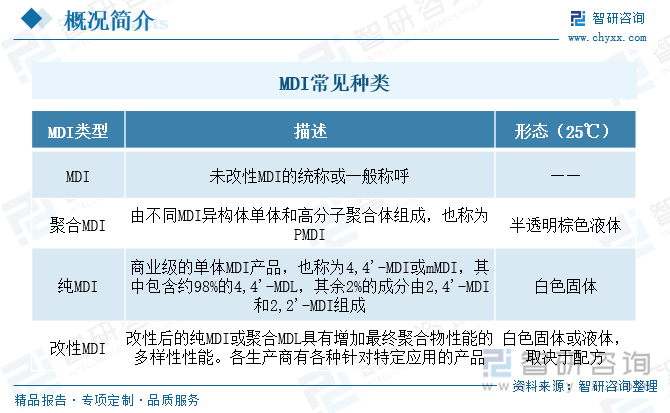
Industry Overview - MDI, or methylene diphenyl diisocyanate, is a high-performance chemical material known for its excellent heat resistance, chemical stability, and high strength [2][5] - The MDI industry in China began in the 1960s but was heavily reliant on imports due to technological limitations [2][12] - Since the 21st century, with investments from foreign companies like Dow and the production ramp-up by Wanhua Chemical, China's MDI capacity has rapidly expanded, surpassing 1 million tons in 2008 and 3 million tons in 2016 [2][12] - By 2024, China's MDI capacity is projected to grow from 3.38 million tons in 2018 to 4.8 million tons, accounting for over 40% of global MDI capacity [2][12] Global Market - The global MDI capacity is expected to increase from 8.38 million tons in 2018 to 11.52 million tons by 2024, with a compound annual growth rate (CAGR) of 5.44% [7] - The MDI industry is characterized by high technical barriers and capital intensity, leading to an oligopolistic market structure, with the top five companies controlling 91.77% of global capacity by 2024 [9][10] Domestic Market - China's MDI market is dominated by Wanhua Chemical, which holds a 64.85% share of the domestic capacity, significantly higher than other players like BASF and Covestro [12][20] - The MDI industry in China is experiencing growth due to increasing demand from the construction sector, with the market size projected to rise from 33.72 billion yuan in 2019 to 48.23 billion yuan in 2024 [14] Key Companies - Wanhua Chemical, established in 1998, is a leading global chemical materials company with an MDI capacity of 3.8 million tons per year as of 2024, and plans to expand to 4.5 million tons by 2026 [16] - BASF, a major player in the MDI market, has a global capacity of 1.89 million tons as of 2024, leveraging advanced technologies and facilities [18] Development Trends - The MDI industry is witnessing continuous capacity expansion and increasing market concentration, with Wanhua Chemical and other companies planning to add 1.49 million tons of new capacity by 2025 [20] - The industry is also shifting towards green transformation and high-end upgrades, with companies like Wanhua and BASF achieving sustainability certifications and developing high-performance products [21] - Emerging markets, particularly in the Asia-Pacific region, are driving demand growth, with China's dual carbon policy enhancing the need for MDI in construction and logistics [22]


华峰化学,60亿并购被否!巴斯夫,成功发货!化工巨头都“爱”这一新材料
DT新材料· 2025-05-06 16:02
Core Viewpoint - Huafeng Chemical's 19 proposals related to a 6 billion yuan acquisition were collectively rejected, impacting its strategic expansion in the polyurethane industry [1][2]. Group 1: Acquisition and Market Impact - The proposed acquisitions aimed to enhance Huafeng Chemical's product matrix across multiple key segments of the polyurethane industry, facilitating vertical integration from raw materials to end products [2]. - The TPU market is experiencing rapid growth, with a global market size of $3.804 billion in 2023, projected to reach $5.83 billion by 2030, reflecting a CAGR of 6.5% from 2024 to 2030 [2]. Group 2: Competitive Landscape - Major global manufacturers in the TPU sector include BASF, Covestro, Huntsman, Lubrizol, Wanhua Chemical, Huafeng Chemical, and Merck, all actively expanding their production capacities [3]. - Covestro announced a multi-million euro investment in a TPU production base in Zhuhai, Guangdong, aiming for an annual capacity of nearly 120,000 tons [3]. Group 3: Innovations and Applications - The TPU industry is diversifying with innovations such as high-performance paint protection films (PPF) launched by Covestro in collaboration with Shell and others, entering the supply chains of major automotive brands [5]. - The demand for high-quality PPF is rapidly increasing, with consumers seeking enhanced protection features and sustainability [6]. Group 4: Bio-based TPU Developments - Bio-based TPU is emerging as a significant trend, with companies like Wanhua Chemical and BASF developing products from renewable resources, enhancing their competitive edge in sustainability [7][9]. - BASF has initiated a strategy combining product innovation, closed-loop production, and global certification to strengthen its position in the bio-based TPU market [7].


创新塑造未来 | 2025中国国际工程塑料产业创新评选火热开启!
DT新材料· 2025-05-06 16:02
Group 1 - The core theme of the 2025 China International Engineering Plastics Industry Innovation Awards is "Innovation Shapes the Future," focusing on identifying and recognizing innovative materials, processes, and equipment in the engineering plastics sector [2] - The awards aim to promote outstanding companies within the industry and encourage the development of the entire engineering plastics sector, with participation from over 500 leading companies globally, including BASF and Covestro [2] - The awards include three main categories: "Innovative Materials Award," "Innovative Process Improvement Award," and "Innovative Industry Solutions Award," designed to highlight exemplary innovations in the engineering plastics industry [2] Group 2 - The organizing units include DT New Materials as the host and Ningbo Detai Zhongyan Information Technology Co., Ltd. as the organizer, with various supporting media outlets [3] - The award ceremony is scheduled for September 11, 2025, coinciding with the 2025 Polymer Industry Annual Conference [5] - The evaluation criteria consist of scores from an expert panel (90 points) and online voting (10 points), with specific rules for participation and scoring to ensure fairness and transparency [5][6] Group 3 - The evaluation process includes several stages: application and preliminary review, public announcement and online voting, and expert evaluation through online presentations [7] - Products must demonstrate innovation, market applicability, and significant advantages over existing products, aligning with industry trends and policies [8][11] - The economic viability of the products is assessed based on their cost-effectiveness and potential to generate substantial economic benefits [9] Group 4 - Eligible companies must possess innovative products, core technologies, or industry solutions and can apply independently or be recommended by industry associations or partners [10] - Award-winning companies will receive media coverage, a trophy, and a certificate, along with promotional opportunities at the 2025 Polymer Industry Annual Conference [13][15][17]
消息人士:根据欧盟合并规定,阿联酋阿布扎比国家石油公司ADNOC价值166亿美元收购科思创的交易将无条件获得欧盟反垄断批准。
news flash· 2025-05-06 10:50
消息人士:根据欧盟合并规定,阿联酋阿布扎比国家石油公司ADNOC价值166亿美元收购科思创的交 易将无条件获得欧盟反垄断批准。 ...
主动将“中国方案”嵌入全球创新链 外资龙头上海总部“含科量”升级
Shang Hai Zheng Quan Bao· 2025-04-29 20:02
Group 1 - In 2024, Shanghai's actual foreign investment is expected to exceed $17.6 billion, with over 1,000 regional headquarters of multinational companies and 30 new foreign R&D centers established [1] - Multinational companies are shifting from merely "manufacturing in China" to embedding "Chinese solutions" into global innovation chains, positioning Shanghai as a global innovation hub [1] - Bayer's Nivea has established a significant R&D center in Shanghai, designed for seamless transitions between theoretical work and experimental validation, emphasizing local market innovation [2][3] Group 2 - Toyota is increasing its investment in China by establishing a comprehensive electric vehicle company in Shanghai, marking a significant step for its Lexus electric vehicle project [2][3] - Toyota is restructuring its R&D operations in China to enhance local decision-making and innovation, integrating various R&D centers into a unified system [3][4] - The company aims to develop products that meet Chinese consumer needs by employing local talent and methodologies [4] Group 3 - Shanghai has recently certified 30 regional headquarters and 10 foreign R&D centers, with a focus on key industries such as electronic information, biomedicine, and new energy [5] - BD Medical has launched a distribution and R&D center in Shanghai, expected to achieve an annual import-export total of 2 billion yuan [5] - BASF is investing 500 million yuan to expand its Cellasto factory in Shanghai, which will enhance its production capacity by nearly 70% by 2027 [5] Group 4 - Carl Zeiss is establishing a new headquarters in Shanghai's free trade zone, integrating R&D, manufacturing, and exhibition functions, with an investment exceeding 600 million yuan [5] - Covestro is expanding its presence in China, collaborating with GAC Group to develop high-performance materials for flying cars, with a significant investment planned [6] - Shanghai aims to attract international companies to enhance R&D innovation and meet local market demands while optimizing their overseas business strategies [6]

156万吨!万华化学,再上两大项目
DT新材料· 2025-04-29 15:32
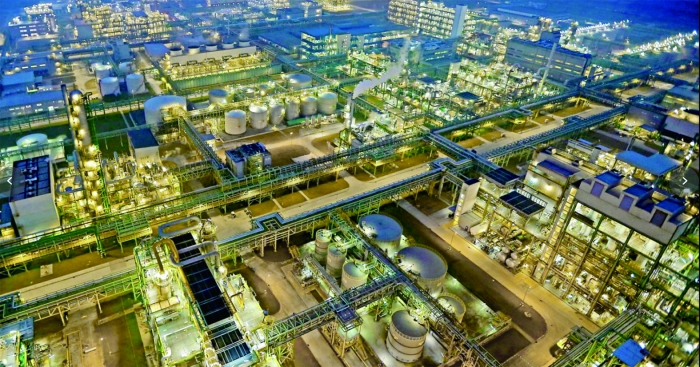
【DT新材料】 获悉,在获得中东石油巨头 6.38亿美金入股之后,4月28日, 万华化学 又公示两大 化工新材料项目,合计产能156万吨! 点击扩展阅读 :《 又一世界巨头,战投万华化学子公司! 》 截至2024年底,万华化学的PC产能48万吨/年。 在 2024年6月,公司曾发布将原有PC装置产能从 48万吨/年提升至60万吨/年,但尚未完全投产。 加上本次项目,未来,万华化学聚碳酸酯总的产能将突破120万吨,国内遥遥领先。 据悉, 2024年国内聚碳酸酯的产能超过380万吨,产量超过300万吨,产能利用率达到84%,创行 业新高。 预计2025年将增至450万吨/年,占全球产能的40%以上。主要企业包括 万华化学、鲁西 化工、利华益维远、浙石化、浙铁大风、恒力石化、海南华盛、湖北甘宁、盛通聚源、沧州大化,神 马 等。此外, 科思创、帝人、中沙、三菱瓦斯 等在国内也有生产基地。 逐渐增加的产能,却面临低端通用料占比超60%,低端产能利用率长期低于55%,这正在让行业毛 利率跌向冰点 。据悉, 截至2025年3月底,国内PC行业动态毛利值为-275元/吨,1季度平均毛 利-561元/吨,同比下跌182.26% ...
以变应变:应对“对等关税”影响的思路与对策
Sou Hu Cai Jing· 2025-04-28 23:12
Core Viewpoint - The "reciprocal tariff" policy of the Trump administration poses significant risks to global trade and supply chains, particularly affecting Jiangsu's economy, which will face both short-term pressures and long-term structural adjustments [1] Short-term Impacts - Jiangsu's exports to the U.S. are expected to decline due to increased tariffs, leading companies to shift orders to emerging markets like Europe and South America [2] - The impact of tariffs on export companies varies based on price elasticity; companies with inelastic demand may pass costs to U.S. consumers, while those with elastic demand may exit the market or absorb costs [2] - The strict origin inspection policies in the U.S. complicate re-export trade through countries like Cambodia and Vietnam, limiting options for Jiangsu companies [2] - Tariffs will increase the cost of imported raw materials and components, reducing market competitiveness and demand for Jiangsu enterprises [2][3] - Fluctuations in the RMB exchange rate due to tariffs will significantly affect small and medium-sized enterprises engaged in exports, leading to profit reductions and increased operational risks [3] - The inconsistency of U.S. tariff policies creates uncertainty, hindering investment decisions and operational activities of companies [3] Long-term Impacts - The "reciprocal tariff" policy may drive Jiangsu's economic transformation by pushing companies to enhance product value to offset rising tariffs [4] - Jiangsu enterprises are encouraged to diversify markets and explore non-U.S. markets, with exports to Belt and Road countries projected to grow significantly [5] - Government policy adjustments, including tariff reductions in key sectors, will support enterprise transformation and attract foreign investment [5] - Companies are increasingly localizing supply chains and establishing production bases in non-U.S. countries to mitigate tariff impacts [5] - The integration of domestic and foreign trade is accelerating, with initiatives to promote "export to domestic sales" models [6] Recommendations for Jiangsu - The government should innovate policies to support exports and establish a responsive mechanism for tariff impacts [7] - Companies should focus on enhancing competitiveness through technological advancements and transitioning to high-end production [8] - Jiangsu should continue to develop diverse market strategies to mitigate external risks, particularly in Belt and Road countries [9] - Financial innovations should be implemented to help enterprises manage operational risks, including currency hedging and supply chain financing [10] - Regional collaboration should be enhanced to improve overall resilience against risks, focusing on key industries like semiconductor and biomedicine [11] - A dynamic risk prevention system should be established to monitor tariff changes and support enterprises in adapting to new trade environments [12]
以人工智能驱动材料创新 ——科思创工程塑料事业部全球总裁王丽一席谈
Zhong Guo Hua Gong Bao· 2025-04-28 01:33
在近日举办的中国国际橡塑展上,科思创工程塑料事业部全球总裁王丽表示:"借助人工智能 (AI)驱动,科思创从传统产品研发转向更高效的创新模式。AI不仅提供应用开发新机会,还提升研 发速度和客户体验。科思创深度参与跨界融合趋势,创新聚碳酸酯解决方案,满足人工智能设备需求, 助力产业链加速推动AI变革。" 经由AI赋能,科思创得以促进一些关键领域加速发展,其中包括备受关注的循环经济。王丽强 调:"循环经济是科思创的长期战略愿景。科思创通过产品研发、产业链合作、技术创新和产能布局来 落实愿景,尤其聚焦回收材料和技术的开发。" 在产业链合作方面,科思创凭借AI技术创新商业模式,拓宽合作伙伴关系。2025年4月,科思创宣 布推出采用汽车报废车灯回收制成的消费后再生(PCR)聚碳酸酯新品系列。该产品线是德国国际合作 机构GIZ发起的一项联合项目的最新成果。该产品系列含50%回收成分,已通过德国莱茵TüV认证,可 重新用于生产汽车部件。目前,大众与蔚来正推进材料验证,未来有望将其应用于新车型设计。 在技术研发方面,科思创开发化学回收技术,探索将聚碳酸酯分解为单体再生产的闭环工艺。德国 勒沃库森总部已启动化学回收技术中试。科思 ...
又一世界巨头,战投万华化学子公司!
DT新材料· 2025-04-27 15:14
【DT新材料】 获悉,4月25日, 万华化学 与 科威特石化工业公司 (下称"PIC",科威特石油公司KPC全资子公司)正式签署合资协议, PIC投资 6.38亿美金认购万华化学全资子公司 万华化学(烟台)石化有限公司 25%的股权 。 在当下如此动荡的关税冲突下,预计未来将有更多石化企业转向与中东企业合作 。近年来最大的一个事件莫过于2023年3月, 全球最大石油公司 沙特 阿美 宣布投资246亿元,收购 荣盛石化 约10%股权,目前是该公司第二大股东。 同年9月,沙特阿美进一步宣布计划收购东方盛虹全资子公司 盛虹 石化 10%的战略股权 (尚未完成) 。同年10月,沙特阿美与南山集团、山东能源集团以及非上市炼化巨头山东裕龙共同签署了谅解备忘录,预示着 沙特阿美可能收购 山东裕龙 10%的战略股权 (尚未完成) 。 2024年4月22日,恒力石化公告,沙特阿美拟向恒力集团收购占 恒力石化 已发行股本 百分之十加一股的股份 (尚未完成) 。 点击扩展阅读 :《 荣盛石化和沙特阿美收购投资项目重大进展! 》、《 沙特阿美、荣盛石化、恒力石化,又来大动作! 》 其他主要的中东石油大厂还有阿布扎比国家石油公司( A ...
6天5板化工大牛股,一季度净利同比下降24%!多次澄清环氧丙烷项目未形成收入
2 1 Shi Ji Jing Ji Bao Dao· 2025-04-23 02:35
Group 1 - The chemical sector is experiencing speculation around propylene oxide, with the stock of Hongbaoli (002165.SZ) hitting the limit up for six days, recording a turnover rate of 44.1% [1] - Global chemical giants Covestro and LyondellBasell announced the permanent closure of their joint propylene oxide production facility, with an annual capacity of approximately 315,000 tons, leading to expectations of price increases due to supply shortages [1] - Hongbaoli reported a revenue of 654 million yuan for Q1 2025, a year-on-year increase of 9.48%, but a net profit of 22.0027 million yuan, a decrease of 23.68% due to lower product prices and rising raw material costs [1] Group 2 - For the full year 2024, Hongbaoli achieved a revenue of 2.726 billion yuan, a year-on-year increase of 2.98%, and a net profit of 584.954 million yuan, a year-on-year increase of 52.8% [1] - The company plans to distribute a cash dividend of 0.4 yuan per 10 shares (including tax) [1] - Hongbaoli's main business includes the research, production, and sales of propylene oxide derivatives, such as polyurethane rigid foam composite polyether and isopropanolamine series products [1] Group 3 - Hongbaoli clarified that its propylene oxide project is undergoing technical modifications and has not yet generated sales revenue, thus not impacting the company's performance [2] - The project is expected to enter trial production by the end of 2025 [2]
