Stripe

Search documents
AI 产业速递:OpenAI 正在进行哪些布局?
Changjiang Securities· 2026-01-16 00:51
Investment Rating - The investment rating for the industry is "Positive" and maintained [8] Core Insights - The AI application sector has gained significant attention recently, with North American model leader OpenAI making new moves across various subfields of "AI+" [2][5] - The current acceleration in AI applications is expected to continue, with a strong outlook for companies like Zhipu and Minimax following their IPOs. Key marginal factors include (1) model capability improvements and release event catalysts; (2) advancement of business models (C-end traffic entry logic & B-end labor substitution logic). A paradigm shift in models by 2026 is anticipated to bring excess opportunities, with a long-term positive outlook on AI industry upgrades [2][11] Summary by Relevant Sections - **AI Medical Applications**: OpenAI launched ChatGPT Health, a dedicated section within ChatGPT for healthcare, collaborating with b.well to manage users' health throughout their lifecycle. This signifies a shift towards a specialized, privacy-focused product in the medical field [11] - **E-commerce and Payments**: OpenAI has formed strategic partnerships with major e-commerce platforms like Shopify and Etsy, allowing consumers to use ChatGPT for product selection. Additionally, OpenAI plans to take a share of sales completed through ChatGPT, which could become a significant revenue source given its large user base [11] - **AI Coding**: OpenAI is building a ubiquitous developer infrastructure by decoupling account systems and embracing third-party ecosystems. The introduction of a one-stop platform for developers aims to leverage the OpenAI ecosystem [11] - **Hardware Developments**: OpenAI is focusing on audio AI and plans to release new audio models and hardware. A new AI headset, developed by a team led by Apple's former chief designer, is expected to launch in September 2026, with projected sales of 40-50 million units in the first year [11]
Polygon Labs' $250M Coinme Acquisition Shows Stablecoin Payments Entering A New Phase In 2026
Benzinga· 2026-01-15 17:51
Group 1: Market Developments - Polygon Labs is acquiring Coinme and Sequence for $250 million to enter the stablecoin-based payments market, aiming to become a leading avenue for stablecoin transactions globally [1] - The year 2026 is anticipated to be pivotal for stablecoins, transitioning from a trading tool to a payment mechanism, with several new stablecoin projects launched since December 2025 [2][3][5][6] Group 2: New Stablecoin Projects - SoFi Bank launched SoFiUSD, a fully reserved U.S. dollar-pegged stablecoin, on December 18, 2025, marking it as the first national bank to issue such a stablecoin [3] - The Pakistani government announced a partnership to integrate the USD1 stablecoin into its digital payment infrastructure on January 14, 2026 [4] - Wyoming's official Frontier stablecoin began its public launch in early January 2026 after testing phases [6] Group 3: Market Dynamics and Competition - The stablecoin market is currently dominated by Tether (USDT) and U.S. Dollar Coin (USDC), which account for most of the market cap, despite the emergence of new stablecoins [6] - Experts suggest that while the market does not need numerous stablecoins, there is a demand for niche stablecoins tailored for specific use cases, such as DeFi yields and local regulations [7][19] - Competition is expected to increase with new entrants like PayPal's PYUSD and World Liberty Financial's USD1, which may erode USDT's market share [18] Group 4: Adoption and Integration - Merchants are likely to prefer stablecoins with deep liquidity and clear compliance, focusing on those that can seamlessly integrate into existing payment systems [7][9] - Stripe has introduced stablecoin-based accounts for clients in over 100 countries, allowing customers to pay with stablecoins while merchants settle in fiat [8][9] - The integration of stablecoins into payment systems is seen as a way to reduce foreign exchange costs and enable faster settlements for merchants [15][16] Group 5: Regulatory Environment - Regulatory clarity from the U.S. and Europe is fostering bullish sentiment and adoption of stablecoins [17] - A new draft bill from the Senate Banking Committee may impose restrictions on digital asset service providers regarding interest payments on stablecoins, potentially affecting yield-bearing coins [11] Group 6: Investment Opportunities - Investment opportunities are emerging in startups focused on distribution, compliance, and workflow integration within the stablecoin ecosystem [13] - Venture capital is expected to flow into companies that facilitate merchant acceptance of stablecoins for payroll and treasury management [20]



再募 150 亿美元,拿走全美 18%的风投资金,3 万字长文聊聊 a16z 是怎么运转的?
Founder Park· 2026-01-15 13:04
Core Insights - a16z has raised over $15 billion, capturing more than 18% of all VC funds raised in the U.S. in 2025 [2][10] - The firm has invested in 56 unicorns over the past decade, more than any other venture capital institution, and has backed 10 out of the top 15 private companies by valuation [3][15] - a16z is characterized as a "Firm" rather than a "Fund," focusing on building a long-term competitive advantage system that strengthens with scale [4][41] Fundraising and Market Position - In 2025, a16z's fundraising of $15 billion surpassed the combined total of its closest competitors, Lightspeed ($9 billion) and Founders Fund ($5.6 billion) [10] - a16z's fundraising success occurred in a challenging environment, where the average fund took 16 months to close, while a16z completed its fundraising in just over three months [10] - The firm has four independent funds that ranked in the top 10 for total capital raised in 2025, with its Late Stage Venture Fund II ranking second [12] Investment Strategy and Philosophy - a16z has led early-stage financing for 31 companies that eventually surpassed a valuation of $5 billion, outperforming its closest competitors by over 50% [16] - The firm holds 44% of the total valuation of all AI unicorns in its portfolio, indicating a strong position in the AI sector [16] - a16z's investment philosophy emphasizes identifying and backing the ultimate winners in their respective categories, often providing more capital than initially requested [26][34] Historical Context and Evolution - Since its inception, a16z has evolved through two distinct eras, focusing first on recognizing undervalued software companies and later on the increasing scale of successful tech firms [63][72] - The first era (2009-2017) was marked by a willingness to pay premium prices for high-potential companies, while the second era (2018-2024) focused on raising larger funds to maintain meaningful ownership in increasingly larger winners [66][72] - a16z's approach has been to build operational infrastructure that supports portfolio companies, a strategy that was initially viewed as unnecessary by peers [67] Notable Investments - a16z has invested in major companies such as OpenAI, SpaceX, and Databricks, which are among the top private companies by valuation [14][16] - Databricks exemplifies a16z's investment model, showcasing the firm's commitment to supporting founders and believing in their long-term vision [25][40] - The firm has consistently backed Databricks through multiple funding rounds, contributing to its growth into a $134 billion company [24][40]

谷歌开启AI购物意向截流战,电商格局要变天?
格隆汇APP· 2026-01-15 11:15
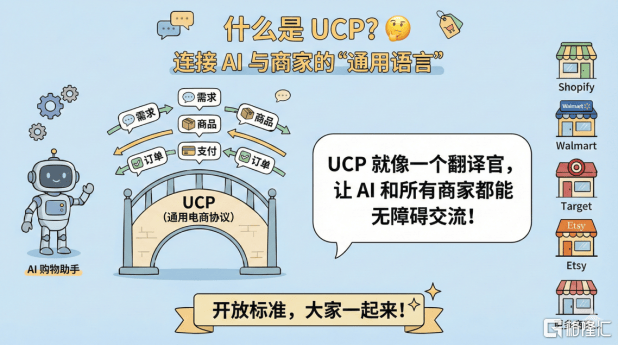
Core Viewpoint - Google has launched the Universal Commercial Protocol (UCP) to standardize interactions between AI agents and retailers, aiming to transform AI shopping from a niche experience into a fundamental industry standard, akin to the HTTP protocol for the internet [4][9][10]. Group 1: UCP Overview - UCP is an open-source protocol that provides a unified standard for product discovery, ordering, payment, and after-sales service, allowing different platforms and merchants to be accessed by a common AI agent [5]. - The protocol enables consumers to complete shopping through natural language across various platforms, moving the decision-making process from individual platforms to AI agents [5][11]. Group 2: Comparison with Previous Protocols - UCP builds on the earlier Agent Commerce Protocol (ACP) introduced by OpenAI, which had limitations in its closed ecosystem, restricting access to specific merchants [7][9]. - UCP aims to democratize AI shopping by breaking down entry points and leveraging Google's vast user base of 3 billion, allowing purchases across multiple interfaces like Gemini, Android, and YouTube [13][19]. Group 3: Enhanced Capabilities - UCP connects to Google's Shopping Graph, which contains 50 billion data points, enabling AI agents to understand dynamic inventory, size recommendations, and trending accessories, thus enhancing the shopping experience [14][15]. - The protocol also improves after-sales service by allowing AI agents to handle returns, delivery modifications, and logistics tracking, evolving from a temporary guide to a personal shopping assistant [18]. Group 4: Market Implications - In the short term, UCP is expected to drive significant traffic to participating merchants by utilizing Google's ecosystem, potentially leading to a surge in sales [20][22]. - However, there is a concern that this could lead to the dilution of brand identity, as AI agents prioritize hard metrics over emotional connections, reducing brands to mere data points in a comparison list [24][25]. Group 5: Competitive Landscape - Amazon is identified as the most affected competitor, facing challenges from Google's strategy to intercept traffic before it reaches Amazon, leveraging partnerships with traditional retailers [28][30]. - In response, Amazon is enhancing its AI shopping capabilities through Alexa, aiming to secure user engagement at the initial shopping thought stage [34][35]. Group 6: Domestic Market Dynamics - In the domestic market, Alibaba is actively pursuing AI shopping integration across its ecosystem, while ByteDance faces strategic challenges due to conflicting business models between content-driven commerce and efficiency-focused AI shopping [39][41]. - Alibaba's recent app updates have led to rapid user growth, while ByteDance's hesitation reflects the complexities of balancing its existing content ecosystem with emerging AI shopping trends [43][45]. Group 7: Future Outlook - Both Google and OpenAI are in the early stages of implementing their shopping experiences, with full functionality expected to roll out in the near future [47]. - The true commercial potential will be realized once these technologies are fully operational and consumer acceptance is established, indicating a significant market opportunity in the evolving landscape of AI-driven commerce [48].



谷歌开启AI购物意向截流战,电商格局要变天?
Sou Hu Cai Jing· 2026-01-15 10:41
Core Insights - Google launched the Universal Commercial Protocol (UCP) to standardize interactions between AI agents and retailers, aiming to automate the entire shopping process from product discovery to post-purchase support [1][3][4] Group 1: UCP Overview - UCP is an open-source protocol that allows AI shopping agents to interact with various platforms and merchants, providing a unified standard for product discovery, ordering, payment, and after-sales service [1][3] - The protocol aims to redefine AI shopping from a limited experience to a comprehensive industry standard, similar to how the HTTP protocol defined the internet [3][4] Group 2: Advantages of UCP - UCP enables seamless shopping experiences across multiple platforms, allowing users to make purchases through various Google services, including Gemini chat, Android search, and YouTube [4][6] - The protocol connects to Google's Shopping Graph, which contains 50 billion data points, allowing AI agents to understand dynamic inventory, size recommendations, and trending accessories, enhancing the shopping experience [4][6] Group 3: Impact on Retailers - UCP provides a dual-edged sword for retailers, offering increased sales through Google's vast user base while simultaneously risking brand dilution as AI agents take over the decision-making process [7][9] - Retailers, especially mid-sized ones, may experience a surge in traffic and sales due to UCP, but they could also face challenges in maintaining brand identity as AI agents prioritize efficiency over emotional connections [10][12] Group 4: Competitive Landscape - Amazon is positioned as a significant competitor, facing challenges from Google's strategy to redirect traffic before it reaches Amazon, effectively disrupting the traditional shopping flow [15][17] - In response, Amazon is enhancing its Alexa AI shopping capabilities to retain user engagement and ensure that customers turn to its platform first for shopping inquiries [17][18] Group 5: Domestic Market Dynamics - In the domestic market, Alibaba is aggressively pursuing AI shopping integration, aiming to establish itself as the first to implement a comprehensive AI shopping interface [19] - Conversely, ByteDance faces strategic challenges due to its content-driven business model conflicting with the efficiency-driven nature of AI shopping, leading to hesitance in adopting similar protocols [20][21] Group 6: Future Outlook - Both Google and GPT are in the early stages of implementing their shopping experiences, with significant user growth and functionality expected in the near future [22][23] - The true commercial potential of AI shopping will only be realized once these technologies are fully operational and consumer acceptance is established, indicating a transformative shift in the retail landscape [25]
Meld raises $7 million to integrate stablecoin networks, build the ‘Visa for crypto’
Yahoo Finance· 2026-01-14 15:00
When a company wants to pay its employees in different countries using stablecoins, it encounters a roadblock: many countries use different stablecoin service providers. There is Yellow Card in South Africa, Onmeta in India, and so on. Pankaj Bengani, a veteran of payment giant Block, founded Meld in part to fix this issue. He is building a network that aims to be a one-stop shop for companies and individuals to access and convert digital assets globally. The startup announced on Wednesday that it raised ...
当 AI 接管钱包:Agentic Commerce 如何重构互联网经济?
海外独角兽· 2026-01-14 04:05
Core Insights - Agentic Commerce represents a significant shift in the way commerce operates, potentially transforming the landscape of internet advertising, e-commerce, and payment infrastructure if successfully implemented [2][5] - The article explores two main questions: 1) Can Agentic Commerce be commercially viable? 2) If successful, how will it reshape the distribution of benefits across the internet ecosystem? [5] Commercial Viability - The article reviews past failures of Meta and Google in e-commerce, contrasting their approaches with those of OpenAI and Perplexity, to identify which third-party models (3P) are most likely to succeed in the future [5][24] - The potential total addressable market (TAM) for three consumer behavior categories—Impulse Buys, Routine Essentials, and Life Purchases—is estimated to be $3 trillion, with Lifestyle and Functional Purchases being the most promising areas for Agentic Commerce [8][9] E-commerce Spectrum - E-commerce is described as a continuous spectrum, with Amazon and Shopify at opposite ends, defined by who acts as the Merchant of Record (MoR) [10][11] - The distinction between "Platform is the MoR" (e.g., Amazon) and "Merchant is the MoR" (e.g., Shopify) affects the business scale, merchant control over customer data, and the potential for disruption in payment systems [12][13] Agentic Commerce Paths - Perplexity and ChatGPT represent two different approaches to Agentic Commerce, with Perplexity acting as the MoR and ChatGPT allowing merchants to retain that role [14][19] - OpenAI's Agentic Commerce Protocol (ACP) decouples the front-end checkout experience from back-end payment processing, allowing merchants to maintain their existing payment service providers while integrating with ACP [15][18] Historical Context - Google and Meta's reluctance to become MoR contributed to their struggles in e-commerce, as they prioritized advertising revenue over the complexities of managing e-commerce transactions [24][26] - The article suggests that if Google or Meta had developed a protocol similar to ACP, their e-commerce trajectories might have been different [26] Impact on Advertising and Payment - The article discusses how Agentic Commerce could redefine the relationship between advertising costs and commission rates, likening both to a form of "digital tax" [32][33] - Shopify is positioned as a structural winner in the Agentic Commerce context, benefiting from its lack of MoR responsibilities and the potential for increased market penetration among small and medium-sized businesses (SMBs) [38][39] Future Considerations - The article envisions a future where a Universal Catalog could be developed to facilitate AI-driven shopping experiences, requiring rich and structured metadata to support precise consumer needs [44]


电商Agent来了,谷歌发布UCP,亚马逊拒绝加入,阿里积极拥抱
3 6 Ke· 2026-01-14 02:58
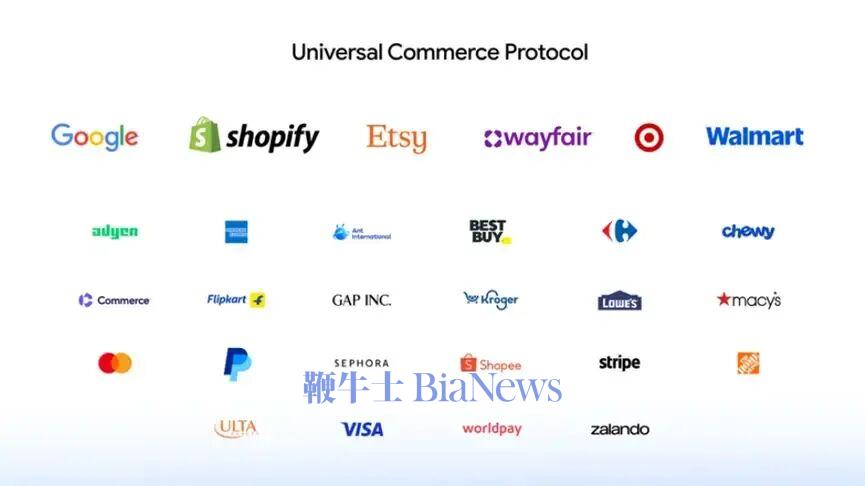
Core Insights - The launch of the Universal Commerce Protocol (UCP) by Google in collaboration with Shopify, Walmart, Target, Visa, and Stripe marks a significant shift in the e-commerce industry towards a new era of "conversation as transaction" [1][6][11] - Traditional e-commerce giants are facing immediate challenges as the UCP aims to standardize interactions that were previously controlled by centralized platforms [2][4][8] Group 1: UCP Overview and Implications - UCP is not just an API specification; it aims to create a universal language for e-commerce transactions, allowing AI agents to interact seamlessly with merchant systems [6][10] - The protocol threatens centralized e-commerce platforms by reducing the necessity for consumers to visit sites like Amazon or Taobao, as they can interact directly with AI agents [6][8] - UCP redefines human-computer interaction from a graphical interface to an intent-based interface, potentially diminishing the value of traditional platform features like homepage traffic and personalized recommendations [8][11] Group 2: Strategic Responses from Major Players - Amazon's absence from the UCP alliance signals a strategic choice to maintain its closed ecosystem, focusing on internal AI developments and reinforcing its control over its platform [13][14] - In contrast, Alibaba's Ant International actively embraces UCP, leveraging its extensive commercial ecosystem and payment capabilities to support AI-driven business growth [19][21] - The differing strategies highlight a fundamental divergence: Amazon seeks to fortify its existing model, while Alibaba aims to become a foundational infrastructure provider within the new open ecosystem [25][31] Group 3: Future Competitive Landscape - The competition in e-commerce will evolve across three levels: entry points dominated by AI assistants, infrastructure provided by companies like Shopify and Ant International, and the transformation of product information and service capabilities to be AI-friendly [27][28][29] - The UCP's establishment signals a shift from platform-centric competition to a broader contest over who can define the next generation of consumer interactions [29][39] - The future of commerce will require businesses to prepare for AI agents, marking a transition from an "attention economy" to an "intention economy" [40][41]

Jamie Dimon says JPMorgan has to invest in AI or risk getting 'left behind'
Yahoo Finance· 2026-01-13 23:40
Core Viewpoint - JPMorgan Chase is significantly increasing its spending on technology and artificial intelligence to remain competitive against both traditional banks and fintech companies, with a focus on long-term growth rather than short-term expense targets [1][2][3]. Spending Strategy - JPMorgan plans to spend approximately $9.7 billion more in 2026 compared to 2025, reflecting a commitment to investing in technology and AI [2]. - The annual technology budget for JPMorgan is around $18 billion, indicating a substantial investment in tech initiatives [5]. Competitive Landscape - CEO Jamie Dimon emphasized that JPMorgan is not only competing with traditional Wall Street rivals but also with fintech companies like Stripe, SoFi, and Revolut, which he acknowledged as strong competitors [2]. - The bank's strategy includes developing an in-house AI platform, Proxy IQ, to replace external proxy advisors for shareholder voting, showcasing its commitment to leveraging technology for operational efficiency [4]. Future Outlook - Dimon sees significant opportunities in AI and believes that increased spending is essential for the bank's growth, despite concerns about the scale of expenditures [3]. - While AI spending is expected to increase, Dimon noted that it is not the primary driver of overall expenditure growth, but rather a component of a broader investment strategy aimed at enhancing efficiency and competitiveness [4].

JPMorgan's Dimon Bets on Tech and AI as Apple Card Buildout Begins
PYMNTS.com· 2026-01-13 17:50
Core Viewpoint - JPMorgan Chase is preparing for significant spending increases through 2026, focusing on technology, artificial intelligence, and payments infrastructure to enhance its competitive position despite regulatory risks in the credit card sector [1][2][4]. Group 1: Financial Performance and Spending Outlook - JPMorgan's fourth-quarter 2025 earnings indicate a planned increase in spending by over $9 billion, bringing total expenses to approximately $105 billion [4]. - The integration of the Apple Card portfolio is a key driver of this spending, expected to take about two years to complete [5][6]. - The firm has already recorded a $2.2 billion reserve build related to the Apple Card portfolio [7]. Group 2: Consumer Spending and Economic Sentiment - Despite weak consumer sentiment, JPMorgan reports continued strength in consumer spending, with debit and credit card sales volumes rising 7% year over year [10]. - Management believes that consumers and small businesses remain resilient, with trends consistent with historical norms [10]. - CEO Jamie Dimon emphasized that current economic indicators such as employment and liquidity support a positive outlook in the short term [11]. Group 3: Investment in Technology and Competitive Landscape - Rising technology spending is deemed essential for maintaining competitiveness against both traditional and non-traditional financial institutions [8]. - JPMorgan is actively involved in blockchain technology and is integrating these capabilities across its operations [9]. - The bank recognizes the competitive threat from fintech companies and is committed to staying ahead in the market [15][16]. Group 4: Regulatory Risks - Regulatory proposals, particularly those aimed at capping credit card interest rates, pose significant risks to the credit card business, potentially impacting margins and access to credit [14].