联影医疗

Search documents
光谷商学院揭牌开班,地方政府为何热衷面向企业家办学?
Di Yi Cai Jing· 2026-01-13 09:05
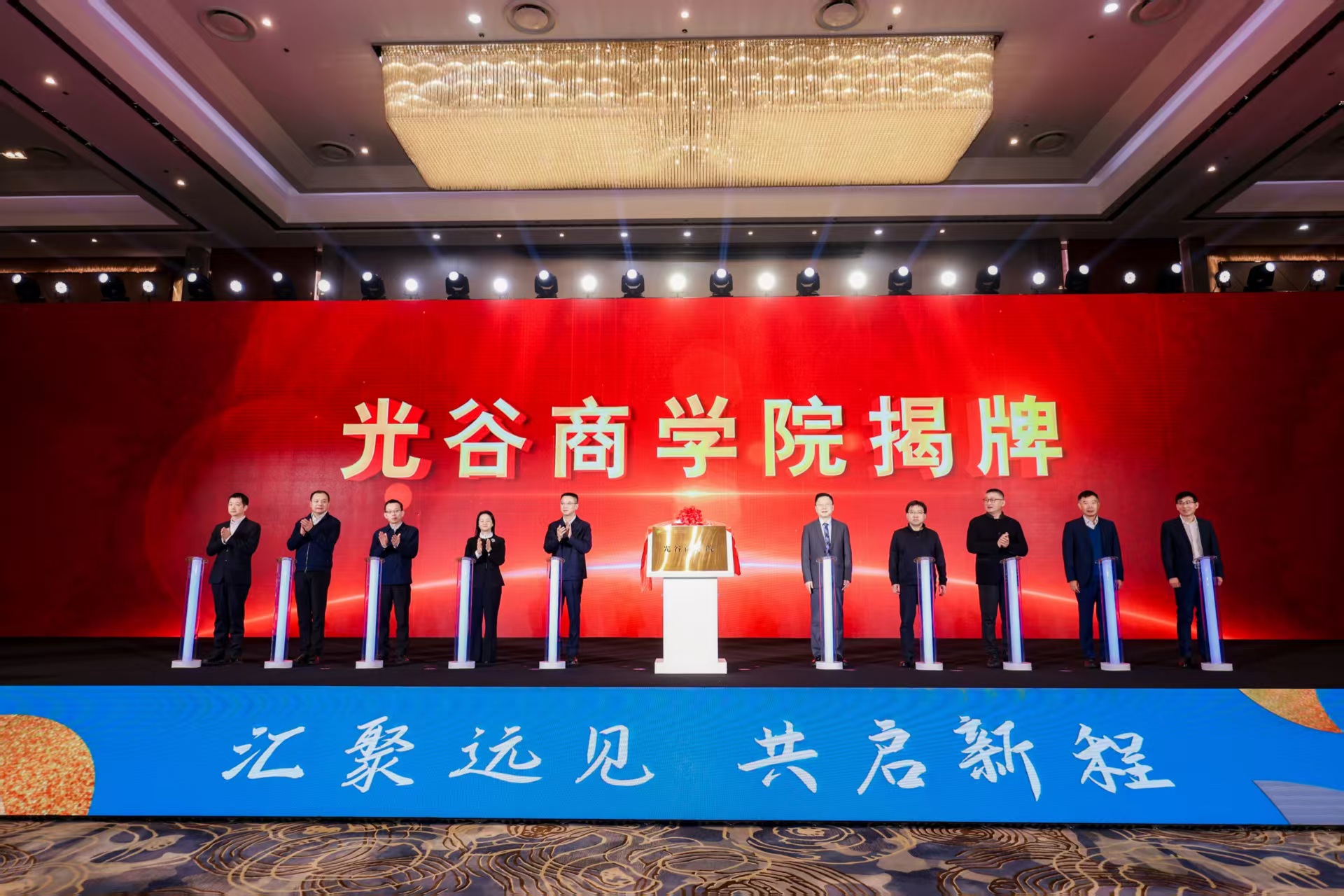
地方政府牵头成立的企业家商学院仍需采取市场化运作,若完全依赖政府拨款,易陷入"办活动、发补贴"的行政化模式。 1月13日,光谷商学院揭牌仪式暨首期"卓越班"开班典礼在武汉举行。华工科技董事长马新强担任院长,蔚来创始人李斌、联影集团薛敏、长江存储董事长 陈南翔等来自新能源汽车、生物医药、集成电路等领域的产业领军人物为学院提供战略指导。 但在建设"世界光谷"的征程中,光谷企业家队伍还存在一些迫切需要解决的问题。沈悦指出,从企业层面看,企业总体上数量可观但有高原缺高峰,不少企 业存在规模小、成长慢、抗风险能力不强、发展后劲不足等问题,参与国际竞争的能力不够、底气不足,缺少总部在本地的"明星企业"。从企业家层面看, 很多企业创始人是科学家、教授出身,但普遍存在重科研轻市场、重技术轻管理等问题,尤其不善于战略规划,不善于市场拓展,不善于资本运作,缺少能 够挑大梁、带动一个行业上下游一起发展的优秀企业家。 为加速培育一支能够引领光谷走向世界的企业家队伍、打造一批世界一流的领军企业,东湖高新区设立光谷商学院。其定位为科技企业的"认知升维引擎、 团队加速基地、资源链接枢纽",构建"领航班""卓越班""初创班"三层精准培育体系 ...

AI医疗板块强势上涨,医疗器械ETF(562600)交投活跃
Sou Hu Cai Jing· 2026-01-13 05:30
Group 1 - The A-share market experienced significant fluctuations on January 13, with the medical device ETF (562600) showing strong performance, rising by 1.58% [1] - The medical technology sector is gaining momentum, driven by AI applications in healthcare, with companies like Di'an Diagnostics hitting the daily limit and Jiukang Bio rising by 12.86% [1] - The medical device ETF (562600) has seen a net inflow of 140 million yuan over the past five trading days, indicating investor confidence in the medical technology sector [1] Group 2 - The medical device ETF (562600) is a key tool for investing in cutting-edge medical technology, tracking the CSI All-Share Medical Device Index, with a significant 23.8% weight in brain-computer interface stocks [2] - The ETF has a high industry exposure of 89.2%, including leading companies like Mindray Medical, United Imaging, and Di'an Diagnostics, effectively capturing the benefits of niche market growth [2] - Investors can participate in the medical device ETF through low-threshold options like the Huaxia CSI All-Share Medical Device ETF Initiated Link A (021250) and C shares (021251) for long-term growth opportunities [2]

重组入列:最新443家全国重点实验室名单
仪器信息网· 2026-01-13 03:56
Core Viewpoint - By December 2025, over 500 national key laboratories have completed restructuring into a new sequence, with nearly 110 "Double First-Class" universities participating in about 80% (nearly 400) of the national key laboratories [1][2]. Group 1: National Key Laboratories Overview - National key laboratories are scientific research and development institutions planned by the state to support the national laboratory system, focusing on major technological innovation areas related to national security and socio-economic development [2]. - The restructuring of the national key laboratory system was first proposed at the Central Economic Work Conference in 2018 and established as a component of national strategic scientific and technological forces in the revised "Science and Technology Progress Law" in 2021 [2]. Group 2: Participation of Universities - The leading or co-building universities for the laboratories are primarily "Double First-Class" universities, indicating a strong involvement of top-tier educational institutions in the research initiatives [1][2]. - Nearly 110 "Double First-Class" universities are involved in the establishment and support of approximately 400 national key laboratories [1][2]. Group 3: List of Key Laboratories - A variety of national key laboratories have been established across different fields, including: - Dark Matter Physics National Key Laboratory led by Shanghai Jiao Tong University [3] - Explosive Science and Safety Protection National Key Laboratory led by Beijing Institute of Technology [3] - Materials Chemistry Engineering National Key Laboratory led by Nanjing University of Technology [3] - The list includes laboratories focusing on diverse areas such as intelligent transportation, infectious disease research, and advanced manufacturing technologies [3][4][5].

继脑机接口之后,AI制药“粉墨登场”?高贝塔医疗器械指数ETF(159898)连续6日吸金3.66亿元
Sou Hu Cai Jing· 2026-01-13 02:52
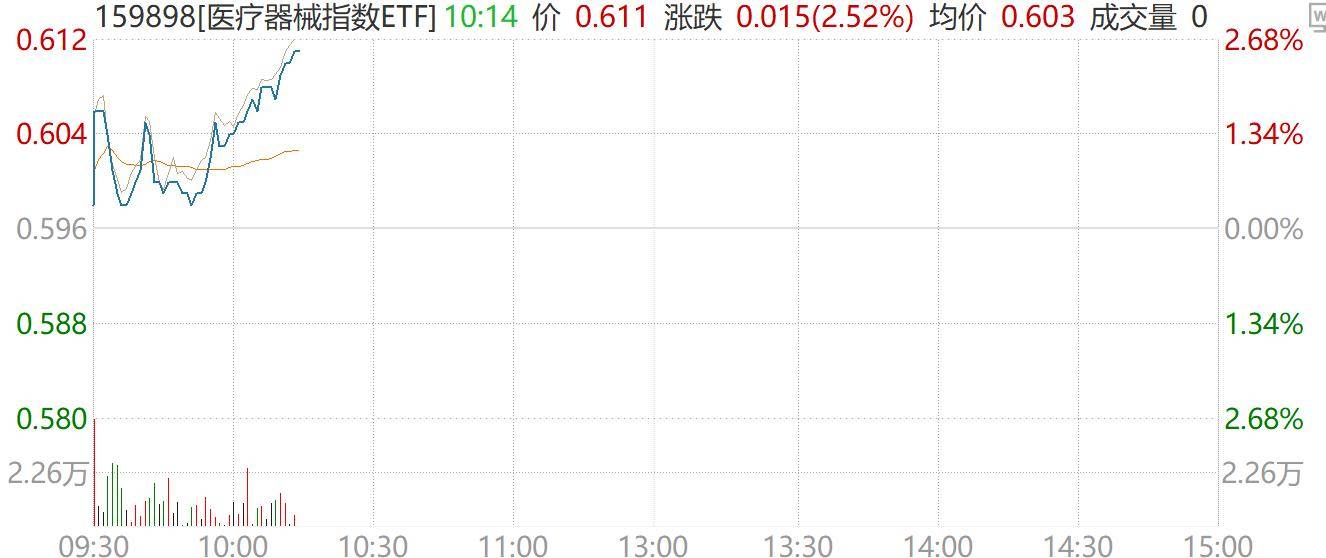
Group 1 - Nvidia and Eli Lilly will invest $1 billion over the next five years to establish an AI drug laboratory, focusing on accelerating medical discovery and production through robotics and physical AI [1] - The announcement has led to a significant rise in related pharmaceutical stocks, with Dean Diagnostics hitting the daily limit up for three consecutive trading days, and other companies like BGI Genomics and Berry Genomics seeing increases of over 16% and 8% respectively [1] - The medical device index ETF (159898) has gained 2.52% and has seen a net subscription of 366 million yuan over six consecutive days, indicating high market interest [1] Group 2 - Huafu Securities predicts that 2026 will mark the beginning of a new five-year period for AI healthcare, with expectations of more proactive fiscal signals supporting AI medical applications [2] - The current demand for AI applications in healthcare is expected to sustain the industry's long-term development, with recent events indicating a shift towards commercialization [2] - The National Medical Products Administration is expected to release ten measures by 2025-2026 to support the innovation and development of AI healthcare and high-end medical devices [2] Group 3 - The medical device index ETF (159898) tracks the CSI All-Share Medical Device Index, focusing entirely on the A-share medical device sector, with a pure beta quality [3] - The top ten holdings of the index include leading companies like Mindray Medical and United Imaging Healthcare, with over 80% of the portfolio in the ChiNext and STAR Market [3] Group 4 - The ETF's index includes a significant focus on brain-computer interface concepts, which account for approximately 24% of the index [4] - There is a scarcity of pure brain-computer interface stocks in the A-share market, presenting opportunities for capturing innovation in the industry [4] Group 5 - The medical device sector, which includes brain-computer interfaces, is expected to see substantial demand before and during the initial production phase of these technologies [5]
把握出海陡峭曲线,卡位AI医疗商业化落地:医疗器械2026年度策略
Huafu Securities· 2026-01-12 12:57
Core Insights - The report maintains a strong market rating for the medical device industry, emphasizing the importance of capitalizing on overseas expansion and the commercialization of AI in healthcare [1][3][5] Medical Device Strategy - The strategy focuses on a three-step approach: prioritizing overseas expansion, benefiting from centralized procurement, and being sensitive to fiscal policies [3][5] - The report highlights the acceleration of overseas growth, particularly in high-value orthopedic, electrophysiology, and robotic sectors, which are expected to be the main contributors to growth in 2025 [5][24] - Companies such as MicroPort, Tianzhihang, and Weigao are recommended for their potential in overseas markets and innovative product offerings [5][24] AI Applications and Brain-Computer Interfaces - The report identifies a significant opportunity in AI applications, with a focus on the commercialization phase driven by policy support and market demand [4][9] - The brain-computer interface sector is poised for growth, with several leading companies expected to go public soon, which could catalyze the market [9][24] Financial Performance and Market Trends - The medical device sector is showing signs of recovery, with Q3 2025 revenues reaching 593.7 billion yuan, a year-on-year increase of 2.9%, indicating a clear upward trend [13][31] - The report notes a significant contraction in fund allocation to the medical device sector, dropping from 24.5% to 15% from Q3 2022 to Q3 2025, suggesting potential for valuation recovery [14][21] Overseas Growth Potential - The report emphasizes the importance of overseas markets, particularly in Europe and the U.S., where companies are transitioning from product-focused strategies to comprehensive commercialization partnerships [5][24] - Key growth areas include surgical robots and high-value consumables, with companies like Tianzhihang and MicroPort leading the charge in international markets [24][30] Fiscal Policy Impact - The report discusses the sensitivity of equipment demand to fiscal policies, with expectations of a more favorable environment as inventory levels decrease and demand normalizes [31][34] - The anticipated release of more proactive fiscal signals in the upcoming years is expected to support the recovery of the medical device sector [31][34]
医药生物行业跨市场周报(20260111):脑机接口板块表现活跃,建议持续关注主题机会-20260112
EBSCN· 2026-01-12 10:50
Investment Rating - The report maintains a rating of "Overweight" for the pharmaceutical and biotechnology sector [4]. Core Insights - The brain-computer interface (BCI) sector is showing active performance, with recommendations to continue monitoring thematic opportunities. The global BCI market is projected to reach USD 7.63 billion by 2029, indicating a rapidly opening blue ocean market [20][21]. - The investment strategy emphasizes the importance of clinical value in the pharmaceutical sector, focusing on innovative drug chains and medical devices. Key recommendations include companies involved in BD overseas acceleration and high-end medical devices [23][25]. Summary by Sections Market Review - The A-share pharmaceutical and biotechnology index rose by 7.81%, outperforming the CSI 300 index by 5.03 percentage points and the ChiNext index by 2.10 percentage points, ranking 6th among 31 sub-industries. The Hong Kong Hang Seng Healthcare Index increased by 10.26%, surpassing the Hang Seng Index by 11.57 percentage points [15][9]. R&D Progress - Recent clinical applications include IMM2510 and Tida-Paclitaxel from Yiming Anke, with ongoing Phase III trials for Tiengoteini from Yaokang and Phase II trials for SYS6017 from Shiyao Group [28]. Key Recommendations - Focus on three categories of companies: 1. Medical scene integrators (e.g., Xiangyu Medical, Weisi Medical) benefiting from insurance payment integration and existing rehabilitation needs [21]. 2. Leaders in invasive/semi-invasive technologies (e.g., Xinwei Medical, Jieti Medical) with significant technological advantages [21]. 3. Full-process support providers (e.g., Meihua Medical, Sanbo Neuroscience) focusing on high-certainty segments like supply chain production and clinical development [21]. Financial Forecasts and Valuations - Key companies and their projected earnings per share (EPS) and price-to-earnings (PE) ratios for 2024-2026 include: - Tianzhili: EPS of 0.64, PE of 24 [3]. - Innovent Biologics: EPS of -0.06, PE of NA [3]. - WuXi AppTec: EPS of 3.27, PE of 30 [3]. - Mindray Medical: EPS of 9.62, PE of 21 [3]. - Weisi Medical: EPS of 1.06, PE of 62 [3]. Policy and Industry Resonance - The report highlights a structural shift in domestic policies favoring innovative drugs, with a focus on clinical value and the potential for valuation recovery in the pharmaceutical sector. The report suggests that the investment attractiveness of the pharmaceutical sector will continue to grow [23][24].



人类首次“太空脑机接口实验”!强脑科技以保密形式提交香港IPO申请!同类费率最低档的医疗器械ETF基金(159797)收涨近2%强势三连阳!
Sou Hu Cai Jing· 2026-01-12 10:18
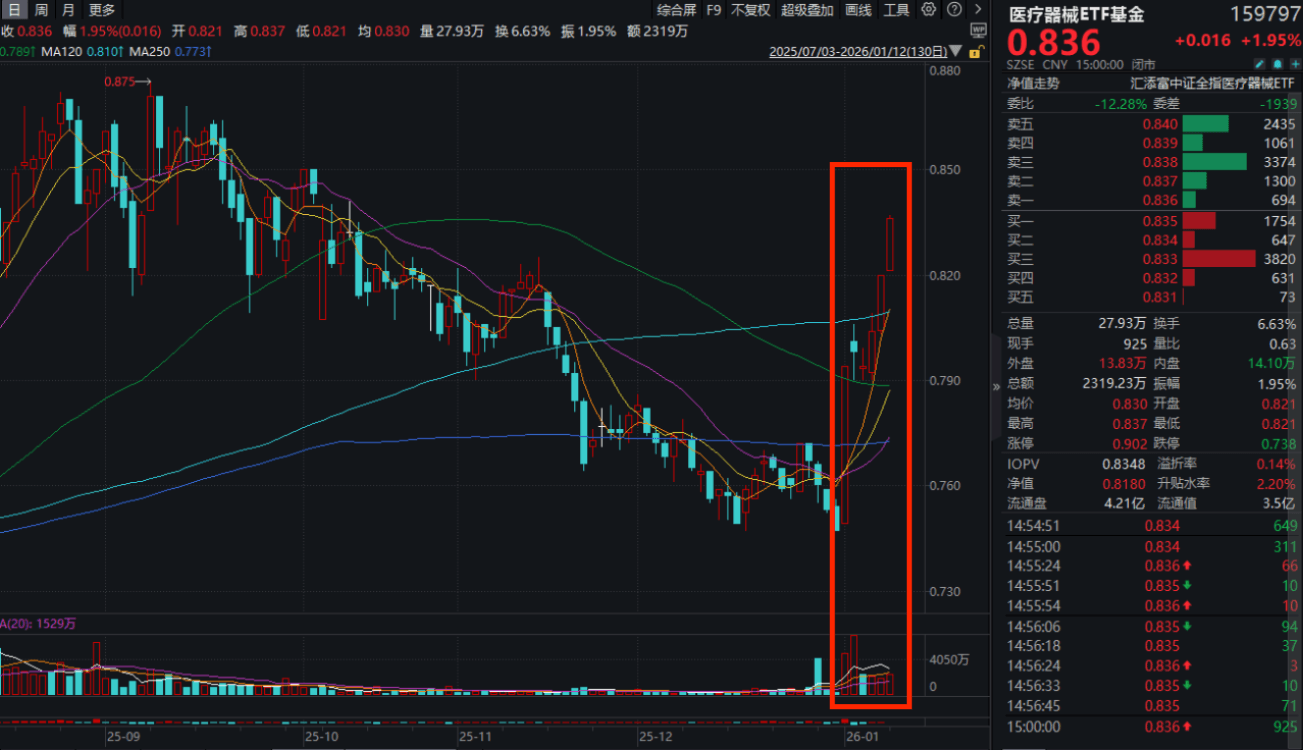
Group 1: Brain-Computer Interface (BCI) Industry - Strong Brain Technology has submitted a confidential IPO application in Hong Kong, indicating a significant step in the BCI sector [1] - The Tianjin University BCI and Human-Machine Integration Laboratory has developed a comprehensive layout from high-performance devices to system integration, focusing on non-invasive BCI technology [1] - The BCI industry is experiencing a golden period of development, with a projected market size of $2.94 billion by 2025 and expected to grow to approximately $12.4 billion by 2034, reflecting a compound annual growth rate of 17.35% [7] Group 2: Clinical Applications and Innovations - The Tianjin University has launched a series of innovative medical devices for clinical applications, covering areas such as stroke rehabilitation, spinal cord injury assistance, depression treatment, and auditory disorders [1] - The BCI technology has been successfully applied in aerospace, including the development of a brain-machine interaction system for space stations, enhancing astronaut performance and emotional state monitoring [1] Group 3: Market Trends and Investment Opportunities - The BCI sector is characterized by active investment and financing activities, with the U.S., EU, and Japan leading in strategic initiatives [4] - The medical device ETF fund (159797) has shown strong performance, with significant net subscriptions, indicating investor confidence in the medical device sector [5][8] - The ETF fund covers core areas of medical devices, including high-value consumables and in vitro diagnostics, with the top ten weighted stocks accounting for 45.04% of the fund [8]
开年火爆的脑机接口怎么“跟”?这些ETF或能锁定板块行情
Xin Lang Cai Jing· 2026-01-12 08:55
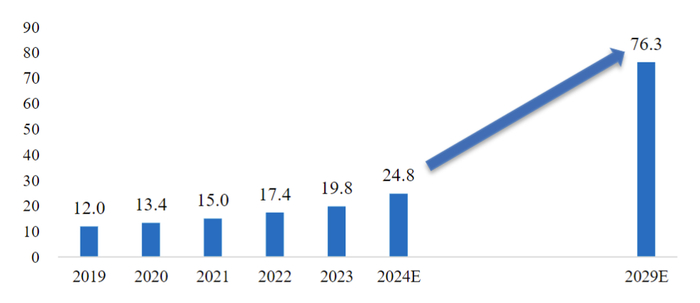
Core Insights - The brain-computer interface (BCI) market is gaining significant attention following Elon Musk's announcement of large-scale production plans for his company Neuralink starting in 2026, shifting perceptions from skepticism to optimism about commercialization [1] - Current applications of BCI technology are still in clinical trial phases, facing ethical and social acceptance challenges, leading to varied growth forecasts from different institutions [1] - Grand View Research reports that the BCI market size grew from $1.2 billion in 2019 to nearly $2 billion in 2023, with a compound annual growth rate (CAGR) exceeding 13%, and is expected to reach $7.63 billion by 2029 with a CAGR of 25.2% from 2024 to 2029 [1] Market Overview - The domestic BCI industry in China has advanced from a "follower" to a "co-runner and partial leader" position globally, with the market size increasing from approximately 1 billion RMB in 2020 to about 1.73 billion RMB in 2023, capturing 12.5% of the global market [3][5] - The CAGR for China's BCI market is reported at 20%, significantly higher than the global average of 14% [3] Drivers of Growth - Policy support includes the inclusion of brain science in China's 14th Five-Year Plan and local subsidies reaching up to 30 million RMB, alongside the development of national standards for BCI expected by 2025 [5] - Capital investment in the domestic BCI sector exceeded 6.5 billion RMB from 2021 to 2023, accounting for 28% of global financing, with notable single-round financing records [5] - Technological advancements include breakthroughs in electrode channel counts by Chinese universities and significant reductions in power consumption and costs for non-invasive BCI technologies [6] Application and Market Segmentation - Medical rehabilitation remains the largest segment, accounting for approximately 65% of the current market, with the average price of domestic "brain-controlled robotic arms" decreasing from 1.2 million RMB in 2019 to 450,000 RMB in 2023 [6] - Consumer applications in education, entertainment, and industrial safety are emerging, with the consumer segment's market share increasing to 18% in 2023 and expected to exceed 30% by 2026 [6] Future Projections - The Chinese BCI market is projected to reach approximately 5 billion RMB by 2026 and aim for 20 billion RMB by 2030, potentially capturing 25% of the global market [7] - China is expected to not only expand its market but also to set standards and solutions, positioning itself as a "second pole" in the global BCI industry [7] Investment Opportunities - The BCI sector's complexity suggests that investing in ETFs could be a strategic approach to capture the full spectrum of opportunities across the value chain, including software algorithms and medical technology [8] - The software segment, which translates neural signals into machine language, is critical for BCI commercialization, with 15% of the CSI Software Service Index now associated with BCI [8] - The medical technology segment is highlighted as the most immediate commercial application for BCI, with significant representation in the CSI Medical Device Index, which includes leading companies in the field [11]
浙商证券:AI应用多点开花 看好AI+生物医药投资机会
智通财经网· 2026-01-12 08:02
智通财经APP获悉,浙商证券发布研报称,AI医疗应用在国家战略与市场需求的共振下已迈入商业化落 地的快速阶段。该行认为AI制药核心价值在于大幅提升药物早研效率,看好国内多家AI制药平台服务 能力全球领先。AI制药的高需求将带来较大的落地验证实验及合作需求,建议关注已与AI制药平台有 战略合作的传统CRO公司。此外,早研效率大幅提升将快速传导至临床前、安评以及临床CRO需求。 浙商证券主要观点如下: 该行认为AI制药核心价值在于大幅提升药物早研效率,以英矽智能Pharma.AI为例,其能够使候选药物 从靶点发现到临床前候选药物确认时间从4.5年大幅缩短到12至18个月,早研阶段的投入产出比大幅提 升。该行看好:1)国内多家AI制药平台服务能力全球领先,海外业务拓展持续高速已验证,关注英矽智 能、晶泰科技、泓博医药、维亚生物、成都先导等;2)AI制药的高需求将带来较大的落地验证实验及合 作需求,建议关注已与AI制药平台有战略合作的传统CRO公司,关注皓元医药、美迪西、百诚医药、 阳光诺和、药石科技、药明康德等;3)早研效率大幅提升将快速传导至临床前、安评以及临床CRO需 求,建议关注昭衍新药、美迪西、益诺思、泰格 ...

HTI医药2026年1月第二周周报:热点接连涌现,持续看好创新药械产业链-20260112
Haitong Securities International· 2026-01-12 07:17
Investment Rating - The report maintains a positive outlook on innovative drugs and the related industry chain, indicating potential value revaluation for specific pharmaceutical companies [6][28]. Core Insights - The pharmaceutical sector in A-shares showed strong performance in the second week of January 2026, with the SW Pharma Bio index rising by 7.8%, outperforming the overall market [8][29]. - Key sub-sectors such as medical services (+12.3%), medical equipment (+9.4%), and chemical preparations (+7.3%) demonstrated significant growth during this period [13][29]. - Notable individual stock performances included Innovative Medical Management (+61.0%), Sanbo Hospital Management Group (+56.2%), and MeHow Medical (+56.1%) [15][29]. - The report highlights a normal premium level of 68.3% for the pharmaceutical sector relative to all A-shares as of January 9, 2026 [15][23]. Summary by Sections 1. Continued Focus on Innovative Drugs and Industry Chain - The report emphasizes the high prosperity in innovative drugs and suggests monitoring companies like Jiangsu Heng Rui Medicine, Hansoh Pharmaceutical, 3SBio, Sichuan Kelun Pharmaceutical, and Jiangsu Nhwa Pharmaceutical for potential value revaluation [6][28]. 2. Performance of A-Shares Pharmaceutical Sector - In the second week of January 2026, the A-share pharmaceutical sector outperformed the market, with the SW Pharma Bio index increasing by 7.8% [8][29]. - The report ranks the pharmaceutical sector as the 5th best-performing industry among Shenwan's primary industries during this period [11][29]. 3. Performance of Hong Kong and U.S. Pharmaceutical Sectors - The Hong Kong pharmaceutical sector outperformed the market, with the Hang Seng Healthcare index rising by 10.3% and the biotechnology sector increasing by 11.1% [20][29]. - Conversely, the U.S. pharmaceutical sector underperformed, with the S&P Healthcare Select Sector rising by only 1.1% compared to the S&P 500's 1.6% increase [20][29].