Figure AI

Search documents
华安基金科创板ETF周报:科创板ETF成立五周年,科创芯片指数涨9.05%
Xin Lang Ji Jin· 2025-09-30 02:54
Group 1: Core Insights - The investment ecosystem of the Sci-Tech Innovation Board (STAR Market) is gradually improving, with the number of STAR Market ETFs reaching 102 by September 26, 2025, including 61 newly established this year [1] - The successful IPO of Moore Threads, a full-function GPU company, highlights the STAR Market's support for "hard technology" and signals a new phase of deep integration between finance and technological innovation [1] - The hard technology sector, particularly in areas like chips and innovative pharmaceuticals, is experiencing significant breakthroughs, reinforcing the investment value of STAR Market companies under the dual drivers of policy and capital [1][2] Group 2: Market Performance - The overall STAR Market saw an increase, with the STAR 50 Index rising by 6.47%, the STAR Information Index by 7.76%, and the STAR Chip Index by 9.05% over the past week [3] - The top five industries on the STAR Market, which account for 88.7% of the market capitalization, are electronics, biomedicine, computers, power equipment, and machinery [4] Group 3: Sector Analysis - The new generation information technology sector, focusing on the electronic chip industry, is showing strong performance driven by policy support, technological breakthroughs, and capital inflow [5] - In the high-end equipment manufacturing sector, while there was a short-term adjustment in the robotics industry, long-term growth potential remains supported by policy and technological advancements [6] - The pharmaceutical sector experienced a decline, with cautious market sentiment, although there are signs of recovery in medical device tenders and overseas revenue growth for some companies [6]


NVIDIA Accelerates Robotics Research and Development With New Open Models and Simulation Libraries
Globenewswire· 2025-09-29 15:00
Core Viewpoint - NVIDIA has launched the open-source Newton Physics Engine and the open NVIDIA Isaac GR00T N1.6 reasoning vision language action model, enhancing robotics development by providing an accelerated platform for simulation and real-world application [2][4][8] Group 1: Technology Advancements - The Newton Physics Engine is GPU-accelerated and co-developed with Google DeepMind and Disney Research, enabling complex robot simulations [4][5] - The Isaac GR00T N1.6 model integrates NVIDIA Cosmos Reason, allowing robots to interpret vague instructions and perform tasks using prior knowledge and common sense [7][8] - The new dexterous grasping workflow in Isaac Lab 2.3 trains robots in a virtual environment, gradually increasing task complexity [13][14] Group 2: Adoption and Impact - Over a quarter-million robotics developers globally require accurate physics for safe real-world execution of robot skills [3] - Leading research institutions and companies, including ETH Zurich and Boston Dynamics, are adopting NVIDIA's technologies for robotics research and development [5][10][19] - The Cosmos Reason model has been downloaded over 1 million times and is leading in the Physical Reasoning Leaderboard on Hugging Face [8][9] Group 3: Infrastructure and Evaluation - NVIDIA is developing AI infrastructure to support demanding robotics workloads, including the upcoming Cosmos Predict 2.5 and Cosmos Transfer 2.5 models [18] - The Isaac Lab - Arena framework, co-developed with Lightwheel, will allow for scalable experimentation and standardized testing of robot skills [17][19] - The open-source NVIDIA Physical AI Dataset has been downloaded over 4.8 million times, providing extensive data for post-training of Isaac GR00T N models [9]

山西证券研究早观点-20250929
Shanxi Securities· 2025-09-29 02:34
Core Insights - The report highlights the ongoing recovery in coal imports, with August 2025 showing a year-on-year decline of 6.76% but a month-on-month increase of 20.02% in imported coal volumes, indicating a gradual recovery trend [7][9] - The construction of new coal mines is projected to take 5-8 years, with rising costs impacting profitability and breakeven points for new projects [6][7] - The report emphasizes the importance of monitoring overseas coal prices, as domestic supply constraints may continue to drive demand for imported coal [9] Industry Commentary: Coal - The report discusses the trend of coal companies expanding reserves, with a focus on the exploration and construction phases of new coal mines [6] - It notes that the average investment cost for new coal production capacity is 697.4 RMB/ton, with costs rising in recent years, particularly in key regions like Shanxi, Shaanxi, and Inner Mongolia [7] - The investment return model for coal mines indicates that profitability varies significantly among different projects, with rising costs necessitating careful financial planning [7] Industry Commentary: Power Equipment and New Energy - The report mentions the announcement by Yushu Technology regarding the open-source model for robotics, which aims to enhance decision-making capabilities through a physics-based world model [8] - It highlights the tightening of energy consumption standards for polysilicon production, which is expected to lead to a reduction in effective production capacity in the coming years [10] - The report provides insights into the growth of solar and wind power generation, with significant year-on-year increases reported for August 2025 [10] Data Analysis - The report details the trends in coal imports, noting a cumulative decline of 12.2% from January to August 2025, while highlighting the marginal easing of negative growth rates [9] - It also discusses the price dynamics of various coal types, with an average import price of 66 USD/ton in August, reflecting a continued downward trend [9] - The report suggests that domestic supply constraints are likely to sustain demand for imported coal, with potential price increases expected if supply disruptions occur [9] Investment Recommendations - The report recommends focusing on companies such as Shanxi Coal International, Jinkong Coal Industry, and Huayang Co., which are well-positioned to benefit from the current market dynamics [7][12] - It suggests that investors pay attention to the potential for price rebounds in coking coal due to seasonal demand patterns and supply disruptions [9][12] - The report also highlights the importance of monitoring the impact of new energy consumption standards on polysilicon and related sectors, suggesting a shift in investment focus towards companies adapting to these changes [10][12]
轮式人形还有弯道超车机遇!
机器人大讲堂· 2025-09-28 13:33
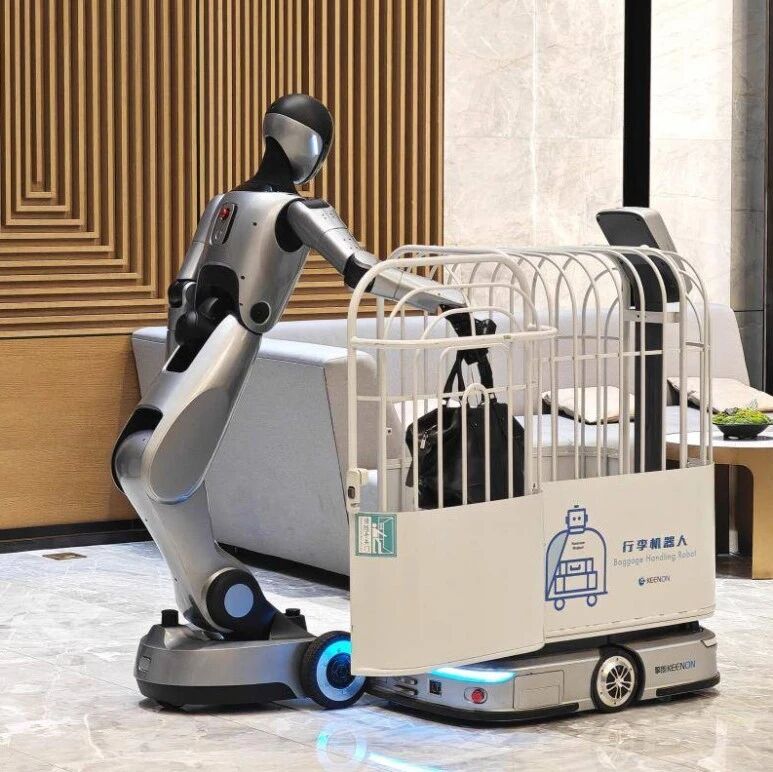
Core Insights - The humanoid robot industry is shifting focus from bipedal robots to wheeled robots, as the latter are more practical and efficient for various applications [1][4][12] - The complexity and high costs associated with bipedal robots hinder their immediate commercial viability, making wheeled robots a more attractive option for companies seeking to prove their capabilities and secure funding by 2025 [3][7][10] Group 1: Challenges of Bipedal Robots - Bipedal robots face significant challenges in achieving efficiency, cost-effectiveness, and reliability due to their complex dynamic balancing algorithms and high energy consumption [3][4] - The risk of falling in unstructured environments poses a critical safety concern, making bipedal robots less suitable for industrial and service applications [3][4] Group 2: Advantages of Wheeled Robots - Wheeled robots benefit from established technologies in autonomous vehicles and service robots, providing them with superior mobility, robustness, and energy efficiency [4][5] - The lower cost of wheeled robot components allows companies to allocate resources towards enhancing other functionalities, such as advanced sensors and manipulation capabilities [7][10] - Wheeled humanoid robots can quickly demonstrate their value in structured environments, leading to faster market adoption and potential revenue generation [7][10] Group 3: Market Trends and Future Outlook - Major players like Tesla are exploring both bipedal and wheeled solutions, indicating a potential shift in industry focus towards more practical applications [9][12] - Startups are increasingly prioritizing functional wheeled robots over bipedal designs, aiming for early market penetration and iterative improvements [9][12] - The future may see a division in application scenarios, with wheeled humanoid robots dominating structured environments while bipedal robots serve niche roles in unstructured settings [12][13]
电力设备及新能源行业周报:宇树科技宣布开源模型,多晶硅能耗标准收紧-20250926
Shanxi Securities· 2025-09-26 02:08
Investment Rating - The report maintains a "Synchronize with the market - A" rating for the power equipment and new energy industry [1] Core Viewpoints - The power equipment and new energy industry has shown a stable market performance over the past year, with significant developments such as the tightening of energy consumption standards for polysilicon and advancements in robotics technology [1][3] - The new energy sector is experiencing a shift towards stricter energy consumption regulations, which is expected to lead to a substantial improvement in the supply-demand balance for polysilicon [3][7] Summary by Relevant Sections Investment Recommendations - Recommended stocks include: - Buy - A: 福莱特 (601865.SH), 横店东磁 (002056.SZ), 阳光电源 (300274.SZ), 阿特斯 (688472.SH), 德业股份 (605117.SH), 石英股份 (603688.SH), 博威合金 (601137.SH) - Buy - B: 爱旭股份 (600732.SH), 隆基绿能 (601012.SH), 大全能源 (688303.SH), 朗新集团 (300682.SZ) [2] - Additional stocks to actively monitor include: 协鑫科技, 通威股份, 信义光能, TCL 中环, 新特能源, 帝尔激光, 福斯特, 晶澳科技, 天合光能, 晶科能源, 迈为股份, 晶盛机电, 弘元绿能 [10] Industry Performance - In August, the industrial solar power generation increased by 15.9%, while wind power generation grew by 20.2%, indicating a robust growth trend in the renewable energy sector [4] - The average energy consumption for polysilicon is projected to tighten significantly, with new standards suggesting a reduction to 6.69 kgce/kg for 2024, compared to previous expectations [3][4] Price Tracking - Polysilicon prices have shown an upward trend, with dense material averaging 51.0 CNY/kg, up 2.0% from the previous week, indicating a tightening supply situation [6] - The price of silicon wafers and battery cells has also increased, reflecting the upward pressure from upstream costs [8][9]




路博迈基金朱冰倩:政策、产业资本、技术三重动力驱动人形机器人产业快速发展
Zhong Zheng Wang· 2025-09-25 14:07
Core Viewpoint - The humanoid robot industry is entering a rapid development phase driven by policies, industrial capital, and technological advancements, presenting significant investment opportunities [1] Policy Perspective - The national government places high importance on the development of the robot industry, with the Ministry of Industry and Information Technology explicitly stating the intention to explore new tracks such as humanoid robots during the "14th Five-Year Plan" period [1] Industry Perspective - Tesla's Optimus Gen3 mass production plan is approaching, and companies like Figure AI have secured substantial financing while demonstrating strong capabilities, indicating technological feasibility and commercial potential [1] - Domestic companies such as Yushu Technology are experiencing rapid order growth and are actively preparing for IPOs, reflecting the vibrancy of the domestic industrial ecosystem and accelerating commercialization [1] Technological Perspective - Progress in robot technology relies on innovations in core components, with advancements in dexterous hands (for fine operations), rotary encoders (for precise measurement of joint angles), and new sensors (such as electronic skin) rapidly evolving [1] - These breakthroughs, whether "from 0 to 1" or "from 1 to N," will create significant value reassessment opportunities for related companies [1]

Must-Watch Robotics Stocks That Could Drive Future Growth Trends
ZACKS· 2025-09-24 16:11
Industry Overview - The second half of 2025 has seen a significant increase in robotics adoption across various industries, with global industrial robot installations exceeding $16.5 billion and a 10% increase in operational robots to over 4.28 million [2] - Manufacturing is leading this transformation, with North American robot orders up 4.3% and revenues rising 7.5%, totaling 17,635 robots valued at $1.094 billion in the first half of 2025 [3] - Healthcare robotics is projected to grow from a market size of $4.31 billion in 2024 to $9.60 billion by 2033, with a CAGR of 9.26% from 2025 to 2033 [4] - The collaborative robot market is expected to grow from $1.42 billion in 2025 to $3.38 billion by 2030, driven by AI integration [6] - Investment activity in robotics has reached historic levels, with over $6 billion raised globally from January to July 2025 [7] Company Highlights - UiPath is positioned as a compelling investment opportunity with the launch of its UiPath Platform for agentic automation, addressing a $50 billion market for autonomous business process automation [10][11] - Cadence Design Systems made a strategic €2.7 billion acquisition of Hexagon's Design & Engineering business, enhancing its capabilities in robotics and physical AI simulation [12] - NVIDIA has launched significant advancements, including the Isaac GR00T N1.5 humanoid robot foundation model and Jetson Thor, which provides 2,070 FP4 teraflops of AI compute power [13] - Advanced Micro Devices is optimizing digital twin and simulation workloads for next-generation robotics applications through a collaboration with Parallel Domain, enhancing realism and scalability [14]



上海证券:机器人本体催化频出 持续关注人形机器人板块
智通财经网· 2025-09-24 11:50
Core Insights - The report from Shanghai Securities highlights a surge in the humanoid robot industry, with significant participation from both domestic and international players, indicating a trend towards commercialization and mass production of humanoid robots [1] Industry Developments - Major companies such as Huawei, ByteDance, BYD, Xiaomi, and Ant Group are increasing their investments in embodied intelligence, while international firms like Tesla and Figure AI are accelerating their commercialization efforts [1] - The humanoid robot industry is entering a phase of diverse innovation, with a clear trend towards industrial applications, suggesting a high degree of certainty in future commercialization [1] Company Highlights - **Tuosda**: Recently launched its first wheeled humanoid robot "Xiao Tuo," which features a four-stewart wheel design and can perform complex tasks autonomously [1] - **Zhiyuan Robotics**: Successfully demonstrated the "Webster Flip," becoming the first humanoid robot to perform this complex gymnastic move, showcasing advanced motion control capabilities [2] - **Moliang Technology**: Completed a Pre-A round financing of tens of millions, aimed at expanding production lines and enhancing delivery capabilities across various sectors [3] - **Figure**: Secured over $1 billion in Series C funding, reaching a valuation of $39 billion, which will support the growth of its humanoid robots and AI platform [4] - **Tesla**: CEO Elon Musk's recent stock purchase and a new compensation plan linked to the delivery of 1 million humanoid robots is expected to catalyze production efforts [5] - **Luxiao Technology**: Announced a partnership with Kepler Robotics to develop AI-integrated home service robots, targeting sales of at least 1 million units in the next three years [6][7]

大摩:视觉数据决定AI未来,特斯拉(TSLA.US)站上“光子竞赛”前沿
Zhi Tong Cai Jing· 2025-09-24 09:55
Core Insights - Morgan Stanley highlights a "photon race" emerging as companies shift focus towards physical/embodied AI and robotics, emphasizing the strategic value of visual data for AI training [1] - Tesla is rated "Overweight" with a target price of $410, as it transitions to a "pure vision" training approach for its Optimus robot, moving away from motion capture and VR [2][3] Group 1: Visual Data Importance - Visual data is identified as the most scarce and strategically valuable resource for training visual-language-action models (VLA) [1] - The analogy of a 600-pound bluefin tuna illustrates that without the means to capture visual data, its value is zero; however, if captured and processed, its value can be immense [1] Group 2: Tesla's Strategic Shift - Tesla's shift to using videos of workers performing tasks as training data marks a significant adjustment in its training paradigm, highlighting the central role of visual data in robot behavior imitation and generalization [3] - The expectation is that visual data will not only be used for model training but also for creating "robot training gyms" to simulate billions of scenarios in a digital environment [3] Group 3: Competitive Landscape - Companies like Tesla, Meta, and Figure AI are pursuing different strategies for data collection, competing for leadership in the "photon race" across various domains, including vehicles and smart glasses [3]

大摩:特斯拉、Meta与Figure--一场“光子争夺战”正在上演
美股IPO· 2025-09-23 12:26
Core Insights - Visual data is becoming a new "gold mine" for AI training, with companies that possess data collection capabilities gaining a competitive edge in the AI robotics race [1][4][10] Group 1: Tesla's Strategic Shift - Tesla is transitioning its Optimus robot training to a "pure vision" method, moving away from traditional remote control and VR technologies [5][6] - The new approach involves recording videos of workers performing tasks to create training data for the robots [5][6] Group 2: Meta's Wearable Technology - Meta is utilizing smart glasses to collect daily activity data, which is seen as a long-term strategic investment despite not having immediate financial impact [6][7] - The potential scale of Meta's smart glasses could lead to significant data generation, with projections of 20 million devices in operation within two years [7] Group 3: Brookfield and Figure AI Collaboration - Brookfield is recognized as a leader in executing large-scale AI infrastructure solutions, partnering with Figure AI to create a data collection network in the real estate sector [10] - This collaboration allows Figure AI to gather essential AI training data, enabling humanoid robots to navigate and interact in human-centric environments [10]