
MSC

Search documents
SFL .(SFL) - 2025 Q2 - Earnings Call Transcript
2025-08-19 15:00
Financial Data and Key Metrics Changes - The company reported revenues of $194 million for the quarter, with an EBITDA equivalent cash flow of $112 million [5][24] - The EBITDA equivalent over the last twelve months was $526 million [5] - The net profit for the second quarter was approximately SEK 1.5 million or $0.01 per share, compared to a net loss of approximately SEK 32 million or $0.02 per share in the previous quarter [26] Business Line Data and Key Metrics Changes - The container vessel segment generated approximately $2 million in revenue, while the car carrier fleet generated approximately NOK 26 million, slightly up from the last quarter [21][22] - The tanker fleet's gross charter hire decreased to approximately NOK 41 million from NOK 45 million in the previous quarter due to scheduled dry dockings [22] - The overall utilization across the shipping fleet was 98.1%, with an adjusted utilization of 99.9% [15] Market Data and Key Metrics Changes - The charter backlog currently stands at $4.2 billion, with two-thirds of this backlog from customers with investment-grade ratings [10][29] - The company has a diversified fleet consisting of 60 maritime assets, including 30 containerships, 16 large tankers, and two drilling rigs [12] Company Strategy and Development Direction - The company is focused on strengthening its charter backlog by securing agreements with strong counterparties and investing in cargo handling and fuel efficiency upgrades [6][10] - The company has divested older, less efficient vessels and is committed to fleet renewal and new technology, with 11 vessels now capable of operating on LNG fuel [7][12] - The company aims to enhance its fleet to position itself for organic growth and comply with strict regulatory demands aimed at reducing shipping emissions [13][14] Management's Comments on Operating Environment and Future Outlook - Management expressed optimism about finding new employment for the idle drilling rig Hercules, despite current market volatility and oil price fluctuations [8][9] - The decision to adjust the dividend to $0.20 per share was made to ensure that distributions are not subsidized by idle assets, particularly the Hercules rig [10][36] - The company has a strong liquidity position, including undrawn credit lines and unencumbered vessels, which will enable continued investment in new assets [11][27] Other Important Information - The company has returned nearly $2.9 billion to shareholders over 86 consecutive quarters [10] - The average age of the vessels sold was about 18 years, reducing the fleet average by about two years [12] Q&A Session Summary Question: What’s the status with the lawsuit with Seadrill? - The company is involved in two lawsuits, with the larger one regarding the redelivery of the Hercules scheduled for 2026, and a guarantee for an adjustment amounting to approximately $45 million to $50 million has been received from Seadrill [30] Question: Can you walk us through your thought process on the decision to lower the dividend? - Management acknowledged disappointment regarding the dividend adjustment, attributing it to the idle status of the Hercules rig and the need to ensure that distributions are not subsidized by non-operational assets [34][36] Question: What are the expected costs for dry docking in the second half of the year? - Management expects dry docking costs to be significantly lower in Q3 and Q4 compared to Q2, with estimates around $3 million to $3.5 million for Q3 and $1 million to $2 million for Q4 [42][44] Question: How is the company viewing opportunities for potential acquisitions? - The company continues to look for acquisition opportunities, although the market has been slower due to general uncertainty. They have significant investment capacity following recent divestitures [46][47] Question: What should be expected for the organic EBITDA contribution from the energy side? - The energy segment is expected to have a negative drag going forward, but the shipping fleet is generating solid contributions and cash flow [50][54]

银河期货航运日报-20250819
Yin He Qi Huo· 2025-08-19 12:03
Report Summary 1. Report Industry Investment Rating No industry investment rating is provided in the report. 2. Core Viewpoints The report analyzes the container shipping, dry bulk shipping, and oil tanker transportation markets. It suggests that the container shipping market (EC) will experience weak and volatile trends, and recommends a 10 - 12 reverse arbitrage strategy with low - level rolling operations. The dry bulk shipping market is expected to see short - term pressure on large - vessel freight rates and a gradual weakening of medium - vessel freight rate support. The oil tanker transportation market shows a divergence between the crude oil and refined oil markets, with the crude oil market remaining stable and the refined oil market facing supply - demand imbalances [6][19][23]. 3. Summary by Directory Container Shipping - Container Freight Index (Europe Line) - **Market Analysis and Strategy Recommendation**: On August 19, EC2510 closed at 1370.3 points, down 0.2% from the previous day. The SCFI Europe Line on August 15 was $1820/TEU, down 7.2% month - on - month. The second - phase settlement index of EC2508 released after Monday's trading was 2180.17 points, down 2.5% month - on - month, expected to decline further. Spot freight rates are falling due to reduced cargo volume and sufficient capacity. The market is expected to be weak and volatile, and a 10 - 12 reverse arbitrage strategy can be used for low - level rolling operations [6][7][8]. - **Industry News**: There are various geopolitical news such as statements from Zelensky and Trump regarding the Russia - Ukraine war, and news about the Israel - Hamas cease - fire negotiation [11][12][13]. Dry Bulk Shipping - **Market Analysis and Outlook**: The Baltic Dry Bulk Freight Index declined on Monday. The Capesize vessel freight index decreased, while the Panamax vessel freight index increased slightly. The spot freight rates of Capesize vessels for iron ore routes decreased on August 18, and the weekly freight rates of some coal and bauxite routes also changed. The iron ore and grain shipment data showed different trends. The large - vessel market may see relatively good but declining transportation demand in early - mid September, and the medium - vessel market's freight rate support from coal and grain transportation is expected to weaken [16][17][19]. - **Industry News**: The iron ore inventory at seven major ports in Australia and Brazil decreased slightly, and the iron ore inventory at Chinese ports increased [20]. Oil Tanker Transportation - **Market Analysis and Outlook**: On August 18, the Baltic Crude Oil Transportation Index BDTI was 1015, down 0.1% month - on - month and up 8.09% year - on - year. The Baltic Product Oil Transportation Index BCTI was 605, unchanged month - on - month and down 2.89% year - on - year. The crude oil market is stable, while the refined oil market has supply - demand imbalances. Short - term attention should be paid to the impact of concentrated bookings on Middle - East routes in September, and long - term attention to factors like environmental elimination and supply - demand reshaping [23]. - **Industry News**: The US may impose additional tariffs on Indian goods due to its import of Russian oil, and there was a statement from Trump about not currently planning to impose tariffs on Chinese goods for buying Russian oil [24]. Related Attachments The report includes various charts related to container shipping, dry bulk shipping, and oil tanker transportation, such as SCFIS and SCFI indices, freight rate indices, and vessel earnings charts [27][29][32].
集运指数(欧线)观点:10空单酌情持有;关注商品宏观情绪扰动-20250817
Guo Tai Jun An Qi Huo· 2025-08-17 12:15
1. Report Industry Investment Rating - Not provided in the content 2. Core Viewpoints of the Report - In the monthly perspective, September is likely to see a double - decline in supply and demand. The decline in September's capacity compared to August has widened to 6.2%, but it is still significantly smaller than the decline in the same period in 2024. The current decline in capacity may be less than the decline in demand, and the fundamentals are expected to face further pressure. - Strategically, it is advisable to hold short positions for the October contract as appropriate and add short positions at high prices. The upper pressure level is referred to as 1400 - 1500 points. For the 2512 contract, in terms of unilateral valuation, it is advisable to wait and see for the time being. It is recommended to focus on the opportunities to expand the spreads of the 10 - 12 reverse spread and the 12 - 04 positive spread in the medium to long term. [8] 3. Summaries by Related Catalogs 3.1 Supply - In the past week, August's capacity was revised down from 325,000 to 314,000 TEU/week. In week 34, there were 3 new blank sailings, and the capacity in week 34 was revised down from 342,000 to 309,000 TEU. - In September, the number of undetermined sailings increased by 1 to 2, and the number of blank sailings increased by 1 to 6. The average weekly capacity was revised down from 308,000 to 294,000 TEU/week. The decline in September's capacity compared to August widened to 6.2%, but it was still significantly lower than the decline in the same period in 2024. - In October, there are 6 undetermined sailings and 4 blank sailings. Excluding undetermined sailings, the average weekly capacity is 289,000 TEU/week, but its reference value is currently limited. [4][5][61] 3.2 Demand - Since week 32, the decline in freight rates has led to an increase in the willingness of downstream customers to hold goods and wait. Since week 34 (the third week of August), the booking rate has slowed down significantly month - on - month, and the cargo - collecting pressure of some shipping companies with extra sailings has increased. [5] 3.3 Price - The average FAK in week 34 (the third week of August) was about $2,750/FEU, and it is expected that the average FAK in week 35 (the last week of August) will be around $2,500/FEU. From the supply - demand pattern, the downward trend of freight rates in September remains unchanged. - The SCFIS European Line Index on August 11 was 2,235.48 points, and it is subjectively expected to be around 2,050 points on August 17. [6][16] 3.4 Historical Freight (Monthly) - It shows the freight rates from 2009 - 2024 and the month - on - month and year - on - year changes between different months, such as the comparison between June and February, December and April, etc. [11] 3.5 Global Main Route Freight Seasonal Trends - It presents the seasonal trends of freight rates on major global routes through the SCFI and NCFI, including routes to Europe, the Mediterranean, North America, South America, etc. [23][25] 3.6 Demand - Side Analysis - In July, the total volume of US imported containers was 2,732,039 TEU, with a year - on - year increase of 5.8% and a month - on - month increase of 14.7%. The import volume from different countries and regions showed different trends. - In June, China's export decline to the US narrowed, and exports to the EU, ASEAN, Africa, and Japan maintained resilience. [35][36] 3.7 Supply - Side Analysis - In terms of ship schedules, there have been changes in capacity from August to October, including new blank sailings and changes in undetermined sailings. - Regarding dynamic capacity, the speed of 12,000 - 16,999 TEU container fleets has fluctuated upwards, and the number of idle 12,000 - 16,999 TEU and 17,000+ TEU container fleets has increased. - In terms of static capacity, in August, the top ten liner companies received 3 new 12,000 - 16,999 TEU ships, all from the OA Alliance and deployed on the US routes. There were no new 17,000+ TEU ships delivered in August. [61][65][91]
PA联盟运价中枢跟随下跌,马士基PSS下修
Hua Tai Qi Huo· 2025-08-15 06:47
1. Report Industry Investment Rating No relevant information provided. 2. Core Viewpoints of the Report - The freight rate of the PA alliance has declined, and Maersk has lowered its PSS. The freight rates of OA and PA alliances are following the downward trend. The 8 - month contract freight rate has reached its peak and is continuously being revised downward, while the 10 - month contract is mainly for short - allocation, and the 12 - month contract's risk lies in whether the Suez Canal will reopen. The main contract is expected to fluctuate weakly, and it is advisable to go short on the 10 - month contract when the price is high [1][3][4][5]. - In terms of strategies, the main contract is expected to be weak in oscillation, and it is recommended to short the 10 - month contract when the price is high [7]. 3. Summary by Directory I. Market Analysis - **Online Quotes**: Different shipping companies in various alliances have different price trends. For example, Maersk's Shanghai - Rotterdam price has increased, while HPL's price remains stable. Some companies in the MSC + Premier Alliance and Ocean Alliance also have specific price quotes for different time periods. Maersk has lowered its PSS for the Far East - Nordic region to 50/100 [1]. - **Geopolitical Aspect**: China emphasizes the importance of maintaining the safety of the Red Sea shipping route and promoting the political settlement of the Yemen issue [2]. II. Shipping Capacity - **Weekly and Monthly Shipping Capacity**: From August to October, the weekly and monthly average shipping capacities of China - European base ports show certain fluctuations. There are also empty sailings, TBNs, and additional ships in different months. For example, in August, there are 4 empty sailings in the OA alliance, and Maersk and the OA alliance have added several additional ships [3]. III. Contract Analysis - **August Contract**: The freight rate has reached its peak and is continuously being revised downward, which brings uncertainty to the estimated delivery settlement price. The delivery settlement price is the arithmetic average of the SCFIS on August 11, 18, and 25. The shipping company's prices have entered a downward cycle [3]. - **October Contract**: It is mainly for short - allocation. Normal years see the freight rate in October 20% - 30% lower than that in August. Attention should be paid to the price follow - up of other shipping companies after Maersk's freight rate drops, and the additional ships announced by HPL in October may put pressure on the spot price. In the context of a large discount, it is relatively safe to short the EC2510 contract when the price is high, but excessive short - chasing should be avoided [4][5]. - **December Contract**: The regular seasonal pattern of high freight rates in the fourth quarter still exists, but the risk lies in whether the Suez Canal will reopen. If it reopens, the seasonal pattern may be challenged [5]. IV. Futures and Spot Prices - **Futures Prices**: As of August 14, 2025, the closing prices of different contracts of the container shipping index for European routes are provided, including EC2602, EC2604, etc. [6]. - **Spot Prices**: The SCFI and SCFIS prices for different routes (Shanghai - Europe, Shanghai - US West, Shanghai - US East) are given on different dates [6]. V. Ship Delivery - In 2025, it is still a big year for container ship deliveries. As of now, 157 container ships have been delivered, with a total capacity of 1.2513 million TEU. As of July 27, 2025, 49 ships with a capacity of 12,000 - 16,999 TEU and 7 ships with a capacity of over 17,000 TEU have been delivered [6]. VI. Strategy and Risk - **Strategy**: The main contract is expected to be weak in oscillation, and it is recommended to short the 10 - month contract when the price is high [7]. - **Risk**: Downward risks include an unexpected decline in the European and American economies, a significant drop in oil prices, etc. Upward risks include the recovery of the European and American economies, supply chain problems, etc. [7]
货运量激增,欧洲港口面临严重拥堵!船公司布局南美西新航线
Sou Hu Cai Jing· 2025-08-14 09:26
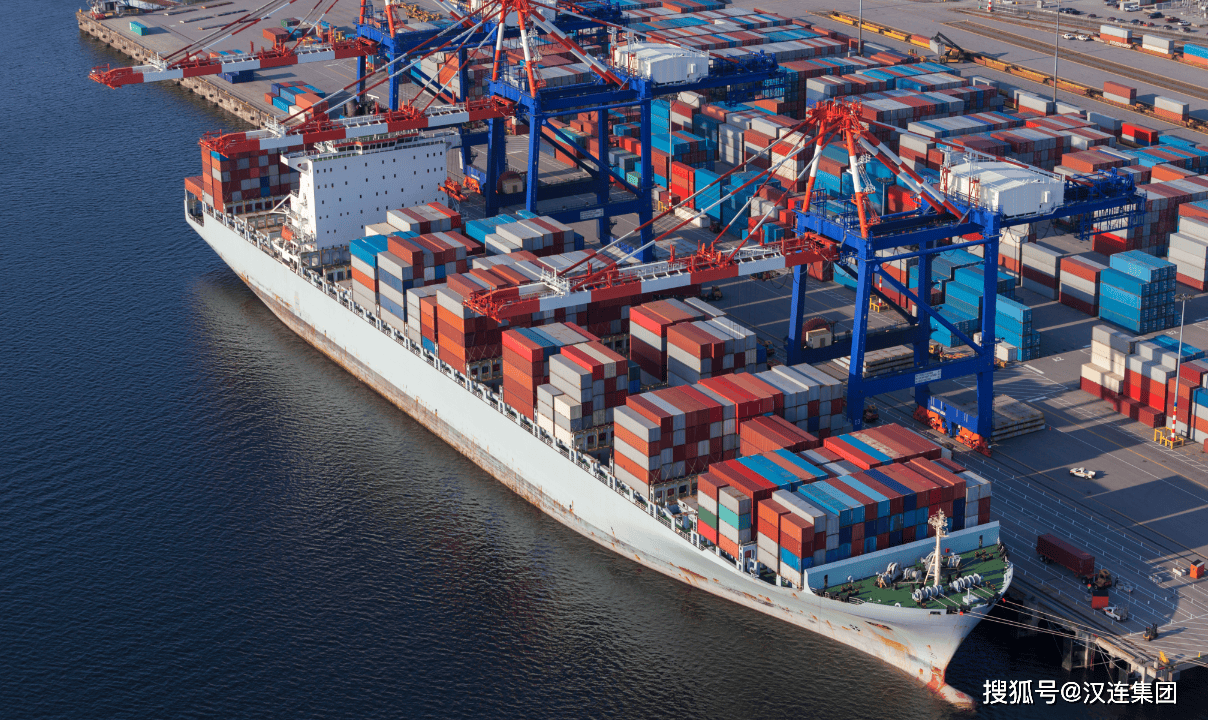
Core Insights - European ports are facing significant congestion due to a surge in cargo volume from Asia and the summer holiday season, leading to increased terminal utilization and longer waiting times [1][3][5] - Major ports like Antwerp, Le Havre, and Rotterdam are experiencing severe operational challenges, with high utilization rates reported across various terminals [1][3][5] Group 1: Port Congestion - Antwerp's PSA terminal utilization ranges from 65% to 92%, with refrigerated container utilization between 45% and 65% [1] - Rotterdam's ECT terminal utilization is at 75%, RWG at 85%, and APMT MVII at 95% [3] - Southampton's terminal utilization is reported at 90-95%, with refrigerated container utilization at 60-65% [3] Group 2: Operational Adjustments - Shipping companies are adjusting operations to alleviate port bottlenecks, including rerouting to less utilized ports [5] - Maersk has announced that the AE11 route will temporarily stop at Vado Ligure instead of Genoa from August to September [5] - Hapag-Lloyd is implementing emergency measures for vessels calling at Genoa during the same period [5] Group 3: Market Outlook - The outlook for several European maritime gateways remains pessimistic, with sustained high demand and limited progress in alleviating congestion [5] - Alphaliner's senior shipping analyst describes the current situation as a "red alert" for European container terminals, indicating ongoing operational pressures at least until the end of the year [5]

FICC日报:运价处于下行周期,关注近期马士基PSS调整情况-20250814
Hua Tai Qi Huo· 2025-08-14 07:23
Report Industry Investment Rating No relevant content provided. Core Viewpoints - The freight rate is in a downward cycle, and attention should be paid to the recent PSS adjustment of Maersk. The 8 - month contract freight rate has reached its peak and is continuously declining, and the final delivery settlement price is estimated to be around 2100 points. The 10 - month contract is mainly for short - allocation, and the focus is on the downward slope of the freight rate. The 12 - month contract still follows the off - peak and peak season pattern, but the risk lies in whether the Suez Canal will reopen. The main contract is expected to fluctuate weakly, and it is advisable to go short on the 10 - month contract when the price is high [1][2][3][4]. Summary by Directory 1. Market Analysis - Online quotes: Different shipping companies have different price quotes for Shanghai - Rotterdam and Shanghai - London routes. For example, Maersk's Shanghai - Rotterdam price in week 35 has risen from 1320/2200 to 1390/2340, and Shanghai - London has risen from 1380/2300 to 1415/2370. HPL's quotes for different periods in August and September are stable at 1535/2435 [1]. - Geopolitical factor: China's Deputy Permanent Representative to the United Nations emphasized the need to maintain the safety of the Red Sea shipping route and promote the political settlement of the Yemen issue [1]. 2. Shipping Capacity - Weekly and monthly average shipping capacity: In August, the remaining 4 - week average weekly capacity to European base ports from China is 308,700 TEU. In September, the monthly average weekly capacity is 302,800 TEU, and in October, it is 286,800 TEU. There are empty sailings and TBNs in August and September, and there are many additional ships in August [2]. 3. Contract Analysis - 8 - month contract: The freight rate has reached its peak and is continuously declining. The delivery settlement price is the arithmetic average of SCFIS on August 11, 18, and 25. The final delivery settlement price is estimated to be around 2100 points [2]. - 10 - month contract: It is mainly for short - allocation. Normal years see a 20% - 30% lower price in October compared to August. Attention should be paid to the price - following situation of other shipping companies after Maersk's week 35 freight rate drops to $2200/FEU. The two additional ships announced by HPL in October may put pressure on the spot price. In the context of a large discount, it is relatively safe to go short on the EC2510 contract when the price is high, but do not chase short excessively [3][4]. - 12 - month contract: In the fourth quarter, due to Western holidays and the need for shipping companies to prepare for the next - year long - term contract negotiation, the freight rate is usually at a high level. The risk lies in whether the Suez Canal will reopen. If it reopens, the seasonal pattern of off - peak and peak seasons may be challenged [4]. 4. Futures and Spot Prices - Futures: As of August 13, 2025, the total open interest of all container shipping index European line futures contracts is 85,722 lots, and the single - day trading volume is 78,305 lots. The closing prices of different contracts are provided [5]. - Spot: On August 8, the SCFI (Shanghai - Europe route) price is $1961/TEU, SCFI (Shanghai - US West route) is $1823/FEU, and SCFI (Shanghai - US East) is $2792/FEU. On August 11, the SCFIS (Shanghai - Europe) is 2235.48 points, and SCFIS (Shanghai - US West) is 1082.14 points [5]. 5. Container Ship Delivery - In 2025, it is still a big year for container ship delivery. As of now, 157 container ships have been delivered, with a total capacity of 1.2513 million TEU. As of July 27, 2025, 49 ships with a capacity of 12,000 - 16,999 TEU have been delivered, with a total capacity of 737,300 TEU, and 7 ships with a capacity of over 17,000 TEU have been delivered, with a total capacity of 159,880 TEU [5]. 6. Strategy - Unilateral: The main contract is expected to fluctuate weakly. - Arbitrage: Go short on the 10 - month contract when the price is high [6].
FICC日报:运价处于下行周期,HPL公布10月份2艘加班船-20250813
Hua Tai Qi Huo· 2025-08-13 07:41
1. Report Industry Investment Rating - Not provided in the content 2. Core Viewpoints of the Report - The freight rate is in a downward cycle, and HPL has announced two additional ships in October [1][2][3] - The 10 - month contract is mainly for short - allocation, and attention should be paid to the downward slope of the freight rate. The 12 - month contract follows the seasonal pattern of peak and off - peak seasons, with the risk of whether the Suez Canal will reopen [3][4] - The strategy suggests that the main contract fluctuates weakly on a single - side basis, and it is advisable to short the 10 - month contract on an arbitrage basis [6] 3. Summary by Relevant Catalogs 3.1 Futures Prices - As of August 12, 2025, the total open interest of all container shipping index European line futures contracts was 79,656.00 lots, and the single - day trading volume was 45,620.00 lots. The closing prices of EC2602, EC2604, EC2606, EC2508, EC2510, and EC2512 contracts were 1528.00, 1350.00, 1482.10, 2082.00, 1417.60, and 1742.00 respectively [5] 3.2 Spot Prices - On August 8, the SCFI (Shanghai - Europe route) price was 1961.00 US dollars/TEU, the SCFI (Shanghai - US West route) price was 1823.00 US dollars/FEU, and the SCFI (Shanghai - US East) price was 2792.00 US dollars/FEU. On August 11, the SCFIS (Shanghai - Europe) was 2235.48 points, and the SCFIS (Shanghai - US West) was 1082.14 points [5] 3.3 Container Ship Capacity Supply - In 2025, it is still a major year for container ship deliveries. As of now, 157 container ships have been delivered, with a total capacity of 1.2513 million TEU. As of July 27, 2025, 49 ships with a capacity of 12,000 - 16,999 TEU have been delivered, with a total capacity of 737,300 TEU; 7 ships with a capacity of over 17,000 TEU have been delivered, with a total capacity of 159,880 TEU [5] - From August to October 2025, the weekly average capacity on the China - European base port route showed certain fluctuations, and there were empty sailings and additional ships in August and September [2] 3.4 Supply Chain - Geopolitically, a Hamas delegation arrived in Cairo for talks on a Gaza cease - fire framework, but Israeli Prime Minister Netanyahu said the possibility of a partial cease - fire and hostage release agreement with Hamas no longer exists [1] - The speed of container ships of different capacities and the number of container ships passing through major canals such as the Suez Canal, Cape of Good Hope, and Panama Canal are important factors affecting the supply chain [52][64][70] 3.5 Demand and European Economy - Western holidays are concentrated in the fourth quarter, and merchants usually stock up in advance, which leads to a relatively high level of shipping volume. The freight rate is usually adjusted to a high level by shipping companies through supply - side measures [4] - The industrial production index, import amount from China, consumer confidence index, and retail sales year - on - year in the EU 27 countries, as well as China's export volume to the EU, are important indicators to measure demand and the European economy [73][80][83]
航运衍生品数据日报-20250812
Guo Mao Qi Huo· 2025-08-12 09:43
Report Summary 1. Investment Rating No investment rating for the industry is provided in the report. 2. Core View - The shipping market is in a state of weak oscillation. The main reason is that Maersk's freight rate at the end of August dropped to 2200, a decrease of 400 from last week, exceeding market expectations. The spot freight rate has peaked, and the subsequent focus is on the decline slope until the end of October. The freight rate on the European route is under pressure, and it is expected to break through 2000 in September [6][7]. 3. Summary by Relevant Contents Shipping Freight Index - **Current and Previous Values and Changes**: The Shanghai Export Container Freight Composite Index (SCEI) is currently at 1490, down 3.94% from the previous value of 1551; the China Export Container Freight Index (CCFI) is at 1201, down 2.59% from 1233. Rates on various routes such as SCFI - West US, SCFI - East US, and SCFI - Northwest Europe also showed significant declines [4]. - **Other Routes**: SCFIS - Northwest Europe is currently at 2235, down 2.70% from 2297; SCFI - Mediterranean is at 2318, down 0.64% from 2333 [4]. Shipping Derivatives - **Contract Prices**: For contracts like EC2506, EC2508, etc., prices showed different degrees of change, with some rising and some falling. For example, EC2506 rose 0.44% to 1497.1 from 1490.5 [4]. - **Open Interest**: Open interest for contracts such as EC2606, EC2508 also changed. For instance, EC2606 open interest decreased by 30 to 770 from 800 [4]. - **Spread**: The spreads between different contract months (10 - 12, 12 - 2, 12 - 4) also changed. For example, the 10 - 12 spread decreased by 17.2 to -341.2 from -324.0 [4]. Market News - **Policy and Geopolitics**: The US and China need to decide whether to extend the current tariff suspension agreement by August 12. Trump threatened to impose higher tariffs on countries buying Russian oil. Trump will meet with Putin in Alaska on August 15 [5]. - **Industry Developments**: South Korea plans to conduct pilot operations on the "Northern Sea Route" starting in 2026. Three Chinese small - market carriers will offer several voyages on this route in late summer 2025. The latest Global Port Tracker (GPT) report shows that US imports in the last four months of 2025 will decline significantly year - on - year [5]. Strategy - The recommended strategy is to short the October contract on rallies (take profit gradually as it has pulled back recently) and hold the 12 - 4 calendar spread [8].
集运指数(欧线):震荡整理,10空单酌情持有
Guo Tai Jun An Qi Huo· 2025-08-11 05:17
Report Summary 1. Investment Rating No specific investment rating for the industry is provided in the report. 2. Core View The report anticipates that the container shipping index (European route) will experience further pressure on its fundamentals in September, with a likely scenario of reduced supply and demand. It is recommended to hold short positions on the EC2510 contract and add positions on price increases, with an upper resistance level of 1500 - 1550 points. However, there are potential upward risks that may prevent a smooth downward trend in the EC2510 contract [12]. 3. Summary by Section 3.1 Market Performance - The container shipping index (European route) has been fluctuating in the past week. The EC2510 contract closed at 1436.0 points, down 12 points for the week; the EC2512 contract closed at 1760.0 points, up 67.6 points; and the EC2508 contract closed at 2071.0 points, down 55.5 points [9]. 3.2 Freight Rates - The market freight rate has dropped to around $2900/FEU. Different alliances have different freight rate trends, with the OA and MSC FAK centers still around $3000/FEU. It is expected that the market FAK freight rate center may be in the range of $2500 - $2600/FEU by the end of August [10]. 3.3 Supply and Demand Fundamentals - **Supply**: In August, the weekly average capacity decreased from 32.8 to 32.5 million TEU, mainly due to the cancellation of an independent overtime ship on the Evergreen CES route in week 35. In September, the weekly average capacity is expected to decrease from 31.8 to 30.8 million TEU, a 5.4% decrease from August and a 2.3% increase from July. In October, the weekly average capacity is 29.1 million TEU, but this figure has limited reference value [11]. - **Demand**: Since mid - August, the overall market cargo volume has shown a mild downward trend, and the booking rate has slowed down since week 34 [11]. 3.4 Strategy - Hold short positions on the EC2510 contract and add positions on price increases, with an upper resistance level of 1500 - 1550 points. Potential upward risks include the slowdown of cargo volume decline and the possible improvement of market sentiment due to the approaching delivery of the EC2508 contract [12].
船司价格高频调整,关注马士基WEEK34周价格是否再度修正
Hua Tai Qi Huo· 2025-08-08 03:27
Report Industry Investment Rating No relevant content provided. Core View of the Report - The shipping company's prices are in a downward cycle, and the freight rates of August contracts have reached their peak and are continuously being revised downwards, which brings uncertainty to the estimated delivery settlement price. For the October contracts, short - positions are the main strategy, and attention should be paid to the downward slope of freight rates. For the December contracts, the seasonal pattern of peak and off - peak seasons still exists, but the risk lies in whether the Suez Canal will resume navigation. The main contract is expected to fluctuate weakly. The recommended strategy is to go long on the December contract and short on the October contract, and short the October contract on rallies [4][5][6][8]. Summary by Directory Market Analysis - Online quotes: Different shipping companies have different quotes for the Shanghai - Rotterdam route. For example, Maersk's WEEK34 quote is 1595/2670, and HPL's quotes vary by shipping period [1]. Geopolitical Situation - Hamas officials stated that the organization will regard any armed forces aiming to manage Gaza as "occupation" forces associated with Israel based on Netanyahu's remarks [2]. Shipping Capacity - The average weekly shipping capacity from China to European base ports in August is 347,300 TEU, and in September it is 297,100 TEU. In August, Maersk added two additional ships, and the OA Alliance added three. There were 4 blank sailings in August, all from the OA Alliance, and there are currently 3 TBNs in August and 2 in September [3]. Contract Analysis - **August Contracts**: The freight rate peak has passed, and the continuous downward revision of freight rates has brought uncertainty to the delivery settlement price. The delivery settlement price is the arithmetic average of SCFIS on August 11th, 18th, and 25th. The prices of shipping companies have entered a downward cycle [4]. - **October Contracts**: It is a seasonal contract with short - positions as the main strategy. Attention should be paid to the downward slope of freight rates. Normally, prices in October are 20% - 30% lower than those in August [5]. - **December Contracts**: The seasonal pattern of peak and off - peak seasons still exists. The risk is whether the Suez Canal will resume navigation. Usually, the prices from the Far East to Europe in December are more than 10% higher than those in October [6]. Futures and Spot Prices - As of August 7, 2025, the total open interest of all contracts of the container shipping index for the European route futures is 77,291 lots, and the single - day trading volume is 32,213 lots. The closing prices of different contracts are provided. The SCFI and SCFIS prices for different routes are also given [7]. Strategy - **Unilateral Strategy**: The main contract is expected to fluctuate weakly. - **Arbitrage Strategy**: Go long on the December contract and short on the October contract, and short the October contract on rallies [8]. Risk Factors - **Downside Risks**: Unexpected economic slowdown in Europe and the United States, significant decline in crude oil prices, unexpected delivery of ships, less - than - expected ship idling, and better - than - expected resolution of the Red Sea crisis. - **Upside Risks**: Economic recovery in Europe and the United States, supply chain disruptions, significant reduction in shipping capacity by liner companies, and continued fermentation of the Red Sea crisis leading to detours [8].