
亿纬锂能

Search documents
湖北3家企业入选2025胡润中国500强
Chang Jiang Shang Bao· 2026-02-10 00:15
Group 1: Core Insights - The 2025 Hurun China 500 list highlights the growing strength of non-state enterprises in Hubei, with three companies making the list, showcasing the steady rise of the local private economy [1] - Gaode Infrared, with a market value of 55 billion yuan, ranks first among Hubei companies and has improved its national ranking from 367th to 279th [1] - Gaode Infrared specializes in infrared thermal imaging technology and has broken the long-standing monopoly of Western giants in this field by developing advanced intelligent equipment [1] Group 2: Company Performance - Gaode Infrared expects a net profit of 700 million to 900 million yuan for 2025, driven by significant growth in its civilian product sector and increased demand for infrared chip applications [2] - Filihua, a new entrant on the list with a market value of 39 billion yuan, anticipates a net profit of 412 million to 472 million yuan for 2025, reflecting a year-on-year growth of 31.12% to 50.22% [2] - Chaoying Electronics, also a new addition with a market value of 35 billion yuan, focuses on PCB development and production, benefiting from local supply chain stability [3] Group 3: Industry Trends - The threshold for entering the 500 list has increased by 7.5 billion yuan to 34 billion yuan, marking a 28% rise [4] - The total value of the 500 companies has grown by 21 trillion yuan, a 38% increase, reaching 77 trillion yuan [4] - Semiconductor, media and entertainment, industrial products, and consumer goods sectors account for half of the total value of the Hurun China 500 [4]


入股+采购!当升科技,签约固态电池龙头
DT新材料· 2026-02-09 16:05
Core Viewpoint - The article discusses the strategic collaboration between Dangsheng Technology and Huineng Technology to advance the mass production of solid-state batteries, highlighting the potential for investment and procurement of battery materials [1]. Group 1: Strategic Collaboration - Dangsheng Technology signed a strategic cooperation framework agreement with Huineng Technology to enhance collaboration in the solid-state battery and new energy sectors [1]. - The agreement includes discussions on equity investment in Huineng Technology and the validation of Dangsheng's battery materials for use in Huineng's solid-state batteries, with a commitment for priority procurement if the materials meet production timelines [1]. Group 2: Technological Advancements - Dangsheng Technology's ultra-high nickel multi-element materials for solid-state batteries are nearing the performance levels of liquid batteries, achieving energy density requirements exceeding 400Wh/kg [2]. - The company has developed a new type of sulfide electrolyte that maintains high ionic conductivity while significantly reducing interfacial pressure, addressing solid-solid interface contact challenges [2]. Group 3: Financial Performance - Dangsheng Technology expects a net profit attributable to shareholders of 600 million to 650 million yuan for 2025, representing a year-on-year growth of 27.16% to 37.76% [3]. - The increase in performance is attributed to the company's ability to capitalize on opportunities in the power, energy storage, and consumer markets, with significant growth in product sales [3]. Group 4: Production Capacity and Market Demand - The company has a planned production capacity of 300,000 tons for lithium iron phosphate (LiFePO4) materials, with the first phase already operational at 120,000 tons per year [4]. - Due to strong demand in the energy storage market, Dangsheng Technology is facing capacity constraints and is actively planning expansions in the southwestern region of China [4].


2025年全球动力电池装车量达1187GWh,预计韩企复苏延迟
Ju Chao Zi Xun· 2026-02-09 13:24
Core Insights - The global electric vehicle (EV) battery usage is projected to reach approximately 1,187 GWh in 2025, representing a year-on-year growth of 31.7% from the previous year [2][3]. Group 1: Market Leaders - CATL remains the global leader in battery usage with 464.7 GWh in 2025, showing a growth of 35.7% year-on-year. Its clientele includes major global brands such as Tesla, BMW, and Mercedes [4]. - BYD ranks second with a battery usage of 194.8 GWh, reflecting a 27.7% increase. The company is expanding its market presence, particularly in Europe, where its battery usage surged by 201.4% to 14.9 GWh [4]. - LG Energy Solution holds the third position with 108.8 GWh, marking an 11.3% growth. The company supplies batteries to Tesla and other automakers, although it faces challenges due to contract terminations and production issues [5][6]. Group 2: Competitive Landscape - The combined market share of South Korean battery manufacturers (LG Energy Solution, SK On, and Samsung SDI) has decreased by 3.3% to 15.4% [5]. - SK On's battery usage reached 44.5 GWh, growing by 12.3%. However, the company faces challenges due to the discontinuation of the Ford F-150 Lightning and a slowdown in the North American EV market [6]. - Samsung SDI's battery usage declined by 6.9% to 28.9 GWh, with its primary clients including BMW and Rivian. The company is experiencing mixed performance due to varying sales of its clients' EV models [5][6]. Group 3: Future Outlook - The electric vehicle battery market is expected to see increased demand, but regional disparities and competitive pressures may lead to greater volatility in company performance [7]. - The Chinese market is characterized by intense price competition, particularly with lithium iron phosphate (LFP) batteries, which may exert downward pressure on prices [7]. - The North American market faces uncertainties in EV demand, which could impact the production capacity and shipment volumes of South Korean battery manufacturers [7].


光储行业跟踪:全国性储能容量电价机制出台,储能系统价格持续上涨
Shanghai Aijian Securities· 2026-02-09 11:12
Investment Rating - The report assigns an "Outperform" rating for the industry [2]. Core Insights - The establishment of a national pricing mechanism for energy storage capacity is expected to stabilize revenue for new energy storage systems, which is a positive development for the industry [2]. - The report highlights a significant increase in the average price of lithium battery storage systems, indicating a trend of rising costs in the energy storage sector [2]. - The report notes a decrease in production for both photovoltaic components and lithium batteries, suggesting a restructuring in supply dynamics within the industry [2][3]. Summary by Sections Production - Photovoltaic component production is projected to decrease by 13.58% month-on-month in December 2025, while lithium battery production is expected to decline by 10.5% month-on-month in February 2026 [2]. - The total production capacity for batteries in China is forecasted at 188 GWh for February 2026, with a global forecast of 195 GWh [2]. Pricing - As of February 4, 2026, the price of polysilicon remains stable at 54.00 CNY/kg, while the average price of 183N monocrystalline silicon wafers has decreased by approximately 7.41% to 1.25 CNY/piece [2]. - The average price for lithium battery storage systems in December 2025 was 0.5882 CNY/Wh, reflecting a month-on-month increase of 2.82% [2]. Domestic Demand - In November 2025, the domestic installation of photovoltaic systems reached 22.02 GW, marking a month-on-month increase of 74.76% [2]. - The cumulative installed capacity for photovoltaic systems in China from January to November 2025 was 274.89 GW, showing a year-on-year growth of 33.25% [2]. Overseas Demand - The export value of photovoltaic components in December 2025 was approximately 2.314 billion USD, representing a year-on-year increase of 18.22% [2]. - The export value of inverters in December 2025 was 839 million USD, which is a year-on-year increase of 26.12% [2].




百汇达突破复材防火及增韧技术 提升产品安全性能
Zhong Guo Neng Yuan Wang· 2026-02-09 10:41
Core Viewpoint - Guangdong Baihuida New Materials Co., Ltd. is leveraging advanced composite materials to enhance battery safety in the automotive sector, positioning itself as a key player in the global market for electric vehicle components [1][2]. Group 1: Company Overview - Baihuida was established in 2013 and focuses on the innovation and industrialization of lightweight composite materials, creating a comprehensive supply chain from resin research to product manufacturing [2]. - The company is a designated supplier of battery covers for major automotive manufacturers, including GAC, Xpeng Motors, BYD, SAIC-GM-Wuling, Dongfeng Motor, and China Aviation Lithium Battery [2]. Group 2: Technological Innovations - Baihuida has developed a multi-layer composite material process that addresses the critical need for thermal runaway protection in battery covers, featuring a three-layer structure that significantly improves fire resistance [3]. - The new product can withstand flame impacts of 1200°C for 30 minutes, reducing back temperature from 670°C to below 300°C, thus enhancing safety during thermal runaway events [3]. - The introduction of a new MCC composite material combines glass fiber and short-cut yarn, achieving high strength and low production costs, filling a domestic market gap and increasing competitiveness [3]. Group 3: Financial Performance and Growth - Baihuida is projected to achieve over 200 million yuan in revenue by 2025, with an average annual growth rate of 20.66% in its main business revenue over the past two years [3]. - The company invests 7.12% of its total revenue in R&D, holding 11 patents in Class I intellectual property and capturing a 27.49% market share in its niche [3][4]. Group 4: Research and Development - The company has invested 60 million yuan to establish a comprehensive R&D center, enhancing its capabilities in resin synthesis, precision testing, and pilot production [5]. - Baihuida's production capacity is the largest in the country, with over 30 machines and an annual output of 1.6 million pieces, while automation improvements have increased production efficiency by over 35% [5]. Group 5: Collaborations and Partnerships - Baihuida collaborates with major companies like EVE Energy and Xpeng Motors to develop full composite battery box materials, as well as with universities for advanced research in carbon fiber and thermosetting resin technologies [5][6]. - The company is also focused on sustainable practices, contributing to carbon reduction goals through innovative recycling technologies and green production processes [8].
储能产业链7家企业扎堆港股IPO
Sou Hu Cai Jing· 2026-02-09 10:33
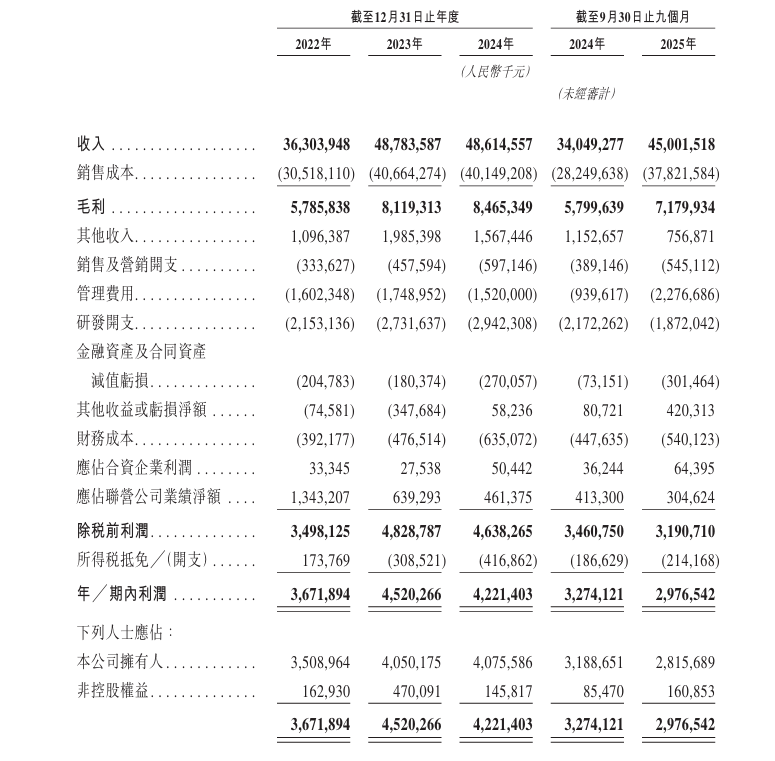
Core Viewpoint - The energy storage industry is experiencing a surge in companies planning to go public in Hong Kong, marking the beginning of a "storage IPO wave" as multiple firms submit their applications for listing [1][14]. Group 1: Company Listings - Companies such as Yihui Lithium Energy, Huasheng Lithium Battery, and Deye have announced plans to issue H-shares and list on the Hong Kong Stock Exchange, reflecting a strategic move to enhance their international presence and financing options [1][4][6]. - Yihui Lithium Energy aims to raise funds primarily for its 30GWh power battery project in Hungary, which is expected to commence production in 2027 [1]. - Huasheng Lithium Battery anticipates a significant profit increase in 2025, projecting a net profit of between 12 million to 18 million yuan, marking a year-on-year growth of 106.87% to 110.30% [2]. Group 2: Financial Performance - Yihui Lithium Energy reported a revenue of 45 billion yuan for the first three quarters of 2025, with energy storage battery revenue reaching 17.069 billion yuan, a year-on-year increase of 37.9% [1]. - Deye achieved a revenue of 8.846 billion yuan and a net profit of 2.347 billion yuan in the first three quarters of 2025, showcasing its strong market position in both residential and commercial energy storage [4]. - Huichuan Technology reported a revenue of 31.663 billion yuan for the first three quarters of 2025, with a net profit of 4.254 billion yuan, reflecting a year-on-year growth of 24.67% and 26.84% respectively [6]. Group 3: Market Trends - The influx of energy storage companies into the Hong Kong market signifies the industry's robust growth and the strategic response of firms to capitalize on global carbon neutrality opportunities [14]. - The competitive landscape is expected to intensify as more companies enter the market, enhancing China's global competitiveness in the energy storage sector [14].




锂电行业跟踪:碳酸锂价格下行,储能电芯均价上行
Shanghai Aijian Securities· 2026-02-09 10:28
Investment Rating - The industry is rated as "Outperform" [2] Core Insights - The production of positive materials in December showed a year-on-year increase, with domestic battery production reaching 201.7 GWh in December 2025, a growth of approximately 62% year-on-year and 14% month-on-month [2] - Lithium carbonate prices have decreased, with industrial-grade lithium carbonate priced at 134,000 CNY/ton as of February 6, 2026, reflecting a weekly decline of 9.46% [2] - The average price of energy storage cells has significantly increased, with prices for various types of lithium iron phosphate cells rising by 3.02% to 4.96% as of February 6, 2026 [2] - The demand for lithium iron phosphate batteries reached a monthly shipment of 79.8 GWh in December 2025, marking a year-on-year increase of 30.82% [2] - The global sales of new energy vehicles reached 2.1521 million units in December 2025, showing a year-on-year growth of 11.50% [2] Summary by Sections Production - In December 2025, the production of lithium iron phosphate positive materials was 26,930 tons, a year-on-year increase of 32.48% [2] Prices - The average price of lithium iron phosphate (power type) was reported at 47,100 CNY/ton on January 9, 2026, an increase of 4.43% from January 4, 2026 [2] - The average price of liquid-cooled container energy storage systems increased slightly, with prices reaching 0.48 and 0.55 CNY/Wh as of February 6, 2026 [2] Domestic Demand - The monthly shipment of ternary power batteries remained stable at 18.2 GWh in December 2025, with a year-on-year increase of 27.27% [2] Overseas Demand - The export volume of Chinese power batteries in December 2025 was 19.0 GWh, reflecting a year-on-year increase of 47.29% [2]


捷邦科技涨5.57%,成交额3.72亿元,今日主力净流入258.72万
Xin Lang Cai Jing· 2026-02-09 07:37
Core Viewpoint - The company, Jieban Technology, has shown significant growth in revenue and is heavily reliant on major clients like Foxconn and Apple, while also benefiting from the depreciation of the Chinese yuan. Group 1: Company Performance - Jieban Technology's stock increased by 5.57% on February 9, with a trading volume of 372 million yuan and a turnover rate of 10.44%, bringing the total market capitalization to 9.645 billion yuan [1] - For the period from January to September 2025, the company achieved a revenue of 962 million yuan, representing a year-on-year growth of 62.04%, while the net profit attributable to shareholders was -12.5763 million yuan, a decrease of 1762.51% [7] - The company has distributed a total of 43.2365 million yuan in dividends since its A-share listing [8] Group 2: Client and Revenue Dependency - The company's primary clients include Foxconn, Quanta Computer, Compal Electronics, and BYD, with sales to Foxconn accounting for 35.58%, 36.85%, and 39.52% of total revenue in recent years [2] - A significant portion of the company's products is used in Apple's laptops and tablets, with sales revenue from products ultimately applied in Apple devices making up 85.22%, 77.95%, and 81.27% of total revenue [2] Group 3: Market and Industry Position - The company has a strong presence in the liquid cooling server business, which is progressing as planned, although specific project details are confidential due to non-disclosure agreements [2] - The company's carbon nanotube products are primarily used in lithium batteries, with supply agreements in place with several new energy manufacturers, including CATL and BYD [2] - As of the 2024 annual report, overseas revenue accounted for 67.79% of total revenue, benefiting from the depreciation of the yuan [3] Group 4: Shareholder and Institutional Holdings - As of September 30, 2025, the company had 7,464 shareholders, an increase of 12.82%, with an average of 3,646 circulating shares per shareholder, a decrease of 10.24% [7] - New institutional shareholders include several funds from the Fortune Group, indicating growing interest in the company's stock [9]

2026成本战打响:原材料暴涨与政策退坡下的“生死局”
3 6 Ke· 2026-02-09 07:21
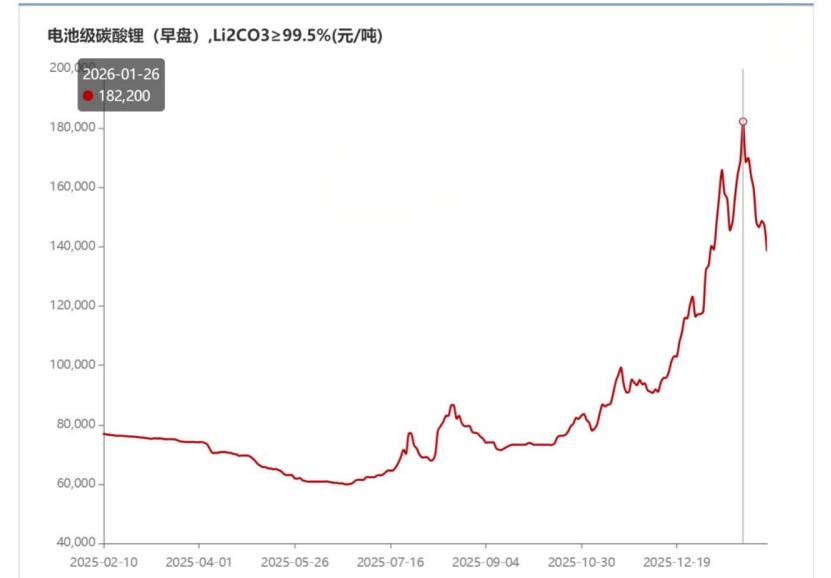
Core Viewpoint - The automotive industry is facing a dual challenge of rising costs and declining demand, with significant price increases in core raw materials and a competitive market environment impacting profitability [1][10]. Group 1: Cost Pressures - The automotive manufacturing sector is experiencing a collective price surge in key raw materials such as lithium, copper, aluminum, and tin, significantly affecting electric vehicle production [2][4]. - The price of battery-grade lithium carbonate has skyrocketed from 75,700 yuan per ton at the beginning of 2025 to 182,200 yuan per ton by January 26, 2026, marking an increase of over 150% [2]. - The cost of copper and aluminum has also risen sharply, with domestic electrolytic copper prices exceeding 100,000 yuan per ton and aluminum prices projected to reach 3,150 USD per ton in the first half of 2026 [4][5]. Group 2: Impact on Electric Vehicles - Electric vehicles, which require significantly more raw materials than traditional fuel vehicles, are particularly vulnerable to these cost increases, with the average vehicle requiring 200 kg of aluminum and 80 kg of copper [4][5]. - The cost of DRAM for automotive applications has surged by 180% in three months, with prices for DDR5 and DDR4 memory chips increasing dramatically due to competition with the AI sector [7][9]. Group 3: Market Dynamics and Policy Changes - The Chinese automotive market is currently experiencing a downturn in consumer confidence, exacerbated by the reduction of tax incentives for electric vehicles and changes to the "trade-in" subsidy policy [10][11]. - The sales profit margin for the automotive industry in China was only 4.1% in 2025, the lowest in five years, with some companies reporting margins as low as 1.8% [11][13]. Group 4: Strategic Responses - Many automotive companies are opting to absorb costs through financial schemes and temporary subsidies rather than raising prices, which could lead to a loss of market share in a highly competitive environment [11][13]. - Leading companies are seeking to strengthen ties with upstream suppliers and expand into overseas markets to mitigate domestic cost pressures [14].
亿纬锂能公布国际专利申请:“电池充电控制方法、系统及存储介质”
Sou Hu Cai Jing· 2026-02-09 06:18
Core Viewpoint - EVE Energy has filed an international patent application for a battery charging control method, system, and storage medium, indicating a focus on innovation and technology development in the battery sector [1] Group 1: Patent Information - The patent application number is PCT/CN2024/124399, with an international publication date set for February 5, 2026 [1] - This year, EVE Energy has announced a total of 37 international patent applications, representing a 48% increase compared to the same period last year [1] Group 2: R&D Investment - In the first half of 2025, EVE Energy invested 1.261 billion yuan in research and development, which is a decrease of 11.33% year-on-year [1]
