大疆

Search documents
为什么说,天空的主导权,正在从硅谷转移到珠三角?
创业邦· 2026-01-31 01:12
Core Viewpoint - The article discusses the shift in dominance in the low-altitude economy, highlighting China's advancements in drone technology and infrastructure compared to the United States, emphasizing the differences in regulatory approaches and manufacturing capabilities [5][8][56]. Group 1: Low-altitude Economy in China - China's perspective on drones is that they are "flying servers" and "winged high-speed trains," aligning with its historical focus on infrastructure development [11][12]. - Shenzhen has established a comprehensive digital infrastructure for low-altitude operations, akin to building roads, which facilitates drone operations [14][15]. - The Civil Aviation Administration of China (CAAC) adopts a pragmatic regulatory approach, allowing for experimentation in designated areas, which contrasts with the U.S. focus on strict regulations [17][18]. Group 2: U.S. Regulatory Challenges - The U.S. Federal Aviation Administration (FAA) prioritizes manned aircraft, creating significant barriers for commercial drone operations, such as the "Visual Line of Sight" requirement [22][25]. - Despite having advanced drone technology, U.S. companies face bureaucratic hurdles that hinder commercial applications, leading to a lack of large-scale deployment [26][39]. - Cultural resistance, such as NIMBYism, further complicates the acceptance and integration of drones into American society [27]. Group 3: Manufacturing and Supply Chain - The article highlights the disparity in manufacturing capabilities, with China able to produce drones at a lower cost and higher efficiency due to its robust supply chain [33][34]. - U.S. attempts to create a domestic drone manufacturing ecosystem face challenges, as compliant U.S. drones are significantly more expensive and less capable than their Chinese counterparts [36][40]. - The cycle of limited commercial applications leading to high costs and low demand for U.S. drones is described as the "hardware curse" [40]. Group 4: Military Implications - The article notes that the use of inexpensive consumer drones in military conflicts has raised alarms in the U.S., prompting a reevaluation of drone strategies [44][45]. - China's approach to drone technology has evolved from consumer markets to military applications, showcasing a bottom-up innovation model [45][46]. - The U.S. is now attempting to rapidly develop affordable drones through initiatives like the "Replicator Initiative," but faces fundamental challenges in manufacturing without relying on Chinese supply chains [50][52]. Group 5: Future Outlook - The article concludes that the competition between the U.S. and China in the low-altitude economy will depend on who can better embrace innovation and tolerate experimentation [56][57]. - While the U.S. retains strengths in AI and advanced technologies, the current regulatory environment may hinder its ability to capitalize on drone technology [56].

秀出智慧农业“肌肉”,广东产学研力量亮出前沿应用成果
Nan Fang Nong Cun Bao· 2026-01-30 10:00
Core Viewpoint - The 24th Guangdong Seed Industry Expo showcased significant advancements in agricultural technology, highlighting the integration of smart agriculture solutions by leading companies and academic institutions in Guangdong [2][3][4]. Group 1: Event Overview - The Guangdong Provincial Department of Agriculture and Rural Affairs hosted the 24th Guangdong Seed Industry Expo in Guangzhou from December 11 to 13 [2]. - The event included an Agricultural Science and Technology Innovation Achievement Exhibition, demonstrating the fruitful results of agricultural technology development in Guangdong [3]. Group 2: Key Participants and Innovations - Leading companies such as Huawei, DJI, and XAG, along with 16 academic institutions including Sun Yat-sen University and South China Agricultural University, presented pioneering achievements in smart agriculture [3][4]. - Innovations showcased included automated systems for fish feeding, AI-assisted breeding tools, and smart pest monitoring solutions, indicating a shift towards more automated and data-driven agricultural practices [19][21][27]. Group 3: Future of Agriculture - The exhibition illustrated a vision for the future of agriculture, emphasizing the development of a new ecological model for smart agriculture that integrates aerial, terrestrial, and digital technologies [11][13]. - The advancements in agricultural technology are positioned to empower China's journey towards becoming a strong agricultural nation [11].


2026前沿科技趋势:塑造自己的下一个版本
3 6 Ke· 2026-01-30 09:58
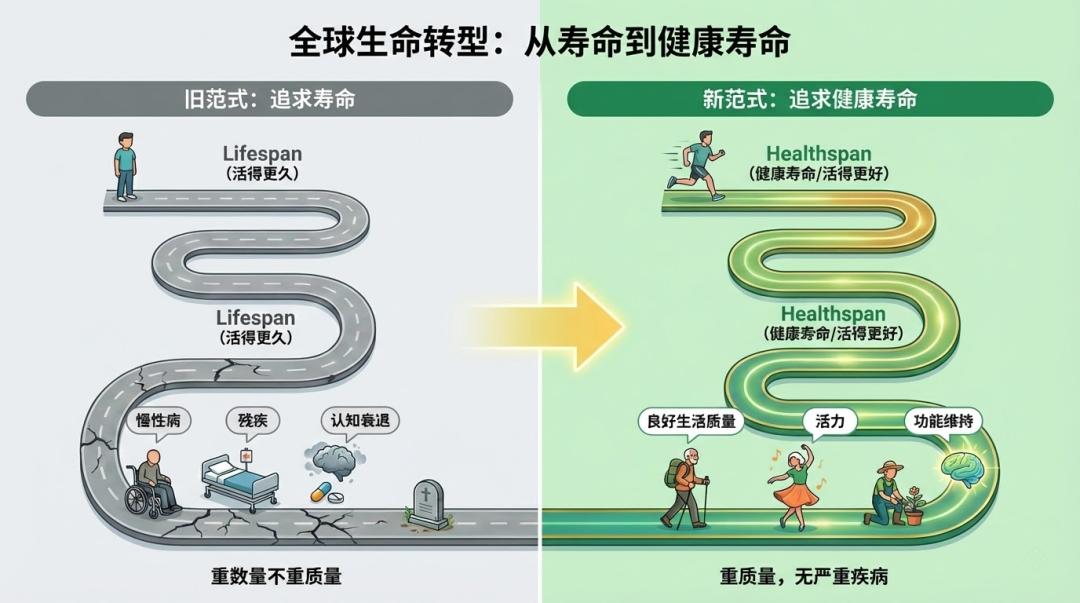
Group 1 - The rapid evolution and application of artificial intelligence and cutting-edge technologies are causing societal adaptation challenges, leading to feelings of uncertainty among people [1][2] - The focus of technological advancement should be human-centered, with an emphasis on shaping a better future through technology by 2030 [2] Group 2 - The "third transformation" of human life aims to extend healthy lifespan rather than just lifespan, with significant implications for global health and economy [3][5] - Human life expectancy has doubled over the past century, but the growth rate has significantly slowed down, with some regions experiencing stagnation or decline [4] - By 2030, the quality of life is projected to be a major focus, with non-communicable diseases potentially costing the global economy up to $47 trillion if not addressed [5] Group 3 - Advances in gene therapy and artificial intelligence are expected to play crucial roles in extending healthy lifespan, with technologies like CRISPR and AI enhancing medical capabilities [9][17] - Clinical breakthroughs in preventive gene therapy and RNA therapies are showing promise in treating chronic diseases effectively [10][12] - Epigenetic reprogramming is emerging as a potential method to reverse aging, with ongoing research aiming for clinical trials by 2026 [15] Group 4 - Artificial intelligence is set to enhance medical efficiency and understanding of human health, with applications in drug development, disease screening, and personal health management expected to yield significant results by 2030 [17][18] - AI is accelerating drug development processes, reducing timelines from years to months, and improving the success rates of new treatments [18][19] Group 5 - The development of exoskeleton technology is enhancing human physical capabilities, with applications in medical rehabilitation, industrial safety, and personal use expected to expand significantly [24][25] - Innovations in exoskeletons are making them more adaptable and user-friendly, with advancements in sensor technology and materials [28][30] Group 6 - The eVTOL market is projected to grow significantly, with advancements in battery technology and noise reduction strategies being critical for its acceptance and integration into urban transportation [31][32] - The evolution of drones into autonomous aerial robots is enhancing their capabilities for both consumer and industrial applications [34] Group 7 - The development of brain-computer interfaces (BCIs) is transforming the treatment of neurological conditions and enhancing human capabilities, with both invasive and non-invasive technologies showing promise [51][54] - BCIs are moving from experimental to standard treatment options for conditions like paralysis, with significant advancements in technology and regulatory approval processes [52][53]
2026前沿科技趋势:塑造自己的下一个版本
腾讯研究院· 2026-01-30 08:18
Core Insights - The article emphasizes the rapid evolution and application of artificial intelligence and cutting-edge technologies across various fields, urging a human-centered approach to technological advancement [3][4][5]. Group 1: Human Life's "Third Transformation" - Extending Healthy Lifespan - Human life expectancy has doubled over the past century, with significant improvements attributed to public health, antibiotics, and vaccines [7]. - Recent research indicates a dramatic slowdown in the growth rate of life expectancy, with the average increase dropping to below 0.25 years per decade in the last 30 years [8]. - A shift is occurring from merely extending lifespan to enhancing healthspan, which is the period of life spent in good health, with potential economic implications of up to $47 trillion in costs from non-communicable diseases by 2030 [9]. Group 2: Programmable Life - Gene Therapy - Gene therapy is moving towards optimizing the "life code," with advancements in CRISPR technology and delivery systems expected to mature by 2030 [11]. - Clinical breakthroughs in preventive gene therapy, such as Verve Therapeutics' treatment for cardiovascular disease, show promising results with significant reductions in LDL-C levels [12]. - The success of personalized CRISPR therapy in curing a fatal metabolic disease in a patient highlights the potential of gene therapy [14]. Group 3: Health Planning - AI Enhancing Medical Efficiency - AI is set to revolutionize drug development, disease screening, and personal health management by 2030, significantly reducing the time and cost associated with traditional drug development [21]. - AI combined with multi-omics technology is facilitating faster and more accurate disease screening, with notable advancements in cancer detection [23]. - Aging clock technology is evolving, enabling precise monitoring of aging processes and identifying underlying causes of aging [25]. Group 4: Enhancing Physical Capability - Exoskeleton Technology - Exoskeleton technology is advancing to enhance human physical capabilities, with applications in medical rehabilitation, industrial safety, and personal use [30]. - In the medical field, exoskeletons are evolving from mere mobility aids to intelligent devices that promote neurological recovery [31]. - Consumer-grade exoskeletons are expected to become popular for outdoor activities, significantly improving mobility for users [32]. Group 5: Flying Technology - eVTOL Development - The eVTOL market is projected to reach $41 billion in China by 2040, with significant advancements in battery technology expected to triple flight ranges [37]. - Noise reduction technologies are being explored to enhance social acceptance of eVTOLs, with strategies like "noise corridors" being implemented [38]. - The evolution of drones into aerial robots is enhancing capabilities in both consumer and industrial applications, with significant advancements in autonomous operations [40]. Group 6: Brain-Machine Interfaces - A New Era of Interaction - Brain-machine interfaces (BCIs) are transitioning from experimental therapies to standard treatment options for conditions like paralysis, with companies like Neuralink leading the way [61]. - Non-invasive BCIs are emerging, allowing for enhanced human-computer interaction, with applications in consumer technology [63]. - The integration of BCIs with AI could redefine human-AI collaboration, raising ethical considerations regarding privacy and data protection [64].

新京报2025“智慧生活”年度案例揭晓,20家企业和产品入选
Xin Jing Bao· 2026-01-30 08:09
Core Insights - The 2025 "Smart Life" annual case event revealed 20 companies and products, highlighting the deep integration of technology and daily life, with a focus on AI products that enhance empathy and user experience [1] - The event emphasizes the importance of practical applications of smart technology in addressing real-life issues and improving user convenience, showcasing a shift from tool-based to ecosystem-based technology [1] Group 1: Key Trends in Smart Technology - The integration of AI products is becoming more pronounced, with a focus on empathy and user-centric solutions [1][3] - Future products are expected to deeply incorporate large model capabilities from the design phase, leading to a new generation of AI-native applications that transform user habits [2] Group 2: Notable Award Winners - Taobao Flash Purchase was recognized as the annual instant retail innovation platform [5] - Ant Financial's "Afu" was awarded as the annual family health guardian AI butler [5] - Kuaishou's "wow" intelligent agent was named the annual commercial AI assistant [6] - Hisense's AI Life Butler received recognition as the annual smart appliance innovation case [12] - DJI's Osmo Action 6 was awarded for its contribution to smart imaging accessibility [13]

大疆老家,南山坐拥10000亿
投资界· 2026-01-30 08:09
里程碑。 作者/周佳丽 那是今年CES上,来自深圳的3 5 0余家参展企业创下阵容之最,现场投资人忍不住感叹: "明年CES不如直接在深圳办。" 如此,只是缩影。今天(1月3 0日),深圳市统计局发布,2 0 2 5年全市地区生产总值3 8 7 3 1 . 8 0亿元,同比增长5 . 5 %。稍早前新华社 报道,2 0 2 5年南山区成功迈入万亿城区, 成为我国首个GDP过万亿元的地市辖区 ,也是继北京海淀区、上海浦东新区之后,全国 第三个迈入"GDP万亿"行列的城区。 与北京海淀依托高校与央企的深厚根基不同,也与上海浦东以金融开放见长的路径相异,面积最小、建制年轻的南山,走出一条独 属于自己的路——以科技创新企业为绝对主体, "大企业顶天立地、中小企业铺天盖地、创新企业开天辟地"。 这一幕,创投圈感受更为深刻。两个月前,投资界报道《 大疆旁边咖啡馆挤满了投资人 》,记录了最近投资人去深圳抢项目的情景 ——以"大疆系"为代表的深圳创业军团席卷创投圈。随后,5 0 0亿粤港澳大湾区创业投资引导基金落户南山,史上最大创投活水缓缓 铺开。 凡此种种,皆是写照。 「 中国最牛区 」 上市公司密度全国第一 某种程度上, ...


拓竹爆红:捐赠1亿
投资界· 2026-01-30 08:09
报道/投资界PEdaily 一份意料之外又情理之中的捐赠。 近日,拓竹宣布设立母校基金,向1 0所员工母校总计捐赠1亿元。 10所高校入选。 作者/王露 名单里大多是传统工科强校和"双一流",但其中一个名字格外醒目:深圳职业技术大学 ——唯一的职业院校。 它为什么会出现在这里?答案藏在拓竹的用人逻辑里,也藏在中国硬科技的变迁里。人 才争夺战,正从工厂和实验室蔓延至大学课堂。 向10所员工母校 捐赠1亿 先从这笔捐赠说起。 1 月 2 7 日 , 拓 竹 宣 布 成 立 拓 竹 母 校 基 金 , 给 员 工 母 校 捐 款 1 亿 元 , 向 长 期 培 养 人 才 的 母 校表达一份感谢。 这份高校名单包括电子科技大学、哈尔滨工业大学、华南理工大学、华中科技大学、上 海交通大学、西安交通大学、中国科学技术大学、香港科技大学、中国美术学院,以及 一个略显意外的名字:深圳职业技术大学。 名单看似杂糅,实则有据可依。拓竹称,每个人的专业背景各不相同——或是来自文理 工科,或是艺术、设计出身,又或是以职业技术见长,但一起构成了今天的拓竹。其筛 选标准并非学校排名或创始人偏好,而是综合各校在司员工数量及薪酬水平等维度 ...

“深圳战胜硅谷!”中国反超美国成无人机行业领导者,美媒开始反思
Huan Qiu Wang Zi Xun· 2026-01-30 07:45
Core Viewpoint - The article highlights the unexpected dominance of China's drone industry over the United States, with Chinese companies, particularly DJI, leading the commercial drone market in the U.S. and globally, despite the U.S. being a historical pioneer in drone technology [2][4][6]. Industry Development - The U.S. was once a leader in drone technology, producing models like the Global Hawk and Predator, but its commercial drone sector is now in early testing phases, while China has integrated drones into everyday life across numerous cities [4][6]. - By 2024, the number of civilian drones in China is projected to reach 2.2 million, reflecting a 455% increase over five years [4]. Market Share - DJI's products are user-friendly and competitively priced, capturing approximately 80% of the U.S. commercial drone market, with significant usage in law enforcement, film production, infrastructure inspection, and agriculture [6]. - Over 70% of commercial drones globally are produced in China, indicating a strong manufacturing base [6]. Regulatory Environment - China's government has actively supported the drone industry by restructuring airspace management rules and encouraging pilot programs for commercial drone operations, which contrasts with the more restrictive regulatory environment in the U.S. [9][10]. - By the end of 2025, China aims to have a comprehensive regulatory and technical standard system for the low-altitude economy, which includes various supportive policies from local governments [9]. Public Acceptance - A McKinsey survey indicates that 86% of Chinese respondents are willing to use commercial drone delivery services, compared to only 53% in the U.S., highlighting a significant difference in public acceptance [10]. Technological Innovation - China's approach to technology emphasizes practical experience through large-scale production rather than breakthroughs in basic science, which has facilitated rapid innovation in the drone sector [11][13]. - Shenzhen, known as the "hardware Silicon Valley," exemplifies how China's manufacturing expertise supports technological innovation and cost reduction in the drone industry [13].

多地GDP数据密集发布,“数字之外”怎么看
Ren Min Ri Bao· 2026-01-30 07:06
看前排:超5.5万亿元!经济十强省份GDP门槛进一步提高 经济大省是全国发展大局的"压舱石""顶梁柱"。2025年12月举行的中央经济工作会议明确,"支持经济 大省挑大梁"。 广东、江苏、山东、浙江、四川、河南、湖北、福建、上海、湖南等10省份,贡献了全国超六成的 GDP。其中有8个省份去年的增速高于或比肩全国平均增速,"挑大梁"作用进一步凸显。 2025年,经济十强省份GDP均超5.5万亿元,门槛进一步提高。山东成为全国第三个、北方地区第一个 过10万亿元的省份;江苏成为继广东省之后,第二个地区生产总值突破14万亿元大关的省份。面对2025 年复杂的国际形势变化,外贸大省广东依然保持了3.9%增速,总量连续37年居全国首位。 近日,全国多地也陆续公布2025年经济数据"成绩单":山东GDP首破10万亿元,江苏首破14万亿元,北 京迈入"五万亿之城";大连成为东北地区首个"万亿之城",深圳南山成为全国首个万亿级地市辖区…… 数据背后,可以读出哪些规律和趋势? 山东,从传统产业占比70%、重化工占传统产业70%的"两个70%"困局,到高新技术产业产值占规上工 业比重超55%。新旧动能转换之间,山东完成了产业结构 ...
32岁程序员猝死,涉事公司HR离职,曾因“不希望家属拿家人生命换钱”言论引争议
Hua Xia Shi Bao· 2026-01-30 06:02
Group 1 - The HR involved in the incident with programmer Gao Guanghui has left the company following backlash from comments made during discussions with the family regarding compensation [1][2] - The HR's controversial statement suggested that dying at work would not be regrettable, which sparked significant online debate [1][2] - Gao Guanghui's wife emphasized in a recorded conversation that her husband was overwhelmed by work responsibilities, not by life burdens, indicating a disconnect between work expectations and personal well-being [2] Group 2 - The Human Resources and Social Security Bureau of Huangpu District, Guangzhou, is conducting an investigation into the Gao Guanghui case, with a 60-day timeline for the inquiry [3] - In response to issues like the "996" work culture and excessive overtime, various large companies, including DJI, Haier, and Midea, have implemented measures to combat "involution" and unnecessary overtime [3]