
泡泡玛特

Search documents
“票根经济”“谷子经济”“兴趣消费”写进政府工作报告 “种草”引变局 “懂你”成标签
Shen Zhen Shang Bao· 2026-02-13 01:35
Core Insights - The rise of "emotional economy" reflects a significant shift in consumer behavior, where young people are increasingly willing to pay for happiness and emotional satisfaction, indicating a transformation in consumption logic from "product-centered" to "people-centered" [5][11] Group 1: Emotional Consumption Trends - Over 90% of young people recognize the importance of emotional value, with 46.8% considering it a remedy for stress and anxiety [4] - The popularity of "blind boxes" and merchandise related to anime and gaming illustrates the trend of consumers seeking joy and emotional fulfillment through purchases [3][4] - The "ticket economy" is emerging, where concert tickets can unlock discounts on related services, enhancing the overall consumer experience [4][8] Group 2: Market Growth and Economic Impact - The emotional consumption market in China reached 2.72 trillion yuan in 2025, projected to exceed 4.5 trillion yuan by 2029 [6] - Companies like Pop Mart have seen significant financial success, with revenue of 138.8 billion yuan and net profit of 47.1 billion yuan in the first half of 2025, surpassing the entire revenue of 2024 [7] - The rise of emotional consumption is driving the growth of niche markets, creating billion-dollar opportunities in sectors like trendy toys and entertainment [8] Group 3: Regional Development and Strategic Focus - Cities like Shenzhen are prioritizing the development of emotional economy concepts such as "ticket economy" and "self-pleasure economy" in their government work reports, indicating a strategic focus on enhancing consumer experiences [9][10] - Shenzhen's demographic advantages, including a young population with high spending power, position it well to capitalize on the emotional economy [10][11] - The city's plans to expand its commercial landscape and enhance consumer engagement through innovative marketing strategies reflect a commitment to fostering a vibrant consumption ecosystem [11]


为什么一半的文旅项目都会失败?
Sou Hu Cai Jing· 2026-02-13 01:21
Core Insights - The Chinese cultural tourism industry requires not only marketing strategies but also strategic marketing, which focuses on the fundamental logic of enterprise survival, development, and growth [2] - The industry is entering a new era characterized by the rise of subcultures, mixed consumption, and the importance of emotional engagement in projects [6][12][21] Group 1: Strategic Marketing - Strategic marketing is defined by three core positions: market positioning, product positioning, and brand positioning [2] - Market positioning clarifies product boundaries for optimal resource utilization [2] - Product positioning aims to avoid competition within a one to three-hour travel radius, creating unique competitive advantages [2] - Brand positioning seeks to establish a brand image that transcends the product itself [2] Group 2: New Trends in Cultural Tourism - The industry is witnessing ten new trends that will shape its future direction [3] - The rise of subcultures is seen as a key to revitalizing the cultural tourism sector, moving from mass appeal to niche markets [6] - The long-tail effect of the internet allows niche products to generate significant revenue [7] Group 3: Mixed Consumption - Successful cultural tourism projects integrate various business functions, such as shopping, dining, and entertainment, creating a comprehensive consumer experience [8][11] - The concept of "mixed consumption" is becoming a competitive advantage for cultural tourism projects, as seen in successful cases like Pop Mart and LA COLINA [9][11] Group 4: Emotional Engagement - Emotional engagement is crucial for the success of cultural tourism projects, requiring pre-planned strategies to resonate with local communities and consumers [21] - Projects that evoke strong emotional responses tend to achieve greater success, as demonstrated by various case studies [21] Group 5: Data-Driven Marketing - The future of business in the cultural tourism sector will revolve around data assets, focusing on customer acquisition, service, and engagement [23] - Companies must build platforms and communities to maintain customer loyalty and transform visitors into repeat consumers [23] Group 6: City and Scenic Area Interaction - There is a growing trend of mutual interaction between cities and scenic areas, with cities becoming integral to the cultural tourism experience [25] - Scenic areas are encouraged to embrace urban culture and provide diverse experiences for local residents [25] Group 7: Positioning and Execution - Successful cultural tourism projects must establish clear positioning and utilize entertainment marketing and media strategies to thrive [27] - The key to success lies in unwavering belief, extreme execution, and long-term commitment [27]
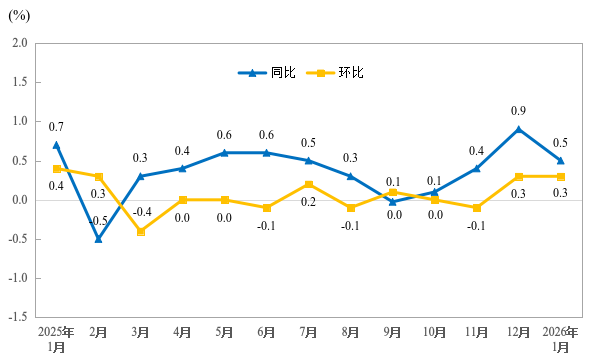
1月份武汉CPI同比上涨0.5%,智能化商品消费需求旺
Chang Jiang Ri Bao· 2026-02-13 00:53
Group 1 - The core viewpoint of the articles highlights the significant price increases in various consumer goods in Wuhan, driven by factors such as AI demand and structural adjustments in supply chains [1][4]. - In January, the price of data storage devices in Wuhan rose by 85.3% year-on-year, reflecting the growing demand from the AI industry [1]. - The Consumer Price Index (CPI) in Wuhan increased by 0.5% year-on-year in January, which is higher than the national increase of 0.2% and the provincial increase of 0.1% [1]. Group 2 - The market for service consumption is active, with customized and deep travel becoming popular, leading to a 4.0% year-on-year increase in semi-self-service travel prices [2]. - Prices for online audio-visual services surged by 16.2% year-on-year, indicating a growing willingness to pay for content [2]. - The price of gasoline at gas stations decreased by 11.8% year-on-year, providing savings for drivers, while the price of electricity for vehicles increased by 7.6% [2]. Group 3 - The price of food items shifted from an increase to a decrease, with fresh vegetable prices still rising but at a reduced rate, and pork prices dropping by 13.4% year-on-year [2]. - The increase in prices for smart products and upgraded services, along with consumption related to new energy, reflects the resilience of urban consumption and industrial transformation [4].

泡泡玛特去年上半年营收增长超2倍
Bei Jing Ri Bao Ke Hu Duan· 2026-02-13 00:27
Core Insights - The article highlights that Pop Mart, a Beijing-based manufacturer of the "Labubu" dolls, has seen its revenue more than double in the first half of 2025, with 40% of its profits coming from outside China [1] Company Performance - Pop Mart's revenue growth is attributed to the global popularity of its "Labubu" dolls, which have sparked a collecting craze among adults worldwide [1] - The company is positioned as a significant player in the global market, reflecting a shift in Chinese soft power through pop culture [1] Industry Trends - The article notes that Chinese pop culture is experiencing a global breakthrough, with applications like TikTok and Temu ranking among the highest downloaded globally [1] - Chinese video games, such as "Black Myth: Wukong," are also gaining popularity on the international stage, indicating a broader acceptance of Chinese cultural products [1]
智通港股沽空统计|2月13日
智通财经网· 2026-02-13 00:21
Group 1 - The core point of the article highlights the short-selling ratios and amounts for various companies, indicating significant market activity and investor sentiment towards these stocks [1][2]. Group 2 - The top three companies by short-selling ratio are China Resources Beer (80291), Great Wall Motor (82333), and JD Health (86618), all at 100.00% [1][2]. - The top three companies by short-selling amount are Meituan (03690) with 1.878 billion, Zijin Mining (02899) with 1.770 billion, and Tencent Holdings (00700) with 1.606 billion [1][2]. - The companies with the highest deviation values in short-selling are Kuaishou (81024) at 36.81%, Zhaojin Mining (01818) at 33.02%, and China Shipbuilding Leasing (03877) at 30.32% [1][2].


“种草”引变局 “懂你”成标签
Sou Hu Cai Jing· 2026-02-12 23:27
Core Insights - The rise of "emotional economy" reflects a significant shift in consumer behavior, where young people are increasingly willing to spend on experiences and products that provide emotional satisfaction rather than just practical utility [5][10] - Government reports from various regions, including Shenzhen, emphasize the importance of expanding domestic demand through concepts like "emotional economy," indicating a strategic focus on consumer sentiment [2][9] Group 1: Emotional Consumption Trends - Over 90% of young people recognize the importance of emotional value, with 46.8% viewing it as a remedy for stress and anxiety [4] - The popularity of "blind boxes" and merchandise related to anime and gaming illustrates a trend where consumers derive joy from the act of purchasing and unboxing, rather than the intrinsic value of the items [3][4] - Concerts and events are seen as "energy fields" that provide unique emotional experiences, further driving the "ticket economy" where ticket stubs can unlock additional consumer benefits [4][8] Group 2: Market Growth and Economic Impact - The emotional consumption market in China is projected to reach 2.72 trillion yuan by 2025, with expectations to exceed 4.5 trillion yuan by 2029 [6] - Brands like Pop Mart have seen significant financial success, with revenue of 13.88 billion yuan and net profit of 4.71 billion yuan in the first half of 2025, surpassing the entire revenue of 2024 [7] - The emergence of new toy brands and the expansion of the ticket economy are creating substantial market opportunities, with various sectors experiencing growth due to the emotional consumption trend [8][9] Group 3: Regional Advantages and Strategic Development - Shenzhen is positioned as a leader in the emotional economy due to its young, high-spending population and a robust industrial chain that supports rapid response to consumer demands [9][10] - The city's government plans to enhance its commercial landscape by developing unique shopping districts and promoting various economic models, including the "ticket economy" and "self-indulgence economy" [10] - The focus on emotional value in consumption reflects a broader shift in economic strategy, moving from a product-centric to a consumer-centric approach, which is crucial for urban economic growth [5][10]

年货消费新潮涌动
Jing Ji Ri Bao· 2026-02-12 22:35
个性年货受追捧 如今,年货的边界正在快速拓宽。 在北京一家文创工坊,"汪氏皮影"第五代传承人党飞华一边雕刻着手中的皮影骏马配饰,一边介绍与品 牌联名推出的新年限定礼盒。"将非遗技艺融入现代设计,变成可拼装、可互动的新年礼,让老手艺有 了年轻化表达。"当下,这类非遗与新消费、新场景结合的年货,成为不少年轻人的心头好。 在广州"非遗贺新春·寻味中国年"活动现场,广府醒狮、潮汕英歌等非遗项目引人瞩目,很多都转化为 可购买、可体验的"新年货"。"伴随广东推出10条非遗年俗旅游线路,越来越多人从'买年货'升级为'游 年俗'。广州酒家作为本地老字号,将'饮茶咩'等文创IP与本地年俗和文旅经济相融合,让游客感受到特 色鲜明的'广式年味儿'。"广州酒家集团品牌管理部主管卢启文认为,这一转变的关键,在于对传统文 化资源的创造性转化。年货消费不断涌现的新需求,也促使商家与时俱进,推出更多贴合时代的优质好 产品。 科技感与智慧化也在重构年货定义与消费场景。在北京某数码卖场,消费者徐赫正在体验新款AI眼 镜,实用功能叠加国家以旧换新补贴,成为提升生活品质的"硬核年货"。2025年年底以来,国家大规模 设备更新和消费品以旧换新政策落地 ...
2月12日南向资金追踪:腾讯控股、小米集团-W、美团-W净买入额居前,分别为14.29亿港元、10.20亿港元、9.85亿港元
Jin Rong Jie· 2026-02-12 15:01
Market Overview - The Hang Seng Index fell by 0.86%, closing at 27,032.54 points, with a total market turnover of 238.705 billion HKD [1] Southbound Trading Data - Tencent Holdings, Xiaomi Group-W, and Meituan-W saw net purchases of 1.429 billion HKD, 1.020 billion HKD, and 0.985 billion HKD respectively [1][2] - WuXi Biologics, Zijin Mining, and Pop Mart experienced net sales of 0.392 billion HKD, 0.346 billion HKD, and 0.301 billion HKD respectively [1][2] Individual Stock Performance - Tencent Holdings had a trading volume of 12.026 billion HKD, with a net buy of 1.429 billion HKD, closing at 535.50 HKD, down by 2.28% [2] - Xiaomi Group-W recorded a trading volume of 27.46 billion HKD, with a net buy of 1.020 billion HKD, closing at 36.52 HKD, down by 1.56% [2] - Meituan-W had a trading volume of 38.31 billion HKD, with a net buy of 0.985 billion HKD, closing at 84.85 HKD, down by 4.50% [2] - Pop Mart had a trading volume of 21.899 billion HKD, with a net sell of 0.301 billion HKD, closing at 252.20 HKD, down by 1.10% [2] - WuXi Biologics had a trading volume of 6.99 billion HKD, with a net sell of 0.392 billion HKD, closing at 41.34 HKD, down by 0.14% [2] - Zijin Mining had a trading volume of 9.64 billion HKD, with a net sell of 0.346 billion HKD, closing at 45.02 HKD, up by 3.45% [2]


港股晨报-20260212
国投证券(香港)· 2026-02-12 11:46
Group 1: Market Overview - The Hong Kong stock market continued its rebound with all three major indices closing higher, with the Hang Seng Index up 0.31%, the Hang Seng China Enterprises Index up 0.28%, and the Hang Seng Tech Index up 0.9% [2] - Market activity has slowed significantly ahead of the Chinese New Year, with trading volume dropping to 217.2 billion HKD, and the short-selling ratio on the main board at 17.95% [2] - Southbound capital remained stable, with a net buy of 4.82 billion HKD, with Tencent Holdings, Meituan, and Pop Mart being the most actively bought stocks [2] Group 2: Sector Performance - The resources and cyclical sectors led the market, driven by a rebound in gold prices, with companies like Zijin Mining, Lingbao Gold, and Shandong Gold seeing significant gains [3] - The building materials and cement sector performed well, with companies like China National Building Material and Conch Cement recording considerable increases, supported by improved industry profitability expectations [3] - The automotive supply chain remained active, particularly with Tesla-related stocks, as the market anticipates advancements in autonomous driving and robotics [4] Group 3: Company Analysis - LeShuShi (2698.HK) - LeShuShi is a multinational hygiene products company focused on emerging markets, with a broad sales network across over 30 countries in Africa, Latin America, and Central Asia [7] - The company has established eight factories in Africa, making it the largest local manufacturer in the hygiene products sector, which enhances its supply chain efficiency [8] - Future growth for LeShuShi is expected to come from external factors like demographic growth in emerging markets and internal factors such as localized production and extensive sales channels [8] - The report gives a "Buy" rating with a target price of 38 HKD, forecasting revenues of 541 million USD, 627 million USD, and 711 million USD for 2025, 2026, and 2027 respectively, with net profits of 106 million USD, 129 million USD, and 147 million USD [8]
净买入逾45亿港元 大举加仓腾讯和小米流出泡泡玛特




Xin Lang Cai Jing· 2026-02-12 10:25
Core Viewpoint - Southbound capital flow into Hong Kong stocks showed a net inflow of approximately 45.67 billion HKD despite a generally weak market performance, indicating continued interest from investors [2][3]. Southbound Capital Flow - Today's southbound trading volume reached about 947.77 billion HKD, an increase of approximately 40 billion HKD from the previous day, accounting for 39.70% of the total turnover of the Hang Seng Index, which has fallen below 40% again [2]. - The net inflow from the Shanghai-Hong Kong Stock Connect was about 46.56 billion HKD, while the Shenzhen-Hong Kong Stock Connect experienced a net outflow of approximately 0.89 billion HKD [2]. Individual Stock Performance - Significant net purchases included Tencent Holdings (14.29 billion HKD), Xiaomi Group (10.20 billion HKD), Meituan (9.85 billion HKD), and Kingsoft Cloud (1.89 billion HKD) [3]. - Major net outflows were observed in WuXi Biologics (3.92 billion HKD), Zijin Mining (3.46 billion HKD), and Pop Mart (3.01 billion HKD) [3]. Investment Highlights - Tencent Holdings saw a decline of 2.28% with a net increase of 25.2 million shares over the past five days, indicating a short-term inflow trend [4]. - Xiaomi Group decreased by 1.56%, with a net increase of 53.81 million shares in the last five days, showing continued short-term inflow [4]. - Meituan dropped 4.50%, but there was a net increase of 20.59 million shares over the past five days, suggesting accelerated short-term inflow [4]. - Kingsoft Cloud increased by 7.82%, with a net increase of 35.20 million shares in the last five days, indicating sustained short-term inflow [4]. - WuXi Biologics fell by 0.14%, but there was a net increase of 25.83 million shares over the past five days, maintaining a primary inflow trend [4]. - Zijin Mining rose by 3.45%, with a net reduction of 8.28 million shares in the last five days, indicating a primary outflow trend [4]. - Pop Mart decreased by 1.10%, with a net increase of 5.58 million shares over the past five days, showing a slowdown in inflow [4]. Recent Trading Activity - In the past month, Tencent Holdings had a net capital inflow of 16.44 billion HKD, while Meituan experienced a net inflow of 6.70 billion HKD despite a 4.50% decline [5]. - Xiaomi Group recorded a net inflow of 7.34 billion HKD, while WuXi Biologics faced a net outflow of 3.92 billion HKD [5].
