
拉布布玩偶

Search documents
【环时深度】中欧青年交流,从“短期热”走向“长期稳”
Huan Qiu Shi Bao· 2026-02-26 22:59
Core Viewpoint - The perception of China among European youth is shifting towards a more positive, rational, and pragmatic understanding, particularly in areas such as trade, technology, and international cooperation [2][3]. Group 1: Survey Insights - A survey conducted by CSA revealed that 82% of European youth hold a positive view of China, indicating a shift from traditional geopolitical narratives to a focus on economic and experiential factors [2]. - The younger generation increasingly associates China with infrastructure development, technological advancement, and trade influence [2][3]. Group 2: Changing Perceptions - European youth are moving beyond simplistic stereotypes of China, recognizing it as a complex entity with significant contributions to technology and innovation [3][6]. - The narrative around China is evolving to focus on specific topics such as renewable energy, digital lifestyles, and artificial intelligence, rather than just political comparisons [3]. Group 3: Media Influence - Short video platforms and social media are becoming primary sources of information for European youth, shaping their perceptions of China through relatable content [4][6]. - The popularity of Chinese applications and cultural products is contributing to a more favorable image of China among young Europeans [6]. Group 4: Cultural Exchange and Language Learning - There is a growing interest among European youth in learning Chinese, seen as a key to understanding China's societal dynamics and fostering personal connections [9][10]. - Programs aimed at enhancing cultural and language exchanges are viewed as essential for building long-term relationships between Europe and China [11][12]. Group 5: Future Engagement Strategies - Recommendations for enhancing youth exchanges include developing longer-term programs that integrate academic and practical experiences, expanding outreach beyond elite circles, and utilizing tourism to create authentic connections [11][12]. - The EU and China are expected to prioritize educational and cultural exchanges as a means to strengthen mutual understanding and cooperation [12].


“毫不犹豫!美国盟友敲响中国大门”
Xin Lang Cai Jing· 2026-02-25 02:05
Group 1 - Beijing has transformed from a partner that made the West feel "uneasy" to a key partner, with Washington no longer dominating the global landscape [2][6] - Foreign leaders, particularly traditional allies of the U.S., have increasingly prioritized visits to China, indicating a shift in geopolitical dynamics [2][6] - Since December of last year, numerous foreign government aircraft have been landing in Beijing, with notable visits from leaders such as French President Macron, Canadian Prime Minister Trudeau, and UK Prime Minister Starmer [2][6] Group 2 - A recent survey indicated a significant rise in the global image of China, with an increasing number of people in 32 countries believing China will be the future world leader [3][7] - China's investment initiatives under the Belt and Road Initiative have established a network of economic ties through infrastructure projects in Asia, Africa, and Latin America, enhancing its influence [3][7] - The perception of China as a responsible global participant has strengthened its position, particularly among countries in the Global South, while European leaders' visits suggest that the Global North is also paying attention [3][7]
海外社交媒体出现“极致中国化”热潮,网民纷纷争当“新晋中国人”
Xin Lang Cai Jing· 2026-02-15 05:20
Core Viewpoint - The rise of "Chinamaxxing" reflects a growing trend among Western youth to embrace Chinese culture and lifestyle, driven by disillusionment with their own societal conditions and a fascination with China's rapid development [1][2][10]. Group 1: Cultural Trends - "Chinamaxxing" has gained popularity on platforms like TikTok, where users share experiences and practices associated with Chinese culture, such as traditional health methods and lifestyle choices [1][5]. - The trend signifies a shift in perception, where previously dismissed Chinese cultural elements are now celebrated and adopted by Western audiences [5][12]. - Young people are increasingly purchasing Chinese-inspired products and engaging with Chinese media, indicating a broader cultural exchange [2][8]. Group 2: Societal Context - The emergence of "Chinamaxxing" coincides with a perceived decline in the American Dream, as many young Americans face stagnant economic prospects and societal challenges [10][11]. - Observers note that this trend may represent a search for new cultural identities and alternatives to Western norms, as young people look to China as a model of progress [12][14]. - The trend is seen as a response to geopolitical tensions, with some young people seeking to distance themselves from the negative narratives surrounding China [14][15]. Group 3: Media Response - Western media, including the BBC, have acknowledged the trend while expressing skepticism about its implications, often framing it within a narrative of cultural appropriation or misunderstanding [2][6][14]. - Despite the media's critical stance, the popularity of "Chinamaxxing" suggests a significant shift in cultural dynamics, with young people increasingly drawn to Chinese culture [5][12]. - The trend has sparked discussions about the evolving global landscape, where cultural influence is no longer solely dominated by Western ideals [14][15].

“Ni hao,我们现在都是中国人了”
Guan Cha Zhe Wang· 2026-02-15 04:39
Core Viewpoint - The rise of "Chinamaxxing" reflects a growing trend among Western youth to embrace Chinese culture and practices, driven by disillusionment with their own societal conditions and a fascination with China's rapid development [1][2][3]. Group 1: Cultural Trends - "Chinamaxxing" has gained popularity on platforms like TikTok, where users share videos about adopting Chinese lifestyle habits, indicating a shift in cultural perception [1][10]. - The trend is characterized by a blend of traditional Chinese practices, such as health remedies and cultural attire, which were previously viewed as outdated but are now celebrated [2][3][6]. - Influencers like Sherry Zhu are pivotal in promoting this trend, encouraging followers to embrace Chinese culture and practices [3][6]. Group 2: Global Perception of China - The increasing interest in Chinese culture coincides with a decline in the perception of the "American Dream," as many young Americans feel stagnant while observing China's rapid urban and technological advancements [8][9]. - The trend signifies a potential shift in global cultural dynamics, where younger generations are looking beyond traditional Western influences for inspiration [12][13]. - Despite ongoing geopolitical tensions, the trend suggests a growing appreciation for Chinese culture among Western youth, indicating a possible cultural rapprochement [12][13]. Group 3: Economic and Social Implications - The popularity of Chinese brands and cultural products, such as Laobubu dolls and Chinese tea drinks, highlights the expanding influence of Chinese soft power globally [2][4]. - The trend may also reflect a broader acceptance of Chinese standards and infrastructure, as Western societies increasingly interact with Chinese innovations [2][4]. - The phenomenon of "Chinamaxxing" could lead to a re-evaluation of cultural and economic relationships between China and the West, as younger generations seek new cultural narratives [12][13].

泡泡玛特去年上半年营收增长超2倍
Bei Jing Ri Bao Ke Hu Duan· 2026-02-13 00:27
Core Insights - The article highlights that Pop Mart, a Beijing-based manufacturer of the "Labubu" dolls, has seen its revenue more than double in the first half of 2025, with 40% of its profits coming from outside China [1] Company Performance - Pop Mart's revenue growth is attributed to the global popularity of its "Labubu" dolls, which have sparked a collecting craze among adults worldwide [1] - The company is positioned as a significant player in the global market, reflecting a shift in Chinese soft power through pop culture [1] Industry Trends - The article notes that Chinese pop culture is experiencing a global breakthrough, with applications like TikTok and Temu ranking among the highest downloaded globally [1] - Chinese video games, such as "Black Myth: Wukong," are also gaining popularity on the international stage, indicating a broader acceptance of Chinese cultural products [1]

国际论道丨破圈出海 中国品牌加速登陆全球市场
Ren Min Ri Bao Hai Wai Ban· 2026-01-26 03:07
Group 1 - The core viewpoint is that Chinese brands are rapidly expanding globally, establishing a new image through innovative product design, marketing strategies, and cultural output [1][2][10] - The perception of Chinese products has shifted positively, especially among younger generations in the U.S., leading to a historical high in consumption of Chinese-made goods [2][12] - Chinese tea and beverage brands are successfully entering the U.S. market, with several brands expanding their presence and establishing operations in Southeast Asia and Australia [4][5] Group 2 - Chinese automotive brands have significantly increased their market share in Kazakhstan, rising from approximately 2% in 2020 to 34.5% in the first nine months of 2025 [5] - The global cosmetics market is witnessing a rise in Chinese brands, driven by strong domestic demand and successful international expansion [5][6] - Chinese brands are competing not only on price but also on quality and creativity, with a notable increase in global trust and influence over the past six years [6][11] Group 3 - The innovative capabilities of Chinese companies are being recognized globally, with a growing number of products showcasing advanced technology and design [7][10] - Chinese brands are increasingly focusing on localizing their operations and hiring local employees to enhance cultural integration and reduce friction [8][10] - The transition from merely selling products to building ecosystems marks a significant evolution in the strategy of Chinese brands in global markets [10][11] Group 4 - The global sales network established by Chinese e-commerce platforms and the effective use of social media for targeted marketing are accelerating the globalization of Chinese brands [11] - The cultural perception of China is evolving, with a growing recognition of Chinese creativity and influence in global trends [12] - China's rise in the global soft power index reflects its increasing influence, suggesting that future cultural phenomena may emerge from Chinese cities [12]

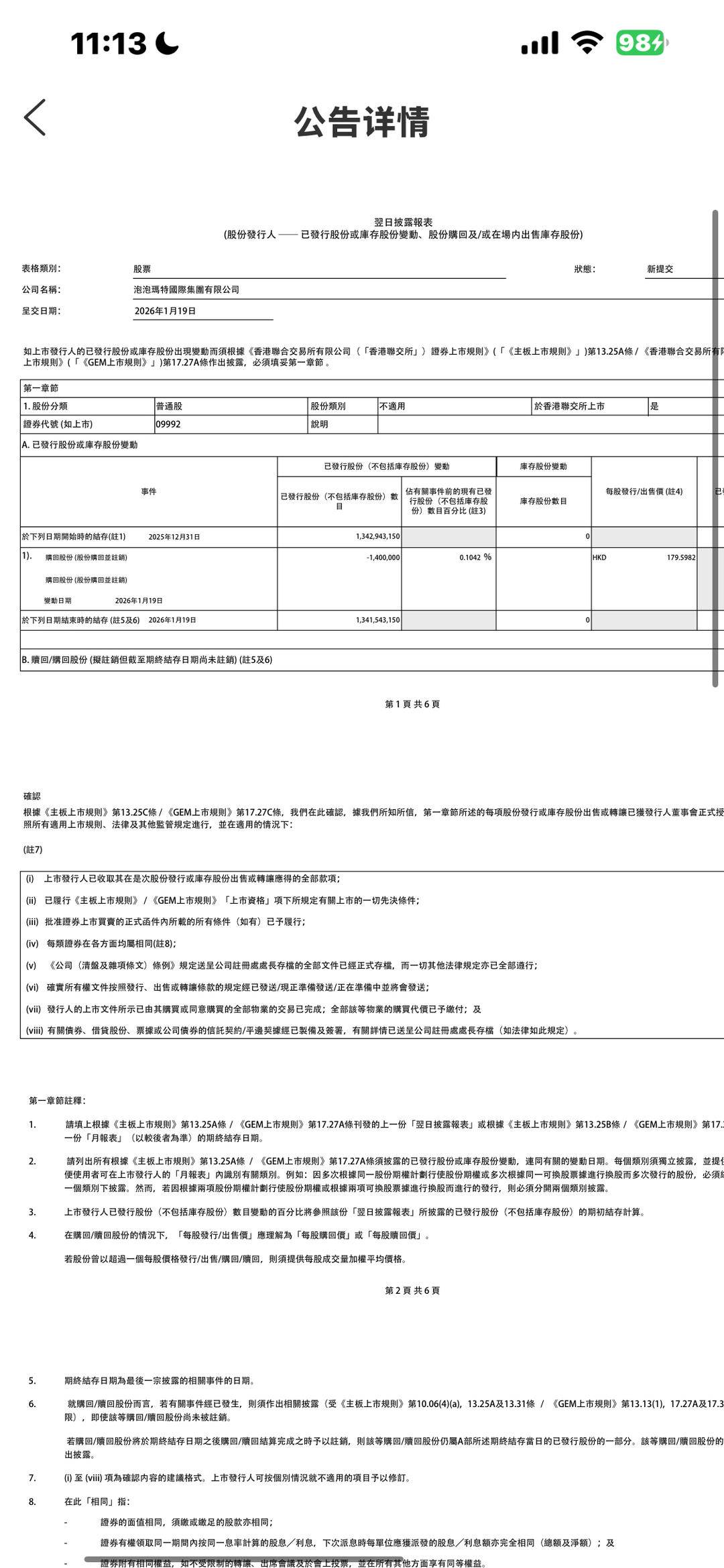
斥资约2.51亿港元回购,拉布布感受到“天冷了”
Yang Zi Wan Bao Wang· 2026-01-21 06:17
Core Viewpoint - Pop Mart, a leading player in the trendy toy market, has repurchased approximately 1.4 million shares for about HKD 251 million, indicating a strategic move to stabilize its stock price amid recent declines [1][5]. Group 1: Share Buyback Details - The share buyback occurred on January 19, 2026, with a total expenditure of approximately HKD 251 million [1]. - Following the buyback, Pop Mart's market capitalization stands at HKD 257.04 billion [1]. - The total number of issued shares decreased from 1,342,943,150 to 1,341,543,150 after the buyback [2]. Group 2: Market Performance and Concerns - Pop Mart's stock price has been on a downward trend since reaching a peak of HKD 339.8 in late August 2025 [5]. - There are concerns regarding a potential slowdown in domestic revenue growth in Q4 2025, with some products experiencing inventory buildup in specific retail locations [5]. - The market has shown reduced interest in older product lines, leading to significant price drops for certain items, reflecting consumer behavior trends [21].
“哭哭马”背后的 “情绪消费”蓝海
Mei Ri Shang Bao· 2026-01-13 22:20
Group 1 - The "Crying Horse" toy from Yiwu has unexpectedly become a bestseller, with daily orders nearing 20,000 and production lines increased from 2 to 15 to meet demand [1][2] - The rise of "emotional consumption" is highlighted, with various products and trends reflecting consumers' willingness to pay for emotional value, such as the popularity of the "Crying Horse" and other emotional products [1][2] - The emotional economy in China is projected to reach a market size of 2.3 trillion yuan by 2024, with expectations to exceed 4.5 trillion yuan by 2029, indicating significant growth potential in this sector [3] Group 2 - The "Crying Horse" resonates with consumers, particularly in the workplace, as it reflects the pressures and emotional struggles faced by workers, thus becoming a favored item among them [2] - The shift in consumer behavior from material needs to emotional fulfillment is evident, with consumers increasingly valuing the emotional resonance and satisfaction derived from their purchases [2][3] - The emergence of the "Z Generation" as a key consumer group emphasizes the trend towards emotional spending, as they prioritize experiences and emotional value in their consumption choices [2][3]
人民日报刊发第五篇钟才平署名文章|宏观经济
清华金融评论· 2026-01-11 08:38
Group 1 - The core viewpoint emphasizes the importance of improving people's livelihoods as a driving force for economic development, highlighting the need to expand domestic demand and create a strong domestic market as a foundation for economic growth [3][4][5]. - The article discusses the significant potential for high-quality development in the real estate sector, noting that while urban housing stock is substantial, many residents still have unmet housing needs, particularly in terms of quality and location [4][5]. - It highlights the changing consumer preferences towards service consumption, with a notable increase in per capita service consumption expenditure from 5,000 yuan to 13,000 yuan between 2013 and 2024, indicating a shift towards experiential and emotional consumption [5][6]. Group 2 - The article outlines the necessity of creating a virtuous cycle of employment, income, consumption, and investment, emphasizing the importance of stabilizing employment and increasing income to boost consumption [7]. - It stresses the need for coordinated efforts to promote both consumption and investment, suggesting that they are interdependent and should work together to enhance the domestic market's growth and stability [8][9]. - The article calls for increased investment in sectors that align with new consumer demands, such as healthcare and cultural tourism, to better meet the needs of the population [10][11]. Group 3 - The article discusses the implementation of more proactive macroeconomic policies, including fiscal and monetary measures, to support economic stability and growth, with a focus on enhancing the effectiveness of these policies [25][26]. - It emphasizes the importance of precise and effective fiscal policies, advocating for increased government spending on key projects and social welfare to stimulate economic activity [26][27]. - The article also highlights the need for flexible monetary policies that adapt to changing economic conditions, ensuring liquidity and supporting the real economy [28][29].
人民日报:向新向优发展,中国经济向好
Ren Min Ri Bao· 2026-01-08 08:48
Group 1 - China's economy is expected to grow by around 5% in 2025, maintaining its position among the world's major economies, with a total economic output projected to reach 140 trillion yuan [3] - The manufacturing sector shows positive trends, with the added value of equipment manufacturing and high-tech manufacturing increasing by 9.3% and 9.2% respectively in the first 11 months of 2025, outpacing overall industrial growth [3] - High-tech product exports have performed well, with integrated circuit exports reaching 1.29 trillion yuan, a growth of 25.6%, indicating strong innovation capabilities despite external pressures [3] Group 2 - The implementation of the Private Economy Promotion Law and the reduction of market access negative lists are part of ongoing reforms aimed at enhancing market competitiveness and promoting a unified national market [4] - China's ecological environment has seen significant improvements, with the PM2.5 concentration in the Beijing-Tianjin-Hebei region dropping to 31 micrograms per cubic meter, a 54% decrease from ten years ago [4] - Social security spending as a percentage of GDP has doubled from 4% in 2012 to approximately 8% now, aligning with levels seen in middle-income countries, reflecting a commitment to improving public welfare [5] Group 3 - Economic indicators such as the Consumer Price Index and industrial profits have shown signs of improvement, with industrial profits increasing by 0.1% year-on-year in the first 11 months of 2025 [6] - The Manufacturing Purchasing Managers' Index rose to 50.1 in December, indicating a return to expansion after eight months, while the non-manufacturing business activity index also rebounded [6] - The resilience of China's economy is attributed to strong leadership and unity under the Communist Party, providing confidence to navigate challenges [6]