恒力石化

Search documents
涤纶产业链整体向好-利好涤纶产业链企业-民营大炼化有望周期向上
2026-01-30 03:11
Summary of Conference Call Records Industry Overview - The polyester industry chain is showing overall improvement, benefiting companies within the chain, particularly private large-scale refining enterprises [1][3] - PX supply is tight due to seasonal production cuts from leading companies like Hengli Petrochemical and Zhejiang Petrochemical, with inventory at historical lows, enhancing bargaining power for major players like Rongsheng Petrochemical, Sinopec, and PetroChina [1][2] Key Points on PTA and PX - No new PTA capacity is expected in 2026, while downstream polyester production plans are anticipated to drive PTA prices up, with current PTA profitability gradually improving [1][2] - The price of long and short fibers is influenced by cost factors, particularly fluctuations in PTA and ethylene glycol prices [1][2] - Ethylene glycol is expected to see new capacity coming online from late 2025 to early 2026, leading to a relatively loose supply in the first half of 2026, although significant price increases are unlikely [1][4] Market Dynamics - Domestic demand for polyester filament is recovering moderately, with the cancellation of mandatory certification in India providing export benefits and overseas demand growing at 10%-15% annually [3][8] - Companies are rationally controlling operating rates to balance profits, with expectations for filament prices to improve post-Spring Festival [3][8] Company Capacities - Major PX producers and their capacities include: - Rongsheng Petrochemical: 10.4 million tons - Sinopec: 7.5 million tons - PetroChina: 6.3 million tons - Hengli Petrochemical: 5 million tons - Dongfang Shenghong: 2.8 million tons - Hengyi Petrochemical: 1.05 million tons [5] Technological Advancements in PTA - The PTA industry has undergone significant technological iterations, reducing energy consumption and processing fees, with fourth-generation processing costs dropping to 300-350 RMB/ton [7] - The industry faced severe losses in the second half of 2025, but recent improvements in processing fees are expected to continue into 2026 [7] Challenges for Private Refining Enterprises - New refining capacity is becoming increasingly difficult to secure due to carbon emission pressures and strict domestic regulations on liquefied projects [10] - High energy costs and insufficient competitiveness have led to many European ethylene and large chemical facilities opting for shutdowns, presenting challenges but also opportunities for structural optimization [10] Profitability Insights - Many refineries are currently operating at a loss due to the price differential from crude oil to naphtha, but private refining enterprises with longer product lines and higher production efficiency are performing relatively well [11] - PX currently shows favorable profitability, with a price differential close to $350 and processing fees around $150 [11] Future Outlook - The ethylene market is at a cyclical low, with potential for price increases as overseas capacities decrease, which could benefit private refining enterprises [12] - Long-term prospects for private refining companies are positive, with expectations of entering an upward cycle due to scale advantages, technological capabilities, and integrated production [14]


化工行业长期走向更健康发展的预期,石化ETF(159731)连续17天净流入
Xin Lang Cai Jing· 2026-01-30 02:33
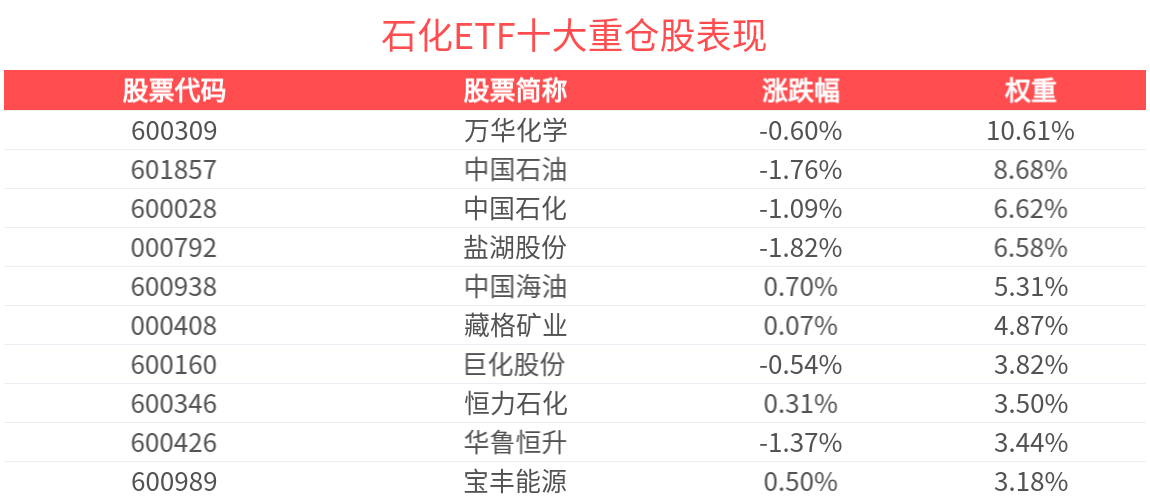
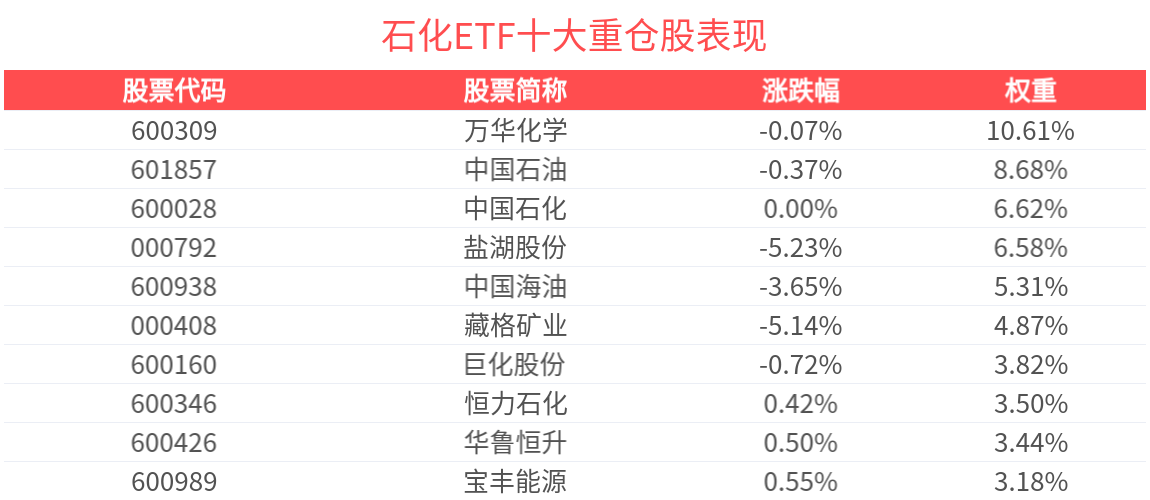
截至2026年1月30日10:02,中证石化产业指数下跌1.41%。成分股方面涨跌互现,东方盛虹、宝丰能源、华鲁恒升等领涨;华峰化学、和邦生物、盐湖股份 等领跌。石化ETF(159731)下跌1.42%。流动性方面,石化ETF盘中换手13.12%,成交1.98亿元,市场交投活跃。拉长时间看,截至1月29日,石化ETF近1周 日均成交2.63亿元。 石化ETF紧密跟踪中证石化产业指数,数据显示,截至2025年12月31日,中证石化产业指数前十大权重股分别为万华化学、中国石油、中国石化、盐湖股 份、中国海油、藏格矿业、巨化股份、恒力石化、华鲁恒升、宝丰能源,前十大权重股合计占比56.73%。 从资金净流入方面来看,石化ETF近17天获得连续资金净流入,合计"吸金"11.86亿元。石化ETF最新份额达14.35亿份,最新规模达15.10亿元,创新高。 天风证券表示,化工行业2025年政策、资本开支拐点已现;"反内卷"的提出提供了对后续行业盈利改善、长期走向更健康发展的预期。 截至1月29日,石化ETF近2年净值上涨68.09%。从收益能力看,截至2026年1月29日,石化ETF自成立以来,最高单月回报为15.86% ...

纺织业多元革新促节能降碳
Jing Ji Ri Bao· 2026-01-29 22:11
中央经济工作会议明确提出"坚持'双碳'引领,推动全面绿色转型",将重点行业节能降碳改造推向纵 深。 "这为纺织行业高质量发展指明了方向。"中国纺织工业联合会副会长、社会责任办公室主任阎岩接受本 报记者专访时表示,纺织行业绿色转型目前已形成"头部引领、分层追赶"的良性格局,从理念倡导进入 规模化实践阶段,正通过技术革新、价值链协同与产业生态支撑的多元发力,释放高质量发展新动能。 技术引领效应持续显现 在工业和信息化部近期公布的"2025年度重点行业能效'领跑者'企业名单"中,江苏恒科新材料有限公司 成功入选,成为聚酯涤纶细分行业全国唯一的"领跑者"企业。 "作为恒力集团全资子公司,恒科新材已构建全流程中水回用系统,废水回用率超90%,年节约水资源 250万吨以上。"恒科新材副总经理陆佳颖介绍,在能源结构优化方面,建成总容量106.5兆瓦的光伏发 电项目及60兆瓦/120兆瓦时储能系统,打造"光储充"一体化模式,热媒炉全面采用生物质颗粒燃料,可 再生能源利用占比超40%。同时,回收利用聚酯工艺塔塔顶蒸汽及空压机余热,用于制冷与物料加热。 近3年,共完成79项节能技改项目,创造效益超7000万元。 "恒力是纺织行业 ...
太猛了!加快轮动了
Ge Long Hui· 2026-01-29 11:49
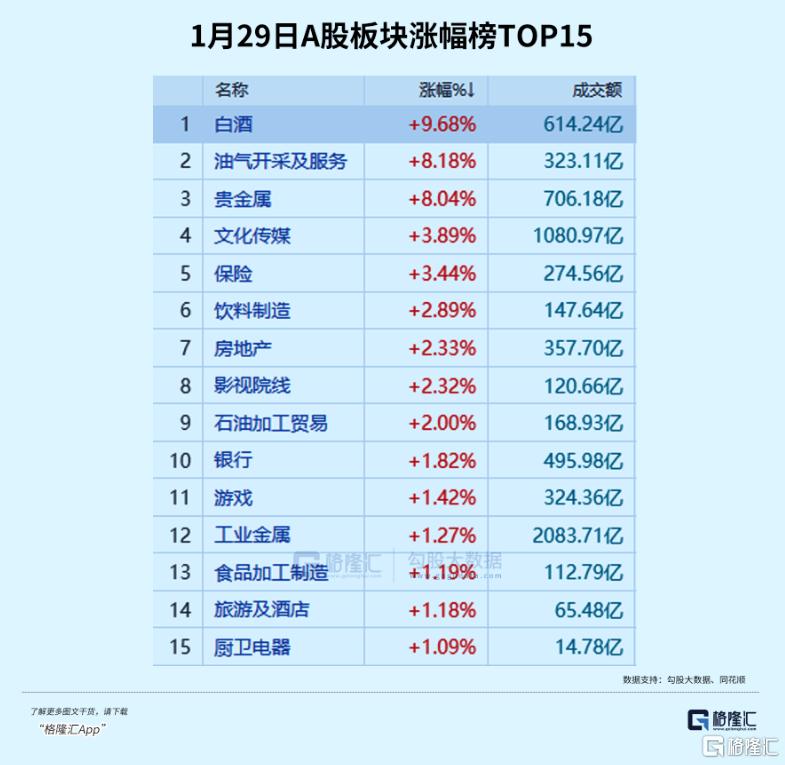
Group 1: Market Performance - The A-share liquor sector experienced a significant surge, with a rise of 9.68% on January 29, leading the market performance for the day [1][2] - The oil and gas extraction and service sector also saw a notable increase of 8.18%, with a total transaction volume of 32.31 billion [2] - The precious metals sector rose by 8.04%, with a transaction volume of 70.62 billion, indicating strong market interest [2] Group 2: Energy and Petrochemical Sector Dynamics - The energy and petrochemical sector's rise began in early January 2026, with domestic crude oil futures rebounding from 411 yuan/barrel to 475 yuan/barrel, a 15% increase [4] - The oil and gas extraction and service sector has accumulated a remarkable increase of 44.22% year-to-date, ranking second in market performance, only behind precious metals [7] - The petrochemical ETF (159731) has shown a cumulative increase of 14.71% since the beginning of the year, reflecting strong investor interest [9] Group 3: Geopolitical and Economic Influences - The recent surge in the petrochemical sector is driven by escalating geopolitical tensions, particularly between the U.S. and Iran, raising concerns over oil supply stability [11] - The market has priced in a risk premium of $3-8 per barrel due to fears of potential disruptions in oil supply from Iran, which produces approximately 3.3 million barrels per day [11] - The classic rotation pattern in commodity markets, where precious metals lead, followed by industrial metals and then energy, is being validated again [14][16] Group 4: Agricultural Sector Insights - The agricultural sector is expected to gain market attention as commodity prices rise, driven by increased costs in agricultural production due to higher energy prices [17][24] - The CPI and food prices have shown signs of recovery, with the CPI rising by 0.8% year-on-year, indicating a potential shift in consumer price dynamics [18] - The agricultural ETF (516810) tracks a comprehensive index covering the entire agricultural value chain, which may benefit from the rising commodity prices [26] Group 5: Industry Outlook - The petrochemical industry is at a turning point, with new policies aimed at preventing excessive competition and improving profitability [22] - The capital expenditure ratios in the refining and chemical sectors are showing a trend towards conservatism, indicating a strategic shift among companies [23] - The anticipated recovery in the petrochemical sector is supported by both geopolitical factors and the broader commodity market dynamics, suggesting a favorable outlook for industry leaders [24][25]




中国股票策略机遇论坛要点-China Equity Strategy_ Shenzhen Opportunity Forum takeaways
2026-01-29 10:59
Summary of Key Points from the Conference Call Industry Overview - **China Equity Strategy**: The 2026 JPM China Opportunity Forum highlighted a constructive outlook on China equities, emphasizing thematic trades such as leading exporters, beneficiaries of AI infrastructure capital expenditure, anti-involution strategies, K-shaped consumption recovery, and property market upside optionality [2][7]. Core Insights - **AI Ecosystem**: The memory and ESS (Energy Storage Systems) sectors are benefiting from global AI capital expenditure demand. Notable trends include a memory up-cycle and rising localization. However, consumer electronics and automotive sectors are facing component cost increases and lower trade-in subsidies year-on-year [6][14]. - **Anti-involution Strategies**: Companies like H World and Atour are shifting to rational pricing strategies to enhance market share. Home appliance brands are focusing on innovation rather than price cuts. The solar industry is also expected to see continued anti-involution efforts [6][31]. - **Consumption Trends**: Leading brands are innovating and optimizing to counteract soft domestic demand, with a focus on overseas growth. The "Liberation Day" in April 2025 is noted as a potential trigger for a future recovery in consumer confidence [6][29]. - **Healthcare Sector**: Drug innovation is a key growth driver for pharmaceutical companies, with a focus on launching new drugs and expanding into overseas markets. Healthcare service providers are gradually recovering, aided by technology upgrades [35][38]. - **Humanoid Robots**: China leads in global humanoid robot shipments, driven by government orders. The sector faces challenges in commercialization and scalability, but industrial applications are expected to show strong potential [40][41]. Important Data Points - **Smartphone Market**: Global smartphone shipments are expected to decline by 0.9% in 2026, with iPhones projected to outperform Android devices. JPM forecasts iPhone EMS builds at 251 million units for 2025, a 6% year-on-year increase [14][15]. - **Automotive Sales**: A slow start for passenger vehicle sales in 2026 is anticipated, with a forecasted decline of 24-29% quarter-on-quarter in Q1 2026 [15]. - **Energy Storage Systems**: Global ESS battery shipments are projected to grow over 40% to approximately 900 GWh in 2026, driven by policy momentum in China and strong orders from Europe [19]. - **Semiconductor Market**: The semiconductor industry is expected to see divergent dynamics, with consumer electronics facing softness while memory and foundry segments show strength. Average DRAM pricing is forecasted to increase by approximately 60% year-on-year in 2026 [20][21]. Company-Specific Insights - **Top Picks**: J.P. Morgan's preferred companies include Zhongji Innolight, NAURA, and CATL, among others, with various ratings and market caps provided [8][10][11][13]. - **Healthcare Innovations**: Companies like Hansoh are targeting over 80% of revenue from innovative medicines by FY25, with a robust pipeline in oncology and diabetes [35][37]. Additional Considerations - **Cost Management**: Companies are overcoming upward cost pressures through process optimization and effective cost pass-through strategies in export markets [34]. - **Global Expansion**: Chinese brands are increasingly building capacity and expanding distribution in emerging markets, with notable investments in ASEAN production bases [33]. This summary encapsulates the key insights and data points from the conference call, providing a comprehensive overview of the current landscape and future outlook for various sectors within the Chinese market.
基础化工板块正迎来景气度与估值逻辑双重重塑,化工ETF嘉实(159129)持续获资金关注
Xin Lang Cai Jing· 2026-01-29 03:53
Group 1 - The core viewpoint of the articles indicates that the chemical materials sector is experiencing a shift from a "cost-sensitive" model to a "structural growth" model, driven by policies on carbon emissions, global energy transitions, and domestic manufacturing recovery [1] - The China Securities Index shows that the chemical industry index rose by 7.29% last week, outperforming the CSI 300 index by 7.91 percentage points, with all 24 sub-industries within the sector recording gains [1] - The implementation of a dual control system for carbon emissions in China marks a new phase in institutionalizing green and low-carbon development, which is expected to accelerate the elimination of outdated capacity in high-energy-consuming and high-emission chemical sub-industries [1] Group 2 - As of December 31, 2025, the top ten weighted stocks in the China Securities Index for the chemical industry include Wanhua Chemical, Salt Lake Co., and Cangge Mining, with these stocks collectively accounting for 45.31% of the index [2] - The chemical ETF managed by Harvest (159129) closely tracks the China Securities Index for the chemical industry, focusing on the new round of prosperity cycle against the backdrop of "anti-involution" in the industry [2] - Investors can also explore investment opportunities in the chemical sector through the chemical ETF linked fund (013527) [3]
2025年中国石油焦产量为3172.7万吨 累计下降2.8%
Chan Ye Xin Xi Wang· 2026-01-29 03:49
Core Viewpoint - The report highlights the trends and investment potential in China's petroleum coke industry from 2026 to 2032, indicating a projected increase in production despite a slight decline in cumulative output for 2025 [1] Industry Summary - According to the National Bureau of Statistics, China's petroleum coke production in December 2025 is expected to reach 2.96 million tons, representing a year-on-year growth of 9.1% [1] - The cumulative production of petroleum coke in China for the year 2025 is projected to be 31.73 million tons, showing a cumulative decrease of 2.8% [1] - The report is based on extensive industry research and aims to provide insights for investment decisions in the petroleum coke sector [1] Company Summary - Listed companies in the petroleum coke sector include Huajin Co., Ltd. (000059), Yuanxing Energy (000683), Shanghai Petrochemical (600688), Huaxi Energy (002630), Wanhua Chemical (600309), Hengli Petrochemical (600346), Rongsheng Petrochemical (002493), Xin'ao Co., Ltd. (600803), and China National Petroleum Capital (000617) [1]

2026年化工策略报告汇报-化工进入击球区-看好全球供给反内卷大周期-看好全球AI需求大周期
2026-01-29 02:43
2026 年化工策略报告汇报 化工进入击球区:看好全球供 给反内卷大周期,看好全球 AI 需求大周期 20260128 摘要 基础化工行业产能扩张放缓,在建工程与固定资产比值降至低位,叠加 行业协会和龙头企业推动反内卷,有望扭转亏损局面,双碳政策也限制 了新增产能,预示行业盈利能力将恢复。 全球流动性宽松及新兴产业发展驱动需求增长,化工品消费具全球性, 下游产业对海外消费依赖度高,人工智能、机器人等新兴产业对新材料 需求增加,共同推动化工行业景气度提升。 基础化工行业价差虽有复苏但仍处底部,安全度较高,自由现金流自 2022 年以来逐渐改善,预计 2025 年全年转正,预示行业拐点出现, 为投资者带来分红等回报机会,潜在股息率普遍超过 10%。 化工行业估值提升受益于自由现金流转正、投资放缓约束、库存低位和 开工率良好,反内卷及能耗政策约束,以及欧洲企业退出市场,共同推 动化工产品价格上涨。 欧洲化工企业因能源成本、人工成本及供应链效率等问题,长期低开工 率难以恢复,高成本产能逐步退出市场,将导致聚烯烃、有机硅等产品 供应减少,推升全球价格。 Q&A 2026 年至 2030 年化工行业的整体趋势如何? 从 ...
风浪中的-硬资产-地缘催化下的能化资产再定价与油运合规牛
2026-01-29 02:43
Summary of Conference Call Records Industry Overview - The conference call discusses the impact of geopolitical events on the oil and chemical industries, particularly focusing on the effects of supply constraints from Venezuela, Russia, and Iran on China's refining sector and chemical asset pricing [1][2][4]. Key Points and Arguments Geopolitical Impact on Oil Supply - Geopolitical events have led to limited oil supplies from Venezuela, Russia, and Iran, which poses risks of rising costs and declining profits for Chinese independent refineries (地炼) [1][2]. - The takeover of Venezuelan oil by the U.S. is expected to redirect supplies away from East Asia, significantly affecting local refineries [2]. - U.S. sanctions have reduced Russian oil exports by approximately 50%, increasing transportation risks and tightening supply [2][4]. - Iran's oil supply is also under pressure due to intensified U.S. sanctions and domestic unrest, which may further limit future supply [2][4]. Impact on Chinese Refining Sector - Short-term effects include rising costs for Chinese independent refineries, with costs potentially increasing by over $10 per barrel, leading to significant profit declines or even losses for smaller refineries [4]. - In contrast, major state-owned enterprises like Sinopec and CNOOC, as well as private companies with stable resources, are expected to benefit from these supply constraints [2][4]. Chemical Industry Trends - The Chinese chemical industry is experiencing a tightening capacity cycle due to dual carbon policies, which is expected to lead to a revaluation of chemical assets over the next five years [1][5]. - By 2025, the export growth rate of Chinese chemical products is projected to increase significantly, with many products having over 20% exposure to overseas markets, helping to mitigate domestic real estate drag [5]. Asset Repricing and Beneficiaries - Strong capital and technology-intensive companies in the chemical sector, such as Wanhua Chemical, Hengli Petrochemical, and Rongsheng Petrochemical, are positioned to benefit from the upcoming asset repricing [6][7]. - The scarcity of chemical products is anticipated to drive asset revaluation, allowing these companies to gain pricing power by controlling supply and capitalizing on demand growth [6]. Global Oil Transportation Challenges - The global oil transportation system faces comprehensive sanctions challenges, affecting exporters, receiving ports, and shadow fleets [8]. - The shadow fleet has seen a significant increase, reflecting changes in U.S. policy towards Iranian oil, with a notable rise in operational challenges for these vessels [11][12]. Supply Chain Implications - India is reducing its imports of Russian oil from 1.7 million barrels per day to 1.3 million barrels due to U.S. pressure, which mirrors challenges faced by Chinese buyers [9]. - The potential loss of Venezuelan, Iranian, and Russian oil supplies could severely disrupt the overall supply chain, increasing international oil price risks [9]. Canadian Oil Exports - Canada exports approximately 4 million barrels of heavy oil to the U.S. daily, and the situation in Venezuela may pressure Canada to lower prices to meet demand, potentially shifting more oil to the East Hemisphere [10]. Market Dynamics and Pricing - The pricing of cyclical stocks should focus on value recovery rather than short-term price fluctuations, emphasizing the importance of performance realization and valuation centrality [15]. Additional Important Insights - The shadow fleet's growth has tripled over the past two decades, indicating a significant shift in the operational landscape for oil transportation [11]. - The global daily oil production is around 100 million barrels, with maritime transport accounting for 45 million barrels; the loss of Iranian exports could greatly impact this market [12]. - China's refining capacity is expected to increase by 1.5 million barrels per day in 2026, with a total refining capacity projected to reach 18 million barrels per day [13]. This summary encapsulates the critical insights from the conference call, highlighting the interplay between geopolitical events and market dynamics in the oil and chemical sectors.
成交额超2亿元,石化ETF(159731)连续16天净流入
Sou Hu Cai Jing· 2026-01-29 02:16
Core Viewpoint - The petrochemical sector is experiencing mixed performance, with the China Petroleum and Chemical Industry Index showing a slight decline, while the Petrochemical ETF has seen significant inflows and growth in net value over the past two years [1][2]. Group 1: Market Performance - As of January 29, 2026, the China Petroleum and Chemical Industry Index decreased by 0.27%, with stocks like Sankeshu and Zhongfu Shenying leading gains, while companies like Hebang Bio and China Petroleum faced declines [1]. - The Petrochemical ETF (159731) fell by 0.47%, with a latest price of 1.05 yuan and a trading volume of 2.12 billion yuan, indicating active market participation with a turnover rate of 17.99% [1]. Group 2: Fund Flows and Performance Metrics - The Petrochemical ETF has seen continuous net inflows for 16 days, totaling 838 million yuan, with the latest share count reaching 1.106 billion and a total scale of 1.166 billion yuan, marking a new high [2]. - Over the past two years, the net value of the Petrochemical ETF has increased by 66.80%, with the highest single-month return recorded at 15.86% and the longest consecutive monthly gain spanning 8 months, achieving a maximum increase of 41.6% [2]. - The average return during the rising months of the Petrochemical ETF is 5.25%, and as of January 23, 2026, the one-year Sharpe ratio stands at 2.22 [2]. Group 3: Industry Trends and Outlook - According to Guosen Securities, the petrochemical sector is strictly implementing capacity reduction and replacement requirements for new refining projects, focusing on upgrading old facilities and demonstrating new technologies [2]. - The refining capacity in China is approaching the policy threshold of 1 billion tons, leading to the gradual consolidation and elimination of smaller capacities, while larger refineries are expected to increase their market share, optimizing the industry structure [2]. - With limited growth in refined oil demand, the transition towards "reducing oil and increasing chemicals" will be essential for refineries [2]. Group 4: Key Stocks in the Index - The top ten weighted stocks in the China Petroleum and Chemical Industry Index as of December 31, 2025, include Wanhua Chemical, China Petroleum, and China Petrochemical, collectively accounting for 56.73% of the index [2].