爱旭股份

Search documents
爱旭股份(600732.SH):预计2025年度净亏损1.2亿元至1.9亿元
Ge Long Hui A P P· 2026-01-18 07:48
报告期内,得益于公司ABC组件高功率、高价值、高安全性的市场优势,2025年ABC组件销售量同比 实现翻倍以上增长,国内外市场的占有率和知名度均持续提升。然而受行业结构性产能过剩影响,供需 失衡状况仍未显著改善,主要产品价格持续处于相对低位,以及2025年下半年上游原材料价格持续上涨 而下游组件价格传导不畅,导致公司全年经营承压,业绩亏损,但亏损幅度较上年显著收窄。 格隆汇1月18日丨爱旭股份(600732.SH)发布公告,经财务部门初步测算,预计公司2025年年度实现归属 于母公司所有者的净利润为-1.2亿元至-1.9亿元。预计2025年年度实现归属于母公司所有者的扣除非经 常性损益后的净利润为-1.6亿元至-2.3亿元。 ...

国家电网“十五五”投资4万亿元,固态电池近期催化密集落地





GOLDEN SUN SECURITIES· 2026-01-18 06:32
Investment Rating - The report indicates a positive outlook for the power equipment industry, particularly in the renewable energy sector, with significant investments and technological advancements expected to drive growth [1][2][4]. Core Insights - The report highlights that the State Grid's investment during the "14th Five-Year Plan" period is projected to reach 4 trillion yuan, marking a 40% increase compared to the previous plan [2]. - The report emphasizes the stability in polysilicon prices and the continuous rise in battery component prices, with N-type battery prices increasing to 0.40 yuan per watt [15][16]. - The report identifies three key areas of focus: supply-side reform leading to price increases in the industry chain, long-term growth opportunities from new technologies, and industrialization opportunities from perovskite GW-level layouts [16]. Summary by Sections 1. New Energy Generation 1.1 Photovoltaics - Polysilicon prices remain stable, while battery component prices are on the rise, with N-type battery prices reaching an average of 0.40 yuan per watt [15]. - The report notes that leading component companies are responding to industry self-discipline by raising component prices, with distributed sales prices reaching 0.72 yuan per watt [15][16]. - Key companies to watch include Tongwei Co., GCL-Poly, LONGi Green Energy, JA Solar, and Trina Solar [16]. 1.2 Wind Power & Grid - The UK AR7 offshore wind auction results exceeded expectations, with a total scale of approximately 8.4GW, validating the upward trend in European offshore wind [17]. - The State Grid's investment is expected to enhance transmission capacity significantly, addressing bottlenecks in renewable energy delivery [18]. - Companies to focus on include Goldwind, Yunda Wind Power, Mingyang Smart Energy, and Sany Heavy Energy [18]. 1.3 Hydrogen & Energy Storage - By 2025, the production and sales of fuel cell vehicles in China are projected to reach 7,797 units, reflecting a 44% year-on-year increase [20]. - The report anticipates that new energy storage installations will reach 58.6GW/175.3GWh by 2025, with significant growth expected in the energy storage sector [21]. - Key players in the hydrogen sector include Shuangliang Energy, Huadian Heavy Industries, and Shenghui Technology [20]. 2. New Energy Vehicles - Solid-state batteries are gaining traction, with several automakers making progress towards mass production by 2026 [29]. - Companies such as BYD, Changan Automobile, and Chery are expected to achieve significant milestones in solid-state battery technology [29]. - The report suggests monitoring companies like Xiamen Tungsten, Hailiang Co., and Nanjing Advanced Lithium Battery [29]. 3. Industry Trends - The report notes a 0.4% increase in the new energy equipment sector from January 12 to January 16, 2026, with a cumulative increase of 5.3% since the beginning of the year [12]. - The photovoltaic equipment sector saw a 3.52% increase, while the wind power equipment sector experienced a decline of 1.28% during the same period [13].
毁约式涨价,光伏组件上演“最后的疯狂”
Ge Long Hui· 2026-01-17 13:22
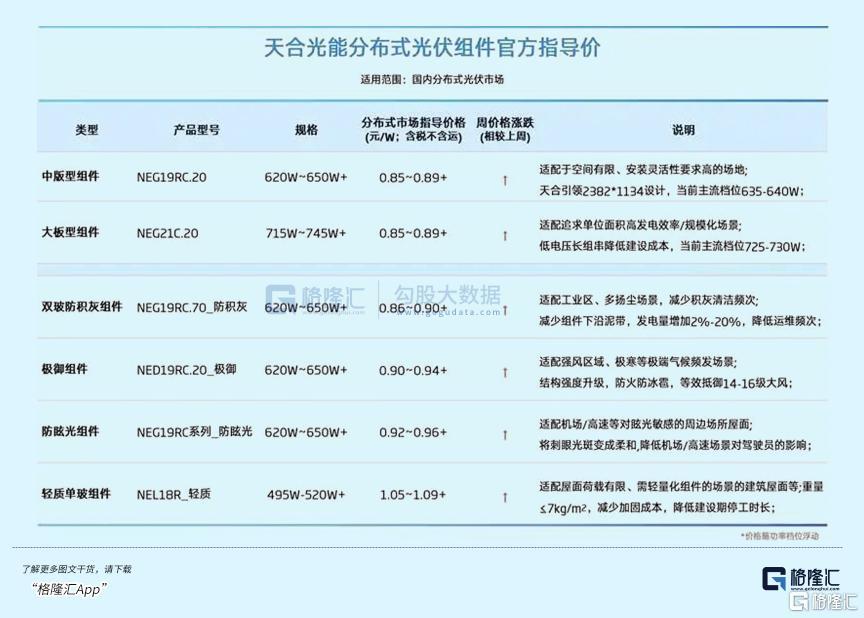
Core Viewpoint - The photovoltaic (PV) module industry is experiencing an unexpected price surge at the beginning of 2026, driven by factors such as the impending cancellation of export tax rebates and rising costs of key materials like silver and aluminum, leading to significant profit compression and potential industry-wide consolidation [1][13][20]. Price Surge and Contract Violations - Several distributed PV investment companies have reported sudden price increases on previously agreed contracts, with some major manufacturers raising prices from 0.73 yuan/W to 0.8 yuan/W [3]. - On January 13, Trina Solar announced collective price increases for various product models, with distributed PV module prices ranging from 0.85 to 0.89+ yuan/W [3]. - A total of 12 module manufacturers raised their prices this week, with increases of 0.04 to 0.15 yuan/W, and some companies have raised prices multiple times within a week [5]. - Reports indicate that some companies are delaying deliveries or demanding price increases, causing significant disruptions in the supply chain for terminal power station installations [5][6]. Causes of Price Increases - The cancellation of export tax rebates, effective April 1, 2026, is a major catalyst for the price surge, as manufacturers rush to ship products before the policy takes effect [6][7]. - The price of silver has skyrocketed, increasing from 7,600 yuan/kg at the beginning of 2025 to 23,688 yuan/kg by the end of the year, resulting in a cost increase of at least 0.16 yuan per watt for PV modules [8][10]. Industry Challenges and Overcapacity - The PV industry is facing severe challenges due to overcapacity, with silicon material production capable of covering more than double the global demand from 2025 to 2027, while actual demand is below 600 GW [13][14]. - Despite the overcapacity, over 40 billion yuan is still being invested in new PV projects, exacerbating supply-demand imbalances [14]. - The cancellation of export tax rebates is expected to be a turning point for the industry, as it has historically provided significant cash flow support to manufacturers [15][16]. Financial Impact on Companies - The removal of export tax rebates will reduce profits for manufacturers significantly, with estimates indicating a loss of 46-51 yuan per 210R module exported [17]. - Many companies are already experiencing negative cash flow, with 41% of listed firms reporting losses, leading to a potential wave of bankruptcies among smaller firms [17][20]. - Major companies like JA Solar and TCL Zhonghuan are reporting substantial losses, with JA Solar expected to lose between 4.5 to 4.8 billion yuan in 2025 [19]. Future Outlook and Industry Consolidation - The anticipated industry consolidation may eliminate over 30% of inefficient capacity, concentrating resources among leading firms with integrated capabilities and advanced technologies [22]. - The industry is expected to emerge healthier post-consolidation, with a focus on identifying valuable investment opportunities in robust companies with strong cash flow and competitive advantages [22].

毁约式涨价!光伏组件上演“最后的疯狂”
Ge Long Hui A P P· 2026-01-17 11:23
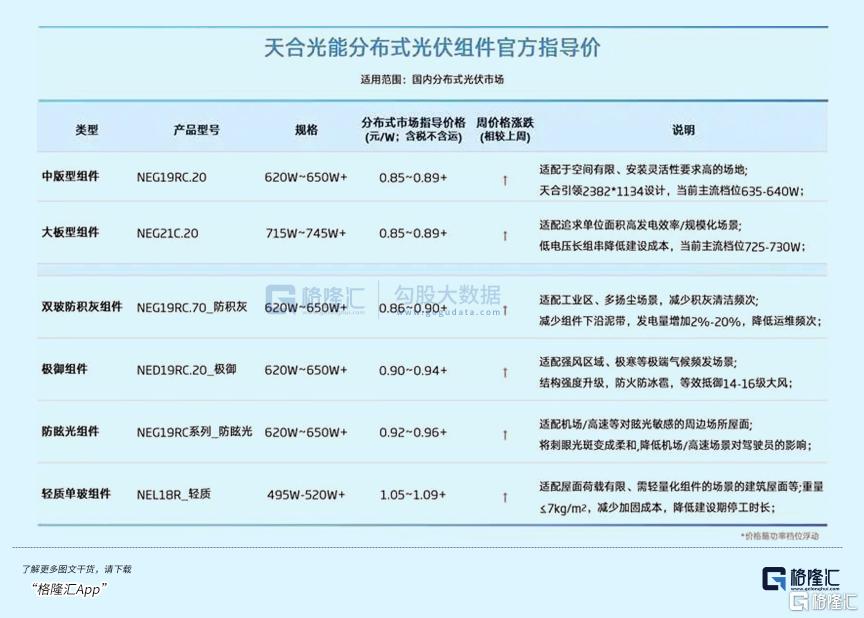
Core Viewpoint - The photovoltaic (PV) module industry is experiencing an unexpected price surge in early 2026, driven by the impending cancellation of export tax rebates and rising costs of key materials like silver and aluminum, leading to significant profit compression and potential industry-wide upheaval [1][7][19]. Price Surge and Market Dynamics - Several distributed PV investment companies have reported sudden price increases on previously agreed contracts, with one leading manufacturer raising prices from 0.73 yuan/W to 0.8 yuan/W [2]. - On January 13, Trina Solar announced a collective price increase for various distributed PV module models, with official guidance prices ranging from 0.85 to 0.89+ yuan/W [2][3]. - A total of 12 module manufacturers raised their prices this week, with increases ranging from 0.04 to 0.15 yuan/W [4]. Cost Factors - The cancellation of export tax rebates, effective April 1, 2026, is a significant catalyst for the price increases, as companies rush to fulfill orders before the policy takes effect [7][8]. - The price of silver has surged over 150% in 2025, increasing its cost share in PV modules from approximately 17% to around 30%, making it the largest cost component [10][13]. - The rising prices of aluminum and other materials have further exacerbated cost pressures, with aluminum's cost share increasing from 8-12% to 12-15% [14][16]. Industry Overcapacity and Challenges - The PV industry is facing severe overcapacity, with silicon production capacity expected to cover more than double the global demand from 2025 to 2027, while actual demand is below 600 GW [17]. - Despite the overcapacity, over 40 billion yuan is still being invested in new PV projects, worsening the supply-demand imbalance [18]. - The cancellation of export tax rebates is anticipated to trigger a brutal industry-wide clearing, with many companies lacking competitive advantages likely to exit the market [19][24]. Financial Impact and Future Outlook - The removal of export tax rebates will significantly reduce profit margins for PV companies, with estimates indicating a profit reduction of 46-51 yuan per 210R module exported [24]. - Many companies are already reporting substantial losses, with projections indicating that the entire PV silicon industry could face losses amounting to hundreds of billions in 2025 [27][28]. - The industry is expected to undergo a significant consolidation, with over 30% of inefficient capacity being eliminated, allowing leading companies with strong technology and global presence to capture over 80% of the market share [29].




毁约式涨价!光伏组件上演“最后的疯狂”
格隆汇APP· 2026-01-17 11:23
Core Viewpoint - The photovoltaic (PV) module industry is experiencing an unexpected price surge at the beginning of 2026, driven by factors such as the impending cancellation of export tax rebates and rising costs of key materials like silver and aluminum, leading to significant profit compression in the industry [2][9][18]. Price Surge and Market Dynamics - Several PV module manufacturers have announced price increases, with some companies raising prices from 0.73 yuan/W to 0.8 yuan/W, and the official guidance price for distributed PV modules now ranges from 0.85 to 0.89 yuan/W [4][6]. - A total of 12 module manufacturers raised their prices this week, with increases ranging from 0.04 to 0.15 yuan/W [6][7]. - Reports indicate that some companies are delaying deliveries and demanding price hikes, causing significant disruptions for downstream companies [7][18]. Reasons for Price Increases - The cancellation of export tax rebates is a major catalyst for the price surge, with the Ministry of Finance announcing the phased removal of VAT export rebates for PV products starting April 1, 2026 [9][10]. - The price of silver has skyrocketed, increasing from 7,600 yuan/kg at the beginning of 2025 to 23,688 yuan/kg by the end of the year, resulting in a cost increase of at least 0.16 yuan per watt for PV cells [11][13]. - The cost share of silver in PV modules has risen from approximately 17% to around 30%, surpassing silicon as the largest cost component [13]. Industry Challenges and Overcapacity - The PV industry is facing severe overcapacity, with silicon production capacity expected to cover more than double the global demand from 2025 to 2027, while actual demand is below 600 GW [19][20]. - The cancellation of export tax rebates is expected to trigger a violent market clearing in 2026, as many companies will struggle with cash flow and rising costs [21][27]. - The industry is projected to experience significant losses, with estimates suggesting that the entire PV silicon industry could face losses amounting to hundreds of billions in 2025 [28][29]. Future Outlook and Investment Strategy - The anticipated market clearing in 2026 is expected to eliminate over 30% of inefficient capacity, concentrating resources among leading companies with vertical integration and core technologies [31]. - Investors are advised to avoid high-debt, non-competitive small and medium enterprises, focusing instead on companies with stable cash flow, strong technology, and global presence [32].

白银暴涨,光伏流泪
Hua Er Jie Jian Wen· 2026-01-16 04:59
Core Viewpoint - The surge in silver prices, which has increased over 200% since early last year, poses significant challenges for the photovoltaic (PV) industry, leading to increased production costs and potential operational disruptions [1][2][5]. Group 1: Silver Price Impact on PV Industry - Silver paste has become the largest cost component in solar modules, rising from 3.4% of total costs in 2023 to 29% currently [2]. - The cost pressure from rising silver prices is forcing some PV companies to halt production or raise prices, with major manufacturers accelerating efforts to reduce silver usage [2][3]. - A 1000 yuan/kg increase in silver price raises the cost of solar cells by 0.01 yuan per watt, which can significantly impact the operational rates of factories in the low-margin PV sector [3]. Group 2: Company Responses and Market Dynamics - Leading companies like Longi Green Energy and Aiko Solar have raised their product prices due to rising raw material costs, with prices for mainstream 500W modules increasing to around 400 yuan (approximately 57 USD) [3]. - Mid-tier companies are facing severe financial strain, leading to extreme measures such as production halts, as seen with a 2GW battery manufacturer in Hunan and the established firm Yijing Photovoltaic [4]. - Despite efforts to clear excess capacity, companies like Trina Solar and JinkoSolar are issuing profit warnings, indicating potential net losses in 2025 due to the ongoing challenges in the market [5]. Group 3: Efforts to Reduce Silver Usage - The PV industry is adopting "de-silvering" strategies to mitigate the impact of high silver prices, with Longi Green Energy announcing plans to accelerate the use of alternative metals [6]. - Analysts predict that the industry could reduce silver usage by 17% this year through technologies like copper plating and silver-coated copper [6]. - However, the aggressive shift to alternative materials carries risks, including potential long-term reliability issues, as copper is less stable than silver and may not meet warranty requirements [7].

济南规上工业企业达到2854家
Da Zhong Ri Bao· 2026-01-16 02:57
Core Insights - Jinan has achieved significant industrial growth, with the number of large-scale industrial enterprises reaching 2,854, an increase of 942 compared to the end of the 13th Five-Year Plan [1][2] - The city has maintained its position as one of the top 100 advanced manufacturing cities in China for four consecutive years, reflecting its strong industrial development strategy [1][3] Industrial Growth and Economic Performance - By 2024, Jinan's industrial revenue is projected to exceed 1 trillion yuan, reaching 1,018.9 billion yuan, marking a historic milestone for the city's industrial economy [1] - From January to November 2025, the city's industrial added value grew by 7.2% year-on-year, with large-scale industrial enterprises achieving revenues of 996.25 billion yuan, a 9.2% increase [1][2] Enterprise Development - As of the end of 2024, Jinan has 15 enterprises with revenues exceeding 10 billion yuan and 807 enterprises with revenues over 100 million yuan, showing a net increase of 5 and 159 respectively since the end of the 13th Five-Year Plan [2] - The city has cultivated 203 specialized and innovative "little giant" enterprises, 2,612 specialized and innovative small and medium-sized enterprises, and 4,096 innovative small and medium-sized enterprises [1][2] Technological and Structural Advancements - Jinan has implemented over 1,000 technical transformation projects annually during the 14th Five-Year Plan, enhancing industrial capabilities [2] - The automotive and electronic information sectors now account for 16.4% and 14.6% of the city's large-scale industrial output, respectively, reflecting a significant increase of 7.8 and 5 percentage points since 2022 [3] Green and Digital Transformation - The city has established 31 national-level green factories and 4 green industrial parks, promoting a comprehensive green manufacturing system [3] - Jinan's software industry has seen an annual growth rate of 15.3% from 2021 to 2024, with software business revenue reaching 597.4 billion yuan in January-November 2025, a year-on-year increase of 11% [4][5] Industrial Cluster Development - Jinan has successfully created a diverse industrial ecosystem with over 40 provincial-level industrial clusters, enhancing regional industrial layout and optimizing production capabilities [4] - The city has focused on digital transformation, establishing 16 provincial-level industrial brains and over 400 intelligent manufacturing pilot projects, with a CNC rate exceeding 70% in key industrial processes [5]
光伏企业,正经历一场“白银劫”
财联社· 2026-01-16 02:29
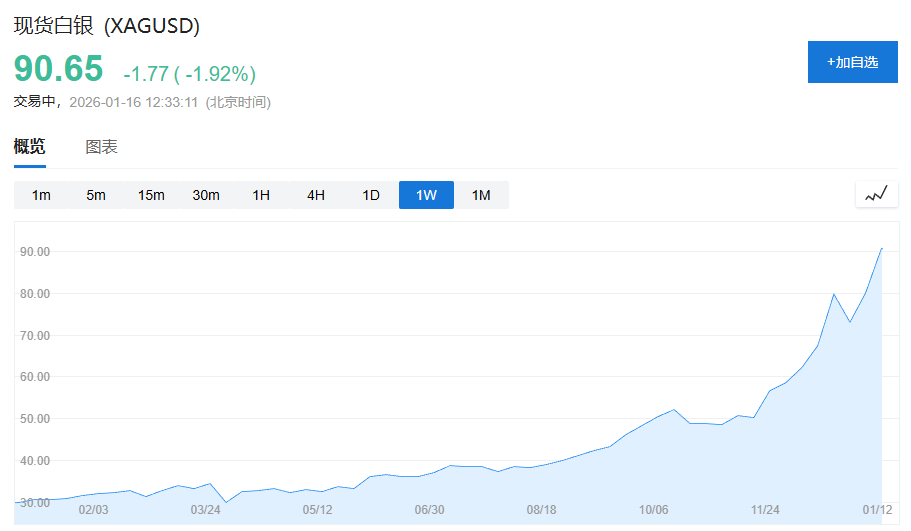
Core Viewpoint - The surge in global silver prices is exerting additional pressure on solar panel manufacturers, who have already faced two years of losses, compounded by intense industry competition [1] Group 1: Silver Price Impact - Spot silver prices have soared to over $93 per ounce, a historical high, with prices more than tripling in the past year [1] - The cost of silver in solar panels now accounts for 29% of total panel costs, significantly up from 3.4% in 2023 and 14% last year [1] Group 2: Industry Response - Manufacturers are responding by raising prices and accelerating plans to replace silver with cheaper materials like copper [4] - In China, some component manufacturers have increased prices to over 0.8 yuan per watt, reflecting a price increase of 1.4%-3.8% from the previous week due to rising silver costs [4] - The typical price for a 500-watt solar panel is now at least 400 RMB (approximately $57) [4] Group 3: Future Outlook - Major solar companies, including Trina Solar and JinkoSolar, have warned of expected net losses again in 2025, indicating that the industry's downturn has not improved significantly despite previous self-regulatory measures [5] - The average silver paste usage in solar panels is projected to drop to 8.96 mg per watt by 2025, down from 11.2 mg in 2024, as manufacturers seek to reduce costs [6] Group 4: Risks of Material Substitution - Engineers can use various methods to replace silver with cheaper copper, but rushing this process may pose risks for manufacturers [7] - Increasing the proportion of substitutes could lead to shorter lifespans for solar panels, potentially resulting in significant liabilities for manufacturers if panels fail before the warranty period [8] Group 5: Silver Demand and Future Consumption - The solar industry accounted for about 17% of total silver demand last year, more than double its share a decade ago, which is comparable to jewelry manufacturing [8] - A slowdown in consumption could threaten the sustainability of rising silver prices, which are currently driven by speculative interest and commodity rotation effects [8] - The current high silver prices may lead to more substitutions, but strong investment demand is expected to keep prices stable in the short term [8]
暴涨的尽头是反噬?白银“扼杀”光伏需求,牛市盛宴暗藏自毁机制
Jin Shi Shu Ju· 2026-01-16 01:52
Group 1 - The surge in silver prices is putting additional pressure on solar panel manufacturers, who are already struggling to end over two years of losses in a highly competitive industry [1] - Spot silver prices recently reached a historical high of over $93 per ounce, causing the silver content in solar panels to rise to 29% of total costs, up from 3.4% in 2023 and 14% last year [1] - Manufacturers are responding by raising prices and accelerating plans to replace silver with cheaper materials like copper [1] Group 2 - Major solar companies have warned of expected net losses again in 2025, indicating that despite a year of self-discipline and government-led efforts to curb overcapacity, the industry's downturn has not yet bottomed out [2] - The average silver usage per watt in solar panels is projected to decrease from 11.2 mg in 2024 to 8.96 mg in 2025 as manufacturers strive to reduce costs [2] - Companies like Longi Green Energy, Jinko Solar, and Shanghai Aiko Solar are beginning to replace silver with cheaper metals in their panels [2] Group 3 - Limited replacement efforts and a slowdown in global solar panel installations may lead to a 17% reduction in silver usage in the industry this year, with a projected demand of around 6,000 tons in 2025 [3] - The solar industry accounted for approximately 17% of total silver demand last year, more than double its share a decade ago, which poses a risk to the sustainability of the current surge in silver prices [3] - Strong investment demand is expected to keep silver prices stable in the short term, but reduced industrial consumption of silver is anticipated in the future [3]
后退税时代,组件龙头谁在“裸泳”?
Xin Lang Cai Jing· 2026-01-15 14:09
Core Viewpoint - The photovoltaic industry is facing a critical turning point in 2026, with major companies like JA Solar, JinkoSolar, and Trina Solar forecasting significant losses for 2025, compounded by the cancellation of export tax rebates that previously supported their profits and operational cash flow [1][11]. Group 1: Financial Impact - The cancellation of export tax rebates is expected to severely impact cash flow for photovoltaic companies, which had relied on these rebates as a stable source of income [2][12]. - In the first three quarters of 2025, the total tax refunds for the four leading module manufacturers approached 10 billion yuan, while the top ten companies received over 20 billion yuan in tax refunds for the 2024 fiscal year [1][12]. - The sudden loss of this crucial cash flow source is likened to cutting off an external lifeline during a time of industry "blood loss," forcing companies to rely more on their operational cash generation capabilities [2][12]. Group 2: Cash Flow Analysis - A clear differentiation in cash flow status among photovoltaic companies has emerged, with some companies struggling significantly as the industry faces a downturn [3][13]. - The cash flow rankings of listed photovoltaic companies over the past five years show that Tongwei Co. leads with a total cash generation of 860 million yuan, while companies like LONGi Green Energy and Aiko Solar are also notable [4][14]. - The abrupt policy change regarding export tax rebates has had the most severe impact on companies with already thin profit margins, necessitating a restructuring of financial management strategies [4][14]. Group 3: Market Dynamics - In an effort to capitalize on the last window of opportunity, major module manufacturers are stockpiling inventory while also clearing existing stock, leading to market chaos with contract breaches and price hikes becoming common [5][15]. - Current market prices for photovoltaic modules show fluctuations, with companies like JinkoSolar and Trina Solar adjusting their prices upward, indicating a volatile market environment [7][17]. - Companies are urged to maintain their reputations while seizing opportunities for recovery, emphasizing the importance of balancing profit-seeking with brand integrity [7][17]. Group 4: Strategic Responses - Leading companies are adopting various strategies to survive the cash flow challenges, such as technological innovation and product differentiation [9][19]. - LONGi and Aiko are promoting BC battery technology to achieve higher premiums in overseas markets, while JA Solar is implementing a "three-pole management system" to reduce production costs [9][19]. - Trina Solar is collaborating with financial institutions to utilize accounts receivable for cash flow supplementation, and JinkoSolar is launching new TOPCon products to enhance market competitiveness [9][19].