
台积电

Search documents
美股异动|联电盘前涨5.7%,与全球载板龙头欣兴电子达成合作
Ge Long Hui· 2026-01-16 09:46
Core Viewpoint - UMC (United Microelectronics Corporation) shares rose by 5.7% to $9.27 following a strategic partnership with leading substrate manufacturer, Unimicron Technology, focusing on high-end manufacturing needs in the AI era [1] Group 1: Partnership Details - UMC plans to invest NT$700 million in Unimicron's cash capital increase [1] - Unimicron intends to issue unsecured corporate bonds not exceeding NT$15 billion [1] Group 2: Strategic Implications - The collaboration aims to integrate UMC into the advanced packaging core industry chain of semiconductors [1] - This partnership is designed to enhance the ecosystem of "wafer manufacturing + PCB/substrate + packaging testing" to address TSMC's CoWoS capacity bottleneck [1]

美股盘前,明星科技股走强,美光科技(MU.O)涨超3%、AMD(AMD.O)涨超2%、台积电(TSM.N)涨超1%。
Jin Rong Jie· 2026-01-16 09:21
本文源自:金融界AI电报 美股盘前,明星科技股走强,美光科技(MU.O)涨超3%、AMD(AMD.O)涨超2%、台积电(TSM.N)涨超 1%。 ...
科技股助推美股指期货全线上涨,亚太股指创历史新高,日元止跌反弹,金银继续回调
Hua Er Jie Jian Wen· 2026-01-16 09:16
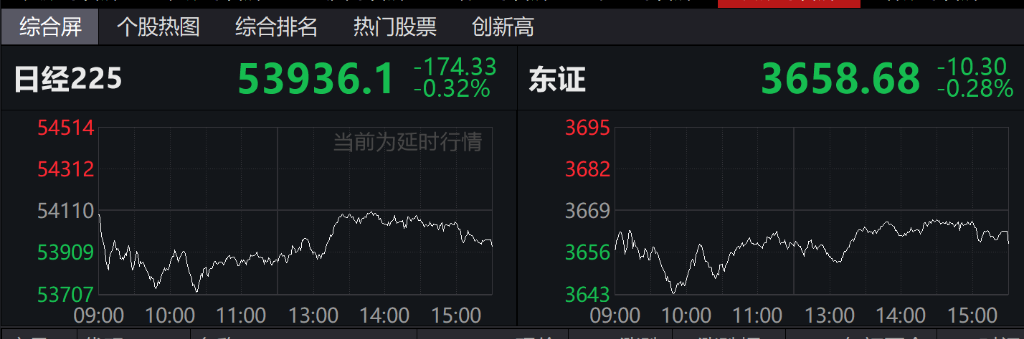
Group 1: Market Overview - The latest wave of enthusiasm in technology stocks continues, driving U.S. stock index futures higher, with the Dow futures up 0.6%, S&P 500 futures up 0.26%, and Nasdaq 100 futures up 0.32% [1] - Asian technology stocks have rebounded strongly, reaching historical highs, alleviating previous concerns about overvaluation in the sector [1] - The MSCI Asia-Pacific index rose 0.4%, hitting a record high, while the Nikkei 225 index closed at 53,936.17 points, down 0.32% but up 7.51% over the last 20 trading days [1][5] Group 2: Currency and Commodity Movements - The Japanese yen appreciated by 0.2% to 158.28 against the dollar, driven by concerns from Japanese officials regarding the weak currency [3][5] - Gold and silver prices experienced slight declines, with spot gold down 0.2% to $4,606.06 per ounce and spot silver down 1.11% to $91.65 per ounce [1] Group 3: Individual Stock Performance - TSMC (Taiwan Semiconductor Manufacturing Company) surged approximately 3%, reaching a historical peak, which positively influenced regional market sentiment [4][5] - Semiconductor stocks in the U.S. pre-market saw gains, with Micron Technology up nearly 4%, AMD up over 2%, and TSMC up over 1% [7] Group 4: Bond Market Insights - Asian bonds remained stable, with the 10-year yield showing minimal fluctuations for the fifth consecutive week, while global corporate bond yield premiums fell to their lowest since 2007 [5][6] - U.S. jobless claims unexpectedly decreased, leading to a decline in U.S. Treasury yields, which contributed to stability in Asian bonds [6]

港股收盘(01.16) | 恒指收跌0.29% 半导体产业链走势强劲 航运股普遍承压
智通财经网· 2026-01-16 08:41
Market Overview - The Hong Kong stock market opened high but closed lower, with the Hang Seng Index down 0.29% to 26,844.96 points and a total turnover of HKD 255.08 billion. The Hang Seng China Enterprises Index fell 0.5% to 9,220.81 points, while the Hang Seng Tech Index decreased by 0.11% to 5,822.18 points. For the week, the Hang Seng Index rose 2.34%, the China Enterprises Index increased by 1.9%, and the Tech Index gained 2.37% [1] Blue-Chip Stocks Performance - Li Ning (02331) showed strong performance, rising 4.35% to HKD 20.4 with a turnover of HKD 54.6 million, contributing 3.16 points to the Hang Seng Index. Morgan Stanley's report indicates that Li Ning's revenue is expected to achieve moderate growth, with net profit margins stabilizing at high single digits, suggesting an upward revision in consensus net profit expectations [2] - Other blue-chip stocks included Techtronic Industries (00669) up 4.87%, Wharf Real Estate Investment (01997) up 2.78%, Alibaba Health (00241) down 5.16%, and Orient Overseas International (00316) down 4.98% [2] Sector Highlights Semiconductor Industry - The semiconductor sector showed strong performance, with companies like Zhaoyi Innovation (03986) up 16.74%, Tianyu Advanced (02631) up 13.5%, and Fortior (01304) up 8.21% [3] Power Equipment Stocks - Power equipment stocks generally rose, with Harbin Electric (01133) up 5.78%, Dongfang Electric (01072) up 4.92%, and Times Electric (03898) up 2.58%. The State Grid's investment plan of HKD 4 trillion for the 14th Five-Year Plan represents a 40% increase from the previous plan, indicating a positive outlook for the sector [4] Commercial Aerospace - The commercial aerospace sector saw a revival, with companies like Goldwind Technology (02208) up 3.52% and Junda Co. (02865) up 2.8%. The sector is expected to benefit from increased activity in space exploration and technology advancements [5] Robotics Sector - The robotics sector was active, with companies like Geekplus (02590) up 6.97% and Cloudwalk (02670) up 4.84%. A report from Omdia predicts significant growth in humanoid robot installations, with a forecast of 1.6 million units by 2025 [6] Shipping Sector - The shipping sector faced pressure, with Orient Overseas International (00316) down 4.98% and Seaspan (01308) down 3.96%. Maersk announced the resumption of operations through the Red Sea, which may lead to a 7%-8% increase in shipping capacity, potentially putting downward pressure on freight rates [7] Notable Stock Movements - MINIMAX (00100) led the AI sector with a rise of 22.35% to HKD 438, driven by its strategic focus on AI model breakthroughs [8] - Conant Optical (02276) reached a new high, up 10.52% to HKD 60.4, as Meta Platforms plans to double AI smart glasses production [9] - Derin Holdings (01709) rose 6.76% to HKD 2.21 after receiving conditional approval for digital asset consulting services [10] - Lithium stocks faced declines, with Ganfeng Lithium (01772) down 4.94% and Tianqi Lithium (09696) down 2.98%, as lithium futures prices fell [11]
大行评级|野村:上调台积电目标价至2280新台币 上调今明两年每股盈测
Ge Long Hui· 2026-01-16 07:41
Core Viewpoint - Nomura's research report indicates that TSMC's capital expenditure budget for this year is between $52 billion and $56 billion, exceeding previous forecasts, reflecting the company's confidence in structural AI demand for 2028-29 [1] Group 1: Capital Expenditure - TSMC's capital expenditure forecast for 2026-27 has been raised to $54 billion and $63 billion, respectively, due to increased investments [1] - The anticipated increase in CoWoS supply for 2027 is expected as TSMC invests more [1] Group 2: Outsourcing Strategy - TSMC's strategy of outsourcing most of its WoS processes is expected to provide upward business potential for professional packaging and testing companies (OSAT) [1] Group 3: Earnings Forecast and Stock Target - Following TSMC's updated earnings guidance and operational leverage improvement, earnings per share estimates for 2026-27 have been raised by 7% and 4%, respectively [1] - TSMC's stock target price has been adjusted from NT$2,135 to NT$2,280, maintaining a "buy" rating [1]
台积电业绩狂飙引爆AI行情,阿斯麦市值一举突破5000亿美元
Jin Rong Jie· 2026-01-16 06:21
Group 1 - TSMC reported Q4 2025 revenue of $33.73 billion, a year-on-year increase of 25.5%, and a net profit of approximately $16 billion, up 35%, with a gross margin of 62.3%, marking the eighth consecutive quarter of profit growth [1] - Advanced processes contributed significantly, with 3nm technology accounting for 28% of Q4 wafer revenue, and 77% of revenue coming from 7nm and below advanced processes, an increase of 5 percentage points compared to the full year of 2024 [1] - TSMC's 2026 guidance includes expected Q1 revenue between $34.6 billion and $35.8 billion, with a gross margin maintained at 63% to 65%, and a capital expenditure plan raised to $52 billion to $56 billion, significantly higher than $40.9 billion in 2025 [1] Group 2 - ASML, TSMC's largest single equipment customer, saw its stock price rise significantly, with a market capitalization exceeding $500 billion, making it the third European company to reach this scale [2] - ASML's stock increased by 7.6% during trading in Amsterdam, with a year-to-date gain of 24%, currently valued at approximately $527 billion [2] - Morgan Stanley's report indicates that ASML's Q4 2025 order volume is expected to reach €7 billion, exceeding market consensus by about 4%, maintaining an "overweight" rating on ASML's stock with a target price of $1,518 [2]
刚刚,涨停潮!三大利好突袭!
天天基金网· 2026-01-16 05:18
Core Viewpoint - The article highlights the strong performance of various sectors, particularly in the semiconductor and electric power infrastructure industries, driven by positive earnings reports and favorable market conditions [2][4][6][11]. Semiconductor Industry - The semiconductor industry is experiencing a strong upward trend, with stocks like Jiangbolong and Baiwei Storage seeing significant gains [4]. - Baiwei Storage's stock rose by 10.48%, reaching a historical high after announcing a revenue forecast for 2025 of 10 billion to 12 billion yuan, representing a year-on-year growth of 49.36% to 79.23% [6]. - TSMC's fourth-quarter financial report exceeded expectations, with a projected capital expenditure of $52 billion to $56 billion for 2026, indicating a strong expansion cycle in the semiconductor sector [6]. Electric Power Infrastructure - The electric power infrastructure sector saw a comprehensive rise, with significant gains in grid equipment and smart grid segments [7]. - The National Grid announced a fixed asset investment of 4 trillion yuan during the 14th Five-Year Plan, a 40% increase from the previous plan, aimed at building a new power system [11]. - European and North American data centers are expected to drive electricity demand significantly, with investments in data centers projected to triple in Europe by 2024 [10]. Company Performance - Siyi Electric's stock hit the limit up, with a reported total revenue of 21.205 billion yuan for 2025, a year-on-year increase of 37.18%, and a net profit of 3.163 billion yuan, up 54.35% [11]. - The semiconductor equipment sector is expected to see order growth exceeding 30% in 2026, driven by AI investments and a high demand for semiconductor manufacturing equipment [6].


亚翔集成(603929):境外洁净室投建持续乐观
HTSC· 2026-01-16 05:18
Investment Rating - The investment rating for the company is maintained as "Buy" with a target price of RMB 235.62 [1][4]. Core Views - The report highlights optimistic prospects for the cleanroom construction sector driven by significant capital expenditure plans from major semiconductor companies like TSMC, which plans to increase its capital expenditure by 27% to 37% year-on-year for FY26, reaching USD 52-56 billion [1][2]. - The demand for advanced semiconductor processes and storage chips is expected to lead to a surge in cleanroom construction, benefiting leading companies like the report's subject, which specializes in high-end electronic cleanroom engineering services [1][2]. - The company has shown strong revenue growth, with December 2025 revenue reaching TWD 95.01 billion (approximately RMB 20.98 billion), a year-on-year increase of 165.1% [2][3]. Summary by Sections Financial Performance - The company achieved a total revenue of TWD 767.39 billion (approximately RMB 169.43 billion) for the full year 2025, reflecting a year-on-year growth of 18.1% [2]. - For Q4 2025, the revenue was TWD 250.8 billion (approximately RMB 55.39 billion), marking a year-on-year increase of 133.7% and a quarter-on-quarter increase of 1.9% [2]. - The company’s net profit forecasts for 2025-2027 are adjusted to RMB 7.9 billion, RMB 12.0 billion, and RMB 13.6 billion respectively, with a CAGR of 28.9% [4]. Market Position and Expansion - The company is expanding its workforce, with the number of employees reaching 918 by the end of 2025, an increase of 131 from the previous year, indicating a strategic push for regional expansion [3]. - The report notes that the global semiconductor cleanroom market has significant regional barriers, and the company has been cultivating a workforce with international project experience, which positions it well for future growth in overseas markets [3]. Valuation Metrics - The report provides a valuation based on a PE ratio of 42x for FY26, leading to an updated target price of RMB 235.62, significantly higher than the previous target of RMB 95.4 [4]. - The company’s earnings per share (EPS) are projected to be RMB 3.71, RMB 5.61, and RMB 6.39 for 2025, 2026, and 2027 respectively [4][8].

每日投资策略-20260116
Zhao Yin Guo Ji· 2026-01-16 03:31
Macro Commentary - The Chinese economy shows signs of moderate monetary policy easing, with a continued slowdown in the growth of social financing stock expected by the end of 2025, and a significant decline in M1 growth, indicating weakened economic activity and private sector confidence [2][6] - The credit structure reveals an imbalance in economic supply and demand, with the corporate sector remaining the main driver of credit expansion, while the household sector continues to deleverage [2] Global Market Performance - Major global stock indices showed varied performance, with the Hang Seng Index closing at 26,924, down 0.28% for the day but up 5.05% year-to-date [3] - The US stock market experienced a rebound, with utilities, industrials, and real estate leading gains, while energy, healthcare, and communication services sectors declined [5] Sector Performance in Hong Kong - In Hong Kong, the consumer discretionary, healthcare, and information technology sectors led declines, while real estate, energy, and industrial sectors saw gains [5] - The Hang Seng Financial Index rose by 0.68% to 50,996, while the Hang Seng Real Estate Index increased by 1.32% to 19,105 [4] Company Analysis - Jitu (1519 HK) is rated as a "Buy" with a target price of HKD 13.4, following a share swap agreement with SF Express, which is expected to enhance product offerings and market reach [6] - WuXi AppTec (2268 HK) is also rated as a "Buy" with a target price of HKD 88.00, anticipating a revenue increase of at least 45% and net profit growth of at least 38% for 2025 [7][10] - WuXi AppTec's strong performance is attributed to a record number of new contracts in drug development and production, with significant growth in XDC projects and a strategic acquisition of Dongyao Pharmaceutical to enhance production capacity [8][9][10]