
神农集团

Search documents
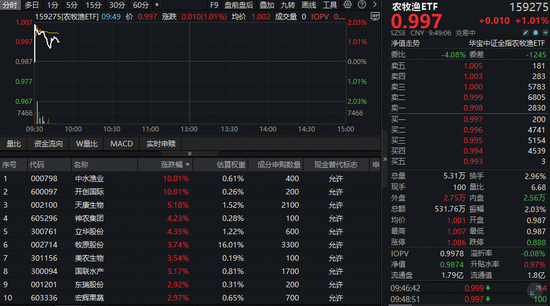
能繁母猪存栏量重回4000万头以下!农牧渔板块开盘大涨,全市场唯一农牧渔ETF(159275)盘中涨超2%!
Xin Lang Ji Jin· 2025-11-24 02:02
Core Viewpoint - The agricultural, animal husbandry, and fishery sector experienced a significant rise in stock prices, particularly in the ETF that tracks this sector, indicating a positive market sentiment and potential investment opportunities in the industry [1][4]. Market Performance - The agricultural and fishery ETF (159275) opened with a price increase of over 2% at one point, closing with a gain of 1.01% [1]. - Key stocks in the sector, including Zhongshui Fishery and Kaichuang International, reached their daily limit, while Tiankang Biological and others saw increases of over 4% [1]. Industry Insights - The Ministry of Agriculture and Rural Affairs held a meeting indicating stable development in livestock production, with the number of breeding sows falling below 40 million by the end of October [1]. - Huaxi Securities noted that pig prices are at low levels, close to industry cash costs, and that capacity reduction is exceeding expectations, suggesting potential for future price increases [1][3]. Price Trends - Current prices for fat pigs have dropped below 12 yuan per kilogram, and weaned piglet prices are around 200 yuan each, indicating that the industry is facing significant losses [3]. - Historical trends suggest that when prices are at such low levels, the industry is likely to undergo market-driven capacity reductions, which could lead to long-term price increases [3]. Valuation and Investment Opportunities - The agricultural and fishery sector may present a favorable investment opportunity, with the ETF's price-to-book ratio at 2.54, which is relatively low compared to historical data [3]. - The ETF (159275) is noted for its high exposure to the pig farming sector, with a 40.25% allocation, making it a key vehicle for investors looking to capitalize on this market [5]. Future Outlook - Guoxin Securities predicts that the official capacity control will improve cash flow for leading companies, potentially transforming them into dividend-paying stocks [4]. - The poultry farming sector is expected to see limited supply fluctuations, with leading companies likely to achieve higher cash flow and dividend returns as demand recovers [4].

农产品研究跟踪系列报告(183):生猪行业反内卷有序推进,看好海内外牧业大周期反转
Guoxin Securities· 2025-11-23 14:57
Investment Rating - The report maintains an "Outperform" rating for the agricultural products sector, particularly focusing on the livestock industry and its cyclical recovery [1][4]. Core Insights - The livestock industry is experiencing a reversal of internal competition, which is expected to support long-term pig prices. As of November 21, the price of live pigs was 11.67 CNY/kg, with a week-on-week decrease of 0.4% [1]. - The beef market is entering a new price increase phase, with the average price of beef at 66.38 CNY/kg, showing a year-on-year increase of 8% [2]. - The report emphasizes the importance of leading companies in the livestock sector, suggesting that their cash flow will improve due to official capacity control measures [3]. Summary by Sections 1. Weekly Overview and Data Summary - The report provides a weekly summary of agricultural product data, highlighting trends in livestock prices and supply dynamics [12]. 2. Fundamental Tracking 2.1 Swine - The swine industry is seeing orderly progress in reversing internal competition, which is expected to stabilize profitability [13]. 2.2 White Chicken - A slight increase in supply is noted, with attention on seasonal consumption recovery [13]. 2.3 Yellow Chicken - Supply remains at a low level, with potential benefits from improved domestic demand [13]. 2.4 Eggs - The egg market faces significant mid-term supply pressure, with wholesale prices at 3.63 CNY/jin, down 28% year-on-year [13]. 2.5 Beef - A new round of beef price increases is anticipated, with a focus on the upward trend in the beef cycle for 2025 [13]. 2.6 Raw Milk - The report suggests that the de-stocking of dairy cows may accelerate in Q4, potentially leading to a price turning point for raw milk [13]. 2.7 Soybean Meal - Short-term supply is expected to be ample, while medium-term demand and supply dynamics are projected to strengthen [13]. 2.8 Corn - Domestic supply and demand balance is tightening, with prices expected to maintain a moderate upward trend [13]. 2.9 Sugar - Short-term increases in imports are noted, with attention on the rhythm of arrivals and fluctuations in crude oil prices [13]. 2.10 Rubber - Prices are expected to stabilize in the short term, with a positive outlook for the medium term [13]. 2.11 Palm Oil - Short-term performance is weak, with medium-term policy support being a focus [13]. 2.12 Cotton - Inventory pressure is neutral, with demand still needing recovery [13]. 2.13 Red Dates - Limited demand recovery is noted, with attention on weather conditions in new production areas [13]. 3. Market Trends - The report discusses market trends and price movements across various agricultural products, indicating a complex interplay of supply and demand factors [12].




研判2025!中国植酸酶行业发展历程、产业链、发展现状、企业分析及未来趋势分析:作为一种环保型饲料,行业未来发展前景广阔[图]
Chan Ye Xin Xi Wang· 2025-11-23 01:17
Core Insights - The phytic acid enzyme market is experiencing significant growth, primarily driven by increased demand in the feed industry, especially after the ban on antibiotics in animal feed in China in 2020, positioning phytic acid enzymes as ideal alternatives [1][7] - China's annual production of phytic acid enzymes has significantly increased, from 43,200 tons in 2015 to an expected 120,600 tons by 2024, indicating a robust growth trajectory [1][8] - The global phytic acid enzyme market is projected to grow from $513 million in 2023 to $822 million by 2029, with a compound annual growth rate (CAGR) of 8.2% [6] Industry Overview - Phytic acid enzymes belong to the class of phosphoric monoester hydrolases and are crucial for enhancing the bioavailability of minerals in plant-based feeds by breaking down phytic acid [2] - The industry has evolved through three stages: initial development in the 1990s, rapid growth from 2001 to 2012, and a mature phase from 2013 onwards, with domestic products replacing imports and achieving international technical standards [3][4] Industry Chain - The upstream of the phytic acid enzyme industry includes raw materials such as wheat, barley, and microorganisms, while the downstream applications span food, pharmaceutical, and feed industries [5] - The feed industry is the largest application area for phytic acid enzymes, driven by the need to improve feed efficiency and reduce costs, with a notable increase in China's feed production reaching 250.7 million tons in the first nine months of 2025, up 6.4% year-on-year [5][6] Competitive Landscape - The global phytic acid enzyme market is highly competitive, with companies like Novozymes, DuPont, and DSM holding significant market shares due to their technological advantages and patent protections [8] - Chinese companies such as Blue Horizon Biotechnology, Yidali, and Xinghuo Technology are emerging as strong competitors, gradually capturing high-end market segments [8] Development Trends - Technological innovation is a key driver for the industry, with advancements in enzyme production and purification methods expected to enhance yield and efficiency [10] - The application of phytic acid enzymes is expanding beyond traditional uses in poultry and pig feed to include aquaculture and organic agriculture, indicating new growth opportunities [11] - Environmental sustainability is becoming increasingly important, with stricter regulations prompting phytic acid enzyme companies to enhance their eco-friendly practices and production processes [12]





招商证券:猪价下行拖累盈利 后周期景气延续
智通财经网· 2025-11-21 08:39
Core Viewpoint - The report from China Merchants Securities indicates that in Q3 2025, the profitability of listed pig companies has significantly declined due to falling pig prices and rising raw material costs, while the cost variance within the industry remains substantial, leading to an expansion of cost advantages for high-quality pig companies. The overall demand is showing signs of recovery in the later cycle, suggesting a potential increase in pig prices in 2026 due to accelerated sow capacity reduction [1][2]. Group 1: Swine Farming - In Q3 2025, the profitability of 18 listed pig companies dropped to 5.54 billion yuan, reflecting a year-on-year decrease of 71% and a quarter-on-quarter decrease of 38% [2]. - The cost variance in the industry remains significant, with high-quality pig companies further enhancing their cost advantages [2]. - The operational cash flow of listed pig companies continues to improve, while capital expenditures remain low and debt ratios are high [2]. - The report anticipates an acceleration in sow capacity reduction, which may elevate the average pig price in 2026 [2]. - Recommended companies include Muyuan Foods and Wens Foodstuff Group, with additional attention on Shennong Group, Dekang Agriculture, Dongrui Co., and COFCO Joycome [2][5]. Group 2: Poultry Farming - The white feather chicken market is expected to see an increase in the import of grandparent stock chickens in 2024, but it will not return to pre-disruption levels until 2025 [3]. - The supply of parent stock chickens is expected to tighten in the second half of 2025, impacting the supply of commercial chickens in 2026 [3]. - The yellow feather chicken sector is experiencing a reduction in parent stock numbers to historically low levels, which may support future price increases [3]. - Recommended companies in poultry farming include San Nong Development for white feather chickens and Lihua Food for yellow feather chickens [3][5]. Group 3: Post-Cycle Demand - The demand for feed in the swine and poultry sectors is gradually recovering, leading to a notable improvement in feed demand [4]. - The demand for aquaculture feed is also expected to rise as the aquaculture sector recovers [4]. - The report forecasts continued demand growth for livestock feed in Q4 2025, while aquaculture feed demand may enter a seasonal decline [4]. - Recommended companies for feed include Haida Group, which is expected to benefit from overseas expansion [4][5]. - In the animal health sector, demand is recovering due to sustained profitability in the downstream farming sector, with major animal health companies expected to see improved profitability [4]. Recommended companies include Kexin Biological and attention on BioStock and Reap Biological [4][5].

中国银河证券:26年农业投资核心围绕生猪养殖及宠物板块 强调核心指标跟踪及时点选择
Zhi Tong Cai Jing· 2025-11-21 06:41
Core Viewpoint - The report from China Galaxy Securities emphasizes the importance of identifying and capturing turning points in the agricultural sector in 2026, focusing on core indicators and finding entry points within a relatively reasonable valuation range [1] Group 1: Swine Breeding - The swine breeding sector is expected to benefit from changes in supply and demand, with a continued emphasis on a balanced approach of offense and defense [1] - The investment opportunities in the swine breeding sector arise from changes in production capacity affecting pig price expectations, with a recommendation to focus on major players like Muyuan Foods (002714) and Wens Foodstuff Group (300498), as well as smaller companies like Tiankang Biological (002100) and Shennong Group (605296) [1] - Despite a generally pessimistic outlook on pig prices based on current data, there is potential for changes within the industry that could lead to investment opportunities [1] Group 2: Pet Food - The pet food sector is characterized by sustained growth and significant market share expansion potential, with export growth serving as a shield for performance and the development of proprietary brands as a spear for future market share increases [2] - The report suggests that companies in the pet food industry should focus on maintaining or exceeding growth expectations for their proprietary brands while leveraging multi-brand operations [2] - Key companies to watch in the pet food sector include Zhongchong Co., Ltd. (002891), Guibao Pet (301498), and Petty (300673), with additional attention on Yuanfei Pet (001222) [2]

天农集团转道递表港交所 超六成收入依赖生猪业务
Mei Ri Jing Ji Xin Wen· 2025-11-20 12:57
Core Insights - Guangdong Tiannong Group Co., Ltd. has officially submitted its application for an IPO on the Hong Kong Stock Exchange after two previous attempts were terminated within five years [1][2] - The company is known for its "King of Chickens," the Qingyuan chicken, which holds over 59% market share in its segment, but it faces significant challenges including reliance on the pig farming business [4][5] Company Overview - Tiannong Group's revenue structure shows over 60% dependence on pig farming, leading to performance fluctuations tied to both "pig cycles" and "chicken cycles" [4][9] - The company has experienced a dramatic shift in net profit over the past three years, from a peak of 890 million yuan to a loss of 670 million yuan [4][11] - The average selling price of Qingyuan chicken has decreased from 37.7 yuan per chicken in 2022 to 30.7 yuan in the first half of 2025, a decline of over 20% [8] Market Position - Tiannong Group ranks first in the Qingyuan chicken market with a market share of 59.3%, and it has developed a comprehensive supply chain involving over 4,000 poultry farmers [7][9] - The market size for Qingyuan chicken is projected to grow from 1.363 billion yuan in 2020 to 1.788 billion yuan in 2024, with expectations to exceed 3.1 billion yuan by 2029 [7] Financial Performance - The company's revenue is projected to reach 4.8 billion yuan in 2024, with pig farming revenue increasing from 2.587 billion yuan in 2022 to 3.203 billion yuan in 2024 [9] - Tiannong Group's pig farming gross margin is expected to be 470 yuan per pig in 2024, ranking second among large-scale farming enterprises [10] Governance and Capital Structure - The company exhibits a family governance structure, with the founders controlling approximately 52.28% of voting rights [13] - Tiannong Group has faced challenges in its capital journey, having attempted to list on the A-share market in 2020 and 2022, both of which were terminated [13][15] Debt and Financial Strategy - The company has a high debt ratio, with liabilities reaching approximately 1.334 billion yuan as of August 31, 2025, with 83.13% due within one year [15] - Recent capital operations, including share buybacks and debt management, indicate a strategic move to optimize its capital structure ahead of the IPO [15]
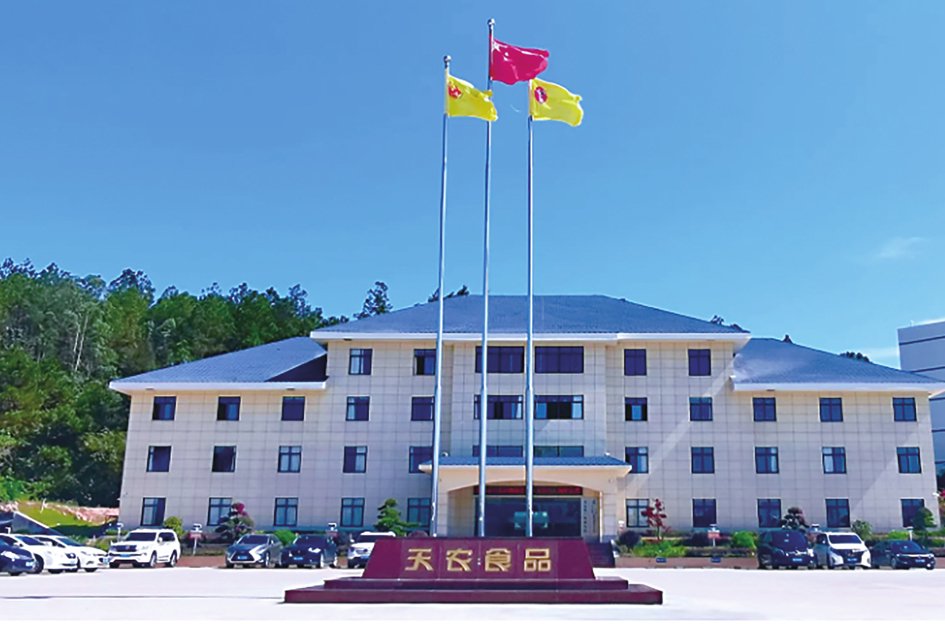
重庆女博士在广东养鸡养猪,天农集去年净赚8.9亿元!儿子、侄子、学生也是公司高管,将赴香港IPO
Mei Ri Jing Ji Xin Wen· 2025-11-20 01:59
Core Viewpoint - The company, Tian Nong Group, is preparing for an IPO in Hong Kong, leveraging its dominance in the Qingyuan chicken market, while facing challenges due to its significant reliance on the pig farming business and family governance issues [1][2][10]. Group 1: Company Overview - Tian Nong Group specializes in raising Qingyuan chicken, holding over 59% market share in this niche [1][7]. - The company was founded by Zhang Zhengfen and her husband in 2003, focusing on the industrialization of Qingyuan chicken after reviving its breeding stock [3][4]. - The company has developed a comprehensive supply chain involving over 4,000 poultry farmers, transitioning traditional farming into a modern industrial model [7][10]. Group 2: Financial Performance - Tian Nong Group's revenue reached 4.8 billion yuan in 2024, with over 60% derived from pig farming, indicating a dual reliance on both chicken and pig cycles [10][11]. - The company's net profit fluctuated significantly over the past three years, from a peak of 890 million yuan to a loss of 670 million yuan [2][12]. - The average selling price of Qingyuan chicken has decreased by over 20% from 2022 to 2025, impacting profit margins [8][12]. Group 3: Market Position and Challenges - The market for Qingyuan chicken is expected to grow from 1.363 billion yuan in 2020 to 1.788 billion yuan in 2024, with projections to exceed 3.1 billion yuan by 2029 [7]. - The company faces challenges from price volatility in both chicken and pig markets, which directly affects profitability [12][17]. - Tian Nong Group's governance structure is heavily family-oriented, with significant control held by the founding couple and their relatives [13][14]. Group 4: Debt and Capital Structure - The company has a high debt ratio, with liabilities reaching approximately 1.334 billion yuan, of which 83.13% is due within one year [17][18]. - Recent capital maneuvers include share buybacks and restructuring efforts aimed at optimizing the capital structure ahead of the IPO [16][18].

重庆女博士在广东养鸡养猪,一年净赚8.9亿元
Mei Ri Jing Ji Xin Wen· 2025-11-19 14:12
Core Viewpoint - Tian Nong Group, a poultry and pig farming company, is preparing for an IPO in Hong Kong, highlighting its success in revitalizing the Qingyuan chicken breed while facing significant challenges related to its dual reliance on both chicken and pig farming [1][11]. Company Overview - Founded by Zhang Zhengfen and her husband, the company focuses on the industrialization of Qingyuan chicken, achieving a market share of over 59% in this niche [1][8]. - The company has developed a complete breeding system for Qingyuan chicken, emphasizing high-quality, natural farming practices [5][8]. Financial Performance - Tian Nong Group's revenue structure shows over 60% dependence on pig farming, with pig product revenue increasing from 25.87 billion to 32.03 billion from 2022 to 2024 [11][12]. - The company's net profit has fluctuated significantly, from a peak of 8.9 billion in 2022 to a loss of 6.7 billion in 2023, before rebounding in 2024 [12][13]. - Average selling prices for Qingyuan chicken have decreased by over 20% from 2022 to 2025, impacting gross margins which have shown significant volatility [9][12]. Market Position - The market for Qingyuan chicken is expected to grow from 1.363 billion in 2020 to 1.788 billion by 2024, with projections to exceed 3.1 billion by 2029 [8]. - The company has established a comprehensive supply chain involving over 4,000 poultry farmers, enhancing its market position [8][11]. Governance and Management - The company exhibits a strong family governance structure, with the founding couple controlling approximately 52.28% of voting rights [14][17]. - The management team includes several family members, indicating a close-knit operational approach [14]. Capital Market Journey - Tian Nong Group has faced challenges in its previous attempts to list on the A-share market, which adds pressure to its current IPO efforts in Hong Kong [16][17]. - The company has engaged in various capital operations, including share buybacks and restructuring, to optimize its financial position ahead of the IPO [16][17]. Debt and Financial Health - The company has a high debt ratio, with liabilities reaching approximately 1.334 billion, of which 83.13% is due within one year [17]. - The financial strategy includes addressing short-term debt pressures while aiming to improve cash flow stability [17].

重庆女博士在广东养鸡养猪,去年净赚8.9亿元!儿子、侄子、学生也是公司高管,将赴香港IPO
Mei Ri Jing Ji Xin Wen· 2025-11-19 12:41
Core Viewpoint - Guangdong Tiannong Group Co., Ltd. has officially submitted its IPO application to the Hong Kong Stock Exchange, focusing on the production of Qingyuan chicken, which holds over 59% market share in its segment [1][8]. Group 1: Company Overview - Tiannong Group is primarily engaged in the breeding and production of Qingyuan chicken, a premium chicken variety, and has expanded its operations to include pig farming, with over 60% of its revenue derived from this sector [2][10]. - The company was founded by Dr. Zhang Zhengfen and her husband, who revitalized the Qingyuan chicken breed from a state of genetic decline, achieving an annual output of over 32 million chickens [3][5]. Group 2: Financial Performance - The company's net profit has fluctuated significantly over the past three years, ranging from a peak profit of 890 million yuan to a loss of 670 million yuan, indicating vulnerability to both the pig and chicken market cycles [2][12]. - In 2024, Tiannong Group's revenue is projected to reach 4.8 billion yuan, with pig farming revenue increasing from 2.587 billion yuan in 2022 to 3.203 billion yuan in 2024, while poultry revenue accounts for only about 20% of total revenue [10][11]. Group 3: Market Position and Pricing - Tiannong Group's Qingyuan chicken commands a premium price, with average selling prices dropping from 37.7 yuan per chicken in 2022 to 30.7 yuan in the first half of 2025, reflecting a decline of over 20% [9]. - The average price of Qingyuan chicken remains significantly higher than that of other chicken varieties, with a stable price range of 17.6 to 22.3 yuan per kilogram compared to 7.2 to 15.6 yuan for white feathered chickens [8]. Group 4: Governance and Capital Structure - The company exhibits a strong family governance structure, with the founders controlling approximately 52.28% of voting rights and a significant portion of the executive team being family members [13][16]. - Tiannong Group has faced challenges in its capital journey, having previously attempted to list on the A-share market before shifting focus to the Hong Kong market, indicating a strategic pivot in response to market conditions [15][16]. Group 5: Debt and Financial Strategy - The company is under considerable debt pressure, with a debt-to-asset ratio consistently above 65% and approximately 83.13% of its 1.334 billion yuan in outstanding loans due within one year [16]. - Despite high debt levels, Tiannong Group has engaged in significant share buybacks and capital restructuring, aiming to optimize its equity structure ahead of its IPO [16].

“鸡王之王”IPO:年入48亿元天农集团携11亿元“急债”闯关港股,曾借年息18%高息贷款
Mei Ri Jing Ji Xin Wen· 2025-11-19 10:21
Core Viewpoint - Tian Nong Group has submitted its IPO application to the Hong Kong Stock Exchange, highlighting its dominance in the Qingyuan chicken market, but faces significant challenges due to its reliance on the pig farming business and various operational issues [1][2][6]. Group 1: Company Overview - Tian Nong Group specializes in raising Qingyuan chicken, holding over 59% market share in this niche, and has successfully increased its annual output to over 32 million chickens [1][4]. - The company was founded by Dr. Zhang Zhengfen and her husband, who revitalized the Qingyuan chicken breed through scientific breeding techniques and a premium growth strategy [3]. Group 2: Financial Performance - The company's net profit has fluctuated dramatically over the past three years, ranging from a peak profit of 890 million yuan to a loss of 670 million yuan, indicating vulnerability to both chicken and pig market cycles [2][8]. - Revenue from pig farming constitutes over 60% of total income, with pig product revenue increasing from 2.587 billion yuan in 2022 to 3.203 billion yuan in 2024 [7]. Group 3: Market Position and Pricing - The average selling price of Qingyuan chicken has decreased from 37.7 yuan per chicken in 2022 to 30.7 yuan in the first half of 2025, reflecting a decline of over 20% [5]. - Despite the price drop, Qingyuan chicken maintains a premium price range of 17.6 to 22.3 yuan per kilogram, compared to the lower-priced white feather and yellow feather chickens [3][4]. Group 4: Governance and Capital Structure - The company exhibits a strong family governance structure, with the founding couple controlling approximately 52.28% of voting rights and several family members in key management positions [10]. - Tian Nong Group has faced challenges in its capital journey, having previously attempted to list on the A-share market before shifting focus to the Hong Kong market [11]. Group 5: Debt and Financial Strategy - The company has a high debt ratio, with liabilities reaching approximately 1.334 billion yuan, of which 83.13% is due within one year, indicating significant short-term repayment pressure [12]. - Recent capital maneuvers, including share buybacks and new investments, suggest a strategic effort to optimize its capital structure ahead of the IPO [12].