
京东方A

Search documents
甬江实验室/中科芯/芯东来/鼎龙/久日新材等24家单位确认演讲 | 2025势银(第五届)光刻产业大会(PRIC 2025)
势银芯链· 2025-06-20 05:22
Core Viewpoint - The 2025 TrendBank (Fifth) Lithography Industry Conference will be held on July 9-10, 2025, in Hefei, focusing on advanced lithography technologies and the challenges faced by the domestic lithography materials industry [14][15][26]. Conference Overview - The conference will cover cutting-edge lithography technologies such as EUV, electron beam lithography, and nanoimprint, discussing the latest research progress and application prospects [14]. - It aims to analyze the current status and technical bottlenecks of domestic lithography materials, including photoresists and wet electronic chemicals, and explore solutions for enhancing self-sufficiency and quality [24][26]. - Key discussions will also focus on the domestic production challenges of lithography equipment, including development, manufacturing processes, and market conditions [14][24]. Participants and Agenda - The conference will feature over 20 industry experts and representatives from various companies and research institutions, including BOE, Zhongke Xin, and Fudan University, who will present and engage in discussions [14][15][16]. - The agenda includes specialized sessions on advanced lithography technologies, photoresists, wet electronic chemicals, and mask and lithography equipment, providing a comprehensive view of the industry [16][18]. Industry Challenges - The domestic lithography industry faces significant challenges, including low self-sufficiency rates for high-end photoresists and reliance on imports for certain high-purity electronic chemicals [24][26]. - The manufacturing technology for high-precision masks is complex, with a significant portion of raw materials being imported, which poses risks to supply stability [24]. - The high-end lithography equipment market is dominated by foreign companies, creating a "bottleneck" for the domestic semiconductor industry [24][26]. Strategic Importance - The conference aims to strengthen the self-controllable capabilities of the lithography technology and related industries in response to global supply chain threats [26]. - It seeks to foster collaboration among research institutions, universities, and enterprises to accelerate technological innovation and promote the upgrading of the lithography industry [26].

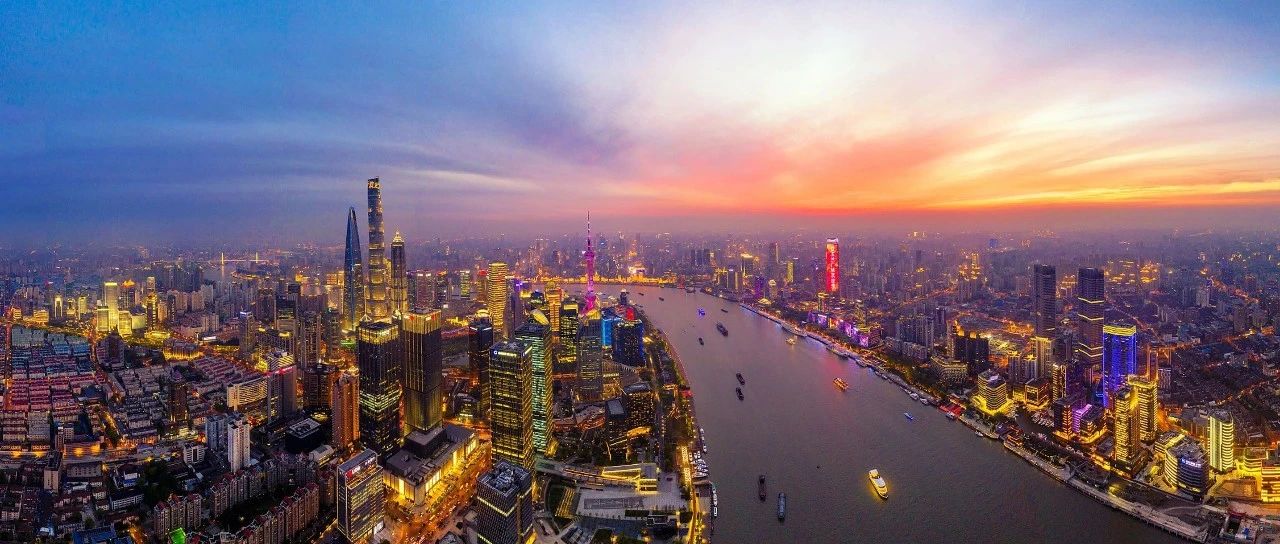
有“苏超”的长三角将逼近世界第一
首席商业评论· 2025-06-20 04:09
Core Viewpoint - The Yangtze River Delta (YRD) is projected to achieve a GDP of $4.65 trillion in 2024, making it the second-largest urban agglomeration globally, only behind the Boston-Washington corridor in the United States. The region's per capita GDP is expected to reach $19,500, nearing the threshold for developed economies [1][7][9]. Group 1: Economic Performance - In 2023, the YRD, covering less than 4% of China's land area, generated nearly 25% of the national economic output, with nine cities boasting a GDP exceeding $1 trillion, ranking it among the top in the country [9]. - The YRD's economic density is significantly high, driven by extensive trade facilitated by its numerous ports, including Shanghai and Ningbo-Zhoushan, which are among the world's largest [18][24]. Group 2: Comparison with Other Regions - The YRD includes Shanghai, Jiangsu, Zhejiang, and Anhui, while the Guangdong-Hong Kong-Macau Greater Bay Area (GBA) comprises Hong Kong, Macau, and nine cities in Guangdong. The YRD's GDP is projected at ¥33.17 trillion, compared to the GBA's ¥14 trillion in 2024 [10][16]. - The YRD's per capita GDP is approximately ¥19,500, while the GBA's is around ¥16,200, indicating a higher economic output per capita in the YRD [10][16]. Group 3: Factors Contributing to Economic Growth - The geographical advantage of the YRD, described as "accessible to rivers and seas," facilitates trade and resource distribution, contributing to its economic growth [22]. - The region's flat terrain supports urban population growth and agricultural development, with Shanghai's flat land comprising 90% of the city and Jiangsu's 80% [24]. - The educational resources in the YRD are robust, producing a significant number of academicians and housing many top-tier universities, which contribute to its innovative capacity [25]. Group 4: Future Growth Drivers - Future growth in the YRD is expected to stem from three key areas: Hangzhou, Anhui, and the redevelopment of Shanghai [30][31]. - Hangzhou is recognized as a hub for digital economy and innovation, attracting talent and investment, while Anhui's integration into the YRD is bolstered by the rise of local enterprises like NIO and iFlytek [32][39]. - Shanghai, despite its large economic scale, faces challenges in maintaining urban vitality and industrial transformation, necessitating a focus on attracting a continuous influx of population [41].
研判2025!中国柔性显示行业产业链、相关政策及市场现状分析:受益于产能扩张、成本下降,柔性显示发展迅速[图]
Chan Ye Xin Xi Wang· 2025-06-20 01:16
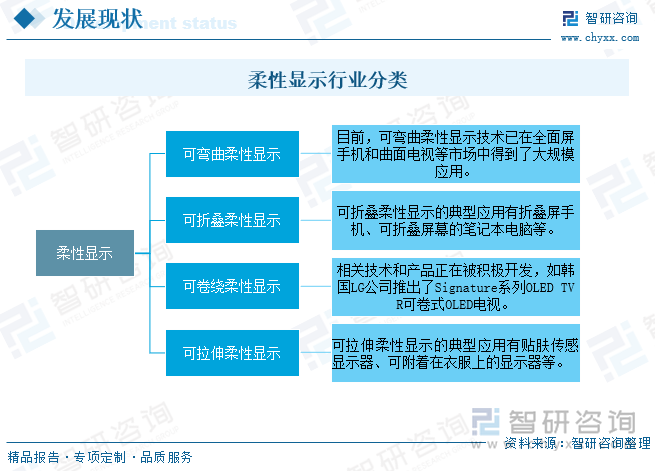
Core Insights - Flexible display technology is revolutionizing the display industry by enabling devices to be curved, folded, and rolled, breaking the traditional rigid display limitations [1][17] - The global flexible display market is projected to grow from $23.2 billion in 2024 to over $173 billion by 2031, driven by advancements in 5G, AI, and VR technologies [1][17] - The flexible OLED segment is expected to see significant growth, with global shipments estimated at approximately 617 million units in 2024, reflecting a year-on-year increase of 21.5% [21] Industry Overview - Flexible displays are made from soft materials and are characterized by low energy consumption, lightweight, durability, and shape variability [2][7] - The main types of flexible displays include bendable, foldable, rollable, and stretchable displays, with bendable and foldable displays already seeing large-scale applications in consumer electronics [2][4] Technology Landscape - The leading technology for flexible displays is flexible OLED, known for its high contrast, wide viewing angles, and rapid response times [4][6] - Other technologies include flexible LCD, electronic paper, quantum dot LEDs, and Micro-LEDs, with flexible OLED being the most widely adopted [4][6] Market Dynamics - The Asia-Pacific region dominates the flexible display market, accounting for over 65% of the global market share, with China, South Korea, and Japan as key contributors [17] - The flexible AMOLED market share in smartphones is expected to rise from 28% in 2022 to 40% in 2024, driven by the demand for high-end smartphone models [19][21] Competitive Landscape - Samsung is the leading global supplier of flexible OLED displays, while BOE Technology Group is the largest producer in China, having broken the international monopoly in 2017 [23] - Chinese companies like BOE, Visionox, Tianma, and TCL Huaxing have made significant technological advancements, enhancing their competitiveness and gradually reducing Samsung's market dominance [23]



四大证券报精华摘要:6月20日
Xin Hua Cai Jing· 2025-06-19 23:54
Group 1 - The Shanghai Stock Exchange has developed a special action plan to enhance the ESG rating of listed companies in the Shanghai market, aiming to improve governance and investment quality [1] - The capital market plays a crucial role in the reform of state-owned enterprises, helping to raise funds, improve corporate governance, and promote mixed ownership reform [2] - Asset management institutions are seeking new asset allocation strategies to adapt to the challenges posed by a low-interest-rate environment, emphasizing diversification and innovation [3] Group 2 - The 2025 Shanghai World Mobile Communication Conference highlighted the integration of 5G, AI, and IoT technologies, with the smart economy expected to drive new growth [4] - The first low-altitude drone perception base station was unveiled at the conference, showcasing advancements in low-altitude economic applications supported by 5G technology [5] - The phosphoric iron lithium market is witnessing a surge in large long-term orders, indicating expanding market demand and potential industry consolidation [6] Group 3 - Nineteen companies have seen their ratings upgraded by institutions for three consecutive months, with significant increases in their stock prices, particularly in the semiconductor sector [7] - The short drama market is experiencing explosive growth, with Chinese platforms making significant inroads into international markets, particularly in Southeast Asia and the U.S. [8] - The solid-state battery sector is gaining momentum, with numerous conferences and a notable increase in stock prices for related companies [9] Group 4 - New equity funds are accelerating their investment strategies, with 47 new funds established in June, reflecting a favorable market environment for structural investment opportunities [10] - Wolong Electric Drive Group plans to list its H-shares in Hong Kong, part of a growing trend of A-share companies pursuing dual listings to enhance global competitiveness [11] - Companies are increasingly engaging in equity mergers and acquisitions to enhance their market presence and enter high-growth sectors, with significant transaction amounts reported [12][13]
科创债年内发行已超8893亿元
Zheng Quan Ri Bao· 2025-06-19 17:12
本报记者 毛艺融 发行利率显著下降 《公告》明确,金融机构、科技型企业、私募股权投资机构和创业投资机构(以下简称"股权投资机构")等三类机构可发 行科技创新债券,募集资金用于支持科技创新领域投融资。 5月7日以来,科创债发行呈现出规模大、认购热情高、利率低、主体多元等特点。尤其是政策红利的持续释放,使得金融 机构、科技型企业和股权投资机构积极参与,推动了科创债市场的快速发展。 具体来看,在前述299只科创债中,银行发行的科创债成为主力,25家银行合计发行2275亿元,发行规模占比超四成。例 如,6月13日,南京银行发行的"25南京银行科创债01BC"上市,发行规模50亿元,期限5年,票面利率1.79%。南京银行表示, 本期科技创新债券所募集的资金,将专项为科技创新企业中长期融资需求提供有力支撑,进一步提升科创金融服务能力,加快 培育和发展新质生产力。 券商也在积极响应。前述299只科创债里,有28家证券公司合计发行279.7亿元。 根据公告,首批银行科创债募集资金将用于发放科技贷款、投资科创债等,券商科创债募集资金将用于新增科技创新投 资、置换前期投资支出、补充流动资金等。 科创债再次迎来政策层面的支持。证监 ...
海外出货破百万台,深圳投影仪公司靠性价比冲破红海|Insight全球
36氪· 2025-06-19 13:39
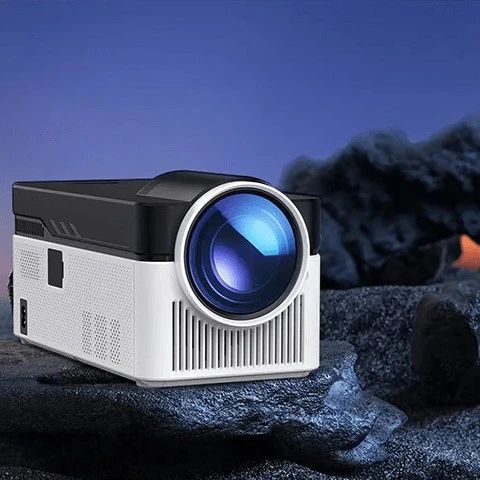
Core Viewpoint - The article discusses the rapid growth of Magcubic, a Shenzhen-based projector manufacturer, in the overseas market, particularly in regions like Southeast Asia and Latin America, highlighting its innovative approach and competitive pricing strategy [3][4][5]. Group 1: Market Dynamics - China is the largest projector market globally, with a complete industry chain, but domestic demand has saturated, leading to a decline in profits for major brands [4]. - Magcubic's HY300 projector, priced at around $70, has become a best-seller in the U.S. market, achieving sales of $393 million during the Double Eleven shopping festival [3][4][18]. - The global home projector market is projected to reach $24.6 billion in 2024, a 217% increase from 2020, with the U.S. and Europe contributing 58% of the market share [19]. Group 2: Product Innovation - Magcubic's success is attributed to its ultra-short throw LCD technology, allowing large screen projections in small spaces, which is a significant innovation compared to traditional DLP projectors [11][12]. - The company has secured licenses for Netflix and YouTube on some of its projectors, enhancing its product offering [14]. - The 1LCD technology has gained a 61.4% market share globally in 2023, indicating a shift in consumer preference towards this technology [14]. Group 3: Strategic Partnerships - Magcubic has established a robust supply chain with partners like BOE and Han Ying, enabling it to set an ambitious target of 1 million units sold annually [17][18]. - The collaboration with platforms like AliExpress has provided Magcubic with significant market exposure and support, particularly in less competitive categories [16][18]. Group 4: Regional Insights - Southeast Asia and Latin America have shown high potential for growth, with Magcubic's products performing exceptionally well in these markets due to a younger demographic and a higher acceptance of Chinese products [20][22]. - The company has recognized the cultural trends in these regions, such as party and camping cultures, which drive demand for affordable and portable projection solutions [21][22]. Group 5: Competitive Landscape - The projector market is becoming increasingly competitive, with more manufacturers entering the overseas market, posing challenges for Magcubic [23][24]. - Despite the challenges, Magcubic's early entry and brand recognition in the overseas market provide it with a competitive edge [22].
“面板三哥”再闯IPO
经济观察报· 2025-06-19 12:50
Core Viewpoint - Huike Co., Ltd. is attempting to relaunch its IPO after a failed attempt in August 2023, amidst significant industry challenges and a shift towards new display technologies [2][12]. Industry Overview - The panel industry is characterized by severe cyclical fluctuations, with recent downturns leading to substantial price drops and widespread losses among manufacturers [5][6]. - Huike has established itself among the top three global TV panel suppliers, particularly excelling in the large-size segment [3][15]. Financial Performance - Huike's financial performance has been volatile, with a profit of 5.406 billion yuan in 2021 followed by an expected loss exceeding 1 billion yuan in 2022 [3][10]. - The company's gross margin for TV panel business plummeted from 52.51% in Q2 2021 to -12.57% in Q2 2022, highlighting the impact of price declines [10]. Business Model and Challenges - Huike's expansion strategy relies heavily on partnerships with local governments, which provide land and funding, but this model exposes the company to significant financial obligations [6][9]. - The company faces a cash outflow obligation of approximately 31.197 billion yuan due to agreements with local state-owned enterprises [9]. Technological Transition - Huike is investing heavily in new display technologies, with over 40 billion yuan allocated to Mini/Micro LED and electronic paper projects [16]. - The acquisition of assets from Royole Technology is seen as a strategic move to enter the OLED market, despite the challenges posed by existing technology gaps [16]. Market Position and Future Outlook - The LCD market is transitioning towards a recovery phase, with price increases noted in early 2025, which may benefit Huike [12]. - Huike aims to maintain its competitive edge in large-size LCD panels while also addressing the need for technological advancement to compete with industry giants [15][17].
京东方要干件大事!准备大代价拿下它!
IPO日报· 2025-06-19 12:16
Core Viewpoint - BOE Technology Group Co., Ltd. (referred to as "BOE") announced plans to acquire a 30% stake in Xianyang Rainbow Optoelectronics Technology Co., Ltd. (referred to as "Rainbow Optoelectronics") for a base price of 4.849 billion yuan, funded by self-raised capital. This transaction is significant for the consolidation of China's display panel industry and may accelerate the integration of LCD capacity and price order reconstruction in the short term [1]. Group 1 - Rainbow Optoelectronics, established in 2015, primarily engages in the production of TFT-LCD panels and modules, operating the LCD 8.6 generation line of Rainbow Shares. The G8.6 generation line is crucial for manufacturing large-size display panels, such as TVs and monitors [3]. - As of December 31, 2024, Rainbow Optoelectronics has total assets of 25.193 billion yuan and net assets of 15.868 billion yuan, with projected revenue of 10.291 billion yuan and net profit of 1.339 billion yuan for 2024. The company's total equity valuation is 16.812 billion yuan, reflecting a 3.46% increase [3]. - The sale of shares may provide significant funding for Rainbow Shares' glass substrate business, which is currently a key revenue contributor, generating 10.21 billion yuan in 2024, accounting for 87.49% of total revenue [3][4]. Group 2 - Rainbow Shares has shifted its strategic focus towards the glass substrate business, which has seen over 20% growth in 2024, despite the lower revenue contribution compared to LCD panels. The company has established 13 production lines with an annual capacity of 51 million square meters, holding over 30% market share domestically [4]. - The acquisition of Rainbow's LCD 8.6 generation line will enhance BOE's production capacity, particularly in the large-size panel segment, addressing its current shortfall in producing 100-inch panels. The VA technology used in Rainbow's 8.6 generation line offers advantages in contrast and viewing angles compared to BOE's mainstream IPS technology [6]. - If the acquisition is successful, the market share of the top three panel manufacturers is expected to increase from over 60% to more than 70%, leading to greater price stability and reduced cyclical volatility in the industry [6].


“面板三哥”再闯IPO
Jing Ji Guan Cha Wang· 2025-06-19 11:59
Core Viewpoint - Huike Co., Ltd. is attempting to relaunch its IPO after previous setbacks, leveraging new product launches and strategic partnerships to enhance its market position in the competitive LCD panel industry [2][4][9]. Group 1: Company Developments - Huike has launched the world's first a-Si car-mounted TRD+TDDI screen and reported a 310% year-on-year increase in its automotive display business shipments for 2024 [2]. - The company has signed a memorandum of understanding with Dixon Technologies to invest approximately 4 billion rupees in a joint factory in India [2]. - Following its IPO advisory completion on May 23, 2023, Huike is making another attempt to go public after failing in 2021 [2][4]. Group 2: Financial Performance - Huike's financial performance has been volatile, with a profit of 5.406 billion yuan in 2021, followed by an expected loss of over 1 billion yuan in 2022 [3][6]. - The company's revenue surged from 10.577 billion yuan in 2019 to 35.709 billion yuan in 2021, but it faced significant losses in 2022 due to declining panel prices [6][7]. - The gross margin for Huike's TV panel business plummeted from 52.51% in Q2 2021 to -12.57% in Q2 2022, highlighting the industry's cyclical challenges [7]. Group 3: Industry Context - The LCD panel industry is characterized by significant cyclical volatility, with prices for mainstream TV panels dropping dramatically since Q3 2021 due to macroeconomic factors [4][6]. - The industry is gradually recovering, with LCD TV panel prices rising in Q1 2025 and production line utilization rates reaching 80% [8]. - Huike's competitive advantage lies in its strong market share in large-size panels, holding 34% and 37% of the 85-inch and 100-inch markets, respectively, as of Q1 2025 [10]. Group 4: Strategic Initiatives - Huike is investing over 40 billion yuan in new display technologies, including Mini/Micro LED and electronic paper, to diversify its product offerings [11]. - The acquisition of assets from Royole Technology is seen as a critical step for Huike to enter the OLED market, despite the challenges posed by existing technology gaps [12]. - The company aims to balance its traditional LCD strengths while transitioning into new technology sectors to remain competitive [10][12].

群智咨询:预计2025年PHUD对于LTPS LCD面板需求约60万片
Zhi Tong Cai Jing· 2025-06-19 10:24
Group 1 - The core viewpoint of the article is that the demand for PHUD (Projection Head-Up Display) for LTPS LCD panels is expected to grow significantly, reaching approximately 600,000 units by 2025 and potentially increasing to 2.5 million units by 2026, representing a year-on-year growth of about 316% [2] - The explosive growth in demand is driven by leading automotive brands such as BMW and Xiaomi, with more brands likely to follow suit, indicating a penetration path of "luxury brands leading + independent car manufacturers following" [2] - By 2030, the demand for PHUD in LTPS LCD panels is projected to reach 7.8 million units, highlighting the long-term growth potential in this segment [2] Group 2 - The demand for HUD (including PHUD) LTPS LCD panels is expected to accelerate, with shipments projected at approximately 8.5 million units in 2024, exceeding 10 million units in 2025, and potentially reaching over 25 million units by 2030 [3] - Traditional HUD panels are primarily smaller in size, but the introduction of PHUD will significantly increase the size requirements, leading to a more pronounced consumption of LTPS LCD panel capacity [3] - By 2025, the demand for HUD LTPS LCD panels is estimated to require about 17,000 G6 glass substrates, with PHUD contributing 5,000 units, accounting for 29% of the HUD panel demand [3] Group 3 - The rise of PHUD and HUD technologies is expected to pose a threat to the traditional full LCD instrument market, creating new opportunities and challenges in the competition between HUD panels and instrument markets [4] - Increased demand for higher brightness will drive the adoption of Mini LED backlight products in the automotive market, while the need for high brightness and high transmittance will explore the potential of Micro LED technology, further promoting the application of new display technologies in the automotive sector [4]
